➡️ PART 3 ENDING PART ➡️
“Play that again.”
Detective Nora Bennett touched the screen.
Static filled the hospital room.
Then Sylvia Carter’s voice returned.
Cold.
Controlled.
Almost bored.
“By tomorrow morning, Rebecca will be sitting where you used to sit, and your mother won’t be able to do a damn thing about it.”
Marcus laughed somewhere in the background.
Then came the man’s voice.
“Make her sign it, Marcus. We need those shares transferred before the federal audit starts.”
I closed my eyes.
Not because I was confused.
Because I wasn’t.
I knew that voice.
Twenty-one years earlier, I had listened to it for six weeks in a federal courtroom while its owner sat behind an expensive defense team and explained why documents did not mean what they plainly said.
Victor Lang.
He had not been a defendant in my case.
He had been a witness.
A financial consultant.
Polished.
Careful.
Connected.
The sort of man who answered questions with twelve words when one would have been enough because he wanted time to decide which version of the truth was safest.
I opened my eyes.
Detective Bennett was watching me.
“You recognize him.”
“Yes.”
“Who?”
“Victor Lang.”
Chloe turned her head weakly.
“You know Victor?”
I looked at my daughter.
“You do?”
“He’s Marcus’s financial adviser.”
Of course.
“What else?”
“He helped structure the employee investment plan.”
My stomach tightened.
“What employee investment plan?”
Chloe stared at me.
Then I saw it.
The realization that there were still things we had never discussed.
Not secrets exactly.
Just pieces of her adult life that belonged to her marriage.
“Mom…”
“What?”
“Marcus’s company.”
“I know.”
“No.”
She swallowed.
“I own part of it.”
Detective Bennett leaned closer.
“How much?”
“Just under twelve percent.”
Just.
Twelve percent was not “just” anything.
“How?”
I asked.
“When Marcus’s original partner left two years ago, the company needed someone with technical credentials attached to the infrastructure division. I invested.”
“With what money?”
“My savings.”
I felt my jaw tighten.
“How much?”
“Eighty thousand.”
I kept my face still.
“And?”
“And some shares were transferred to me as part of the restructuring.”
“Voting shares?”
“Yes.”
There it was.
Not a mistress.
Not only a marriage.
Not only humiliation.
Control.
Marcus hadn’t needed Chloe gone because Rebecca wanted her chair at Thanksgiving dinner.
He needed Chloe frightened.
Disoriented.
Separated from support.
And signing papers.
I looked at Bennett.
“The shares.”
She nodded.
“That’s what the recording suggests.”
Chloe started crying.
“I thought he just wanted me out.”
I took her hand.
“He did.”
I leaned closer.
“But he also wanted something from you before you went.”
Her face crumpled.
“I loved him.”
Three words.
Nothing legal about them.
Nothing evidentiary.
And somehow they were the most devastating thing said in that hospital room.
I squeezed her fingers.
“I know.”
“He could have asked for a divorce.”
“I know.”
“He could have bought my shares.”
“I know.”
“He didn’t have to…”
She looked at her bruised wrist.
Her voice disappeared.
I kissed her forehead.
“No.”
I whispered.
“He didn’t.”
Detective Bennett quietly stopped the recording.
Not the evidence.
The hospital playback.
She gave my daughter a moment.
That mattered to me.
Twenty-seven years in prosecution had taught me that institutions can become so focused on proving what happened that they forget something happened to a person.
Bennett hadn’t forgotten.
When Chloe was ready, she continued.
“Do you know whether Marcus or anyone else has access to your company accounts?”
“Company accounts, no. Some shared household accounts, yes.”
“Any electronic signature credentials?”
Chloe’s eyes widened.
“My laptop.”
“Where is it?”
“At the house.”
“Password protected?”
“Yes.”
“Does Marcus know the password?”
“No.”
Then she hesitated.
“He might.”
“How?”
“He watched me enter it once and joked that I always use numbers connected to Dad.”
I looked at her.
Her father had died six years earlier.
Chloe still used his birthday for things she shouldn’t.
I had warned her.
Not now.
No lectures.
Bennett asked:
“Any two-factor authentication?”
“My phone.”
We all looked at the evidence bag.
The phone Marcus and Sylvia had thrown away.
That explained why they hadn’t destroyed it immediately.
They needed it first.
“Detective.”
My old voice had returned.
Bennett looked at me.
“We need to preserve access logs.”
She gave me the faintest smile.
“We already requested that.”
Good.
Very good.
Then she said:
“And Eleanor?”
“Yes?”
“You’re her mother right now.”
The words landed softly.
I looked at Chloe.
She was pale.
Exhausted.
Still trembling beneath warmed blankets.
My daughter did not need a retired federal prosecutor sitting beside her bed.
She needed her mother.
I put the badge back into my purse.
Then held her hand with both of mine.
“All right.”
For the next several hours, other people did their jobs.
Doctors.
Nurses.
Detectives.
A forensic examiner.
An advocate.
I answered when asked.
Otherwise, I stayed beside Chloe.
That was harder than taking charge.
I had spent most of my professional life believing action was the antidote to fear.
Sometimes it is.
Sometimes love means sitting still while somebody else does the work.
By noon, Thanksgiving dinner at the Carter house had begun.
I knew because Sylvia had posted photographs online.
Yes.
Posted photographs.
While my daughter lay in a hospital bed.
A long mahogany table.
White linen.
Crystal glasses.
Autumn flowers.
Candles.
A roasted turkey in the center.
Marcus stood near the head of the table wearing a navy suit.
Rebecca was beside him.
In Chloe’s place.
Exactly as Sylvia had promised.
My stomach turned.
“Don’t look.”
Chloe whispered.
I put the phone down.
“I’m sorry.”
“Is she sitting there?”
I didn’t answer.
She closed her eyes.
“She is.”
“Yes.”
A tear slid down her cheek.
“That’s stupid.”
“What?”
“That it hurts.”
“No.”
“They hurt me. They left me at a bus station. And somehow I’m crying because another woman is sitting in my chair.”
I stroked her hair.
“Grief doesn’t rank its reasons.”
She looked at me.
“What does that mean?”
“It means you can be devastated by the crime and still have your heart broken by the chair.”
She cried harder.
“I bought those napkins.”
I almost laughed.
“What?”
“The orange ones.”
Her mouth trembled.
“I spent two hours picking those stupid napkins because Sylvia said cream looked cheap.”
I laughed.
Then Chloe did too.
It hurt her face.
She winced.
But kept laughing.
Two women sitting in a hospital on Thanksgiving, crying over orange napkins.
Sometimes sanity returns through the smallest door.
At 12:47 PM, Detective Bennett’s phone rang.
She stepped into the hallway.
When she returned, her expression had changed.
“Eleanor.”
I stood.
“What?”
“Can we speak outside?”
“No.”
Chloe surprised both of us.
“If it’s about me, say it here.”
Bennett looked at her.
Then nodded.
“Your company confirmed an attempted login to the shareholder portal at 1:14 this morning.”
Chloe stared.
“After Marcus left me at the terminal.”
“Yes.”
“From where?”
“An IP address associated with your home network.”
My hand tightened around the bedrail.
“Was anything transferred?”
“The login failed at the second authentication step.”
Chloe looked toward her recovered phone.
“They needed my phone.”
“Yes.”
Bennett continued.
“We also learned someone contacted the platform’s support line shortly after two and claimed you’d lost access to your device.”
Chloe’s mouth opened.
“Did they reset it?”
“No.”
“Why?”
“The caller couldn’t answer one of the identity verification questions.”
For the first time that morning, I smiled.
“What question?”
Bennett glanced at her notes.
“Name of your first pet.”
Chloe blinked.
Then looked at me.
“Benjamin.”
I smiled.
Marcus thought it was Pepper.
Pepper had been our Labrador when Chloe was in high school.
Benjamin was a fat orange goldfish she had won at a county fair when she was six.
He lived four years.
My late husband built him a ridiculous miniature castle.
Marcus had mocked the photograph once.
Apparently, he hadn’t remembered the name.
Thank you, Benjamin.
Wherever goldfish go.
Bennett continued.
“The company has frozen any ownership changes pending review.”
Chloe exhaled.
“So they didn’t get the shares.”
“No.”
“Can they?”
“Not without further steps, and the company has been notified of the dispute.”
I watched some of the terror leave my daughter’s face.
Not all.
Enough.
Then Bennett looked at me.
“There’s more.”
Of course there was.
“The company was already under review.”
“The federal audit.”
“Yes.”
“What agency?”
She named it.
I knew people there.
Not current leadership personally.
Enough to understand the implications.
I did not reach for my phone.
That mattered.
The old Eleanor would have wanted to call everyone she knew.
The wiser one understood that twenty years of credibility could be damaged by one mother making the wrong call in anger.
“Do they know about Chloe?”
“They will through proper channels.”
“Good.”
Bennett looked almost relieved.
“You’re not going to call anyone?”
“No.”
“Why?”
“Because I’m retired.”
I glanced at my daughter.
“And because this belongs to the evidence now, not my ego.”
Chloe squeezed my hand.
At 1:23 PM, Marcus called.
Not me.
Chloe.
Her phone was still being handled as evidence, but the call appeared.
Bennett asked what Chloe wanted.
“Can I answer?”
“If you’re comfortable, and we’ll handle it according to procedure.”
Chloe looked at me.
I said nothing.
Her choice.
She nodded.
The call was arranged.
Marcus’s voice filled the room.
“Chloe?”
My daughter’s entire body tensed.
I almost stopped it.
Then she spoke.
“Yes.”
A breath.
“Oh, thank God.”
I nearly admired the performance.
“Where are you?”
Chloe looked at Bennett.
“Safe.”
“Baby, listen to me. Last night got out of control.”
Baby.
I saw Chloe flinch.
Marcus continued.
“My mom was upset. You were upset. Everybody had too much to drink.”
Chloe had not been drinking.
She was on medication for migraines and rarely drank at all.
“Where is my coat?”
Silence.
“What?”
“My coat.”
“Chloe, what does that matter?”
“Where is it?”
“I don’t know.”
“My shoe?”
“Jesus Christ.”
There.
The impatience.
The real Marcus leaking through.
“I’m trying to fix our marriage and you’re asking about a shoe?”
Chloe’s eyes filled.
“You left me outside.”
“I dropped you at a bus terminal.”
“With no coat.”
“You said you wanted to leave.”
“I said I wanted to leave your house.”
Silence.
“You took my phone.”
“No, I didn’t.”
“You threw it away.”
“I have no idea what you’re talking about.”
Chloe looked at Bennett.
Then asked:
“Did you get into my shareholder account?”
Nothing.
Not breathing.
Not background noise.
Nothing.
Then:
“Who told you that?”
My prosecutor’s mind almost smiled.
Not:
What shareholder account?
Not:
No.
Who told you?
Chloe understood too.
I saw it.
Her grief hardened into clarity.
“Goodbye, Marcus.”
“Wait.”
She ended the call.
Then she cried.
I held her.
“You did well.”
“I feel sick.”
“That can happen after doing well.”
She laughed weakly against my shoulder.
“You sound like a lawyer.”
“Terrible habit.”
At 2:06 PM, the Carter Thanksgiving dinner stopped being festive.
I wasn’t there.
I did not storm into the dining room holding my old badge.
No cinematic entrance.
No speech beside the turkey.
Reality was better.
Because reality did not need me standing in the room.
According to information we learned later, Marcus was carving the turkey when the doorbell rang.
Sylvia assumed it was a late guest.
She told one of the caterers to answer.
Two local detectives stood outside.
With them was an investigator connected to the financial inquiry.
The laughter stopped.
Marcus put down the carving knife.
Rebecca stood.
Victor Lang did not.
That interested investigators later.
Everyone else reacted.
Victor remained seated.
Men who spend their lives around investigations learn not to run before they know what the government has.
The detectives asked Marcus to step away from the table.
Sylvia immediately began shouting.
Not smart.
Marcus told her to stop.
Smarter.
Rebecca began crying.
Victor asked whether they had a warrant.
Smartest.
They did.
The dining room emptied into confusion.
Guests gathered coats.
The CEO Marcus had been so desperate to impress stood beside the front door while investigators moved through the house.
The orange napkins remained folded beside untouched plates.
The turkey cooled.
For months afterward, Chloe hated Thanksgiving.
For years afterward, I secretly loved imagining that turkey.
Marcus had believed image was everything.
The perfect house.
Perfect table.
Perfect career.
Perfect replacement wife waiting nearby.
And in the end, his Thanksgiving turkey sat cooling while people with evidence bags walked past it.
Not revenge.
Irony.
There is a difference.
The search recovered Chloe’s laptop from Marcus’s study.
Not the bedroom.
His study.
Someone had tried to access it.
Investigators found copies of documents related to a proposed transfer of Chloe’s shares.
Her signature appeared on one draft.
She had never signed it.
That changed the temperature of the case.
Another document showed a proposed sale of company assets to an entity linked indirectly to Victor Lang.
The details became complicated.
Shell entities.
Consulting contracts.
Inflated invoices.
Transactions that looked ordinary individually and suspicious collectively.
I understood enough to know one thing.
This was bigger than an affair.
Bigger than Sylvia.
Bigger than Thanksgiving.
Chloe’s twelve percent stake had become inconvenient because certain corporate actions required approval thresholds Marcus and his allies could not reach cleanly while she remained a voting shareholder.
They needed her consent.
Or her shares.
They had tried persuasion first.
Marcus had been talking for months about “simplifying” ownership.
Chloe refused because the numbers didn’t make sense.
Then came pressure.
Then the affair became part of the leverage.
Then Thanksgiving.
Rebecca’s role was not what I expected.
She had been having an affair with Marcus.
That was true.
She knew he was married.
Also true.
She knew Sylvia wanted Chloe gone.
True.
But she did not know about the financial scheme.
At least, investigators ultimately found no evidence that she did.
Rebecca believed Marcus was divorcing Chloe.
A familiar lie.
He told her Thanksgiving would be the day he finally “ended things.”
Sylvia encouraged the relationship.
Not because she adored Rebecca.
Because Rebecca had no ownership stake in the company.
That sentence told me everything I needed to know about Sylvia Carter.
She didn’t want a better wife for her son.
She wanted a more convenient one.
Rebecca learned this two days after Thanksgiving.
Her attorney advised her to cooperate.
She did.
She turned over messages.
One from Sylvia made my blood cold.
Once Chloe is gone, Marcus can fix the ownership problem and we can all breathe again.
Rebecca had replied:
What ownership problem?
Sylvia:
Business. Don’t worry about it.
Rebecca:
Does Chloe know I’m coming Thursday?
Sylvia:
She will.
Another message:
Wear the green dress. Marcus loves it.
Cruelty arranged like table decor.
When Chloe read those messages months later, she didn’t cry.
She simply said:
“She planned my humiliation like a centerpiece.”
Yes.
That was exactly what Sylvia had done.
But humiliation was not the worst thing she had planned.
Investigators reconstructed the night.
The Thanksgiving Eve gathering began with Marcus telling Chloe Rebecca would attend dinner.
Chloe initially thought Rebecca was a colleague.
Then Marcus admitted the affair.
He said the marriage was over.
Sylvia produced papers.
Chloe refused to sign.
Victor Lang arrived later.
That was the male voice on the recording.
He told Chloe the documents were routine separation paperwork.
She read them.
Engineer.
Spreadsheet woman.
My daughter.
She noticed references to voting rights.
She refused.
Marcus became angry.
Sylvia insulted her.
Victor tried to calm everyone.
Then, according to Chloe and supported in part by the recording, Marcus grabbed her wrist when she tried to take the papers.
She pulled away.
A side table tipped.
Red wine spilled across Sylvia’s Persian rug.
Sylvia slapped Chloe.
Chloe tried to reach the door.
Marcus blocked her.
Rebecca stood frozen.
Not heroic.
Not participating physically.
Frozen.
Chloe shouted that she would call police.
Sylvia took her phone.
Marcus told her:
“Sign first.”
Chloe refused.
Then she did something nobody knew until the recovered audio was enhanced.
She said:
“My mother will know what to do.”
Sylvia laughed.
“Your mother?”
Then:
“That old woman drives a ten-year-old SUV and clips grocery coupons.”
Another laugh.
“What’s she going to do?”
Chloe answered:
“You don’t know my mother.”
I cried when I heard that.
Not because she knew I had once been powerful.
She didn’t.
Not really.
She knew I would come.
That was enough.
Marcus drove her to the terminal.
Investigators could not establish every minute between the confrontation and the drop-off with perfect certainty.
Some allegations were supported more strongly than others.
That mattered.
I had spent a career telling juries not to fill gaps merely because they disliked a defendant.
I would not abandon that principle because the victim was my daughter.
Facts.
Always facts.
What was clear was enough.
Chloe had injuries consistent with the reported confrontation.
Her phone had been taken and discarded.
Her coat and shoe had not accompanied her to the terminal.
Marcus left her there after midnight in dangerously cold weather.
Video documented the drop-off.
The audio documented coercive demands involving her shares.
Digital evidence documented attempted access to her shareholder account afterward.
Draft documents raised serious questions about attempted forgery and financial misconduct.
And the federal audit opened doors Marcus had apparently spent months trying to keep closed.
Victor Lang became the center of the financial investigation.
That did not make Marcus innocent.
It made him smaller than he thought he was.
He had imagined himself the architect.
Evidence suggested he was partly a participant and partly a useful man whose vanity made him easy to recruit.
Victor understood Marcus’s weakness.
Ambition.
Status.
Fear of losing the company.
Sylvia understood another.
Entitlement.
Together, they convinced Marcus that Chloe’s shares were an obstacle rather than property belonging to his wife.
Marcus did the rest.
People often expect villains to be masterminds.
Many are simply selfish people who repeatedly choose the option that benefits them and then invent reasons afterward.
Marcus was very good at reasons.
I heard many of them.
Through attorneys.
Through filings.
Through statements.
He loved Chloe.
He panicked.
He was under financial pressure.
Victor manipulated him.
His mother interfered.
Rebecca confused him.
Chloe was difficult about the shares.
The company was his life’s work.
He never meant for her to become hypothermic.
He assumed the terminal would open soon.
He thought she had money.
He thought someone would help.
He thought.
He assumed.
He believed.
Every sentence somehow moved responsibility one inch away from himself.
But responsibility is patient.
It waits.
Chloe spent three days in the hospital.
The physical injuries healed faster than the rest.
Her fingers recovered.
The swelling faded.
The bruises changed from purple to green to yellow.
The cold left her body.
Fear did not.
For months, she woke at 12:38 AM.
The timestamp from the terminal video.
Sometimes she dreamed she was back on the bench.
One shoe.
No coat.
People walking past.
In the dream, everyone had Marcus’s face.
She moved home with me temporarily.
My house became hers again.
The room she had slept in as a teenager still had a tiny nail hole where she once hung a poster I hated.
She noticed it the first night.
“You never fixed that?”
“I was preserving evidence.”
She laughed.
Good.
I wanted laughter in that room.
I wanted ordinary things.
Tea.
Laundry.
Arguments about thermostat settings.
Chloe leaving three mugs on her desk.
Me complaining.
Her stealing my good blanket.
Me pretending to care.
Trauma wants to become the center of a house.
We refused to give it every room.
Thanksgiving leftovers never came.
I made another turkey two weeks later.
Just for us.
Chloe stared at it.
“Mom.”
“What?”
“This could feed fifteen people.”
“I miscalculated.”
“You prosecuted federal fraud cases.”
“Turkey math is different.”
She smiled.
We ate turkey sandwiches for six days.
On the seventh, Chloe threatened legal action.
Progress.
The first time she returned to work, she lasted forty minutes.
Her manager found her crying in a restroom.
She came home furious.
“I can’t even work.”
“You worked forty minutes.”
“That is not an achievement.”
“It is if yesterday was zero.”
She glared.
“I hate inspirational math.”
“So do I.”
The next attempt lasted two hours.
Then four.
Eventually a full day.
Recovery did not move in a straight line.
Nothing human does.
The company placed Chloe’s shares under protections while disputes were resolved.
Eventually, through civil proceedings and corporate restructuring, she separated her ownership interests from Marcus under terms negotiated by attorneys.
I will not pretend she emerged with every dollar she believed she deserved.
Legal outcomes rarely feel as emotionally symmetrical as stories want them to.
But she did not sign away her ownership under coercion.
She did not disappear from the records.
And the attempted transfer failed.
That mattered.
The federal financial case took much longer.
Years.
Not months.
By then, my old badge had returned to its lockbox.
I never used it as a weapon.
That surprised people when the story became known.
A reporter once asked:
“Did your background as a federal prosecutor help bring your son-in-law down?”
I disliked the question.
“No.”
She looked disappointed.
“Surely it helped.”
“It helped me understand procedure.”
I said.
“It helped me know what not to touch, what not to speculate about, and why evidence should move through proper channels.”
“But you knew people.”
“Yes.”
“Did you call them?”
“No.”
“Why?”
“Because my daughter deserved an investigation nobody could dismiss as her mother’s influence.”
That quote made the article.
Good.
Because it was true.
Power is not knowing whom to call to bend a system.
Sometimes power is knowing not to.
I had spent decades inside federal courtrooms.
I respected them too much to turn my former position into a family weapon.
The badge mattered that morning for one reason.
It reminded me who I had once been.
Not because dispatchers cared more about retired prosecutors than other mothers.
They shouldn’t.
Chloe deserved help because she was a human being in danger.
Not because her mother once carried credentials.
That realization humbled me.
For a few weeks, I had enjoyed the thought that Marcus underestimated the wrong woman.
Eventually, I understood something better.
He had underestimated Chloe.
That was his real mistake.
He thought she would sign.
She didn’t.
He thought pain would make her compliant.
It didn’t.
He thought leaving her at the terminal would make her ashamed.
It didn’t.
He thought taking her phone would take her evidence.
It didn’t.
He thought calling her hysterical would make her doubt what happened.
For a while, it almost did.
Then she listened to her own recording.
Her own voice.
Clear.
Firm.
Refusing.
“No.”
Again.
“No.”
Again.
“I am not signing that.”
Again.
“Give me my phone.”
Again.
“Move away from the door.”
Again.
Her voice was frightened.
But it was there.
One night, she listened to the recording with her therapist.
When she came home, she sat at my kitchen table.
“I thought I was weak.”
I put down my book.
“Why?”
“Because I remember crying.”
“You were hurt.”
“I remember begging him to stop.”
“Of course.”
“I remember being scared.”
“Yes.”
She looked at me.
“Then I heard the recording.”
“And?”
“I kept saying no.”
I smiled.
“Yes.”
“Even when I was crying.”
“Yes.”
“Even when he grabbed me.”
“Yes.”
She started crying again.
“I thought courage would sound different.”
I reached across the table.
“It usually doesn’t.”
“What does it sound like?”
“Sometimes?”
I squeezed her hand.
“Exactly like a frightened person saying no one more time.”
She never forgot that.
Neither did I.
Rebecca testified.
That caused a storm in the Carter family.
Sylvia called her a liar.
Marcus accused her of revenge.
Rebecca’s attorney produced messages.
Facts again.
She admitted her own conduct.
She admitted the affair.
Admitted entering the house knowing Chloe would be confronted with the relationship.
Admitted failing to intervene quickly when the confrontation escalated.
She did not claim heroism.
That made her more credible.
At one hearing, Chloe and Rebecca passed each other in a courthouse corridor.
I was there.
Rebecca stopped.
“Chloe.”
My daughter froze.
Rebecca looked at me.
I said nothing.
Not my conversation.
“I’m sorry.”
Chloe’s jaw tightened.
“I know.”
“I should have helped you.”
“Yes.”
“I was scared.”
“So was I.”
Rebecca cried.
Chloe did not.
Then Rebecca said:
“I didn’t know about the shares.”
“I believe you.”
Rebecca looked surprised.
Chloe continued.
“That doesn’t make the rest okay.”
“I know.”
“You knew he was married.”
“Yes.”
“You came into my house.”
“Yes.”
“You watched his mother humiliate me.”
“Yes.”
“You watched him grab me.”
Rebecca’s face collapsed.
“Yes.”
“And you didn’t help.”
“No.”
Silence.
Then Chloe said:
“I don’t hate you.”
Rebecca looked up.
“That isn’t forgiveness.”
“I know.”
“It means I don’t want to carry you.”
Rebecca nodded.
“Okay.”
Chloe walked away.
I followed.
In the elevator, I asked:
“You all right?”
“No.”
“Good answer.”
She leaned against the wall.
“Did I sound cruel?”
“No.”
“Too soft?”
“No.”
“What did I sound like?”
“Finished.”
She closed her eyes.
“Good.”
The criminal cases did not resolve all at once.
Victor faced serious federal charges related to the financial conduct uncovered in the broader investigation.
Other people were implicated.
Some allegations were dismissed.
Others supported.
Documents mattered.
Witnesses mattered.
Digital records mattered.
The final case was more complicated than any Thanksgiving revenge fantasy could capture.
Marcus ultimately entered pleas related to conduct supported by the evidence against him.
His financial and domestic conduct carried consequences through different systems.
Sylvia also faced consequences for her own participation.
I attended some proceedings.
Not all.
At first, I thought I needed to witness everything.
Then Chloe said:
“Mom, you know you don’t have to go.”
“I want to support you.”
“I’m not going tomorrow.”
“What?”
“I have therapy.”
I stared.
She smiled.
“Apparently my mental health is more important than watching Victor’s lawyer argue about metadata for six hours.”
I laughed.
She was right.
So we went for lunch after therapy instead.
I ordered soup.
She stole half my bread.
Justice continued without us sitting in every courtroom.
That was another lesson my retirement taught me.
The system did not require Eleanor Hale to watch it breathe.
Good.
At Marcus’s sentencing on the charges that ultimately applied to him, Chloe chose to speak.
I sat behind her.
She wore a dark blue suit.
No shaking.
Or if she shook, I couldn’t see it.
Marcus sat at the defense table.
He looked smaller than I remembered.
Chloe began:
“My husband did not destroy my life.”
I felt my throat tighten.
She continued.
“He hurt me.”
Silence.
“He betrayed me.”
Another breath.
“He participated in trying to take something that belonged to me.”
She looked toward Marcus.
“And he left me in a place where I could have been seriously harmed.”
Marcus lowered his eyes.
“But he did not destroy my life.”
Her voice strengthened.
“I say that because for months I used the language other people gave me.”
Ruined.
Broken.
Destroyed.
She paused.
“I was injured.”
She touched her wrist unconsciously.
“I was traumatized.”
Then:
“I was not erased.”
I cried.
Chloe continued.
“I don’t ask the court to punish Marcus because he cheated on me.”
Good.
“That belongs to our marriage.”
Then:
“I ask the court to consider what he did when I refused to surrender my rights.”
She described the papers.
The phone.
The terminal.
The cold.
The bench.
Then:
“The worst thing wasn’t realizing another woman would sit at my Thanksgiving table.”
Her voice cracked.
“The worst thing was realizing my husband believed my place in our life could be reassigned like a chair.”
I closed my eyes.
“He treated my marriage, my property, my voice, and eventually my safety as obstacles to the future he wanted.”
She breathed.
“I spent months asking why he did it.”
Then:
“I no longer need the answer.”
She turned slightly toward Marcus.
“Marcus, I loved you.”
He cried.
“I probably loved you longer than was good for me.”
A faint sad smile.
“But love is not a transfer of ownership.”
The courtroom went completely still.
“You did not own my shares because I was your wife.”
“You did not own my silence because I loved you.”
“You did not own my future because we once promised one to each other.”
She looked toward the judge.
“I want whatever sentence the law supports.”
Not revenge.
Not destruction.
Law.
My daughter.
When she returned to her seat, I took her hand.
“You sounded like a prosecutor.”
She whispered:
“Don’t insult me.”
I nearly laughed in court.
Afterward, Marcus asked through counsel whether Chloe would permit him to send one personal letter.
She said yes.
One.
It arrived months later.
She read it alone.
Then gave it to me.
“Do you want me to read this?”
“Yes.”
I did.
Marcus did not excuse himself.
That surprised me.
He wrote:
Chloe,
I spent most of our marriage thinking I was the ambitious one and you were the stable one.
I treated your stability like infrastructure.
Something that would always be there.
Your salary.
Your judgment.
Your patience.
Your loyalty.
Then when the company became threatened, I started seeing everything as something to save or sacrifice.
I sacrificed you.
I read slowly.
He admitted the affair.
Admitted liking the admiration Rebecca gave him.
Admitted resenting Chloe for questioning financial decisions.
Admitted allowing his mother to turn that resentment into contempt.
Then:
The night before Thanksgiving, when you refused to sign, I remember thinking, “Why is she doing this to me?”
I understand now how monstrous that question was.
You were protecting something that belonged to you.
I was the person doing something to you.
Chloe looked away while I read.
The letter continued.
I took your phone because I wanted control.
I drove you to the terminal because I wanted you gone.
I took your coat from the car because I was angry and because part of me wanted you to feel punished.
There is no explanation that makes that less cruel.
I stopped.
My hands shook.
“Do you want me to continue?”
“Yes.”
He wrote:
I told myself you would go inside.
I told myself someone would help.
I told myself it wasn’t that cold.
Every one of those thoughts was something I used to avoid saying the truth:
I left my wife outside in winter because she would not obey me.
Chloe sobbed.
I put the letter down.
She shook her head.
“Finish.”
So I did.
Marcus apologized for the attempted access to her shares.
For the lies.
For Rebecca.
For allowing Sylvia to degrade her.
Then:
I don’t ask you to forgive me.
I hope someday Thanksgiving becomes a holiday again instead of a date on a police report.
I hope you own whatever comes next in your life completely.
Marcus.
I folded the letter.
“What are you going to do?”
Chloe wiped her face.
“Nothing.”
“No reply?”
“No.”
“Okay.”
She looked at me.
“Is that cruel?”
“No.”
“I believe he’s sorry.”
“So do I.”
“Then shouldn’t I—”
“No.”
I interrupted gently.
“Someone’s remorse creates an obligation for them.”
I touched her hand.
“Not for you.”
She stared.
“What obligation?”
“To become different.”
I nodded toward the letter.
“Your obligation is whatever you decide your own life requires.”
She breathed.
Then smiled faintly.
“I like retired-prosecutor Mom better than prosecutor Mom.”
“Why?”
“Fewer objections.”
“Don’t push it.”
She laughed.
Sylvia never apologized as cleanly.
For years, her letters were full of qualifications.
I was protecting my son.
I was under pressure.
Chloe had always looked down on me.
The company was everything Marcus had built.
Rebecca manipulated us.
Victor misled everyone.
I never meant for Chloe to get hurt.
Eventually, Chloe stopped reading them.
Then, six years after Thanksgiving, one final letter arrived.
Different handwriting.
Shaky.
Sylvia had suffered a stroke.
She dictated it to a nurse.
Chloe almost threw it away.
Then opened it.
Chloe,
I have spent years explaining myself because explanation let me avoid confession.
I wanted Marcus to succeed so badly that I began treating anyone who questioned him as an enemy.
You questioned him because you were right.
I hated you for being right.
I encouraged his affair because Rebecca admired him and you challenged him.
I told myself a good wife should support her husband.
What I meant was that a good wife should agree with him.
That was wrong.
Chloe stopped.
Then continued.
I slapped you.
I took your phone.
I helped pressure you to sign.
I watched my son take you away without your coat and did not stop him.
The next morning, I sat at a beautiful Thanksgiving table and complained that you had ruined my rug.
There is no version of that memory in which I am the woman I thought I was.
I am sorry.
I do not ask to be part of your life.
Sylvia.
Chloe sat quietly.
Then:
“She finally said it.”
“Yes.”
“Too late.”
“Yes.”
“Does too late mean it doesn’t matter?”
“No.”
She looked at me.
“What does it mean?”
“It means it matters late.”
She folded the letter.
That was all.
Chloe did not visit Sylvia.
But when Sylvia died two years later, Chloe sent flowers.
No card.
Her choice.
Her boundary.
Her peace.
My old badge remained in the lockbox.
For a long time, Chloe teased me about it.
“You really opened the box at the bus station?”
“Yes.”
“Dramatic.”
“You were unconscious.”
“Still dramatic.”
“I was under stress.”
“You told 911 you were a retired federal prosecutor.”
“I was providing context.”
She laughed.
“Sure.”
One Christmas, she gave me a framed photograph.
Not of the badge.
Of my grocery coupons.
She had found an old photograph of me at the kitchen table clipping them.
Underneath, she engraved:
THE TERRIFYING FEDERAL PROSECUTOR AT WORK
I laughed for ten minutes.
Humor returned slowly to our family.
Then all at once.
That mattered.
Chloe eventually sold the last of her interest connected to Marcus’s former company structure.
When the funds cleared, she called me.
“It’s done.”
“How do you feel?”
“Rich.”
“You’re not rich.”
“Let me have this.”
“Fine.”
She laughed.
Then became quiet.
“Free.”
That was the real word.
“What are you going to do?”
“I don’t know.”
“Good.”
“What?”
“You’ve spent years knowing exactly what you had to do next.”
I smiled.
“Maybe not knowing is a luxury.”
She thought.
“I like that.”
She took three months off.
For Chloe, that was radical.
My spreadsheet daughter traveled without an itinerary for the first week.
It lasted thirty-six hours.
Then she made a spreadsheet.
Some trauma recovery has limits.
She went to Portugal.
Spain.
Italy.
Sent me photographs.
In every one, she wore both shoes.
The first time I noticed that, I cried.
Ridiculous.
Two shoes.
Ordinary.
But trauma changes the emotional value of ordinary objects.
A coat.
A phone.
A chair.
A shoe.
A Thanksgiving napkin.
Things become symbols without permission.
Healing sometimes means they become things again.
When Chloe was thirty-five, she met Aaron.
A structural engineer.
Quiet.
Divorced.
Had a seven-year-old daughter named Lucy.
The first time Chloe brought him to dinner, I interrogated him accidentally.
“What do you do?”
“Structural engineering.”
“Debt?”
Chloe kicked me under the table.
“Ow.”
Aaron blinked.
“Some student loans left.”
“Credit score?”
“Mom.”
“What?”
Aaron started laughing.
Then told me.
I liked him immediately.
Not because of the credit score.
It was respectable.
Because he wasn’t threatened by questions.
Marcus had treated questions as disloyalty.
Aaron treated them as information.
That difference became important.
They dated three years.
Chloe did not rush.
Aaron didn’t pressure.
When he proposed, Chloe said:
“I need a week.”
He said:
“Take two.”
She married him.
I walked her down the aisle.
Halfway there, she stopped.
I panicked.
“What?”
“My shoe.”
I looked down.
The strap had loosened.
She started laughing.
Then I understood.
One shoe.
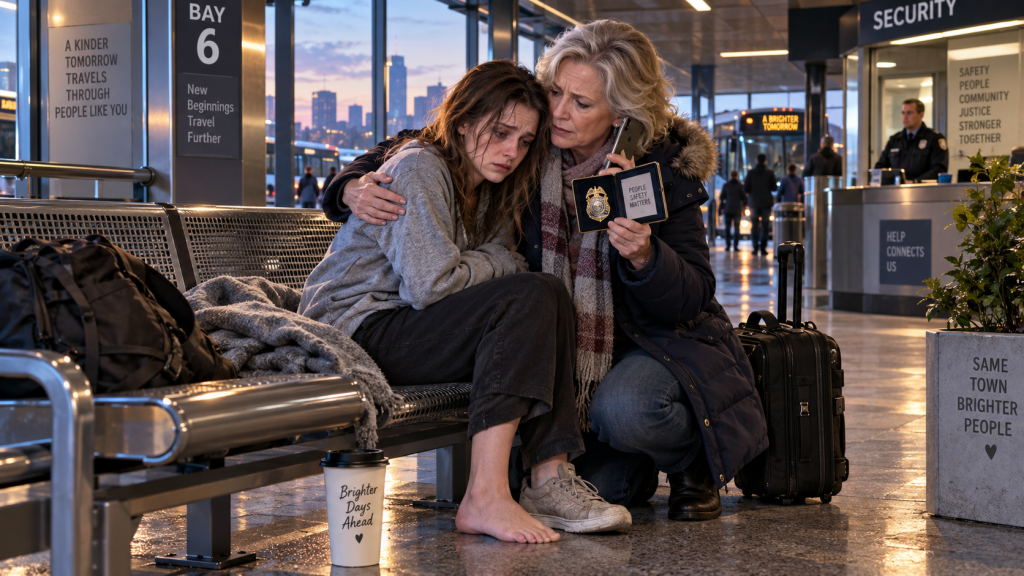
For a second, both of us were back at Bay 6.
Then Chloe bent down.
Fastened the strap.
Stood.
“Okay.”
“You okay?”
“Yes.”
She looked toward Aaron.
“This time I choose where I’m going.”
I nearly ruined my makeup.
At the reception, there was an empty chair beside mine.
For my late husband.
Chloe’s father.
His photograph sat on the table.
I touched it.
“You would have liked this one.”
In my imagination, he replied:
Better than the last one.
I laughed alone.
People probably thought grief had finally made me strange.
Maybe it had.
Chloe became stepmother to Lucy.
She was terrified.
Not because she didn’t love the child.
Because she understood responsibility.
One night, she called me.
“Mom, Lucy said she hates me.”
“How old is she?”
“Nine.”
“Congratulations.”
“That’s not helpful.”
“She also told Aaron she hates broccoli.”
“Mom.”
“What happened?”
Chloe explained.
Rules.
Homework.
Bedtime.
Ordinary conflict.
Then she said:
“I don’t want to become controlling.”
I understood immediately.
“Having boundaries isn’t what Marcus did.”
“I know.”
“Do you?”
Silence.
I continued.
“Marcus didn’t hurt you because he had expectations.”
“He hurt you because when you exercised your own rights, he treated your refusal as something he was entitled to override.”
Chloe breathed.
“You can tell a nine-year-old to go to bed.”
“Even if she hates me?”
“Especially then.”
She laughed.
Years later, Lucy called Chloe “Mom” for the first time.
Accidentally.
Then froze.
Chloe cried in the pantry for twenty minutes.
Aaron called me.
“What do I do?”
“Leave her alone.”
“She’s sobbing.”
“Happy sobbing?”
“I think.”
“Then definitely leave her alone.”
He did.
Chloe never had biological children.
Not because she couldn’t.
Because she eventually decided she didn’t want to.
That was another choice people tried to interrogate.
After everything you’ve been through, don’t you want a family of your own?
She hated that sentence.
Lucy was her family.
Aaron was her family.
I was her family.
Blood is one way people become family.
Not the only one.
By the time Lucy graduated from college, she introduced Chloe as:
“My mom who makes spreadsheets for vacations.”
Perfect.
The first Thanksgiving Chloe hosted after marrying Aaron terrified her.
She didn’t tell me until I arrived.
I found her standing in the kitchen staring at the turkey.
“You okay?”
“Yes.”
Lie.
“Chloe.”
She put down the spoon.
“I don’t know if I can do this.”
“Cook?”
“Thanksgiving.”
Ah.
The table was beautiful.
Not Sylvia beautiful.
Chloe beautiful.
Mismatched plates.
Flowers from the grocery store.
A pie leaning suspiciously to one side.
Orange napkins.
I stared at them.
“You bought orange napkins.”
She looked down.
Then laughed.
“I didn’t even realize.”
“Want me to throw them away?”
“No.”
She touched one.
“They’re napkins.”
Yes.
They were.
Just napkins.
Aaron entered carrying potatoes.
“Why are both of you crying?”
“Napkins.”
He stared.
“I married into a very strange family.”
“Correct.”
We ate.
Nobody sat in anyone else’s place.
There were no assigned seats.
That had been Chloe’s rule.
“Sit wherever.”
Lucy sat beside me.
Aaron carved the turkey badly.
Chloe took the knife away.
“You’re butchering it.”
“It’s already dead.”
“Give me that.”
Everyone laughed.
Halfway through dinner, the doorbell rang.
Chloe froze.
I saw it.
Tiny.
Almost invisible.
Her hand tightened around her fork.
Aaron noticed too.
“I’ll get it.”
It was a neighbor.
She had made too much pie.
Nothing else.
The door closed.
Chloe breathed.
Then continued eating.
Healing.
Not forgetting the doorbell.
Continuing after it.
Later that evening, she and I washed dishes.
“Mom?”
“Yes?”
“Do you remember what Sylvia said?”
“Which thing?”
“That Rebecca would be sitting where I used to sit.”
“Yes.”
Chloe rinsed a plate.
“I used to think that’s what hurt most.”
“The chair?”
“Yes.”
“What do you think now?”
She looked around.
Aaron and Lucy were laughing in the living room.
“No one can take your place if your place isn’t a chair.”
I smiled.
“Very philosophical.”
“I’m serious.”
“I know.”
She dried her hands.
“My place is wherever I am allowed to be myself without being punished for it.”
I looked at her.
“That took me a long time.”
“Worth learning.”
She hugged me.
“Thanks for coming to get me.”
The sentence knocked the breath out of me.
I pulled back.
“What?”
“At the terminal.”
“Chloe.”
“I never thanked you.”
“You didn’t need to.”
“I know.”
She smiled.
“Still.”
I touched her face.
“You called.”
“No, I didn’t.”
I froze.
She was right.
Marcus called.
Come pick up your garbage.
I closed my eyes.
“He called.”
“Yes.”
“You came because he called.”
“Yes.”
“What if he hadn’t?”
The question haunted us both for a second.
Then I remembered the security guard.
The bus driver.
Morning passengers.
Someone likely would have found her.
But likely is a terrible word when you love someone.
“I don’t know.”
Chloe nodded.
Then said:
“But you came.”
“Yes.”
“That’s what matters.”
She hugged me again.
Years passed.
My hair turned completely white.
The ten-year-old SUV became a sixteen-year-old SUV.
Chloe begged me to replace it.
“No.”
“It makes noises.”
“So do I.”
“The transmission is dying.”
“So am I.”
“Mom!”
“Eventually.”
She bought me a new SUV for my seventy-fifth birthday.
I was furious.
Then I drove it.
Heated seats.
I forgave her immediately.
She kept the old SUV.
“Why?”
I asked.
“Sentimental.”
“It’s a car.”
“It brought you to Bay 6.”
I became quiet.
“You remember that?”
“I remember waking in the hospital and asking how you got there.”
She smiled.
“You said, ‘I drove.’”
“That sounds like me.”
“It does.”
The old SUV stayed in her garage for three years until Aaron finally convinced her that sentiment did not improve brake lines.
They sold it to a mechanic.
Chloe cried.
Then laughed at herself.
“It’s a car.”
“Yes.”
“Why am I crying?”
“Because it was never only a car.”
She nodded.
Then let it go.
I retired twice in my life.
The first time from federal service.
The second from being the woman everyone called when something went wrong.
That retirement was harder.
Age forced it.
My knees.
My heart.
My eyesight.
Eventually, Chloe began driving me to appointments.
She carried my medicine.
The reversal was not lost on either of us.
One morning, as she helped me into her car, I said:
“This feels familiar.”
“What?”
“You carrying my medication.”
She froze.
Then smiled.
“Pack what you need.”
My throat tightened.
Those had been my words at another time—
No.
That belonged to another family story.
But the sentiment was ours too.
Family repeats care in different forms.
The strongest person changes depending on the year.
At eighty, I finally gave Chloe the lockbox.
We sat at my kitchen table.
“What is this?”
“You know.”
“The famous box?”
“Don’t be dramatic.”
“You opened it at a bus terminal on Thanksgiving.”
“You’re never letting that go.”
“No.”
She opened it.
Inside was the badge.
Old credentials.
Photographs.
A few case mementos I probably should have thrown away decades earlier.
Chloe touched the badge.
“So this is it.”
“Yes.”
“The thing Marcus didn’t know.”
“Yes.”
She smiled.
“Can I tell you something?”
“What?”
“I’m glad he didn’t know.”
“Why?”
“Because if he had, maybe he would’ve been more careful.”
I stared.
She continued.
“Maybe he would’ve hidden things better.”
True.
“Maybe he would’ve treated me differently because he feared you.”
Her eyes met mine.
“I don’t want the lesson to be that people should treat women well because their mothers might be powerful.”
My throat tightened.
“What should the lesson be?”
“That they should treat women well because women are people.”
I smiled.
“Better lawyer than me.”
“Engineer.”
“Tragic waste.”
She laughed.
Then held the badge out.
“Do you want it back?”
“No.”
“What should I do with it?”
“Whatever you want.”
She thought.
Then placed it back into the box.
“I’ll keep it.”
“For sentimental reasons?”
“No.”
“Why?”
“To remind me that the badge wasn’t what saved me.”
I looked at her.
“What did?”
She counted.
“Security cameras.”
One finger.
“The bus driver who remembered the SUV.”
Another.
“The guard who kept the terminal records.”
Another.
“Paramedics.”
Another.
“Doctors.”
Another.
“Detective Bennett.”
Another.
“My stupid phone recording.”
Another.
“Benjamin the goldfish.”
I laughed.
“Obviously.”
“And you.”
She touched my hand.
“Mostly you coming.”
I shook my head.
“No.”
“Mom.”
“You saved yourself too.”
She smiled.
“I know.”
Good.
She knew.
That was what I wanted.
When I was eighty-three, Detective Nora Bennett retired.
Chloe and I attended her party.
She recognized us immediately.
“Bay 6.”
Chloe laughed.
“That’s how you remember us?”
“I remember everybody by locations.”
She hugged Chloe.
Then me.
“You scared the hell out of the first responding officers.”
I looked offended.
“I was extremely professional.”
Bennett laughed.
“You opened a federal badge before they even got there.”
“Context.”
Chloe nearly choked on her drink.
Bennett became serious.
“You did something right, though.”
“What?”
“You backed off.”
I knew exactly what she meant.
“You let us investigate.”
“Yes.”
“A lot of people with your background can’t.”
“I wanted it clean.”
“It was.”
That mattered more than she knew.
Then Bennett turned to Chloe.
“And you?”
“What about me?”
“You look happy.”
Chloe smiled.
“I am.”
“Good.”
That was all.
No discussion of Marcus.
No cases.
No old wounds.
Just:
You look happy.
I am.
Good.
Sometimes an entire ending fits inside three sentences.
Marcus served his sentence and later rebuilt a quieter life.
I knew only what became public or what Chloe chose to tell me.
He never became the powerful executive he imagined himself becoming.
But neither did he spend the rest of his life as a cartoon villain.
He worked.
Completed required programs.
Stayed out of trouble.
Years later, he remarried.
Chloe heard through someone else.
“How do you feel?”
I asked.
She shrugged.
“I hope he’s better to her.”
I studied her.
“That’s it?”
“What am I supposed to do?”
“Throw something?”
“Mom.”
“Old prosecutorial instinct.”
She laughed.
Then:
“I don’t want him miserable forever.”
“No?”
“No.”
She looked out the window.
“I wanted consequences.”
She paused.
“He had them.”
Then:
“I don’t need misery.”
That distinction made me proud.
Not because forgiveness is morally superior.
It isn’t always.
Because Chloe had reached the point where Marcus’s happiness no longer threatened hers.
That is freedom.
Victor’s story ended differently.
His financial crimes had harmed more people than our family.
Employees.
Investors.
Clients.
The federal case documented years of conduct.
He received a substantial sentence.
I read the judgment once.
Then closed it.
I felt no triumph.
Perhaps retirement had softened me.
Or perhaps I had simply spent enough years watching sentencing to understand that justice is rarely joyful.
Necessary.
Sometimes satisfying.
Rarely joyful.
There are victims behind every clean headline.
Families behind every count.
Years behind every number.
I did not toast.
I made tea.
Called Chloe.
Asked about her garden.
That felt healthier.
At eighty-six, I moved into a smaller house near Chloe and Aaron.
She wanted me closer.
I pretended she was controlling.
She pretended not to enjoy the joke.
One afternoon, we unpacked boxes.
She found the orange napkins.
Not the originals.
The ones from her later Thanksgiving.
“You kept these?”
“I keep everything.”
“You yelled at me for keeping the SUV.”
“Different.”
“How?”
“Napkins don’t need brake repairs.”
She sat on the floor.
Then found an old photograph.
Marcus and Chloe.
Wedding day.
Young.
Beautiful.
Hopeful.
She stared for a long time.
“Want me to throw it away?”
I asked.
“No.”
I was surprised.
“Why?”
“Because I was happy that day.”
She touched the photograph.
“I don’t want what he did later to steal that from me too.”
I said nothing.
She continued.
“I loved him.”
“Yes.”
“I meant my vows.”
“Yes.”
“That version of me wasn’t stupid.”
“No.”
She looked at me.
“Right?”
“Absolutely not.”
“She didn’t know.”
“No.”
“She trusted her husband.”
“Yes.”
“That wasn’t a character flaw.”
My eyes filled.
“No, baby.”
She put the photograph back in the box.
Not displayed.
Not destroyed.
History.
That is what healing did for Chloe.
It moved things from the altar to the archive.
Marcus became history.
The terminal became history.
Sylvia became history.
Even the bruises that once seemed to fill every mirror became history.
Not erased.
Placed.
There is mercy in putting the past where it belongs.
My last Thanksgiving at Chloe’s house happened when I was ninety-one.
Yes.
Ninety-one.
I had outlived my husband.
My enemies.
Several judges.
Three cardiologists.
And, to everyone’s surprise, the grocery coupon industry.
Chloe was sixty-two.
Lucy had children of her own.
The house was loud.
Warm.
Messy.
A toddler was under the table.
Someone had burned rolls.
Aaron was arguing with an electric carving knife.
I watched Chloe walk through the room carrying a bowl of potatoes.
Silver in her hair.
Laugh lines around her eyes.
No fear.
No Marcus.
No Sylvia.
No Bay 6.
Just Chloe.
At least, that was what I saw first.
Then one of Lucy’s daughters asked:
“Grandma Chloe, why do you hate bus stations?”
The room went still.
Children have extraordinary timing.
Chloe looked at me.
I raised one eyebrow.
Her choice.
She sat.
“I don’t hate bus stations.”
“You said you do.”
“I said I don’t like one particular bus station.”
“Why?”
Lucy started to intervene.
Chloe stopped her gently.
“It’s okay.”
She looked at her granddaughter.
“When I was younger, someone I trusted treated me very badly and left me there.”
The child’s eyes widened.
“Why?”
“Because I told him no.”
Simple.
True.
Age appropriate.
“What did you do?”
Chloe smiled.
“My mom came.”
The child looked at me.
“Great-Grandma Eleanor?”
“The terrifying one.”
I raised my fork.
“Respect your elders.”
Everyone laughed.
The child asked:
“Did she beat him up?”
“No.”
Chloe laughed.
“She called people whose job was to help.”
Boring.
Perfect.
“Then what?”
“Then I got better.”
The child frowned.
“That’s it?”
Chloe looked around the table.
At Aaron.
Lucy.
Children.
Grandchildren.
Me.
“Yes.”
She smiled.
“That’s it.”
But of course it wasn’t.
Getting better contained years.
Therapy.
Courtrooms.
Tears.
New love.
Old letters.
Two shoes.
Orange napkins.
A stepdaughter.
A wedding.
A garden.
A thousand ordinary mornings.
Children want dragons slain.
Adults eventually learn that sometimes the ending is simply:
Then I got better.
And life continued.
Dinner resumed.
Aaron finally defeated the carving knife.
The toddler emerged from beneath the table holding a dinner roll nobody had given him.
Someone poured wine.
Chloe sat beside me.
“You okay?”
I nodded.
“Cold?”
“No.”
“Tired?”
“Always.”
She put a blanket over my knees anyway.
I looked at her.
“Bossy.”
“Genetic.”
We smiled.
After dinner, while everyone else cleaned, Chloe and I sat near the window.
Snow had started falling.
Soft.
Quiet.
The kind of cold that looked beautiful from inside a warm house.
For a moment, I remembered Bay 6.
Broken streetlight.
Metal bench.
One shoe.
Blue fingers.
Mom.
They hurt me.
Memory arrived.
Then left.
Chloe touched my hand.
“You went somewhere.”
“Yes.”
“Terminal?”
“Yes.”
“Me too.”
We watched the snow.
“Does it still hurt?”
I asked.
She thought.
“Sometimes.”
“Even now?”
“Yes.”
Then:
“But not like it owns the day.”
I nodded.
That was good.
After a while, she asked:
“Mom?”
“Yes?”
“Did you really think your badge was going to terrify everybody?”
I laughed.
“No.”
“You absolutely did.”
“Maybe a little.”
“Arrogant.”
“Federal prosecutor.”
“Retired federal prosecutor.”
“Still counts.”
She leaned her head against my shoulder.
At ninety-one, my shoulder wasn’t particularly comfortable.
She stayed there anyway.
“Do you know what I remember from the hospital?”
“What?”
“Not the detectives.”
“Okay.”
“Not the recording.”
“Okay.”
“Not even finding out about the shares.”
I waited.
“You kept rubbing my hand.”
My throat tightened.
“What?”
“My fingers were cold.”
She looked down at our hands.
“You rubbed them until they warmed up.”
I had forgotten.
She hadn’t.
“That was the part that made me believe I was safe.”
Not the badge.
Not the prosecutor.
Not the call.
Warm fingers.
I cried.
Chloe kissed my temple.
“Hey.”
“Old eyes.”
“Liar.”
“Disrespectful child.”
She laughed.
I looked at my daughter.
Then I understood the mistake I had made in telling the story for years.
I always began with the phone call.
5:02 AM.
Marcus.
Come pick up your garbage.
Then the terminal.
The badge.
The recording.
The federal audit.
The dining room interrupted.
It made a good story.
But it wasn’t the story.
The story was Chloe.
A woman who said no.
A woman who was punished for saying no.
A woman who survived the punishment and refused to let it teach her to say yes when she meant no.
That was the story.
The rest was evidence.
Years after that final Thanksgiving, when my health began failing, Chloe moved me into her home.
I objected.
Naturally.
“I can live alone.”
“You put your cereal in the refrigerator yesterday.”
“It was warm.”
“It was cornflakes.”
“Temperature is subjective.”
“Mom.”
I moved in.
My room overlooked the garden.
On the dresser sat the lockbox.
Chloe had brought it.
“Why?”
“You like your things.”
“I don’t need that.”
“Then ignore it.”
I did.
Mostly.
One night, I woke frightened.
Not sure where I was.
Age can make even familiar rooms briefly strange.
I called:
“Chloe?”
Footsteps.
Immediate.
The door opened.
She appeared in pajamas.
“I’m here.”
I stared.
For a second, she was twenty-eight again.
Then sixty-something.
Then my little girl.
All at once.
“Sorry.”
“Don’t apologize.”
“I woke you.”
“That’s allowed.”
She sat beside me.
I laughed softly.
“What?”
“Nothing.”
“Mom.”
“I was remembering something.”
“What?”
“Bay 6.”
She squeezed my hand.
“Why?”
“You called me.”
“No.”
She smiled.
“Marcus called you.”
“Right.”
I looked at her.
“But you said my name.”
At the terminal.
Mom.
That whisper.
I had heard it thousands of times in dreams.
“I came.”
“Yes.”
She pulled the blanket higher.
“Now I came.”
There it was.
The whole circle.
Not debt.
Not repayment.
Care.
You come when someone you love calls.
Not because they owe you.
Not because one day they’ll return it.
Because love moves toward pain when it can.
Marcus had taught us the opposite.
He moved Chloe away when her existence became inconvenient.
He placed her outside the life he wanted and expected the world to accept his definition of her.
Garbage.
Hysterical.
Difficult.
Obstacle.
Minority shareholder.
Ex-wife.
Problem.
But names given in cruelty do not become identities unless we keep wearing them.
Chloe stopped.
She became herself again.
Engineer.
Daughter.
Friend.
Wife.
Stepmother.
Mother in every way that mattered to Lucy.
Grandmother.
Woman who made terrifying vacation spreadsheets.
Person who still overcooked green beans.
Someone who hated being cold.
Someone who always carried an extra coat in her car.
That last one mattered.
She kept three.
One for herself.
One for passengers.
One “because you never know.”
Every winter, I noticed.
I never commented.
Some acts of healing do not need witnesses.
After I died—
No.
I can’t tell you that part.
So let me end before it.
Let me end with the last Thanksgiving I remember clearly.
Snow outside.
Warm house.
Family everywhere.
Chloe at the table.
No assigned chair.
No one replacing anyone.
Orange napkins.
A turkey Aaron had finally learned to carve.
My old badge locked away in another room where it belonged.
At some point, one of the children spilled cranberry sauce.
Everyone groaned.
Chloe laughed.
Then the little girl looked terrified.
“I’m sorry.”
Chloe immediately knelt beside her.
“It’s okay.”
“But I ruined it.”
“It’s a tablecloth.”
“It won’t come out.”
“Then we’ll buy another.”
The child looked shocked.
Chloe smiled.
“People matter more than rugs and tablecloths.”
I froze.
So did she.
For one second, Sylvia’s five-thousand-dollar Persian rug entered the room like a ghost.
That brat destroyed it.
Then Chloe looked at me.
I looked at her.
And we both started laughing.
Nobody else understood.
We laughed until Chloe cried.
Until I cried.
Until Aaron asked whether he should be worried.
“No.”
Chloe wiped her eyes.
“Everything’s fine.”
And it was.
That sentence had once been a lie people used to hide terrible things.
Now it was true.
Everything was fine.
Not perfect.
Not untouched.
Fine.
The child helped clean the cranberry sauce.
The stain remained faintly pink.
Chloe kept the tablecloth.
Years later, she told me she liked the stain.
“Why?”
“Proof.”
“Of what?”
“That something can be marked and still belong at the table.”
I had no clever response to that.
My daughter had become wiser than me.
That is every good parent’s goal, though few of us admit it.
So this is how I remember Thanksgiving now.
Not Bay 6.
Not the cold.
Not Marcus’s voice.
Not Sylvia’s rug.
Not Victor’s audit.
Not the warrant arriving while a turkey cooled beneath expensive lights.
I remember a stained tablecloth.
A warm room.
My daughter laughing.
Because justice mattered.
Consequences mattered.
Evidence mattered.
My old career mattered.
But none of those things were the ending.
The ending was that Chloe never became what Marcus called her at 5:02 that morning.
Garbage.
She never had been.
She was a woman whose husband confused possession with marriage.
A woman whose mother-in-law confused obedience with worth.
A woman whose business partners confused ownership with something they could pressure out of her.
They tried to remove her from the table.
Instead, she built another table.
Larger.
Warmer.
No assigned seats.
And years later, when a child spilled something expensive, Chloe did not protect the furniture.
She protected the child.
That is how cycles end.
Not with speeches.
With different choices in familiar moments.
Marcus had once believed my daughter could be discarded before breakfast and replaced before dinner.
He was wrong.
Sylvia believed money and appearances could decide who belonged.
She was wrong.
Victor believed signatures could be obtained if enough pressure surrounded the person holding the pen.
He was wrong.
And I—
I had been wrong about something too.
At 5:47 that Thanksgiving morning, kneeling beside my unconscious daughter, I opened an old lockbox and took out a badge.
For one fierce second, I thought:
Now they will learn who I am.
Years later, I understood the better thought would have been:
Now I will remember who she is.
Chloe.
My daughter.
Not a victim before she was a person.
Not evidence before she was a woman.
Not a shareholder before she was a human being.
She did not need my old title to make what happened to her serious.
She did not need my connections.
She did not need Marcus destroyed.
She needed warmth.
Medical care.
Evidence preserved.
People who believed her.
A lawful process.
Time.
Therapy.
Choice.
And a mother who came when called.
That was all I really gave her.
The rest, Chloe did herself.
The badge eventually tarnished.
My credentials expired.
The cases I prosecuted became old citations in databases nobody read.
People I once feared in court died.
Judges retired.
Buildings changed names.
Power fades.
Titles disappear.
But there is a kind of authority age cannot retire.
The authority to say:
I believe you.
Come home.
You do not have to sign.
You do not have to forgive.
You do not have to protect the people who hurt you.
You are allowed to leave.
You are allowed to begin again.
You still belong.
Those were the only credentials Chloe ever needed from me.
So when I remember that morning, I don’t picture myself holding the badge anymore.
I picture my hand around Chloe’s blue fingers.
Rubbing warmth back into them.
Slowly.
Patiently.
Until she squeezed once.
Barely.
But enough.
Mom.
I’m here.
Those were the words that mattered.
Not:
I’m a retired federal prosecutor.
Not:
I know powerful people.
Not:
I’ll destroy them.
Just:
I’m here.
And decades later, in a warm house on another Thanksgiving, my daughter sat beside me while snow covered the roads outside.
She had both shoes.
A coat hung by the door.
Her phone rested safely beside her plate.
Her name remained attached to her own life.
Nobody had papers waiting for her signature.
Nobody was deciding where she was allowed to sit.
Nobody was replacing her.
And when dinner began, Chloe looked around the table and said the words she had once been denied:
“Everybody find a seat.”
There were plenty.
There always would be.
Because in the family she built afterward, nobody had to disappear so someone else could belong.
That was justice too.
Maybe the kind that lasted longest.
THE END STORIES! THANK YOU FOR READING GOOD LUCK !❤️
Related Posts