➡️ PART 3 ENDING PART ➡️
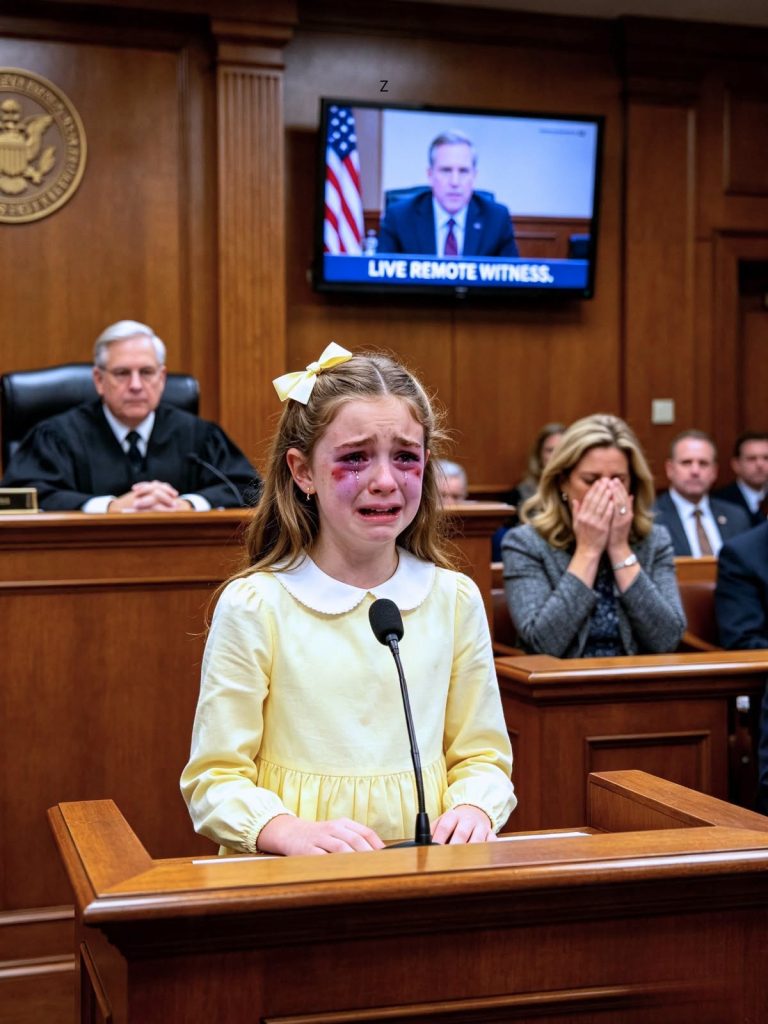
For one terrible second, I forgot we were standing inside a courtroom.
I forgot the judge.
The attorneys.
The bailiff.
The rows of wooden benches behind us.
All I could hear was my ten-year-old daughter whispering:
“He was talking about what happens to your money after Grandma dies.”
My money.
After Grandma dies.
My mother was seventy-two years old.
Alive.
Healthy enough to garden every morning and complain about the squirrels digging up her tulip bulbs.
Daniel knew that.
Everyone in our family knew that.
So hearing Lily speak about my mother’s death as if it were already a financial event someone had planned around made something cold move through me.
“Lily,” I whispered, “what do you mean?”
She looked at the judge instead of me.
Maybe that was easier.
Maybe she understood that if she looked at her mother, she might start crying.
“I heard Dad talking.”
Daniel stood again.
His attorney grabbed his sleeve.
“Sit down.”
“She’s a child.”
Daniel’s voice was shaking.
“This is ridiculous.”
The judge’s expression hardened.
“Mr. Mercer, you will sit down.”
“She doesn’t understand what she heard.”
“Then you should have no objection to the court determining what she heard.”
Daniel sat.
I had been married to that man for fourteen years.
I knew every version of his face.
The amused Daniel.
The irritated Daniel.
The charming Daniel.
The exhausted Daniel.
The Daniel who smiled at strangers when he wanted something.
The Daniel who became silent when he was angry with me because silence was easier to deny than cruelty.
I had never seen this Daniel.
Afraid.
The judge looked toward Lily.
“Do you still have the recording?”
She nodded.
“Is it on the same phone?”
“Yes.”
My attorney, Rachel Kim, stood.
“Your Honor, before anything further is played, may I suggest we address how this evidence was obtained and whether continuing in open court is appropriate, especially given the child’s age?”
I loved Rachel for that.
Because everyone else was looking at the phone.
She was looking at Lily.
The judge agreed.
The courtroom was cleared except for the attorneys, court staff, Daniel, me, and Lily.
Then the judge asked that a court-appointed child advocate be brought in.
We waited.
Nobody spoke.
Lily sat beside me.
I wanted to ask a thousand questions.
I asked none.
Instead, I whispered:
“Are you okay?”
She shrugged.
That tiny movement nearly broke me.
Children should not have to shrug when asked whether they are okay in a courtroom.
I took her hand.
“You are not in trouble.”
Her eyes filled.
“Promise?”
“Promise.”
“Even if I wasn’t supposed to record?”
“Whatever happens with the recording is for the adults to figure out.”
I squeezed her hand.
“You are not responsible for fixing this.”
She looked at me.
“But Dad was lying.”
“I know.”
“And nobody believed you.”
My throat closed.
“Some people did.”
“Not enough.”
Ten years old.
Not enough.
I looked away before she could see what that sentence did to me.
For months, Daniel had described me as emotionally unstable.
He told friends I was paranoid.
He told his family I had become impossible to live with.
In court filings, his attorney had described my reactions to our separation as “volatile.”
The word had followed me everywhere.
Volatile.
I had cried when I learned he wanted a divorce.
Volatile.
I had questioned unexplained withdrawals from our account.
Paranoid.
I had become upset when Daniel changed passwords.
Controlling.
I had asked why financial statements disappeared from our home office.
Obsessive.
Every reasonable question became evidence that I was unreasonable for asking it.
And the cruelest part was that after enough months, I had begun asking myself whether he was right.
Maybe I was too emotional.
Maybe I was remembering things incorrectly.
Maybe exhaustion had made me suspicious.
Maybe I really was becoming someone I did not recognize.
Then my daughter brought a phone into court.
And suddenly Daniel was the one asking everyone not to listen.
The child advocate arrived.
Her name was Dr. Lena Morris.
She introduced herself to Lily, then asked the judge for permission to speak with her privately before anything else happened.
The judge agreed.
Lily looked at me.
“Do I have to?”
Dr. Morris answered before I could.
“You can tell me if you’re uncomfortable.”
Lily considered her.
“Will you tell Dad what I say?”
“Not privately as his helper, no. I work for the court, not your dad or your mom.”
Lily nodded.
Then she left with her.
The door closed.
Daniel turned toward me.
“What have you done?”
I stared at him.
For months, I had answered that kind of accusation.
Defended.
Explained.
Apologized.
Not this time.
“Nothing.”
“You’ve poisoned her against me.”
“No.”
“You expect anyone to believe she did this alone?”
Rachel touched my arm.
A reminder.
Don’t engage.
But I looked at Daniel.
“I didn’t know the videos existed.”
“Convenient.”
His attorney whispered sharply:
“Daniel.”
He ignored him.
“You’ve been telling her things.”
“No.”
“She knows about the divorce.”
“She lives in our house.”
“You made her afraid of me.”
That one hurt.
Because I had spent months doing the opposite.
When Lily asked why Dad was sleeping in the guest room, I said:
“Adults are having problems.”
When she asked whether he still loved us, I said:
“Your father loves you.”
When Daniel moved into an apartment, I helped Lily choose photographs for her bedroom there.
I never told her about the money.
Never showed her filings.
Never called him names.
I had protected her relationship with him while he was telling attorneys I was unstable.
“You did that yourself.”
I said.
His face changed.
Rachel quietly said:
“That’s enough.”
She was right.
I stopped.
Forty minutes later, Dr. Morris returned alone.
My heart jumped.
“Where’s Lily?”
“With a court officer having a snack.”
That was somehow the most comforting sentence I’d heard all morning.
A snack.
Normal.
Child.
Dr. Morris addressed the judge.
She said Lily appeared to have made the recordings independently.
According to Lily, she had begun recording because her parents were arguing more frequently and because her father had repeatedly told her that her mother “forgot things.”
That sentence hurt in a completely different way.
Daniel had not merely been telling adults I was unstable.
He had been planting the idea with our child.
Dr. Morris continued.
Lily said she became frightened that I really was forgetting conversations.
So she started recording things.
Not to trap Daniel.
To check reality.
I covered my mouth.
My daughter had been ten years old and using a phone to determine which parent was telling the truth.
No child should have to become an archivist of their own home.
The judge asked whether Lily understood what she had recorded.
“Some of it.”
Dr. Morris replied.
“But not all. And I strongly recommend that she not be questioned directly by either parent about the contents.”
I nodded before the judge even looked at me.
Daniel said nothing.
The judge allowed the second recording to be reviewed.
Lily was not brought back into the room.
Good.
Rachel sat beside me.
“Breathe.”
I did.
The video began.
The image showed darkness.
Mostly ceiling.
Lily had apparently left the phone partly hidden behind something on a bookshelf.
Daniel’s voice came from the kitchen.
Another man’s voice answered.
I recognized it from the first recording.
His name, I would later learn, was Victor Hale.
Daniel’s longtime financial adviser.
At first, they talked about ordinary things.
A property.
An account.
Attorney fees.
Then Victor said:
“You’re counting on money you don’t control.”
Daniel laughed.
“I will.”
“You don’t know that.”
“Her mother has already structured most of it.”
My stomach tightened.
Victor lowered his voice.
“And if Claire fights you?”
Claire.
Me.
Daniel answered:
“Then she looks unstable.”
The room became completely still.
Victor said:
“You keep saying that like it’s automatic.”
“It practically is.”
Daniel sounded relaxed.
Confident.
“She’s emotional. Her mother knows it. Everybody knows it.”
I felt Rachel’s hand close over mine.
Then Daniel said:
“Once the divorce gets ugly enough, she’ll unravel. She always does when she thinks she’s losing control.”
My eyes filled.
Victor asked:
“And the trust?”
Trust.
I turned toward Rachel.
Her face had gone still.
Daniel answered:
“Her mother’s estate plan leaves Claire a controlling interest in the family properties.”
My mother owned several small rental properties.
Nothing enormous.
But over forty years, she and my father had built something meaningful.
After Dad died, Mom kept them.
I knew someday my brother and I would inherit something.
I had never asked how much.
Victor said:
“You don’t get inheritance in the divorce.”
“I know.”
Daniel sounded irritated.
“I’m not an idiot.”
“Then what exactly is the plan?”
A pause.
Then Daniel said the sentence that ended whatever remained of my marriage inside me.
“I don’t need the inheritance divided now. I need leverage over Claire later.”
My entire body went cold.
Victor said:
“Through Lily?”
Daniel hesitated.
Then:
“Through custody.”
I stopped breathing.
Rachel whispered:
“Oh my God.”
Daniel’s attorney closed his eyes.
On the recording, Victor said:
“Don’t do that.”
“I didn’t say I’d do anything.”
“You just did.”
“I said if Claire wants flexibility later, she’ll have to be reasonable.”
“Reasonable about what?”
“The properties. The money. Whatever comes.”
Victor’s voice became firmer.
“Daniel, your daughter is not collateral.”
Daniel laughed softly.
“You’re being dramatic.”
No.
He was.
Our daughter.
Collateral.
I looked at him across the courtroom.
He stared at the table.
The recording continued.
Victor said:
“And the psychiatric evaluation?”
Daniel replied:
“My attorney can request one if she gives us enough.”
“Enough what?”
“Outbursts. Messages. Anything.”
“You’re provoking her?”
Silence.
Then Daniel said:
“I’m documenting her.”
Victor responded:
“That wasn’t my question.”
Another silence.
Longer.
Then Daniel said:
“Sometimes people reveal themselves when you push the right buttons.”
I began crying.
Not loudly.
Not dramatically.
Just tears.
Months of confusion suddenly had architecture.
The late-night arguments he started, then abruptly became calm during.
The text messages where he made accusations that seemed designed to force me into long explanations.
The financial questions he refused to answer until I became frustrated.
The time he told me he was taking Lily out of state and then called me controlling when I asked where.
The conversations he summarized afterward in ways that barely resembled what happened.
He had not invented every argument.
I had been angry.
I had shouted twice.
I had said things I regretted.
But he had been collecting my worst moments while quietly helping create them.
The recording ended.
Nobody moved.
The judge looked toward Daniel.
His voice was measured.
“Mr. Mercer, I strongly suggest you follow your counsel’s advice before speaking.”
Daniel’s attorney leaned toward him.
This time, Daniel listened.
The judge did not make some dramatic declaration that I had won.
Real courtrooms do not work like that.
Evidence has rules.
Context matters.
Recordings have to be authenticated.
Financial documents have to be examined.
Children have to be protected.
But the atmosphere changed.
For months, the question had been:
What is wrong with Claire?
Now there were questions about Daniel.
Specific ones.
Documented ones.
And questions are powerful when someone has spent months controlling the answers.
The judge ordered preservation of the phone.
The financial documents were copied.
Neither parent was permitted to question Lily about the evidence.
Temporary custody arrangements remained in place for forty-eight hours while the court reviewed the new information.
Daniel was ordered not to remove funds from identified accounts.
And the previously scheduled financial disclosure review was expanded.
The hidden $180,000 mattered.
But not in the way I first thought.
It wasn’t all marital money.
That would have been simpler.
Some of it came from a consulting business Daniel had created without telling me.
Some was money transferred from accounts tied to his business interests.
Some required forensic tracing.
What mattered immediately was that he had failed to disclose it accurately while accusing me of financial irrationality.
When court ended, I wanted Lily.
Nothing else.
Dr. Morris brought her to me.
She had eaten crackers and half a granola bar.
There were crumbs on her sweater.
I nearly cried because of the crumbs.
Ordinary.
Ten years old.
Still.
She looked at me.
“Am I in trouble?”
“No.”
“Is Dad?”
I crouched.
“That’s for the adults to figure out.”
“Did the video help?”
That question broke my heart.
I took both her hands.
“Listen to me.”
She looked frightened.
“You are not responsible for helping me win anything.”
“But—”
“No.”
I kept my voice gentle.
“You are not my lawyer.”
A tiny smile.
“You are not my detective.”
Another tiny smile.
“You are not responsible for proving whether I’m good or Dad is bad.”
Her eyes filled.
“I just didn’t want them to think you were crazy.”
I closed my eyes.
Then pulled her against me.
“I know.”
She cried into my shoulder.
“I heard him telling Grandma you forget things.”
My eyes opened.
“What?”
“He called Grandma.”
“When?”
“A lot.”
I felt anger rise.
I pushed it down.
Not because it was wrong.
Because Lily did not need to carry it.
“Okay.”
I kissed her hair.
“You did what you thought you had to do.”
“Are you mad?”
“No.”
“Dad will be.”
“That is not your responsibility.”
She cried harder.
I held her.
There are moments when motherhood is not fixing.
It is becoming a wall between your child and a burden that never should have reached them.
That day, I became the wall.
Not against Daniel forever.
Against adult responsibility.
Lily had carried enough.
My mother came to my house that evening.
Her name was Margaret.
She walked in with fury on her face.
Not at me.
At Daniel.
“What did he tell you?”
I asked.
She stopped.
“About what?”
“Me forgetting things.”
Her face changed.
That was answer enough.
“Mom.”
She sat down.
“Daniel called me several times.”
“What did he say?”
“That you were under stress.”
“And?”
“That you were becoming forgetful.”
“And?”
“That you had started making accusations about money.”
I laughed bitterly.
“What did you tell him?”
“That you were going through a divorce.”
“Did you believe him?”
Mom looked at me.
“Not exactly.”
“What does that mean?”
“I wondered.”
There it was.
I turned away.
“Claire.”
“You wondered if I was losing my mind.”
“No.”
“You wondered.”
“Yes.”
She whispered it.
I cried.
Mom came closer.
“I am sorry.”
“Why didn’t you call me?”
“I did.”
“Not about that.”
She had no answer.
“Why didn’t you say, ‘Daniel told me you’re forgetting things. Is something happening?’”
“I didn’t want to upset you.”
I laughed.
That old sentence.
People hide things from you because they don’t want to upset you.
Then the hidden thing becomes ten times larger.
“Mom, what trust was Daniel talking about?”
She became very still.
“Your father’s trust.”
“What about it?”
“You and Michael are beneficiaries.”
Michael was my younger brother.
“Controlling interest in what?”
“The properties.”
“How much?”
She named the properties.
Seven.
I knew about five.
Two I had not realized she still owned.
Combined value was significant.
Not private-jet money.
Not dynasty money.
Enough to distort someone who had begun measuring marriage in leverage.
“Why didn’t I know?”
“Because it isn’t yours yet.”
That answer was exactly right.
My mother’s assets were hers.
Her death was not my financial plan.
I felt sick thinking Daniel had treated it like one.
“Does Daniel know the details?”
“He shouldn’t.”
“Who does?”
“My attorney. Michael. You knew generally.”
“And?”
Mom’s face changed.
“Daniel helped me organize tax documents two years ago.”
There it was.
Access.
Not entitlement.
Access.
He had seen enough.
Mom started crying.
“I trusted him.”
“So did I.”
We sat together.
Two women embarrassed by the same man.
Then I said:
“Don’t change your estate plan because of this.”
She stared at me.
“What?”
“Don’t punish him by rearranging my future.”
“Claire—”
“It’s your money.”
“But Daniel—”
“Is divorcing me.”
I took her hand.
“Do whatever you would do if he didn’t exist.”
She looked at me for a long time.
Then nodded.
That mattered.
I refused to let Daniel’s greed make my mother’s life revolve around him too.
The next weeks were brutal.
Not cinematic.
Brutal.
Lawyers.
Documents.
Interviews.
Forensic accounting.
Custody evaluations.
Therapy appointments for Lily.
Work.
Laundry.
School lunches.
Life continued to demand ordinary competence while extraordinary things were happening.
I learned that survival often looks like answering emails while your heart is broken.
The $180,000 account became clearer.
Daniel had hidden approximately $126,000 that should have been disclosed as part of marital financial discovery.
The rest involved business funds and disputed classification.
My attorney never promised me all of it.
Good attorneys do not promise outcomes.
Rachel promised documentation.
That was enough.
Victor Hale cooperated.
That surprised me.
He turned over emails.
Notes.
Messages.
He had repeatedly warned Daniel against involving custody in financial leverage.
He had not known about every hidden transfer.
When he learned the extent of what Daniel had been doing, he ended their professional relationship.
I hated him at first because his voice was on the recording.
Then evidence complicated my anger.
He had not been helping Daniel target me.
He had been telling him to stop.
That distinction mattered.
Truth does not become cleaner just because you are hurt.
Daniel had enough responsibility without borrowing anyone else’s.
The envelope Lily found contained copies of the hidden account statements and an unsigned draft agreement concerning Daniel’s consulting business.
The signature the judge had asked about was on an authorization Daniel claimed I had approved.
I had not.
But even that became more complicated.
The signature was not a crude forgery.
It was a copied electronic signature from an older business document.
A forensic document examiner later concluded it had been inserted digitally.
Daniel’s attorney stopped calling the envelope irrelevant.
The court ordered additional review.
Then came the hardest part.
Custody.
I wanted to say:
Lily stays with me.
Forever.
He did this.
He used her.
He frightened her.
I am her mother.
Protect her.
But parenting does not become simple because the other parent has behaved badly.
Daniel loved Lily.
That truth made me angry.
Because I wanted clean categories.
Monster.
Victim.
Good parent.
Bad parent.
Life refused.
Daniel had taken her camping.
Read her bedtime stories.
Built a ridiculous cardboard castle for her eighth birthday.
Stayed beside her all night when she had pneumonia.
He also spoke about using custody as leverage.
He undermined her trust in me.
He created an environment where she felt compelled to record adults.
Both sets of facts existed.
The child advocate recommended temporary supervised contact while Daniel underwent evaluation and parenting counseling.
I agreed.
Daniel fought it.
Then lost that argument.
For three months, he saw Lily under structured conditions.
She hated it.
Not because she wanted more time with him.
Because it made her feel as if she had caused something.
Therapy helped.
Slowly.
Her therapist, Dr. Simone Ellis, told me something I wrote down.
“Children often believe information creates consequences. We have to teach Lily that Daniel’s choices created the consequences. Her disclosure only revealed them.”
I repeated that to Lily.
Again.
Again.
Again.
Until one day she rolled her eyes.
“I know, Mom.”
I almost cried from happiness.
Eye rolling.
Normal.
Ten.
Eleven by then.
Daniel changed too.
Not immediately.
At first, he was furious.
At me.
At Lily.
At Victor.
At his lawyer.
At the judge.
At everyone except himself.
His first supervised visit with Lily lasted twenty-three minutes.
She refused to speak after he asked:
“Why did you record Daddy?”
The supervisor ended the visit.
That night, Daniel emailed me.
This is what you’ve done to her.
I forwarded it to Rachel.
I did not respond.
That was new.
Old Claire would have written six paragraphs.
Explaining.
Defending.
Correcting.
Trying to make him understand.
New Claire learned that some messages are not invitations to communication.
They are hooks.
You do not have to bite.
Months passed.
Daniel changed attorneys.
His second attorney apparently told him something the first had been trying to tell him for months:
Stop fighting facts.
That was when repair began.
Not reconciliation.
Repair.
He admitted the hidden funds.
Not all wrongdoing.
Not immediately.
But enough to begin settlement.
He stopped claiming I was mentally unstable.
He agreed to a formal correction in the custody filings.
That mattered enormously.
Not because a document could erase what he said.
Because lies preserved in legal records can outlive relationships.
I wanted the correction.
I got it.
He attended parenting counseling.
At first because the court required it.
Later, according to Dr. Morris, because he began to understand what he had done to Lily.
One afternoon, nearly nine months after the courtroom recording, Daniel asked through the parenting coordinator whether he could write Lily a letter.
The therapist reviewed it first.
So did the coordinator.
I did not.
That was deliberate.
His apology to his daughter did not need my editing.
Lily read it in therapy.
Afterward, she came home quiet.
“Dad said it wasn’t my fault.”
I nodded.
“How do you feel?”
“I don’t know.”
“That’s allowed.”
“He said he shouldn’t have talked about you like that.”
“Okay.”
“And he said grown-up problems shouldn’t have been around me.”
“Okay.”
“He wants me to forgive him.”
I became careful.
“Did he say you had to?”
“No.”
“Good.”
“Do I?”
“No.”
Her eyes widened.
“You don’t?”
“Forgiveness isn’t homework.”
She smiled.
“What do I do?”
“Whatever is honest.”
She thought.
“I miss him.”
“I know.”
“And I’m mad.”
“I know.”
“Can both happen?”
“Yes.”
That became one of the most important truths of our house.
You can miss someone and be angry.
You can love someone and need distance.
You can forgive someone and still require change.
You can refuse forgiveness and still move forward.
Human feelings are not court verdicts.
They do not have to choose one side.
The divorce settled fourteen months after that courtroom morning.
Daniel and I did not have a dramatic trial.
Once the financial evidence became clear, both attorneys pushed toward settlement.
The hidden marital funds were accounted for.
I received my share of the marital estate.
Daniel retained his business interests with adjustments.
My mother’s trust remained untouched because it had never belonged in our divorce.
That point mattered to me.
Her money was not my victory.
The court incorporated financial disclosure findings into the final order.
Custody remained structured.
I had primary physical custody.
Daniel received gradually expanding parenting time contingent on compliance with counseling and the parenting plan.
No parent was permitted to discuss litigation, inheritance, or financial disputes with Lily.
Good.
The divorce papers arrived on a Thursday.
I expected to feel free.
Instead, I sat on my kitchen floor and cried.
Fourteen years.
People like to describe divorce as liberation when the marriage was unhealthy.
Sometimes it is.
It is also grief.
I had loved Daniel.
That fact did not become stupid because he hurt me.
We had danced at our wedding.
We had chosen Lily’s name together.
We had once driven six hours through a snowstorm because we thought spending Christmas apart would be unbearable.
Those memories did not disappear because later memories were uglier.
I grieved the marriage I had.
I grieved the marriage I thought I had.
I grieved the marriage I kept hoping we could become.
Three different funerals.
No body.
Rachel called that evening.
“It’s final.”
“I know.”
“You okay?”
“No.”
“Good answer.”
I laughed through tears.
“Thank you.”
“For what?”
“Believing me.”
She became quiet.
“Claire, I believed the evidence.”
I smiled.
That was exactly why I trusted her.
Not because she had chosen me emotionally.
Because she had looked at facts.
“I know.”
Then she added:
“But for what it’s worth, I believed you deserved to be heard before the evidence arrived too.”
That stayed with me.
Lily was eleven when the divorce ended.
I did not tell her we won.
Because she had not been a weapon in a competition.
I said:
“The divorce is finished.”
She looked relieved.
“Do we have to go back to court?”
“Probably not for a while.”
“Good.”
Then:
“Can we order pizza?”
Children understand priorities better than adults.
We ordered pizza.
My mother came over.
Michael too.
We ate in the living room.
No champagne.
No divorce cake.
Just dinner.
At one point Mom raised her soda.
“To boring years.”
I laughed.
“To boring years.”
I wanted them desperately.
We got some.
Not all.
Enough.
Daniel’s relationship with Lily rebuilt slowly.
For the first year, she never stayed overnight.
Then one night.
Then alternate weekends.
Not because I decided he deserved it.
Because professionals observed improvement and Lily wanted more contact.
That distinction mattered.
Her relationship with her father belonged to her.
My job was safety.
Not revenge.
The first time she packed an overnight bag again, I felt sick.
She noticed.
“Mom.”
“Yeah?”
“You’re doing the face.”
“What face?”
“The pretending-you’re-not-worried face.”
I laughed.
Apparently my daughter knew me too well.
“I am worried.”
“Do you want me not to go?”
Every selfish part of me screamed yes.
I crouched.
“No.”
“Really?”
“Yes.”
“Why?”
“Because wanting to go matters.”
She hugged me.
“I’ll call.”
“You don’t have to check on me.”
“I know.”
“Have fun.”
She did.
That hurt.
And healed.
Both.
Daniel eventually apologized to me.
Not during settlement.
Not through attorneys.
Three years later.
Lily was fourteen.
We were sitting in the school parking lot after a parent-teacher conference.
Daniel said:
“Can I tell you something?”
I almost said no.
Then:
“Okay.”
“I knew you weren’t unstable.”
My hands tightened around the steering wheel.
He continued.
“I knew.”
I looked at him.
“I told myself you were emotional enough that it wasn’t really lying.”
My stomach turned.
“It was.”
“I know.”
“Why?”
He stared through the windshield.
“Money.”
“At first?”
“At first.”
“And later?”
He swallowed.
“Control.”
There.
“After you started questioning the accounts, I felt exposed.”
He looked ashamed.
“And once I told people you were irrational, every time you got angry it made me feel like I’d proven something.”
“You provoked me.”
“Yes.”
The word came quietly.
“I did sometimes.”
“Sometimes?”
He corrected himself.
“More than sometimes.”
I waited.
“I am sorry.”
I had imagined that apology.
For years.
In my fantasies, I said something devastating.
Elegant.
A sentence he would remember forever.
Instead I said:
“Thank you for finally telling the truth.”
He nodded.
“Do you forgive me?”
I thought about Lily.
The courtroom.
The videos.
The hidden account.
My mother’s face.
Fourteen years.
Then:
“Some of it.”
He looked surprised.
“Some?”
“Yes.”
“Which part?”
“I don’t know yet.”
That was honest.
“I may never forgive all of it.”
He nodded.
“I understand.”
“And forgiveness doesn’t mean I trust you.”
“I know.”
“Trust is separate.”
“I know.”
I looked at him.
“But I don’t hate you.”
His eyes filled.
“I hated myself for a while.”
“That isn’t repair either.”
He nodded.
“I know.”
That was the last conversation we ever had about forgiveness.
It was enough.
Lily grew.
Thank God.
Children are supposed to grow beyond the worst thing that happened in their childhood.
At sixteen, she joined debate.
I panicked internally.
A child who had once presented evidence to a judge becoming a competitive debater felt a little too on-brand.
She was excellent.
At seventeen, she lost a major tournament and cried in the car.
I loved that problem.
Not because she hurt.
Because it was ordinary.
At eighteen, she got into three colleges.
Daniel and I sat on opposite sides of the auditorium at graduation.
Afterward, Lily dragged us together for a photograph.
I hated it.
Daniel looked uncomfortable.
Lily grinned.
“Act normal.”
“We’ve never done that.”
I said.
She laughed.
The photograph still sits on my shelf.
Not because it proves we became one happy family again.
We didn’t.
It proves something better.
We became two parents capable of standing beside the same daughter without asking her to choose which adult deserved the frame.
Lily studied psychology.
Not law.
Everyone expected law.
She hated that.
“Just because I brought evidence to court once doesn’t mean I want to spend my life there.”
Fair.
She became a child psychologist.
Years later, she told me the courtroom influenced her career anyway.
“How?”
I asked.
“Dr. Morris.”
I smiled.
The child advocate.
“She was the first adult that day who asked how I felt before asking what I knew.”
My eyes filled.
“I remember.”
“I wanted to be that person for other kids.”
And she became exactly that.
Not because trauma had given her a destiny.
Because she made meaning from something she survived.
There is a difference.
My mother lived long enough to see Lily graduate.
Long enough to see her marry.
Long enough to hold her first great-grandchild.
The trust Daniel had once discussed as if Mom’s death were an upcoming financial transaction remained Mom’s for another eighteen years.
I loved that.
Every year she lived felt like an insult to his old calculations.
She sold two properties.
Bought another.
Gave money to charity.
Took a ridiculous cruise to Norway with Aunt Susan.
Changed her estate plan three times.
Not because of Daniel.
Because it was hers.
Eventually, she created separate trusts for Michael and me.
Independent trustees.
Clear protections.
When she told me, I said:
“Mom, I don’t need details.”
“I know.”
“Then why are you telling me?”
“Because secrecy caused enough trouble in this family.”
Fair.
She smiled.
“You don’t control it.”
“Good.”
“Daniel can’t touch it.”
“Also good.”
“And if you die before me—”
“Mom.”
“What? Estate planning requires death.”
“You’re enjoying this.”
“A little.”
She lived to ninety.
When she died, I was sixty-one.
I thought about Daniel’s old recording.
What happens to your money after Grandma dies.
Eighteen years had passed.
Lily was grown.
The divorce was ancient history.
Daniel had remarried.
So had I.
Yes.
Eventually.
His name was Aaron.
We met when I was forty-nine.
He was a widower.
Patient.
Funny.
Terrible at cooking.
He did not rescue me.
I would not have trusted a rescuer.
He simply made room.
The first time we disagreed seriously, I became frightened by my own anger.
I stopped mid-argument.
“What?”
he asked.
“I need a minute.”
“Okay.”
“No, I mean I need to leave the room.”
“Okay.”
“You’re not going to follow me?”
“Do you want me to?”
“No.”
“Then no.”
I nearly cried.
Boundaries can feel suspicious when you have lived too long without them.
We married three years later.
Daniel attended Lily’s wedding years after that with his second wife, Rebecca.
Aaron attended beside me.
Nobody fought.
Nobody performed friendship.
Civility was enough.
My mother’s inheritance eventually arrived.
I did not feel triumphant.
I felt devastated because Mom was gone.
That was another thing Daniel had failed to understand all those years earlier.
Inheritance is not free money.
Sometimes it is grief with paperwork.
I would have traded every property interest for one more afternoon listening to Mom complain about squirrels.
I used part of the inheritance to fund a scholarship in my parents’ names.
Michael did too.
I kept some properties.
Sold others.
Made decisions slowly.
My decisions.
That mattered.
Lily never asked how much.
One day I told her.
She said:
“Okay.”
That was it.
I laughed.
“What?”
“Nothing.”
“Was I supposed to faint?”
“No.”
She smiled.
“Grandma’s money was Grandma’s. Now it’s yours.”
Simple.
Healthy.
Everything Daniel had once made complicated.
When Lily was thirty-two, she asked me about the videos.
We had not watched them together since court.
She remembered enough.
Not everything.
“Do you still have copies?”
“Yes.”
“Why?”
I didn’t know.
Legal records.
Fear.
Evidence.
Maybe some part of me still needed proof.
Proof that I had not imagined it.
Proof that Daniel had said those things.
Proof that I had been right.
Lily asked:
“Can we watch them?”
I hesitated.
“Why?”
“I want to know what I remember versus what actually happened.”
We talked with her therapist first.
Yes, even psychologists have therapists.
Especially good ones.
Then we watched.
The first video.
Daniel discussing finances.
The second.
The custody conversation.
Adult Lily sat beside me.
Halfway through, she paused it.
“I remember his voice being scarier.”
“You were ten.”
She nodded.
“He sounds pathetic.”
I looked at her.
Not the word I would have chosen.
But I understood.
A man who once controlled our emotional weather now looked smaller on an old screen.
Not harmless.
Smaller.
We finished.
Lily cried.
I did too.
Then she said:
“I thought I saved you.”
My heart cracked.
“Oh, honey.”
“I know now that’s not what happened.”
“No.”
“But for years, part of me thought if I hadn’t recorded him, you’d have lost everything.”
I took her hand.
“You didn’t save me.”
She nodded.
“The truth helped.”
“Yes.”
“But adults helped too.”
“Yes.”
“Rachel.”
“Yes.”
“Dr. Morris.”
“Yes.”
“The judge.”
“Yes.”
“Grandma.”
“Yes.”
“You.”
I smiled.
“Eventually.”
She squeezed my hand.
“You saved yourself too.”
I thought about it.
“Maybe.”
Then I corrected myself.
“Yes.”
That mattered.
Women are often uncomfortable saying that.
I saved myself.
Not alone.
Never alone.
But I participated in my own rescue.
I hired counsel.
Kept records.
Asked questions.
Stopped answering bait.
Protected Lily.
Went to therapy.
Learned.
Rebuilt.
The videos opened a door.
I still had to walk through it.
“Do you want the recordings?”
I asked.
Lily shook her head immediately.
“No.”
“Do you want me to keep them?”
She thought.
“Do you need them?”
That question stayed with me.
Did I?
Not legally.
The case had been closed for decades.
Not emotionally.
Not anymore.
So I deleted my personal copies.
Not the official records I didn’t control.
Mine.
I watched the files disappear.
I expected something dramatic.
Nothing happened.
The room remained quiet.
Lily leaned against me.
“You okay?”
“Yes.”
And I was.
Evidence had protected me.
It did not need to become a shrine.
Daniel died when Lily was forty-six.
Cancer.
He had been ill for almost two years.
By then, their relationship had become good.
Not perfect.
Good.
He had spent decades repairing what he could.
He never again spoke badly about me to her.
Never asked about my mother’s money.
Never used custody as leverage.
He became a grandfather.
A surprisingly good one.
When he was dying, Lily visited often.
I encouraged her.
Not because I had forgotten.
Because her relationship with her father was hers.
A week before he died, Daniel asked to see me.
Aaron asked:
“Do you want to?”
“I don’t know.”
“Then don’t decide tonight.”
That was why I loved him.
The next morning, I said yes.
Daniel looked old.
Illness had taken the confidence from his body.
But his eyes were still familiar.
“Claire.”
“Daniel.”
We sat.
He said:
“I’ve been trying to think of what I owe you.”
I almost smiled.
“Probably too late for financial discovery.”
He laughed weakly.
“Still you.”
“Still me.”
Then he became serious.
“I owe you an apology without asking anything back.”
I waited.
“I lied about you.”
“Yes.”
“I hid money.”
“Yes.”
“I tried to use Lily.”
My throat tightened.
“Yes.”
“I told myself I was protecting myself in a divorce.”
He looked down.
“But I was punishing you for no longer trusting me after I gave you reasons not to.”
That was accurate.
“I made your reasonable reactions look unreasonable.”
Tears filled my eyes.
“I knew what buttons to push because I had spent years learning you.”
He cried.
“And I used intimacy as information.”
That sentence hurt.
Because that was exactly what he had done.
“I am sorry.”
I nodded.
“Thank you.”
“I don’t deserve anything from you.”
“No.”
He almost smiled.
“I deserved that.”
“Probably.”
“Is Lily okay?”
I looked at him.
“You know she is.”
“I mean because of me.”
“She carries some things.”
He cried.
“I know.”
“But she has a good life.”
“I’m glad.”
“You helped repair that.”
He looked surprised.
“I did?”
“Yes.”
I would not deny truth simply to punish a dying man.
“You eventually respected her boundaries.”
He cried harder.
“I wish I’d been that father from the beginning.”
“So does she.”
He nodded.
Then:
“Do you forgive me?”
There it was again.
Decades later.
This time, I knew my answer.
“Yes.”
He closed his eyes.
“But.”
He opened them.
“I don’t forgive you because you’re dying.”
He nodded.
“I don’t forgive you because what happened became okay.”
“I know.”
“I forgive you because I don’t need you to owe me anymore.”
He cried silently.
“And because you spent years behaving differently.”
“Thank you.”
“That doesn’t erase it.”
“I know.”
“It means I no longer need the debt.”
He nodded.
We sat quietly.
Then Daniel said:
“I loved you.”
I looked at him.
“I know.”
“I was terrible to you.”
“Yes.”
“Both are true?”
I smiled sadly.
“Both are true.”
He died six days later.
At the funeral, I sat beside Aaron.
Lily sat with Rebecca.
That was right.
Afterward, Lily hugged me.
“Thank you for coming.”
“I came for you.”
“I know.”
Then she whispered:
“He told me you forgave him.”
I smiled.
“Did he?”
“He was very proud of it.”
“Of course he was.”
She laughed through tears.
Then:
“Did you mean it?”
“Yes.”
She studied me.
“You really did.”
“Yes.”
“How?”
I thought.
“Time.”
Then:
“Evidence.”
She frowned.
“Evidence?”
“He changed.”
I said.
“Not perfectly. Not quickly. But enough times, over enough years, that I stopped needing to understand him only as the man in those videos.”
Lily nodded.
“That doesn’t happen for everyone.”
“No.”
“And nobody owes it.”
“No.”
“Okay.”
That distinction mattered.
Not every harmful person changes.
Not every relationship deserves restoration.
Forgiveness is not a moral trophy awarded to the person willing to tolerate the most.
Sometimes safety means permanent distance.
Sometimes the healthiest ending is a locked door.
Ours happened differently.
Daniel faced consequences.
He lost trust.
Lost time with Lily.
Lost money in settlement.
Lost the marriage.
Had to rebuild his relationship with his daughter under supervision.
Then he changed.
Slowly.
For years.
I was allowed to notice.
That did not betray the woman I had been in court.
She needed boundaries.
Older me was allowed to have peace.
Both were acts of self-respect.
Aaron died when I was seventy-six.
A heart attack.
Sudden.
Cruel.
After all my careful learning about endings, life still surprised me.
Lily came immediately.
She sat on my kitchen floor with me.
Like I had sat there after my divorce decades earlier.
“I can’t do this again.”
I whispered.
She took my hand.
“You don’t have to do all of it tonight.”
I looked at her.
Dr. Morris.
All those years later.
The lesson had traveled.
Ask how the child feels before asking what she knows.
Make room.
Do not force.
Do not make another person’s pain useful to you.
Lily had become extraordinary at that.
Not because of Daniel.
Not because of me.
Because she chose what kind of person to become.
At eighty-one, I moved into a smaller home.
Lily wanted me closer.
I said:
“Not that close.”
She looked offended.
“I am delightful.”
“You’re a psychologist.”
“Exactly.”
“Terrifying.”
We compromised.
Fifteen minutes.
Close enough for emergencies.
Far enough that nobody arrived without calling.
That rule made us laugh.
She had a key.
She never used it without permission unless there was a real emergency.
One afternoon, she asked:
“Do you remember the envelope?”
“Unfortunately.”
“I thought Dad was going to grab it.”
“He tried.”
“I was scared.”
“I know.”
“Were you?”
“Yes.”
“You didn’t look scared.”
I smiled.
“Adults lie with their faces.”
She laughed.
Then grew serious.
“I used to think you were fearless.”
“No.”
“I know now.”
“Good.”
“Were you ever afraid you’d lose me?”
Every day.
That was the truth.
“Yes.”
Her eyes filled.
“Every day.”
“Why didn’t you tell me?”
“Because that fear belonged to me.”
She went quiet.
There.
Maybe that was the clearest difference between what Daniel had done and what I eventually learned to do.
Adults are allowed to have fear.
Children are not supposed to carry it for them.
I had not always done that perfectly.
But I tried.
When I was eighty-five, Lily found an old box while helping me organize papers.
Inside were court documents.
Copies of financial records.
The original inventory of the phone.
Dr. Morris’s report.
My divorce decree.
Lily sat on the floor.
“Why do you still have all this?”
“I forgot.”
“Can we shred it?”
I looked at the box.
Once, those papers had felt like oxygen.
Evidence.
Protection.
Proof.
Now they were paper.
“Yes.”
We fed them through the shredder.
Page after page.
Not because history vanished.
Because it no longer needed storage in my closet.
When we reached the divorce decree, Lily held it up.
“Keep?”
“No.”
“You sure?”
“Yes.”
She shredded it.
The machine groaned.
“Even the shredder is tired of Dad.”
I laughed so hard I had to sit down.
That is what time sometimes does.
It turns a document that once made you sob into a joke beside your daughter.
Not because pain was imaginary.
Because pain stopped being in charge.
Lily retired before I died.
That was deeply offensive.
Your child should not be old enough to retire while you are still alive.
She had gray hair.
Grandchildren.
A career behind her.
And still, sometimes, when she sat beside me, I saw the ten-year-old girl gripping a phone.
I wanted to reach back and take it from her.
Tell her:
Go play.
Let the adults handle this.
But I couldn’t change that day.
What I could do was refuse to let that day become the most important thing about her.
Lily was not the child who exposed her father.
She was Lily.
She loved peach pie.
Hated flying.
Forgot birthdays unless they were in her calendar.
Became a psychologist.
Raised two children.
Married a woman named Nora at thirty-nine after spending several nervous years figuring out what she wanted.
Loved her father.
Loved me.
Got angry.
Made mistakes.
Apologized.
Laughed loudly.
Lived.
That mattered more than any courtroom.
And I was not the unstable wife.
I was not even the vindicated wife.
I was Claire.
Mother.
Daughter.
Friend.
Accountant for a nonprofit for twenty-seven years.
Terrible gardener.
Decent cook.
Widow twice over if you count divorce as one kind of widowhood, though I eventually stopped doing that.
A woman who learned to trust herself again.
That last part took years.
Long after Daniel stopped calling me unstable, his voice sometimes remained inside my head.
Are you overreacting?
Did that really happen?
You’re too emotional.
You’re making something out of nothing.
Therapy helped.
Evidence helped.
Time helped.
But the biggest thing was practice.
Making small decisions.
Trusting them.
Changing my mind without calling myself crazy.
Feeling anger without treating anger as proof of instability.
Crying without apologizing.
Saying:
I remember this differently.
Saying:
No.
Saying:
I need time.
Saying:
That doesn’t work for me.
Saying:
I don’t know.
All of those sentences rebuilt me.
People talk about trusting others after betrayal.
They talk less about learning to trust yourself.
That was harder.
Daniel had not only lied to other people about me.
He had trained me to doubt my own reactions.
Undoing that required thousands of tiny moments where I listened to myself and discovered I was not dangerous.
I was human.
Emotional sometimes.
Wrong sometimes.
Right sometimes.
Angry.
Tender.
Confused.
Clear.
None of those things made me unfit to be a mother.
None made me insane.
They made me alive.
Near the end of my life, one of Lily’s grandchildren asked how our family had survived “the big divorce.”
Apparently family stories acquire titles.
I laughed.
“What have you heard?”
“That Aunt Lily showed a judge a secret video and saved everybody.”
I looked at Lily.
She groaned.
“I have corrected this.”
“Clearly not enough.”
The teenager leaned forward.
“So what really happened?”
I thought carefully.
Then said:
“Your grandmother told the truth about something adults were hiding.”
Lily smiled.
“But she did not save everybody.”
I continued.
“Lots of people did their jobs.”
“Was Great-Grandpa Daniel evil?”
No.
That question deserved care.
“He did some harmful and dishonest things.”
“That’s not what I asked.”
“I know.”
I smiled.
“But people are rarely improved by reducing their entire lives to one word.”
“Was he good?”
“Sometimes.”
“Bad?”
“Sometimes.”
The teenager looked dissatisfied.
“You adults make everything complicated.”
“It already is.”
Lily laughed.
I continued.
“He hurt people. He faced consequences. Later he changed a lot of his behavior. Your grandmother loved him.”
I looked at Lily.
“She was also angry with him.”
Lily nodded.
“Both were true.”
The teenager rolled her eyes.
“That sounds like something therapists say.”
“It is.”
I looked at Lily.
“Unfortunately, we have one in the family.”
She threw a cushion at me.
Everyone laughed.
That is the ending I prefer.
Not the courtroom.
Not Daniel reaching for the envelope.
Not the judge’s face.
Not even the video.
Laughter.
A family many decades later, able to tell the truth without requiring anyone to become only villain or victim.
Truth does not need simplification to remain true.
Daniel lied.
He hid money.
He manipulated.
He tried to turn custody into leverage.
He undermined me.
Those facts remain.
He also eventually admitted them.
Accepted consequences.
Repaired his relationship with Lily.
Spent years behaving differently.
Those facts remain too.
I was harmed.
I also rebuilt.
Lily was exposed to things she never should have carried.
She also grew into a full life larger than what happened to her.
My mother doubted me briefly.
Then stood beside me.
Rachel believed evidence.
Dr. Morris protected a child.
Victor refused to help Daniel cross a line even though he should have challenged him sooner.
A judge slowed everything down long enough for facts to be examined.
No single hero.
No single moment.
Just people making choices.
That is most of life.
When I was ninety-one, Lily asked me one final time about that morning.
We were sitting beside a window.
My hands were thinner.
Hers were old too.
She asked:
“Mom, when I said I had something to show the judge, what did you think?”
I smiled.
“I thought you had drawn something.”
She burst out laughing.
“Seriously?”
“You were ten.”
“I was holding a phone.”
“I was under stress.”
She laughed harder.
Then wiped her eyes.
“What did you think when Dad tried to grab the envelope?”
“That I was going to tackle him.”
“Mom!”
“I didn’t.”
“You were forty-something.”
“I was strong.”
She shook her head.
Then became quiet.
“Were you proud of me?”
I looked at her.
This mattered.
“I was proud that you told the truth.”
Her eyes filled.
“But?”
“But I wish you had never needed to.”
She nodded.
“So do I.”
I took her hand.
“And I was proud of you for a thousand things afterward that had nothing to do with that courtroom.”
She cried.
“Name five.”
“Bossy.”
“Five.”
“Graduating.”
“One.”
“Becoming Dr. Lily Mercer even though I told you psychologists are nosy.”
“Two.”
“Raising your children without making them responsible for your feelings.”
Her face changed.
“Three.”
“Forgiving your father in your own time.”
“Four.”
“And learning that loving me didn’t require choosing me over him.”
She covered her mouth.
“Five.”
I smiled.
“Also peach pie.”
“That doesn’t count.”
“It does in this house.”
We sat there holding hands.
Mother and daughter.
No phone between us.
No evidence.
No judge.
No need to prove anything.
And that, more than every ruling that came before, felt like justice.
Because justice had never only meant Daniel losing.
It meant Lily getting her childhood back as much as possible.
It meant me getting my voice back.
It meant money being accounted for.
Lies being corrected.
Boundaries being respected.
A child being told:
This was never your job.
A woman being told:
Your emotions do not make your reality untrustworthy.
A father eventually understanding:
Love does not give you the right to use your child as leverage.
A family learning:
Truth is not betrayal.
Sometimes truth is the first thing that makes repair possible.
I had walked into that courtroom believing I was fighting a divorce.
I thought I needed to prove I was not unstable.
I thought I needed a judge to understand me.
But by the time everything ended, I understood something deeper.
I did not need a court to tell me who I was.
The court needed facts to make legal decisions.
I needed something else.
I needed to stop handing other people authority over my own mind.
That took longer than the divorce.
Longer than the custody case.
Longer than the financial settlement.
But I got there.
And once I did, Daniel’s old accusation lost its power.
He had called me unstable.
I became steady.
Not because I never cried.
Because I stopped treating tears as collapse.
Not because I never became angry.
Because I learned anger can carry information without becoming my master.
Not because I always knew what was true.
Because when I didn’t know, I investigated instead of automatically assuming I was wrong.
That is stability.
Not perfect calm.
Trustworthy self-correction.
Years after the divorce, Lily once asked:
“If I hadn’t made the recording, what would have happened?”
I told her the truth.
“I don’t know.”
“Would Dad have won?”
“I don’t know.”
“Would you have found the money?”
“Probably eventually.”
“Would Grandma have believed him?”
“I don’t know.”
She hated that answer.
People want alternate histories to come with certainty.
They don’t.
Then I told her:
“But I know what happened in this life.”
She looked at me.
“You brought the recording.”
“Yes.”
“Adults examined it.”
“Yes.”
“The truth came out.”
“Yes.”
“And we kept living.”
She smiled.
“Yes.”
That was enough.
We kept living.
That is the sentence I would put above everything else.
Not:
He got what he deserved.
Not:
I won.
Not:
My daughter exposed him.
We kept living.
We kept becoming people after the story everyone would have thought defined us.
Daniel became more than his worst year.
Lily became more than the brave child in court.
I became more than the woman somebody tried to convince was losing her mind.
We kept living.
And eventually, the courtroom became a room we no longer entered except through memory.
The envelope became paper.
The hidden account became numbers resolved by attorneys.
The inheritance became my mother’s life before it became mine.
The phone became obsolete.
The video became unnecessary.
The divorce decree went through a shredder.
But one thing remained.
The moment my daughter looked at a judge and told the truth even though she was afraid.
Not because she should have had to.
She shouldn’t.
But because truth, once spoken, changed what everyone in that room was required to confront.
Daniel could no longer control the story by repeating it more confidently than I did.
Evidence interrupted him.
Then accountability followed.
Slowly.
Imperfectly.
Enough.
If I could return to that courtroom, I would not change the judge’s ruling.
I would not change Rachel’s questions.
I would not even change the moment the video played.
I would change one thing.
I would take Lily’s phone from her hands afterward.
I would kneel in front of her.
And sooner than I did that day, I would say:
“Thank you for telling the truth. Now give this to the adults. Go be ten.”
Because that was what she deserved.
Not the burden of saving me.
Childhood.
And what did I deserve?
Not victory.
Not revenge.
Not Daniel’s humiliation.
I deserved reality.
The right to ask questions without being called irrational.
The right to be angry without having anger weaponized against me.
The right to financial honesty inside a marriage.
The right to parent without my child becoming currency.
The right to leave a relationship that had become unsafe for my sense of self.
And later, when enough years had passed, I also deserved the right to forgive without anyone telling me that forgiveness made what happened acceptable.
Every stage belonged to me.
Anger.
Distance.
Healing.
Forgiveness.
Peace.
No one else got to set the timetable.
That became the life I built after divorce.
Not a life without pain.
A life in which my pain was mine to understand.
Not someone else’s evidence against me.
The last time I dreamed about the courtroom, I was very old.
In the dream, everything happened exactly as before.
Daniel reached for the envelope.
The bailiff stopped him.
The judge looked at Lily.
But when the video began, there was no sound.
The screen showed our old kitchen.
Empty.
Morning sunlight across the counters.
Nothing else.
Then ten-year-old Lily reached for my hand.
We walked out.
No ruling.
No argument.
No explanation.
Just a mother and daughter leaving the room together.
When I woke, I understood why.
The evidence had done its work.
We didn’t need to stay in court forever.
So we didn’t.
We went home.
We grew older.
We made mistakes.
We loved people.
We lost people.
We forgave some things.
Kept boundaries around others.
We learned that truth can hurt without destroying you.
We learned that love without honesty becomes dangerous.
We learned that accountability without humanity becomes revenge.
And we learned that forgiveness without change is only permission wearing a prettier name.
Most importantly, Lily learned she never had to prove my reality again.
And I learned I never needed my child to.
That was the real ending.
Not the moment the courtroom fell silent.
The moment, years later, our lives became loud again.
Birthdays.
Graduations.
Arguments about dinner.
Wedding music.
Babies crying.
Grandchildren laughing.
Phones ringing.
Doors opening.
Ordinary life.
The sound of people who had survived something difficult without making survival their entire identity.
And whenever I remembered Daniel whispering:
“Where did she get that?”
I no longer remembered his fear first.
I remembered my daughter.
Ten years old.
Hands trembling.
Still telling the truth.
Then I remembered the woman she became.
And I knew the most important thing I had ever done was not use her courage as my weapon.
It was give it back to her as her own.
Her truth.
Her life.
Her choice.
Just as mine became mine again.
THE END STORIES! THANK YOU FOR READING GOOD LUCK !❤️
Related Posts