➡️ PART 3 ENDING PART ➡️
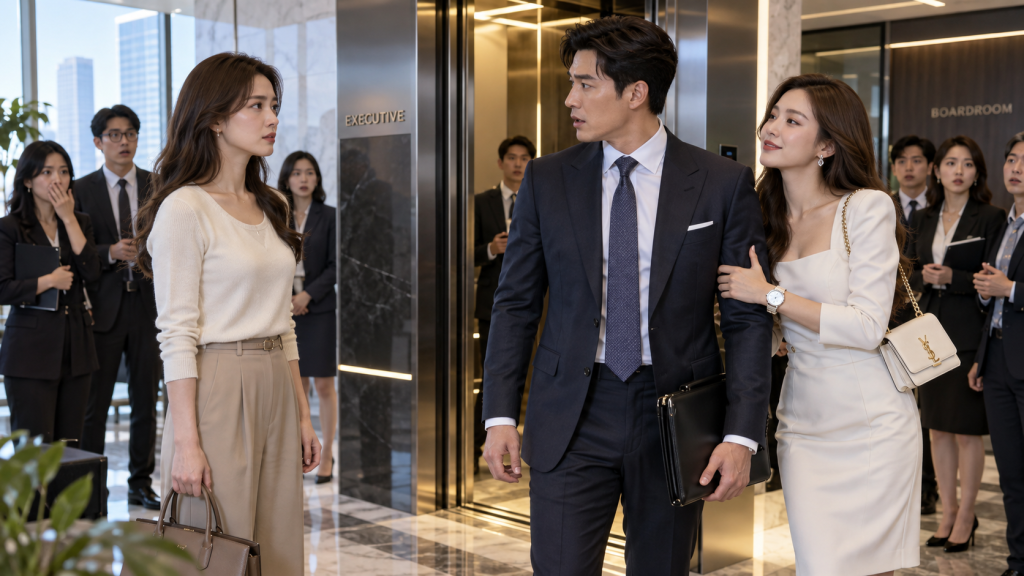
“Because, ma’am… the watch isn’t the only thing President Shiao gave her.”
The employee who said it looked as if she regretted the words before they had even finished leaving her mouth.
She stood several feet behind Jang Chin Tong, clutching a tablet against her chest with both arms. She was young—perhaps twenty-six or twenty-seven—and I recognized her as the same woman who had quietly advised me to take the service elevator downstairs.
The same woman Jang had humiliated for not being important enough.
Now she was trembling.
Jang spun toward her.
“Lin Mei, shut your mouth.”
Lin Mei lowered her eyes automatically.
That small movement told me more than the insult did.
She had been trained to obey.
Not officially.
Not through any policy written in an employee handbook.
Through repetition.
Through fear.
Through watching what happened to people who challenged Jang Chin Tong.
I looked at her.
“Ms. Lin.”
She slowly raised her head.
“You were speaking.”
Jang stepped forward.
“She doesn’t know what she’s talking about.”
I didn’t look at Jang.
“Ms. Lin?”
Lin Mei swallowed.
Then she looked at Shiaoza.
My husband.
He had not moved.
The color had drained from his face.
And suddenly I knew there was more.
Much more.
Lin Mei whispered:
“There’s an apartment.”
Nobody spoke.
I felt the air leave my lungs.
“What apartment?”
Jang snapped:
“She’s lying.”
“Then let her finish.”
My voice was quieter than Jang’s.
That made everyone listen harder.
Lin Mei’s fingers tightened around the tablet.
“An executive apartment in Building C.”
I looked at Shiaoza.
“Company property?”
He answered after a pause.
“Yes.”
“Who uses it?”
Another pause.
“Visiting executives sometimes.”
Lin Mei shook her head.
“No.”
Jang turned on her.
“You little—”
“Enough.”
The chairman’s voice cut through the hallway.
Chairman Han was sixty-eight and rarely needed to raise his voice.
He didn’t now.
“Ms. Jang, you will not threaten another employee in front of me.”
Jang’s mouth closed.
Chairman Han looked at Lin Mei.
“Continue.”
Lin Mei seemed terrified.
Then something changed in her expression.
Maybe she realized the person who had frightened her for years no longer controlled the room.
“The apartment has been assigned to Secretary Jang for almost two years.”
I looked at my husband.
“Is that true?”
Shiaoza rubbed his forehead.
“Yes.”
There are moments when your heart breaks loudly.
Betrayal.
A confession.
A photograph.
A message.
And then there are moments when it breaks almost politely.
One fact at a time.
A watch.
An apartment.
A nickname.
Tong Tong.
A woman’s confidence.
A husband’s silence.
Each piece placed carefully beside the last until you realize you are looking at a life you didn’t know existed.
“Why?”
I asked.
Shiaoza stepped toward me.
“Can we discuss this privately?”
“No.”
His eyes tightened.
“This isn’t the place.”
I almost laughed.
The hallway had apparently been the perfect place for his secretary to call me dirty.
The perfect place for employees to threaten my career.
The perfect place for Jang to imply she had an intimate relationship with my husband.
But suddenly, with the truth facing the opposite direction, the hallway was inappropriate.
“No.”
I repeated.
“I asked why.”
He looked around.
Employees were watching.
Board members were watching.
Jang was watching him most closely of all.
And then I understood something.
She was waiting too.
Just as I had been.
Waiting to see which one of us he would protect.
Shiaoza finally said:
“The apartment was an executive accommodation.”
“For her?”
“Yes.”
“Why?”
“She was working late.”
I stared at him.
“So were hundreds of employees.”
He had no answer.
Lin Mei spoke again.
“There are other things.”
Jang lunged toward her.
Not enough to strike her.
Enough to frighten her.
“Stop talking!”
A security officer immediately stepped between them.
Jang looked around as if she could not understand how the rules of gravity had changed so quickly.
An hour earlier, employees moved when she told them to move.
Now security was standing between her and someone she considered beneath her.
Power is strange that way.
It often looks permanent until the room stops agreeing that it is.
I turned toward Chairman Han.
“I want the audit started today.”
He nodded.
“It will be.”
“External.”
Another nod.
“Agreed.”
“No one reporting directly to President Shiao handles evidence collection.”
My husband’s jaw tightened.
I continued.
“Preserve expense records, company cards, executive housing records, procurement, gifts, travel reimbursements, HR complaints, promotions, terminations, transfers, and elevator access policies.”
The chairman looked toward the general counsel.
“Do it.”
Jang laughed nervously.
“You can’t seriously be listening to her.”
Chairman Han turned.
“Ms. Jang.”
She stopped.
“You appear not to understand what just happened.”
His voice was almost gentle.
“The board appointed her chief executive officer this morning.”
Jang stared at me.
“She’s his wife.”
“Yes.”
Chairman Han replied.
“And she is also the CEO.”
Those two identities had been collapsed around me for years.
Shiaoza’s wife.
Mrs. Shiao.
The woman beside him at dinners.
The person expected to smile beside him at photographs.
But I had spent twenty years building my own career.
Negotiating contracts.
Restructuring failing divisions.
Opening markets.
Walking into rooms where men assumed I was someone’s assistant and leaving with their signatures on agreements.
I had not been appointed because I married Shiaoza.
If anything, the board had hesitated because I had.
The company was founded by Shiaoza’s grandfather, but it had grown far beyond the family.
My appointment had taken eleven months of review.
The board wanted operational discipline.
They wanted someone who had successfully rebuilt three regional divisions.
They wanted independence from internal factions.
Ironically, the thing they feared most was that I would protect my husband.
Standing in that hallway, I realized they were about to discover whether their concern had been justified.
I looked at Shiaoza.
“Your access to discretionary executive spending is suspended pending audit.”
His face hardened.
“You’re suspending your own husband?”
“No.”
I said.
“The CEO is suspending an executive whose spending is under review.”
Jang stared at me with naked hatred.
“You’re doing this because you’re jealous.”
I finally looked at her.
“No.”
She laughed.
“You saw my watch and lost your mind.”
“The watch raised a question.”
“You think President Shiao belongs to you?”
That sentence would once have hurt.
Now it sounded childish.
“People don’t belong to people.”
I said.
“Marriages require honesty. Companies require controls. Today I have questions about both.”
Jang lifted her wrist deliberately.
The white watch gleamed under the lights.
“He gave it to me because I matter to him.”
Shiaoza suddenly said:
“Take it off.”
She froze.
“What?”
“The watch.”
Her confidence faltered.
“You gave it to me.”
“I told you to take it off.”
Her face changed.
Not heartbreak.
Something closer to panic.
That interested me.
“Why?”
I asked.
Neither answered.
“Why does she need to take it off now?”
Shiaoza looked at me.
“I can explain.”
“Then explain.”
“The watch was purchased through my personal account.”
“For your mother.”
“Yes.”
“And it ended up on Jang’s wrist.”
He swallowed.
“Yes.”
“How?”
Silence.
Jang whispered:
“Don’t.”
I looked at her.
For the first time, she wasn’t looking at me.
She was looking at him.
“Shiaoza.”
I said.
“How?”
He closed his eyes.
“I gave it to her.”
There it was.
No misunderstanding.
No shipping mistake.
No counterfeit.
He had given my mother-in-law’s birthday present to his secretary.
I felt something inside me become very still.
“When?”
“The night she said.”
“After dinner?”
“Yes.”
“Were you alone?”
“Yes.”
“Where?”
He hesitated.
“The apartment.”
Nobody moved.
Jang’s mouth trembled.
I had my answer.
Or at least enough of one.
I removed my wedding ring.
Shiaoza stared at my hand.
“Don’t.”
It was the first genuinely frightened thing he had said to me.
I placed the ring in my handbag.
Not dramatically.
Not thrown at him.
Not dropped on the floor.
Fourteen grams of metal did not deserve a performance.
Ten years of marriage did.
And whatever came next would happen privately.
I looked at Chairman Han.
“I’ll be in the boardroom in fifteen minutes.”
Then I turned to the employees.
“Anyone who has information relevant to the audit will have a protected reporting channel by noon. Retaliation against any employee who participates will result in immediate disciplinary review.”
Lin Mei looked at me.
I added:
“And effective immediately, all employees with legitimate business above the sixty-third floor may use elevators serving those floors.”
A few people actually looked confused.
As though dignity had arrived too suddenly to trust.
“The stairs policy is suspended.”
I said.
Jang scoffed.
“There is no stairs policy.”
I looked at her.
“Excellent.”
Then I turned to Lin Mei.
“That means nobody can punish employees for violating a policy that doesn’t exist.”
Her eyes filled.
That was the first change I made as CEO.
Not firing my husband’s secretary.
Not suspending my husband.
An elevator.
It sounds small.
It wasn’t.
For years, the building had been teaching employees where they belonged.
Executives rode.
Others climbed.
Hierarchy had become architecture.
I intended to tear that lesson out by the roots.
I walked away.
Shiaoza followed me.
“Wait.”
I kept walking.
“Please.”
I stopped at the end of the corridor.
Not because he asked.
Because I didn’t want him following me into the boardroom.
“What?”
“We need to talk.”
“Yes.”
“Now.”
“No.”
His face tightened.
“You’re my wife.”
“And at nine this morning, I became your CEO.”
He looked wounded by that sentence.
I almost felt sorry for him.
Almost.
“You’re going to humiliate me in front of the entire company.”
I stared at him.
“No.”
I said.
“You are confusing exposure with humiliation.”
He went still.
“If the facts humiliate you, speak to the person who created them.”
His face hardened.
“So that’s it?”
“No.”
I looked toward Jang.
She stood down the corridor, surrounded by nobody.
Interesting.
All the people who had hovered around her earlier had quietly disappeared.
“This is the beginning.”
The audit began before lunch.
By five o’clock, the watch had become almost irrelevant.
Almost.
The external forensic team found company-paid expenses linked to Jang.
The apartment.
Luxury meals.
Travel upgrades.
A car allowance far beyond her role.
Clothing categorized as “client presentation.”
Spa charges categorized as “executive wellness.”
A handbag charged as “conference materials.”
I stared at that one for several seconds.
Our forensic accountant, Ms. Qiao, said:
“You’ll see worse.”
She was right.
The expenses mattered.
But the personnel records were worse.
Seven employees had filed complaints involving Jang over three years.
Five had later been transferred.
Two resigned.
One had been terminated for “performance inconsistency.”
Lin Mei had filed one of the complaints.
I read it alone in my office.
She described Jang restricting elevator access.
Publicly insulting junior employees.
Demanding personal errands.
Using President Shiao’s name to threaten careers.
Ordering employees to collect dry cleaning.
Making staff wait outside restaurants for her.
Changing work schedules as punishment.
One paragraph made me stop.
Lin Mei had written:
“Secretary Jang repeatedly states that instructions from her should be treated as instructions from President Shiao. Employees are afraid to verify this because those who question her lose access to senior management.”
The complaint had been closed.
Reason:
Insufficient evidence.
Approved by:
Office of the President.
I stared at Shiaoza’s digital approval.
My husband had seen it.
That changed everything.
The affair—if that was what it was—belonged to our marriage.
This belonged to the company.
He knew employees were afraid.
And he closed the complaint.
I called him.
“Come to my office.”
He arrived twelve minutes later.
He had removed his jacket.
His tie was loose.
For the first time in years, he looked tired in a way money could not hide.
I placed Lin Mei’s complaint on the desk.
“Did you read this?”
He glanced at it.
“I don’t remember.”
“Look at the approval.”
He did.
His face changed.
“Did you read it?”
“I receive hundreds of—”
“Don’t.”
My voice sharpened.
“Do not tell me you’re too important to read documents carrying your approval.”
He sat down.
“I probably skimmed it.”
“Why was it closed?”
“HR said there wasn’t enough evidence.”
“HR says your office requested closure.”
He went silent.
“Why?”
He rubbed his face.
“Jang said Lin Mei had a personal issue with her.”
“And you believed Jang.”
“Yes.”
“Did you speak to Lin Mei?”
“No.”
“Any witnesses?”
“No.”
“Review access logs?”
“No.”
“Interview anyone?”
“No.”
“No.”
“No.”
“No.”
Each answer became smaller.
“Then you didn’t investigate.”
“I relied on people.”
“You relied on her.”
He looked away.
I leaned back.
“Were you sleeping with Jang?”
His head snapped toward me.
“No.”
I stared at him.
“No?”
“No.”
“The apartment?”
“I gave her access.”
“The dinners?”
“Yes.”
“The watch?”
“Yes.”
“The nickname?”
He looked ashamed.
“Yes.”
“But no affair?”
“Not physical.”
There are phrases designed to save a person and somehow condemn them more efficiently.
Not physical.
I looked at him for a long time.
“What does that mean?”
He exhaled.
“I got too close to her.”
“How close?”
“She listened to me.”
I almost laughed.
The oldest sentence in the world.
“My wife was busy.”
“She understood me.”
“She admired me.”
“I never meant for it to become anything.”
Different costumes.
Same betrayal.
“Did you kiss her?”
“No.”
“Touch her sexually?”
“No.”
“Tell her you loved her?”
“No.”
“Tell her our marriage was unhappy?”
Silence.
There.
“How often?”
“I don’t know.”
“Did you complain about me?”
“Yes.”
“Did you tell her things about our marriage I didn’t know you were sharing?”
“Yes.”
“Did you spend evenings alone with her?”
“Yes.”
“Did you hide that from me?”
“Yes.”
“Did you give her gifts?”
“Yes.”
“Did you let her believe she was more important than other employees because of her relationship with you?”
His eyes dropped.
“Yes.”
That was enough.
Maybe there had been sex.
Maybe there hadn’t.
For the first time, I realized I did not need to become a detective of bedsheets to determine whether my marriage had been betrayed.
Intimacy had been moved outside it.
Secrets had been created.
Privileges had been granted.
My trust had been used to make room for another woman.
Whatever label he preferred could wait.
“Why the watch?”
He looked at me.
“She saw the box.”
My stomach tightened.
“When?”
“At the apartment.”
Of course.
“She asked about it?”
“Yes.”
“What did you say?”
“That it was a gift.”
“For whom?”
“I didn’t say.”
“And then?”
“She tried it on.”
I closed my eyes.
“She liked it.”
He whispered.
“And you gave it to her.”
“Yes.”
“What did your mother get?”
“A different watch.”
I laughed.
I couldn’t help it.
It was so absurd.
The gift I chose.
The gift I spent hours finding.
The gift meant to thank a woman who had welcomed me into her family.
He gave it to his secretary because she liked it.
Then bought his mother something else.
It was such a small betrayal compared with everything else.
That was why it hurt.
Big betrayals can feel unreal.
Small ones fit perfectly inside the hand.
“You took something I chose with love and used it to impress another woman.”
He looked down.
“I know.”
“No.”
I said.
“You know now because you’re watching me understand it.”
He cried.
I had rarely seen Shiaoza cry.
Once when his grandfather died.
Once when our first pregnancy ended at eleven weeks.
Once when his father had emergency surgery.
Now.
“I was lonely.”
he said.
I looked at him.
“So was I.”
That silenced him.
He had not expected it.
I continued.
“You think I didn’t notice our marriage becoming calendars and airport pickups?”
He looked at me.
“You think I wasn’t lonely in hotel rooms?”
My voice cracked.
“You think I didn’t want someone to ask how my day was?”
I wiped my eyes.
“I had opportunities too.”
His face changed.
“I had colleagues who admired me. Men who listened. Men who thought I was brilliant.”
I leaned forward.
“You know what I did?”
He said nothing.
“I came home.”
The tears came then.
Mine.
Not loud.
Not dramatic.
Just grief escaping through whatever cracks pride had failed to seal.
“I came home to you.”
He covered his face.
“I know.”
“No.”
I whispered.
“You assumed.”
That was the difference.
He assumed I would remain faithful because I was his wife.
He assumed I would remain patient because I was capable.
He assumed I would remain available because I had always been.
He assumed the marriage could survive on whatever attention remained after everything else had eaten.
I had made assumptions too.
That trust maintained itself.
That love protected people from temptation.
That asking fewer questions made me secure rather than absent.
We had both neglected something.
Only one of us had created a secret intimacy.
Those were not equal mistakes.
I would not pretend they were.
“What happens now?”
he asked.
“With the company?”
“With us.”
I looked at him.
“I don’t know.”
He nodded.
That was the first honest answer either of us had given about our marriage in years.
The audit continued.
Jang was placed on administrative leave.
She responded badly.
First denial.
Then outrage.
Then accusation.
She claimed I was retaliating because I was jealous.
The external investigators documented every allegation.
That was important.
I did not want my anger determining company discipline.
Facts would.
Jang hired an attorney.
Good.
She should have representation.
Shiaoza was removed from operational oversight pending the board review.
He remained a shareholder.
That distinction became important.
The company did not belong to me.
It did not belong to him.
It had shareholders, directors, employees, contracts, obligations.
Family ownership had allowed too many people to confuse personal loyalty with corporate authority.
I intended to end that.
The audit eventually identified over $430,000 in questionable or unauthorized expenses tied directly or indirectly to Jang over four years.
Not all were theft.
That mattered.
Some were expenses Shiaoza had approved.
Improperly, perhaps.
Foolishly, certainly.
But approval changed the legal and accounting treatment.
The audit team separated categories carefully.
I insisted on that.
I would not inflate numbers to make her look worse.
Truth did not need decoration.
There were also hiring irregularities.
Three people Jang disliked had been passed over for promotions despite stronger performance records.
Two positions had been created for acquaintances of hers.
One vendor contract had gone to her cousin’s company without proper disclosure.
That triggered a separate review.
The deeper we looked, the clearer the real problem became.
Jang had abused power.
But she had not invented that power.
Shiaoza had handed it to her.
Sometimes directly.
Sometimes through silence.
Sometimes simply by allowing everyone to believe she spoke for him.
That was harder for him to accept.
“I never told her to threaten people.”
he said during one board review.
Chairman Han replied:
“You taught people that she could.”
Shiaoza went quiet.
That sentence traveled through the company.
Not publicly.
But I carried it.
Power is not only what you order someone to do.
Power is also what people learn they can do because they believe you will protect them.
Jang had believed Shiaoza would protect her.
She had been right.
Until the morning she mistook his wife for an intern.
People later called that poetic justice.
I didn’t.
Because if she had recognized me, nothing would have happened that morning.
She would have smiled.
Opened the elevator.
Called me Madam CEO.
Hidden the watch.
And dozens of employees would have continued climbing five flights of stairs because nobody important had been inconvenienced.
That disturbed me more than her insult ever had.
The system should not require someone powerful to be mistreated before mistreatment becomes visible.
So I changed the system.
Anonymous reporting moved outside executive reporting lines.
Retaliation reviews became automatic when a complainant was transferred, demoted, or terminated within twelve months.
Executive gifts above a threshold required disclosure.
Company housing required documented business justification.
Related-party vendor relationships had to be declared.
Elevator access became functional rather than status-based.
I banned the phrase “executive privilege” from internal access policies unless legal counsel could explain why the privilege was operationally necessary.
That last one annoyed people.
Good.
Three months into my tenure, I held the first all-staff meeting.
I stood on a stage in the atrium.
Nearly two thousand employees attended in person or online.
I told them:
“A title should tell you what responsibility someone carries. It should not tell you how much dignity they deserve.”
The room became quiet.
“If our company requires employees to become powerful before they can safely report mistreatment, then we do not have a reporting system.”
Lin Mei sat in the fourth row.
I saw her.
She saw me.
“We will make mistakes.”
I continued.
“I will make mistakes.”
That surprised people.
CEOs are apparently supposed to pretend omniscience.
I had no interest.
“But mistakes hidden by hierarchy become culture. And culture eventually becomes cost.”
I paused.
“Human cost first.”
That mattered.
“Financial cost later.”
Afterward, I received hundreds of messages.
Some praise.
Some skepticism.
Some complaints that the company was becoming too soft.
I read those too.
Leadership is not collecting agreement.
It is deciding which discomfort serves the institution and which discomfort simply protects old privilege.
Jang’s employment ended after the investigation.
Not because she insulted me.
That distinction mattered to me.
Her termination letter did not mention the word “intern.”
It documented misuse of authority, policy violations, undisclosed conflicts, retaliation, and expense issues established through review.
She appealed.
The process upheld the decision.
I never saw her again.
Except once.
Six months later.
She waited outside a restaurant where I had dinner with a client.
Security noticed her first.
I told them to stay nearby but let her speak.
She looked different.
No designer suit.
No white watch.
“Are you happy?”
she asked.
“No.”
That seemed to surprise her.
“You ruined my career.”
“No.”
“You did.”
“The investigation documented your conduct.”
“Because you ordered it.”
“Yes.”
“If you hadn’t come that day—”
“Other employees would still have been harmed.”
She laughed bitterly.
“You don’t care about them. You wanted revenge because Shiaoza loved me.”
There it was.
Loved me.
I looked at her.
“Did he tell you that?”
She hesitated.
“No.”
“Then why do you believe it?”
“He didn’t have to.”
I almost felt sorry for her.
Almost.
“What did he promise you?”
Her face tightened.
“Nothing.”
“Marriage?”
“No.”
“Promotion?”
“No.”
“Money?”
“No.”
“Then what?”
She looked away.
“He made me feel important.”
There it was.
The same hunger.
Different side.
Shiaoza wanted admiration.
Jang wanted importance.
They fed each other’s emptiness and called the arrangement special.
“Did you know he was married?”
She glared at me.
“Of course.”
“Did you know the watch was for his mother?”
Her expression changed.
No.
She hadn’t.
I saw it immediately.
“He told me he’d bought it for someone who didn’t appreciate him.”
My heart stopped.
Someone who didn’t appreciate him.
Me?
His mother?
It didn’t matter.
The lie had been useful.
She looked at my face.
“He didn’t tell me it was for her.”
“I believe you.”
That unsettled her more than anger would have.
“You believe me?”
“Yes.”
“Why?”
“Because he lied to both of us differently.”
Her eyes filled.
For the first time, I saw not Secretary Jang.
Not my husband’s favorite.
Not the woman who humiliated employees.
A person.
A flawed person who had harmed others and also built part of her identity around crumbs from a married man.
Compassion did not erase accountability.
Both could exist.
“I hated you before I met you.”
she whispered.
“Why?”
“Because he talked about you.”
My stomach tightened.
“What did he say?”
“That you were never home.”
True sometimes.
“That your career mattered more than him.”
Maybe that was how he felt.
“That you didn’t need anyone.”
False.
“That you thought you were smarter than everyone.”
I almost smiled.
“Did he say that?”
“Yes.”
“What else?”
She looked at me.
“That no matter what he did, you would always land on your feet.”
That one hurt.
Because it sounded like admiration until you understood how often strong people are abandoned inside compliments.
You can handle it.
You’ll be fine.
You’re strong.
All different ways of saying:
I don’t have to take care with you.
I nodded.
“Thank you.”
She stared.
“For what?”
“For answering.”
Then I turned to leave.
“Wait.”
I stopped.
“Did you leave him?”
I looked at her.
“Yes.”
Her face changed.
I had not announced it publicly.
Our divorce filing was private at that stage.
“He said you wouldn’t.”
I smiled sadly.
“He was wrong.”
Then I left.
Yes.
I filed for divorce.
Five months after my first day as CEO.
Not the next morning.
Not in rage.
I went to therapy.
Shiaoza did too.
We attended marriage counseling for twelve weeks.
I wanted to know whether the marriage was dead or merely injured.
There is a difference.
We talked about the affair.
He still insisted it had never become sexual.
Eventually, I believed him.
That surprised me.
The evidence supported it.
Messages recovered during the audit showed emotional intimacy, flirtation, gifts, private dinners, complaints about me, and a relationship that crossed professional and marital boundaries.
But no evidence of a physical affair.
By then, the distinction mattered less.
He had built a room in his emotional life and locked me outside it.
Jang had been inside.
That was enough.
During counseling, Shiaoza said:
“I thought because I never slept with her, I hadn’t really cheated.”
Our therapist asked:
“Did you hide the relationship?”
“Yes.”
“Would you have behaved the same way if your wife were present?”
“No.”
“Did you give emotional intimacy to Ms. Jang that you intentionally withheld from your wife?”
He cried.
“Yes.”
The therapist said nothing else.
She didn’t need to.
One afternoon, Shiaoza apologized properly.
Not:
I’m sorry you were hurt.
Not:
I’m sorry things went too far.
Not:
I’m sorry I was lonely.
He said:
“I used your strength as permission to neglect you.”
I looked at him.
He continued.
“I told myself you didn’t need me because admitting you did would mean admitting I wasn’t showing up.”
Tears filled my eyes.
“I liked being admired by someone who saw only the version of me I wanted to show.”
He wiped his face.
“And when employees complained about her, I protected her because investigating her would’ve forced me to admit what our relationship had become.”
That was the truth I had been waiting for.
Not because it repaired us.
Because it stopped asking me to participate in his denial.
“I am sorry.”
he said.
“I betrayed you even if I never touched her sexually.”
I nodded.
“Yes.”
“I betrayed the company too.”
“Yes.”
“I don’t know how to fix either.”
I looked at him.
“You start by understanding that fixing yourself does not guarantee getting either one back.”
He cried.
“I know.”
That was when I knew I could forgive him someday.
It was also when I knew I was leaving.
People assume forgiveness and reconciliation are twins.
They aren’t.
Sometimes forgiveness is what allows you to walk away without needing the other person destroyed behind you.
I filed.
Shiaoza did not fight me.
Our divorce took eleven months.
We had no children.
That simplified some things.
Made others sadder.
We had once wanted them.
Then careers expanded.
Timing became complicated.
A miscarriage became something neither of us knew how to discuss.
Years passed.
Maybe we had both assumed there would always be another year.
There wasn’t.
We divided property.
Kept our separate business interests.
He remained a shareholder in the company but resigned from management.
That was his decision after the board completed its review.
The board had censured him, removed certain authority, and required governance reforms.
He could have stayed in a reduced role.
He chose not to.
“I don’t know how to walk into that building anymore.”
he told me.
I understood.
“You could learn.”
“I could.”
“Do you want to?”
He thought.
“No.”
That was honest.
He spent the next few years managing investments outside the company.
Quietly.
For the first time in his adult life, his surname did not automatically come with an office.
It changed him.
Slowly.
The company changed too.
Not magically.
Culture does not transform because a CEO gives one speech.
Managers resisted.
Senior executives complained.
One vice president told me:
“People are too sensitive now.”
I asked:
“Too sensitive to what?”
He had no good answer.
We lost some executives.
Promoted others.
Lin Mei became deputy director of employee operations three years later.
Not because she had spoken up that day.
She would have hated that.
She earned it.
Her performance was excellent.
She became known for asking one question in meetings:
“Would this policy still make sense if the lowest-paid employee had to live under it?”
That question saved us from several stupid decisions.
The elevator became a company joke.
When we renovated headquarters, the architects asked whether executive elevators should remain separate.
I said:
“For security purposes?”
“No. Status.”
“No.”
That was the end of it.
Years later, a young employee joined the company and heard the old story.
Apparently it had become legend.
The CEO who was mistaken for an intern.
The secretary with the watch.
The elevator confrontation.
Corporate folklore loves clean narratives.
I hated most versions.
In some, I fired Jang on the spot.
False.
In others, I slapped her.
Absolutely false.
One version had me buying the entire company the next day.
Ridiculous.
So during an anniversary town hall, I corrected it.
“I didn’t win because someone discovered I was important.”
I said.
“The problem was that employees thought mistreating an intern would have been acceptable.”
The room went silent.
“If your lesson from that story is ‘Be careful who you insult because she might be the CEO,’ you learned the wrong lesson.”
I looked across the auditorium.
“The intern deserves respect too.”
That became the line people remembered.
Good.
Let the watch disappear from the legend.
Let the elevator remain.
I served as CEO for fourteen years.
We grew.
We failed sometimes.
We acquired two companies.
Exited one market.
Survived a recession.
Made mistakes.
Corrected some quickly.
Others too slowly.
I learned that leadership was less glamorous than people imagined.
Mostly decisions.
People.
Numbers.
Consequences.
Listening.
Then listening again after realizing the first person had only told you what they thought you wanted to hear.
The hardest part was not making decisions.
It was building an organization where bad news could travel upward without being punished.
That lesson came from Jang.
And from Shiaoza.
And from the woman I had been on my first morning, standing in front of an elevator while dozens of employees watched silently.
Fear had been traveling downward for years.
Truth could not travel up.
I reversed that as best I could.
At fifty-eight, I stepped down.
The board wanted me to stay another three years.
I said no.
One of the lessons I had learned from my marriage was that success can consume everything you feed it.
And it is always hungry.
I had given enough.
My successor was not family.
That mattered to me.
She was Lin Mei.
The woman who had once whispered:
“Just take the service elevator.”
The board chose her unanimously.
On her first morning as CEO, I met her downstairs.
She looked at the elevators.
Then at me.
“Should I take the service one for symbolism?”
“No.”
“Why?”
“Because symbolism is exhausting.”
She laughed.
We rode together.
All the way up.
Nobody stopped us.
When the doors opened, I stepped out.
She didn’t.
“Aren’t you coming?”
“No.”
Her smile disappeared.
“You’re really leaving?”
“Yes.”
She looked frightened.
I recognized that feeling.
“I’m not ready.”
“No one is.”
“You were.”
I laughed.
“On my first day, I discovered my husband had given his secretary my mother-in-law’s birthday watch.”
She smiled.
“Fair point.”
I hugged her.
“Build your company.”
“Our company.”
“No.”
I shook my head.
“Yours to lead. Their company to belong to.”
She nodded.
The doors began closing.
“Wait.”
I held them.
“What?”
She smiled.
“Thank you for not taking the service elevator.”
I laughed.
Then let the doors close.
My life after the company was quieter.
For a while, too quiet.
I had spent decades measuring days by meetings.
Suddenly Tuesday could be Tuesday.
I traveled.
Read books without highlighting them.
Learned pottery badly.
Killed six tomato plants.
Then seven.
Apparently operational excellence does not transfer to gardening.
I served on nonprofit boards.
Mentored women who reminded me painfully of myself.
Ambitious.
Competent.
Exhausted.
Certain rest was something earned after all work was finished.
I told them the truth.
Work is never finished.
Rest anyway.
Shiaoza and I remained apart.
For years, we spoke only when necessary.
Then his mother died.
I went to the funeral.
Not because I was his former wife.
Because I had loved her.
She had eventually learned about the watch.
Not from me.
From Shiaoza.
He told her everything.
She called me afterward.
“I am furious.”
she said.
“At him?”
“At both of you.”
I almost laughed.
“Why me?”
“You chose a watch that expensive for an old woman.”
“You loved it.”
“I did.”
Then she cried.
“I wish he’d given it to me.”
“So do I.”
That sentence carried more than a watch.
We both knew.
When she died at eighty-six, I stood beside her coffin and thought of the white watch.
Jang had returned it during the investigation.
It had remained sealed in evidence for months.
Eventually, Shiaoza gave it to his mother.
She refused to wear it.
Not because she hated the watch.
Because she said:
“Some gifts arrive too late to remain gifts.”
She kept it in a drawer.
After her death, Shiaoza handed the box to me.
“I don’t want it.”
“Neither do I.”
“What should we do?”
I thought.
“Sell it.”
We did.
The proceeds funded a scholarship for young women entering corporate compliance and governance.
His mother would have found that hilarious.
Maybe she did, wherever people go when they no longer have to worry about what their foolish children are doing.
At the funeral, Shiaoza and I sat together for ten minutes.
He had gray hair now.
So did I.
“You look well.”
he said.
“So do you.”
“I heard Lin Mei became CEO.”
“Yes.”
“Good choice.”
“Yes.”
Silence.
Then:
“Are you happy?”
I thought about it.
“Yes.”
He smiled.
“Good.”
“You?”
“Most days.”
“That counts.”
He nodded.
Then he said:
“I never thanked you.”
“For what?”
“For not destroying me.”
I looked at him.
“I wasn’t trying to save you either.”
“I know.”
“I wanted the truth.”
“I know.”
He smiled sadly.
“You always did.”
“No.”
I corrected him.
“I learned to.”
He nodded.
Fair.
Years earlier, I had preferred trust without questions.
Now I understood mature trust differently.
Trust is not refusing to look.
Trust is believing you can look and still survive whatever you find.
Shiaoza never remarried.
Not because he spent his life waiting for me.
He dated.
Had relationships.
None lasted.
I did not interpret that as romance.
People’s lives are more complicated than that.
I had one serious relationship after our divorce.
His name was David.
A professor.
Kind.
Brilliant.
Impossible with directions.
We were together nine years.
We never married.
Not because I was afraid.
Because we didn’t need to.
He died unexpectedly at sixty-seven.
Stroke.
Grief found me again.
Shiaoza sent flowers.
No message beyond:
“I am sorry.”
Exactly right.
By seventy, I had become one of those women younger executives invited to lunches because they wanted “wisdom.”
I told them wisdom was mostly scar tissue with better vocabulary.
They wrote that down.
I told them not to.
They wrote that down too.
One young woman asked:
“What was the most important decision you made as CEO?”
She expected an acquisition.
A restructuring.
Maybe appointing Lin Mei.
I said:
“Opening the elevator.”
She laughed.
Then realized I was serious.
“Why?”
“Because organizations tell people what they value through tiny inconveniences.”
She waited.
“Who waits.”
I said.
“Who climbs.”
“Who gets interrupted.”
“Who is allowed to speak.”
“Who has to ask permission.”
“Who gets believed.”
“Who gets called difficult.”
“Who is expected to smile.”
“Who gets an elevator.”
I stirred my tea.
“Culture hides in ordinary things.”
That was what my first day taught me.
The affair changed my marriage.
The audit changed the company.
But the elevator changed me.
Before that morning, I thought power was primarily the ability to make decisions.
Afterward, I understood another form.
The ability to define what is normal.
Jang had made humiliation normal.
Shiaoza had made favoritism normal.
Employees had made silence normal because silence kept them employed.
My job was not merely to punish the people responsible.
It was to make dignity normal.
That took fourteen years.
Maybe longer.
Culture never finishes.
Years after retirement, I visited headquarters.
I was seventy-four.
The lobby had been renovated again.
I barely recognized it.
A young security employee asked for my ID.
I showed it.
He checked the system.
“Who are you visiting?”
I smiled.
“CEO Lin.”
“Do you have an appointment?”
“Yes.”
He verified it.
Good.
No special recognition.
No nervousness.
No one whispering:
Don’t you know who she is?
I loved it.
Then I approached the elevators.
A young woman rushed in carrying three boxes.
The doors started closing.
I held them.
“Thank you!”
she said.
“What floor?”
“Sixty-seven.”
She pressed the button.
Then looked at me.
“You?”
“Sixty-eight.”
She smiled.
“Executive?”
“No.”
Not anymore.
She shifted one box.
“I’m an intern.”
I laughed.
She looked confused.
“Sorry.”
I said.
“Old memory.”
The elevator climbed.
No service elevator.
No stairs.
No permission.
Just two women going where their work required them to go.
When the doors opened at sixty-seven, she stepped out.
“Have a good day.”
“You too.”
The doors closed.
I stood alone.
And cried.
Not because I was sad.
Because sometimes change is invisible until you encounter the thing that used to hurt and discover it has become ordinary.
The intern rode the elevator.
Nobody cared.
Perfect.
When I reached sixty-eight, Lin Mei was waiting.
“You’re crying.”
“I’m old.”
“That’s not an explanation.”
“It explains most things.”
She hugged me.
Then I told her about the intern.
She smiled.
“Do you know how many times I’ve heard that story?”
“This one just happened.”
“No. The old one.”
“Oh.”
“Employees still tell it.”
“I know.”
“Do you know how it ends now?”
I frowned.
“How?”
She said:
“The CEO didn’t fire the secretary because she insulted the wrong woman. She changed the company because the secretary thought there was a right woman to insult.”
I stared at her.
“That’s better.”
“I know.”
“Who wrote that?”
“I did.”
“Of course.”
We laughed.
Years later, when Shiaoza became ill, he asked to see me.
Cancer.
Advanced.
I went.
Not because I owed him.
Because I wanted to.
He was seventy-nine.
Time had softened him physically.
Not morally.
That work he had done himself.
He had spent years quietly funding ethics programs and employee legal-aid services.
He never attached his name.
I learned only because one organization asked me to speak and mentioned him.
He had changed.
That did not mean our divorce had been a mistake.
This is important.
Someone can become the person you once needed after you no longer need them.
You are not required to return.
His change belonged to him.
My leaving belonged to me.
Both could be right.
I sat beside his bed.
He looked at my wrist.
No watch.
I rarely wore one anymore.
“Do you remember it?”
he asked.
“The white watch?”
“Yes.”
“I remember.”
“I think that stupid thing cost me my marriage.”
I shook my head.
“No.”
He looked at me.
“You cost yourself the marriage.”
He smiled weakly.
“Still direct.”
“Time is limited.”
He laughed.
Then coughed.
When he settled, he said:
“You’re right.”
“I know.”
“Still arrogant.”
“That too.”
Silence.
Then:
“I was angry at you for years.”
I looked at him.
“After the divorce?”
“Yes.”
“Why?”
“Because you were fine.”
I almost laughed.
“I wasn’t.”
“I know that now.”
He stared at the ceiling.
“But you looked fine.”
There it was again.
The curse of capable people.
Looking fine becomes evidence that nobody hurt you.
“I cried for two years.”
He turned toward me.
“I didn’t know.”
“You weren’t supposed to.”
He nodded.
“I wanted you to regret leaving.”
“I did sometimes.”
His eyes widened.
“You did?”
“Of course.”
“Why didn’t you come back?”
“Regret isn’t always instruction.”
He closed his eyes.
“That sounds like something you’ve been saving.”
“No. I just thought of it.”
“Annoying.”
I smiled.
Then he whispered:
“Did you forgive me?”
“Yes.”
“When?”
“I don’t know.”
“Before today?”
“Long before.”
“Why didn’t you tell me?”
“You never asked.”
He laughed weakly.
Fair.
“What does forgiveness mean to you?”
I thought.
“That I can remember what happened without needing you to suffer for it.”
He cried.
“Does it mean what I did was okay?”
“No.”
“Does it mean leaving was wrong?”
“No.”
“Does it mean you would’ve stayed if I had apologized sooner?”
“I don’t know.”
That answer seemed to comfort him more than certainty.
Maybe because it was honest.
“I loved you.”
he said.
“I know.”
“Badly.”
“Sometimes.”
“I loved Jang too.”
I was surprised.
Not hurt.
Just surprised.
“Did you?”
“In some way.”
He looked embarrassed.
“I think I loved how she made me feel more than I loved who she actually was.”
“That sounds accurate.”
“I used her.”
“Yes.”
“She used me.”
“Yes.”
“We hurt you.”
“Yes.”
He looked at me.
“You don’t soften things for dying people.”
“You’re not dead yet.”
He smiled.
Then became serious.
“I am sorry.”
“I know.”
“No.”
His eyes filled.
“I want to say it one last time correctly.”
I waited.
“I am sorry I made your strength an excuse for my neglect.”
My throat tightened.
“I am sorry I shared our marriage with another woman instead of bringing my loneliness to you.”
Tears came.
“I am sorry I gave her power over employees because protecting her was easier than examining myself.”
He struggled for breath.
“And I am sorry I gave away the watch you chose for my mother.”
I laughed through tears.
“That really was stupid.”
“Very.”
We both laughed.
Then he whispered:
“You deserved better.”
I shook my head.
“No.”
He looked confused.
“I deserved honesty.”
I said.
“Better makes it sound like people are prizes.”
He smiled.
“Still correcting me.”
“Until the end.”
He died four days later.
I attended the funeral.
Lin Mei came.
Chairman Han had died years earlier.
Several former employees came.
Some remembered Shiaoza fondly.
Some did not.
Both were valid.
People are not made truthful by death.
He had been generous.
Charismatic.
Funny.
Intelligent.
He had also abused authority through favoritism.
Betrayed his marriage.
Failed employees who needed him to act.
Later, he changed.
He spent years making amends where he could.
That was his whole life.
Not saint.
Not villain.
Human.
At the funeral, I did not speak.
I sat in the third row.
When it ended, I placed one thing beside his photograph.
An elevator access card.
Lin Mei saw it.
“What is that?”
“His old executive card.”
“You kept it?”
“Apparently.”
“Why leave it?”
I smiled.
“Private joke.”
She shook her head.
“You’re strange.”
“Yes.”
Outside, sunlight fell across the steps.
People dispersed.
I stood alone for a minute.
Then went home.
I was eighty-three when I wrote down the story properly.
Not for publication.
For myself.
I began with the sentence:
On my first day as CEO, my husband’s secretary called me an intern.
Then I crossed it out.
It was accurate.
But not true enough.
I tried again.
On my first day as CEO, I discovered how many people in my company had learned that dignity depended on rank.
Better.
Then:
On my first day as CEO, I discovered my marriage had been living on assumptions.
Also true.
Finally, I wrote:
On my first day as CEO, an elevator door opened, and everything I had refused to examine walked inside with me.
That was the one.
The watch.
The marriage.
The company.
The silence.
The hierarchy.
The loneliness.
All of it.
For years, people asked whether I regretted not confronting Jang immediately.
No.
Silence is not always weakness.
Sometimes silence is observation.
I watched.
Her behavior.
Employees’ fear.
My husband’s face.
Her watch.
His response.
Had I shouted immediately, I might have received a lie.
Instead, I learned the structure around the lie.
That mattered more.
But I also learned silence should have an expiration date.
There were times in my marriage when I had remained quiet too long.
Times I noticed distance and called it trust.
Times I felt lonely and called it independence.
Times I wanted to ask Shiaoza why he was never home and decided successful marriages did not interrogate.
That was foolish.
Healthy trust can survive questions.
Fragile trust requires silence.
I wish I had known that sooner.
Would it have saved the marriage?
Maybe.
Maybe not.
That is not why the lesson matters.
Questions are not accusations.
Needs are not weakness.
Competence is not invulnerability.
A woman can run a corporation and still want her husband to come home.
A man can lead thousands and still need to say:
I am lonely.
Before loneliness becomes permission.
That is what I eventually taught when younger executives asked about balance.
Not work-life balance.
I hate that phrase.
Life does not sit neatly on one side of a scale while work sits on the other.
I taught attention.
What are you feeding?
What are you assuming will survive without care?
What relationship have you labeled “strong” because calling it strong gives you permission to neglect it?
Those questions made rooms uncomfortable.
Good.
Useful questions often do.
At eighty-six, I received a package from Lin Mei.
Inside was a white watch.
For one wild second, my heart stopped.
Then I laughed.
It wasn’t the watch.
Just a modern model in white.
There was a note.
It said:
“For your birthday. This one is actually meant for you.”
I laughed until I cried.
Then I called her.
“You’re terrible.”
“I learned from the best.”
“I am returning it.”
“You will not.”
“I don’t need a watch.”
“You’re eighty-six. You need to know what time your appointments are.”
“I have a phone.”
“Wear the watch.”
So I did.
Not every day.
Enough.
The first time I wore it into headquarters for an anniversary dinner, older employees noticed.
Lin Mei nearly fell out of her chair laughing.
Nobody else understood.
Perfect.
Some memories should become jokes eventually.
Not because they were never painful.
Because pain should not own them forever.
That night, a young manager asked me:
“Is that watch valuable?”
I looked at it.
“Very.”
“How much?”
I smiled.
“Not in money.”
She looked confused.
I left her that way.
At ninety, my world became smaller.
Not sadder.
Smaller.
A few friends.
Books.
Tea.
Lin Mei visited.
Former colleagues called.
I had no children to gather around me.
For years, that thought had frightened me.
Then I discovered family arrives in more forms than inheritance law recognizes.
People came.
Not because I was CEO.
I hadn’t been CEO for decades.
They came because somewhere along the way, work relationships had become human ones.
Lin Mei brought dumplings.
A former driver brought oranges.
A retired finance director argued with me about interest rates.
Young executives sent letters.
One former intern wrote:
“I never met you, but I worked at the company you changed.”
That sentence meant more than every quarterly earnings report I had ever signed.
The company you changed.
Not:
The company you owned.
I never owned it.
That was another lesson.
Leaders are temporary.
Culture outlives them.
So does damage.
So can repair.
Near the end of my life, Lin Mei sat beside me.
She was old too.
Not as old as me.
I reminded her frequently.
“You know what I still think about?”
she asked.
“The elevator.”
“Of course.”
“You could have destroyed Jang that morning.”
“No.”
“You could have fired her.”
“I could have tried.”
“Why didn’t you?”
“Because I didn’t know enough.”
“You knew she was horrible.”
“That isn’t an employment standard.”
Lin Mei laughed.
“It should be.”
“No.”
I smiled.
“People deserve process even when we dislike them.”
She nodded.
“That was one thing I learned from you.”
“Only one?”
“Don’t push it.”
We sat quietly.
Then she said:
“Do you regret Shiaoza?”
I looked at her.
“No.”
“Really?”
“Parts.”
“That wasn’t my question.”
“I know.”
I thought.
“No. I don’t regret loving him.”
“Even after everything?”
“Yes.”
“Why?”
“Because the fact that something ended badly doesn’t mean every day before it was false.”
She nodded.
“We had good years.”
I said.
“We were young together.”
I smiled.
“He knew me before anyone called me CEO.”
That mattered.
“He hurt me.”
I continued.
“I left.”
“He changed.”
“I forgave.”
“He died.”
I shrugged.
“That is a life.”
Lin Mei looked at the white watch on my wrist.
“You still wear it.”
“Sometimes.”
“Does it remind you of Jang?”
“No.”
“Shiaoza?”
“No.”
“What then?”
I smiled.
“The intern.”
She laughed.
“What intern?”
“The woman in the elevator when I was seventy-four.”
“Oh.”
“She didn’t know who I was.”
“And?”
“Nothing happened.”
Lin Mei understood.
Her eyes filled.
“That’s what you wanted.”
“Yes.”
Not recognition.
Normalcy.
A world where dignity did not depend on recognizing the powerful person in plain clothes.
That was the victory.
Not Jang losing her job.
Not Shiaoza apologizing.
Not me becoming CEO.
A young intern riding to the sixty-seventh floor without anyone asking whether she deserved the elevator.
Sometimes the greatest evidence of change is how boring justice becomes.
Nobody applauds.
Nobody notices.
The door opens.
You enter.
That is all.
A few weeks before my ninety-first birthday, I dreamed about that first morning.
Jang stood in front of the elevator.
Young.
Beautiful.
Arrogant.
The white watch on her wrist.
“Custodians use the service elevator.”
she said.
But in the dream, I didn’t argue.
I looked behind me.
Dozens of employees were standing there.
Lin Mei.
People whose names I had forgotten.
People who had resigned.
People who had stayed.
Then the elevator doors opened.
Everyone stepped inside.
Too many people.
Ridiculously crowded.
I laughed.
Jang looked furious.
Shiaoza stood at the back.
Young too.
He looked at me.
Not afraid.
Not ashamed.
Just sad.
Then he moved aside.
Made room.
The doors closed.
When I woke, I was crying.
Not because I wanted him back.
I didn’t.
I think I cried because memory had finally found a version of the story where nobody needed to be thrown out of the elevator.
There was simply room.
That is not how real life works.
Some people must lose access when they abuse it.
Some marriages end.
Some employees are terminated.
Some doors close.
But healing sometimes imagines a world larger than consequence.
A world where the lesson remains after the punishment no longer matters.
I liked that.
So if you ask me what happened on my first day as CEO, I can tell you the dramatic version.
My husband’s secretary called me an intern.
She ordered me out of the executive elevator.
She wore a watch meant for my mother-in-law.
My husband came out.
The truth began unraveling.
An audit exposed favoritism, improper expenses, retaliation, and a culture built around fear.
Jang lost her position.
Shiaoza lost his executive authority.
Our marriage ended.
I rebuilt the company.
All true.
But that isn’t the story I carried longest.
The story I carried was about assumptions.
Jang assumed plain clothes meant low status.
Employees assumed rank determined dignity.
Shiaoza assumed my strength meant I could survive neglect.
I assumed trust meant I should never question him.
The board assumed family ties might make me protect him.
I assumed becoming CEO would be the hardest thing I did that year.
We were all wrong.
That is why I stopped trusting assumptions that could be replaced by questions.
Who are you?
What happened?
Who approved this?
Why?
Is this fair?
Are you okay?
Are we okay?
What do you need?
What am I refusing to see because seeing it would require change?
That last question became the most important.
It would have saved us years of silence.
Maybe not the marriage.
But years.
Still, I do not believe every painful lesson needs to be romanticized.
I will not tell you I am grateful Shiaoza betrayed me.
I am not.
I will not say Jang’s cruelty happened for a reason.
It happened because she chose cruelty and believed power would protect her.
I will not say the marriage had to end for me to become strong.
I was strong before.
That was part of the problem.
Everyone knew it except me.
Pain does not need to become destiny to become useful later.
Something bad can simply be bad.
Then you decide what comes next.
What came next for me was truth.
Boundaries.
Leadership.
Grief.
Growth.
Forgiveness.
And eventually, peace.
Not the peace of forgetting.
The peace of remembering without needing the story to change.
I loved Shiaoza.
He betrayed me.
I left him.
He became better.
I forgave him.
I did not return.
All of those sentences fit together.
Jang hurt employees.
She was held accountable.
I eventually understood some of the emptiness that made her vulnerable to Shiaoza’s attention.
Understanding did not require rehiring her.
Both fit.
I was humiliated on my first morning.
I was also privileged enough to reveal a system other people had endured silently for years.
That knowledge obligated me to change more than my own situation.
Both fit.
Human beings contain contradictions.
Maturity is learning not to erase one truth because another is easier.
And the watch?
People always ask about the watch.
The original was sold.
The second one—the birthday gift from Lin Mei—remained with me until the end.
In my will, I left it to her granddaughter.
Along with a note:
“Wear this wherever you are told you don’t belong.”
A little dramatic.
I was ninety.
I had earned dramatic.
But underneath the joke was the lesson that began in that hallway.
You do not need expensive clothes to deserve respect.
You do not need a title to deserve dignity.
You do not need to reveal that you are the CEO before cruelty becomes wrong.
And you do not need to remain in a marriage simply because the person who hurt you eventually understands what they lost.
Sometimes the most meaningful thing you can do with a door is open it.
Sometimes it is close it.
Wisdom is learning which.
On my first morning as CEO, Jang Chin Tong tried to close an elevator door in my face because she believed I was beneath her.
Years later, I understood the irony.
She thought power meant deciding who was allowed upstairs.
I learned power meant building a place where nobody had to beg for permission to be treated like a human being.
That was the company I wanted.
That was the woman I became.
And that was why, when I remembered Shiaoza walking out of that conference room and looking at me with fear in his eyes, I no longer wondered:
Which one of us will he choose?
That question had mattered desperately then.
It did not matter anymore.
Because eventually, I understood that I had been waiting for the wrong person to make the choice.
The most important choice was mine.
I chose truth over appearances.
I chose process over revenge.
I chose employees over hierarchy.
I chose dignity over status.
I chose to forgive without returning.
And when the marriage I had trusted could no longer hold the woman I had become, I chose myself without needing to destroy anyone else to prove I was worth choosing.
That was the real promotion.
Not CEO.
Not a title engraved beside an office door.
The promotion was becoming the person who no longer needed someone else’s decision to determine her value.
And after all those years, whenever an elevator door opened in front of me, I stepped inside without asking whether I belonged there.
I knew.
THE END STORIES! THANK YOU FOR READING GOOD LUCK !❤️
Related Posts