The basement door upstairs creaked open. Every sound inside me stopped. Mom grabbed my arm. Mateo and Sofia were still upstairs in the living room, wrapped in blankets, watching cartoons because I had been desperate to give them something normal while the world around us cracked apart.
The basement stairs were narrow. Wooden. Old. Whoever had opened that door would have to come down one step at a time. Mom whispered, “Daniela…” I put one finger to my lips. Then I reached for my phone. No signal. Of course. The basement walls were concrete.
My father had built this place like a bunker. I looked around. Six monitors. Filing cabinets. Desk. Flash drive. Ledger. And somewhere upstairs, footsteps. One. Two. Three. My heart pounded harder. Then a small voice called down. “Mommy?” I almost collapsed. Sofia.
I ran up the stairs.
She stood at the doorway clutching her stuffed elephant.
Her hair stuck up on one side.
“Mama, the TV stopped.”
I pulled her into my arms so hard she squealed.
“It’s okay.”
“Did I do something?”
“No.”
That question cut me.
Three years old.
Already asking whether another adult’s anger belonged to her.
I kissed her forehead.
“Never think that.”
Then I heard pounding on the front door.
Mauricio.
“Daniela!”
Patricia’s voice followed.
“Open this door right now!”
I carried Sofia downstairs again.
Mateo followed, frightened but quiet.
My mother looked at me.
“What do we do?”
For one second, the answer felt enormous.
Call police?
Run?
Hide?
Confront them?
Then my father’s words came back.
Don’t argue with anyone.
He had known.
Not exactly what night.
Not exactly what injury.
But enough to leave instructions.
Enough to create another door.
So I chose what he had chosen.
Evidence first.
I moved the twins into a small storage room at the back of the basement.
There were blankets inside.
Water.
A battery lamp.
Another detail Dad had planned.
That frightened me too.
How much had he known?
I knelt in front of Mateo and Sofia.
“You stay here with Grandma.”
Sofia grabbed my blouse.
“No.”
“I’m right outside.”
“No, Mama.”
I touched her face.
“You remember the game Grandpa taught you?”
Mateo nodded first.
“Quiet mouse.”
My throat tightened.
Dad used to make them giggle by whispering:
“Quiet mouse, quiet house.”
I had thought it was just a game.
Maybe it was.
Maybe Dad simply knew children needed something to do when adults were scared.
“Quiet mouse,” I whispered.
Mateo pressed a finger to his lips.
Sofia copied him.
Mom looked at me.
“You’re not going upstairs alone.”
“I’m not going upstairs.”
I held up my phone.
“I’m calling from here.”
The basement had an old landline.
I almost laughed when I saw it.
Dad hated cell phones.
Called them “fancy devices that become bricks exactly when you need them.”
For once, his stubbornness felt like genius.
I called emergency services.
Gave the address.
Explained that my husband and mother-in-law were outside.
That my mother had visible bruising.
That we had found recordings suggesting coercion and attempted financial manipulation.
I did not exaggerate.
I did not speculate.
Facts.
The dispatcher told us to remain locked inside.
Good.
That I could do.
Then the pounding stopped.
Silence spread across the house.
I did not trust it.
The monitor showed Mauricio standing in our driveway.
Patricia beside him.
Both arguing.
Then a third car pulled up.
Black.
Unfamiliar.
A man stepped out.
Mom went rigid.
“Oh no.”
I looked at her.
“Who is that?”
She stared at the screen.
“Víctor Salazar.”
The name meant nothing.
Mom whispered,
“He worked with your father.”
“When?”
“Years ago.”
“Doing what?”
She hesitated.
“Private lending.”
My stomach tightened.
“My father was a lender?”
“Not exactly.”
“Mom.”
She looked toward the twins.
Then back at me.
“Your father helped people recover businesses.”
“That means nothing.”
“He would buy debt.”
I stared.
“Distressed debt?”
She nodded.
I suddenly understood the basement differently.
Files.
Ledgers.
Old contracts.
Dad had spent his life publicly running a modest accounting consultancy.
Quiet clients.
Small office.
Never flashy.
Apparently that had not been the whole story.
“What does Víctor have to do with Patricia?”
Mom looked sick.
“That is what I should have told you years ago.”
My heart sank.
“Tell me now.”
She swallowed.
“Before you married Mauricio, Patricia owed your father money.”
I stared.
“What?”
“A lot.”
“How much?”
Mom looked toward the ledger.
“Enough that she could have lost everything.”
The pounding resumed upstairs.
This time, a man’s voice called my name.
“Daniela!”
Víctor.
I stayed silent.
He called again.
“I’m not with Mauricio.”
I looked at Mom.
She whispered,
“Do not trust him automatically.”
Good.
I nodded.
Dad’s first lesson seemed increasingly useful.
Do not argue.
Do not trust apologies.
Trust evidence.
I went back to the monitors.
Víctor stood ten feet from Mauricio.
They were arguing now.
The driveway camera had audio.
I turned up the volume.
Mauricio shouted,
“You had no right to come here.”
Víctor answered calmly.
“You called me.”
My pulse jumped.
Mauricio had called him.
Why?
Víctor continued.
“You said the ledger was open.”
Patricia snapped,
“Lower your voice.”
Too late.
I was recording the monitor with my phone.
Mauricio said,
“We need it before she sees everything.”
My mother covered her mouth.
Everything.
Not just childcare.
Not just my money.
I opened the ledger again.
Transfers.
Company names.
Dates.
Amounts.
For years.
At first, I had focused only on the lines connected to my accounts.
But now I looked higher.
Patricia’s name.
Mauricio’s.
A company called MPR Servicios.
Another called San Javier Holdings.
Then my father’s name.
Again and again.
Signed beneath payment authorizations.
Except Mom had already said the signature was false.
I turned to her.
“Did Dad know someone was using his name?”
“Yes.”
The answer came too quickly.
I stared.
“You knew?”
Her face crumpled.
“Not at first.”
“When?”
“About a year before he died.”
Anger rose.
“Mom.”
“I wanted to tell you.”
“But?”
“Your father made me promise.”
That sentence hurt.
Another family secret protected “for my own good.”
I took a breath.
“Why?”
“Because Mauricio was already your husband.”
“And the twins were babies.”
“He thought if we confronted them without proof, Patricia would convince Mauricio to take the children and turn everything into a family war.”
I laughed bitterly.
“So he hid a basement.”
Mom wiped her eyes.
“He gathered proof.”
“Of what?”
She looked at the ledger.
“That Patricia had been moving money for years through businesses tied to Mauricio.”
My stomach dropped.
“From Dad?”
“From several people.”
“Your father discovered his old signature had been copied onto loan releases.”
“Property transfers.”
“Payment acknowledgments.”
“And?”
Mom’s voice became smaller.
“And some documents involving you.”
I closed my eyes.
“What documents?”
“She had access to copies of your ID.”
“When?”
“From the wedding paperwork.”
My stomach turned.
Of course.
Wedding files.
Tax records.
Insurance forms.
All the boring documents nobody guards carefully once family is involved.
I looked at the ledger again.
“Did Mauricio know?”
Mom hesitated.
“That was the question your father could never answer.”
Outside, sirens finally appeared on the monitor.
Relief hit so hard I had to sit.
Police vehicles turned into the street.
Mauricio stepped back.
Patricia froze.
Víctor raised both hands.
For the first time that night, I allowed myself to breathe.
The next hour moved in pieces.
Officers separated everyone.
One came to the basement door.
I verified through the camera before unlocking anything.
That detail mattered.
I was done opening doors because someone told me to.
The twins were brought upstairs.
Mom received medical attention.
Her wrist was badly bruised but not broken.
The cheekbone mark was older.
Two days old.
I noticed that.
“How long has this been happening?”
She looked away.
“Daniela.”
“How long?”
“Only since you left for Monterrey.”
I stared.
“Only?”
She flinched.
I softened my voice.
“How many times?”
“Patricia grabbed me twice.”
“Mauricio?”
Silence.
My stomach dropped.
“Mom.”
“He didn’t hit me.”
“But?”
“He blocked the door once.”
“That matters.”
“I know.”
“When?”
“Three nights ago.”
“Why didn’t you call me?”
Tears filled her eyes.
“Because you were closing the contract.”
I almost laughed from disbelief.
“You were being intimidated and you didn’t want to interrupt my work?”
“You worked for six months on that deal.”
I took her hands.
“Mom.”
“My job is not more important than you.”
She cried.
“I know.”
“No.”
I shook my head.
“I need you to know it enough to act on it next time.”
She nodded.
The phrase “next time” made me sick.
There would not be another situation like this.
Not if I could help it.
Mauricio was not arrested that night.
Neither was Patricia.
Not immediately.
That frustrated me.
But the police had evidence now.
Video.
Audio.
Bruises.
Ledger.
Statements.
And a house full of information none of us fully understood yet.
Víctor volunteered his phone.
That surprised everyone.
He also gave a statement.
That surprised Mauricio most.
The next morning, in an interview room, Víctor explained why he had come.
Mauricio called him at 9:14 p.m.
He had said:
Daniela found the basement.
My skin went cold.
That meant Mauricio already knew I was inside before he pounded on the door.
“How?”
The detective asked.
Víctor answered,
“Motion alert.”
I stared.
“What motion alert?”
The officer looked at me.
“Do you have cameras inside the duplex?”
“Yes.”
“Only ones my father installed.”
Víctor shook his head.
“Mauricio added one.”
My stomach dropped.
“Where?”
“In the basement stairwell.”
I thought about the creak.
The door.
My children.
My mother.
Someone watching.
The police searched again.
They found a tiny camera embedded in a smoke detector near the stairs.
Not connected to Dad’s system.
Connected to an account registered through Mauricio’s business email.
I felt physically sick.
“He knew the basement existed.”
Mom whispered.
Víctor nodded.
“For about six months.”
“Why didn’t he open it?”
“He couldn’t.”
“Your father changed the lock.”
The brass key.
Dad had anticipated discovery.
I sat back.
Everything became stranger.
Mauricio had known there was a hidden room.
Patricia had known much longer.
They had simply lacked access.
Then I came home early.
Then Mom was hurt.
Then I remembered Dad’s instruction.
Maybe that was what they feared.
Not me seeing bruises.
Me understanding what bruises were supposed to trigger.
Víctor continued.
“Your father didn’t buy the neighboring unit only for privacy.”
My chest tightened.
“Why did he buy it?”
“To store records.”
“Why not a safe?”
“Because the records weren’t just about Patricia.”
I went still.
“Who else?”
He looked at me.
“Your husband.”
Silence.
There it was.
The answer Dad never reached before he died.
Mauricio had known.
Not everything.
But enough.
Víctor produced old messages.
Mauricio to his mother.
Years earlier.
Before our twins were born.
Before Dad died.
Daniela never checks business-side transfers if they clear under household expenses.
My stomach turned.
Another:
Her father watches everything. We have to wait.
Another:
Once he’s gone, Elena won’t know what she’s looking at.
I stopped reading.
My mother began to cry.
I felt nothing at first.
That was worse.
The mind sometimes protects itself by becoming empty.
Mauricio had not merely stood by while his mother manipulated money.
He had been helping.
Slowly.
Quietly.
Using my trust as cover.
The total amount taken directly from my accounts over four years was not enormous enough to destroy me.
That was part of the design.
Small transfers.
Service fees.
Consulting charges.
Maintenance reimbursements.
Amounts that blended into our life.
Altogether, roughly 1.7 million pesos.
Painful.
Significant.
But not everything.
The deeper scheme involved using my father’s old business relationships and forged releases to restructure debt Patricia owed.
That debt had begun twenty years earlier.
She had borrowed heavily to save a failing textile company.
Dad helped arrange financing.
The business collapsed anyway.
Instead of repaying fully, Patricia began moving assets.
Dad discovered some of it.
Then, over years, documents began appearing showing debts “settled.”
Signatures.
His signatures.
False.
He had spent the final year of his life quietly rebuilding the chain of evidence.
The ledger was his map.
The flash drive was the archive.
And there was more.
Always more.
On the flash drive, Dad had left a video.
I watched it alone first.
Then again with Mom.
He appeared thinner than I remembered.
Cancer had hollowed his cheeks.
But his eyes were sharp.
“Daniela.”
I started crying before he said anything else.
“If you are seeing this, then something happened that I hoped never would.”
He coughed.
Paused.
Then smiled faintly.
“Your mother probably told you I was dramatic.”
Mom laughed through tears.
“I did.”
Dad continued.
“Patricia has spent years convincing herself that debt is something other people invent to control her.”
“That would merely be annoying if it had remained debt.”
“It did not.”
My throat tightened.
“She forged releases.”
“Moved assets.”
“Used people close to me.”
Then Dad looked directly into the camera.
“And I believe Mauricio has helped her.”
I covered my mouth.
“I cannot prove how much.”
“That is why I have not told you yet.”
Anger rose.
Even now, I wanted to yell at the screen.
You should have told me.
Dad seemed to anticipate it.
“You are angry.”
I laughed through tears.
“Yes.”
“I would be too.”
My mother squeezed my hand.
Dad continued.
“I made a choice you may disagree with.”
“I wanted evidence before I placed a grenade inside your marriage.”
I hated that sentence because I understood it.
“But if Elena is ever harmed…”
His face changed.
“All waiting ends.”
There.
That was the warning.
Not about money.
Mom.
If Mom was hurt, Dad knew Patricia and Mauricio had moved from quiet fraud into physical coercion.
The hidden compartment was the switch.
Dad continued.
“The neighboring house belongs to a trust benefiting Daniela and the twins.”
My breath stopped.
“The primary house does not.”
Mom frowned.
“What?”
Dad looked toward someone off-camera.
Then continued.
“The home Daniela shares with Mauricio was purchased partly with her funds.”
“But because I suspected financial manipulation, I arranged something through the original acquisition structure.”
I turned to Mom.
She looked as confused as me.
Dad said,
“Daniela holds the controlling beneficial interest through a property company.”
“Mauricio does not.”
My pulse jumped.
The house.
Our house.
The place Patricia sat with her feet on my coffee table.
The place Mauricio had just told me the twins were not leaving.
It was not half his.
Not in the way he believed.
Dad had helped me buy it years earlier when my business first grew.
I remembered him insisting on a strange holding-company structure.
I had rolled my eyes.
Called it unnecessarily complicated.
He had said,
“Complicated is only bad if nobody knows why it exists.”
Now I knew.
The property company required my independent authorization for any sale or mortgage.
Mauricio had occupancy rights through marriage.
Not control.
Dad finished the video with one sentence.
“Do not use ownership to humiliate anyone.”
My breath caught.
“Use it to become free.”
The screen went black.
That was my father.
Even from the grave, refusing to let money become revenge.
I cried until I could not see.
Mom cried beside me.
Then she whispered,
“He knew you.”
“Yes.”
“He knew what you’d want to do.”
I almost smiled.
“Throw them into the street?”
Mom wiped her face.
“Exactly.”
We both laughed.
It was a terrible time to laugh.
That was why we needed it.
My attorney arrived that afternoon.
Sofía León.
Sharp.
Quiet.
The kind of lawyer who never raised her voice because facts were loud enough.
She reviewed the trust.
Property company.
Bank transfers.
Video.
Ledger.
Then looked at me.
“Do you want divorce counsel too?”
“Yes.”
No hesitation.
That surprised me.
Not because I still wanted Mauricio.
Because fifteen years? No. In this story maybe unspecified years, but long enough. We need consistency: user didn’t state marriage length. Let’s not add. Continue generic.
I had loved him.
Had children with him.
Built a home with him.
But somewhere between Mom’s bruised wrist and the message Her father watches everything. We have to wait, the marriage stopped being a question.
Sofía nodded.
“Good.”
Not celebratory.
Just clear.
“The first priority is safety.”
“The second is preserving evidence.”
“The third is finances.”
“And the children?”
“Always part of the first priority.”
I liked her immediately.
Mauricio texted me constantly.
At first angry.
You kidnapped my children.
Wrong.
I took them to property I controlled.
Then:
My lawyer says you cannot keep them from me.
Maybe true, maybe not.
So I did not answer.
Then softer:
Please let me explain.
Then:
My mother manipulated me.
That one almost worked.
For ten seconds.
Then I remembered the messages.
He had not been ten years old.
He had been an adult husband choosing secrecy.
I handed every message to Sofía.
She told me:
“Do not argue with evidence.”
Dad again.
The custody process became the most painful part.
Money was simple compared with children.
Mauricio loved Mateo and Sofia.
That was what confused me.
He read to them.
Bathed them.
Made pancakes on Sundays.
He was not a cartoon villain every hour of every day.
That truth hurt.
Because if he had been terrible all the time, leaving would have been emotionally easy.
Instead, I had to hold two facts.
He loved his children.
And he had participated in coercion against their grandmother and financial deception against their mother.
Love does not erase danger.
Courts eventually set temporary arrangements with supervision and strict conditions while investigations continued.
Mauricio hated it.
“I’m their father.”
I told Sofía not to relay his emotional statements unless legally relevant.
I already knew who he was.
The question was whether he could become safe.
Patricia had no access to the twins.
That decision felt easier.
Not because I hated her more.
Because the recording was clear.
First the children. Then her money.
I heard that sentence in my sleep for months.
My mother moved into the neighboring duplex with us.
For three weeks, she apologized every time she sat down.
“I can help.”
“Mom.”
“I should cook.”
“Mom.”
“I can fold laundry.”
“Mom.”
Finally, I put both hands on her shoulders.
“You are not earning your bed.”
She looked at me.
“What?”
“You do not have to work to deserve being here.”
Her face changed.
Then she started crying.
I realized how deeply Patricia’s treatment had entered her.
Twelve days.
That was all.
Twelve days of being ordered around.
Criticized.
Watched.
Grabbed.
And my mother had begun acting like rest was theft.
I hated that.
So every morning, I made her coffee.
Badly.
She complained.
Good.
Complaining meant she was becoming herself again.
The twins recovered faster than we did.
Mateo started sleeping through the night.
Sofia stopped crying when someone raised their voice on television.
One afternoon, she brought Mom a toy brush and said,
“Grandma, you don’t clean.”
Mom laughed.
“No?”
“No.”
“You play.”
So Mom sat on the floor and played.
I had to walk into another room.
Some healing moments are too private to survive being watched.
The investigation continued.
Víctor cooperated fully because, as he eventually admitted, he had helped my father gather evidence.
He was not innocent either.
Years earlier, he had enabled some financial structures Patricia exploited because the commissions were good.
Dad confronted him.
Víctor helped correct the records afterward.
That was why he knew the ledger.
That was why Mauricio called him.
Mauricio believed Víctor would help destroy it.
Instead, Víctor chose differently.
Late.
But differently.
I asked him once,
“Why?”
He looked toward the garden.
“Your father forgave me before I deserved it.”
I said nothing.
“He made me promise that if his records were ever opened, I would protect the truth, not myself.”
That sounded like Dad.
Then Víctor added,
“I failed at that for a long time.”
Also true.
The criminal case became complicated.
Forgery.
Financial fraud.
Coercion.
Potential conspiracy.
The physical marks on Mom mattered.
The recording mattered more.
Patricia eventually claimed she had only held Mom’s wrist because she was “hysterical.”
Then prosecutors played the clip.
Sign the childcare statement. Once Daniela looks neglectful, Mauricio gets leverage.
That ended the performance.
Mauricio’s defense shifted too.
First:
He knew nothing.
Then:
His mother controlled everything.
Then:
He only moved money to protect the family.
Then finally, under evidence:
He knew more than he admitted.
He had authorized transfers.
He had monitored the hidden house.
He had discussed custody leverage.
That was the part I could not forgive quickly.
The children.
Money can be repaid.
Property corrected.
But using Mateo and Sofia as leverage was different.
He knew my weakest place.
He planned around it.
During one hearing, Mauricio looked at me across the room.
His face was exhausted.
He mouthed:
I’m sorry.
I looked away.
Not to punish him.
Because apology without time is pressure.
He needed to sit inside consequences without me helping him escape discomfort.
The court eventually approved a plea arrangement involving the financial misconduct and coercive behavior supported by the evidence.
Patricia also faced criminal consequences, though different from Mauricio’s.
Neither received a fairy-tale lifetime punishment.
Real life is slower and less satisfying than revenge stories.
There were fines.
Restitution.
Restrictions.
Probationary conditions.
A period of incarceration tied to the most serious conduct.
Civil recovery.
Asset tracing.
Ugly meetings.
Lawyers billing by the hour.
But the biggest consequence was not prison.
It was loss of access.
Patricia lost her unquestioned place at the center of the family.
Mauricio lost automatic trust.
Those things are harder to rebuild than bank balances.
The stolen money was partly recovered.
Not all.
Some had gone into Patricia’s debts.
Some into failing businesses.
Some could be traced.
Some disappeared into years of expenses.
At first, I obsessed over every peso.
Then Sofía asked:
“How much are you willing to spend emotionally to recover the last ten percent?”
I stared.
“What?”
“You can pursue everything.”
“That is your right.”
“But the legal cost, time, and stress may exceed what remains.”
That offended me.
Because she was right.
So I made decisions.
Not all or nothing.
Some claims I pursued.
Some I let go.
That was harder than revenge.
But more freeing.
The main house became the strangest issue.
Legally, the controlling interest was mine through the company structure.
Mauricio had rights connected to the marriage, but not the control he assumed.
I could have forced a brutal fight.
Instead, through settlement, I bought out legitimate claims and kept the property for the twins’ stability.
Patricia never entered again.
The first night I returned after changing the locks, I stood in the same living room where she had rested her feet on my table.
Empty.
Quiet.
I expected triumph.
Instead, I cried.
Homes remember.
Mom walked in behind me.
“Do you want to sell?”
I looked around.
“No.”
“Are you sure?”
“No.”
That made her smile.
“Good answer.”
I laughed.
Then said,
“I want to decide later.”
That was the whole point.
Later belonged to me now.
For the next year, the neighboring duplex remained our refuge.
Then something changed.
Mom wanted the basement opened.
Not hidden.
Opened.
“What do you mean?”
“Take the door off.”
I stared.
“The whole door?”
“Yes.”
“Why?”
She looked down the stairs.
“Secrets did too much work in this family.”
That hit.
So we removed the basement door.
We converted the room.
Half office.
Half family archive.
The monitors came down.
The files were digitized.
The filing cabinets stayed.
On one wall, I framed Dad’s four-line note.
If Elena is ever hurt, open the basement. Trust the cameras, not apologies. Mauricio knows less than Patricia thinks. Do not let either of them destroy the ledger.
Mom hated the framing.
“Slightly dramatic.”
“He literally built a secret room.”
“Fair.”
We laughed.
The sewing machine moved upstairs near a window.
Mom began sewing again.
At first, her hands hurt.
Arthritis.
Then slowly, she returned to it.
She made Sofia a yellow dress.
Mateo a little fabric dinosaur.
Me?
A cloth folder for documents.
I stared.
“Seriously?”
She smiled.
“For your paperwork addiction.”
“I learned from Dad.”
“That is exactly the problem.”
We laughed again.
Mauricio started therapy.
Court-ordered at first.
Then voluntarily.
That mattered.
Not enough to restore marriage.
But enough to change parenting.
His first letter to me was terrible.
I let my mother pressure me.
I stopped reading.
His second was better.
I used my mother as an excuse because blaming her let me avoid admitting I liked the advantages.
That sentence made me continue.
I liked that your income covered more.
I liked that Patricia solved problems I did not want to face.
I liked believing the property would eventually be ours.
My throat tightened.
When I found out about the basement, I should have told you. Instead, I put a camera there because I wanted to know what your father had hidden before you did.
No excuse.
Good.
I told myself I was protecting our family. I was protecting my position inside it.
There.
That was truth.
Then:
The worst thing I did was not the money. It was teaching our children that their mother could be threatened with losing them if she disobeyed me.
I cried.
Because he understood.
Finally.
But understanding late does not create entitlement to return.
I wrote back one paragraph.
I believe you understand more now. Keep doing the work. Our children deserve a father who can love them without using them. I am not returning to the marriage.
He did not beg.
That mattered.
He replied:
I understand.
Years passed.
Custody expanded slowly when professionals believed it was safe.
Mauricio became reliable.
Not perfect.
Reliable.
He arrived on time.
Returned the twins on time.
Stopped using messages to manipulate.
Never again discussed money through the children.
At first, every correct behavior made me suspicious.
Then my therapist said,
“You do not have to trust transformation immediately.”
“You can simply observe it.”
So I did.
Observe.
Not reward.
Not punish.
Just watch.
Mateo and Sofia grew.
At six, Mateo asked why Grandma lived with us so often.
I said,
“Because family helps each other.”
Sofia frowned.
“Like when Abuela Patricia made Grandma clean?”
My stomach tightened.
Children remember more than we think.
I knelt.
“No.”
“That was not helping.”
“What was it?”
I thought.
“Using.”
She nodded.
“What’s using?”
“When someone treats a person like their needs matter less because they want something.”
Mateo said,
“That’s mean.”
“Yes.”
Simple truths.
At eight, they asked why Dad and I divorced.
We answered together.
That mattered.
Mauricio said,
“I made choices that hurt Mom and Grandma.”
Mateo asked,
“Did Grandma Patricia make you?”
Mauricio looked at me.
Then at him.
“No.”
That was the right answer.
“She influenced me.”
“But I chose.”
I almost cried.
Sofia asked,
“Are you still bad?”
Mauricio smiled sadly.
“I try not to be.”
Children.
No courtroom in the world asks harder questions.
At ten, Sofia found Dad’s old video.
My father.
Her grandfather.
She watched part of it.
Then asked,
“Why did Grandpa make secret things?”
I told her the truth.
“He was scared we wouldn’t listen until something bad happened.”
She thought.
“Did he not trust you?”
That hurt.
Maybe.
“Maybe not enough.”
She looked confused.
“Was that bad?”
“Sometimes love and control can look similar if people don’t ask permission.”
I surprised myself with the answer.
Dad had protected us.
He had also hidden things.
Both true.
I no longer wanted family heroes or villains carved from one emotion.
Dad did something wise.
And something painful.
Mom loved me.
And kept secrets.
Mauricio betrayed me.
And later became a better father.
Patricia harmed us.
And perhaps had her own history I never needed to excavate.
People can be complicated without accountability becoming optional.
That became my rule.
At thirteen, the twins asked to see Patricia.
I hated the idea.
But I had spent years teaching them that family did not mean control.
So I could not turn around and control their feelings.
We discussed it with their therapist.
They chose supervised contact.
Patricia had changed somewhat.
Not enough for me.
Perhaps enough for a monitored conversation.
The first meeting lasted forty minutes.
She cried when she saw them.
Sofia did not hug her.
Mateo did.
That was his choice.
Patricia looked at me once.
I nodded.
Not forgiveness.
Permission for the children to decide.
Afterward, Sofia said,
“She said sorry.”
“How did that feel?”
“Weird.”
“Do you believe her?”
“I don’t know.”
“Good answer.”
She smiled.
I sounded like Mom.
Patricia wrote me afterward.
Only one line mattered.
I treated Elena’s age as permission to command her.
That was accurate.
Then:
I treated your marriage as permission to reach into your life.
Also accurate.
Then:
I called control family loyalty because the word control would have forced me to see myself honestly.
I read that line twice.
Still, I did not resume a relationship with her.
Understanding is not a ticket back inside.
My mother lived until eighty-one.
Longer than any of us expected after Dad died.
She spent the final years doing exactly what Patricia had accused her of being too old to do.
Living.
Traveling.
Sewing.
Arguing.
Spoiling the twins.
She learned to order groceries online and acted as though she had discovered electricity.
She once bought nineteen jars of olives because she pressed the wrong quantity.
We ate olives for six months.
When her arthritis worsened, she hired help.
By choice.
The first cleaner she hired was named Rosa.
Mom nearly drove her insane.
“You don’t need to polish that.”
“Señora Elena, please sit down.”
“I can fold.”
“Señora Elena.”
I laughed every time.
One afternoon, Rosa found Mom wiping the bathroom sink after she had already cleaned it.
She put her hands on her hips.
“Do you want my job?”
Mom froze.
Then laughed.
A big laugh.
The bathroom.
That memory.
I knew exactly where her mind went.
Later, she sat beside me.
“I used to think needing help meant owing someone.”
I shook my head.
“No.”
“I know now.”
That was healing.
Not just escaping.
Learning different equations.
When Mom died, Sofia was sixteen.
Mateo too.
They stood beside me at the funeral.
Mauricio attended.
Patricia did not.
Her choice or his—I never asked.
Afterward, I opened the sewing machine.
The hidden compartment was still there.
Empty now.
I placed Dad’s letter inside.
Then added one of Mom’s.
She had written it years earlier and told me to open it “when I started acting like I knew everything.”
Apparently death qualified.
It said:
Daniela, your father believed protection meant preparing for danger. I believed protection meant carrying pain quietly so my children could keep going. We were both wrong sometimes. Protecting someone also means telling them the truth soon enough to choose.
I stopped.
Tears blurred the page.
Do not repeat our mistake.
Love the twins with information, not secrecy.
And if they ever tell you something you do not want to hear, listen before you defend the person you love.
My chest tightened.
That line.
Maybe Mom knew more than she ever said.
I finished.
One more thing. Throw away that ugly green chair in the basement. Your father loved it. He was wrong.
I laughed out loud at her funeral week.
That was exactly like Mom.
We threw away the chair.
No ceremony.
Dad would survive.
Years later, I sold my original house.
The one Mauricio and I had shared.
Not because it was cursed.
Because the twins left for university and I no longer wanted that much space.
I moved into the neighboring duplex.
The “secret” house.
Except nothing about it was secret anymore.
Curtains open.
Garden restored.
Basement door gone.
Bright walls.
Family photographs everywhere.
The PRIVATE PROPERTY sign Patricia once placed near the entrance?
I kept it.
But I changed one word.
It now read:
PERSONAL PROPERTY
My daughter thought that was cheesy.
My son loved it.
I did too.
Mauricio eventually remarried.
A woman named Lucía.
Before the wedding, he asked whether I would be comfortable if the twins stood with him.
I laughed.
“They’re your children.”
“I know.”
“Then ask them.”
Not me.
That mattered.
He did.
They said yes.
Years earlier, he had threatened custody to control me.
Now he asked the children instead of assuming anyone belonged to him.
That was growth.
Not redemption theatre.
Behavior.
Repeated.
I never married again.
Not because Mauricio ruined love.
Because I stopped treating marriage as the necessary ending to a woman’s story.
I dated.
Loved once.
Lost once.
Stayed friends with someone I thought I might marry.
Built a full life anyway.
Sometimes fulfillment is less dramatic than weddings.
Work.
Children.
Coffee with friends.
A mother’s sewing machine by the window.
A garden you choose to maintain.
Accounts only you authorize.
Keys no one uses without asking.
Peace can be very ordinary.
That is part of what makes it beautiful.
When the twins turned twenty-one, I brought them into the basement.
Or what used to be the basement.
The files were mostly gone.
Digitized.
The monitors removed.
Only one filing cabinet remained.
I opened it.
Inside were copies of Dad’s records.
Mom’s letter.
Settlement documents.
Property structures.
Everything.
Mateo frowned.
“Why are you showing us this?”
“Because your grandparents waited too long to tell me things.”
Sofia understood first.
“You don’t want secrets.”
“Exactly.”
I showed them the trust.
The property company.
What belonged to whom.
What would happen if I died.
Who had authority.
Who did not.
No mystery.
No dramatic hidden compartment waiting for a bruise.
Mateo looked bored after fifteen minutes.
Good.
Financial transparency should sometimes be boring.
Sofia asked,
“What if you change your mind?”
“Then I tell you.”
“What if we disagree?”
“Then we disagree.”
She smiled.
“That’s it?”
“That’s it.”
No one had to be injured for the documents to become visible.
That felt like victory.
I am sixty now.
The twins are adults.
Mateo became an engineer.
Sofia became an attorney.
Of course she did.
The first time she negotiated a contract for me, she said,
“Mom, you sign too fast.”
I stared at her.
“Excuse me?”
She smiled.
“Grandpa would be proud.”
I groaned.
Family patterns can become jokes when they stop being wounds.
The sewing machine still works.
Barely.
I use it terribly.
Mom would be horrified.
The hidden compartment sticks now.
Sometimes I open it anyway.
Inside are only two things.
Dad’s note.
Mom’s letter.
No ledger.
No flash drive.
No secret property records.
No evidence waiting for violence.
Just words.
That is how I wanted it.
People who hear the story always focus on the basement.
The secret house.
The hidden cameras.
The forged money trail.
The strange trust.
They say:
“Your father knew everything.”
No.
He didn’t.
That matters.
Dad knew enough to worry.
He gathered evidence.
Protected property.
Left instructions.
But he did not know exactly how far Mauricio would go.
He did not know when Patricia would grab Mom’s wrist.
He did not know I would come home three hours early.
He did not know Sofia would be crying in the hallway.
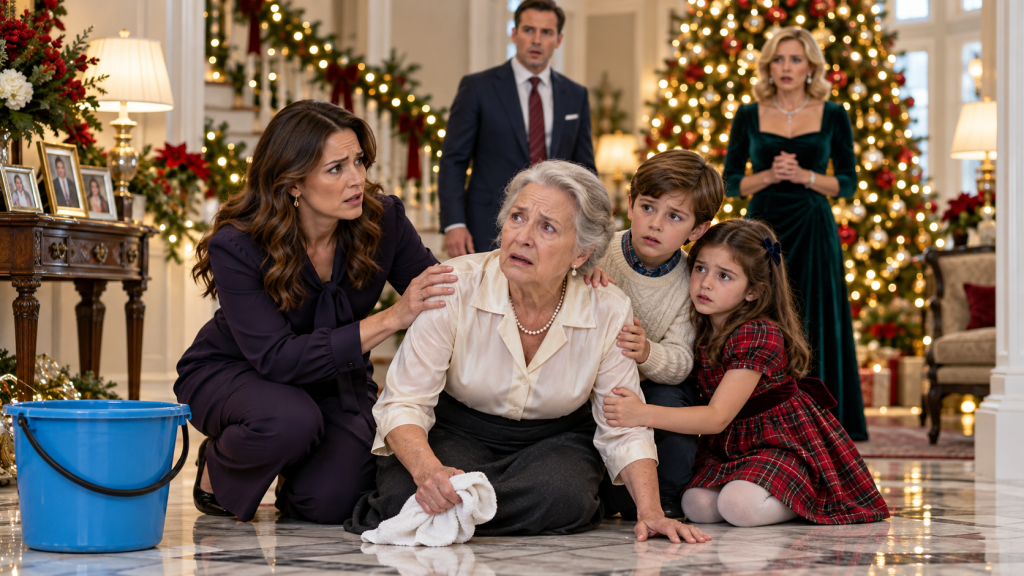
He did not know the first thing I would notice was Mom kneeling beside a toilet.
And he certainly did not know I would someday remove the basement door entirely.
What he gave me was not perfect foresight.
He gave me a pause.
A place to look before I reacted.
That saved me.
Not because secrets are good.
Because evidence gave me enough distance from emotion to see what was real.
But the lesson I passed to my children was different from the one Dad left me.
He said:
If you see your mother hurt, don’t argue. Open the hidden compartment.
I told Mateo and Sofia:
“If you ever see someone you love hurt, believe the injury enough to ask questions immediately.”
No hidden room required.
No waiting for proof to become unbearable.
Ask.
Listen.
Document.
Get help.
Love is not harmed by honest questions.
Only control is.
The final time Mauricio and I spoke about that Christmas, the twins were twenty-five.
We were standing outside Sofia’s apartment after dinner.
He looked older.
So did I.
He said,
“I still think about your mother kneeling in that bathroom.”
My throat tightened.
“So do I.”
“I should have stopped my mother.”
“Yes.”
He nodded.
No defense.
Then:
“I should have stopped myself long before that.”
“Yes.”
He looked at me.
“Do you hate me?”
I thought.
“No.”
That surprised him.
“I did.”
“For a while.”
“But hate kept you too central.”
He looked down.
“What do you feel now?”
I considered.
“History.”
His eyes filled.
That answer hurt him.
But it was true.
Not love.
Not hatred.
History.
Something real that happened.
Something that shaped us.
Something that did not get to keep happening.
He nodded.
“That’s fair.”
Then he left.
I watched him walk away.
No dramatic music.
No revenge.
Just distance.
The right kind.
Sometimes endings are not about someone losing everything.
Sometimes the real ending is that they stop having access to you.
That is enough.
My father once feared Patricia and Mauricio would destroy the ledger.
They did not.
For years, I thought that ledger was the most important thing in the story.
It wasn’t.
The most important thing was my mother standing up.
Literally.
I found her on her knees.
That image haunted me.
But when I remember it now, I continue the scene.
I helped her stand.
Her sleeve slipped.
I saw the bruises.
She tried to hide them.
Mauricio told me not to make a scene.
And instead of arguing with him, I remembered Dad.
I moved.
That was the turning point.
Not the basement.
Not the money.
Not the police.
The moment I believed the marks on my mother’s wrist more than I believed the man standing in front of me.
Everything else followed.
Years later, Sofia asked me,
“What would have happened if your flight hadn’t landed early?”
I hated the question.
Because I did not know.
Maybe Mom would have endured two more days.
Maybe Patricia would have pushed harder.
Maybe the childcare statement would have been signed.
Maybe not.
Maybe Dad’s secret would have stayed hidden longer.
I told Sofia the truth.
“I don’t know.”
She looked worried.
So I added,
“That’s why we don’t build safety around luck.”
Her face changed.
“What do you build it around?”
“People who can tell the truth without fear.”
“Documents everyone understands.”
“Money nobody can move secretly.”
“Children who know adults will listen.”
“Families where ‘no’ does not mean betrayal.”
She smiled.
“Sounds expensive.”
I laughed.
“It is.”
“But cheaper than secrets.”
That became our family joke.
Transparency is cheaper than secrets.
Emotionally.
Financially.
Legally.
Every way.
At Christmas now, we gather in the neighboring house.
The once-empty one.
The one everyone thought belonged to a bank.
The one Dad bought through a trust.
The one Patricia feared.
The one whose basement held the proof.
The twins bring partners.
Children now too.
Little feet running through rooms.
No one is ordered to serve.
No one earns a seat by working.
Whoever cooks complains.
Whoever does dishes gets applauded dramatically.
And every year, someone hangs an ornament shaped like a tiny sewing machine on the tree.
My son bought it as a joke.
I hated it.
Then loved it.
Last Christmas, my granddaughter asked,
“Why do we have a sewing machine on the tree?”
Everyone looked at me.
I thought about telling the whole story.
Then smiled.
“Because your great-grandmother was very good at sewing.”
Sofia raised an eyebrow.
I added,
“And your great-grandfather was very bad at simple solutions.”
Everyone laughed.
That was enough.
She can hear the rest when she is older.
Truth does not always have to arrive all at once.
The difference is she will never need bruises to unlock it.
That promise matters more to me than any house.
Any ledger.
Any trust.
My father tried to protect us with hidden compartments.
I protected my children by removing the need for them.
And my mother?
She spent the final years of her life reminding me that no person should have to scrub someone else’s bathroom to justify being allowed inside a family.
I still hear her voice sometimes when I catch myself overworking.
“Sit down, Daniela.”
So I do.
Not always.
But more than before.
I pour coffee.
Look through the open basement doorway.
Watch sunlight spill down stairs that once terrified me.
And I think about how rooms change when secrets leave them.
The basement was once evidence.
Now it is part of the house.
The neighboring property was once a mystery.
Now it is home.
My mother’s bruises once looked like proof that we had failed her.
Now I remember them as the last thing that family ever successfully hid from me.
Because after that Christmas, we changed the rules.
No suffering in silence.
No money without records.
No authority without consent.
No love that requires fear.
No family member too important to question.
And no locked door staying closed just because someone powerful says it should.
THE END STORIES! THANK YOU FOR READING GOOD LUCK !❤️
Related Posts