➡️ PART 3 ENDING PART ➡️
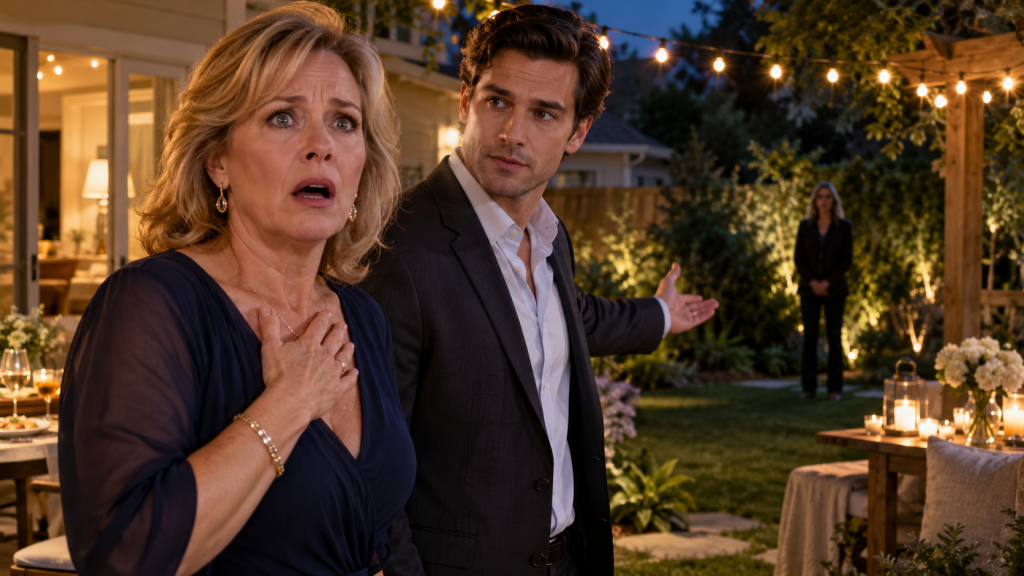
“Mom?”
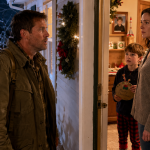
Marissa stood in the open doorway.
“What are you all doing out here?”
For one terrible second, nobody answered.
The porch light fell across half her face, illuminating the birthmark she had spent most of her childhood trying to hide.
When she was eight, she had asked me whether God had accidentally spilled paint on her.
When she was twelve, she begged me to buy a concealer advertised on television.
When she was sixteen, she stopped asking.
That had somehow been worse.
She had simply learned to look in the mirror without expecting it to apologize.
Now she stood in my doorway wearing the cream sweater Graham had bought her for Christmas, looking from me to her fiancé to the stranger beneath the maple tree.
Except he was not a stranger.
Not entirely.
Blood recognizes nothing by magic, but photographs do.
Marissa had seen Daniel’s face in old albums.
Her expression changed.
She looked at me.
Then at him.
Then back at me.
“Mom…”
I moved toward her.
“Marissa, come inside.”
She did not move.
“Is that…”
Her voice broke.
Daniel stepped forward.
“Marissa.”
She recoiled so violently that Graham immediately moved between them.
“Don’t.”
Graham’s voice was sharp.
Daniel stopped.
Marissa stared at Graham.
“You know him?”
Silence.
That silence was the first crack.
I saw it happen.
The exact moment my daughter realized everyone in the yard knew something she did not.
“Graham?”
He turned toward her.
“Marissa, I need to tell you something.”
Her face went white.
“No.”
“Please.”
“No.”
She looked at me.
“What is happening?”
I reached for her.
She stepped away from me too.
That hurt.
But I understood.
“Don’t touch me until somebody tells me why my father is standing in your backyard.”
Daniel whispered:
“I asked Graham to bring me here.”
Marissa looked at him.
“You asked my fiancé?”
“Yes.”
“How do you know my fiancé?”
Graham closed his eyes.
Marissa turned toward him.
“How do you know my father?”
“Marissa—”
“Answer me.”
Graham’s shoulders dropped.
“I met Daniel before I met you.”
Nothing moved.
Not the trees.
Not the air.
Not even me.
Marissa stared at him.
“What?”
“I knew him first.”
“How?”
Graham swallowed.
“He contacted me.”
“Why?”
I wanted to stop it.
Not the truth.
The cruelty of having it delivered all at once.
But there was no gentle way left.
Graham said:
“He paid me to meet you.”
Marissa blinked.
Once.
Twice.
Then she laughed.
A tiny sound.
Confused.
“You’re joking.”
“No.”
“You’re joking.”
“I wish I were.”
Her eyes moved toward me.
I shook my head immediately.
“I knew nothing about this.”
She looked back at Graham.
“What does ‘paid you to meet me’ mean?”
“I was supposed to get close to you.”
“How close?”
Graham said nothing.
Marissa looked at his hand.
At the ring on his finger.
Then down at her own engagement ring.
Her face emptied.
“No.”
“Marissa—”
“No.”
“The engagement wasn’t supposed to—”
She ripped the ring off.
Graham flinched.
She threw it.
Not at him.
Past him.
It disappeared into the grass.
“Wasn’t supposed to what?”
she screamed.
“Become real?”
Graham’s eyes filled.
“Yes.”
I watched my daughter’s heart break in front of me.
And there are moments when being a mother is torture because every instinct tells you to fix something no human hands can repair.
I wanted to erase the last six months.
I wanted to erase Daniel.
Graham.
The backyard.
The envelope.
Every cruel child who had ever convinced Marissa that being loved would be some extraordinary favor.
Because I knew what she was thinking.
I saw it before she said it.
Her fingers touched her birthmark.
That old reflex.
The one she had mostly outgrown.
“So that’s it.”
she whispered.
Graham shook his head.
“No.”
She laughed through tears.
“Of course.”
“No, Marissa.”
“Of course a man like you didn’t just walk into a coffee shop and decide he wanted me.”
I felt something break inside me.
“Marissa.”
She looked at me.
“Don’t.”
“Sweetheart—”
“Don’t tell me I’m beautiful.”
Her voice cracked.
“Not right now.”
So I didn’t.
That mattered.
There are moments when repeating a comforting sentence can sound like refusing to hear the wound underneath it.
Graham stepped closer.
She stepped back.
“Do not.”
He stopped.
“I love you.”
She slapped him.
The sound cracked across the yard.
Daniel moved.
I turned on him.
“Don’t you dare.”
He froze.
Marissa stared at Graham.
“You don’t get to say that yet.”
He nodded slowly.
“You’re right.”
“Yet?”
She laughed bitterly.
“Listen to yourself.”
“I’m sorry.”
“How much?”
Graham looked confused.
“What?”
“How much did he pay you?”
Silence.
“Tell me.”
“Ten thousand up front.”
She closed her eyes.
“And?”
“Forty thousand after I introduced him to you.”
Her knees almost buckled.
I caught her.
This time, she let me.
“Fifty thousand dollars.”
she whispered.
Graham cried.
“I didn’t take the rest.”
“Oh, how noble.”
“I know it doesn’t help.”
“You’re right.”
Daniel stepped forward.
“This was my idea.”
Marissa turned.
Her expression became so cold I almost did not recognize her.
“You.”
Daniel stopped.
“I can explain.”
“Twenty-three years.”
“I know.”
“No.”
She walked toward him.
“Don’t say you know.”
“Marissa—”
“You left when I was four.”
“Yes.”
“You didn’t call.”
“No.”
“You didn’t write.”
“I did.”
She froze.
“What?”
“I wrote.”
I looked at him.
“No, you didn’t.”
“Yes.”
“To whom?”
“Your mother.”
I stared.
“My mother?”
Daniel lifted the envelope.
“Evelyn.”
My mother’s name sounded wrong in his mouth after all these years.
“She knew.”
Marissa looked between us.
“Knew what?”
Daniel held out the envelope.
“The reason I left.”
I did not take it.
“You can explain with your mouth.”
He lowered his hand.
Then he looked at Marissa.
“Your birthmark wasn’t why I left.”
Her face changed.
“Who said it was?”
Daniel closed his eyes.
“I did.”
The air left my lungs.
I remembered.
Twenty-three years earlier.
Daniel pacing the kitchen.
Daniel drinking too much.
Daniel saying he could not handle people staring.
Daniel saying he was tired of doctors.
Daniel saying parenthood was not what he expected.
Then one morning—
gone.
He left a note.
I’m sorry. I can’t do this life.
For years, I had protected Marissa from the ugliest parts.
I never told her that during one argument Daniel had pointed toward the bedroom where she slept and said:
“Everywhere we go, people look at us.”
I had hated him for that sentence.
Now he said:
“I lied.”
I stared.
“What are you talking about?”
Daniel looked at me.
“I wanted you to hate me.”
“You succeeded.”
“I know.”
“Why?”
He held up the envelope.
“Because Evelyn told me to leave.”
My stomach dropped.
“No.”
“She did.”
“My mother adored Marissa.”
“Yes.”
“She hated you after you left.”
“I know.”
“She called you a coward until the day she died.”
“I know.”
“Then you’re lying.”
“Read the letter.”
I snatched it from him.
The handwriting stopped me.
Mom.
Absolutely Mom.
The slight rightward slant.
The oversized E.
The way she crossed her t’s too high.
My hands began shaking.
The envelope was addressed to me.
But never mailed.
Inside were eight pages.
The first line:
Claire, if Daniel has finally given you this, then either I am dead or he has broken the promise I made him give me. I hope, for Marissa’s sake, it is the second.
I looked up.
“What promise?”
Daniel whispered:
“To stay away.”
“Why?”
“Read.”
So I did.
Not aloud.
Not at first.
My mother’s words moved beneath my eyes.
Then I reached the third paragraph.
And the ground disappeared.
Marissa’s birthmark is not dangerous. Dr. Levin confirmed that. But its shape and placement told me something I hoped never to tell you.
I stopped.
Marissa whispered:
“What?”
I couldn’t speak.
She came closer.
“Mom?”
I handed her the letter.
She read.
Her eyes moved.
Then stopped.
“What does this mean?”
Daniel sat down on the garden bench.
He looked suddenly older.
“Your birthmark resembles one that runs in my family.”
Marissa stared.
“So?”
“Not my immediate family.”
He swallowed.
“My biological father’s family.”
I frowned.
“You told me your father was Peter Wallace.”
“Peter raised me.”
“Then who—”
“My biological father was Jonathan Vale.”
The name meant nothing to me.
But apparently it meant something to Marissa.
She frowned.
“Vale?”
Daniel nodded.
“Vale Pharmaceuticals?”
“Yes.”
I laughed in disbelief.
“What does a pharmaceutical company have to do with any of this?”
Daniel looked at me.
“Your father worked for them.”
My father had died when I was fourteen.
He had been a laboratory technician.
Quiet.
Gentle.
I remembered almost nothing about his work.
“My dad?”
“Yes.”
“And?”
Daniel’s eyes filled.
“Jonathan Vale was his employer.”
I felt cold.
“My mother knew him too?”
“Yes.”
“Why?”
“Because your father discovered something.”
The story came slowly.
Not because Daniel wanted drama.
Because shame has a way of making simple sentences difficult.
In the late 1980s, Jonathan Vale had been involved in concealing safety problems connected to an experimental medication his company was developing.
My father, Samuel, discovered manipulated test records.
He kept copies.
He intended to report them.
Before he could, he died in what the family had always called a highway accident.
No evidence ever proved it was anything else.
Mom suspected.
But suspicion is not proof.
Years later, I met Daniel.
Neither of us knew Daniel was Jonathan Vale’s biological son.
Daniel’s mother had had a brief affair with Vale while working as his assistant.
Peter Wallace raised Daniel as his own.
The truth came out only after Peter died.
Daniel was twenty-nine.
We were already married.
Marissa was three.
Daniel learned the truth privately.
He told my mother.
Not me.
“Why Mom?”
I demanded.
“Because I found Samuel’s name in old company documents.”
He looked ashamed.
“I panicked.”
“And instead of telling your wife, you told her mother?”
“Yes.”
“Why?”
“Because Evelyn knew what your father had found.”
My mother had kept his copies.
For years.
Hidden.
She believed Vale’s people had tried to find them after Dad’s death.
Then Marissa was born.
The birthmark itself proved nothing.
But it resembled a distinctive vascular mark several members of the Vale family carried.
Mom became frightened that if Jonathan Vale ever discovered Daniel existed—and then discovered Daniel had married the daughter of the man who once held damaging evidence—the past might reopen.
It sounded impossible.
Melodramatic.
A conspiracy invented by grief.
Until Daniel showed us the rest.
Old photographs.
His biological mother.
Jonathan Vale.
Jonathan’s sister.
And on her cheek, extending toward her jaw—
a birthmark eerily similar to Marissa’s.
Marissa touched her own face.
“So Grandma thought someone would recognize me?”
Daniel nodded.
“Eventually.”
“That is insane.”
“Yes.”
“Did anyone?”
Daniel looked down.
“Yes.”
My stomach tightened.
“Who?”
“Jonathan.”
Marissa stepped backward.
“He knew about me?”
“He learned about me first.”
Daniel said.
“Then he had me followed.”
I stared.
“When?”
“Shortly before I left.”
My skin went cold.
“He approached me.”
“Where?”
“Parking garage.”
“What did he want?”
“The documents Samuel had copied.”
“I didn’t have them.”
“Evelyn did.”
“Did he threaten Marissa?”
Daniel hesitated.
That was answer enough.
“What did he say?”
I demanded.
Daniel’s voice broke.
“He showed me photographs.”
“Of what?”
“You.”
“Marissa.”
“Daycare.”
My breath disappeared.
“He had pictures of our daughter?”
“Yes.”
I grabbed the garden table to stay upright.
“He told me families suffer when old secrets refuse to stay buried.”
Marissa whispered:
“Oh my God.”
“I went to Evelyn.”
Daniel continued.
“She gave him the documents.”
I stared.
“What?”
“She traded them.”
“For what?”
“A written agreement.”
“Money?”
“No.”
“What agreement?”
“That Jonathan would leave you and Marissa alone.”
I laughed bitterly.
“And you believed him?”
“No.”
“Neither did Evelyn.”
“Then what?”
“She told me the safest thing was to remove the connection.”
“What connection?”
“Me.”
Silence.
Daniel cried.
“She believed if I disappeared publicly—if it looked like I had abandoned you because I couldn’t accept Marissa—Jonathan would believe our family had fractured.”
I felt sick.
“So you let everyone believe you abandoned your daughter because of her face.”
“Yes.”
“You let her believe it?”
“I thought you would tell her I was just a coward.”
“I was a coward.”
“Don’t turn this into sacrifice.”
He looked at me.
“I’m not.”
“Good.”
“Because sacrifice would have been telling me the truth and letting me decide.”
“Yes.”
“You took my choice.”
“Yes.”
“You took hers.”
“Yes.”
“Mom took mine too.”
“Yes.”
My mother.
Dead twelve years.
I could not yell at her.
Could not ask her why.
Could not make her sit in the kitchen and explain why fear gave her the right to rearrange my marriage.
I looked at her handwriting.
The next pages answered some of it.
She apologized.
Again and again.
She wrote that after Jonathan Vale died seven years later, she begged Daniel to wait longer because Vale’s company remained powerful.
She became trapped by her own decision.
Then sick.
Then ashamed.
She wrote the letter before her death.
She gave it to Daniel through an attorney.
With instructions:
Give this to Claire only if you decide to return. If you remain gone, let her hate you. Do not use my fear to ask her forgiveness.
I lowered the paper.
For once, I understood why Daniel had not used it earlier.
But understanding was not absolution.
Marissa looked at him.
“So Grandma told you to leave.”
“Yes.”
“And you just did it?”
“Yes.”
“You could’ve said no.”
“Yes.”
“You could’ve come back after Jonathan died.”
“Yes.”
“You could’ve called me when I turned eighteen.”
“Yes.”
“You could’ve sent me one letter.”
“Yes.”
“Birthday card.”
“Yes.”
“Email.”
“Yes.”
“Anything.”
“Yes.”
Her voice rose.
“Stop saying yes!”
Daniel cried.
“What do you want me to say?”
“The truth!”
“The truth is I was afraid.”
“Of what?”
“By then?”
He looked at her.
“You.”
That stopped her.
Daniel wiped his face.
“I had been gone too long.”
“Every year made the next year harder.”
“When you were five, I thought I’d come back when things were safer.”
“When you were eight, I thought you’d hate me.”
“When you were twelve, I knew you should.”
“When you were sixteen, I saw a photograph of you online and realized you had grown up without me.”
“When you turned eighteen, I wrote a letter.”
“Where is it?”
“In a drawer.”
“Why?”
“Because I was ashamed.”
Marissa stared.
“So after the danger was gone, you stayed away because coming back was uncomfortable.”
Daniel nodded.
“Yes.”
That was the most honest thing he had said.
Marissa cried.
“Then don’t ever tell this story like you disappeared to save me.”
Daniel closed his eyes.
“I won’t.”
“You left partly because you were scared.”
“Yes.”
“And you stayed gone because you were a coward.”
“Yes.”
“And then, twenty-three years later, you decided the best way to return was to hire a stranger to manipulate me.”
Daniel looked toward Graham.
“Yes.”
Marissa laughed.
It sounded exhausted.
“You two deserve each other.”
She turned.
Graham said:
“Marissa.”
She stopped.
“What?”
“There is something else you need to know.”
“Of course there is.”
“I knew almost none of this when Daniel hired me.”
“What did he tell you?”
“That he’d abandoned his daughter and wanted a chance to reconnect.”
“And your solution was pretending to date me?”
“He didn’t ask me to date you at first.”
Daniel looked at Graham.
Graham ignored him.
“He hired me because I worked for a private investigation firm.”
Marissa stared.
“You’re an investigator?”
“I was.”
“Was?”
“I quit three months ago.”
“When did you start watching me?”
Graham’s face filled with shame.
“Eight months ago.”
We had believed they met six months earlier.
Marissa understood immediately.
“You watched me for two months before introducing yourself?”
“Yes.”
Her hand went to her mouth.
“What did you tell him?”
“Where you worked.”
“Your routine.”
“That you were safe.”
“That you seemed happy.”
“Seemed?”
“I didn’t enter your home.”
“I didn’t access private accounts.”
“I followed you.”
“That is private!”
“I know.”
“You watched me?”
“Yes.”
“Did you take pictures?”
“Yes.”
She closed her eyes.
I wanted to kill both men.
Possibly with the garden shovel.
“Where are they?”
Marissa asked.
“Destroyed.”
“How do I know?”
“You don’t.”
That answer surprised her.
Graham continued.
“You don’t have to believe anything I say tonight.”
“Good.”
“I’m going to give you everything.”
He reached into his coat.
A flash drive.
Documents.
Bank records.
The original contract.
Daniel’s messages.
Invoices.
His resignation letter from the investigation firm.
A cashier’s check for ten thousand dollars.
“What is that?”
Marissa asked.
“The money Daniel paid me.”
“I tried returning it.”
“Why didn’t he take it?”
Daniel whispered:
“I told him to keep it.”
Graham shook his head.
“So I put it aside.”
Marissa looked at the check.
“You think giving it back fixes this?”
“No.”
“Then why?”
“Because keeping it would mean I still benefited from what I did to you.”
She stared.
Graham continued.
“The original agreement was to arrange a natural meeting.”
“Become someone you trusted.”
“Eventually tell you I had located your father through my work.”
“There was never supposed to be an engagement.”
“So why propose?”
Graham’s face collapsed.
“Because I fell in love with you.”
Marissa shook her head.
“You don’t get to use love as bleach.”
He flinched.
She continued.
“It doesn’t clean the beginning.”
“I know.”
“Do you?”
“Yes.”
“Because you keep saying you love me like that should change the facts.”
Graham cried.
“You’re right.”
“I loved you before I knew you were being paid.”
“Yes.”
“You knew everything.”
“Yes.”
“I told you things I had never told anyone.”
“I know.”
“I told you about being bullied.”
“I know.”
“I told you I used to eat lunch in a bathroom stall because girls took pictures of my face.”
Graham covered his mouth.
“I know.”
“I told you I thought nobody would ever choose me.”
His shoulders shook.
“I know.”
“And you listened while knowing you had literally been paid to choose me.”
That sentence destroyed everyone in the yard.
Graham sat down.
He cried openly.
Marissa did not comfort him.
Neither did I.
He deserved to feel it.
Finally he whispered:
“That was the moment I should’ve told you.”
“When?”
“The night you told me about college.”
“Why didn’t you?”
“Because I was selfish.”
No excuse.
Good.
“I knew if I told you, I’d lose you.”
“So you decided my right to know was less important than your fear of losing me.”
“Yes.”
Marissa looked toward Daniel.
“Interesting.”
The two men looked at each other.
The parallel was obvious.
Daniel had hidden truth because he was afraid.
Graham had hidden truth because he was afraid.
Different scale.
Same arrogance.
Both had decided they knew which truth Marissa could survive.
She looked at me.
“Did you know anything?”
“No.”
“Nothing?”
“Nothing.”
“Grandma?”
“Nothing.”
“Dad?”
“No.”
“Graham?”
“No.”
She studied me.
Then nodded.
“Okay.”
One word.
But it meant she believed me.
I nearly collapsed from relief.
Marissa walked into the house.
Nobody followed.
Ten minutes passed.
Then twenty.
Daniel asked:
“Should we—”
“No.”
I said.
Graham remained silent.
After half an hour, Marissa returned carrying two bags.
My heart sank.
“Where are you going?”
“Home.”
“You can stay here.”
“I know.”
“Then stay.”
She looked at me.
“If I stay here, I’ll spend the night asking you what I should do.”
“And?”
“I need to find out what I think before I borrow what you think.”
My daughter.
I nodded.
“Okay.”
Graham stood.
“I’ll leave.”
“Yes.”
Marissa looked at him.
“Give me your key.”
He removed her apartment key from his ring.
Placed it on the table.
“The engagement ring is somewhere in the grass.”
she said.
“Leave it there.”
He nodded.
She turned to Daniel.
“Do not contact me.”
His face broke.
“Okay.”
“If I want you, I’ll find you.”
“Yes.”
“And Graham?”
“Yes?”
“Don’t follow me.”
“I won’t.”
“Not as an investigator.”
“I won’t.”
“Not as my fiancé.”
His eyes filled.
“I won’t.”
She looked at me.
“Mom.”
I hugged her.
She held me tightly.
Then whispered:
“Please don’t tell me everything happens for a reason.”
“I would never insult you like that.”
She laughed through tears.
“Good.”
Then she left.
The wedding was canceled the next morning.
Not postponed.
Canceled.
That mattered.
Marissa called every vendor herself.
Graham offered to cover the losses.
She refused at first.
Then changed her mind.
“He caused half of this.”
she said.
“He can pay half.”
I agreed.
Accountability is not the same as revenge.
The wedding venue refunded part.
Graham paid the rest.
Marissa mailed him a spreadsheet.
My daughter had inherited my mother’s talent for painful organization.
For six months, she did not speak to Graham.
For eight, she did not speak to Daniel.
She spoke to me constantly.
Sometimes about them.
Often not.
That was important.
Her life did not become a courtroom where the two men were always defendants.
She worked.
Saw friends.
Went to therapy.
Changed her hair.
Took a pottery class.
Made terrible bowls.
I displayed every one.
“Mom.”
“What?”
“That one is objectively ugly.”
“You made it.”
“Exactly.”
“It is art.”
“It cannot hold water.”
“Conceptual art.”
She laughed.
The first time I heard her laugh after that night, I went into the bathroom and cried.
Not because laughter meant she was healed.
Because pain had failed to take every room.
Daniel respected her silence.
To his credit.
He sent nothing.
No flowers.
No letters.
No guilt.
Eight months later, Marissa contacted him.
One message:
I have questions. Public place. Mom comes.
He agreed.
We met at a café.
Daniel arrived twenty minutes early.
Marissa did not hug him.
She had a notebook.
Of course she did.
“Did you ever cheat on Mom?”
“No.”
“Did you ever blame my birthmark privately?”
“No.”
“Did you ever feel embarrassed by it?”
Daniel hesitated.
I hated him for hesitating.
Then he said:
“Once.”
Marissa’s face changed.
“When?”
“You were two.”
“A woman in a restaurant stared.”
“I got angry.”
“Not at her.”
“At the situation.”
“For maybe five seconds, I wished your face didn’t attract attention.”
He cried.
“Then I hated myself for thinking it.”
Marissa looked down.
“Thank you for telling the truth.”
Daniel nodded.
“Did you love me?”
“Yes.”
“Do you love me?”
“Yes.”
“Do you expect me to call you Dad?”
“No.”
“Do you expect forgiveness?”
“No.”
“Why did you hire Graham?”
“Because I was still trying to control the outcome.”
That answer impressed me despite myself.
Daniel continued.
“I told myself I was creating a bridge.”
“I was really avoiding the risk that you would reject me directly.”
“So you made Graham absorb the risk.”
“Yes.”
“And me.”
“Yes.”
She wrote something.
“What?”
Daniel asked.
“None of your business.”
He almost smiled.
Wisely, he stopped himself.
They met again.
Then again.
Slowly.
Marissa never recovered the childhood she lost with him.
That phrase mattered.
People said:
“At least you got your father back.”
She corrected them.
“I didn’t get him back.”
“You can’t get back a relationship you never had.”
“We’re building one.”
Daniel had to learn that distinction.
He wanted photographs.
Holidays.
Titles.
He wanted twenty-three years compressed into months.
Marissa refused.
One Christmas, he asked whether he could join us.
She said no.
He accepted it.
The next year, she invited him for dessert.
Not dinner.
He arrived at seven.
Left at nine.
No complaints.
The year after that, dinner.
Progress measured in hours.
Graham was harder.
Because Marissa had actually loved him.
Daniel represented an absence.
Graham represented a betrayal inside something present.
Six months after the canceled wedding, Graham sent one letter.
Not to ask her back.
He wrote:
I will not tell you that what we had was real as though that should settle anything. My feelings became real. My behavior remained dishonest. Both statements are true. You loved me using information I controlled. That means your consent to our relationship was incomplete, and I understand why that may make the entire relationship feel stolen. I am sorry. I will not contact you again unless you ask me to.
Marissa showed me.
“What do you think?”
I handed it back.
“What do you think?”
She smiled sadly.
“Therapy has ruined you.”
“Very expensive skill.”
She kept the letter.
A year passed.
Then another.
Marissa dated someone else.
A dentist named Owen.
Nice man.
Kind.
They lasted seven months.
No villain.
No betrayal.
Just wrong for each other.
That was healthy.
Not every relationship needed to become a life lesson.
Then, nearly three years after the backyard, Marissa saw Graham at a charity event.
He was volunteering with an organization that provided free investigative assistance to families searching for missing relatives.
She almost left.
Instead, she walked up.
“Hi.”
Graham went pale.
“Hi.”
He did not hug her.
Good.
“You look different.”
she said.
“So do you.”
“That’s a dangerous thing to say to a woman.”
He panicked.
“I meant your hair.”
She laughed.
That saved him.
They had coffee.
One coffee.
Then nothing for two months.
Then another.
Graham told her what he had done with his life.
He had left private surveillance work entirely.
He completed training in investigative ethics and victim advocacy.
Not because a certificate erased anything.
Because he needed different habits, not just regret.
He worked mostly with legal-aid organizations.
He never mentioned Marissa in his professional story.
That mattered to her.
He had not turned hurting her into a redemption brand.
Six months later, she asked:
“Do you still love me?”
Graham answered:
“Yes.”
“Why didn’t you say it sooner?”
“Because the last time I used love as an argument, you were right to reject it.”
She cried.
He did not touch her until she reached for him.
They began again.
Not resumed.
Began.
Marissa insisted on that word.
No engagement.
No promises about marriage.
Separate homes.
Couples therapy before there was even a serious commitment.
Graham agreed.
Their therapist once asked:
“What is the central injury?”
Graham said:
“I lied.”
Marissa shook her head.
“No.”
He looked at her.
She said:
“The central injury is that you knew the truth would affect my choice, so you took away my ability to choose.”
Graham nodded.
“Yes.”
That became the work.
Not proving he loved her.
Returning choice.
If she said no, no persuasion.
If she needed time, time.
If she asked a question, full answer.
If the answer made him look bad, especially then.
Four years after their second beginning, Graham proposed again.
Not publicly.
Not dramatically.
They were washing dishes.
He dried his hands.
Then said:
“I have a question.”
Marissa looked at him.
“If that is a ring, I swear—”
It was.
She laughed.
He did not kneel.
“Marissa, I would like to marry you.”
“I love you.”
“But I don’t want an answer tonight.”
Her face softened.
“I want you to keep the ring for thirty days.”
“That’s weird.”
“I know.”
“Why?”
“Because the first time, I built a relationship around information you didn’t have.”
“This time, I want you to have space.”
She stared at him.
“Thirty days?”
“Or thirty years.”
She cried.
“Idiot.”
“Possibly.”
She said yes on day twenty-three.
Their second wedding was small.
Forty people.
No elaborate venue.
No performance.
Daniel attended.
So did I.
Before the ceremony, Marissa stood in front of the mirror.
She wore no heavy makeup.
Only lipstick.
Her birthmark completely visible.
I stood behind her.
She caught my eye in the mirror.
“Don’t.”
“What?”
“Cry.”
“I’m not.”
“You are already crying.”
“Mother of the bride privilege.”
She smiled.
Then touched her cheek.
“Do you know what I hate?”
“What?”
“That so much of this story became about this.”
She traced the edge of the birthmark.
“Grandma’s fear.”
“Daniel’s lie.”
“My insecurity.”
“Graham’s guilt.”
“Everyone keeps acting like this thing is a symbol.”
I listened.
She looked at me.
“It’s skin.”
I smiled.
“Yes.”
“That’s all.”
“Yes.”
“I spent half my life treating it like evidence.”
“Evidence of what?”
“That I was harder to love.”
My heart broke.
“And now?”
She shrugged.
“Now it’s the left side of my face.”
That was one of the most beautiful things I had ever heard.
Not:
I learned to love my birthmark.
Not:
It made me special.
Not:
It was secretly a blessing.
Just:
It is skin.
She had finally allowed her face to be ordinary.
Graham cried when he saw her.
She pointed at him.
“Keep it together.”
“No promises.”
Daniel sat in the second row.
He had asked whether he should walk her down the aisle.
Marissa said no.
He accepted it.
I walked with her.
Halfway down, she whispered:
“Mom.”
“Yes?”
“I’m walking too.”
I looked at her.
She smiled.
“So technically, we’re walking together.”
I laughed.
“Fair.”
At the front, Graham held out his hand.
Marissa took it.
Not because anyone had arranged it.
Not because Daniel paid him.
Not because I approved.
Not because insecurity made her grateful.
Because she knew everything.
And chose.
That was the difference.
They had a daughter three years later.
Her name was Evelyn.
After my mother.
That surprised me.
“Are you sure?”
I asked.
Marissa nodded.
“Grandma made a terrible decision.”
“Yes.”
“She also loved us.”
“Yes.”
“I don’t want fear to be the only thing we inherit from her.”
I understood.
Baby Evelyn did not have Marissa’s birthmark.
Daniel looked relieved when he saw her.
Marissa noticed.
“Don’t.”
He looked ashamed.
“Sorry.”
“There would have been nothing wrong if she did.”
“I know.”
“Do you?”
He nodded.
“Yes.”
Two years later, Marissa had a son.
Samuel.
After my father.
He had a tiny reddish mark behind his ear.
Daniel laughed when he saw it.
Marissa glared.
He raised both hands.
“I said nothing.”
“Good.”
The mark faded by his third birthday.
Nobody cared.
That was healing too.
The Vale story eventually became less dramatic than it had sounded that night.
Jonathan Vale was dead.
The old pharmaceutical company had been sold and restructured repeatedly.
My father’s copied documents, preserved by my mother, were eventually reviewed by attorneys and historians.
Some supported concerns about unethical research practices.
Nothing definitively proved Jonathan caused my father’s fatal accident.
I refused to turn suspicion into fact simply because it made the story cleaner.
That mattered.
We had already suffered enough from people deciding what was true without giving others a choice.
Daniel had been genuinely threatened.
My mother had been genuinely afraid.
But fear had magnified itself through secrecy.
One bad decision created the next.
Mom told Daniel to leave.
Daniel agreed.
Mom traded documents.
Daniel stayed away.
Then danger faded.
Shame remained.
Shame became silence.
Silence became twenty-three years.
That was the real monster.
Not the birthmark.
Not some inherited curse.
Silence.
Daniel became a grandfather.
Slowly.
Evelyn called him Daniel until she was six.
Then one day:
“Grandpa Daniel.”
He froze.
Marissa noticed.
“Don’t make it weird.”
Apparently our family had developed a phrase.
Daniel cried in the bathroom.
I knew.
I heard him.
I did not tease him.
Much.
He never became the father Marissa should have had.
He became a man who showed up later.
Those are not the same thing.
But later is still a place where something can happen.
He attended school plays.
Birthdays.
Soccer games.
He never complained when Graham stood closer in family photographs.
He never said:
“But I’m her father.”
Biology had already received twenty-three years of unearned importance.
Daniel finally learned presence had to be practiced.
When he was seventy-two, he became ill.
Heart failure.
Marissa visited.
Not every day.
Often.
One evening, he asked:
“Do you forgive me?”
She sighed.
“I knew you were going to do this.”
“Sorry.”
“No, you’re not.”
He laughed weakly.
“No.”
She held his hand.
“I forgive parts.”
“What does that mean?”
“I forgive the scared young man who thought disappearing would protect us.”
Daniel cried.
“And the rest?”
“I’m still angry at the man who stayed gone after the danger passed.”
He nodded.
“Fair.”
“And the man who hired Graham?”
She raised an eyebrow.
“That guy was an idiot.”
Daniel laughed until he coughed.
“Yes.”
Then Marissa said:
“But I don’t wake up angry anymore.”
He looked at her.
“Is that forgiveness?”
“Maybe.”
He squeezed her hand.
“I’ll take maybe.”
“No.”
she said.
His face fell.
She smiled.
“You don’t get to take it.”
“It’s mine.”
Daniel smiled through tears.
“Right.”
He died two months later.
Marissa grieved him.
Not as the father she had known all her life.
As the father she had begun to know late.
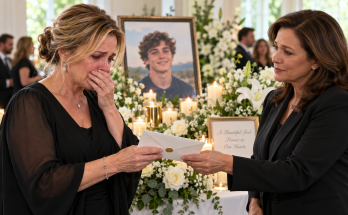
At his funeral, she spoke.
“My father left when I was four.”
No softening.
No euphemism.
“For years, I believed he left because he could not accept having a daughter who looked like me.”
“I later learned that was not true.”
“But the truth did not magically make the abandonment harmless.”
She looked toward us.
“He left partly because he was afraid.”
“He stayed away partly because he was ashamed.”
“He returned badly.”
A few people laughed gently.
“Very badly.”
Graham lowered his head.
Marissa smiled at him.
“My father taught me something I wish he had learned earlier.”
“Protection without another person’s consent can become control.”
“Love does not give us the right to decide which truths someone else is allowed to know.”
“He learned that late.”
“But he learned.”
She paused.
“And in the years I knew him as an adult, he stopped asking me to erase the years I didn’t know him.”
“That is what allowed us to have the years we did.”
She sat down.
No fairy tale.
No condemnation.
Truth.
My mother would have been proud.
Or uncomfortable.
Probably both.
Graham and Marissa remained married.
Not perfectly.
That matters too.
Trust repaired is not trust made indestructible.
There were moments.
A late text.
A forgotten detail.
An innocent omission.
Sometimes Marissa’s body remembered before her mind did.
“Are you hiding something?”
she would ask.
At first Graham became defensive.
Then he learned.
“No.”
“Do you want to check?”
Sometimes she did.
Eventually, rarely.
One night, nearly fifteen years into their marriage, Graham said:
“I hate that I did this to us.”
Marissa looked at him.
“You did something to the beginning.”
He waited.
She continued.
“We built the rest.”
That sentence freed him from a kind of guilt that had stopped being useful.
Accountability should shape behavior.
Not become a shrine where everyone kneels forever.
Their children grew.
Evelyn inherited Graham’s ridiculous height.
Samuel inherited Marissa’s laugh.
Neither inherited her belief that love was something they should feel lucky to receive.
That may have been Marissa’s greatest accomplishment.
She taught them:
“Someone liking you is not a favor.”
“Someone dating you is not charity.”
“You do not owe gratitude for being chosen.”
“Choose back.”
I loved that.
Choose back.
Two words.
Everything our story had lacked at the beginning.
Daniel had not let me choose.
My mother had not let me choose.
Graham had not let Marissa choose.
Eventually, healing became the return of choice.
When Evelyn was fourteen, a boy mocked a scar on another girl’s face.
Evelyn confronted him.
The school called Marissa because the confrontation became loud.
Marissa picked her up.
In the car, she asked:
“What did you say?”
Evelyn looked guilty.
“That his personality needed cosmetic surgery.”
Marissa covered her mouth.
“That is terrible.”
“I know.”
“Don’t say that again.”
“Okay.”
Pause.
“Was it funny?”
Marissa stared through the windshield.
“A little.”
They both laughed.
Then Marissa became serious.
“You don’t have to rescue everyone who looks different.”
“I know.”
“Make sure they want your help.”
Evelyn nodded.
Choice again.
Always choice.
I grew old.
Older than my mother ever got to be.
At seventy-eight, I moved into a smaller house near Marissa.
Not because she demanded it.
Because stairs had become my enemy.
Graham installed railings.
I watched him work.
“You’re handy.”
“Please don’t tell Marissa.”
“Why?”
“She’ll add projects.”
Too late.
I gave him seven.
He completed all of them.
At eighty, I found Mom’s original letter again.
I had kept it in a safe.
I called Marissa.
“Do you want this?”
She read it.
Then sat quietly.
“Do you hate Grandma?”
I asked.
“No.”
“Do you forgive her?”
“I don’t know.”
I smiled.
“Family tradition.”
She laughed.
Then:
“I think she was terrified.”
“Yes.”
“And wrong.”
“Yes.”
“Both?”
“Yes.”
She folded the letter.
“I wish people understood that.”
“What?”
“You don’t have to turn someone into a monster to admit they hurt you.”
I nodded.
“And you don’t have to turn them into a saint because they were scared.”
Exactly.
She kept the letter.
Years later, she donated it with Daniel’s permission documents and some of my father’s records to a university archive studying medical ethics and family secrecy.
Private parts removed.
Not every wound belongs to the public.
At eighty-four, I developed breast cancer.
Early.
Treatable.
Still frightening.
Marissa came to every major appointment.
Graham drove when she couldn’t.
During chemotherapy, my hair fell out.
One morning, I stood in the mirror and cried.
Marissa came behind me.
“Mom?”
“I look terrible.”
She stared at me.
Then smiled.
“Do you want me to tell you you’re beautiful?”
I laughed.
Because I remembered.
The backyard.
Her words:
Don’t tell me I’m beautiful. Not right now.
“No.”
I said.
“Then I won’t.”
She hugged me.
“You look sick.”
“Thank you.”
“You’re welcome.”
I laughed until my ribs hurt.
Sometimes love is not telling someone they are beautiful.
Sometimes it is respecting the truth they need at that moment.
I survived.
At eighty-eight, I attended Marissa and Graham’s thirtieth anniversary.
Thirty years.
Graham made a toast.
“I met my wife dishonestly.”
Everyone who knew the story became very still.
Marissa sighed.
“Oh God.”
He smiled.
“I don’t recommend it.”
Laughter.
“Everything good in my life began only after she learned the truth and was given the freedom to leave.”
He looked at her.
“She did leave.”
“For a long time.”
“Then years later, she chose me.”
His voice broke.
“I spent the first part of our story trying to manufacture an outcome.”
“The rest of my life taught me that being chosen means nothing unless the other person is free not to choose you.”
Marissa cried.
He raised his glass.
“To freedom.”
She raised hers.
“To second chances that are never owed.”
Everyone drank.
Perfect.
When I was ninety-one, Marissa asked to record my memories.
“For the kids.”
“I’m not dead.”
“I know.”
“Feels suspicious.”
“Mom.”
So we sat in my living room.
She placed a recorder on the table.
“Tell me about the first time I brought Graham home.”
I groaned.
“You cooked too much.”
“I always cook too much.”
“He was nervous.”
“I thought he was charming.”
“He was.”
“Then I went to the bathroom.”
“Yes.”
“What happened?”
I smiled.
“He turned into an idiot.”
From the kitchen, Graham yelled:
“I can hear you!”
“Good!”
Marissa laughed.
Then she asked:
“Were you happy for me?”
“So happy.”
“Why?”
The question surprised me.
“Because you were in love.”
“That’s all?”
I knew what she was really asking.
“No.”
I reached for her hand.
“Part of me was relieved.”
Her expression changed.
“Because of my face?”
“Not exactly.”
I chose my words carefully.
“Because I had watched you spend years believing love might not happen for you.”
“And I hated that belief.”
“When you brought Graham home, I thought maybe the belief had finally died.”
Marissa looked down.
“Then you learned he was paid.”
“Yes.”
“That must have confirmed your worst fear.”
“No.”
She looked up.
“My worst fear was never that nobody would love you.”
“What was it?”
“That you might accept bad love because you believed it was the only kind you could get.”
Tears filled her eyes.
I squeezed her hand.
“That night, when you took off the ring and walked away, I was devastated.”
“But I was also proud.”
“Why?”
“Because even while your heart was breaking, you knew being loved dishonestly was not something you had to accept just because you had once feared being alone.”
Marissa cried.
“So the happiest part wasn’t the wedding?”
“No.”
“The second proposal?”
“No.”
“What?”
“The night you left.”
She laughed through tears.
“That’s depressing.”
“No.”
“It was the first time I knew you understood what I had been trying to tell you since you were born.”
“What?”
“You were never required to accept whatever love was offered.”
“You were allowed to have standards.”
“You were allowed to walk away.”
“You were allowed to be chosen.”
“And allowed to choose back.”
She squeezed my hand.
“Choose back.”
“Yes.”
She stopped the recorder.
Then hugged me.
I died at ninety-four.
Not dramatically.
Morning sunlight.
Marissa beside me.
Graham nearby.
My grandchildren grown.
Great-grandchildren making too much noise down the hallway.
I liked the noise.
Before I closed my eyes, Marissa leaned close.
“Mom?”
“Yes?”
“Do you think Grandma was waiting for you?”
I smiled.
“If she is, we’re having words.”
Marissa laughed.
“Dad too?”
“Different words.”
She kissed my forehead.
“I love you.”
“I love you too.”
Then I touched her cheek.
Not the birthmark.
Her cheek.
There was a difference.
“Marissa?”
“Yes?”
“You know, don’t you?”
She understood immediately.
“Yes.”
“Good.”
Those were my last words.
After my funeral, Marissa found an envelope in my desk.
Her name.
Inside was a letter.
My darling Marissa,
When you were born, the doctor placed you in my arms, and the first thing I noticed was not your birthmark.
It was your fingers.
You had the longest little fingers I had ever seen.
Then you sneezed.
Then you opened your eyes.
Only afterward did someone mention the mark on your face.
I want you to remember that because the world spent far too many years making one feature the headline of your existence.
It was never the headline to me.
You were.
I am sorry I could not protect you from every stare.
I am sorry children were cruel.
I am sorry your father’s disappearance allowed you to connect his absence to your appearance.
I am sorry Graham’s betrayal reopened that wound.
But I am not sorry for the woman you became, because saying that would make your pain sound necessary.
It wasn’t.
You did not need bullying to become compassionate.
You did not need abandonment to become strong.
You did not need betrayal to learn your worth.
Those things happened.
You grew anyway.
There is a difference.
Marissa stopped reading.
Cried.
Then continued.
Your grandmother loved you and made a fearful decision that harmed you.
Your father loved you and spent years behaving like love could excuse cowardice.
Graham loved you and once believed love could make dishonesty less dishonest.
All three eventually learned the same lesson.
Love is not permission.
It does not give us ownership of another person’s choices.
The best thing I ever watched you do was learn to choose back.
You chose whether Daniel could enter your adult life.
You chose whether Graham could return.
You chose what your birthmark meant—and eventually chose to let it mean almost nothing at all.
That last choice may have been my favorite.
It was skin.
Just skin.
You were always the story.
Love, Mom.
P.S. I still think the first engagement ring is somewhere in my old backyard. If Graham ever finds it, tell him he is absolutely forbidden from proposing a third time.
Marissa laughed so loudly that Graham came running.
“What?”
She handed him the letter.
He read the postscript.
Then looked guilty.
“What?”
Marissa narrowed her eyes.
“You found it, didn’t you?”
Graham slowly nodded.
“When?”
“About fifteen years ago.”
“Where is it?”
“In my desk.”
“You kept it?”
“I didn’t know what else to do with it.”
She laughed.
“Bring it.”
He did.
The ring looked smaller than she remembered.
A little tarnished.
There was still dried earth inside the setting.
Marissa held it.
Once, it had represented the worst humiliation of her life.
A proposal built on a lie.
A relationship arranged through money.
Proof, she had thought that night, that no man like Graham could genuinely choose someone who looked like her.
Now she looked at the ring and felt almost nothing.
That surprised her.
“Do you want to throw it away?”
Graham asked.
“No.”
“Keep it?”
“No.”
“Then what?”
Marissa thought.
Then smiled.
“Sell it.”
They did.
They donated the money to an organization providing counseling for teenagers experiencing bullying because of visible differences.
No plaque.
No names.
No grand symbolic speech.
Just money becoming useful.
That was enough.
Marissa lived a long life.
Longer than Daniel.
Longer than me.
Longer, eventually, than Graham.
He died at eighty-seven.
She was beside him.
Before he died, he whispered:
“I did my part of the deal.”
Marissa stared at him.
Then realized.
Those terrible words from my backyard.
She laughed and cried.
“You idiot.”
Graham smiled weakly.
“Now it’s your turn.”
“What is my turn?”
“Live.”
Her face collapsed.
“That is a terrible joke.”
“I’ve been saving it for sixty years.”
“Still terrible.”
“I love you.”
Marissa kissed him.
“I know.”
Then she added:
“And I chose you.”
Graham smiled.
That was what he wanted to hear.
Not that fate had forgiven him.
Not that the lie no longer mattered.
That after everything was known, she had been free.
And she chose.
He died that night.
Marissa grieved him without rewriting the beginning.
Their grandchildren knew the story.
Not every detail.
Enough.
One granddaughter once asked:
“Grandma, if Grandpa Graham lied to you, why did you marry him?”
Marissa answered:
“I didn’t marry the man who lied to me.”
The girl frowned.
“But he was the same person.”
“Yes.”
“Then what do you mean?”
“I mean I didn’t marry him then.”
“I left.”
“He changed.”
“I changed.”
“Years passed.”
“We met again honestly.”
“Then I decided.”
The child thought.
“So people can change?”
“Yes.”
“Do you have to forgive them?”
“No.”
“Do you have to give them another chance?”
“Absolutely not.”
“Then why did you?”
Marissa smiled.
“Because I wanted to.”
That was the whole point.
Not obligation.
Choice.
At eighty-nine, Marissa sat for a family portrait.
Children.
Grandchildren.
Great-grandchildren.
Someone asked whether she wanted the photographer to soften the birthmark digitally.
The photographer looked horrified.
“I didn’t suggest that.”
A great-grandchild had.
Marissa laughed.
“No.”
The child asked:
“Why?”
Marissa shrugged.
“Because then it wouldn’t be my face.”
Simple.
No speech.
No triumph.
Just a face.
When the photograph was printed, Marissa studied it.
Her birthmark had faded slightly with age.
Wrinkles crossed through it.
Gray hair framed it.
She smiled.
For decades, people had attached stories to that patch of skin.
Children called it ugly.
Strangers called it unusual.
Doctors called it vascular pigmentation.
My mother called it dangerous evidence.
Daniel allowed it to become the cover story for his disappearance.
Marissa once called it the reason nobody would love her.
Eventually, she stopped calling it anything.
And that was freedom.
When she died at ninety-three, her children found three things together in her bedside drawer.
My letter.
Her grandmother’s letter.
And a photograph from her second wedding.
On the back, in Marissa’s handwriting:
I knew everything when I said yes.
Beneath it, years later, she had added:
That is why the yes mattered.
Her daughter Evelyn read the sentence at the memorial.
Then she told the family something Marissa had said many times:
“My mother spent the first part of her life believing being chosen was the greatest proof that she mattered.”
“She spent the rest learning something better.”
“Being chosen is beautiful.”
“But choosing is powerful.”
The room became quiet.
Evelyn continued.
“Her father chose fear.”
“Her grandmother chose secrecy.”
“Her husband, at first, chose manipulation.”
“Each choice harmed her.”
“But none became her destiny.”
“Marissa chose boundaries.”
“She chose questions.”
“She chose to leave.”
“Later, she chose to return.”
“She chose forgiveness where she wanted it and withheld it where she needed time.”
“She chose not to make a birthmark into a metaphor forever.”
“And most importantly, she never taught us that another person’s desire for us determined our value.”
Evelyn touched her own daughter’s shoulder.
“She taught us to choose back.”
After the memorial, the family gathered in the old backyard.
My house had remained in the family.
The maple tree was enormous now.
Someone remembered the ring.
Someone else remembered Daniel standing beneath that tree.
The younger children knew only fragments.
One asked:
“Is this where everything started?”
Evelyn looked at the house.
“No.”
“Where?”
She smiled.
“Long before here.”
Another child asked:
“Is this where everything got fixed?”
Evelyn shook her head.
“No.”
Nothing had been fixed that night.
That night had broken things.
Truth sometimes does.
But broken was not the same as ruined.
The truth broke an engagement built on missing information.
It broke Daniel’s fantasy that he could return without facing consequences.
It broke my belief that my mother had simply been a helpless observer.
It broke Marissa’s heart.
Then, slowly, truth gave everyone something secrecy never had.
A choice.
That was what the backyard became in our family history.
Not the place where Marissa’s fiancé was exposed.
Not the place where an absent father returned.
Not the place where a birthmark unlocked some dark family secret.
It was the place where lies finally ran out of room.
And when they did, Marissa stood beneath the porch light with tears on her face, removed an engagement ring, and refused to let fear decide her future for her.
Years later, when she remembered that younger version of herself, she did not feel embarrassed.
She felt proud.
That woman thought her world had ended.
She did not know she would live another seventy years.
She did not know Daniel would eventually learn to show up without demanding a title.
She did not know Graham would spend years becoming someone she might freely choose again.
She did not know she would become a mother.
A grandmother.
A great-grandmother.
She did not know her face would one day become so ordinary to her that she could go hours, days, weeks without thinking about the mark at all.
She knew only that the man she loved had lied.
And she knew she deserved the truth.
That knowledge was enough.
If I could return to that backyard for one minute, I would not warn Marissa.
I would not stop Daniel from arriving.
I would not hide Graham’s confession.
I would not take away the pain by preserving the lie.
I would stand beside my daughter.
And when she touched her birthmark and wondered whether she had ever truly been chosen, I would tell her something different from what I used to say.
I would not say:
“You’re beautiful.”
She already knew I believed that.
I would say:
“His lie is about his character, not your face.”
Then I would let her decide what happened next.
Because that was the lesson all of us took too long to learn.
Love can invite.
Love can ask.
Love can apologize.
Love can wait.
Love can change.
But love does not get to choose for someone else.
Marissa’s life began changing the night she finally understood that.
Not because a handsome man loved her.
Not because her father returned.
Not because a family secret explained away twenty-three years of abandonment.
Not because the birthmark turned out to connect her to some wealthy family.
None of those things gave her value.
She had value before Graham entered the coffee shop.
Before Daniel came back.
Before my mother’s letter was opened.
Before anyone called her beautiful.
Before anyone called her different.
She had value when she was a newborn sleeping against my chest.
She had value when children mocked her.
She had value eating lunch alone.
She had value when no boys called.
She had value the night she fell in love.
She had value the night that love shattered.
And she had value when she walked away.
That was what I had tried to teach her.
It simply took life a long time to show her the difference between hearing it and knowing it.
The last photograph of Marissa showed her sitting beneath the old maple tree.
Ninety-two years old.
Silver hair.
Birthmark visible.
Eyes closed.
Sunlight across her face.
On the back she had written one final sentence:
I spent too many years waiting to be chosen before I realized my life had been mine to choose all along.
And beneath it:
I chose it.
All of it.
THE END STORIES! THANK YOU FOR READING GOOD LUCK !❤️
Related Posts