➡️ PART 3 ENDING PART➡️
The sirens reached the end of the street before David found his voice again.
He stared at the phone in his hand as if it had turned into something poisonous.
My father remained on speaker.
“David.”
That was all he said.
My husband flinched.
I had never seen that before.
Not once.
David had shouted at waiters.
Humiliated junior associates.
Interrupted judges.
Threatened contractors.
Corrected strangers with the confidence of a man who believed a law degree had appointed him guardian of reality.
But one calm word from my father emptied every clever sentence from his mouth.
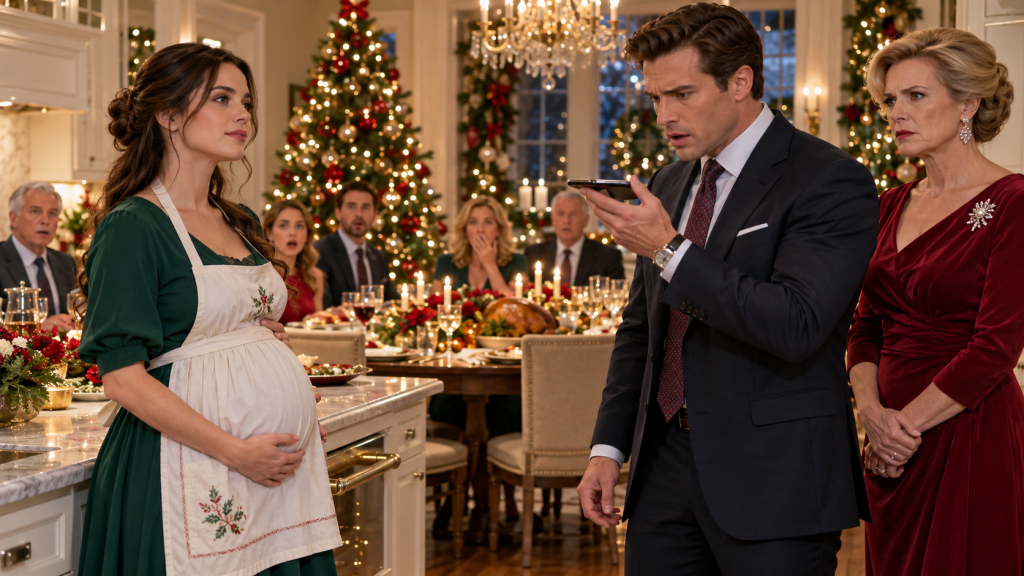
Sylvia gripped the kitchen counter.
“This is ridiculous.”
Her voice sounded thin.
“They cannot simply come into my house.”
My father answered before I could.
“If emergency responders have reason to believe my daughter is experiencing a medical crisis, you will not obstruct them.”
Sylvia stared at the phone.
Then at me.
I was still on the floor.
One hand beneath my belly.
The other pressed against the tile.
The pain came again.
Deep.
Low.
Terrifying.
I gasped.
My father heard.
His voice changed.
“Anna?”
“I’m here.”
“Stay with me.”
Something warm moved beneath my dress.
Fear swallowed everything.
“Dad.”
“Yes.”
“I’m bleeding more.”
The room disappeared behind tears.
My father did not tell me it would be fine.
He had never been a man who lied to comfort people.
Instead he said:
“The ambulance is almost there.”
A fist hammered against the front door.
“EMS!”
David looked toward the hallway.
Then at me.
Then toward the dining room full of his colleagues.
Nobody was laughing anymore.
No one was eating.
The perfect Christmas dinner sat cooling beneath candles.
Gravy congealed in silver dishes.
The turkey I had woken at five in the morning to prepare rested at the center of the table like something from another family’s holiday.
One of David’s colleagues, a woman named Claire Morgan, had risen from her chair.
She was a senior partner at his firm.
I had met her only twice.
Both times David became more attentive to me the second Claire entered the room.
She walked into the kitchen now.
Her face changed when she saw me on the floor.
“Jesus Christ.”
Sylvia stepped in front of her.
“She slipped.”
Claire looked at the blood.
Then at Sylvia.
“Move.”
Sylvia actually did.
Someone opened the front door.
Paramedics rushed in.
Behind them came two uniformed officers.
David stood straighter automatically.
His lawyer posture.
Shoulders down.
Chin level.
Voice controlled.
“My wife had an accident.”
One officer looked at me.
The paramedics did not waste time asking David for his version.
A woman knelt beside me.
“Anna? I’m Rachel. I’m a paramedic. Can you tell me how far along you are?”
“Thirty-one weeks.”
“Any complications before today?”
“No.”
“Did you fall?”
I looked at David.
His face changed.
Not visibly enough for anyone who did not know him.
I knew him.
One tiny narrowing of the eyes.
A command.
Stay loyal.
The old Anna might have.
The woman I had been that morning certainly would have considered it.
Then my father’s voice came from the phone on the counter.
“Anna.”
I looked away from David.
“No.”
The paramedic leaned closer.
“No, you didn’t fall?”
“No.”
“What happened?”
My throat closed.
Sylvia said:
“She lost her balance when—”
Claire turned.
“Let her answer.”
Silence.
The room belonged to me for once.
I looked at the paramedic.
“My mother-in-law pushed me.”
Sylvia gasped.
“That is a lie.”
“And my husband refused to call an ambulance.”
David stepped forward.
“I was trying to calm her down. She’s emotional and—”
The second officer raised a hand.
“Sir, stop.”
David froze.
Not because the officer had more intelligence.
Because he had authority David could not dismiss.
The paramedic asked:
“Did anyone strike you anywhere else?”
“No.”
“Did you hit your abdomen?”
“My back hit the counter.”
“Any loss of consciousness?”
“I don’t think so.”
“Any contractions?”
“I don’t know.”
Another wave of pain answered for me.
Rachel looked at her partner.
“Let’s move.”
They brought in a stretcher.
I tried to stand.
My legs failed.
Embarrassment came before fear.
How absurd.
I was thirty-one weeks pregnant, bleeding on a kitchen floor after being shoved, and some part of me still worried that strangers might think I looked undignified.
That was what David had taught me.
Appearances first.
Pain second.
I stopped caring.
The paramedics lifted me.
My father was still on speaker.
“Dad.”
“Yes.”
“I’m going.”
“I know.”
“Are you coming?”
A pause.
Then:
“I’m already on my way.”
My throat tightened.
“From Washington?”
“Yes.”
“You don’t have to—”
“Anna.”
There was my childhood again.
One word.
The tone he used when I was twelve and tried to argue that stitches were unnecessary because the cut had “mostly stopped bleeding.”
“I’m coming.”
I closed my eyes.
“Okay.”
The officer reached for David’s phone.
“Sir, I need you to end the call.”
My father said:
“Anna, listen carefully.”
I looked toward the phone.
“I love you.”
My father rarely said that first.
My eyes filled.
“I love you too.”
Then the call ended.
They wheeled me through the dining room.
David’s colleagues moved aside.
Some looked at me.
Some looked at him.
One stared at the cracked remains of my phone near the kitchen wall.
Claire looked directly at me.
“I saw him take your phone.”
David’s face changed.
“Claire.”
She ignored him.
She looked at the officer.
“I saw David take her phone when she asked for emergency help.”
There it was.
A witness.
A real one.
Not my father.
Not someone powerful.
A woman David had invited because her opinion mattered professionally.
David’s voice sharpened.
“You misunderstood what you saw.”
Claire turned slowly.
“I did not.”
Something shifted in the room.
I saw it happen.
Until that moment, David still believed he could shape the story.
Claire had just taken the story out of his hands.
The stretcher rolled toward the front door.
Patricia Reynolds, another attorney from David’s firm, stepped forward.
“I heard Anna ask for 911.”
Then a younger associate said:
“So did I.”
David stared at them.
His face looked almost betrayed.
That would have been funny if I had not been terrified for my child.
People like David confuse silence with loyalty.
They think if nobody stops them immediately, everyone has agreed.
But silence sometimes breaks all at once.
Outside, the winter air hit my face.
Christmas lights glowed along the neighboring houses.
A plastic reindeer leaned sideways on someone’s lawn.
A child across the street watched from behind a window.
I wondered what story she would remember.
An ambulance.
Police.
A pregnant woman leaving on a stretcher.
Maybe her mother would close the curtain.
Maybe not.
The ambulance doors shut.
Rachel connected monitors.
“Anna, we’re going to take care of you.”
I nodded.
“Can you hear the baby?”
“We’re checking.”
That was not the answer I wanted.
She adjusted something.
I watched her face.
Professionals think frightened patients cannot read faces.
We can.
Her concentration changed.
“What?”
I asked.
“His heart rate is there.”
His.
The baby was a boy.
We had learned at twenty weeks.
David had cried when the technician said it.
Actually cried.
He bought blue blankets that afternoon.
Called his mother.
Opened champagne he did not let me drink, obviously.
For three days, he treated me like something sacred.
I had almost believed pregnancy had repaired our marriage.
Then the demands changed.
Now there was an heir to protect.
Do not lift that.
Do not eat this.
Do not embarrass me.
Do not gain too much weight.
Do not challenge my mother.
Smile at the firm dinner.
Wear the navy dress.
Call my partners “Mr.” until invited otherwise.
My son had not caused David’s control.
He had simply given it a new costume.
The paramedic said:
“We’re seeing some concerning changes. The hospital knows we’re coming.”
“Is he okay?”
“Right now we have a heartbeat.”
Right now.
The phrase followed me all the way to the emergency entrance.
Everything happened quickly after that.
People cut away my dress.
Placed monitors.
Started an IV.
Asked the same questions repeatedly.
Name.
Date of birth.
Weeks pregnant.
Where did I hurt?
Had anyone assaulted me?
Did I feel safe at home?
I answered.
For the first time in years, repetition did not feel like disbelief.
It felt like documentation.
A doctor named Dr. Shah came in.
Not my obstetrician.
On-call maternal-fetal medicine.
He introduced himself while studying the monitors.
“Anna, the baby’s heart rate is showing distress, and I’m concerned about placental injury from the trauma.”
My hands went numb.
“Can you save him?”
“We are going to move quickly.”
That was doctor language for:
This is serious.
He continued.
“We’re preparing for an emergency delivery.”
“No.”
The word came automatically.
Too early.
Thirty-one weeks.
I had not finished the nursery.
I had not washed the small blue sleep sacks.
I had not decided whether his middle name would be James or Samuel.
“No.”
Dr. Shah looked at me.
“I know.”
“He’s too small.”
“He is premature.”
“Will he live?”
“I cannot promise you that.”
My breath broke.
“But at thirty-one weeks, babies can do very well with neonatal care.”
I held onto that.
Can.
Not will.
Can.
“Where is my husband?”
The question escaped me.
Habit.
The nurse looked carefully at me.
“Police are speaking with him.”
I closed my eyes.
Good.
Then immediately felt guilty for thinking it.
That guilt was another chain.
I let it fall.
The nurse asked:
“Is there someone else you want us to contact?”
“My father.”
“Name?”
I told her.
She stopped writing.
Looked up.
Not because she doubted me.
Because the name was recognizable.
Even people who do not follow the courts recognize some titles.
“Your father is…”
“Yes.”
She recovered quickly.
Professional.
Good.
“Is he your emergency contact?”
I almost laughed.
“No.”
David had changed that years earlier.
Of course he had.
“Make him one.”
“We can do that.”
“And remove David.”
She nodded.
That tiny administrative change made me cry.
A line in a computer.
Emergency contact.
The person the hospital calls when something happens.
For years, I had let marriage make David the automatic answer to every question.
Who speaks for Anna?
David.
Who knows Anna?
David.
Who drives Anna?
David.
Who explains why Anna is upset?
David.
Not anymore.
The operating room was bright.
Cold.
Fast.
Someone explained anesthesia.
Someone else asked whether I consented to an emergency cesarean if needed.
I said yes.
Again.
Yes.
Yes.
Yes.
My own voice signing me back into my body.
Then pain became pressure.
Voices moved around me.
Numbers.
Commands.
A neonatal team waited.
I prayed.
Not elegantly.
No formal language.
Please.
Please.
Please.
Then I heard a sound.
Small.
Angry.
Alive.
My son cried.
I began sobbing.
Someone said:
“Baby boy.”
Someone else:
“Time of birth, 7:42 p.m.”
Christmas Day.
My son was born on Christmas.
Far too early.
Because his grandmother pushed me.
Because his father cared more about police cars than my bleeding.
Because I had spent years believing keeping peace protected people.
Yet he cried.
My boy cried.
“Can I see him?”
“Briefly.”
They brought him near.
Tiny.
Red.
Wrapped quickly.
A little cap.
Machines waiting.
I touched one finger to his cheek.
“I’m your mom.”
Ridiculous.
He knew nothing about language.
I needed to say it anyway.
“You’re safe.”
Then they took him to neonatal intensive care.
That was the last thing I remembered before the medication pulled me under.
When I woke, my father was sitting beside the bed.
No robe.
No courtroom.
No cameras.
Just my father.
Gray suit wrinkled from travel.
Tie loosened.
Reading glasses in one hand.
He looked older than I remembered.
That frightened me more than anything.
For years, I had kept him at a distance partly because he always seemed immovable.
The man newspapers called intimidating looked like a tired father who had spent hours waiting for his daughter to wake.
“Dad.”
His eyes opened.
He stood immediately.
“Anna.”
I started crying.
He leaned down and kissed my forehead.
Not Chief Justice.
Dad.
I held onto his sleeve.
“My baby?”
“Alive.”
I sobbed.
“He’s in NICU.”
“Stable for now.”
“For now?”
My father closed his eyes briefly.
“Your doctors will explain better than I can.”
I looked at him.
He had always been precise.
If he said stable for now, he meant he would not make promises medicine had not made.
“Can I see him?”
“When the doctor clears you.”
I nodded.
Then remembered.
“David?”
My father’s face became unreadable.
He sat.
“Under investigation.”
“Sylvia?”
“Also.”
“Are they arrested?”
“I’m not discussing details I don’t know with certainty.”
There he was.
Still a judge.
I laughed once and immediately regretted it because my abdomen hurt.
“Don’t make me laugh.”
His mouth trembled.
“I’ll try to become less charming.”
“You’ve had seventy years of practice.”
“I’m not seventy.”
“You look seventy.”
“Abuse victim status does not protect you from being removed from my will.”
I cried harder.
Because joking meant I was alive.
Because he was there.
Because I had missed him.
That last part hurt differently.
My father took my hand.
“Anna.”
“Yes?”
“Why didn’t you call me?”
There it was.
Not accusation.
Pain.
I looked toward the window.
Night outside.
Hospital lights reflected in the glass.
“I didn’t want you to fix my life.”
He was silent.
“I know what people say about me.”
I continued.
“That I’m your daughter.”
“Not Anna.”
“Your daughter.”
“That every job I get is because of your name.”
“That every door opens.”
“That nobody tells me no.”
His hand tightened.
“When I met David, he didn’t know.”
“I liked that.”
My father nodded.
“I understand.”
“Then Mom died.”
His face changed.
My mother had been gone six years.
Ovarian cancer.
The only person who could make my father forget where he left his glasses.
“I pulled away from you.”
“Yes.”
“I thought you were trying to manage my grief.”
“I was.”
I looked at him.
He nodded.
“I did it badly.”
That surprised me.
“I called therapists.”
“Without asking.”
“Yes.”
“You spoke to my employer.”
“To tell them you might need time.”
“I didn’t ask you.”
“No.”
“You sent security when I moved apartments.”
“The building had problems.”
“Dad.”
“I am acknowledging the criticism, not agreeing with every detail.”
I almost laughed again.
He continued.
“I frightened you with help.”
That sentence quieted me.
“Yes.”
“I’m sorry.”
My father apologizing was like seeing a monument bend.
I squeezed his hand.
“David loved that I wanted independence.”
“He used it.”
“Yes.”
“He said you were controlling.”
My father’s jaw tightened.
“Sometimes I was.”
That hurt because it was fair.
“But he made everything sound like proof I should stay away from you.”
“Did he know who I was?”
“No.”
“Not at first.”
“And later?”
I looked down.
“I told him my father was in law.”
My father raised an eyebrow.
“That narrows it to approximately half of Washington.”
“I said you were a judge.”
“And?”
“He thought state court.”
“How?”
“I let him.”
My father nodded slowly.
“And when he called you an orphan?”
I froze.
“He did that?”
Of course.
The phone had been on speaker.
My father heard more than I remembered.
“He knew Mom died.”
“He knew we were estranged.”
“So when he wanted to hurt me, he said I had nobody.”
My father looked away.
His eyes shone.
“Anna.”
“I know.”
“No.”
He looked back.
“You do not know.”
His voice broke.
“You do not get to know what it was like hearing my pregnant daughter beg for emergency help while a man told her she had no one.”
I started crying.
He did too.
My father rarely cried.
I had seen it at my mother’s funeral.
Once when I graduated law school? Wait Anna profession not established. Could be not lawyer. Avoid.
Now.
He wiped his face angrily.
“I should have come for you sooner.”
“How?”
“I don’t know.”
“That’s the point.”
I looked at him.
“You didn’t know.”
He hated that answer.
Powerful people hate situations where power would not have helped because information never reached them.
I continued.
“I hid things.”
“You were isolated.”
“I still hid them.”
“Why?”
Because I was ashamed.
That was the simplest answer.
“I thought if I told you what David was like, you’d say you knew.”
My father looked offended.
“I would never.”
“You warned me about him.”
He went quiet.
There.
Years earlier.
The first dinner.
David interrupting me.
Correcting a story I told.
Ordering wine for me after I said I did not want any.
My father noticed.
Afterward he said:
“He seems very invested in having the room move around him.”
I called him elitist.
Controlling.
Judgmental.
I told him David was the first man who loved me without caring who my father was.
My father said:
“I hope I’m wrong.”
I had spent years proving him wrong.
Even after he was right.
That is the trap pride builds.
The longer you defend a choice publicly, the harder it becomes to admit privately that the choice is hurting you.
“I thought if I called you, I would have to admit you saw something I didn’t.”
My father squeezed my hand.
“Anna.”
“Yes?”
“I would rather be wrong about every man you ever marry than right about one who hurts you.”
I closed my eyes.
That was the sentence I needed five years earlier.
Maybe he had not known how to say it then.
Maybe I had not been able to hear it.
Both.
A doctor entered.
Dr. Shah.
He explained my son’s condition.
Premature.
Breathing support.
Close monitoring.
The placental separation had been serious.
Emergency delivery had likely prevented a much worse outcome.
Likely.
The word mattered.
Then:
“Would you like to see him?”
I started crying again.
“Yes.”
They took me in a wheelchair.
My father walked beside me.
At the NICU entrance, he stopped.
“You go.”
“You’re not coming?”
“This is yours first.”
My throat tightened.
There he was.
Learning.
Not managing.
Letting me decide.
I went inside.
My son lay beneath warm light.
Tiny chest moving.
Wires.
Tape.
A tube.
A nurse explained each machine.
I heard maybe half.
I touched my hand through the opening.
His fingers closed around the tip of mine.
Barely.
Still.
He held on.
“What’s his name?”
the nurse asked.
I had not decided.
David wanted David Junior.
Sylvia wanted Charles after her father.
I wanted Samuel James.
For months, I had surrendered the argument because it felt small compared with everything else.
Now I looked at my child.
“Samuel.”
The name came without permission from anyone.
“Samuel James.”
The nurse smiled.
“Hello, Samuel.”
I cried.
My son had his name.
I had mine.
That night, a detective came to take my statement.
I expected my father to stay.
Instead he stood.
“I’ll be down the hall.”
I looked at him.
“You don’t want to hear?”
“This is your statement.”
“But—”
“I am your father.”
He said it carefully.
“Not your lawyer.”
“Not the investigator.”
“Not the judge in this matter.”
My throat tightened.
“And because of my position, I will be extremely careful not to create even the appearance that I am influencing what happens.”
That mattered.
More than dramatic phone calls.
More than sirens.
More than the title.
I nodded.
“Okay.”
He left.
Detective Elena Morales sat beside me.
No awe.
No nervousness about my father.
Good.
She asked what happened.
I told her.
Christmas morning.
The cooking.
The humiliation.
Sylvia’s push.
The blood.
David taking my phone.
The broken screen.
His claim about the sheriff.
His threat to call me unstable.
She asked:
“Has he ever physically hurt you before?”
I hesitated.
“No.”
Then corrected myself.
“He’s blocked doorways.”
“Taken keys.”
“Grabbed my wrist.”
“Thrown things near me.”
“Not at me.”
Detective Morales wrote.
“Has he threatened you?”
“Yes.”
“How?”
“That nobody would believe me.”
“That he could make me look unstable.”
“That I would lose the baby if I ever tried to embarrass him professionally.”
She looked up.
“What do you mean lose the baby?”
I swallowed.
“He said he would make sure a court thought I was unfit.”
“Did he say he would take custody?”
“Yes.”
“Why?”
“Because he’s a lawyer.”
As though lawyers own law.
How had I ever let that sentence frighten me so much?
Because I did not know what he was willing to lie about.
Detective Morales asked about finances.
Phones.
My identification.
My passport.
My email.
The house.
Whose name was on it.
I realized David controlled more than I admitted.
The mortgage was joint.
But every online password was his.
He managed bills.
He had the family phone plan.
He had insisted on shared location.
He handled insurance.
Even the car I used was titled through a company benefit arrangement because it “simplified taxes.”
I had mistaken convenience for partnership.
Then surrendered a little access at a time.
Detective Morales said:
“We’ll connect you with an advocate.”
“I have my father.”
The words came automatically.
She looked at me.
“That’s good.”
Then:
“You still deserve an advocate whose role is you.”
I stared.
She was right.
Even powerful fathers are not systems.
I accepted.
Over the next forty-eight hours, the story moved beyond me.
Claire Morgan gave a statement.
So did two other guests.
One had heard Sylvia say:
“Servants don’t sit with the family.”
That sentence embarrassed me more than the violence.
I hated that.
Detective Morales did not react.
Humiliation is part of coercion.
She understood.
The paramedics documented my condition.
Hospital staff photographed bruising and the point where my back struck the counter.
The broken phone was collected.
The 911 and dispatch records were preserved.
My father’s security office documented the time he instructed staff to contact local emergency services after hearing I was bleeding and being denied medical care.
He did not call a sheriff friend.
He did not direct police.
His protective staff notified emergency dispatch like any witness could.
I was grateful.
And strangely relieved.
Justice would not depend on my surname.
That became important to me.
David was arrested after the initial investigation supported charges related to interfering with emergency assistance, destruction of property, and conduct surrounding the assault.
Sylvia faced her own charges connected to pushing me.
I will not pretend everything happened instantly.
Charges changed.
Lawyers argued.
Some counts were stronger than others.
What television compresses into ten minutes took months.
But the first wall had fallen.
David’s firm placed him on leave.
Not because my father called.
He did not.
Claire did.
She had been at the table.
She reported what she witnessed to firm leadership and the professional-responsibility committee.
The firm began its own review after learning David had used his status as a lawyer to threaten his wife and suggested personal connections could shield him.
That mattered professionally.
So did his later conduct.
From jail, then through counsel after release on conditions, David tried to control the narrative.
He claimed I had concealed my identity to manipulate him.
True that I concealed it.
False that it excused anything.
He claimed I had staged the emergency to damage his career.
The blood on Sylvia’s kitchen floor made that difficult.
He claimed my father had orchestrated a vendetta.
My father made exactly one public statement through the Court’s information office:
The Chief Justice will not comment on a pending personal matter involving an adult family member. He has no role in the investigation or prosecution and expects the ordinary legal process to proceed without interference.
That was it.
No threats.
No calls to prosecutors.
No influence.
David hated that more than anything.
He wanted to fight power.
It let him avoid fighting evidence.
Instead, my father stepped aside.
The law David had mocked was allowed to treat him like any other defendant.
My father visited every night he could.
Not with staff.
Not with advice.
He sat beside Samuel’s incubator after I finally invited him.
The first time, he stood there for twenty minutes without speaking.
Then whispered:
“He has your mother’s nose.”
I laughed.
Samuel’s nose was the size of a button.
“You cannot possibly know that.”
“I was married to the nose for forty-two years.”
Fair.
He touched the glass.
“Hello, Samuel.”
My throat tightened.
“You like the name?”
“Yes.”
“You hated James.”
“I hated your Uncle James.”
“Same name.”
“Different child.”
My father looked at me.
“See? Growth.”
We smiled.
For the first time in years, being with him did not feel like being managed.
Maybe he changed.
Maybe I did.
Probably both.
Samuel remained in NICU for seven weeks.
Seven of the longest weeks of my life.
He gained weight slowly.
Learned to breathe without assistance.
Learned to feed.
Every tiny improvement became a holiday.
My father returned to Washington when he had to.
He called every evening.
Asked:
“Do you want advice or company?”
The first time he said it, I laughed.
“What?”
“I’ve been instructed there is a distinction.”
“By whom?”
“Your aunt.”
That explained everything.
“Company.”
“Fine.”
Then he would talk about something ordinary.
Weather.
A book.
A clerk who spilled coffee without identifying the clerk because, as he reminded me, “I’m not giving you office gossip.”
I needed ordinary.
David’s mother sent letters.
Not apologies.
Explanations.
I was trying to help you learn discipline.
You were emotional from pregnancy.
I never intended for you to fall.
That last sentence enraged me.
She did not intend the exact consequence.
As though pushing a pregnant woman became acceptable if you expected her to remain upright.
My advocate advised me not to respond.
I didn’t.
David sent flowers once.
Security refused delivery after confirming the sender.
Red roses.
My favorite flower was peonies.
Five years married.
He did not know.
That should not have mattered.
It did.
Samuel came home from the hospital in February.
Not to David’s house.
I had obtained a protective order and temporary exclusive use of a small condo my mother had left me years earlier.
David hated that condo.
Called it “sentimental clutter.”
I had never sold it.
Thank God.
It had been rented to a graduate student who moved out voluntarily after the lease ended around the same time; until then, my father arranged a hotel suite through a trust? Need be careful. Actually I could stay in a secure rental. Let’s make simple: while condo was unavailable, I stayed in a furnished rental paid from my own separate savings. Then move to condo once legally available. But my mother leaving condo means assets. Fine.
The condo overlooked a narrow park.
Two bedrooms.
Old floors.
Tiny kitchen.
No granite.
No formal dining room.
No room for Sylvia to host thirty-person Christmas dinners.
Perfect.
My father helped me assemble Samuel’s crib.
This was an error.
Chief Justices apparently receive no training in furniture assembly.
He held one side panel backward for fifteen minutes.
I stared.
“You interpret statutes for a living.”
“This is Swedish.”
“The instructions are pictures.”
“Exactly. No text. Barbaric.”
I laughed until my stitches hurt.
He glared.
Then laughed too.
That night, after he left, I placed Samuel in his crib.
He looked impossibly small.
Safe.
I sat on the floor.
Cried.
Not because I was sad.
Not entirely.
Because quiet no longer felt like a trap.
No one was going to come home and ask why dinner wasn’t ready.
No one would inspect the counter.
No one would tell me a chair was not for me.
My kitchen had two chairs.
I sat whenever I wanted.
The first Christmas after David, I ordered Chinese food.
My father came.
So did my aunt.
Claire, surprisingly, sent dessert but did not intrude.
Samuel wore pajamas with reindeer.
I did not cook one thing.
At five in the afternoon, I realized I had spent the previous Christmas standing for almost twelve hours.
That memory hit unexpectedly.
I sat down at my own table.
My father noticed.
“Are you all right?”
“Yes.”
Then:
“No.”
He waited.
“I’m sitting.”
He looked confused.
Then understood.
His face changed.
He pulled out the chair beside me.
Sat too.
No speech.
Good.
Sometimes justice is a courtroom.
Sometimes it is sitting down while dinner is delivered in paper cartons.
The legal case took more than a year to resolve.
David fought hard.
Of course he did.
He had built a career on argument.
He attacked credibility.
Mine.
Claire’s.
Even the medical timeline.
His attorneys were careful not to repeat his ugliest claims, but defense is defense.
The system allowed him to contest evidence.
That was his right.
My father never commented.
Privately, he sometimes looked as though he wanted to personally rewrite every procedural rule.
He didn’t.
One evening, before my testimony in a pretrial hearing, I told him:
“I’m scared.”
He said:
“I know.”
“What if they make me look stupid?”
“They may try.”
“What if I get confused?”
“You may.”
“Dad.”
He leaned closer.
“Anna, truth does not require perfect memory.”
I stared.
“People remember trauma unevenly.”
“You may forget whether Sylvia used her left hand or right.”
“You may remember the serving spoon on the floor and not what song was playing.”
“That does not turn a push into a fall.”
I breathed.
Then he added:
“And if you do not know an answer, say you do not know.”
“You don’t need to perform certainty.”
That was judge advice.
Father advice too.
I held onto it.
At the hearing, David’s lawyer asked why I had hidden my family identity from my husband’s parents.
“Privacy.”
“Did you enjoy knowing something they did not?”
“Sometimes.”
The lawyer looked surprised.
So was I.
I continued.
“I had spent my whole adult life trying not to have my father’s name decide how people treated me.”
“Did your husband know?”
“He knew my father was alive.”
“He knew we were estranged.”
“He did not know his position.”
“Why?”
“Because when we met, David said he loved that I was ordinary.”
The word tasted different now.
“Did you lie?”
“I withheld.”
“Isn’t that dishonest?”
My own attorney objected.
The judge allowed limited questioning.
I answered.
“Yes.”
The courtroom went quiet.
David looked at me.
For years, he had depended on me defending myself against every accusation.
This time I did not.
“I should have told my husband more about my family before we married.”
“That was a mistake.”
I looked toward David.
“It did not give him the right to take my phone while I was bleeding.”
The lawyer moved on.
That was another freedom.
I could admit my mistakes without accepting responsibility for his.
Two truths can stand beside each other.
The case eventually resolved through a plea agreement.
Not the dramatic maximum sentence people imagined because of who my father was.
Actually, that mattered to me.
The prosecutors assessed evidence.
The defense negotiated.
The judge accepted an agreement based on the case, not my surname.
David pleaded to offenses that reflected the obstruction of emergency assistance and domestic abuse-related conduct supported by the evidence.
He received a custodial sentence followed by supervision, mandatory intervention programming, and strict no-contact conditions.
Sylvia entered her own plea connected to the assault and accepted probationary conditions, mandatory counseling, and no contact with me unless specifically permitted.
Some people online later claimed my father had destroyed them.
Wrong.
Evidence did.
Witnesses did.
Their choices did.
My father’s title made the story louder.
It did not make Sylvia push me.
It did not make David break my phone.
It did not make Claire speak.
It did not create blood on a kitchen floor.
That distinction became the center of my life afterward.
David’s career consequences came separately.
The state bar opened disciplinary proceedings based on the criminal case and evidence concerning his misuse of professional status in threatening me.
His firm terminated him before sentencing.
Again, not because my father called.
Claire testified internally.
Other partners reviewed communications.
They discovered something I had not known.
David had used firm resources twice to ask junior employees for informal background information about family-court judges after arguments with me.
Nothing illegal by itself, but deeply inappropriate in context.
He had also bragged in messages that his professional relationships could make “domestic nonsense disappear.”
Those messages hurt him.
Not my father.
David’s law license was eventually suspended and later subject to further disciplinary restrictions following the full proceedings.
His career did not “end” in one theatrical phone call.
Reality was slower.
More humiliating.
His own conduct followed him into every room.
That was enough.
The divorce became its own war.
David wanted access to Samuel.
That complicated everything.
He was Samuel’s father.
The family court did not simply erase biology because I hated him.
Evaluators became involved.
Protective conditions.
Supervision.
Evidence.
Years.
At first, there was no contact.
Later, after required assessments and only under strict professional supervision, limited contact became legally possible.
I struggled with that.
My father never told me what to do.
That was perhaps the greatest proof he had changed.
He asked:
“What does your lawyer advise?”
“What does Samuel’s representative recommend?”
“What do you want?”
Not:
Here is what will happen.
I listened to professionals.
Listened to myself.
And when Samuel was old enough, his needs mattered too.
David’s relationship with his son, if it existed at all, would not be mine to design as revenge.
Nor would I hand him access carelessly.
Boundaries.
Evidence.
Supervision.
Choice as Samuel grew.
That became the framework.
Sylvia saw Samuel only once during his infancy.
In court.
From across a hallway.
She began crying.
“My grandson.”
I turned away.
She had nearly cost him his life.
Biology is not an access pass.
Years later, when she completed counseling and made repeated requests through proper channels, I allowed letters to be held for Samuel until he was old enough to decide whether he wanted them.
Not because she deserved forgiveness.
Because he deserved ownership of his own family history.
My father agreed.
Then immediately added:
“But if one letter mentions that standing while pregnant is good for babies, I reserve the right to object as a grandfather.”
I laughed.
The first year after divorce, I returned to work.
What did I do? User hasn’t specified. Need choose career maybe teacher? Could remain unspecified. Perhaps say “I had left my job after marriage”. Better: I returned to a policy research organization? But that could link father’s law. Maybe simpler: I returned to the museum foundation where I had worked before marriage. Yet invented. Fine. We can say I had left a nonprofit communications role when pregnant. Let’s do maybe “I returned to the literacy nonprofit where I had worked before David persuaded me to quit.” But not established. Could be too much. Let’s state: “I returned to part-time work in the field I had left after marriage” without specifics. Then rebuild.
The first paycheck deposited into an account only I controlled made me cry.
Not because it was large.
It wasn’t.
My father could have supported me forever.
That was not the point.
I needed to remember that accepting help and surrendering control were not the same thing.
My father offered money.
I accepted some.
That took humility.
For years, I had confused independence with refusing everything from him.
David exploited that.
So I learned a new version.
I accepted childcare when I needed it.
Legal referrals through ordinary channels, not influence.
A security assessment after credible concerns.
Therapy.
Groceries when Samuel was sick.
I also said no.
No, I did not want a driver.
No, I did not want to move to Washington.
No, I did not want a trust buying me a giant house.
My father complained about the driver.
I reminded him of the crib.
He surrendered.
We learned each other again.
Not as Chief Justice and secret daughter.
Father and daughter.
Messy.
Late.
Real.
One afternoon when Samuel was three, he found a newspaper photograph of my father.
“Grandpa!”
“Yes.”
“Why is he wearing a dress?”
I laughed for five minutes.
“It’s a robe.”
“Why?”
“He’s a judge.”
“What’s a judge?”
“Someone who listens to arguments and makes decisions under the law.”
Samuel considered this.
“Like Mommy?”
My father heard from the kitchen.
“No.”
He walked in carrying apple slices.
“Your mother is far more difficult.”
I threw a napkin at him.
Samuel laughed.
I watched them.
My father kneeling to hand fruit to the grandson he had almost lost.
Ordinary.
That was the life I wanted.
Not power.
Not headlines.
Ordinary.
My identity became public after the case.
There was no avoiding it.
Reporters camped outside one hearing.
Old photographs resurfaced.
Articles called me:
SECRET DAUGHTER OF CHIEF JUSTICE
I hated that phrase.
Secret daughter.
As though I had been hidden in an attic.
I was not secret.
Private.
There is a difference.
But headlines do not respect distinctions.
Some people said I had trapped David by hiding who I was.
Others said he deserved what happened because he chose the wrong woman to abuse.
I hated that more.
The wrong woman?
What about women whose fathers repair cars?
Teach kindergarten?
Drive buses?
Are dead?
What about women with nobody powerful to call?
Was abusing them less foolish?
Less dangerous?
Less wrong?
That question became impossible for me to ignore.
I began volunteering with a domestic-violence legal clinic.
Quietly at first.
No press.
I did administrative work.
Sat with women filling out forms.
Helped arrange transportation.
Held babies.
Listened.
The clinic director, Mara, knew who my father was.
She did not care.
Good.
One afternoon, a woman named Tasha sat across from me.
Twenty-four.
Two children.
No money.
Her boyfriend had taken her identification.
She whispered:
“He says nobody will believe me.”
My chest tightened.
Different man.
Same sentence.
“What does he do?”
She described control.
Threats.
A broken phone.
A door he blocked.
Not identical.
Familiar enough.
I told her:
“I believe you.”
She cried.
That was the moment the whole story changed for me.
I had spent months thinking my father saved me.
He didn’t.
Not exactly.
He helped.
He came.
He loved me.
He made sure emergency services were called.
But what saved me was a chain of people doing their jobs and telling the truth.
Paramedics.
Doctors.
Claire.
The associate at the table.
Detective Morales.
My advocate.
My attorney.
The prosecutor.
The judge who did not care who my father was.
Systems are supposed to work even when nobody famous is on speakerphone.
Too often they do not.
I wanted to help make them work more often.
My father worried when I told him.
“Security.”
“Dad.”
“Public attention.”
“Dad.”
“People may use you to get to me.”
“Dad.”
He stopped.
“What?”
“I’m doing it.”
He sighed.
“Do you want advice?”
“No.”
“Company?”
I smiled.
“Yes.”
So he donated anonymously to the clinic.
I found out anyway.
He denied it.
Terrible liar for a judge.
I did not expose him.
At the clinic, I never told women:
Leave immediately.
I understood too much.
Leaving can be the most dangerous moment.
Money matters.
Housing matters.
Children matter.
Immigration status matters.
Health matters.
Fear matters.
Love can still exist.
Shame.
Hope.
All of it.
I learned to ask:
“What would make you safer tonight?”
Not:
Why are you still there?
That question should be retired forever.
My father once came to a clinic fundraising dinner.
No press.
He sat in the back.
Mara introduced survivors anonymously.
No spotlight on me.
Good.
Afterward he said:
“I understand something now.”
“What?”
“The law is the last tool.”
I looked at him.
“For some people, yes.”
He nodded.
“By the time a case reaches a judge, a hundred other things have already happened.”
“Exactly.”
He looked older again.
“We spend a lot of time speaking as if legal remedies begin the story.”
“They don’t.”
“No.”
He squeezed my shoulder.
“You’re teaching me too much.”
“Terrifying.”
Samuel grew.
Four.
Five.
Six.
Every birthday felt impossible.
The premature baby became a loud child who hated peas and loved dinosaurs.
At six, he asked why his father did not live with us.
I had prepared for that question.
Therapists helped.
Books.
Scripts.
Nothing prepares you for your child’s actual eyes.
I said:
“Your dad hurt me and made unsafe choices.”
Samuel looked down.
“Did he hurt me?”
“His choices put you in danger before you were born.”
“Does he love me?”
The hardest one.
“I think he may.”
Samuel looked confused.
“Then why?”
I took a breath.
“Love is not enough if someone chooses unsafe behavior.”
He thought about that.
“Grandpa loves us.”
“Yes.”
“He doesn’t hurt us.”
“No.”
“Mommy loves me.”
“Very much.”
“You make me brush my teeth.”
“Cruelty has many forms.”
He laughed.
Good.
I never made David a monster in Samuel’s bedtime story.
He was responsible for what he did.
Samuel could know that without being told he came from evil.
Children should not inherit shame from parents’ choices.
When Samuel was eight, he asked to read one of David’s supervised letters.
We did it with his therapist.
David wrote that he was sorry.
That he had spent years confronting what he had done.
That he loved Samuel.
That he did not expect forgiveness.
I watched my son read.
He asked:
“Is he lying?”
“I don’t know.”
Honest.
“Do you hate him?”
“No.”
That surprised him.
“I used to.”
“Why not now?”
“Because hate kept him in too many rooms.”
Samuel nodded.
Then:
“Can I write back?”
My heart tightened.
“Yes.”
He wrote three sentences.
Hi. I like baseball. I don’t remember you. I am not ready to meet you.
Perfect.
David’s next letter said:
I understand.
Growth?
Maybe.
Maybe not.
It was not my job to grade him anymore.
Samuel decided later, with professionals involved, whether and when to have limited contact.
That story belonged partly to him.
I will not turn it into mine.
My relationship with Sylvia ended differently.
She wrote me one real apology when Samuel was ten.
Not:
I’m sorry you fell.
Not:
I’m sorry things became complicated.
She wrote:
I pushed you.
Five words.
Then:
I knew you were pregnant. I knew you were in pain. I was angry because you refused the place I had decided you should occupy in my family.
I stopped reading.
Started again.
I taught my son that women prove love through obedience. Then I acted shocked when he expected obedience from his wife.
That was the first time she took responsibility.
I am not asking to see Samuel. I am asking you to tell him someday that his grandmother knew she was wrong before she died.
She was ill.
I learned later.
Cancer.
I gave the letter to my therapist.
Then to my father.
He read it.
“What do you think?”
I asked.
He handed it back.
“It’s not mine to interpret.”
Annoying.
Correct.
I answered Sylvia.
One sentence.
I will keep the letter for Samuel.
No forgiveness.
No punishment.
Truth preserved.
She died eleven months later.
I did not attend the funeral.
Samuel did not either.
When he turned fifteen, I gave him the letter.
He read it quietly.
Then placed it in a box with David’s letters.
“What do you think?”
I asked.
He shrugged.
“I think she finally told the truth.”
That was enough.
Years passed.
My father retired.
The day he left the Court—fictional timeline but no need real. This is fictional. I stood beside him privately after the formal ceremonies.
He looked relieved.
Then lost.
For nearly his entire adult life, people had risen when he entered rooms.
Now he was just my father with too many suits.
“What are you going to do?”
I asked.
“Read.”
“You already read.”
“Without footnotes.”
“Ambitious.”
He smiled.
Then:
“I want to spend more time with Samuel.”
“Ask Samuel.”
He stared at me.
I smiled.
Growth.
He asked.
Samuel said yes.
They started fishing.
Neither knew how.
That was apparently irrelevant.
They mostly sat near water and argued about baseball.
My father softened in retirement.
Or maybe I saw parts of him his office had hidden.
He cooked badly.
Forgot appointments.
Became obsessed with woodworking.
Made me a chair.
It wobbled.
I kept it.
On Christmas, years after the one that changed everything, we returned to the subject only once.
Samuel was fourteen.
He helped me cook.
Voluntarily.
My father sat at the table reading.
I carried a dish out.
Samuel pulled out a chair.
“Sit.”
I laughed.
“I’m fine.”
“Sit.”
Something about the word stopped me.
Not command.
Care.
I sat.
Samuel finished stirring the sauce.
My father looked over his glasses.
No one said anything.
I thought of Sylvia:
“Servants don’t sit with the family.”
I thought of the kitchen floor.
The granite.
Blood.
David’s shoe beside my broken phone.
Then I looked at my son.
Apron crooked.
Sauce on his sleeve.
No belief that cooking made him less a man.
No belief that sitting made me disobedient.
My eyes filled.
Samuel noticed.
“Mom, are you crying?”
“No.”
“You are.”
“Onions.”
“There are no onions.”
“Legal privilege.”
My father laughed.
Samuel rolled his eyes.
I sat through the rest of dinner.
That became my private victory.
Not David losing his law license.
Not reporters learning whose daughter I was.
Not police arriving.
A chair.
People underestimate chairs.
Who gets to sit.
Who serves.
Who speaks.
Who is told to stand.
Power hides in ordinary furniture.
I never again allowed anyone to tell me where I belonged without asking whether I agreed.
At forty-two, I changed my surname back to the one I was born with.
Not my father’s public surname exactly? Wait if daughter’s surname had been David’s after marriage and father surname public. She might reclaim maiden name, which reveals identity. Fine.
For years I had kept David’s surname because paperwork was exhausting and Samuel shared it.
Then one morning I saw it printed on an envelope and realized I no longer wanted to answer to it.
I asked Samuel how he felt.
He was twelve.
“Can I keep mine?”
“Yes.”
“Then I don’t care.”
Good.
I restored my birth name.
The first time I signed it, my hand shook.
Not because it belonged to a famous man.
Because it belonged to me before David.
My father said nothing dramatic.
He only looked at the signature.
Then:
“Welcome back.”
That got me.
The press occasionally revived the story whenever David’s disciplinary case reached a new milestone or my father appeared publicly.
For years, headlines centered him.
CHIEF JUSTICE’S DAUGHTER SPEAKS ABOUT ABUSE
Eventually, I insisted on a different frame.
At one event for the legal clinic, I said:
“My father’s title did not make what happened to me serious.”
The room quieted.
“It was serious before anyone knew his name.”
I continued.
“I am grateful my father answered the phone.”
“I am grateful his staff helped contact emergency services.”
“I am grateful he came.”
“But if the lesson you take from my story is ‘be careful who you abuse because her father might be powerful,’ then you learned the wrong lesson.”
The silence deepened.
“The lesson is that every woman on a kitchen floor deserves the same urgency.”
No matter who her father is.
No matter whether she has a father.
No matter whether she has money.
No matter whether her husband is a lawyer.
No matter whether the table is set for Christmas.
That speech became the thing people quoted.
Not:
Then call my father.
Good.
Because that line was satisfying.
The other truth mattered more.
One afternoon, years later, Claire Morgan came to see me.
She had become managing partner of the firm David once thought belonged to men like him.
We met for coffee.
She said:
“I’ve wanted to apologize for years.”
I frowned.
“For what?”
“I was at dinners before that Christmas.”
My stomach tightened.
“I saw things.”
“What things?”
“Not violence.”
She looked ashamed.
“The way he corrected you.”
“The way he joked that you were ‘bad with decisions.’”
“The way he ordered for you.”
“I thought he was controlling.”
“Why didn’t you say anything?”
She looked at me.
“Because I thought it wasn’t my business.”
I nodded.
That phrase.
Again.
Private family matter.
Not my business.
Claire continued.
“I still don’t know what I should have done.”
That honesty mattered.
I thought.
“Maybe ask me privately if I was okay.”
She nodded.
“Would you have told me?”
“No.”
We both smiled sadly.
“Then what good would it have done?”
“I might have remembered someone noticed.”
Claire cried.
That became part of her firm’s training later.
Not because every controlling spouse is an abuser.
Not because colleagues should become detectives.
But because isolation thrives when everyone agrees not to notice.
Ask.
Quietly.
Without forcing.
Leave a door open.
Sometimes that matters years before someone walks through.
David eventually rebuilt part of his life after release.
I heard through Samuel.
Not law.
Not the same city.
He worked in compliance for a small business for a while.
Then something else.
I did not follow closely.
He remarried.
That news surprised me.
Not because I thought he should be alone forever.
Because some small part of me had imagined his life frozen at the moment mine changed.
That is another form of self-centeredness trauma can create.
The person who hurt you keeps living.
So do you.
His new wife contacted me once.
I did not respond.
Not because I wanted her unsafe.
Because I did not know her circumstances, and I would not become an invisible third person in their marriage.
I sent the message to my attorney, who advised that unless there was a clear safety concern or lawful reason, I owed no direct contact.
Good.
I had spent enough years making David my responsibility.
Samuel met his father as an adult.
His choice.
He told me afterward:
“He’s older.”
I laughed.
“That happens.”
“He cried.”
I waited.
“He said he’s sorry.”
“What did you say?”
“That I’m not the person he needs to apologize to.”
My throat tightened.
Samuel continued.
“Then I told him I also don’t want to spend my life being angry for you.”
I nodded.
“Good.”
“You’re not upset?”
“No.”
“That would be another form of control.”
He smiled.
“Grandpa says you’ve become annoyingly philosophical.”
“Your grandfather made jurisprudence his personality for sixty years.”
“Fair.”
Samuel maintained limited contact with David after that.
Birthdays.
Occasional meals.
No pretending.
No erasing.
That was his relationship.
I did not supervise it.
By then he was a man.
That may have been my final lesson in letting go.
My father died when Samuel was twenty-six.
Peacefully.
At home.
Old.
Loved.
The man who once answered a Christmas call with “Identify yourself” spent his last afternoon asking whether someone had remembered to feed the dog.
Power ends strangely.
At his funeral, cameras gathered.
Former clerks.
Judges.
Politicians.
Lawyers.
People told stories about opinions he wrote.
Cases.
Dissents.
Majorities.
History.
I stood beside Samuel and thought of the crib.
The crooked crib panel.
Apple slices.
Fishing.
The terrible chair he built.
The night he sat beside my hospital bed with his tie loose.
Public men die twice.
First as people.
Then as reputations.
I missed the person.
After the service, someone asked me:
“What do you think your father’s greatest legacy was?”
The expected answer was legal.
I looked at Samuel.
Then said:
“He learned how to ask whether I wanted advice.”
The reporter laughed uncertainly.
I didn’t.
That was his greatest legacy to me.
Not power.
Restraint.
People think restraint is weakness because it produces no spectacle.
It is harder than control.
My father could have spent the years after my assault making calls.
Applying pressure.
Demanding outcomes.
Instead, he understood that his role made restraint more important.
He protected me as a father.
He respected the process as a judge.
He accepted that those duties were different.
I loved him most for that.
After his death, I found a note among his personal papers.
Not legal.
Not addressed formally.
Just:
Anna —
The worst mistake I made as your father was believing that because I could solve some problems, I had permission to solve yours.
I stopped.
My eyes filled.
David made the opposite mistake more violently. He believed marriage gave him ownership over your choices. Different scale. Same temptation: control disguised as care.
That line hurt.
Because it was true.
You taught me that love sometimes means arriving when called and sometimes means waiting outside the room.
Then:
I am proud of the life you built after Christmas. Not because you survived. You did not choose what happened. I am proud because you used survival to become more attentive to people whose phones would never reach someone powerful.
I cried until the paper blurred.
At the bottom:
Also, the chair did not wobble when I built it. Samuel damaged it.
Liar.
I framed the note.
Not the chair.
The chair finally collapsed under a box of books.
Justice.
By the time I was sixty, the Christmas story felt like something that belonged to a younger woman.
Not unreal.
Distant.
My scar had faded.
Samuel had his own life.
The clinic had expanded into three counties.
We helped fund emergency legal assistance, transportation, childcare, and technology replacement for people whose partners controlled phones and accounts.
That last program mattered to me.
A phone can look trivial.
Until yours is broken while you are begging for an ambulance.
We called it Open Line.
Not after me.
Never.
One December, a young lawyer at the clinic asked:
“Did you really tell your husband to call your father?”
I smiled.
“Yes.”
“And he really didn’t know?”
“Not enough.”
“That must have been incredible.”
I thought about it.
“The phone call?”
“Yes.”
“No.”
She looked surprised.
“What was incredible?”
I saw the ambulance doors.
Samuel’s first cry.
My father beside my bed.
The first chair at my own Christmas table.
The woman at the clinic saying nobody would believe her.
So many moments.
“The incredible part came later.”
“What happened?”
“I stopped needing the story to end with a powerful man rescuing me.”
She went quiet.
I continued.
“My father helped me.”
“Doctors helped me.”
Witnesses helped me.
The police helped.
Lawyers helped.
Advocates helped.
But eventually, I had to build a life none of them could build for me.
That is the unglamorous part.
Therapy.
Paperwork.
Nightmares.
NICU visits.
Court dates.
Learning passwords.
Saying no.
Letting Samuel love people I had reasons to hate.
Forgiving myself.
There is no dramatic line for that.
No:
Then call my father.
Just mornings.
Years.
Choices.
That was the real ending.
And yet, if I return in memory to that kitchen, I still see everything.
The white tile.
The serving spoon.
Christmas candles.
My broken phone.
Sylvia’s face.
David crouched beside me with the confidence of a man certain he controlled the story.
“I’m a lawyer.”
he said.
“You aren’t going to win.”
For years afterward, people told me I had won.
Did I?
My son was born seven weeks early.
I carried fear into motherhood.
My marriage ended in courtrooms.
My family became public gossip.
David lost a career he had spent years building.
Sylvia died knowing her grandson did not know her.
Nobody won Christmas.
That is not what justice means.
Justice was that the truth survived.
Justice was that I got emergency care.
Justice was that Samuel lived.
Justice was that David’s law degree did not make him immune.
Justice was that my father’s title did not make him prosecutor.
Justice was Claire saying:
“I saw it.”
Justice was a paramedic asking me instead of my husband.
Justice was a doctor writing down what happened.
Justice was the system working because evidence mattered.
Not because I was somebody’s daughter.
And healing?
Healing was different.
Healing was sitting.
Cooking because I wanted to.
Not cooking when I didn’t.
Letting my son choose his relationship with his father.
Letting my father love me without letting him manage me.
Letting myself accept help without calling it weakness.
Telling women at the clinic:
“You don’t have to have a powerful father.”
“You just need someone to believe the first honest sentence you can manage.”
On one of my last Christmases with my father, before age made standing difficult for him, Samuel cooked almost everything.
Badly.
The turkey was dry.
The potatoes were somehow both burned and undercooked.
I made one pie.
That was all.
We sat at the table.
My father lifted his glass.
“To Anna.”
I groaned.
“No speeches.”
He ignored me.
“Many years ago, my daughter called me at Christmas.”
“I did not call you.”
I corrected.
“Her idiot husband called.”
Samuel laughed.
My father nodded.
“Important distinction.”
Then he became serious.
“I once thought the most important thing I did that night was make sure emergency services were contacted.”
I looked at him.
“It wasn’t.”
“What was?”
He smiled.
“I answered.”
My throat tightened.
That was all.
He answered.
Then other people did too.
The paramedic answered.
The doctor answered.
Claire answered.
The detective answered.
My lawyer answered.
The judge answered.
Eventually, I answered myself.
What do you want?
Safety.
A life.
A chair.
My child.
My name.
My own decisions.
So I built them.
One by one.
That Christmas, Samuel pulled out the chair beside him.
“Mom.”
“Yes?”
“Sit.”
I smiled.
Then sat.
Nobody told me it was good for the baby.
Nobody told me servants stood.
Nobody cared whether the gravy was perfect.
My father passed me the potatoes.
Samuel complained that I took too many.
I told him I had spent thirty years earning those potatoes.
He said that made no sense.
He was right.
We laughed anyway.
Outside, snow began falling.
Inside, every person at the table had a seat.
That was enough.
More than enough.
And if I could speak to the woman I was on that kitchen floor, I would not tell her:
Your father is powerful.
I would tell her:
Your pain is real before anyone important confirms it.
Your life is worth saving before anyone knows your surname.
Your child deserves safety before a court orders it.
And you are not required to remain standing just because someone else is more comfortable when you do.
Sit down.
Speak.
Ask for help.
And when the door finally opens—
go.
THE END STORIES! THANK YOU FOR READING GOOD LUCK !❤️
Related Posts