➡️ PART 3 ENDING PART➡️
“No,” I whispered. “I never signed anything.”
The woman from the bank became very quiet.
Not suspicious.
Careful.
There is a tone people use when a conversation suddenly becomes more serious than the script in front of them.
“Mrs. Mitchell, I need to ask you a few questions.”
I gripped the edge of my dining table.
“Go ahead.”
“Did you authorize your daughter or son-in-law to sign loan documents on your behalf?”
“No.”
“Did you give either of them power of attorney?”
“No.”
“Did you electronically approve a new guarantor agreement approximately six months ago?”
“No.”
My voice grew firmer each time.
The representative paused.
Then:
“Are you certain?”
That question angered me more than it should have.
“I am sixty-seven.”
I said.
“I forget where I put my glasses.”
“I do not forget agreeing to become responsible for tens of thousands of dollars.”
“I understand.”
she said quickly.
“I’m sorry.”
My anger softened.
She was doing her job.
“What happens now?”
“I’m going to transfer this matter to our fraud department.”
Fraud.
The word hit differently when spoken aloud.
Not:
Family confusion.
Not:
Paperwork.
Not:
David being careless.
Fraud.
I looked toward the garage.
Michael’s red tool chest sat beyond the door.
His letter remained on my kitchen counter.
Don’t let them make you poor just because saying no makes you feel like a bad mother.
Even dead, my husband was apparently still better at seeing things than I was.
The bank representative continued.
“They will provide instructions for disputing the signature and requesting a copy of the documents.”
“I want everything.”
“We can arrange that.”
“Will Sarah be notified?”
There was another pause.
“The borrowers may be contacted as part of the investigation.”
My stomach tightened.
Borrowers.
My daughter.
My son-in-law.
For one weak second, I almost said:
Never mind.
Forget I called.
I could feel the sentence forming inside me.
Then I looked at Michael’s letter again.
Thirty-eight thousand dollars before he died.
Nearly four years of mortgage assistance after.
Car payments.
Phones.
Storage.
Repairs.
Emergencies.
The guest-room window I had not fixed.
The winter coat lining I had stitched myself.
The bathroom faucet that leaked because a plumber seemed like an indulgence.
I swallowed.
“Proceed.”
The woman said:
“All right.”
My hand trembled.
I hated that it trembled.
Not because I was frightened of the bank.
Because I knew exactly what would happen next.
Sarah would call.
And this time, money would not be the only thing between us.
The documents arrived through the bank’s secure portal that afternoon.
I opened them on my laptop.
There it was.
My name.
Amber Jean Mitchell.
My address.
My phone number.
My financial information.
And near the bottom of the guarantor agreement, a signature pretending to be mine.
I stared at it for a long time.
It was close.
Close enough that someone unfamiliar with my handwriting might accept it.
But I knew the way I signed my name.
Michael used to tease me that my capital A looked like a collapsing ladder.
The signature on the form had a neat A.
Too neat.
It felt strangely violating to see my own name behaving like somebody else.
I printed the document.
Then I printed one of my old insurance forms bearing my actual signature.
Placed them side by side.
Different.
No question.
My phone rang.
Sarah.
I let it ring.
Again.
David.
Then a text from Sarah.
Mom, did you call the bank and tell them we forged something?
I closed my eyes.
There are words a mother never expects to see attached to her child.
Forgery was one.
My phone buzzed again.
Please answer. This is serious.
I almost laughed.
Yes.
It was.
Apparently seriousness arrived when consequences did.
I typed:
I did not sign the refinancing documents. The bank asked whether I authorized anyone to sign for me. I told them the truth.
Three dots appeared instantly.
Disappeared.
Returned.
David said you agreed months ago.
I stared at the message.
Then wrote:
I agreed years ago to co-sign the original vehicle loan. I did not authorize a new guarantor agreement six months ago. Those are different things.
Sarah called immediately.
I answered this time.
Not because I wanted to.
Because avoiding the conversation would only prolong it.
“Mom.”
She sounded breathless.
“What did you do?”
I looked at the fraudulent signature.
“I told the truth.”
“You reported David for fraud.”
“I reported that I did not sign something bearing my name.”
“That is the same thing.”
“No.”
“It really isn’t.”
She made an angry sound.
“You know what I mean.”
“No, Sarah.”
My voice surprised me.
Calm.
Very calm.
“For years, I have known what you mean before you finish speaking.”
“I have filled in the polite version.”
“Made excuses.”
“Covered the money.”
“I am done doing that.”
Silence.
Then:
“David handled the paperwork.”
I leaned back.
“Did you know he was using my name?”
Sarah hesitated.
That hesitation was worse than an answer.
“Sarah.”
“We thought…”
“What?”
“We thought it was basically a renewal.”
My chest tightened.
“Did you know?”
“I knew you were staying on the loan.”
“I was not asked to stay on it.”
“You were already on it.”
“On a different agreement.”
“Mom, you’re splitting hairs.”
“No.”
I stood.
My chair scraped against the floor.
“I am separating my signature from someone else’s.”
She exhaled sharply.
“You always said you’d help us.”
“Helping is something I choose.”
“You do not get to turn that choice into permanent permission.”
“You’re acting like we stole your identity.”
I looked at the page.
My name.
Not my handwriting.
Not my consent.
“What would you call it?”
Sarah started crying.
That almost broke me.
Almost.
“Mom, please.”
There was my old role.
Please.
The sound that had opened my checkbook more times than I could count.
I gripped the phone.
“Did you sign my name?”
“No!”
The answer came fast.
Too fast to be a lie, I thought.
Then hated that I was still trying to protect her.
“Did David?”
“I don’t know exactly what he did.”
“Did you know I had not personally signed anything?”
Silence.
There.
The truth.
“Sarah.”
“Yes.”
Barely audible.
I sat again.
Something inside me became very still.
“You knew.”
“I knew you hadn’t come over to sign.”
“Those are not the same—”
“Stop.”
I had almost never interrupted my daughter in her life.
She went quiet.
“You knew paperwork had been submitted in my name.”
“You knew I had not signed it.”
“And you decided that was acceptable because you believed I would have agreed eventually.”
Sarah sobbed.
“We were under pressure.”
“That does not answer what I said.”
“I thought you would understand.”
“I understand perfectly.”
My own voice cracked now.
“That is what hurts.”
She cried harder.
Then:
“If David gets in trouble, what happens to Leo?”
My eyes closed.
There it was.
My grandson.
The strongest lever.
Maybe she did not mean it manipulatively.
Maybe fear had simply sent her toward the person she knew I could never ignore.
Still.
I could not let Leo become another reason to disappear myself.
“I love Leo.”
I whispered.
“You know that.”
“Then help us.”
I shook my head even though she could not see me.
“No.”
Silence.
“Mom.”
“I will not protect Leo by teaching his parents that his grandmother’s name is available when they need credit.”
Sarah stopped crying for a moment.
I continued.
“If there are consequences, they belong to the adults who made the decision.”
“You are his mother.”
“You are my daughter.”
“Both things are true.”
“And neither truth gives you my signature.”
I ended the call.
Then I sat at my table shaking so badly I spilled my tea.
Martha came over twenty minutes later.
I had not called her.
Apparently I had forgotten that neighbors can see through windows.
She walked into my kitchen carrying two mugs and a bottle of something.
“What is that?”
I asked.
“Brandy.”
“It’s three in the afternoon.”
“You sound judgmental for someone who looks like she’s seen a ghost.”
She sat.
I handed her the loan document.
Martha read slowly.
Her eyebrows rose.
“That your signature?”
“No.”
She looked at me.
“Well.”
“That seems bad.”
I laughed.
A ridiculous little laugh.
Then I cried.
Martha came around the table and put her arms around me.
I hated being comforted.
It made everything real.
“I thought the worst thing was the message.”
I whispered.
“What message?”
“Sarah telling me not to contact them.”
Martha knew about it generally.
Not the exact words.
I showed her.
She read.
Then looked at the loan papers again.
“Oh, Amber.”
I wiped my face.
“I keep hearing Michael.”
“What’s he saying?”
I handed her the letter.
She read it.
Halfway through, Martha removed her glasses.
By the end, she was crying too.
“That man.”
she whispered.
“He knew.”
“He knew enough.”
I stared toward the garage.
“He gave them thirty-eight thousand dollars.”
Martha’s head snapped up.
“You never told me that.”
“I didn’t know.”
Michael had handled more of the finances while he was alive.
Not because he controlled me.
Because I hated spreadsheets and he liked them in a deeply suspicious way.
He had given Sarah and David thirty-eight thousand dollars to clear debt.
They promised it would not happen again.
Then he died.
And less than a year later, the requests to me began.
Small at first.
A thousand dollars after a furnace repair.
Then mortgage assistance when David changed careers.
Then the car.
Then phones.
Then storage.
The pattern looked different now.
Martha folded Michael’s letter carefully.
“What are you going to do?”
“I don’t know.”
“Yes, you do.”
I looked at her.
“You called the bank.”
“That was step one.”
“What is step two?”
I thought.
Then:
“Find out how much of my life I’ve been paying for.”
I spent the next two days with statements.
Four years.
Forty-eight months.
I built a spreadsheet.
Michael would have been proud.
Or horrified by the reason.
Mortgage assistance alone:
$57,600.
Vehicle payments:
$21,600.
Storage:
$7,200.
Family phone plan contribution attributable to them:
A little over $8,000.
Then I added what I could remember.
Emergency plumbing.
A deductible after storm damage.
Leo’s preschool deposit.
Two appliance replacements.
A “temporary” payment for David’s business insurance.
A credit-card balance Sarah swore would be repaid.
Christmas travel.
A roof repair contribution.
The number crossed $110,000.
I stopped.
Walked outside.
Stood beside the tomatoes.
Rain had knocked two green ones from the vine.
I picked them up.
Held them in my palm.
One hundred and ten thousand dollars.
Not including Michael’s thirty-eight thousand.
Nearly one hundred fifty thousand over the years.
I had not been wealthy.
That was the part that hurt most.
If I had millions, perhaps the number would have been merely irritating.
But I had a pension.
Savings.
A paid-off house.
A retirement account Michael and I built slowly.
I had denied myself nothing essential.
But I had postponed.
Reduced.
Adjusted.
Again and again.
Not because Sarah was starving.
Because I believed my comfort was less urgent than hers.
And because somewhere inside me, after Michael died, helping Sarah had become the way I proved I was still useful.
That realization embarrassed me.
No one had forced every payment.
Some had been asked for.
Some I offered before Sarah finished describing the problem.
I had participated in the pattern.
That did not excuse what happened.
But if I wanted freedom, I had to tell the truth about myself too.
I had not only been used.
I had trained everyone—including myself—to believe my love arrived by automatic transfer.
I called an attorney.
Her name was Denise Caldwell.
Michael had used her for estate work years earlier.
She had sharp glasses and the kind of office where every plant looked intimidated.
I brought everything.
Loan papers.
Statements.
Michael’s letter.
Sarah’s message.
The napkin would have been nice, I thought, then remembered that belonged to another life entirely.
Denise read without interruption.
Then looked up.
“First, we separate three issues.”
“Okay.”
“Your voluntary financial support.”
“Your liability on existing accounts.”
“And the unauthorized signature.”
I nodded.
She tapped the loan document.
“This one is serious.”
My stomach tightened.
“I don’t want Sarah arrested.”
Denise leaned back.
“I didn’t say anything about Sarah being arrested.”
“But fraud—”
“You need to stop jumping from protecting yourself to imagining the worst possible outcome for your daughter.”
That annoyed me.
Probably because it was accurate.
She continued.
“The bank will investigate.”
“They may require a formal statement.”
“They may refer the matter elsewhere.”
“What happens after that depends on facts we don’t have yet.”
“I cannot promise there will be no consequences.”
“I also cannot tell you to accept liability for an agreement you did not authorize because you are afraid consequences might make your daughter uncomfortable.”
I looked down.
That sounded like Michael.
Everyone was ganging up on me.
Denise continued.
“Were you a co-signer on the original loan?”
“Yes.”
“Did you understand that liability?”
“Yes.”
“Then you honor what you actually agreed to until lawfully released.”
“Fine.”
“But you do not adopt new obligations you never accepted.”
I nodded.
Then she pointed to Sarah’s message.
“This is useful.”
“How?”
“It establishes that they expressly requested no contact.”
I frowned.
“I don’t want to use her message against her.”
“Amber.”
Denise removed her glasses.
“You need to stop hearing every fact as a weapon.”
“A fact can simply be a fact.”
I sat back.
She continued.
“They asked for distance.”
“You complied.”
“They then appeared at your home demanding continued financial support.”
“That pattern matters if this becomes contentious.”
I swallowed.
“What do you suggest?”
“Document.”
“Communicate in writing.”
“No angry arguments.”
“No money.”
“No new guarantees.”
“No informal access to your accounts.”
“Review your credit.”
“Review your estate documents.”
“And file whatever formal dispute the bank requires.”
I stared.
“That sounds cold.”
“It is not cold.”
Denise’s voice softened.
“It is clear.”
Then:
“You have spent years treating clarity like cruelty.”
That sentence went straight through me.
The bank asked for a signed dispute statement.
I signed it.
My real signature.
Crooked capital A and all.
A week later, an investigator called.
He asked questions.
I answered.
Did I authorize the refinance?
No.
Did I sign electronically?
No.
Did I give permission for my prior signature to be reused?
No.
Did I know the new loan amount?
No.
That was when I learned something else.
The refinanced balance was substantially larger than I had expected.
“What happened?”
I asked.
The investigator would not discuss every detail.
But enough became clear.
The refinancing had not merely extended the old balance.
Additional obligations and fees had been folded into the new arrangement.
David and Sarah had used the process to create breathing room elsewhere.
My guarantee had helped them qualify.
Again.
My retirement became a silent participant in a lifestyle I had never approved.
After the call, I sat in my garage beside Michael’s tool chest.
I opened the drawer.
Read his letter again.
Then I said aloud:
“You could have told me.”
Silence.
Of course.
Then I thought about it.
Maybe he had tried.
There had been conversations.
Michael saying:
“They need to start solving their own problems.”
Me replying:
“They’re young.”
Michael saying:
“David needs to learn what his business actually earns.”
Me saying:
“They have a baby.”
Michael saying:
“We cannot be their emergency fund forever.”
Me saying:
“We’re family.”
How convenient memory becomes when the person you argued with is no longer alive to quote himself.
I touched the paper.
“I’m sorry.”
I whispered.
Not because I had loved Sarah too much.
Because I had used love to avoid saying no.
David came to my house two days later.
Alone.
I saw him through the door camera.
He rang once.
Then twice.
I did not answer.
He called.
I let it ring.
Then a text:
We need to talk face to face like adults.
Interesting.
Adults.
I called Denise.
She said:
“You don’t need to open the door.”
So I didn’t.
David rang again.
Then knocked.
“Amber!”
I remained in the kitchen.
He raised his voice.
“I know you’re home.”
I texted:
Please communicate through writing regarding financial matters. I am not discussing the bank investigation at my home.
His reply came immediately.
You are blowing up your daughter’s life over paperwork.
I stared.
Paperwork.
That word has covered an astonishing amount of betrayal in human history.
He wrote again.
You knew you were helping us with the car.
I answered:
I knew what I had previously agreed to. I did not authorize the new agreement.
Then:
Please leave my property.
He stood on the porch for another minute.
I watched him through the camera.
For the first time, he looked less angry than scared.
That softened me.
Then I remembered that fear was not the same as innocence.
He left.
Sarah did not contact me for three weeks.
Neither did Leo.
That was the punishment I had feared.
Whether intentional or not, the silence hurt more than the money.
Every evening around five, I expected a video call.
Leo used to call after school.
He would tell me important things.
A worm on the sidewalk.
A boy named Carter who cheated at kickball.
A dinosaur fact he had learned from a book.
Nothing.
I bought a birthday card for him even though his birthday was four months away.
Then cried in the grocery-store parking lot.
Martha found me there because apparently the woman had developed supernatural tracking abilities.
“Stop following me.”
I said.
“We buy groceries at the same place.”
“Suspicious.”
She climbed into the passenger seat.
“You miss him.”
“Yes.”
“Call?”
“They told me not to.”
“Sarah did.”
“Yes.”
Martha looked out the windshield.
“You’re doing the right thing.”
I hated that phrase.
“Doesn’t feel like it.”
“Most expensive truths don’t.”
I looked at her.
“When did you become wise?”
“Widowhood.”
Fair.
We sat.
Then she said:
“Come to Maine with me.”
“What?”
“My sister rented a little place for a week.”
“I’m not going to Maine.”
“Why?”
“I have things to do.”
“What?”
I opened my mouth.
Nothing came.
Martha smiled.
“Exactly.”
I fixed the guest-room window first.
Not Maine.
One revolution at a time.
A contractor replaced the failed seal and two warped pieces of trim.
When he handed me the invoice, I almost flinched.
Then realized it cost less than half of what I used to send Sarah every month.
I paid it.
The next week, I called a plumber.
New faucet.
No leak.
Then I bought a winter coat.
Nothing ridiculous.
Good wool.
Warm lining.
I stood in the store wearing it and heard Sarah in my head:
“That’s expensive.”
Not something she had actually said.
Something I had taught myself to hear.
I bought it anyway.
That evening, I hung the coat beside my front door.
Then stood there staring at it.
Freedom can look embarrassingly ordinary.
The bank investigation continued.
Meanwhile, my automatic payments did not.
Sarah and David managed the first mortgage payment after scrambling.
Then the second.
How?
I heard through Martha, who heard through someone at church who knew Sarah’s neighbor.
Small towns are illegal intelligence networks.
The home-theater television went back.
Then the new sound system disappeared.
They canceled a vacation.
David sold a recreational trailer I had forgotten they owned.
Sarah increased her work hours.
Suddenly, money appeared.
Not enough to make their finances easy.
Enough to prove that “we can’t pay the mortgage” had not meant what I thought.
It had meant:
We cannot pay the mortgage and preserve everything else we prefer.
That distinction cost me four years.
The storage unit called near the end of the month.
Sarah had not transferred the lease.
The manager asked what I wanted to do.
“Nothing.”
I said.
“You have the contact information?”
“Yes.”
“Then contact them.”
“What if they don’t respond?”
“Follow your normal process.”
My stomach twisted.
Their belongings might eventually be sold or discarded if they ignored it.
Kayaks.
Furniture.
Boxes.
I wanted to intervene.
Then I remembered Michael’s tool chest in the back corner while their unused belongings occupied most of the space.
“No.”
I whispered to myself after hanging up.
Not angry.
Training.
A muscle.
No.
The most difficult call came from Leo.
Three weeks and four days after Sarah stopped contacting me.
My phone displayed her number.
I almost did not answer.
Then I thought there might be an emergency.
“Hello?”
“Grandma?”
Everything inside me broke.
“Leo.”
“Why haven’t you called me?”
I closed my eyes.
There are moments when adults must resist the urge to hand a child the truth simply because the truth would make the adult look better.
This was one.
“I’ve been giving your mom some space.”
“Did you get mad?”
“No.”
Not exactly.
“Mom says grown-ups are having a disagreement.”
“That’s true.”
“Did I do something?”
My eyes filled.
“No.”
“Oh, sweetheart.”
“Nothing.”
“Then can I come over?”
I swallowed.
“Ask your mom.”
“She said I could call.”
In the background, I heard Sarah.
Quiet.
“Tell Grandma Saturday is okay if she wants.”
My heart stumbled.
Leo shouted:
“Mom says Saturday.”
I smiled despite myself.
“I heard.”
“So?”
I hesitated.
Then:
“Yes.”
“Really?”
“Really.”
He started talking immediately about school.
Dinosaurs.
Carter.
A science project.
Normal.
I cried silently through most of it.
When the call ended, Sarah did not get on.
I did not ask her to.
Saturday was enough.
Sarah dropped Leo off at eleven.
She stayed in the car.
I walked down the driveway.
Leo flew out before she fully stopped.
“Grandma!”
I hugged him.
Too tightly.
He complained.
Good.
Normal.
Sarah rolled down the window.
“He needs to be home by six.”
“Okay.”
“His inhaler is in the side pocket.”
“Okay.”
She looked at me.
I looked at her.
Everything else sat between us.
Loan.
Money.
Message.
Silence.
Michael.
Then Sarah whispered:
“Thank you.”
I nodded.
No speech.
She drove away.
Leo tugged my hand.
“Can we get pizza?”
“Lunch is in ten minutes.”
“So pizza?”
“No.”
He sighed like I had destroyed childhood.
Perfect.
He found Michael’s tool chest after lunch.
“Was this Grandpa’s?”
“Yes.”
“Can I open it?”
I almost said no.
Then realized I had no reason.
“Carefully.”
Leo pulled open the top drawer.
Wrenches.
Sockets.
Old measuring tape.
He held up a screwdriver.
“What’s this?”
I stared.
“A screwdriver.”
“I know.”
“Then why did you ask?”
He laughed.
The sound filled the garage.
I thought about Michael.
How badly he would have wanted this.
Leo touching his tools.
Not because of inheritance.
Because objects continue stories when people cannot.
We spent the afternoon building a small wooden birdhouse from a kit Martha had bought him.
It leaned slightly.
Michael would have fixed it.
I didn’t.
Some things deserve to show who built them.
When Sarah returned, Leo ran outside holding the birdhouse.
“Look!”
Sarah smiled.
A real smile.
Then saw Michael’s red tool chest behind me.
Her face changed.
“Dad’s.”
“Yes.”
“You got it out of storage?”
“Yes.”
She looked away.
“I’m sorry about that.”
I waited.
She continued.
“I didn’t realize how much of our stuff was in there.”
“You knew enough.”
Her eyes filled.
“Yeah.”
No excuse.
Small progress.
She left.
Two months after I disputed the loan, the bank informed me that their investigation had concluded I had not authorized the new guarantor agreement.
My liability under that disputed document would be removed.
There were still administrative steps.
I did not care.
I sat at my kitchen table and cried.
Not because I had won.
Because somebody official had said:
You are not responsible for what you did not agree to.
Such a simple concept.
I wished mothers received it in writing at birth.
The matter did not end there.
The lender referred the unauthorized document for further review.
Authorities became involved.
David hired an attorney.
Sarah hired a different one.
That told me something.
Then, one evening, Sarah appeared alone at my door.
She rang once.
Waited.
No key.
I noticed.
That mattered.
I opened the door but did not move aside.
“Is Leo okay?”
“Yes.”
“Are you?”
She looked exhausted.
“No.”
I waited.
“Can I come in?”
I thought.
Then stepped aside.
“Yes.”
She entered slowly.
No childhood entitlement.
No “this is still my house.”
She sat at the dining table.
I made tea.
Habit.
Not surrender.
For several minutes, neither spoke.
Then Sarah said:
“David did sign it.”
I closed my eyes.
Not surprise.
Still pain.
“He admitted it?”
“To me.”
“Why?”
She laughed bitterly.
“Because his lawyer told him lying to me wasn’t helping.”
I sat across from her.
Sarah looked at her hands.
“He had an old copy of your signature from documents.”
She stopped.
I raised a hand.
“I don’t need the mechanics.”
She nodded.
Good.
“I knew he was submitting paperwork.”
“I knew you hadn’t signed anything new.”
I swallowed.
“Did you know he was going to put my signature on it?”
She hesitated.
“Not exactly.”
I held her gaze.
“Sarah.”
Her eyes filled.
“I knew he said he could handle it.”
“That isn’t what I asked.”
She started crying.
“I didn’t ask.”
There.
The ugliest kind of knowledge.
The kind protected by not asking.
She continued.
“I knew if I asked exactly what he meant, I might have to stop him.”
My chest hurt.
“I told myself you would say yes.”
“Why?”
“Because you always did.”
The words hung between us.
Not accusation.
History.
I sat back.
Sarah covered her face.
“I know how awful that sounds.”
“Yes.”
I said softly.
“It does.”
She cried harder.
I did not rush around the table.
That was difficult.
Instead I asked:
“Why did you send me that message?”
She lowered her hands.
“What?”
“The night you told me not to contact you.”
Sarah looked toward the window.
“Because David and I had been fighting about you.”
“About what?”
“He said you were always questioning our spending.”
I frowned.
“I asked once why you needed a new SUV when the old one was three years old.”
“That’s what he meant.”
I almost laughed.
Sarah continued.
“He said you used money to stay involved.”
That hit.
“Did you believe him?”
“Partly.”
Honest.
Good.
Sarah wiped her face.
“You did comment on things.”
“You gave advice when I didn’t ask.”
“You called if I didn’t answer texts fast enough.”
“You sometimes acted like because you helped us, you had a vote.”
I stared.
There it was.
The part of the story where I was not entirely innocent.
I could feel defensiveness rising.
Then I thought of Denise.
Clarity.
Not cruelty.
“Okay.”
Sarah looked surprised.
“Okay?”
“I did those things.”
Her eyes widened slightly.
“I should not have.”
She waited.
I continued.
“If my help came with commentary you didn’t want, you had the right to refuse the help.”
Sarah looked down.
“But you did not have the right to keep the money and remove me.”
Her face crumpled.
“No.”
“I see that now.”
I leaned forward.
“If you wanted emotional distance, you could have asked for it.”
“And I would have been hurt.”
“But that would have been your right.”
“If you wanted financial independence, you could have asked for that too.”
“We didn’t.”
“No.”
I said.
“You wanted my wallet to stay in the relationship after I left it.”
Sarah covered her mouth.
I hated how sharp the sentence sounded.
Then realized it was true.
She whispered:
“Yes.”
I looked away.
Rain tapped softly against the kitchen window.
Same sound as the night her message arrived.
Sarah said:
“David wrote most of the text.”
I looked back.
“You sent it.”
“Yes.”
“Then it was yours.”
She nodded.
That mattered.
No blaming David out of responsibility.
Then she whispered:
“I’m sorry.”
I had waited months to hear it.
It did not fix anything.
That surprised me.
I thought apologies opened doors.
Sometimes they only tell you which door might someday be safe to approach.
“I believe you’re sorry.”
Sarah’s eyes filled.
“Do you forgive me?”
There it was.
The question children ask as if forgiveness is another form a mother signs.
I thought carefully.
“I don’t know yet.”
Her face fell.
I reached across the table.
Not to erase that answer.
To keep us connected while it remained true.
“I love you.”
Sarah took my hand.
“I love you too.”
“Those are different questions.”
She cried.
So did I.
Sarah and David separated six weeks later.
Not because of me.
I need to say that.
It would make a neat story if my boundary exposed David as a villain and Sarah immediately escaped.
Life was messier.
The bank investigation forced financial records into the open.
Sarah discovered debts she did not know about.
David discovered Sarah had quietly started saving a little money in an account of her own after the refinancing scare.
They accused each other of secrecy.
Some accusations were fair.
Some were projection.
Counseling followed.
Then separation.
David moved into a small apartment.
Sarah and Leo stayed in the house temporarily.
She could not afford it long-term.
She called me one evening.
“Mom.”
My body tensed automatically.
Money.
I hated that every call had trained me.
Sarah heard it.
“Before you say anything, I’m not asking for money.”
I closed my eyes.
“Okay.”
“I need advice.”
That felt almost as dangerous.
“What kind?”
“Should I sell the house now or wait until after everything is settled?”
I said:
“I’m not qualified to answer that.”
She laughed through her frustration.
“You always used to have an opinion.”
“I still do.”
“What is it?”
“Get advice from your attorney and a financial adviser.”
Silence.
Then:
“That was very mature.”
“Terrible, isn’t it?”
She laughed.
We both did.
Something healed.
Tiny.
Real.
They sold the house.
Not in foreclosure.
Not dragged away by a sheriff.
No dramatic scene.
They sold it because maintaining the mortgage without my $1,200 monthly subsidy was no longer sensible.
Sarah cried on moving day.
So did Leo.
I did not say:
I told you so.
I brought sandwiches.
Helped label boxes.
Paid for nothing except lunch.
At one point, Sarah held up a decorative vase.
“Do you remember buying this?”
“No.”
“You did.”
“For my thirtieth birthday.”
“Oh.”
She smiled.
“You hated it.”
“I did?”
“Yes.”
“You said it looked like a haunted urn.”
I laughed.
“That sounds like me.”
Sarah looked around the half-empty living room.
Then:
“I used to think leaving this house would mean I failed.”
“Do you still?”
She thought.
“No.”
“Now I think staying here because I’m afraid what people will think would be worse.”
Good.
She had learned something.
Maybe all of us had.
Sarah rented a two-bedroom apartment close to Leo’s school.
Not glamorous.
Clean.
Affordable.
The first time I visited, she apologized for the small kitchen.
I looked at her.
“Why?”
She laughed awkwardly.
“I don’t know.”
“Then stop.”
She did.
The couch was secondhand.
The dining table came from a resale shop.
Leo’s room had dinosaur sheets.
He loved it.
Sarah worked full-time again.
She hated the schedule at first.
Then discovered she liked being good at something outside the house.
Not because motherhood was small.
Because she had become too dependent on a financial structure in which David’s business and my money determined everything.
She started managing accounts for a physical-therapy office.
Within a year, she got a raise.
She called me.
Not to ask anything.
Just to say:
“I got it.”
“I knew you would.”
“Mom.”
“What?”
“You didn’t even know I applied.”
“Then I had extraordinary faith.”
She laughed.
I missed that laugh.
David’s legal situation resolved slowly.
He eventually admitted responsibility for the unauthorized signature in a formal process.
I did not attend every hearing.
I did not want my life organized around his consequences.
There were penalties.
Financial restitution.
Supervision.
Restrictions tied to the outcome.
He did not go to prison.
Some relatives thought he should.
Others thought I should have “dropped it.”
Both groups spoke as though I controlled the machinery.
I did not.
Once I told the truth, other systems made their own decisions.
That was another lesson.
You are not responsible for every consequence that follows someone else’s action just because your honesty revealed it.
David’s business did not survive.
Not solely because of the fraud matter.
It had been struggling longer than I knew.
Revenue had improved.
Cash flow had not.
He had confused busy with profitable.
There is a difference.
Michael would have enjoyed explaining it.
David eventually took a salaried job.
I heard this from Sarah.
He paid child support.
Saw Leo regularly.
I never tried to interfere.
Whatever I thought about David, Leo was entitled to form his own relationship with his father as safely as possible.
I refused to make my grandson inherit adult hatred.
David apologized to me once.
Nearly two years later.
Not because I requested it.
Sarah asked whether I would be willing to meet him at a coffee shop.
I thought for a week.
Then agreed.
Public place.
One hour.
No financial discussion beyond what he owed under the formal agreements.
David arrived early.
He looked older.
Less polished.
The expensive watch was gone.
I noticed and immediately felt ashamed for noticing.
We sat.
He said:
“I don’t expect you to forgive me.”
Good opening.
I waited.
“I told myself you had already agreed in spirit.”
My mouth tightened.
He continued.
“I know how that sounds.”
“It sounds like you removed my consent because it was inconvenient.”
“Yes.”
He swallowed.
“That’s what I did.”
I appreciated the absence of excuses.
“I was desperate.”
“I know.”
“I thought the business would turn a corner.”
“I know.”
“I thought if we could get six more months—”
I held up a hand.
“David.”
He stopped.
“The problem was not that your business was failing.”
He nodded.
“The problem was what I did about it.”
“Yes.”
Silence.
Then:
“I resented you.”
That surprised me.
“Why?”
“Because Sarah trusted you.”
“Because you had savings.”
“Because every time we needed help, you could solve the immediate problem.”
“I felt like a failure.”
I frowned.
“So you used me.”
He looked ashamed.
“Yes.”
Then:
“And I started telling myself your help came with control.”
“Sometimes it did.”
His eyes lifted.
I continued.
“I gave advice nobody asked for.”
“I made comments.”
“I let money blur roles.”
David nodded slowly.
“But.”
I said.
“None of that gave you the right to sign my name.”
“No.”
“Good.”
He looked down.
“I’m sorry.”
I believed he meant it.
That did not make me trust him.
Those are different.
“Thank you.”
I said.
Then we finished our coffee.
No hug.
No dramatic absolution.
Enough.
I went to Maine with Martha.
Finally.
Two years late.
The rental cottage was tiny.
The ocean was freezing.
Martha complained about gulls as though they were personally insulting her.
I bought lobster and nearly fainted at the price.
Then I paid anyway.
One evening, we sat on the porch wrapped in blankets.
Martha raised a glass.
“To being financially irresponsible.”
I laughed.
“This is one lobster.”
“Gateway behavior.”
The sky turned orange.
Then pink.
Then gray.
I thought about all the years I believed spending money on myself was selfish while spending it on adults who could work was love.
How strange.
“I feel guilty.”
I said.
“About what?”
“Being here.”
Martha stared at me.
“Amber.”
“I know.”
“No.”
“You don’t.”
She pointed toward the ocean.
“Sarah has a job.”
“Leo has a home.”
“David has a job.”
“Nobody is starving.”
“You bought a lobster.”
“Civilization will recover.”
I laughed so hard I cried.
Then I cried for real.
Martha did not ask why.
Sometimes friends know when explanation would only shrink the feeling.
When I returned, I changed my estate plan.
Not in anger.
I waited until I could do it calmly.
That was important.
Denise asked what I wanted.
“For Leo to be protected.”
“From whom?”
I thought.
“From everybody’s expectations.”
So we created a structure.
An independent trustee.
Education.
Medical needs.
Later distributions.
No one person in the family could simply reach into it.
Sarah was included in my estate.
Not as before.
Not cut out.
I loved her.
My will was not a weapon.
But I stopped treating inheritance as an apology for boundaries I set while alive.
I also left money to a local widow-support program Michael had quietly donated to.
And a technical-school scholarship in his name.
He would have hated the attention.
Perfect.
Sarah and I went to counseling together for six months.
That may sound extreme.
Maybe it was.
We had spent years mixing mothering, money, guilt, gratitude, criticism, and rescue into one tangled cord.
Somebody needed to help us separate the wires before the house burned down.
Our counselor asked Sarah:
“What did your mother’s money mean to you?”
Sarah said:
“Safety.”
Then:
“Love.”
Then, after a long silence:
“Permission not to change.”
I looked at her.
She cried.
“I knew our lifestyle didn’t make sense.”
“I knew David’s business was unstable.”
“I knew we should sell the SUV.”
“Maybe move.”
“Maybe I should work more.”
“But every time things got close to forcing a decision…”
She looked at me.
“You helped.”
My eyes filled.
“I thought I was making life easier.”
“You were.”
She said gently.
“That was the problem.”
Ouch.
Our counselor turned to me.
“What did giving the money mean to you?”
I hated therapy.
“I don’t know.”
“Try.”
I looked at my hands.
“Usefulness.”
Sarah began crying.
I continued.
“After Michael died, the house was quiet.”
“Sarah had Leo.”
“They needed things.”
“I could solve things.”
“If they needed me…”
My voice broke.
“…then I was still necessary.”
Sarah reached for my hand.
I let her.
Our counselor said:
“So both of you used the money to avoid something.”
Sarah avoided change.
I avoided loneliness.
That was not an excuse for fraud.
It was context.
Context is useful when it explains the road.
Dangerous when it erases responsibility.
We learned the difference.
One session, Sarah said:
“Mom, sometimes you were too involved.”
The old me wanted to defend.
I breathed.
“Give me an example.”
She looked surprised.
Then:
“When Leo was four, I told you we were switching preschools.”
“You called three schools yourself.”
I winced.
“That was bad.”
“You thought you were helping.”
“I did.”
“You sent me articles about childhood nutrition every time I let him eat cereal.”
“I was insufferable.”
Sarah laughed.
“Yes.”
I laughed too.
Then she became serious.
“I should have told you to stop.”
“Yes.”
“Instead, I kept taking the money and resenting the advice.”
“Yes.”
“I’m sorry.”
I nodded.
“I’m sorry too.”
That apology felt cleaner than the first one.
Less desperate.
No money attached.
No crisis.
Just two adults naming things.
The key came up in therapy.
Of course.
Sarah said:
“When Mom asked for the house key back, it felt like she stopped being my mother.”
I stared.
“It was my house.”
“I know.”
“But it was the house I grew up in.”
“I know.”
She cried.
“It felt like being exiled.”
My heart softened.
Then our counselor asked:
“Why did you believe access to the house proved access to your mother?”
Sarah looked confused.
Good question.
She thought.
“Because it always had.”
I realized something.
Sarah had never knocked.
Not really.
She had come in after school.
After college.
After marriage.
After Michael died.
Even when she had her own home, my home remained partly hers.
I had encouraged that.
Then the key became symbolic when I took it back.
Not only boundary.
Loss.
I looked at Sarah.
“I’m sorry I did it in anger.”
She shook her head.
“You had the right.”
“Yes.”
“Both can be true.”
Our counselor smiled.
Annoying woman.
Progress.
I did not give Sarah the key back then.
Important.
Understanding pain did not mean reversing every boundary.
Instead, she knocked.
Every visit.
I opened the door.
Sometimes I invited her to stay.
Sometimes I said I was tired.
The world did not end.
We learned that love can survive a closed door.
That may sound obvious.
It was revolutionary for us.
Leo grew.
Fast.
Cruelly fast.
At eleven, he found the birdhouse we had built years earlier.
It was falling apart.
“Grandma, we should fix this.”
“We should throw it away.”
“No!”
I smiled.
Michael’s tool chest came out.
Leo had longer arms now.
Better coordination.
We rebuilt the roof.
Replaced one side.
Left the crooked front.
“Why keep that part?”
he asked.
“Because you made it when you were little.”
“It looks terrible.”
“It looks like you made it when you were little.”
He considered.
“Fair.”
We worked.
Then he asked:
“Why did Mom and Dad stop living together?”
I paused.
Sarah had explained age-appropriate pieces.
I would not add my own case file.
“They had problems they could not solve while living the same way.”
“Was it money?”
Children hear everything.
“Money was part of it.”
“Was it you?”
My heart tightened.
“No.”
Then, because honesty mattered:
“I was part of some disagreements.”
“But their marriage belonged to them.”
He nodded.
“Dad says he made a big mistake with your name.”
I stopped.
“What did he tell you?”
“That he used it when he wasn’t supposed to.”
I breathed.
“That’s true.”
Leo looked at me.
“Do you hate him?”
“No.”
“Why?”
“Because hating him would take more energy than I feel like giving him.”
Leo laughed.
Then I added:
“And because people can do something very wrong without becoming only that thing forever.”
He thought.
“Do you trust him?”
“Not with my bank account.”
Leo laughed harder.
Good.
Some truths can be carried lightly after enough time.
Sarah became financially boring.
Best compliment I can give her.
Emergency fund.
Retirement contribution.
Used car.
She paid bills before buying extras.
Not because poverty is virtuous.
Because reality had finally entered the budget.
When she wanted a vacation, she saved.
The first one she took with Leo was three nights at a lake two hours away.
She sent me a photograph.
Not a request.
Just a picture of Leo holding a fish.
I stared at it for five minutes.
Then texted:
Tell him the fish looks smarter than he does.
Sarah replied:
He says you’re rude.
Normal.
Beautiful.
On my seventieth birthday, Sarah asked what I wanted.
“Nothing.”
“That’s impossible.”
“It’s not.”
“Dinner?”
“Fine.”
“Restaurant?”
“No.”
“Why?”
“Because you’ll spend too much.”
She stared at me.
I started laughing.
So did she.
Old habits.
Then I said:
“Come here.”
“Bring Leo.”
“That’s enough.”
They arrived at six.
No expensive gift.
No envelope.
No emergency.
Leo carried a cake from the grocery store.
Sarah brought flowers from her apartment-complex market.
We ate at my dining table.
The same table where I had read her message three years earlier.
After cake, Sarah handed me a small box.
“I said no gifts.”
“It isn’t expensive.”
Suspicious phrase.
I opened it.
A brass key.
My old spare key.
I looked up.
Sarah’s eyes were wet.
“I found it in a drawer when I moved.”
“I thought I gave it back.”
“You did.”
“This is a copy I had made years ago.”
I stared.
She continued quickly.
“I forgot I had it.”
“When I found it, I almost threw it away.”
“Then I thought you should decide.”
She placed it beside my plate.
“I don’t want access you didn’t give me.”
That sentence went through me.
The key sat between us.
Three years earlier, I had taken one from her palm and heard something settle inside me.
Clarity.
Now I looked at this one.
Choice.
I picked it up.
Then held it toward her.
Sarah stared.
“Mom.”
“This time you ask before using it.”
Tears spilled down her face.
“Always.”
“If I’m not home and you need something, call.”
“I will.”
“If you use it to rearrange my kitchen, I change the locks.”
She laughed through tears.
“I promise.”
I put the key in her hand.
Not because she was my daughter.
Not because childhood granted permanent entry.
Because trust had grown back.
Different.
Stronger.
She closed her fingers around it.
Then hugged me.
Leo shouted:
“Do I get a key?”
“No.”
“Why?”
“You’re twelve.”
“That’s discrimination.”
“Correct.”
Later that night, after they left, I opened Michael’s tool chest.
His letter was still there.
Soft along the folds now.
I read it again.
Amber, if you’re reading this, Sarah and David are probably asking for more than help. Please remember: love is not the same as financing someone else’s choices.
Then the line:
Don’t let them make you poor just because saying no makes you feel like a bad mother.
I smiled.
“You were right.”
I said aloud.
Then:
“Mostly.”
Because Michael had not lived long enough to see the rest.
The part where Sarah changed.
The part where I changed too.
The part where no became something other than rejection.
The part where my daughter came to dinner without needing anything.
I folded the letter.
Returned it to the drawer.
I no longer needed to read it every week.
That felt like progress too.
People sometimes ask whether I regret all the money.
That question is complicated.
Do I regret helping my daughter?
No.
Do I regret the amount?
Yes.
Do I regret paying Leo’s preschool deposit?
No.
Do I regret four years of mortgage transfers that allowed two adults to postpone difficult decisions?
Yes.
Do I regret the car?
Deeply.
Do I regret the storage unit?
Every single kayak.
But regret is useful only if it teaches you where to stop.
Otherwise it becomes another bill you keep paying.
I stopped.
I also stopped telling the story as:
My daughter used me.
Too simple.
Sarah did use my generosity.
David crossed a much more serious line.
Both are true.
I also used rescuing as a way to feel necessary.
That is true too.
None of those truths cancel each other.
Families become dangerous when only one person is allowed to have motives and everyone else is assigned roles.
Victim.
Villain.
Martyr.
Ungrateful child.
Controlling mother.
Real people are messier.
I was generous.
And intrusive sometimes.
Sarah was loving.
And entitled sometimes.
David was ashamed.
And dishonest.
Michael was wise.
And, according to him when alive, impossible to live with before breakfast.
All true.
What changed everything was not the canceled payments.
That was merely the first visible boundary.
The real change was this:
I stopped confusing access with love.
Access to my money.
Access to my house.
Access to my time.
Access to my forgiveness.
None of those things became automatic because someone shared my blood.
And strangely, once access stopped being automatic, the love became easier to see.
Sarah called because she wanted to talk.
Not because the mortgage was due.
Leo visited because he liked being here.
Not because I was babysitting while his parents shopped.
I gave gifts because I wanted to.
Not because I was afraid saying no might cost me a relationship.
There is a difference between generosity and ransom.
I had paid ransom without realizing anyone had taken me hostage.
One Sunday, years later, Sarah came over while I was pruning roses.
She used the key.
Then immediately shouted from the entryway:
“Mom?”
I smiled.
“Backyard.”
She came outside carrying two coffees.
“You said to ask before using it.”
“You called twice.”
“My phone was inside.”
“So I knocked.”
“I was out back.”
“Then I used the key.”
“Excellent compliance.”
She rolled her eyes.
We sat.
For a while, neither spoke.
Then Sarah said:
“I think about that message sometimes.”
My stomach tightened.
“Which one?”
She gave me a look.
I knew.
We’ve decided to distance ourselves from you. Please don’t contact us anymore.
She whispered:
“I thought I was setting a boundary.”
“You were.”
She looked surprised.
“I was?”
“Yes.”
“The request for no contact was a boundary.”
I sipped coffee.
“The expectation that my money would keep arriving afterward was the problem.”
Sarah laughed softly.
Then nodded.
“I see that now.”
She stared at the garden.
“I was so angry when you canceled everything.”
“I know.”
“I thought you were punishing me.”
“Part of me probably was angry.”
“Would you do it the same way now?”
Good question.
I thought.
“Yes.”
Then:
“But I would explain less.”
She laughed.
“Of course.”
“I spent my whole life overexplaining no.”
Sarah smiled.
Then became serious.
“You know what scared me most?”
“What?”
“When the payments stopped, I realized I had no idea what our life actually cost.”
That hurt.
“I should have taught you better.”
She shook her head.
“I was thirty-eight.”
“Stop taking credit for everything.”
I laughed.
Michael would have approved.
David remarried eventually.
Years later.
A woman I met twice.
Pleasant.
Leo liked her.
That was enough.
David never asked me for money again.
We became civil.
At Leo’s school events, we could stand near each other without everyone developing a stress rash.
Once, after a soccer game, David came over.
“Amber.”
“Yes?”
“I wanted to tell you I finished paying the last of the restitution.”
I looked at him.
“That’s good.”
He nodded.
Then:
“I know that doesn’t undo anything.”
“No.”
“I know.”
We stood awkwardly.
Then I said:
“Take care of yourself.”
“You too.”
He left.
No forgiveness speech.
No dramatic embrace.
People do not always need full reconciliation to stop harming each other.
Sometimes respectful distance is a successful ending.
Leo graduated high school.
I cried before his name was called.
Sarah told me to behave.
I refused.
Afterward, he hugged me.
“I got into the engineering program.”
“I know.”
“You helped.”
I stiffened.
He laughed.
“Not with money.”
“Oh.”
“Although…”
“Leo.”
“Kidding.”
He smiled.
“You taught me how to use Grandpa’s tools.”
I looked at him.
“That is a generous interpretation of what happened.”
“I built a birdhouse.”
“It nearly killed birds.”
He laughed.
Then:
“I kept it.”
“What?”
“The old front piece.”
“The crooked one?”
“Yeah.”
My eyes filled.
“I put it on my desk.”
“Why?”
He shrugged.
“Reminds me you don’t have to replace every ugly part just because you know how.”
That was far too wise for eighteen.
I blamed Sarah.
When Leo started college, I paid for one thing.
Tools.
Good ones.
Not because he asked.
Because I wanted to.
I took him to the store.
We chose a set.
He looked at the price.
“Grandma, this is too much.”
I smiled.
“No.”
“It isn’t.”
“How do you know?”
“Because I decided.”
There.
The entire lesson.
A gift freely chosen.
No guilt.
No fear.
No expectation.
He hugged me.
Then immediately chose a cheaper set.
Michael would have loved him.
My life became larger too.
That surprised me.
For years, I thought family was the center and everything else arranged itself around it.
After the payments stopped, time appeared.
Money appeared.
Not wealth.
Room.
I joined a gardening club.
Then quit because everyone was too competitive about hydrangeas.
I traveled with Martha twice more.
I replaced the old carpet upstairs.
Took a watercolor class.
Terrible.
Kept going.
Bought theater tickets without first checking whether Sarah had an emergency.
Sometimes the emergency did not come.
Sometimes one did.
And I learned to ask a new question:
“Do you need advice, help thinking through options, or money?”
Sarah almost always said:
“Not money.”
The first time, we both laughed.
Later, the question became normal.
That was our relationship growing up.
Both of us.
At seventy-three, I had knee surgery.
Sarah offered to stay with me for a week.
My first instinct was no.
Then I recognized another form of pride.
Boundaries can become walls if you worship them too much.
So I said yes.
She came.
Cooked.
Drove me to appointments.
Helped with medication schedules.
Changed sheets.
Complained about my television volume.
I complained about her cooking.
On the third night, she sat beside me and said:
“This feels strange.”
“What?”
“Taking care of you.”
I smiled.
“Enjoy it while I’m temporarily defenseless.”
She laughed.
Then:
“I used to think letting you help me meant you were controlling me.”
“Sometimes I was.”
She shook her head.
“No.”
“I mean…”
She thought.
“I didn’t understand how to receive help without giving up responsibility.”
I looked at her.
“That’s because I didn’t always know how to give help without assuming responsibility.”
We stared at each other.
Then I said:
“That sounded like therapy.”
“Horrible.”
We laughed.
She stayed seven days.
Not one bill mentioned.
The old automatic-payment records remained in my bank archive.
I saw them occasionally when searching past transactions.
$1,200.
$450.
$150.
Over and over.
Digital evidence of the years when I believed consistency made generosity pure.
One day, I stopped feeling angry when I saw them.
Then I knew something had changed.
Not forgotten.
Integrated.
Like a scar you stop touching every morning to see whether it still hurts.
Sarah once asked:
“Do you wish Dad had confronted me before he died?”
I thought about Michael’s letter.
“Yes.”
Then:
“No.”
She frowned.
“Helpful.”
“I wish he had been able to say what he saw and stay long enough for us to argue about it.”
“That’s different.”
Sarah nodded.
“I think I was afraid of him.”
That surprised me.
“Your father?”
“He saw through excuses.”
I smiled.
“Yes.”
“He also made me feel like every mistake was a character flaw.”
There it was.
Michael had not been perfect.
“He could do that.”
Sarah looked at me.
“You never say anything bad about him.”
“He’s dead.”
“So?”
“It gives him an unfair advantage.”
She laughed.
Then I said:
“Your father loved you.”
“He also worried about you.”
“He tried to solve things with firmness.”
“I tried to solve things with money.”
“Neither was perfect.”
Sarah smiled sadly.
“Maybe I needed both.”
“Maybe.”
Then:
“Maybe you needed to become your own third option.”
She looked at me.
“That one.”
Good.
When I turned seventy-five, Sarah gave me something strange.
A canceled check.
Framed.
I stared.
“What is this?”
She grinned.
“Read it.”
It was a photocopy of the first mortgage assistance check I had ever written them.
Four years before the automatic transfer started.
$1,200.
Memo:
Just until things settle down. Love, Mom.
I laughed so hard I nearly dropped the frame.
“You framed my bad decision?”
“Turn it over.”
On the back, Sarah had written:
Things finally settled down when we learned to settle them ourselves. Thank you for loving me enough to stop.
I cried.
Of course.
She hugged me.
Then whispered:
“And thank you for helping before you stopped.”
That mattered too.
Because I did not want the story rewritten as though every dollar had been foolish.
Some help was real.
Some saved us.
Some gave them breathing room.
The mistake was not helping.
The mistake was helping without an end.
Without boundaries.
Without asking whether the help was still serving growth.
We put the framed check in my home office.
Martha thought it was weird.
She was right.
I kept it anyway.
Years after the forged agreement, the memory that remained strongest was not the bank call.
Not David on my porch.
Not even Michael’s letter.
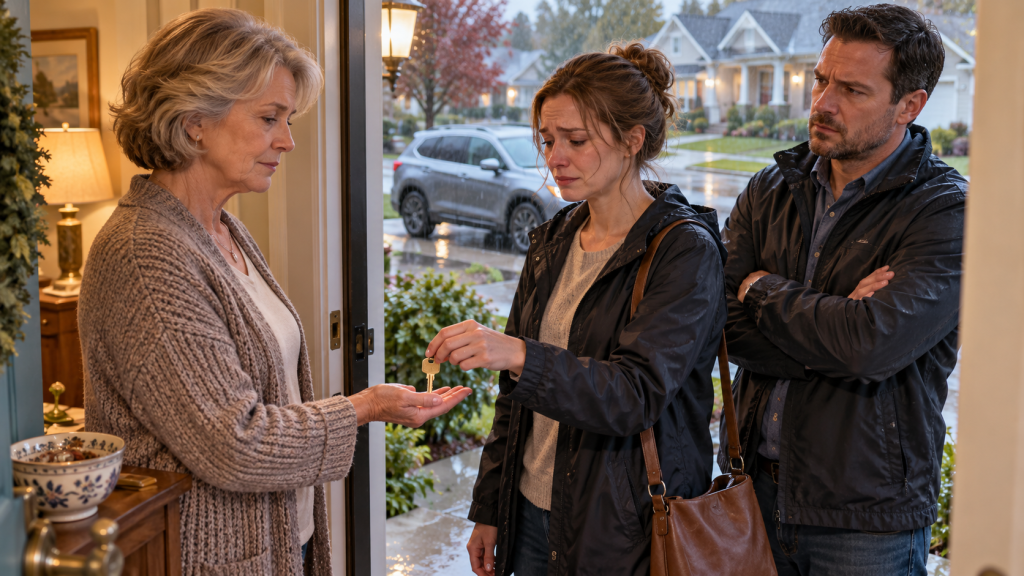
It was the sound of my spare key dropping into the ceramic bowl.
A tiny metallic clink.
That sound marked the moment I stopped demanding that my daughter treat me well while simultaneously proving she could treat me however she wanted and still keep full access to everything I owned.
It was not revenge.
It was alignment.
My words and actions finally matched.
You want distance?
Then distance includes the parts of me that have been carrying you.
Later, when Sarah earned the key back, it meant something because access had become intentional.
That is what boundaries do when they work.
They do not merely keep people out.
They make entry meaningful.
If I could speak to the woman standing at her kitchen counter that rainy Tuesday night, staring at the message from her daughter, I would tell her this:
Do not beg.
Not because pride is more important than family.
Because begging someone to keep you in a relationship they currently resent teaches both of you that your dignity is negotiable.
Do not threaten.
Do not list everything you have done.
Do not send screenshots of bank transfers.
Do not say:
After all I’ve given you.
Even if it is true.
Especially if it is true.
Simply listen to the boundary.
Then decide what boundary you need too.
That is not punishment.
Mutuality is not punishment.
I would also tell her something I did not understand that night:
Sarah’s message was not the end of our relationship.
It was the end of one version.
A version in which I was mother, banker, rescuer, adviser, key-holder, emergency contact, and silent subsidy.
A version in which Sarah was daughter, dependent, resentful recipient, and adult child who never had to discover the exact cost of her own life.
That relationship needed to end.
We mourned it.
Then something better grew.
Slower.
Less automatic.
Real.
I still help Sarah sometimes.
That may disappoint people who want revenge stories.
Too bad.
If her car breaks down and she asks whether I can pick up Leo—yes.
If she is sick and needs soup—yes.
If she needs twelve hundred dollars because she bought something she could not afford—no.
If she asks my opinion, I give it.
If she does not, I try to keep my mouth closed.
I succeed approximately sixty percent of the time.
Sarah claims forty.
Families remain difficult even after personal growth.
And Leo?
He knows the broad truth now.
As an adult, he once asked:
“Grandma, did Mom really tell you never to contact them?”
“Yes.”
“And then freak out when you stopped paying?”
“Essentially.”
He laughed.
“That’s kind of insane.”
“Be respectful.”
“She was insane.”
“She was overwhelmed.”
“And entitled.”
I looked at him.
“Also true.”
He smiled.
“Do you ever wish you had just kept paying so none of it happened?”
I thought about his question.
“No.”
“Even though Mom and Dad split?”
“They split because of choices in their marriage.”
“Even though Dad got in legal trouble?”
“He got in legal trouble because of what he did.”
“Even though you and Mom didn’t speak normally for months?”
That one hurt.
I breathed.
“No.”
Leo nodded.
“Why?”
“Because peace purchased by pretending something is fine is not peace.”
He thought.
Then:
“Grandpa said stuff like that?”
“Your grandfather used fewer words.”
“What would he say?”
I smiled.
“Stop paying.”
Leo laughed.
Probably accurate.
Michael never got to see the ending.
That remains unfair.
But sometimes I imagine telling him.
Sarah has her own retirement account now.
Leo is good.
David grew up some.
I grew up more than I expected.
The tool chest is still red.
Your socket set is incomplete because Leo lost a piece and blames me.
The guest-room window no longer leaks.
I finally bought a proper coat.
And no, I did not become poor.
Not financially.
More importantly, I stopped making myself emotionally poor by giving away every resource I had in exchange for feeling needed.
I think Michael would smile.
Then tell me I still overwater the tomatoes.
He would be correct.
The last automatic transfer I canceled that week was not the mortgage.
Not the car.
Not the phones.
It took me years to understand this.
The final payment I stopped making was the one inside me.
The automatic assumption that if someone I loved was uncomfortable, I had to spend something to fix it.
Money.
Time.
Energy.
Dignity.
Silence.
Anything.
That was the most expensive account of all.
Closing it changed my life.
My daughter once told me:
“Please don’t contact us anymore.”
I respected that sentence.
Maybe more literally than she expected.
The mortgage transfer stopped.
The car payment stopped.
The storage unit stopped.
The phone plan changed.
Then the deeper things stopped too.
The rescuing.
The guessing.
The financial apology for existing.
For a while, everything got worse.
That is the part people leave out when they talk about boundaries.
People who benefited from the old arrangement rarely applaud the new one.
They panic.
They accuse.
They test.
They may leave.
And you may spend nights wondering whether peace was worth the price.
But if the boundary is honest, something eventually becomes possible that was impossible before.
You find out which relationships can survive without the subsidy.
Ours did.
Barely at first.
Then beautifully.
Years later, Sarah was sitting at my kitchen counter while I made tea.
Same sugar bowl.
Same rain against the window.
She looked at her phone and laughed.
“What?”
I asked.
“Leo.”
“What does he want?”
“Money.”
I raised an eyebrow.
“For what?”
“He says his car needs tires.”
“Does it?”
“Probably.”
“What are you going to do?”
Sarah smiled.
“I’m going to ask whether he has enough in his emergency fund.”
I stared.
She stared back.
Then we both started laughing.
“Oh God.”
she said.
“I became you.”
“No.”
I handed her tea.
“You became yourself.”
“Worse.”
“Probably.”
Her phone buzzed again.
She read.
Then smiled.
“He says he can cover most of it.”
“And?”
“I told him I’ll lend him the difference if he makes a repayment plan.”
I nodded.
“Reasonable.”
Sarah looked at me.
“Too involved?”
“Not if he agreed.”
She smiled.
“Look at us.”
“Yes.”
“Terrifying.”
Then she reached across the counter and squeezed my hand.
No crisis.
No check.
No request.
Just my daughter.
I squeezed back.
That was all I had wanted from the beginning.
I simply took the longest possible route to learn it.
Love should never require an automatic payment.
And family should never mean that your “no” disappears because somebody believes you would eventually say yes.
The strongest love I ever gave my daughter was not the money that kept arriving every month.
It was the day I finally allowed it to stop.
Because when the money disappeared, we were forced to discover whether anything else remained.
It did.
Not the old relationship.
Something better.
A daughter who knocked.
A mother who could say no.
A grandson who knew he was loved without being used as leverage.
A spare key given freely.
A red tool chest back where it belonged.
And a family that finally learned the difference between helping one another and living off one another.
The rainy Tuesday when Sarah asked me to disappear did not end my place in her life.
It ended my job as the invisible machinery underneath it.
Once that machinery stopped humming, all of us had to stand on our own feet.
And, eventually, we learned we could still stand beside one another.
That was worth far more than every mortgage payment I ever made.
THE END STORIES! THANK YOU FOR READING GOOD LUCK !❤️
Related Posts