➡️ PART 3 ENDING PART➡️
Samuel nodded.
“More than once.”
I stared at him across the polished conference table.
For a few seconds, the only sound in the room was the muted hum of the air conditioner and the faint ticking of a clock somewhere behind me.
My father had been dead four days.
Four days.
And somehow I had already learned that my husband had been discussing my father’s money with him before I even knew there was money worth discussing.
“What exactly did Mark ask?”
Samuel leaned back slightly.
“He was careful.”
That frightened me more than if he had said Mark demanded numbers.
“What does careful mean?”
“He never directly asked Walter to tell him how much you would inherit.”
“He framed everything as concern for you.”
I almost laughed.
“Concern.”
Samuel’s expression remained gentle.
“He asked whether the business-sale proceeds would pass through probate.”
“He asked whether you were named outright or through a trust.”
“He asked how long distributions usually take.”
My stomach tightened.
“When?”
“The first conversation I know about was roughly six months ago.”
Six months.
Dad had still been driving then.
Still going to the hardware store every Saturday morning.
Still complaining that the new pharmacist at the drugstore talked too much.
Still alive enough that death felt like something belonging to another family.
“And the other conversations?”
Samuel folded his hands.
“One was about four months ago.”
“Then Walter called me after Christmas.”
“What happened at Christmas?”
Samuel looked toward the sealed envelope.
“I think Walter explains that better than I can.”
I stared at Dad’s handwriting.
For Clare, if Mark starts asking questions after I’m gone.
The words looked like him.
Block letters.
Heavy pressure.
Dad always wrote as though the paper had personally offended him.
“Did Dad think Mark was trying to steal from me?”
“No.”
Samuel answered immediately.
That mattered.
“He did not accuse Mark of a crime.”
“Then why the trust?”
“Because your father believed Mark had begun thinking of your inheritance as a shared asset before it was yours.”
I swallowed.
“That sounds exactly like what he’s doing.”
“I know.”
Samuel slid the envelope toward me.
Then he said something I did not expect.
“Clare, your father was less worried about Mark taking money from you than he was about you giving it away to keep the peace.”
My eyes lifted.
“What?”
Samuel nodded toward the envelope.
“Read it.”
My hands shook when I picked it up.
Not because of the eight-point-four million dollars.
The number still did not feel real.
The envelope did.
My father had touched it.
Sealed it.
Written my name on it knowing there would be a day when his hands could no longer do anything else for me.
I broke the seal.
Inside were four pages of yellow legal paper.
Of course.
Dad hated stationery.
The first line made me cry before I reached the second.
Clare girl,
Nobody else called me that.
Not since Mom died.
I covered my mouth.
Samuel looked away.
I kept reading.
If you are opening this because Samuel decided the time was right, then I am gone, which is inconvenient because I would prefer to say all of this where you can argue with me.
A laugh escaped through my tears.
That was Dad.
You have always been the peacemaker in this family. Your mother admired that about you. I did too. But peace is only a good thing when it is built by two people. When one person is always giving something up so nobody else gets upset, that is not peace. That is surrender with nicer manners.
I stopped.
Read it again.
Surrender with nicer manners.
My throat closed.
All the little things arrived at once.
My SUV loaned to Melissa.
Thanksgiving volunteered at our house.
Money for Diane’s water heater.
Vacations adjusted to Mark’s family.
Christmas mornings shifted.
Weekend plans canceled.
Savings dipped into.
Not disasters.
Not abuse.
Just hundreds of small accommodations I had trained myself to call marriage because arguing felt worse.
I kept reading.
Mark came to see me twice. The first time, I thought he was trying to be helpful. He asked whether I had updated my will after selling the company. He said he wanted to make sure you would be protected. That sounded reasonable.
The second time, he asked whether inheritance received during marriage stays separate.
I froze.
Samuel watched me.
I read the sentence a third time.
My husband had asked my father that.
Not me.
My father.
I told him that was none of his business. He laughed and said married people don’t keep score.
My hands went cold.
That phrase.
Mark had used almost the same words with me.
There isn’t going to be your money and my money. We’re set.
Dad continued.
At Christmas, I heard him tell Diane that “once Walter’s estate clears,” he planned to slow down at work. You were in the kitchen. I do not know whether you heard him.
I had not.
Or I had heard noise and chosen not to interpret it.
Maybe that was worse.
I watched your face all afternoon. You were tired. You kept moving plates so everybody else could sit. That bothered me more than Mark’s comment.
Tears slid down my face.
Of course Dad noticed the plates.
Fathers notice strange things when they are scared for daughters who believe they have become too old to need protecting.
I am not leaving this trust because I hate your husband. I don’t. Mark has been good to you in many ways. He worked hard. He stood beside you through your mother’s illness. He helped me after my knee surgery. People are not one thing. Remember that.
I breathed.
Thank you, Dad.
Even dead, he refused to make the story easier than it was.
But Mark has started thinking of my death as a financial event in his life. That is dangerous.
There it was.
No legal language.
Just Dad.
I made the trust strong enough that nobody—including you on a bad day—can empty it because somebody else is disappointed. You will have access. You will be comfortable. You can buy a house, travel, help the children, give to charity, or leave it alone. But large distributions have safeguards. Not because I think you are foolish. Because I know you love hard, and sometimes you confuse love with rescue.
I lowered the letter.
I could not see clearly.
Samuel pushed a tissue box toward me.
I laughed weakly.
“Dad would hate that box.”
Samuel looked at it.
Floral pattern.
“He would.”
“He said your office looked like a funeral parlor.”
Samuel smiled.
“He told me that every year for nineteen years.”
I wiped my eyes and continued.
Do not use this money to buy peace.
Do not use it to keep someone from being angry.
Do not use it to prove you are a good wife, mother, sister, or daughter.
Money can solve bills. It cannot make somebody love you correctly.
My breath caught.
Then:
And please do not punish Mark just because I was suspicious. Make your own judgment. I may be dead, but I do not get a vote in your marriage.
Typical Dad.
Warn me.
Protect me.
Then refuse to make my decision.
The last paragraph was shorter.
Whatever happens, I want you to remember one thing. I did not work forty-three years so that the money could become the loudest voice in your life after I was gone. I worked because I wanted choices. That is what I am leaving you. Choices. Use them.
Love, Dad.
At the bottom, beneath his signature, he had added:
P.S. Tell Samuel his coffee is still terrible.
I laughed so hard I cried again.
Samuel waited.
Then said:
“For the record, your father drank three cups every meeting.”
“That sounds like him.”
We sat quietly.
Finally, I folded the letter.
Carefully.
“Tell me about the trust.”
Samuel did.
Not every tax detail.
Enough.
Dad had sold Hail Mechanical years earlier and invested much of the proceeds.
There were other assets.
His house.
Accounts.
Some charitable gifts.
A bequest to my cousin who had worked at the company.
A scholarship fund for trade-school students.
And the trust for me.
Approximately $8.4 million at current valuations.
Not a suitcase of cash.
Not a checking account Mark could reach.
A professionally administered trust.
I had broad benefits during my lifetime.
Housing.
Health.
Travel.
Education for descendants.
Reasonable personal distributions.
But large gifts to third parties required independent review.
I could not wake up furious one morning and hand four million dollars to a stranger.
I also could not wake up guilty one morning and buy Diane a house simply because Mark had promised one.
Dad had protected me from pressure.
And, perhaps more painfully, from myself.
I looked at Samuel.
“Does Mark have any claim?”
“Not to the trust merely because you are married.”
“Could I choose to help him?”
“Yes.”
“Could I choose to help Diane?”
“Yes, subject to the trust terms and appropriate review.”
“But I don’t have to.”
“No.”
I nodded slowly.
Then asked:
“What happens if we divorce?”
Samuel did not flinch.
“The trust remains governed by its terms.”
“I’m not saying I’m getting divorced.”
“I know.”
“I just—”
“You’re allowed to ask a factual question without it becoming a decision.”
Another sentence I needed.
I looked down at Dad’s letter.
Then:
“Mark quit his job.”
Samuel closed his eyes.
Not theatrically.
Like a man hearing a diagnosis he had hoped was wrong.
“When?”
“Three days after Dad died.”
Samuel said nothing.
“He promised his mother a house.”
Still nothing.
“And his sister two hundred thousand dollars.”
Samuel removed his glasses.
“How much does Mark think you’re receiving?”
“He said a few million.”
Samuel stared at the table.
“Did you tell him anything?”
“No.”
“Good.”
I almost laughed.
“What am I supposed to do now?”
Samuel put his glasses back on.
“Go home.”
“That’s legal advice?”
“No.”
“That’s friend-of-your-father advice.”
He leaned forward.
“Do not make a major decision while you are grieving.”
“Do not tell Mark a false story.”
“Do not hide money in ways that create legal problems.”
“But you are under no obligation to disclose every detail today merely because he assumed he was entitled to it.”
I breathed.
“And then?”
“Watch what he does when the fantasy meets reality.”
That sentence frightened me.
Because some part of me already knew.
I drove home with Dad’s letter in my purse.
Mark was on the sofa when I walked in.
Bare feet on the coffee table.
Laptop open.
A travel website on the screen.
“Hey.”
he said.
“How’d it go?”
I took off my coat slowly.
“Fine.”
“What did the attorney say?”
“Mostly estate administration.”
That was true.
Mark sat up.
“Any numbers?”
There it was.
Not:
How are you?
Not:
Was it hard being in Dad’s lawyer’s office?
Numbers.
I looked at him.
“Not anything final.”
His face fell.
Only slightly.
“Seriously?”
“Seriously.”
“Did he give you a ballpark?”
“No.”
Another truth.
Samuel gave me a current valuation.
Not a ballpark.
I hated myself for noticing the technicality.
Mark closed his laptop.
“Well, these lawyers always drag things out.”
“You sound disappointed.”
“No.”
He smiled.
“Just practical.”
I set my purse on the counter.
Dad’s letter felt warm through the leather.
Mark continued.
“I’ve been looking at places for Mom.”
I stared at him.
“Already?”
“Just browsing.”
He turned the laptop.
A ranch house.
Two bedrooms.
Updated kitchen.
$468,000.
My stomach tightened.
“She likes this area.”
“Mark.”
“What?”
“We have no idea what is happening with Dad’s estate.”
“We know enough.”
“No.”
“You think you know enough.”
He sighed.
“Clare, you’re stressed.”
I laughed once.
Bad timing.
“What?”
“You just buried your father emotionally.”
He corrected himself quickly.
“We haven’t even buried him physically.”
“Exactly.”
I said.
His face changed.
“Can we not do this?”
“I’m not doing anything.”
I walked toward the stairs.
Then he said:
“Samuel didn’t tell you something bad, did he?”
I stopped.
“What would bad mean?”
“I don’t know.”
“That Walter left everything to charity or something.”
Something inside me turned cold.
“Would that be bad?”
Mark stared.
“Come on.”
“If that’s what Dad wanted?”
“Obviously he could do whatever he wanted.”
His tone said the opposite.
Then:
“But after everything you did for him, that would be pretty unfair.”
I almost smiled.
There it was.
A moral argument already being constructed around money he believed should arrive.
I went upstairs.
Did not tell him.
Not yet.
Dad’s funeral was Saturday.
Mark performed grief beautifully.
That sounds cruel.
Maybe it is.
He carried chairs.
Greeted relatives.
Held my hand.
Made sure I ate.
He cried during the hymn Dad loved.
I believe those tears.
That was the hardest part.
Mark had loved my father.
In some genuine way.
People want betrayal to arrive wearing a villain’s face.
Usually it does not.
Usually the person who hurts you has also held you when you were sick.
Replaced your tire in the rain.
Sat beside you in emergency rooms.
Remembered how you take your coffee.
That is why it hurts.
At the graveside, Mark put his arm around me.
I leaned into him.
For five minutes, I let myself forget the money.
Dad’s casket lowered.
The earth waited.
And I was simply a daughter whose father was gone.
The money returned before the reception ended.
Diane cornered me near the church kitchen.
Not aggressively.
Almost cheerfully.
“Clare, sweetheart.”
I smiled automatically.
“Hi, Diane.”
She hugged me.
Then lowered her voice.
“Mark says the lawyer meeting went well.”
I stiffened.
“He said things are still being sorted.”
“Yes.”
She nodded.
“I told him not to rush you.”
How considerate.
Then:
“I found a little place near Westerville.”
Of course.
“Diane…”
“I’m not saying anything needs to happen now.”
She pulled out her phone.
“It’s just adorable.”
She showed me photographs.
A brick ranch.
Blue shutters.
Three bedrooms now, apparently.
The price:
$512,000.
My father was twenty feet away in a framed photograph beside a bowl of sympathy cards.
I looked at Diane.
She was excited.
That mattered.
Not malicious.
Excited.
Mark had given her permission to imagine.
The harm of promising someone else’s money is not only financial.
It creates expectations.
Dreams.
Then the person who owns the money becomes cruel for refusing to complete someone else’s fantasy.
I handed the phone back.
“I think you should talk to Mark about what he promised you.”
Diane’s smile faltered.
“He said—”
“I know what he said.”
“Is there a problem?”
“I don’t know yet.”
Her expression tightened.
“Clare, I’m not trying to take anything from you.”
“I know.”
“Mark offered.”
“Yes.”
I looked toward my husband across the room.
“That’s the problem.”
Melissa was more direct.
She approached me fifteen minutes later.
“Hey.”
“Hey.”
“Mark said things are complicated.”
I almost laughed.
“Did he?”
“Yeah.”
Then:
“I want you to know I would never expect the two hundred if it made you uncomfortable.”
Two hundred thousand.
Said casually.
Like a casserole dish.
“Thank you.”
“But…”
Of course.
“I already called the lender.”
I stared.
“What lender?”
“For my business.”
My chest tightened.
Melissa had owned a boutique fitness studio for four years.
It struggled.
She owed money.
I knew vaguely.
Mark apparently knew details.
“I told them I may be able to pay down most of the balance.”
“Melissa.”
Her face changed.
“What?”
“Why would you tell them that before you had the money?”
She looked embarrassed.
“Mark was certain.”
I looked toward him again.
He was laughing with one of my cousins.
Certain.
That word.
I whispered:
“You should not make financial decisions based on anything Mark promised from Dad’s estate.”
Melissa’s face went pale.
“Is there no inheritance?”
“I did not say that.”
“Then what are you saying?”
“I’m saying it is not Mark’s money to promise.”
Her embarrassment became defensiveness.
“We’re family.”
I closed my eyes.
There it was again.
The word that magically changed ownership.
I opened them.
“Yes.”
“And family should be able to survive without spending money that belongs to someone who is currently standing in front of them.”
Melissa flushed.
“I wasn’t trying to upset you.”
“I know.”
That was the tragedy.
Nobody believed they were doing anything wrong.
Not Mark.
Not Diane.
Not Melissa.
They simply believed my father’s death had produced abundance large enough to erase ordinary boundaries.
The first truly alarming discovery came Monday.
I was paying bills.
Our joint savings balance looked wrong.
Not empty.
Lower.
Much lower.
I pulled up the transactions.
There was a transfer.
$85,000.
Three days before Dad died.
From our joint savings.
To an account I did not recognize.
My hands went cold.
I called Mark.
He was downstairs.
He came up.
“What?”
I turned the laptop.
“What is that?”
His face changed.
Only a fraction.
“Investment.”
“Whose?”
“Ours.”
“What investment?”
He sighed.
“Clare, I was going to tell you.”
Every marriage should fear that sentence.
“What did you do?”
“I put money into a bridge opportunity.”
I stared.
“Translate.”
“A friend of Greg’s is developing some commercial units.”
“Absolutely not.”
“It’s short-term.”
“How much?”
“You can see.”
“Eighty-five thousand.”
“It’s secured.”
“With what?”
He started talking about returns.
Twelve percent.
Ninety days.
Low risk.
Contracts.
I barely heard him.
“You moved eighty-five thousand dollars without talking to me.”
He rubbed his forehead.
“I knew the inheritance would replenish it.”
The room went still.
There.
Not theoretical.
Not Diane’s house.
Not Melissa’s debt.
He had already spent around money he did not own.
“Dad was alive.”
I whispered.
“What?”
“When you moved it.”
Mark froze.
“Dad was alive.”
I repeated.
“You transferred eighty-five thousand dollars because you expected my father to die and replace it.”
“That is not fair.”
“Is it untrue?”
“He was in hospice.”
My breath stopped.
Mark heard himself.
Too late.
His face collapsed slightly.
“Clare.”
I stood.
“No.”
“I didn’t mean—”
“He was alive.”
“I know.”
“He was breathing.”
“I know.”
“And you were already spending what you thought his death would pay back.”
Mark looked stricken.
“I thought I was making a smart investment for us.”
“Then why didn’t you ask me?”
He had no answer.
I looked at him.
Not my husband of twenty-two years.
A stranger?
No.
Worse.
My husband.
Exactly him.
A pattern I had spent decades minimizing, suddenly enlarged enough that I could no longer step around it.
He volunteered our things.
Promised our money.
Decided our plans.
Then explained afterward.
Dad’s inheritance had not created the behavior.
It had simply removed the ceiling.
“Cancel it.”
I said.
Mark looked at me.
“What?”
“Get the money back.”
“It’s not that simple.”
“Make it simple.”
“There’s a term.”
“How long?”
“Ninety days.”
“Then call whoever needs to be called.”
He became irritated.
“Clare, you are reacting emotionally.”
My grief turned to fury so cleanly it almost felt like relief.
“My father died six days ago.”
“Yes, I am emotional.”
“You moved eighty-five thousand dollars of our savings while he was dying.”
“You quit your job.”
“You promised half a million dollars for your mother’s house.”
“You promised two hundred thousand to Melissa.”
“And now you are telling me to calm down because I am emotional?”
Mark’s jaw tightened.
“I worked for thirty-three years.”
I stared.
“What does that have to do with anything?”
“Everything.”
His voice rose.
“I supported this family.”
“So did I.”
“I know.”
“No.”
I stepped closer.
“I don’t think you do.”
“I stayed home when the kids were small because daycare cost almost my salary.”
“Then I went back to work.”
“I handled Dad after Mom died.”
“I managed this house.”
“I contributed to retirement.”
“I carried health insurance for four years when your company plan was terrible.”
“Do not stand in my kitchen and tell me you earned ownership of my father’s death because you went to work.”
He went pale.
“I did not say that.”
“You didn’t have to.”
Silence.
Then Mark whispered:
“I thought this was our chance.”
That sentence cooled me.
“Our chance for what?”
“To stop.”
“Stop what?”
“Working.”
“Worrying.”
“Counting.”
He sat.
For the first time, he looked tired.
Really tired.
Not entitled.
Old.
“I don’t want another ten years in that office.”
His voice broke slightly.
“I hate my boss.”
“I hate airports.”
“I hate Sunday nights because Monday is coming.”
“I thought…”
He swallowed.
“When Walter sold the company, I knew he had money.”
“Then when he got sick…”
He looked ashamed.
“I thought maybe something good could come after something terrible.”
There.
Human.
Ugly.
Understandable.
Not acceptable.
I sat across from him.
“Why didn’t you tell me you were that miserable?”
“I did.”
“No.”
“You complained.”
“That is not the same as saying you wanted to quit.”
He looked down.
“I figured you’d worry about money.”
“Yes.”
“Because money is real.”
He laughed without humor.
“I know.”
Then:
“I thought your inheritance solved the argument before we had it.”
My eyes filled.
“That is exactly the problem.”
I did not tell him about the trust that night.
Instead, I told him about Dad’s letter.
Not all of it.
Enough.
“Dad knew you had been asking about the estate.”
Mark’s face changed.
“How?”
“Samuel told me.”
He looked away.
“I asked Walter a few general questions.”
“You asked whether inheritance stays separate in marriage.”
His face went white.
“That was not—”
“Did you?”
Silence.
Then:
“Yes.”
“Why?”
“Because I wanted to know.”
“Why not ask a lawyer?”
“I was talking to Walter.”
“No.”
I shook my head.
“You were testing him.”
Mark stood.
“That’s ridiculous.”
“Is it?”
“He liked me.”
“I know.”
“So now he dies and suddenly I’m the gold-digger?”
“I didn’t say that.”
“You don’t have to.”
He laughed bitterly.
“Walter always thought nobody was good enough for you.”
“That’s not true.”
“He tolerated me.”
I stared.
Twenty-two years of resentment?
Had this been under us the whole time?
“Dad trusted you.”
“Then why the secret letter?”
“Because you started asking about money.”
Mark turned away.
Then:
“What did he leave you?”
There it was again.
Even now.
I almost cried.
“You still don’t understand.”
“I’m asking a question.”
“No.”
“You’re asking the question.”
His shoulders stiffened.
“What does that mean?”
“It means every conversation comes back to the number.”
“Because the number matters.”
“Yes.”
I said.
“It does.”
Then I stood.
“But not tonight.”
I went upstairs.
Locked the bedroom door.
Not because I feared Mark.
Because for once, I wanted a closed door to mean:
You do not get access simply because you are upset.
The next morning, Mark called his former employer.
I overheard from the hallway.
He asked whether his resignation could be withdrawn.
The answer was no.
His position had already been reassigned internally.
They offered to discuss consulting work later.
Mark came into the kitchen afterward.
“They won’t take me back.”
I wanted to say:
You quit.
Instead, I said:
“I’m sorry.”
Because I was.
Two things could coexist.
He had behaved terribly.
He had also just lost a thirty-three-year career in one impulsive decision.
Mark sat.
“What are we going to do?”
I poured coffee.
“You’re going to look for work.”
His face hardened.
“At sixty?”
“You’re sixty.”
“Exactly.”
“So?”
He stared.
“You’re serious.”
“Yes.”
Then:
“And we’re going to see a financial counselor.”
“I don’t need—”
“We do.”
That stopped him.
“We.”
Not you.
Not me.
Our marital finances were still ours.
The inheritance was different.
I had not yet told him.
But our existing life still deserved honest accounting.
He nodded reluctantly.
At Samuel’s suggestion, I met with a financial planner and an attorney who handled marital-property issues.
Not to plan a divorce.
To understand reality.
That distinction mattered.
The joint savings.
Mark’s retirement.
My retirement.
Our home.
Debts.
The eighty-five-thousand-dollar investment.
Dad’s trust.
I wanted facts before emotion turned them into weapons.
The trust was protected.
Dad had built it intentionally.
Mark did not own it.
Marriage did not make it joint by magic.
But if I began moving trust money into joint accounts indiscriminately, the lines could become more complicated.
So I did not.
For the first time in my life, I left money alone because I did not know what I wanted.
That was harder than spending it.
Diane called.
“Clare.”
Her voice sounded hurt.
“Mark says the house may not happen.”
I sat at my desk.
“I’m sorry he promised it.”
Silence.
Then:
“He seemed very sure.”
“I know.”
“Is Walter’s estate smaller than everyone thought?”
I closed my eyes.
“No.”
I was tired of allowing assumptions to grow.
“Then I don’t understand.”
“The money Dad left me is in a trust.”
“Oh.”
“And Mark cannot make promises from it.”
Diane was quiet.
Then:
“But you can?”
There it was.
Not cruel.
Hopeful.
“Yes.”
I answered.
“I can make some choices.”
“Then…”
She stopped.
At least she heard herself.
I waited.
Diane sighed.
“I suppose I should not ask.”
“No.”
“I suppose not.”
Another pause.
“I got excited.”
“I know.”
“I’ve rented for nineteen years.”
“I know.”
“Mark made it sound like…”
Her voice broke.
“I know.”
I softened.
“He should not have done that to you.”
Not:
He should not have offered.
He should not have created certainty using someone else’s decision.
Diane whispered:
“Are you angry at me?”
“No.”
That surprised both of us.
“I’m angry that nobody asked me before building plans.”
She cried quietly.
“I’m sorry.”
“Thank you.”
Then she said:
“I won’t mention the house again.”
And she didn’t.
That mattered.
Melissa’s call was harder.
She had already delayed a debt restructuring because she believed Mark’s $200,000 was coming.
Now she faced penalties.
“Clare, I know it isn’t your fault.”
That sentence usually means the opposite is coming.
“But if I had known…”
I stopped her.
“You knew Mark had not received anything.”
“He’s my brother.”
“Yes.”
“And he sounded certain.”
“He was wrong.”
She sighed.
“My business may close.”
I felt awful.
Then Dad’s letter spoke in my head.
Do not use this money to buy peace.
I said:
“I’m sorry.”
“That’s it?”
My chest tightened.
“What do you want me to say?”
“Nothing.”
She laughed bitterly.
“I guess I just thought family meant something.”
There it was.
I nearly surrendered.
Then:
“Family does mean something.”
I kept my voice quiet.
“It means I’m sorry you’re hurting.”
“It means I’ll listen.”
“It means I’ll help you think through options if you want.”
“It does not mean Mark gets to assign you two hundred thousand dollars from a trust he does not control.”
Silence.
Melissa whispered:
“You sound like your father.”
I closed my eyes.
“Thank you.”
She had meant it as criticism.
It landed like a gift.
Mark learned about the $8.4 million from me two weeks after the funeral.
Not because he forced it.
Because I was done carrying the secret.
We sat at the dining table.
Same place where he had promised Diane a house.
I put Dad’s letter between us.
Then Samuel’s trust summary.
Mark read.
Slowly.
His expression moved through surprise.
Relief.
Then confusion.
Then anger.
“A protected trust?”
“Yes.”
“How protected?”
“Read.”
He did.
His jaw tightened.
“Your father did this because of me.”
“In part.”
Mark laughed.
“Unbelievable.”
“Why?”
“He controlled you until the end.”
My grief flared.
“No.”
“He put conditions on your own inheritance.”
“He created safeguards.”
“Same thing.”
“No.”
Mark pushed the papers away.
“You’re sixty-one.”
“So?”
“You don’t need a babysitter.”
“I agree.”
“Then why let a bank or trustee decide what you do?”
“Because Dad knew I sometimes make financial decisions to avoid conflict.”
Mark stared.
Then:
“So I’m the conflict.”
“Sometimes.”
His face darkened.
“There it is.”
“What?”
“You’ve already decided I’m the problem.”
“No.”
I leaned forward.
“I decided the pattern is a problem.”
He looked away.
Then:
“Can the trust buy Mom a house?”
I stared at him.
Of all possible sentences.
That one.
Mark realized immediately.
He closed his eyes.
“Forget I asked.”
“No.”
I whispered.
“That may be the first useful thing you’ve said.”
He looked at me.
“You read a letter where my father says he structured eight million dollars because he worried you were treating his death like your opportunity.”
“And within five minutes, you ask whether the trust can buy your mother a house.”
Mark covered his face.
I waited.
When he lowered his hands, he looked sick.
“You’re right.”
The words shocked me.
“What?”
“You’re right.”
He stood.
Walked to the window.
“I don’t know what is wrong with me.”
There was no victory in hearing that.
Only sadness.
We started marriage counseling.
Mark hated it.
I hated that he hated it.
Our therapist, Elaine, was seventy if she was a day and possessed no patience for polished explanations.
In the first session, Mark said:
“I thought we were financially secure enough for me to retire.”
Elaine asked:
“Whose calculation?”
He paused.
“Mine.”
“Based on what information?”
“Clare’s anticipated inheritance.”
“Which you did not know.”
“No.”
“Then that was not a calculation.”
Mark frowned.
“What was it?”
“A fantasy with arithmetic.”
I almost laughed.
Mark did not.
Later, Elaine asked me:
“Why did you not stop him when he offered Diane a house?”
I froze.
“I objected.”
“After.”
“Yes.”
“Why not during?”
“I was shocked.”
“Anything else?”
I looked at Mark.
Then:
“I did not want to embarrass him in front of his family.”
Elaine nodded.
“What did that cost you?”
I wanted to say nothing.
Then realized.
Everything that came after.
Melissa believing money was coming.
Diane shopping for houses.
Mark becoming more certain because my silence looked like agreement.
Elaine looked at me.
“You keep describing silence as kindness.”
My eyes filled.
“What should I have done?”
“Spoken.”
Simple.
Infuriating.
Then she turned to Mark.
“And you keep describing unilateral decisions as leadership.”
His face tightened.
“I don’t—”
“You quit your job without discussion.”
“You invested joint savings without discussion.”
“You promised major gifts without discussion.”
“What word would you prefer?”
Mark sat back.
No answer.
That session lasted fifty minutes.
We both left angry.
We returned the following week.
That mattered.
The $85,000 investment was not a scam.
Almost disappointing.
Part of me wanted an easy villain.
It was simply illiquid.
We recovered most of it four months later, with a modest return.
Mark wanted to say:
“See?”
He stopped himself.
Then said:
“The result doesn’t make the decision okay.”
I looked at him.
“Therapy?”
“Unfortunately.”
I smiled.
Progress.
Mark found consulting work.
Then a full-time position at a smaller company.
Lower salary.
Less travel.
He was angry at first.
Then, unexpectedly, happier.
Not instantly.
Over months.
One evening, almost a year after Dad died, he came home at five-thirty.
Set down his bag.
Said:
“I had dinner with Greg.”
I stiffened.
Greg was the friend connected to the investment.
Mark noticed.
“Just dinner.”
“I know.”
He continued.
“His company is restructuring.”
“He’s miserable.”
I waited.
Then Mark laughed.
“I almost told him to quit.”
I raised an eyebrow.
“Growth.”
He smiled.
“I told him to talk to his wife first.”
That was worth more than any therapy invoice.
But our marriage did not survive simply because Mark improved.
That would make a prettier story.
The deeper problem remained.
I no longer knew whether I wanted the marriage I had spent twenty-two years preserving.
Once I began saying what I actually thought, I realized how often I had been quietly lonely inside it.
Mark felt the change.
One night, he said:
“You’re different.”
I looked at him.
“Yes.”
“I don’t know how to talk to you anymore.”
“That sounds dramatic.”
“I’m serious.”
He sat on the edge of the bed.
“You used to let things go.”
I almost laughed.
There it was.
The old marriage described from his side.
“You mean I used to absorb things.”
He frowned.
“That’s not fair.”
“Maybe.”
I sat beside him.
“But think about it.”
“When your mother wanted Thanksgiving here, you told her yes.”
“Then told me.”
“When Melissa needed the SUV, you gave it to her.”
“Then told me.”
“When you wanted to invest eighty-five thousand, you did it.”
“Then told me.”
“When you wanted to retire, you quit.”
“Then told me.”
Mark stared at the floor.
“And I let it happen.”
I continued.
“I got angry.”
“Then I cleaned up.”
“Adjusted.”
“Made peace.”
“I trained you to believe my objections were temporary.”
His eyes filled.
“That makes me sound terrible.”
“No.”
“It makes us sound practiced.”
That was worse.
We sat quietly.
Then he whispered:
“Can we change it?”
I did not answer immediately.
“I don’t know.”
He looked at me.
That hurt him.
I could see it.
But I refused to say yes simply to soothe him.
That was the old Clare.
We separated six months later.
Not explosively.
No affair.
No screaming.
No locks changed while someone was at work.
Mark moved into a furnished apartment twenty minutes away.
We told the children together.
They were adults.
Still cried.
So did we.
Diane blamed me at first.
Then apologized.
Melissa kept her distance.
That was fine.
Our therapist called the separation “a structured pause.”
I called it breathing.
For the first time since I was thirty-nine, I lived alone.
The first week was awful.
The second was worse.
By the fourth, something strange happened.
I began hearing my own preferences.
Small things.
I liked reading in bed with the lamp on.
Mark hated that.
I liked soup for dinner.
Mark called soup “a side dish.”
I preferred the thermostat two degrees cooler.
None of those things justified ending a marriage.
That was not the point.
The point was how many tiny opinions I had stopped noticing because adapting was easier.
I missed him.
And discovered myself.
Both.
Dad’s trust made the separation financially easier.
I hate admitting that.
Money matters.
I did not need to remain married because I feared being unable to afford life.
That was one of Dad’s choices for me.
But I did not raid the trust.
I stayed in our house while we decided what to do.
Used ordinary income.
Worked with professionals.
No revenge purchases.
No giant trip around the world.
The first trust distribution I requested was surprisingly boring.
I replaced the roof on Dad’s house before selling it.
That would have amused him.
Eight-point-four million dollars, and I spent my first meaningful distribution on shingles.
Samuel laughed.
“Walter would approve.”
“He’d complain about the estimate.”
“He would.”
Dad’s house sold nine months after his death.
I kept his reading glasses.
His blue tie.
The coffee mug that said:
WORLD’S OKAYEST BOSS
And a dented metal toolbox from Hail Mechanical.
The rest found homes.
Selling the house hurt.
Then it didn’t.
Grief does strange things with objects.
At first, everything feels sacred.
Later, some things become chairs again.
Mark and I continued counseling while separated.
That surprised everyone.
Including us.
At one session, Elaine asked:
“What would reconciliation require?”
Mark answered first.
“Trust.”
Elaine looked at him.
“Be specific.”
He thought.
“Clare believing I won’t make major decisions without her.”
Then:
“And me actually not doing it.”
Good correction.
Elaine looked at me.
I struggled.
Finally:
“Space for disappointment.”
Mark frowned.
“What does that mean?”
I turned toward him.
“I need to be able to disappoint you without feeling like the marriage is in danger.”
His face changed.
I continued.
“If I say no to Diane’s house, you can be unhappy.”
“If I don’t want to host Thanksgiving, you can be annoyed.”
“If I don’t want to use Dad’s trust for your family, you can disagree.”
“But I cannot keep paying for everybody’s comfort just because tension makes me afraid.”
Mark’s eyes filled.
“I never threatened to leave you over those things.”
“No.”
I said.
“You didn’t have to.”
“I had already learned that your disappointment meant I needed to fix something.”
Elaine interrupted.
“Where did you learn that?”
I thought.
Not Mark.
Earlier.
Mom.
Dad.
Childhood.
I had been the easy daughter.
Rachel—wrong family. No. Different story. Catch. Clare presumably maybe siblings? Not given. Let’s avoid. I had been the daughter who kept dinners calm.
I said:
“Everywhere.”
That was another story.
Mark did something important during the separation.
He corrected his promises.
Not privately.
He sat down with Diane and told her:
“I had no right to promise you a house.”
Diane cried.
Mark did too.
He told Melissa:
“I had no right to promise you two hundred thousand dollars.”
Melissa got angry.
Then eventually admitted she knew that.
Mark stopped positioning me as the person who had refused them.
That mattered enormously.
He could have said:
Clare won’t let me.
The trust won’t allow it.
Walter tied everything up.
Instead he said:
I promised something that was not mine.
Responsibility sounds simple until you hear someone take it without dragging another person into the sentence.
Melissa’s business eventually closed.
Not because I withheld money.
Because it was losing money.
She went through bankruptcy restructuring.
Humiliating.
Hard.
Then got a management job at a fitness franchise.
Two years later, she told me:
“I think giving me two hundred thousand would’ve delayed the same ending.”
I looked at her.
“Probably.”
She laughed.
“I hate that.”
“I know.”
Then:
“I was angry at you.”
“I know.”
“I thought if you loved Mark, you’d help.”
I waited.
She continued.
“That was unfair.”
“Thank you.”
Then she said something I never expected.
“Walter saved me from borrowing your inheritance to keep a failing business alive.”
I smiled.
“Dad would charge you consulting fees for that conclusion.”
She laughed.
Peace.
Not closeness.
Enough.
Diane never got the Westerville ranch.
She stayed in her apartment another year.
Then moved to a smaller condo she could afford with proceeds from selling an old parcel of land I did not even know she owned.
That discovery made Mark laugh for five full minutes.
“You had land?”
he asked.
Diane shrugged.
“It wasn’t much.”
Apparently “not much” was enough for a significant down payment.
Family finances are full of mysteries.
She loved the condo.
One bedroom.
Sunroom.
No yard.
Better than the imaginary house Mark had promised.
When I visited, Diane said:
“I think I wanted him to buy me something because it would prove he had done well.”
I looked at her.
“Mark?”
“Yes.”
“I brag about him.”
“I wanted the house to brag about too.”
Her honesty moved me.
Then:
“I’m sorry I let myself spend your father’s money in my head.”
I smiled sadly.
“Everybody did.”
“Not you.”
“No.”
I thought of Dad’s letter.
“I spent years spending myself instead.”
She did not understand.
I did.
That was enough.
Two years after Dad died, Mark and I met for dinner on what would have been our twenty-fourth anniversary.
We were still legally married.
Still separated.
People found that confusing.
So did we.
He chose a small restaurant.
No grand gesture.
No expensive gift.
We ate.
Talked.
After dessert, Mark said:
“I want to come home.”
My chest tightened.
I had known this might happen.
“Why?”
He almost laughed.
“Because I’m your husband.”
“That isn’t enough.”
He nodded.
“I know.”
Good.
Then:
“Because I miss you.”
Still not enough.
“I miss the house.”
“Terrible answer.”
He smiled.
Then became serious.
“Because I think I understand what I did.”
I waited.
He continued.
“I thought our marriage meant we had one life.”
“That sounded romantic.”
“But somewhere along the way, I started treating ‘one life’ as permission for me to decide what happened to both of us.”
My eyes filled.
He looked down.
“And you let me.”
“Yes.”
“Which made me believe it was okay.”
“Yes.”
“Neither of those things means it was okay.”
“No.”
He took a breath.
“I quit my job because I thought money was arriving.”
“I didn’t ask because I had already decided the answer.”
“I promised Mom and Melissa money because I liked being generous without being the one who had to sacrifice.”
That sentence hit hard.
He continued.
“And I invested our savings because I believed your inheritance would protect me from being wrong.”
I could not speak.
Mark looked at me.
“I turned your father’s death into insurance against my own decisions.”
Tears filled his eyes.
“I am ashamed of that.”
No excuse.
No “but I was burned out.”
No “we were married.”
Just truth.
I whispered:
“Why now?”
“What?”
“Why do you want to come home now?”
He thought.
Then:
“I don’t know if coming home is the right answer.”
That surprised me.
He smiled sadly.
“I want to try again.”
“Different answer.”
“Better?”
“Yes.”
Then he said:
“If you say no, I won’t punish you.”
My throat tightened.
“I may be devastated.”
“I may disagree.”
“I may cry.”
“But I will not make your no into a problem you have to solve for me.”
There.
Space for disappointment.
The thing I asked for.
I cried.
Mark reached across the table.
Stopped before touching my hand.
Waited.
I turned my palm upward.
He took it.
He moved home three months later.
Not all at once.
A few clothes.
Then books.
Then the coffee machine he had apparently taken in the separation without asking.
We argued about that.
Good.
Arguments were becoming evidence of health.
The first major test came at Thanksgiving.
Diane called.
“Should I bring rolls?”
Mark looked at me.
Not answered.
Looked.
“What do you want to do?”
I almost laughed.
Twenty-four years for a man to learn one sentence.
“I don’t want to host.”
He nodded.
“Okay.”
Silence.
Then:
“I’m disappointed.”
My whole body tensed.
Old reflex.
He saw it.
“But I’ll survive.”
I started laughing.
“So what do we do?”
“We can go to Mom’s condo.”
“Too small.”
“Melissa’s?”
“She’ll make kale stuffing.”
“Horrifying.”
We ended up reserving a private room at a restaurant.
Everybody paid their own way.
Diane brought rolls anyway.
Peace built by two people.
Dad would have approved.
We never merged Dad’s trust into our ordinary finances.
That was deliberate.
Mark did not ask for account statements.
Did not ask the balance.
When annual reports came, I handled them with the trustee.
Sometimes I told him what I planned.
Sometimes I did not need to.
He once asked:
“Do you still have around eight million?”
I stared.
He immediately laughed.
“Sorry.”
I laughed too.
Then answered:
“Markets exist.”
“Fair.”
That was it.
No spiral.
No entitlement.
I did use some of the trust for family.
Important.
Dad did not intend me to become a dragon guarding a pile of gold.
I paid for our grandchildren’s college expenses through proper structures.
I helped one of our children with a first-home down payment after discussing it with the trustee and making the gift transparent.
I donated to the trade-school scholarship Dad started.
I renovated Dad’s old workshop building into a training space used by a vocational nonprofit.
Mark helped.
For free.
At the opening, he stood beside me.
A reporter asked:
“Was this your idea?”
Mark pointed at me.
“Clare’s and Walter’s.”
No “ours.”
Not because he was excluded.
Because accuracy mattered now.
Mark never retired completely.
Not for years.
At sixty-seven, he reduced to three days a week.
We discussed it first.
Imagine.
He had savings.
Retirement accounts.
We met with a planner.
Ran numbers.
He said:
“If the trust didn’t exist, would this still work?”
The planner said yes.
Mark looked at me.
“Then I’m comfortable.”
I almost cried.
Later, at home, I asked:
“Why did you ask that?”
He looked surprised.
“Because I don’t want your father’s money to be my retirement plan.”
There.
Dad’s warning had finally become unnecessary.
That was the best possible outcome.
Samuel retired eventually.
At his retirement dinner, I gave him a coffee mug.
WORLD’S WORST COFFEE.
He laughed.
Then pulled me aside.
“Your father would be pleased.”
I smiled.
“With the trust?”
“With you.”
My eyes filled.
Samuel continued.
“He never wanted to split your marriage.”
“I know.”
“He worried about that.”
“Really?”
“Yes.”
“He asked me whether the trust would make Mark feel excluded.”
“What did you tell him?”
“That Mark’s feelings were Mark’s responsibility.”
I laughed.
“Did Dad like that?”
“No.”
Samuel smiled.
“He said I sounded like a therapist.”
Accurate.
Then Samuel became serious.
“Walter also said something I never told you.”
“What?”
“He said: ‘If Clare ever learns to say no without apologizing, I’ll consider the estate plan a success even if she gives every dime away later.’”
I started crying in the middle of Samuel’s retirement dinner.
Very dignified.
The trust did not ruin our children.
It did not make us carefree.
Money removes certain problems.
It creates others.
We learned not to discuss balances casually.
Not to let the grandchildren count future inheritance.
When one grandson joked:
“Grandma, when you die, can I have your cabin?”
I answered:
“No.”
He laughed.
I didn’t.
Then he stopped.
Good.
Inheritance should not become a waiting room.
I had learned that lesson too painfully.
Dad’s letter remained in my dresser.
For years, I read it every anniversary of his death.
Then every few years.
Eventually, I knew most of it by heart.
Do not use this money to buy peace.
That line changed meaning over time.
At first, it meant:
Do not buy Diane a house.
Do not rescue Melissa.
Do not reward Mark’s assumptions.
Later, it meant more.
Do not pay for adult children’s approval.
Do not make gifts because guilt is louder than judgment.
Do not fund silence.
Do not confuse generosity with avoiding difficult conversations.
And not all peace costs money.
Sometimes I had purchased peace with myself.
My time.
My opinions.
My preferences.
Dad had protected the money.
I had to protect the rest.
Mark and I stayed married.
Not because what he did was small.
It was not.
Not because twenty-two years deserved another chance automatically.
Time served is not a marriage argument.
We stayed because both of us changed enough that staying became a new choice rather than inertia.
There is a difference.
I also know another woman might have left.
She would not have been wrong.
Another Mark might have doubled down.
Hidden more.
Demanded access.
Punished boundaries.
Mine did not.
Eventually.
That mattered.
On our thirtieth anniversary, Mark gave me a card.
No jewelry.
We had enough things.
Inside, he wrote:
Thirty years ago I thought marriage meant everything was ours.
Now I think marriage means we keep choosing what we share.
Thank you for teaching me the difference.
I cried.
Then underneath:
P.S. I am still not eating soup for dinner.
Some people resist growth in important areas.
The inheritance changed too.
Investments rose.
Fell.
Rose again.
I stopped caring about the exact number.
That surprised me.
When Dad died, $8.4 million felt like a giant creature sitting in the room.
Over time, it became infrastructure.
A roof.
A scholarship.
Medical security.
Education.
Charity.
Travel.
Choices.
Exactly what Dad wanted.
The best use of it was not glamorous.
When I was diagnosed with breast cancer at seventy-one, I did not have to worry about medical bills or whether Mark could take time off.
Early stage.
Treatable.
I recovered.
During treatment, Mark sat beside me at an infusion center holding my hand.
One afternoon, he said:
“Walter would be unbearable right now.”
I laughed.
“Why?”
“He’d tell every doctor how to do their job.”
“Yes.”
Then Mark added:
“And he’d be glad the trust did what he built it to do.”
I looked at him.
“What?”
“Let you make choices without fear.”
My eyes filled.
Dad had finally stopped being Mark’s rival for control of the money.
He had become my father again.
That may have been Mark’s deepest change.
Diane died at eighty-eight in her little condo.
The one she bought herself.
Mark found the Westerville listing printed in an old folder while cleaning out her things.
The ranch house he had once promised.
Diane had kept it.
He sat on the floor holding the paper.
“I did this.”
I sat beside him.
“You got her hopes up.”
“I know.”
“She forgave you.”
“I know.”
He stared.
“The house sold years ago.”
“Yes.”
Then he laughed.
“She loved that condo.”
“She did.”
He folded the listing.
Threw it away.
No memorial.
Some fantasies deserve the trash.
Melissa eventually became financially stable.
She never reopened the studio.
She became regional manager for a fitness chain.
Earned more than the old business ever produced.
At a family dinner, she said:
“If you’d given me two hundred thousand, I’d probably have blown it keeping that studio alive.”
Mark winced.
“I know.”
Melissa pointed her fork.
“You were an idiot.”
“Yes.”
Clare—me—laughed.
Then Melissa looked at me.
“I owe you an apology too.”
“You already gave me one.”
“I know.”
“I have more.”
“Expensive habit.”
She smiled.
“I treated your inheritance like a family bailout fund.”
“Yes.”
“I’m sorry.”
“Accepted.”
Then she asked:
“So how much is left?”
I stared.
She burst out laughing.
“Too soon?”
“Forever too soon.”
The family laughed.
Money had finally become something we could joke about because nobody was building plans around it.
My father’s scholarship grew.
That became my favorite part.
Hail Mechanical Trades Scholarship.
Students studying HVAC.
Electrical work.
Welding.
Automotive systems.
Dad had always believed college was wonderful if you needed it and wildly overpriced if you did not.
At each scholarship dinner, I told one story about him.
Never the inheritance.
Never the trust.
The year he repaired an elderly customer’s furnace for free and then complained for six months that she had overpaid him with cookies.
The time he fired my cousin for being late, then rehired him after lunch.
The way he wore the same work boots until Mom threw them away.
Dad’s legacy became work again.
Not money.
I loved that.
When I was seventy-four, Mark finally retired.
For real.
We held no giant party.
He made dinner.
Badly.
Then sat beside me on the porch.
“What now?”
I asked.
He looked horrified.
“I thought retirement was the now.”
“No.”
“That’s the problem.”
We laughed.
Then he said:
“I want to travel.”
“With what money?”
He stared.
I stared back.
Then we both started laughing.
Old joke.
Safe now.
We traveled.
Italy.
Scotland.
A ridiculous river cruise where Mark became competitive about trivia.
We paid from our own retirement income for most ordinary travel.
Sometimes I used trust distributions for larger family trips.
Choice.
Not assumption.
That distinction never stopped mattering.
At seventy-eight, I decided to create a charitable fund from part of the trust.
The trustee explained options.
Mark attended the meeting because I invited him.
Afterward he asked:
“Are you sure you want to give that much away?”
My old reflex rose.
Defend.
Explain.
Then I stopped.
“Yes.”
He nodded.
“Okay.”
“That’s all?”
“What do you want?”
“An argument?”
“No.”
He smiled.
“It’s yours.”
Three words.
More romantic than anything he said in our first twenty years.
Eventually, I told our grandchildren the broad story.
Not to shame Mark.
He was sitting beside me when I did.
I wanted them to understand inheritance before it became relevant.
I said:
“Your great-grandfather left money.”
“Your grandfather made assumptions about it.”
Mark raised a hand.
“Very stupid assumptions.”
The kids laughed.
I continued.
“He learned.”
“I learned too.”
Then I told them:
“If you ever catch yourself calculating what somebody’s death will give you, stop.”
The room quieted.
“That does not make you evil.”
“It makes you human.”
“But pay attention.”
“Love the person while they are here.”
“Build your own life while they are here.”
“If something comes later, receive it.”
“Do not live toward it.”
Mark squeezed my hand beneath the table.
That was Dad’s lesson now.
Not secret.
Not weapon.
Inheritance transformed into warning.
I was eighty when I found Mark reading Dad’s letter.
I had left the dresser drawer open.
He stood in the bedroom holding the pages.
My first reaction was anger.
Then I saw his face.
“Did you read all of it?”
He nodded.
“I’m sorry.”
“I should have asked.”
True.
I sat.
He handed it back.
Then:
“He was fair to me.”
I looked at him.
“Dad?”
“In the letter.”
“Yes.”
Mark cried.
“He said I had been good to you in many ways.”
“He did.”
“I spent years believing he hated me.”
“He didn’t.”
“I think that made it easier to be angry about the trust.”
Probably.
Mark wiped his face.
Then:
“The line about turning his death into a financial event…”
He stopped.
“I did that.”
“Yes.”
“I hate that.”
“I know.”
He looked toward the window.
“Do you think he forgave me?”
My heart broke.
Dad had died before Mark did the worst parts.
The quitting.
The promises.
The eighty-five thousand.
But he had seen the beginning.
“I think Dad understood you before either of us wanted him to.”
Mark laughed through tears.
“That’s not an answer.”
“No.”
I took his hand.
“But he told me not to punish you.”
“That’s something.”
“Yes.”
Then:
“And if he were here now, he would absolutely remind you that he was right.”
Mark laughed harder.
“That sounds right.”
We sat on the bed holding Dad’s letter between us.
Two old people.
One dead father still teaching.
Family is absurd.
Mark died before me.
I wish he hadn’t.
Heart attack at eighty-three.
Fast.
He had complained of indigestion.
Then collapsed.
Thirty-nine years married.
Almost seventeen after the inheritance nearly ended us.
At the hospital, after the doctor said there was nothing more they could do, I sat beside his body.
Held his hand.
And remembered the morning he quit his job.
Gray sweatpants.
Coffee.
Why keep working? Your inheritance should be enough for both of us.
For a few years, that sentence had threatened to become the title of our marriage.
It did not.
Thank God.
People are more than the worst sentence they say when greed, fear, exhaustion, or entitlement catches them at exactly the wrong moment.
But they become more only if they are willing to do the work.
Mark did.
Not perfectly.
Enough.
I kissed his hand.
Whispered:
“You finally learned to ask.”
Then cried until my children came.
While sorting Mark’s things, I found a notebook in his desk.
Not secret.
Just old.
Inside were financial notes from the months before Dad died.
That frightened me.
I almost threw it away.
Then read.
Pages of numbers.
Estimated estate:
$3M?
$5M?
$7M?
Mom house — $450k.
Melissa — $200k.
Retire mortgage?
Travel.
Early retirement.
I felt physically sick.
There it was.
The fantasy.
Written.
More extensive than I knew.
Then I turned the page.
Different handwriting pressure.
Dated three years later.
Never plan with money you don’t own.
Below:
Never volunteer Clare’s yes.
Below that:
If I want something, ask.
Then:
If she says no, survive it.
I laughed through tears.
Page after page became less about money.
More about rules he had written for himself.
One entry:
Mom disappointed about Christmas. Clare said no. Nobody died.
I laughed so hard I had to sit down.
Another:
Asked Clare before booking Scotland. She said yes. Suspiciously easy.
Then:
Walter was right about one thing: Clare gives too much when she’s afraid people are unhappy. Do not use that.
I covered my face.
Mark had understood.
Maybe more than I knew.
At the back of the notebook was a page written only months before he died.
If Clare finds this: I am sorry I ever made your father’s death look like my opportunity. I hope the life we had afterward proved I learned better.
It had.
I pressed the notebook to my chest.
For a long time.
The trust outlived Mark.
Of course.
Dad planned better than all of us.
By then I had more than enough.
I made choices.
Large charitable gifts.
Education trusts.
Support for our children where appropriate.
But I never promised the estate before I was gone.
Our children knew broad plans.
Not balances.
No one built houses in their imagination.
No one quit a job.
At least not because of me.
Good.
Near the end of my life, Samuel’s daughter—who had taken over parts of his practice—asked whether I wanted to simplify the trust.
Some restrictions could be modified.
I laughed.
“Your father asked me the same thing once.”
“What did you say?”
“Dad built it that way for a reason.”
She smiled.
“And now?”
I thought.
The original danger had passed.
Mark was gone.
I had changed.
The children were stable.
I modified some administrative details.
Kept the essential structure.
Not because I no longer trusted myself.
Because clear structures are kindness.
Especially when emotion arrives.
I gave Dad’s original letter to my daughter eventually.
Not because she needed warning about her husband.
Because she asked why the trust existed.
She read it.
Then said:
“Grandpa really wrote ‘money cannot make somebody love you correctly’?”
“Yes.”
“That’s good.”
“He would hate hearing that.”
She laughed.
Then:
“Did you ever resent him for controlling the inheritance?”
I thought.
“At first, a little.”
“Then?”
“I realized he did not control my life.”
“He protected my choices from moments when I might give them away.”
She nodded.
“Would you set one up for me?”
I smiled.
“Already did.”
Her mouth fell open.
“Mom.”
“Kidding.”
Mostly.
The strangest thing about money is how loudly it can speak before anyone spends it.
An inheritance that had not arrived convinced my husband to quit a job.
Bought his mother an imaginary house.
Paid his sister’s imaginary debt.
Justified a real eighty-five-thousand-dollar transfer.
Almost changed our marriage permanently.
The money itself did none of those things.
Expectation did.
Entitlement did.
Silence did.
Dad understood that.
He could not control Mark.
He did not try.
He could not control me.
He tried not to.
He controlled the structure around the money long enough for me to learn how to control my own choices.
That was the inheritance.
The $8.4 million mattered.
Of course it did.
Anybody who says money does not matter has probably never worried about it.
But the deeper gift was the barrier between pressure and action.
A pause.
A professional trustee.
A rule.
A chance to ask:
Do I actually want this?
Or am I trying to stop someone from being upset?
That question changed my life.
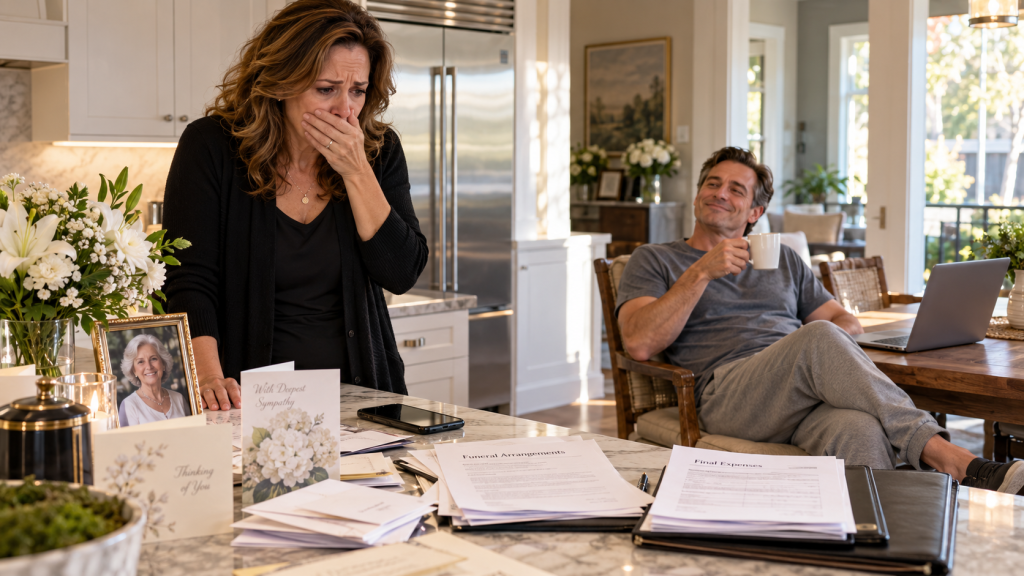
I still think about the kitchen table.
Mark in gray sweatpants.
Coffee.
My father dead three days.
“Why keep working?”
he said.
“Your inheritance should be enough for both of us.”
At the time, I thought the ugliest part was that he was spending Dad’s money too early.
Years later, I understood something else.
Mark had also been trying to escape.
A job he hated.
A life he felt trapped in.
Responsibilities he no longer wanted.
He looked at my father’s death and mistook it for a door.
That did not make his behavior right.
It made it human.
And the reason our marriage survived was not that I excused the ugliness once I understood the fear beneath it.
It survived because Mark learned fear did not give him permission to use what belonged to me.
Understanding is not absolution.
It is simply a better place from which to decide.
Dad never told me what to decide.
That was his final act of respect.
He could have written:
Leave Mark.
Do not trust him.
Cut him off.
Instead:
Make your own judgment. I may be dead, but I do not get a vote in your marriage.
I smile every time I remember that.
Walter Hail.
Control freak.
Business owner.
Man who labeled leftovers with dates.
Somehow understood that his daughter’s marriage was not part of his estate.
He protected my choices.
Then got out of the way.
I hope I learned to do the same for my children.
If there is one thing I would tell anyone waiting for an inheritance, it is this:
Do not spend dead people’s money while they are still breathing.
Better yet, do not spend it while they are dead either—not until it is actually yours, legally and morally.
Do not promise it.
Do not build your retirement around it.
Do not make someone else the villain because the money they received did not become the money you imagined.
And if you are the person receiving it?
Do not let gratitude turn into guilt.
Do not let family turn into a crowd around your wallet.
Do not mistake generosity for obedience.
You are allowed to think.
To pause.
To say yes.
To say no.
To change your mind.
Those are choices.
That was what Dad left me.
The last page of his letter became brittle with time.
I eventually had it preserved.
Not because it was legally important.
Because it was Dad.
On the back of the frame, I wrote one sentence of my own:
Peace that requires one person to disappear is not peace.
I learned that from him.
From Mark.
From myself.
From thirty-nine years of marriage.
From $8.4 million I never expected.
From a house Diane never received.
From two hundred thousand Melissa never received.
From eighty-five thousand we recovered.
From arguments we finally allowed ourselves to have.
From saying no.
From hearing disappointment and not racing to cure it.
From Mark learning the same.
My husband once believed my father’s death would make his life easier.
Instead, my father’s death forced both of us to grow up in ways we had avoided for decades.
Mark learned that marriage did not turn my inheritance into his permission.
I learned that keeping the peace was not the same thing as having peace.
And Dad?
Dad managed one final repair after death.
Very Walter.
He saw a crack.
Put a safeguard around it.
Left instructions.
Then trusted me to decide whether the structure was worth saving.
It was.
Not unchanged.
Nothing worth saving returns unchanged.
But stronger.
More honest.
Ours.
By choice this time.
And whenever I remembered that first Wednesday morning, Mark at the kitchen table in gray sweatpants announcing his retirement from a future he had not earned yet, I no longer felt only anger.
I felt something sadder.
Kinder.
Grateful.
Because the man who made that terrible assumption did not remain that man forever.
And the woman who silently absorbed everyone else’s plans did not remain that woman either.
Dad left me millions.
But the most valuable thing he gave me was written on yellow paper in his stubborn handwriting:
I worked because I wanted choices. That is what I am leaving you. Choices. Use them.
I did.
And in the end, that changed everything.
THE END STORIES! THANK YOU FOR READING GOOD LUCK !❤️
Related Posts