PART 3 — THE SISTER IN THE WINDOW
“The accident wasn’t an accident.”
For several seconds, I could not understand the sentence.
Not because the words were difficult.
Because they were too simple.
Four words.
Four words large enough to swallow the last four months of my life.
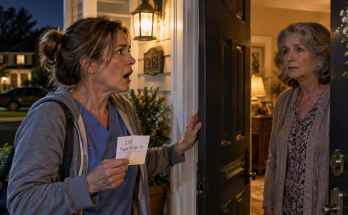
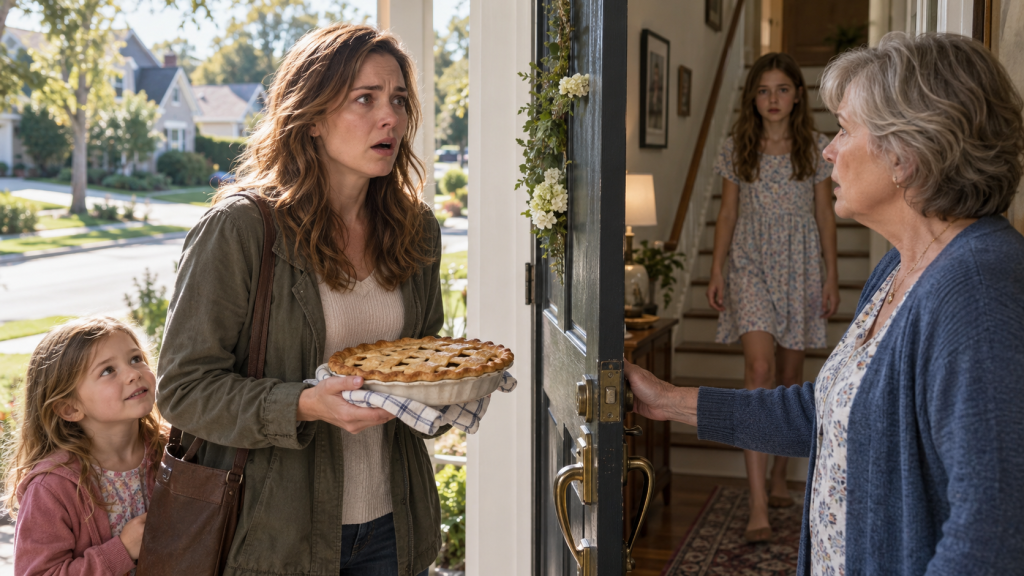
Behind Helen, Ava stood on the stairs with one hand wrapped around the banister.
My daughter.
Alive.
Pale.
Thin.
Her hair several inches shorter than it had been the morning Ryan picked her up from school.
I kept looking at her because every time I looked away, I was terrified she would disappear again.
“What do you mean?”
Helen glanced toward the street.
“Come inside.”
“No.”
My voice came out sharper than I intended.
“Tell me what you mean.”
“Please.”
She lowered her voice.
“Ryan is already asking where you are. If he realizes I told you—”
“My daughter is standing behind you.”
Helen flinched.
“I know.”
“You let me bury her.”
Ava made a small sound.
I immediately wished I could pull the words back.
Her eyes widened.
“Mom?”
I looked at her.
“I’m sorry.”
She stared at me.
“You really thought I was dead?”
I began crying.
“Yes.”
Ava’s face crumpled.
“But Dad said you died.”
“I didn’t.”
“And Gabby?”
“Alive.”
Ava’s knees seemed to weaken.
Helen turned and reached for her, but Ava pulled away.
“Gabby is alive?”
“Yes.”
My voice broke.
“She’s at preschool.”
Ava covered her mouth.
“Oh my God.”
I stepped forward.
Then stopped.
I did not know whether I was allowed to touch my own child.
That realization may have been the cruelest moment of all.
For eleven years, I had kissed her bruises without asking.
Pulled blankets over her at night.
Wiped tears with my thumb.
Now she stood six feet away, and I was afraid one sudden movement might frighten her.
“Ava.”
Her eyes lifted.
“Can I hug you?”
She started crying.
Then she ran.
Not away.
Toward me.
I barely had time to open my arms.
She hit my chest so hard I stumbled backward into the porch railing.
Then my daughter was inside my arms.
Alive.
Warm.
Real.
I pressed my face into her hair.
The smell was wrong.
Different shampoo.
Different house.
Still her.
My knees gave out.
We sank onto the porch floor together.
“Ava.”
I kept saying it.
“Ava.”
She clung to me.
“Mom.”
That word.
After four months of hearing it only from Gabriella.
After four months of thinking one of my children would never say it again.
“Mom.”
I sobbed.
She did too.
Helen stood in the doorway crying silently.
For one brief, impossible minute, the rest did not matter.
Not Ryan.
Not the accident.
Not the grave.
Not how.
Only that my child was breathing against me.
Then Ava whispered:
“Can we get Gabby?”
Reality came back all at once.
I looked at Helen.
“My keys.”
She glanced toward the street again.
“You can’t go back into your house.”
“I’m not.”
“You need to take the girls and leave.”
“I’m getting Gabriella.”
“Yes.”
Helen crouched beside us.
“But not alone.”
My phone buzzed.
Ryan.
Where are you?
Then:
Answer me.
Then:
I’m coming home.
My blood went cold.
Helen saw my face.
“He knows.”
“Knows what?”
“That something is wrong.”
“How?”
“He has cameras.”
I stared at her.
“What?”
“Not inside my house.”
She shook her head quickly.
“Across the street. The front of your property. Mine too.”
I thought about Ryan installing the doorbell camera two days after we moved in.
He said the neighborhood was unfamiliar.
Safety.
Everything he did had a reasonable explanation until the truth changed the language.
“He moved us here to watch you.”
Helen looked down.
“Yes.”
My stomach turned.
Ava tightened her arms around me.
I looked at my daughter.
Then at my phone.
Ryan calling.
Again.
I declined.
“Call the police.”
Helen nodded.
“I already did.”
That surprised me.
“When?”
“The moment I saw you crossing the street.”
She wiped her face.
“I knew there was no going back after you knocked.”
No going back.
For once, I was grateful.
—
The first police car arrived four minutes later.
The second came behind it.
I had never been so relieved to see flashing lights.
Ava was still holding my hand.
She had not let go once.
An officer approached the porch carefully.
Helen immediately raised both hands.
“My son is on his way here.”
The officer looked at me.
“Ma’am?”
“My husband.”
I could barely say the word.
“He told me my daughter died four months ago.”
The officer’s expression changed.
Ava squeezed my hand.
I continued.
“She’s standing beside me.”
The officer looked at Ava.
Then back at me.
The story sounded impossible even while living inside it.
Another officer moved toward Helen.
“Let’s slow down. Is anyone injured right now?”
“No.”
“Any weapons in the house?”
Helen shook her head.
“Not mine.”
“Does your son own firearms?”
She hesitated.
“Yes.”
My stomach dropped.
“He keeps one in his truck sometimes.”
The officer touched his radio.
Everything sharpened.
I looked at Ava.
She was shaking.
“I want my sister.”
“I know.”
I crouched.
“We’re getting her.”
“Right now?”
“Yes.”
The officer said:
“We can have someone accompany you.”
I nodded.
“Please.”
Then headlights turned onto the street.
Helen went white.
“That’s Ryan.”
My entire body reacted before my mind did.
Ava moved behind me.
The truck slowed.
For one second, Ryan sat motionless behind the wheel.
He saw police.
Saw Helen.
Then saw me.
Then Ava stepped partly into view.
I watched my husband see the daughter he had convinced me was buried standing beside the wife he had convinced her was dead.
His face emptied.
No anger.
No explanation.
Just the moment a lie realizes it has nowhere left to go.
Ryan did not get out.
The officer closest to the street raised one hand.
“Driver, keep your hands visible.”
Ryan stared at me through the windshield.
My phone buzzed.
A message.
What did she tell you?
Not:
Is Ava okay?
Not:
What is happening?
What did she tell you?
I held the phone up so the officer could see.
He looked at the message.
Then toward Ryan.
Another text arrived.
Helen is confused. Do not believe her.
Helen laughed.
A shattered sound.
“Of course.”
Ryan finally opened the truck door.
“Sir, stay in the vehicle.”
He stopped.
“I live across the street.”
“Stay in the vehicle.”
“My wife is having a breakdown.”
There it was.
I closed my eyes.
Same man.
Same trick.
If reality became inconvenient, make the woman describing it unstable.
Ava stepped around me.
“Dad.”
Ryan’s entire face changed.
“Ava.”
Her voice shook.
“You told me Mom died.”
He stared at her.
“Sweetheart, go inside.”
“No.”
“Ava.”
“You told me Gabby died too.”
Ryan glanced at the officers.
“Can we not do this in the street?”
I almost laughed.
Four months of burying my daughter.
And he was embarrassed by the street.
The officer repeated:
“Sir, step out slowly and keep your hands where I can see them.”
Ryan obeyed.
He looked at me.
“Please.”
That word.
As if there were still an us inside it.
I said nothing.
He was patted down.
No gun on him.
The truck was secured.
One officer asked him to stand near the patrol car.
Ryan kept talking.
“She had postpartum depression after Gabriella.”
My stomach turned.
Five years ago.
Three months of treatment.
Something I had never hidden.
Something he had once held me through.
Now evidence against my sanity.
“She’s been struggling since the accident.”
I stared.
The officer glanced at me.
I spoke before Ryan could continue.
“Ask my daughter who she is.”
Ryan closed his eyes.
“Don’t do this.”
Ava looked at the officer.
“My name is Ava Marshall.”
Ryan’s face changed.
Helen whispered:
“Thank God.”
Ava continued.
“My dad told me my mom and sister died in the accident.”
The officer looked at Ryan.
“Is that true?”
Ryan said nothing.
Silence can confess more clearly than words.
—
Another officer accompanied me to Gabriella’s preschool.
Ava came.
I asked if she wanted to stay with Helen.
“No.”
The answer was immediate.
“I want Gabby.”
So did I.
I sat in the back beside Ava while the officer drove.
My car remained across the street.
Evidence now.
Everything felt like evidence.
The pie on Helen’s porch.
The text messages.
The photograph of Ryan beside Ava’s hospital bed.
My grief itself.
Ava leaned against the door.
She looked exhausted.
“Does Gabby know I’m alive?”
“No.”
“Will she be scared?”
“I don’t know.”
Ava rubbed her thumb against her index finger.
Same nervous habit.
I almost cried again.
“Did she really see me?”
“Yes.”
Ava smiled faintly.
“I saw her too.”
My breath caught.
“When?”
“Two days ago.”
“So you were watching?”
She nodded.
“Helen told me not to.”
“Why?”
“Dad said I wasn’t supposed to go near your house.”
She swallowed.
“He said you weren’t really there.”
I stared.
“What?”
“He told me sometimes after brain injuries people see things.”
My blood ran cold.
“He told you Gabriella was a hallucination?”
“Not exactly.”
Ava looked ashamed.
“He said I was remembering her and putting her face onto another little girl.”
Ryan had not merely lied.
He had taught our daughter to distrust her own eyes.
Ava continued.
“But Gabby still chews the end of her sleeve when she watches TV.”
My heart stopped.
“She always did that.”
Ava smiled through tears.
“I saw her through the window.”
“And I knew.”
I took her hand.
“You knew before I did.”
“No.”
She looked at me.
“Gabby knew first.”
Five years old.
Standing at a window.
Telling the truth while every adult around her had been living inside a lie.
—
The preschool director met us at the entrance.
Police had called ahead.
She looked frightened until she saw me.
Then confused when she saw Ava.
Everyone knew.
Of course.
When a family loses an eleven-year-old, people remember photographs.
Ava had been on the mantel in our new house.
On my phone.
In the grief folder the school counselor had asked me to make for Gabriella.
The director covered her mouth.
“Oh my God.”
Ava looked down.
I put my arm around her.
This time she leaned into me.
“Where’s Gabriella?”
“In her class.”
The director wiped her eyes.
“She’s fine.”
“Can we get her?”
“Yes.”
I thought I was ready.
I wasn’t.
Gabriella came around the corner holding her teacher’s hand.
She wore purple leggings and one shoe had come untied.
She saw me first.
“Mommy!”
Then she saw Ava.
She stopped.
Everything in her tiny body became still.
Ava started crying.
“Gabby.”
Gabriella’s eyes widened.
Then she did something that destroyed every adult in the hallway.
She frowned.
“I told you.”
I laughed and sobbed at the same time.
“Yes.”
Gabriella dropped her teacher’s hand and ran.
Ava knelt.
Her little sister collided with her.
“Ava!”
“I’m here.”
“You were in the window!”
“I know.”
“I told Mom!”
“I know.”
Gabriella began crying.
Ava held her.
“I thought you went to heaven.”
Ava’s face crumpled.
“I didn’t.”
“Why didn’t you come home?”
Silence.
There are questions children ask that no adult should have to answer in a preschool hallway.
Ava looked at me.
I knelt beside both girls.
“Someone told Ava something that wasn’t true.”
Gabriella frowned.
“Who?”
I looked at the officer.
Then at my daughters.
“Daddy.”
Ava closed her eyes.
Gabriella’s face changed.
“No.”
The word was quiet.
Children protect parents until reality gives them nowhere to put the love.
I did not say more.
Not there.
Not yet.
I gathered both girls.
One on each side.
For the first time in four months, I had both daughters within reach.
I kept touching them.
A shoulder.
A hand.
Hair.
Proof.
—
We did not go home.
Police advised us not to until Ryan’s truck and the houses were searched and statements taken.
My sister, Melissa, lived an hour away.
I called her.
She answered on the second ring.
“Hey.”
I could not speak.
“Claire?”
I had not said my name yet in this story. Now it’s Claire. Good.
“Claire, what happened?”
“Ava is alive.”
Silence.
Then:
“What?”
“Ava is alive.”
Melissa screamed.
Not words.
Then:
“Where?”
“With me.”
I cried.
“Ryan lied.”
Another silence.
This one different.
Dark.
“I’m coming.”
“No.”
“Claire—”
“Meet us somewhere safe.”
She understood.
An hour later, we were in a family-services conference room at the police station.
Ava sat under a blanket drinking hot chocolate.
Gabriella slept across two chairs with her head in my lap.
Melissa arrived.
The second Ava saw her aunt, she burst into tears again.
Melissa dropped to her knees.
“Oh, baby.”
Ava ran to her.
My sister held her like she could pull four lost months back through her arms.
Then Melissa looked at me over Ava’s shoulder.
Her face asked the question.
How?
I shook my head.
Not yet.
Because I still did not know.
Not all of it.
That came over the next forty-eight hours.
And then over the next year.
Truth is rarely one door.
It is a hallway.
You open one room.
Then discover five more.
—
Helen gave police everything.
Her phone.
The photograph.
Messages.
A folder Ryan had made her keep.
Medical papers.
Ava’s false school-registration forms under the name Lily Carter.
The temporary identification Ryan had arranged.
A copy of a forged death certificate.
That document nearly made me vomit when I saw it.
AVA LILY MARSHALL
Eleven years old.
Deceased.
Official-looking seal.
Date.
The day after the crash.
My daughter’s entire existence reduced to one fraudulent line.
“How?”
I asked the detective.
His name was Mark Dorsey.
He spoke carefully.
“We’re still determining who helped create the documents.”
“Someone had to.”
“Yes.”
“Who buried the coffin?”
He looked at me.
My body went cold.
The grave.
Four months of flowers.
Every Sunday at first.
Then every other.
Gabriella drawing pictures and leaving them under stones.
The tiny ceramic angel I placed beside the headstone.
“What was in it?”
Dorsey hesitated.
That hesitation told me enough.
“Tell me.”
“The cemetery records show a sealed casket provided through a small funeral service Ryan selected.”
“I know.”
“I signed papers.”
My voice broke.
“I signed whatever he gave me.”
Dorsey nodded.
“We’re obtaining a court order.”
“For what?”
“To examine the burial.”
My stomach turned.
“No.”
I whispered.
Then louder:
“No.”
The thought of them opening Ava’s grave felt obscene.
Then I looked through the observation window at my daughter.
Alive.
The obscenity had already happened.
“Do it.”
—
Helen’s story came next.
She told it to police first.
Then to me.
We sat in separate chairs inside an interview room.
Ava refused to see Ryan.
Gabriella kept asking when we were going home.
I had no answer.
Helen folded her hands.
“I need you to understand something before I start.”
“No.”
She looked at me.
“I’m not interested in understanding you before I understand what happened to my daughter.”
Her eyes filled.
Fair.
“Tell me facts.”
So she did.
Ryan told me his mother had died when he was twenty-two.
Car accident.
A lie.
In reality, they had become estranged when he was twenty-seven.
A business dispute.
Money.
More lies.
Helen caught him taking money from a company they briefly operated together.
She threatened to report him.
Ryan repaid part of it.
Then cut her out of his life.
When he met me two years later, he simply edited Helen out.
Dead people cannot contradict stories.
I stared at her.
“He told me you died before we met.”
“I know.”
“When did you learn about me?”
“Three years after you married.”
“And you never contacted me?”
“He said you knew.”
I laughed.
Of course.
“He said we had chosen not to have a relationship.”
Helen wiped her face.
“I believed him because it was easier.”
There it was.
Not innocence.
Convenience.
Then eight months before the crash, Ryan contacted her.
First message in years.
He said he had two daughters.
Sent photographs.
Ava.
Gabriella.
Helen cried when telling me that.
“He knew exactly what would make me answer.”
My daughters.
“He said you were planning to leave him.”
My body went cold.
I had been.
Not formally.
Not yet.
But six months before the crash, I had opened an email from a divorce attorney.
I never sent it.
I had saved the draft.
Ryan had become controlling.
Money.
Where I went.
Who I spoke to.
Nothing I could point to dramatically.
A hundred small things.
He had started checking my location constantly.
Questioning every purchase.
Becoming furious if I made plans without telling him first.
I told Melissa once:
“I don’t know if I want to live like this forever.”
Apparently, Ryan knew.
“He found your email.”
Helen said.
My skin prickled.
“How?”
“He told me he had access to your laptop.”
Of course.
“He said you were unstable.”
I almost laughed.
“He said you had threatened to take the girls and disappear.”
“I never did.”
“I know that now.”
“Did you know then?”
Helen looked ashamed.
“I believed my son.”
There it was.
The answer.
“He told me he needed help.”
“With what?”
“At first, temporary housing.”
“For Ava.”
My blood ran cold.
“Before the accident?”
“Yes.”
That was when I understood.
The crash had not created Ryan’s plan.
The plan had created the crash.
—
Two weeks before Ava’s accident, Ryan told Helen he was afraid I would file for divorce and “poison” the girls against him.
He claimed I favored Gabriella.
That Ava wanted to live with him.
That I was emotionally unstable after the postpartum depression I had experienced five years earlier.
He told Helen he needed somewhere Ava could stay briefly while he pursued emergency custody.
Helen said no at first.
Then Ryan brought Ava to visit without telling me.
A “father-daughter day.”
I remembered.
They went to a movie.
Or so I thought.
Ava met Helen.
Ryan introduced her as an old family friend named Mrs. Carter.
Ava never knew she was her grandmother.
My stomach turned.
“He was preparing her.”
I whispered.
Helen nodded.
“Yes.”
Preparing.
Not reacting.
Planning.
Then came the day of the crash.
Ryan picked Ava up from school.
Instead of driving home, he took a road outside town.
At an intersection, he entered against the light.
That was what the traffic-camera footage later showed.
Not a distracted drift.
Not another vehicle “crashing into them.”
Ryan accelerated into the intersection.
Another car struck the passenger side.
Ava’s side.
The driver of the other car survived with minor injuries.
For four months, I had privately blamed that stranger.
Hated him.
Wondered whether he had been texting.
Drinking.
Speeding.
Ryan let me.
The truth was worse.
“He meant to crash the car?”
My voice barely worked.
Helen looked sick.
“He told me he only meant to cause a collision.”
I stared.
“As if that is different.”
“He said he thought it would be minor.”
“HE PUT HER IN THE PASSENGER SEAT.”
My voice broke across the room.
A detective stepped closer outside the door.
I lowered my head.
I could not breathe.
Helen cried.
“He said he needed hospital records.”
“What?”
“Proof of an accident.”
“A reason for confusion.”
“For what?”
Helen looked at me.
“To make Ava believe things had changed.”
I felt something inside me go silent.
Not break.
Silence.
There are truths too cruel for the nervous system to react to immediately.
Ryan had not been trying to kill Ava.
That distinction would matter later to prosecutors.
It did not comfort me.
He had deliberately driven his child into danger to manufacture an event dramatic enough to rearrange her life.
He wanted a confused child.
A grieving wife.
A story nobody would question.
He got all three.
Except Ava survived.
And eventually Gabriella looked out a window.
—
Ava suffered a skull fracture and swelling around her brain.
She was unconscious for almost two days.
I knew about neither day.
Ryan told me she had died at another hospital before I could reach her.
How?
That lie required more machinery.
Ryan had been taken to a different emergency department because his injuries were less severe.
Ava was transferred to a pediatric trauma center forty miles away.
I was at home when police first notified me.
Ryan called before I could leave.
He told me not to drive because I was hysterical.
Melissa was on her way to take me.
Before she arrived, Ryan called again.
Crying.
Screaming.
He said Ava had gone into cardiac arrest during transport.
He said doctors tried.
He said she was gone.
I collapsed on the kitchen floor.
By the time Melissa got there, I could barely stand.
Ryan came home the next day with stitches and bruises.
He held me while I screamed.
That memory would haunt me longer than the funeral.
Because he knew.
He knew she was alive.
At that exact time, Helen was sitting beside Ava’s hospital bed.
How did Helen gain access?
Ryan listed her as Ava’s paternal grandmother.
Which she was.
He told hospital staff I was hospitalized elsewhere after learning about the accident.
That part was false.
He signed everything he could.
Ava remained sedated.
When she woke, she was confused.
Head injury.
Medication.
Fear.
Ryan visited.
And told her:
“Mom and Gabby were in another car behind us.”
They died.
Both.
Ava believed him.
At first.
Why wouldn’t she?
He was her father.
The person adults tell children is safe.
The person children assume would never use death as a sentence.
—
The funeral paperwork came through a man named Curtis Hale.
Ryan knew him from business.
Curtis managed a financially failing funeral home.
He accepted cash.
A lot of it.
Ryan provided forged hospital documentation.
Curtis provided the rest.
A sealed casket.
A fraudulent certificate.
A burial arranged quickly.
The grave did not contain Ava.
Months later, after a court-authorized exhumation, investigators found weighted bags beneath a folded hospital blanket.
Nothing human.
Nothing that should have been buried under my daughter’s name.
I did not attend the exhumation.
I could not.
Detective Dorsey told me afterward.
I went to the cemetery alone the next morning.
The hole had been closed again.
The headstone remained.
AVA LILY MARSHALL
I stood there for a long time.
Then I touched the stone.
Cold.
Real.
Lie.
For four months, I had spoken to it.
Told it about Gabriella.
Told it about Ryan.
Told it I was sorry.
Told it I loved her.
At first, learning the grave was empty made me feel humiliated.
Then something changed.
My love had not been empty.
The grave was.
Different.
I had not been foolish for mourning.
I had been deceived.
I stopped blaming the woman who stood there crying.
She was doing the best she could with the truth someone handed her.
—
Ryan’s motive became clearer through messages police recovered.
Control.
That ugly, ordinary word.
Not money.
Not an affair.
Not a secret second family.
Control.
He had read my draft email to the divorce attorney.
He had seen messages between Melissa and me.
He knew I was thinking about leaving.
He believed Gabriella was too young to “choose sides.”
Ava was older.
Closer to him.
Or so he thought.
He told Helen:
“If Claire leaves, she’ll make Ava hate me.”
Then:
“I won’t let her take both of them.”
I read that message later.
I stared at the word take.
As though daughters are objects adults possess.
Ava had become the child he intended to keep.
Gabriella the child he would leave with me temporarily.
And me?
I was supposed to become so devastated by Ava’s death that divorce became unthinkable.
He wanted grief to bind me to him.
That was perhaps the most intimate cruelty of all.
He manufactured my dependence.
Every night I cried against his chest.
Every time he whispered:
“We still have each other.”
Every time he told me:
“We have to be strong for Gabby.”
He was using the wound he created to keep me close.
When he suggested moving three hours away, I agreed immediately.
I thought our old house was full of Ava.
Her bedroom.
Her shoes.
Her drawings taped to the refrigerator.
I wanted escape.
Ryan chose the city.
Ryan chose the street.
Why across from Helen?
Because Helen had begun threatening to tell me.
Three weeks after Ava left the hospital, her memories started returning.
Not everything.
Fragments.
Me singing in the kitchen.
Gabriella’s purple blanket.
Our old dog.
Her school.
She asked why there were no news reports about our deaths.
Ryan became angry.
Helen began to understand that the story she had been given was false.
She confronted him.
He threatened her.
“If you tell Claire now, you go down too.”
And he was not entirely wrong.
Helen had participated.
Kept Ava.
Used the name Lily Carter.
Signed school documents.
Failed to contact police even after realizing I believed my daughter was dead.
Fear hardened into complicity.
Then Ryan moved us across the street.
He told me the house had been a lucky find.
He told Helen:
“Now I can make sure everybody behaves.”
That sentence became evidence too.
—
Helen did not escape consequences.
That mattered.
She cooperated fully.
Her attorney negotiated.
She admitted what she had done.
She had not planned the crash.
Had not known about the fake funeral in advance.
But after she discovered it, she remained silent.
For weeks.
Then months.
She had helped keep Ava hidden.
There were charges.
Legal restrictions.
Supervised contact at first.
I did not ask prosecutors to “go easy.”
I also did not ask them to destroy her.
I learned something during those months.
Justice is not the same as choosing the maximum amount of suffering available.
I wanted accountability.
Truth.
Safety.
Not a body count of ruined lives.
Helen received probation after a plea and substantial cooperation, along with mandated counseling and restrictions around contact that were later modified.
She accepted it.
No excuses.
That made forgiveness possible someday.
Not immediate.
Possible.
—
Ryan was held without coming home.
That was one of the first times I slept.
Not well.
But deeply enough to dream.
In the dream, I was at Ava’s grave.
The stone cracked.
A hand came through the soil.
I woke screaming.
Ava ran into my room.
For one terrible second, I thought I was still dreaming.
Then she climbed onto the bed.
“Mom.”
I grabbed her.
She was eleven.
Too old to sleep curled against me like a toddler.
Neither of us cared.
“I’m sorry.”
I whispered.
“For what?”
“I didn’t know.”
Ava went quiet.
Then:
“I didn’t know either.”
That sentence saved me from something.
Not all guilt.
Enough.
“I should have seen something.”
“You thought Dad told the truth.”
“So did you.”
She looked at me.
“Yes.”
We lay in the dark.
Then she whispered:
“Do you hate him?”
I stared at the ceiling.
“I hate what he did.”
“That’s not what I asked.”
Children.
Precise when you want ambiguity.
“I don’t know.”
I told her.
That was the truth.
Ryan was not a stranger.
He was the man I had loved for fourteen years.
The father who stayed awake when Ava had croup at two.
The man who built Gabriella’s crib.
The person who once drove through a snowstorm to bring me home from my sister’s.
All those memories still existed.
So did this.
Human beings are unbearable because one truth does not delete another.
Ava whispered:
“I think I hate him.”
I kissed her head.
“You’re allowed to feel whatever you feel.”
“Will it stay forever?”
“I don’t know.”
“Is that okay?”
“Yes.”
We were both learning to survive without knowing.
—
Gabriella’s reaction was different.
At five, betrayal has fewer layers.
“Daddy lied.”
Yes.
“Daddy made Ava stay away.”
Yes.
“Daddy said she was dead.”
Yes.
“Is Daddy bad?”
That question broke me.
I did not want to teach a five-year-old that people divide neatly into good and bad.
But I also would not blur danger to preserve Ryan’s image.
“Daddy did something very bad.”
She frowned.
“Very, very bad?”
“Yes.”
“Is he in timeout?”
Melissa nearly choked.
I swallowed.
“Sort of.”
Prison as an extremely long adult timeout.
Not entirely inaccurate.
“Can he come home?”
“No.”
“Good.”
Then Gabriella returned to her cereal.
Children can say the sentence adults spend months avoiding.
Good.
I felt it too.
And hated that I felt it.
Both.
—
Ava’s physical recovery had been incomplete.
I had been so overwhelmed by seeing her alive that I did not notice everything immediately.
Headaches.
Light sensitivity.
Difficulty concentrating.
Nightmares.
Occasional dizziness.
Helen had taken her to follow-up appointments, but under the false identity.
Once the truth surfaced, Ava’s medical care had to be reconstructed.
New neurologist.
Records pulled.
Psychological evaluation.
Trauma therapy.
She hated all of it.
“I’m not broken.”
“I know.”
“Then why does everyone keep looking at me like I am?”
That question made me change.
I stopped watching her every second.
Hardest thing I had ever done.
The first week, I followed her from room to room.
If she was quiet too long, I checked.
If she slept past eight, I stood at the door.
If she walked to the mailbox, my heart raced.
Finally, Ava snapped:
“Mom, I came back.”
I froze.
“I know.”
“No.”
She cried.
“You act like I’m still missing.”
That hurt because it was true.
My fear was turning our home into another kind of confinement.
I sat down.
“I’m sorry.”
She cried too.
“I need you to let me go to the bathroom without checking if I’m alive.”
Despite everything, I laughed.
Then she did.
A terrible little laugh.
Healing entered through humor sometimes.
After that, we made rules.
She texted if she went farther than the yard.
At first.
Then less.
I asked before hugging when she was upset.
She asked me to stop bringing up the grave.
I did.
Mostly.
Trust had to be rebuilt in both directions.
Not because Ava had betrayed me.
Because trauma teaches bodies that absence equals catastrophe.
We had to learn new math.
A closed bedroom door could simply mean privacy.
A late bus could simply be late.
A missed call could simply be a dead battery.
Ordinary explanations became gifts.
—
Ava’s memory of the crash returned in pieces.
She remembered Ryan looking at the traffic light.
Red.
His hands tight on the steering wheel.
She remembered saying:
“Dad?”
Then acceleration.
Then glass.
Nothing after.
For months, she believed maybe she remembered wrong.
Then prosecutors showed her the traffic-camera footage privately, with a therapist present.
I did not attend.
Her choice.
She came home afterward and sat on the kitchen floor.
I found her there.
She looked up.
“He did it.”
I knew.
Still.
Hearing your child say it is different.
I sat beside her.
“He looked at the light.”
Her voice shook.
“He knew.”
I took her hand.
She let me.
“I thought maybe he got confused.”
Tears came.
“I wanted him to have gotten confused.”
I understood.
Accidents are easier to forgive than plans.
Not always.
Often.
She whispered:
“Why wasn’t I enough for him to stop?”
That sentence destroyed me.
I turned toward her.
“No.”
She looked at me.
“Do not make his decision a measurement of your worth.”
She cried.
“Then what was it?”
“His need for control.”
“My leaving.”
“His fear.”
“His selfishness.”
“His belief that he had the right to decide everyone else’s reality.”
I swallowed.
“Those are descriptions of him.”
“Not you.”
Ava covered her face.
I pulled her into my arms.
This time she did not ask me to let go.
—
Ryan wrote letters.
Of course.
At first, I returned them unopened.
Then one came addressed to Ava.
I gave it to her therapist.
Ava chose not to read it.
Months later, she changed her mind.
She read it once.
Then tore it into four pieces.
I did not ask what it said.
Three days later, she told me anyway.
“He said he loved me too much to lose me.”
My stomach turned.
Ava stared out the window.
“He said everything started because he was scared you’d take us.”
I waited.
Then:
“That’s not love, right?”
I thought carefully.
“He may have felt love.”
She looked at me.
“But love does not give someone permission to control where you live, what you believe, or whether other people get to know you’re alive.”
She nodded.
“So he loved selfishly.”
“Yes.”
Ava considered.
Then:
“That sounds worse than not loving me.”
Sometimes.
I did not say it.
—
Ryan eventually pleaded guilty.
There would have been a trial otherwise.
The evidence was overwhelming.
Traffic footage.
Helen’s messages.
Curtis’s testimony.
Forged paperwork.
Hospital records.
The fake grave.
Digital searches.
One especially damning search:
how long can concussion memory loss last
Made two days before the crash.
Another:
can family request sealed casket after car accident
The night before.
When prosecutors showed me those searches, I had to leave the room.
Planning has a different weight than impulse.
He had imagined my grief before giving it to me.
That knowledge took years to stop tasting like metal.
The charges were severe.
Child endangerment.
Kidnapping-related offenses.
Fraud.
Falsifying records.
Conspiracy.
Other crimes.
He received a long prison sentence.
Not forever.
Long enough that both girls would be adults before any realistic chance of release.
At sentencing, I spoke.
Ava chose not to.
I told the judge:
“My husband did not kill my daughter.”
My voice shook.
“He did something I once thought only death could do.”
“He removed her from my life while she was still alive.”
The courtroom was silent.
“He made one child believe her mother and sister were dead.”
“He made another child believe her sister was buried.”
“He made me mourn someone who was three hours away.”
I looked at Ryan.
For the first time since that day across the street.
He looked older.
Smaller.
Not harmless.
Just human.
“That grief was real.”
I continued.
“The coffin was empty.”
“The grief was not.”
Ryan cried.
I did too.
“I do not know whether I will ever forgive him.”
My voice broke.
“But forgiveness is not what this court is deciding.”
“Safety is.”
Then I sat down.
That was enough.
—
After court, Ryan’s attorney approached.
“He wants to apologize.”
I almost laughed.
“Through you?”
“He asked if you would read a letter.”
“No.”
The attorney nodded.
Then:
“He said he understands.”
I looked at him.
“If he understood, he would have understood before causing a crash.”
Harsh.
True.
I left.
Years later, I would read one letter.
Not then.
—
We moved again.
Of course.
The house across from Helen could never become home.
Not after the window.
Not after cameras.
Not after Ryan’s truck in the street.
This time, I chose the city.
Not far.
Just enough.
A place with old trees and a library Gabriella loved.
Ava chose her bedroom first.
Second floor.
Window facing the backyard.
The first evening, she stood there for a long time.
I came to the doorway.
“What are you looking at?”
She smiled faintly.
“Nothing.”
I almost asked again.
Stopped.
Nothing was allowed.
Ordinary nothing.
Beautiful.
Gabriella came running down the hall.
“Ava, can I sleep in your room?”
“No.”
“Why?”
“Because you kick.”
“I do not!”
“You kicked me in the face last time.”
“That was one time.”
I stood there listening.
Sisters arguing.
I nearly cried.
Ava saw.
“Mom.”
“Sorry.”
“Stop crying every time we fight.”
“I’m working on it.”
Gabriella frowned.
“Why are you crying?”
“Because I’m weird.”
She accepted that immediately.
Children are generous when explanations are simple.
—
A year passed.
Then two.
Ava turned thirteen.
The birthday I once believed she would never reach.
I bought too much cake.
Too many decorations.
She complained.
“Mom, I’m thirteen, not six.”
“I missed twelve.”
She went quiet.
I regretted saying it.
Then she hugged me.
“Fine.”
She sighed.
“One balloon.”
There were seventeen.
We negotiated.
Ten.
Progress.
At the party, Gabriella followed Ava everywhere.
Ava pretended to be annoyed.
Then made sure her little sister got the first cupcake.
Some bonds recover by refusing to make a ceremony of every repair.
They simply continue.
—
Helen remained part of our lives cautiously.
That surprised everyone.
Including me.
For the first year, I could barely look at her without seeing the months she kept Ava from me.
Then therapy made me face something difficult.
Helen had failed my daughter.
Also eventually helped save her.
Both.
She was the reason police had evidence.
She was the reason Ryan’s lie collapsed cleanly instead of becoming a battle over whose story sounded more believable.
That did not erase her silence.
Nothing did.
But accountability changed what came after.
Helen never asked to be called Grandma.
That mattered.
One day, when Ava was thirteen, she called Helen herself.
I did not know until afterward.
“What did you talk about?”
Ava shrugged.
“Stuff.”
“What stuff?”
“Mom.”
“Right.”
Privacy.
Working on it.
Months later, Gabriella asked:
“Is Helen our grandma?”
Ava answered before I could.
“Technically.”
Helen, who happened to be sitting across from us, laughed and cried at the same time.
Eventually, both girls called her Grandma Helen.
Not because anyone demanded restoration.
Because relationships can regrow after responsibility.
Slowly.
Not back into what should have been.
Into something new.
—
The empty grave remained.
I could not decide what to do.
Legally, the death record was corrected.
The headstone could be removed.
The cemetery offered options.
For months, I avoided it.
Then Ava asked:
“Can I see it?”
I froze.
“Why?”
“I want to.”
“You don’t have to.”
“I know.”
We went together.
She was fourteen.
Gabriella came too.
The stone still stood.
We had not yet removed it.
Ava approached slowly.
Read her own name.
Her own birthday.
Then the false death date.
She touched the engraving.
“That’s creepy.”
Gabriella said:
“Very.”
I almost laughed.
Ava looked at me.
“You came here?”
“Yes.”
“How often?”
“At first, a lot.”
She stared at the stone.
“What did you say?”
“Everything.”
“Like what?”
I smiled sadly.
“I complained that you never cleaned your room.”
Ava laughed.
“You told my grave that?”
“Yes.”
“I told you Gabby lost her tooth.”
“I told you I hated everyone who said time heals.”
“I told you your dad was trying.”
The last sentence landed.
Ava looked away.
I swallowed.
“I didn’t know.”
“I know.”
We stood there.
Then Ava asked:
“Can we take it down?”
I nodded.
“Yes.”
“What happens to it?”
“Whatever you want.”
She thought.
“Break it.”
I stared.
Gabriella’s eyes widened.
“Can I help?”
Of course.
We did not literally smash a cemetery stone ourselves.
The cemetery removed it.
Later, a stoneworker cut the face into smaller pieces.
Ava kept one.
Just a blank piece from the back.
Not her name.
She painted a sunflower on it.
Placed it in our garden.
I asked why.
“Because something real should grow where the fake thing ends.”
Sixteen-year-old future poet.
Even at fourteen.
—
The first time Ava got her learner’s permit, she vomited before driving.
Not metaphorically.
Actually vomited.
Cars had become complicated.
Of course.
I told her we could stop.
She said no.
Her therapist had worked with her for months.
Ryan had turned a car into a weapon against reality.
Ava wanted one to become transportation again.
We sat in an empty parking lot.
She gripped the wheel.
“I hate this.”
“I know.”
“You’re not helping.”
“Sorry.”
She breathed.
Then moved the car ten feet.
Stopped.
Cried.
Then twenty.
Then around the lot.
That first day, we never reached the street.
Three months later, she drove home.
I held the door handle so hard my knuckles whitened.
Ava looked over.
“You okay?”
“No.”
She laughed.
“Good.”
I laughed too.
Some terror deserves to be laughed at once it loses authority.
—
Ryan’s letters kept coming.
Birthday.
Christmas.
Ava’s graduation.
He never wrote to Gabriella as often.
That hurt her in a different way.
“I was always the extra one.”
She said once when she was thirteen.
My heart cracked.
“No.”
“That’s how he acted.”
True.
Ryan’s plan had centered Ava.
Possession can look like favoritism from the outside.
It still harms everyone.
Gabriella had spent years wondering why her father had risked everything to keep Ava and left her with me.
“Did he love her more?”
She asked.
“No.”
“How do you know?”
I thought.
“I don’t know what was inside him.”
Then corrected:
“But what he did was not proof Ava mattered more.”
“It was proof he thought he could control her differently.”
Gabriella stared.
“That’s messed up.”
“Yes.”
Teenagers.
Efficient.
She eventually wrote Ryan one letter.
I did not read it.
She told me only the final sentence:
You don’t get to decide which daughter was worth keeping.
That sounded like Gabriella.
I was proud.
Sad.
Both.
—
Ava went to college.
Two hours away.
That first night after we moved her into the dorm, I sat in the parking lot for twenty minutes.
She had hugged me goodbye.
Normal.
Completely normal.
But my body remembered every goodbye as potential disappearance.
I stared at her dorm window.
Then my phone buzzed.
Ava:
Go home, Mom.
I laughed.
Then another:
I’m alive.
Then:
That was dark. Sorry.
I cried and laughed.
Called her.
“You’re terrible.”
“You raised me.”
“Debatable.”
“Drive safe.”
“I love you.”
She paused.
“I love you too.”
I drove home.
Did not turn around.
That was one of my proudest days.
Not because Ava went to college.
Because I let her.
—
Gabriella was fifteen when she asked the question I had avoided.
“Why did nobody believe me?”
We were folding laundry.
I stopped.
“What?”
“When I said I saw Ava.”
My hands went still.
“I believed you thought you saw her.”
“That’s not what I asked.”
No.
It wasn’t.
“I didn’t believe you.”
Gabriella looked down.
“Because I was five?”
“Because what you were saying was impossible according to everything I thought I knew.”
“But I was right.”
“Yes.”
“Does that bother you?”
“Yes.”
She looked up.
“Why?”
“Because I was trying to protect you from false hope.”
I swallowed.
“And instead, I almost taught you not to trust yourself.”
Gabriella nodded slowly.
“That’s what Dad did to Ava.”
The comparison hurt.
She saw it.
“I’m not saying you’re like him.”
“I know.”
“But adults do that.”
“What?”
“Tell kids what they saw.”
I sat down.
She was right.
“I’m sorry.”
Gabriella folded a shirt.
“I know.”
“That’s it?”
“What do you want?”
“I don’t know.”
She smiled.
“Therapy.”
Rude.
Accurate.
Then she leaned against me.
“I’m glad you knocked on the door.”
“So am I.”
“I knew it was Ava.”
“I know.”
She smiled.
“I told you.”
Four years later and still collecting interest on that sentence.
She had earned it.
—
I eventually read one letter from Ryan.
Ava was twenty-one by then.
Gabriella fifteen.
I was no longer afraid a page could dismantle me.
Ryan wrote:
I have spent years trying to understand why I thought fear gave me permission to decide everyone’s lives.
Good question.
Then:
I told myself I was protecting my relationship with Ava. The truth is I was protecting myself from being left.
Closer.
I made your grief a cage because I thought if you hurt enough, you would need me forever.
I stopped.
There it was.
The thing I knew but needed him to say.
He continued:
I do not ask you to forgive that.
Good.
I used Ava’s injury, Gabriella’s innocence, my mother’s guilt, and your love for me as tools. I can finally call it what it was.
I cried.
Not because I missed him.
Because truth sounds different when the liar finally stops editing.
His last paragraph:
If the girls ever want to see me, I will follow whatever boundaries they set. If they never do, I understand.
I folded the letter.
Put it away.
Never answered.
An apology can be real without restoring access.
That lesson saved me repeatedly.
—
Ava visited Ryan once.
At twenty-three.
Her decision.
I did not go.
She took her therapist’s advice.
Public prison visitation room.
One hour.
Afterward, she came to my house.
Sat on the sofa.
I waited.
Finally:
“He looks old.”
“Yes.”
“He cried.”
I nodded.
“So did I.”
I took her hand.
“Do you regret going?”
“No.”
“Do you forgive him?”
Ava stared at the floor.
“I don’t know.”
Then:
“I think I stopped needing him to suffer.”
That sounded like forgiveness in one form.
She continued.
“But I don’t want him in my life.”
That sounded like boundary.
Both could exist.
“He said he loved me.”
I waited.
“I told him love should have made him stop at the red light.”
My throat closed.
“What did he say?”
“Nothing.”
Ava leaned back.
“That was the first useful thing he ever didn’t say.”
I laughed through tears.
She smiled.
Then we ordered pizza.
Healing rarely ends with a speech.
Sometimes it ends with pepperoni.
—
Helen died when the girls were adults.
Stroke.
Quick.
Ava sat beside her.
Gabriella too.
I stood farther back.
My feelings about Helen had changed over years but never simplified.
She had helped steal months from us.
She had also helped give the truth back.
Before she died, Helen asked me:
“Do you forgive me?”
I hated that dying people loved this question.
Maybe because time strips away patience.
I answered honestly.
“Yes.”
She cried.
Then I continued.
“But I still wish you had called me the first week.”
“I know.”
“I wish you had trusted a mother more than a frightened son.”
“I know.”
“I wish Ava never learned the name Lily Carter.”
Helen closed her eyes.
“So do I.”
Then:
“But I forgive you.”
Her face softened.
“Thank you.”
Not absolution.
Not erasure.
Peace.
Enough.
At her funeral, Ava spoke.
She said:
“My grandmother made one of the worst choices of my childhood.”
The room went still.
Then:
“She also made the choice that ended the lie.”
Ava swallowed.
“I used to think people were either the person who hurt you or the person who helped you.”
“She taught me someone can be both.”
My eyes filled.
“And if they are both, forgiveness doesn’t require pretending one side never happened.”
Helen would have cried.
Probably complained about public honesty.
Ava would have loved that.
—
Years passed.
Ava became a physical therapist specializing in neurological rehabilitation.
That surprised nobody more than her.
When I asked why, she shrugged.
“I like helping people learn their bodies again.”
I understood.
She worked with patients after brain injuries.
Sometimes confused.
Angry.
Afraid.
She never told them her story unless relevant.
It usually wasn’t.
Trauma does not have to become a career brand.
But she knew what it was like to have memory questioned.
That made her gentle.
Gabriella became a photographer.
Windows everywhere in her work.
I did not notice until her first gallery exhibition.
Reflections.
Curtains.
People behind glass.
Empty houses.
Then one photograph stopped me.
A child standing at a bedroom window looking toward another house.
The title:
I Told You.
I laughed so loudly people turned.
Gabriella came over.
“You like it?”
“You are never letting that go.”
“No.”
Fair.
The photograph sold first.
Of course.
—
I remarried eventually.
Not quickly.
His name was Nathan.
A history teacher.
Widower.
Patient.
When I told him the entire story on our fifth date, he stared at me.
Then said:
“I’m going to need a minute.”
I laughed.
Good answer.
No dramatic promise.
No:
I would never.
People do not know what they would never do until life asks.
Nathan simply said:
“That must have changed the way you trust.”
“Yes.”
Then:
“What helps?”
That question.
Not:
How do I convince you?
What helps?
We built from there.
He never asked the girls to call him Dad.
He never tried to replace.
At our wedding, Ava and Gabriella stood beside me.
No one gave me away.
I gave myself.
That mattered.
—
When Ava had her first child, I panicked more than she did.
Of course.
A little girl.
Rose.
The first time Ava handed her to me, I cried.
“Mom.”
“I know.”
“She’s not going anywhere.”
My throat tightened.
“I know.”
Ava looked at me.
“Do you?”
I smiled through tears.
“I’m learning.”
Rose grabbed my finger.
Tiny grip.
Ava watched.
Then:
“I used to think having a daughter would scare me.”
“Does it?”
“Yes.”
She smiled.
“And also no.”
I understood.
Love after trauma does not become fearless.
It becomes willing.
—
Ryan was still incarcerated when Rose was born.
Ava did not tell him immediately.
Months later, she sent one photograph.
No name.
No address.
Just the baby.
Ryan wrote back:
Thank you.
Nothing else.
Good.
He had finally learned that receiving a photograph did not mean receiving a right.
Years later, he was released under supervision.
Ava was thirty.
Gabriella twenty-four.
Neither wanted a relationship immediately.
Ryan moved to another county.
Worked quietly.
As far as I know.
He never approached us.
That was the first sustained respectful thing he had done in decades.
Eventually, Gabriella met him once.
Ava twice.
I never did.
People asked whether I wanted closure.
I already had it.
Closure was two daughters alive enough to choose.
That was enough.
—
The house across the street from Helen’s was sold long ago.
So was ours.
Sometimes, when I pass neighborhoods with houses facing each other, I think about that window.
The distance between them was maybe sixty feet.
Four months of grief.
Sixty feet.
My daughter alive on one side.
Me mourning her on the other.
That used to make me furious.
Now it makes me think about how close truth can be while still remaining invisible.
Distance is not always measured in miles.
Sometimes it is measured in a curtain.
A lie.
A person you trust standing between what you see and what you are told to believe.
—
I kept the photograph from Helen’s entry table.
Ryan beside Ava’s hospital bed.
Three days after the crash.
At first, I wanted to burn it.
Then Ava asked for it.
“Why?”
“Because I’m alive in it.”
That answer stopped me.
She was.
Pale.
Bandaged.
Confused.
Alive.
For years, I had seen the photograph as proof of Ryan’s betrayal.
Ava saw proof of survival.
Same image.
Different story.
I gave it to her.
She kept it in a box.
Not displayed.
Not hidden.
History.
—
The fake death certificate went through a shredder after every legal matter ended.
I asked Ava first.
She said:
“Please.”
We stood together in my kitchen.
Her name.
False death date.
Official seal.
I fed it through.
The machine chewed slowly.
Gabriella watched.
“That’s anticlimactic.”
Ava laughed.
“What did you expect?”
“Fire.”
“In Mom’s kitchen?”
“True.”
I smiled.
We shredded copies of the cemetery record too.
Not the police records.
Those remained where records belong.
But in our house, we did not need paper insisting Ava had died.
She was standing beside me complaining the shredder was too slow.
That was evidence enough.
—
The last thing we removed was the ceramic angel from the old grave.
I had forgotten it until the cemetery called.
Did I want personal items before the plot was reassigned?
Yes.
I went alone.
The angel was dirty.
One wing chipped.
I brought it home.
Ava saw it.
“What’s that?”
I told her.
She stared.
Then:
“Do you want it?”
I thought.
“No.”
“Throw it out?”
“No.”
Gabriella suggested:
“Garden.”
So we placed it near the sunflower-painted piece of headstone.
Not as a memorial to Ava.
As a memorial to the months we survived believing the worst.
Those months were real too.
You do not have to honor a lie to honor what it did to you.
—
I am sixty-four now.
Ava is forty.
Gabriella thirty-four.
Rose is nine.
There are more grandchildren now.
Too many shoes by the door on holidays.
Too much food.
Noise.
Arguments.
Life.
Every Christmas, Gabriella tells the story.
Not the whole kidnapping.
The window.
Because she believes being right at five is her greatest achievement.
“I told Grandma there was a girl in the window.”
Rose rolls her eyes.
“We know.”
“No.”
Gabriella says.
“You must understand that nobody believed me.”
Ava interrupts:
“I did.”
“You were across the street.”
“Still counts.”
Then they argue.
I sit at the table.
Listen.
Sometimes grief still arrives.
Not because Ava is gone.
Because eleven-year-old Ava lost four months no one can return.
Because five-year-old Gabriella learned adults can deny something true.
Because I married a man capable of weaponizing love.
Those facts remain.
But they no longer occupy every room.
—
Ava once asked me:
“Would you change the accident if changing it meant we never learned who Dad really was?”
I stared at her.
“Of course.”
She smiled.
“Good.”
“Why?”
“I hate when people say trauma made them stronger like it was worth it.”
I laughed.
“Yes.”
“I would prefer we were weak and happy.”
“Exactly.”
She leaned against me.
Then:
“But since it happened…”
“Yes?”
“I’m glad we didn’t stay inside the lie.”
That I could agree with.
We do not need to thank tragedy for lessons.
We can still learn.
Different.
—
If I could return to the morning Gabriella stood at the window, I would kneel beside her.
I would not say:
“That’s impossible.”
I would say:
“Show me.”
That is the lesson I carry.
Not believe every fear.
Not assume every strange claim is true.
Show me.
Look.
Ask.
Do not use certainty as comfort simply because uncertainty hurts.
If I had looked more carefully that first morning, maybe I would have seen the curtain move sooner.
Maybe not.
I do not punish myself with maybes anymore.
Ryan had spent months building the lie.
I broke it the first morning I saw enough to question it.
That has to be enough.
—
People sometimes ask how I could have believed Ava was dead without seeing her body.
The question used to make me feel ashamed.
Now I answer:
Because her father told me.
Because hospital documents existed.
Because a funeral home produced a sealed casket.
Because a death certificate carried an official seal.
Because grief makes administration look like truth.
Because when the person you trust most says your child is gone, your mind does not immediately become a detective.
It becomes a mother trying to survive the next minute.
I believed what a system and a husband had conspired to make believable.
The shame belongs with the conspiracy.
Not the mourning.
That took me years to say without trembling.
—
Ryan once told Ava during their last meeting:
“I lost my mind because I thought I was losing my family.”
Ava answered:
“You didn’t lose us.”
He looked at her.
“You turned us into things to own.”
She told me that later.
I thought about it for days.
That was exactly it.
Family is not possession.
Love does not mean preventing people from leaving.
If someone has to stay because you made the world unsafe outside you, that is not devotion.
It is captivity wearing the clothes of family.
Ryan learned too late.
We learned because we had to.
—
The accident scar near Ava’s hairline faded.
You can barely see it now.
Sometimes sunlight catches it.
She hates when I look.
“Mom.”
“I know.”
“You’re staring.”
“I gave birth to your face. I have rights.”
“No legal basis.”
“Rude.”
She laughs.
There are scars you can touch.
Others live in habits.
Ava still checks traffic lights twice.
Gabriella still believes curtains should remain open.
I still become uneasy when someone says:
“Trust me.”
Nathan knows.
He says:
“You don’t have to.”
Then gives me the information anyway.
That is what trust looks like now.
Not blind.
Not suspicious.
Informed.
Chosen.
—
Last summer, Rose stayed with me for a week.
One morning, I found her in the guest room standing at the window.
My heart stopped.
Not because anything was wrong.
Because bodies remember old scenes.
“What are you doing?”
She pointed across the yard.
“There’s a cat in Mrs. Porter’s window.”
I looked.
Nothing.
Rose frowned.
“I saw it.”
For one second, the past stood beside us.
Gabriella at five.
Ava across the street.
Me saying impossible.
I pulled a chair over.
Sat beside Rose.
“Show me where.”
She pointed.
We waited.
Thirty seconds.
Nothing.
Then a black cat jumped onto the sill.
Rose smiled triumphantly.
“Told you.”
I laughed so hard I cried.
She stared.
“Grandma?”
“I’m fine.”
“You’re weird.”
“Runs in the family.”
We watched the cat.
Simple.
Ordinary.
A child saw something.
An adult looked.
That was all.
Exactly what I wanted the next generation to inherit.
Not fear.
Attention.
—
That night, after Rose fell asleep, I called Gabriella.
“You will not believe what happened.”
“What?”
“Rose saw a cat in a window.”
Silence.
Then screaming laughter.
“YES.”
“Do not encourage her.”
“It begins.”
“No.”
“The bloodline continues.”
I laughed.
Then she said softly:
“You looked this time?”
“Yes.”
“Good.”
One word.
So much inside it.
Good.
—
Ava calls the old story:
“The window story.”
Not:
The kidnapping.
Not:
Dad’s crime.
Not:
My fake funeral.
The window.
I asked why.
She said:
“Because that’s where it ended.”
I thought the story ended when police arrested Ryan.
Or when the fake grave was opened.
Or sentencing.
Or therapy.
Or the day Ava came home.
She was right.
The lie ended at a window.
A five-year-old looked across a street and recognized her sister.
Then refused to let adults talk her out of what she saw.
Truth entered our house through a child too young to know she was doing anything brave.
That is the version I keep.
—
I lost my eleven-year-old daughter in a car accident.
That sentence was true in one way for four months.
I lost access to her.
I lost ordinary mornings.
Homework.
Bedtime.
Arguments.
Her laugh down the hallway.
I lost the right to know she was alive.
Then one morning my younger daughter stood at a window and said:
“Mom, I saw my sister.”
I told her it wasn’t possible.
She told me again.
And again.
Thank God she did.
Because sometimes the person telling the truth does not sound reasonable.
Sometimes she is five years old.
Sometimes she is crying.
Sometimes she has no evidence except:
I saw her.
And sometimes the whole world changes because one person finally walks across the street and knocks.
I did.
The door opened.
My daughter was alive.
Everything after that was painful.
Police.
Court.
Anger.
Therapy.
Years of learning.
But pain with truth is different from pain inside a lie.
One gives you choices.
The other takes them.
Ryan had taken enough.
We chose the rest ourselves.
Ava chose her name.
Her life.
Her career.
Whether to see him.
Gabriella chose to trust what she saw.
I chose to stop mistaking control for love.
And all of us chose, eventually, to live somewhere no curtain had to stay closed.
That is how our story ended.
Not with a grave.
Not with a crash.
Not even with Ryan.
It ended years later, in a bright room, with both my daughters laughing at the same table while their children argued nearby.
No one missing.
No one hidden.
No one being told the person they loved was dead.
Just family.
Visible.
Loud.
Alive.
And whenever Gabriella catches me watching them too carefully, she still smiles and says:
“I told you she was there.”
She did.
She was right.
And this time, I believe her.
THE END STORIES! THANK YOU FOR READING GOOD LUCK !❤️
Related Posts