➡️ PART 3 ENDING PART ➡️
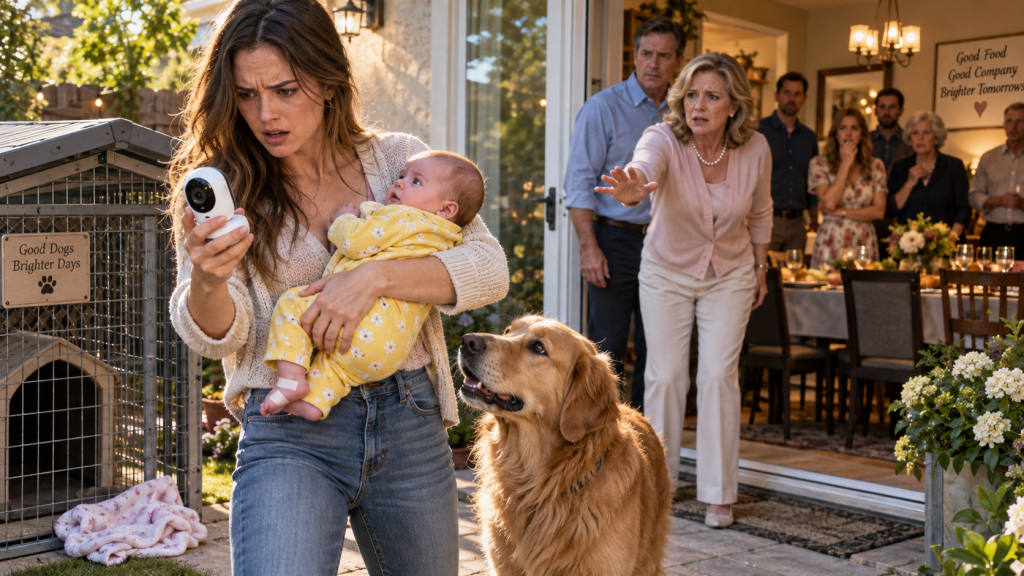
“If your daughter discovers what we found in the baby’s blood test, none of you will be able to hide this anymore.”
The pediatrician’s voice came through the tiny speaker with such clarity that for a moment I forgot how to breathe.
My daughter whimpered against my chest.
I tightened my arms around her instinctively.
Across the dining room, my father looked like a man watching his own funeral.
Diane did not.
My stepmother looked furious.
Not frightened.
Not ashamed.
Furious.
“Turn that off.”
I stared at her.
“No.”
“Claire.”
My name sounded like a warning in her mouth.
“Give me the camera.”
I took another step backward.
“No.”
She lunged.
My father caught her wrist.
“Enough.”
Diane spun toward him.
“Let go of me.”
“No.”
“Robert.”
“I said enough.”
Something changed in my father’s voice.
Twenty years of submission seemed to crack inside those two words.
Diane heard it too.
She became very still.
I looked down at the camera.
The recording continued.
On-screen, Dr. Marcus Hale stood beside my daughter’s crib.
I knew him.
He had examined Sophie twice after her birth.
Once in the hospital.
Once three days later when she had been unusually sleepy and struggled to feed.
He had told me preliminary tests looked reassuring but that one laboratory result needed confirmation.
I had been waiting for his call.
Apparently, he had called someone else first.
My father.
“Why are you here?”
Robert asked in the recording.
Dr. Hale looked uncomfortable.
“Because I couldn’t reach Claire.”
My heart lurched.
My phone had been behaving strangely for days.
Calls disappearing.
Messages arriving late.
I had blamed the device.
Dr. Hale continued.
“And because your number was listed as her secondary emergency contact.”
My father nodded.
“What did you find?”
The doctor looked toward the nursery door.
“Where is Claire?”
“At the pharmacy.”
“Diane?”
“Downstairs.”
The doctor’s expression tightened.
“I’d rather speak directly to Claire.”
“Then why come here?”
“Because I received another call before I could reach her.”
My father frowned.
“From whom?”
The recording caught a voice from the hallway.
“Me.”
Diane walked into the nursery.
My skin turned cold.
On-screen, she smiled.
Not warmly.
Carefully.
“What exactly did the laboratory find?”
Dr. Hale stared at her.
“I can’t discuss Claire’s daughter’s medical information with you without authorization.”
Diane’s smile disappeared.
“I’m her grandmother.”
“That doesn’t give you automatic access to protected medical information.”
My father stepped between them.
“Marcus, is Sophie sick?”
The doctor hesitated.
“There is a result that requires immediate follow-up.”
“What result?”
“I need Claire.”
Diane folded her arms.
“She isn’t here.”
“Then I’ll wait.”
“No.”
The word came too quickly.
Even on the tiny screen, Dr. Hale noticed.
“Why not?”
Diane’s face changed.
“Because you’re upsetting everybody over nothing.”
The doctor stared at her.
Then said:
“I didn’t tell you what we found.”
Silence.
Diane stopped moving.
So did I.
Beside me in the dining room, one of the guests whispered:
“Oh my God.”
The recording continued.
Dr. Hale repeated:
“I haven’t told you the result.”
Diane looked at Robert.
My father looked confused.
Then Dr. Hale asked:
“So how do you know it’s nothing?”
Diane recovered.
“I don’t.”
“You just said—”
“I meant babies have abnormal results all the time.”
“Sometimes.”
Dr. Hale looked at my father.
“But this one is unusual.”
My father swallowed.
“How unusual?”
The doctor removed the envelope.
He did not hand it over.
Instead, he held it.
“The initial screening found a medication metabolite in Sophie’s blood.”
My stomach dropped.
I looked at my baby.
Medication?
“What medication?”
My voice came out as a whisper in the present-day dining room.
Nobody answered.
On-screen, Robert asked the same question.
Dr. Hale did.
“A prescription sedative.”
I nearly dropped the camera.
“No.”
Sophie stirred against me.
The small plaster on her heel suddenly made sense.
The blood test.
The hospital had taken blood because she had been lethargic.
A sedative.
Inside my newborn daughter.
“No.”
I looked at Diane.
She stared back.
“Explain.”
“It isn’t what you think.”
“I haven’t told you what I think.”
“Claire—”
“What was in my daughter’s blood?”
Diane’s mouth opened.
Closed.
My father whispered:
“Keep watching.”
I did.
On the recording, Dr. Hale explained that the amount detected was small.
Not necessarily life-threatening.
But not something expected in a newborn.
They had ordered confirmation because false positives and contamination had to be considered.
Then he said:
“If the confirmatory test is positive, we need to determine how she was exposed.”
My father sat on the edge of the bed.
Diane remained standing.
“What happens then?”
she asked.
“We notify Claire.”
“And?”
“We determine whether Sophie needs additional treatment.”
“And?”
The doctor looked at her.
“And depending on the circumstances, there may be a safeguarding investigation.”
Diane went pale.
There.
That was it.
The moment.
Even through the screen, I saw fear enter her face.
Not fear for Sophie.
Fear of investigation.
My father saw it too.
“Diane?”
She turned.
“What?”
“Why do you look like that?”
“I don’t.”
“You do.”
Dr. Hale looked between them.
“Is there something I should know?”
“No.”
Diane answered instantly.
My father said:
“Yes.”
She snapped toward him.
“Robert.”
“What?”
“Don’t.”
“Don’t what?”
“Make this into something.”
He stared.
Then:
“Have you given Sophie anything?”
Diane laughed.
A hard, offended sound.
“Are you insane?”
“Answer.”
“No.”
“Anything in her bottle?”
“No.”
“On her pacifier?”
“No!”
The baby began crying in the recording.
Sophie.
My Sophie.
Only days old.
Diane walked toward the crib.
Dr. Hale moved first.
“Don’t.”
She froze.
The doctor’s tone had changed.
Professional.
Firm.
“I think we should wait for Claire.”
The recording ended.
Not because the conversation ended.
Because somebody had removed the camera.
I stared at the blank screen.
Then at my father.
“You took it down.”
He nodded.
“Why?”
His eyes filled.
“Diane told me the doctor had violated Sophie’s privacy by discussing the test in front of the camera.”
I laughed once.
It sounded terrible.
“And you believed her?”
“No.”
“Then why?”
He looked at the floor.
“Because she told me something.”
“What?”
Diane shouted:
“Robert!”
My father turned.
“No.”
“Don’t you dare.”
“You put a newborn baby in a dog enclosure.”
Her face twisted.
“She was safe!”
“She was crying!”
“She always cries!”
The room went silent.
Always.
My baby was twelve days old.
Always.
I stared at her.
“You resent her.”
Diane’s expression changed.
“No.”
“You do.”
“No.”
“You think she cries too much.”
“All babies cry too much.”
One guest whispered:
“Diane.”
She spun.
“Stay out of it!”
I looked at my father.
“What did she tell you?”
His face crumpled.
“That she had given Sophie something.”
I stopped breathing.
Diane screamed:
“Robert!”
My father continued.
“She said it was only once.”
My knees weakened.
“She said you hadn’t slept in three nights.”
My daughter whimpered.
I held her closer.
“She said you were exhausted.”
His voice shook.
“She said Sophie wouldn’t settle.”
“No.”
“I came downstairs that night and found Diane holding her.”
“No.”
“She told me she had put the smallest amount of one of her sleeping tablets into a bottle.”
Someone at the table gasped.
I couldn’t move.
My baby.
My tiny baby.
A medication meant for an adult.
“What did you do?”
I whispered.
Dad began crying.
“I made her tell me how much.”
“That’s what you did?”
“I called a poison information line without giving names.”
“You didn’t call me?”
“I was afraid.”
“Of what?”
“That they’d take Sophie away.”
I stared at him.
“From me?”
He cried harder.
“Diane said if anyone found out, they would think you had done it.”
There it was again.
The weapon my stepmother understood best.
Fear.
Not of what happened.
Of what people might think.
“She said because Sophie was in your care, because you were exhausted, because you were breastfeeding and taking postpartum medication…”
He stopped.
“You believed she could blame me.”
“Yes.”
I nearly collapsed.
“So you hid it.”
His silence answered.
I looked at Diane.
“You drugged my daughter.”
“It was a crumb.”
The words were out before she could stop them.
The entire room froze.
Diane realized what she had just admitted.
Her face drained.
“A crumb?”
I whispered.
She backed away.
“I didn’t mean—”
“You crushed a sleeping pill.”
“No.”
“You just said—”
“I meant if someone had done something like that, it would’ve been—”
“Stop.”
My voice was quiet.
That frightened her more than shouting would have.
“Stop lying.”
My father reached for me.
I stepped away.
“Don’t.”
He lowered his hand.
“You knew.”
“I knew after.”
“You knew my daughter had been given a sedative.”
“Yes.”
“You knew the doctor found it.”
“Yes.”
“You hid the camera.”
“Yes.”
“You let me continue living in this house.”
His face crumpled.
“Yes.”
“With her.”
“Yes.”
I looked toward the dog enclosure through the window.
Then something clicked.
“Today wasn’t about the crying.”
Diane said nothing.
“You put Sophie outside because of the camera.”
Silence.
“You knew the doctor might contact me again.”
No answer.
“You wanted the camera gone.”
My father whispered:
“She asked me to destroy it.”
I stared.
“And you hid it instead.”
“Yes.”
“Why?”
“I couldn’t destroy it.”
“Congratulations.”
He flinched.
“I know that isn’t enough.”
“No.”
I looked at him.
“It isn’t.”
Our old dog, Jasper, was lying near the doorway.
His tail thumped once.
The absurdity almost broke me.
The dog had done what the adults wouldn’t.
He brought the truth back.
I took out my phone.
Diane moved.
“Claire.”
I dialed emergency services.
She rushed toward me.
My father stepped between us.
“Don’t.”
“Move!”
“No.”
“You’re choosing her?”
Dad shook his head.
“For the first time in a long time, I’m choosing what I should have chosen immediately.”
He looked at Sophie.
“Her.”
Diane slapped him.
Hard.
Everyone gasped.
Dad did not retaliate.
He simply stepped backward.
Touched his cheek.
Then looked at her.
“Thank you.”
Diane stared.
“For what?”
“For making it impossible to pretend anymore.”
I made the call.
Police arrived.
So did paramedics.
Sophie was taken back to the hospital.
I rode with her.
I did not let anyone else hold her.
At the emergency department, doctors examined her from head to toe.
Blood tests.
Monitoring.
Questions.
So many questions.
When had she eaten?
How much?
Any vomiting?
Any unusual sleepiness?
Who had access to her?
What medications were in the home?
I answered everything.
Even when answers made my family look terrible.
Especially then.
The confirmatory laboratory test from the earlier sample was positive.
The new test did not show a dangerous current level.
Doctors explained that the earlier exposure appeared limited and that Sophie was fortunate not to have suffered a more severe outcome.
Fortunate.
I hated the word.
But I understood it.
She was alive.
Breathing.
Hungry.
Angry.
Beautifully angry.
When a nurse brought a bottle, Sophie drank greedily.
Then cried when it was empty.
I cried too.
“Let her cry.”
The nurse looked at me.
“What?”
“Let her.”
I kissed my daughter’s forehead.
“She gets to cry.”
The nurse smiled gently.
“Yes.”
“She gets to be loud.”
“Yes.”
“She never has to earn quiet.”
The nurse’s eyes filled.
“No.”
I held Sophie against my chest.
“You cry whenever you need to, baby.”
And she did.
For twenty minutes.
I had never heard anything more beautiful.
Investigators interviewed everyone from Sunday dinner.
Some remembered Diane complaining about Sophie’s crying before I arrived outside.
One guest admitted she had seen Diane carrying the baby toward the back door.
“Why didn’t you say anything?”
an investigator asked.
The woman cried.
“I thought she was taking her for air.”
Another guest had noticed the nursery camera sitting near the patio before it disappeared.
Someone else remembered my father leaving the table.
Pieces.
No single witness had seen everything.
Together, they mattered.
The camera mattered most.
It had recorded the pediatrician’s visit.
It had recorded Diane taking Sophie outside.
It had recorded Dad hiding the device.
It had recorded enough audio to challenge several lies.
The dog had not solved a crime.
Jasper had simply retrieved an object.
But sometimes an ordinary action changes everything because of what humans have already placed inside the object.
The next morning, Detective Mara Ellison sat beside my hospital bed.
“You should know your stepmother has been arrested.”
I closed my eyes.
“For drugging Sophie?”
“Charges will be determined by prosecutors based on the evidence.”
I nodded.
“What about Dad?”
“He is cooperating.”
“That isn’t what I asked.”
“No.”
She studied me.
“He may also face consequences for his actions after learning about the exposure.”
I looked down at Sophie.
“Good.”
The word hurt.
But I meant it.
“He’s my father.”
“I understand.”
“No.”
I shook my head.
“I mean I don’t want him protected because he’s my father.”
Detective Ellison nodded.
“That makes sense.”
“He protected Diane because she was his wife.”
My voice cracked.
“I won’t do the same thing.”
The detective remained quiet.
That was kind.
I didn’t need reassurance.
I needed space to understand that the man who had raised me had failed my daughter.
My father came to the hospital two days later.
He was not allowed into Sophie’s room automatically.
I had to approve it.
I almost didn’t.
Then I did.
He entered slowly.
He looked older.
Not by two days.
By twenty years.
He stopped several feet from the crib.
“Hi.”
I didn’t answer.
“Can I sit?”
I pointed toward the chair.
He sat.
For a long time, neither of us spoke.
Then he said:
“I’m sorry.”
I looked at him.
“Which part?”
His face crumpled.
“All of it.”
“No.”
I shook my head.
“Specific.”
He swallowed.
“I’m sorry I didn’t tell you the moment Diane admitted what she had done.”
I waited.
“I’m sorry I let fear of an investigation become more important than Sophie’s safety.”
More.
“I’m sorry I removed the camera.”
More.
“I’m sorry I let Diane convince me that protecting the family meant protecting the secret.”
My eyes filled.
More.
“I’m sorry I saw Sophie in that enclosure today and still thought first about the camera instead of picking her up.”
There.
That one destroyed him.
He began sobbing.
“I saw her.”
“I know.”
“I heard her crying.”
“I know.”
“I walked over.”
“I watched it.”
“I could have opened the gate.”
“Yes.”
“I could have carried her inside.”
“Yes.”
“I didn’t.”
“No.”
He covered his face.
“I don’t know who I became.”
I stared at him.
“I do.”
He looked up.
“You became someone who was more afraid of conflict with Diane than of failing everyone else.”
His face went still.
“You’re right.”
“You stayed silent at dinner.”
“Yes.”
“You watched her tell everyone I was making a scene.”
“Yes.”
“You knew what she’d done before.”
“Yes.”
“You knew she had already endangered Sophie.”
“Yes.”
“And you still stayed quiet.”
“Yes.”
I cried.
“I don’t know how to forgive that.”
“I’m not asking you to.”
That mattered.
I looked at him.
“Good.”
He nodded.
“I came to tell you something else.”
“What?”
“I’m leaving Diane.”
I felt nothing.
Not relief.
Not satisfaction.
Nothing.
“That’s your decision.”
“I know.”
“Don’t do it for me.”
“I’m not.”
“Don’t do it so I’ll forgive you.”
“I’m not.”
“Don’t do it because you think leaving her makes you innocent.”
He closed his eyes.
“It doesn’t.”
“Good.”
He stood.
“Can I see Sophie?”
“You can look.”
He approached the crib.
Sophie was asleep.
Dad stared.
His shoulders shook.
He did not touch her.
He understood he hadn’t earned that.
“Hi, little bird.”
That had been his nickname for her.
I almost told him not to use it.
Then stopped.
He whispered:
“I failed you.”
Sophie slept.
“You’ll never remember.”
He cried.
“But I will.”
Then he left.
For months, I didn’t speak to him.
The legal process moved slowly.
Diane denied intentionally endangering Sophie.
Then the camera footage became impossible to explain away.
Additional evidence emerged.
Searches of the house found the medication.
Messages between Diane and my father documented arguments about the exposure.
One message from Diane read:
If Claire finds out, she’ll take that baby and leave, and everyone will blame me.
Dad had replied:
You should have thought about that before giving it to her.
That message proved something important.
He knew.
And he had known before Sunday dinner.
Another message from Diane said:
Delete the nursery recordings.
Dad replied:
I did.
He had lied to her.
He hadn’t deleted them.
Instead, he removed the camera and hid it.
Cowardice mixed with one small act of resistance.
That did not make him a hero.
But it mattered.
People are rarely only one thing.
Eventually, Diane entered a guilty plea to charges related to administering the medication and endangering Sophie.
Her attorney described stress.
Family pressure.
A crowded house.
Her difficulty adjusting to having a newborn around.
I listened.
None of those things changed the central fact.
A crying baby had annoyed her.
She had chosen an adult medication as a shortcut to silence.
Then, when consequences approached, she tried to hide what she had done.
The dog enclosure became part of the case not because Sophie had been physically injured there, but because it demonstrated Diane’s ongoing disregard for her safety.
At sentencing, I was allowed to speak.
I stood.
Looked at Diane.
For weeks, I had written angry speeches.
Then deleted them.
I didn’t want the most important words of my daughter’s story to belong to hatred.
So I said:
“My daughter was twelve days old.”
Silence.
“She did not cry to manipulate anyone.”
I looked at Diane.
“She did not cry to ruin dinner.”
My voice shook.
“She cried because crying was the only language she had.”
Diane lowered her eyes.
“When she needed comfort, an adult decided her voice was inconvenient.”
I breathed.
“When the consequences of that decision became frightening, adults decided the truth was inconvenient too.”
My father sat behind me.
I did not look at him.
“I cannot tell the court what punishment is enough.”
That wasn’t my job.
“But I can tell you what I want my daughter to learn one day.”
I looked toward the judge.
“I want Sophie to grow up knowing she never has to become quiet to deserve love.”
My voice broke.
“She never has to make herself smaller so adults can feel comfortable.”
Tears rolled down my face.
“And if someone hurts her, our family’s reputation will never be more important than her truth.”
I sat.
Diane cried.
I didn’t care whether the tears were remorse or fear.
That belonged to her.
My job was Sophie.
My father faced separate legal consequences for his role in concealing evidence and failing to act appropriately after learning what happened.
The outcome was less severe than Diane’s.
He cooperated fully.
He admitted what he had done.
No excuses.
That did not restore our relationship.
Accountability and reconciliation are different roads.
Sometimes they meet.
Sometimes they don’t.
For nearly a year, Dad saw Sophie only in photographs my aunt occasionally showed him.
I didn’t send them.
I didn’t stop my aunt either.
I was trying to learn boundaries without turning boundaries into revenge.
That is harder than it sounds.
Sophie grew.
The tiny plaster disappeared from her heel.
Her yellow onesie went into a box.
I almost threw it away.
Dust from the enclosure still stained one knee.
I couldn’t wash it out completely.
For months, I hated that onesie.
Then I realized it wasn’t responsible for anything.
I folded it.
Put it with her hospital bracelet.
Not as a shrine to trauma.
As history.
Sophie deserved the truth someday.
But she also deserved a childhood before the truth became hers to carry.
At six months, she laughed whenever Jasper sneezed.
At nine months, she crawled backward before learning forward.
At eleven months, she stood holding the coffee table and screamed because she couldn’t figure out how to sit down.
At thirteen months, she walked.
Straight toward Jasper.
He ran.
She followed.
I laughed until I cried.
The dog who had once carried the camera back into our house became Sophie’s favorite creature.
She called him “Jah.”
Jasper tolerated hugs with the patience of a saint.
When Sophie was two, she climbed into his old dog bed.
I froze.
Not the enclosure.
Just his bed inside the living room.
Still, my body remembered.
Dust.
Yellow onesie.
Blanket on the ground.
Crying.
I rushed toward her.
Then stopped.
Sophie was laughing.
Jasper sat beside her.
Nothing was wrong.
I forced myself to breathe.
Trauma can turn ordinary shapes into alarms.
Part of healing is teaching your body that today is not yesterday.
I sat beside them.
Sophie patted the dog bed.
“Mama sit.”
So I did.
Jasper sighed dramatically.
Three of us squeezed into a bed designed for one dog.
I laughed.
The memory loosened slightly.
Dad began therapy.
I learned that from my aunt.
He didn’t tell me.
Good.
For once, he wasn’t using change as a performance for my approval.
He divorced Diane.
Sold the house.
Moved into a small apartment.
Stopped hosting Sunday dinners.
For his first Christmas alone, I sent nothing.
I felt guilty.
Then angry that I felt guilty.
Then tired.
Healing is rarely elegant.
Sometimes it is sitting in your kitchen furious at yourself for missing a man you’re not ready to forgive.
When Sophie was three, Dad wrote me a letter.
Not asking to see her.
Not asking me to call.
Just a letter.
Claire,
I spent most of my marriage confusing peace with the absence of confrontation.
I thought if nobody shouted, things were fine.
I thought swallowing my objections made me patient.
I thought keeping secrets kept the family together.
I was wrong.
Silence did not create peace.
It created room for Diane’s behavior to go unchallenged.
Then when Sophie’s safety required me to speak, I discovered I had practiced silence for so long that it had become my instinct.
That is mine to live with.
I don’t expect you to trust me because I understand it now.
Understanding comes after the damage.
Trust would have to come after behavior, if it ever comes at all.
I love you.
I love Sophie.
I will not use either love as an argument for access.
Dad.
I read it three times.
Then put it away.
Six months later, I called him.
“Hello?”
His voice sounded frightened.
“Hi.”
Silence.
“Claire?”
“Yes.”
“Are you okay?”
“Yes.”
“Sophie?”
“She’s fine.”
He exhaled.
“Okay.”
I stared at my kitchen wall.
“Do you want coffee?”
He began crying.
I almost hung up.
“Dad.”
“Sorry.”
“Coffee.”
“Yes.”
“Saturday.”
“Yes.”
“Just you.”
“Of course.”
“And this isn’t forgiveness.”
“I know.”
I nearly snapped at the phrase.
Then realized he meant it.
“Okay.”
We met.
He looked older again.
Sophie was not there.
That was deliberate.
He needed to rebuild a relationship with me before I considered allowing one with her.
We talked.
Not about Diane for the first hour.
Weather.
Work.
Jasper.
Sophie.
Then Dad said:
“I have something for you.”
My body tightened.
He placed a small memory card on the table.
“What is that?”
“Backup from the nursery camera.”
I stared.
“You had another copy?”
“Yes.”
Anger flashed.
“Why didn’t investigators have it?”
“They do.”
He immediately clarified.
“This is a copy they returned.”
“What else is on it?”
“Months won’t fit because the camera wasn’t installed that long.”
He smiled sadly.
“But there are recordings from Sophie’s first days home.”
“Why give it to me?”
“Because most of what the camera recorded wasn’t Diane.”
I looked at him.
“What was it?”
“You.”
I took it home.
Waited three weeks.
Then watched.
There I was.
Three in the morning.
Hair wild.
Walking the nursery with Sophie.
Singing badly.
Another clip.
Me changing her diaper.
Another.
Me crying while feeding her.
Another.
Me whispering:
“Mommy doesn’t know what she’s doing, but we’ll figure it out.”
I sobbed.
The camera had become a symbol of what happened.
I had forgotten it also recorded love.
Hours of it.
Me holding Sophie.
Dad rocking her once.
Jasper sleeping outside the nursery door.
Ordinary life.
Diane appeared occasionally.
Not every appearance was sinister.
That was difficult too.
Once she folded Sophie’s blankets.
Once she brought me tea.
Once she smiled genuinely while Sophie slept.
People who do terrible things are still people.
That doesn’t make the terrible thing smaller.
It makes our responsibility to judge actions carefully more important.
I did not need Diane to be a monster every minute in order to take seriously the minute she endangered my child.
That realization freed me from something.
I no longer needed to rewrite every memory of her as evil.
Some had been kind.
Some manipulative.
Some ordinary.
One unforgivable choice had nearly cost my daughter dearly.
Then many dishonest choices followed.
All true.
Dad eventually met Sophie again when she was four.
Public park.
My rules.
He arrived early.
Brought no gifts because I had told him not to.
Sophie hid behind my leg.
“Who’s that?”
“My dad.”
She peeked.
“That Grandpa Robert?”
“Yes.”
She knew him from photographs.
Dad crouched.
“Hi, Sophie.”
She stared.
“Do you have snacks?”
He looked at me.
I laughed despite myself.
“She’s very transactional.”
“I brought nothing.”
Sophie frowned.
“Bad Grandpa.”
Dad laughed.
Then cried.
Sophie looked alarmed.
“Why he leaking?”
That made me laugh harder.
Dad wiped his face.
“I’m happy.”
She considered him.
Then handed him a dandelion.
“Here.”
He accepted it like a medal.
“Thank you.”
They built slowly.
Park visits.
Ice cream.
Zoo.
Birthdays.
Never unsupervised at first.
Dad never complained.
That mattered.
Years passed.
Jasper died when Sophie was seven.
That grief was enormous.
Sophie lay beside him on the kitchen floor during his last afternoon.
“Why can’t the doctor fix him?”
“Because he’s very old.”
“I don’t want him old.”
“I know.”
“Can we make him young?”
“No.”
She cried.
Then whispered into his ear:
“You good dog.”
Yes.
He had been.
After Jasper died, we buried his collar beneath a tree.
I kept one thing.
The nursery camera.
For years, it sat in a drawer.
At ten, Sophie found it.
“What’s this?”
My heart stopped.
“A camera.”
“Mine?”
“It used to be in your nursery.”
“Does it work?”
“Probably.”
“Can I use it?”
“No.”
“Why?”
“Because it’s old.”
She rolled her eyes.
“You’re old.”
“Go to your room.”
She laughed.
I wasn’t ready.
That was okay.
Truth should not be hidden forever.
But children are allowed to receive it at an age when they can understand it without being crushed by adult detail.
At twelve, Sophie asked why I didn’t speak to Grandma Diane.
There it was.
I had always said:
“She isn’t part of our life because she made unsafe choices.”
At twelve, that wasn’t enough.
“What choices?”
I sat with her.
Dad joined only because Sophie asked him to.
He looked terrified.
Good.
Truth should make him uncomfortable.
I told her.
Not every legal detail.
Not every ugly sentence.
Enough.
When she was a newborn, Diane had given her medication that was not safe for her.
Dad learned about it and did not tell me immediately.
Later, Diane put her outside during a family gathering because she was crying.
Dad saw her and failed to bring her inside.
The camera showed us what happened.
Sophie listened.
Her face changed slowly.
Then:
“The dog enclosure?”
“Yes.”
“The one that used to be at Grandpa’s old house?”
“Yes.”
She stared at Dad.
“You saw me?”
He cried.
“Yes.”
“And left me?”
“Yes.”
“Why?”
He could have given a complicated answer.
Therapy.
Coercive dynamics.
Fear.
Marriage.
Shame.
He gave the correct one.
“I was a coward.”
Sophie stared.
“That’s mean.”
Dad nodded.
“It was.”
“Were you mean?”
“I behaved in a way that hurt you.”
She looked at me.
“Why do we see him now?”
“Because people can sometimes change.”
“Did he?”
“I think he has.”
She looked at Dad.
“Did you?”
He answered:
“I try to make different choices now.”
“Do I have to forgive you?”
“No.”
Immediate.
Both of us said it.
Sophie almost smiled.
“Jinx.”
Even there.
Even then.
A child found room for silliness.
Thank God.
She asked:
“Did Jasper really find the camera?”
“Yes.”
Her eyes widened.
“He saved me!”
I shook my head.
“No.”
“What?”
“He found the camera.”
“But—”
“The doctors protected you.”
I touched her hand.
“I picked you up.”
I looked at Dad.
“Grandpa eventually told the truth.”
Then:
“And you survived something you don’t even remember.”
Sophie thought.
“Jasper still gets credit.”
“Fine.”
She grinned.
“Hero dog.”
Dad smiled through tears.
That night, Sophie slept in my bed.
At two in the morning, she whispered:
“Mom?”
“Yes?”
“Did I cry a lot?”
I opened my eyes.
“What?”
“As a baby.”
“Yes.”
She became quiet.
“Was I annoying?”
My heart shattered.
I turned toward her.
“No.”
“But Diane—”
“Listen to me.”
I held her face.
“You were a newborn.”
Her eyes filled.
“Crying was your job.”
“My job?”
“Yes.”
“To cry?”
“To tell us you needed something.”
She sniffled.
“Were you mad?”
“Sometimes I was tired.”
“Same thing?”
“No.”
I kissed her forehead.
“Feeling tired, frustrated, or overwhelmed doesn’t give anyone permission to make a baby unsafe.”
“Did you ever want me to stop?”
“Absolutely.”
She looked surprised.
I smiled.
“Every parent sometimes desperately wants a crying baby to stop crying.”
“Then what’s different?”
“What you do with the feeling.”
She listened.
“You can put a baby safely in a crib and take a minute.”
I counted.
“Ask someone trustworthy for help.”
“Call a doctor if something seems wrong.”
“Wear earplugs while you’re holding them safely.”
She giggled.
“Really?”
“Really.”
Then I became serious.
“But you don’t hurt them.”
She nodded.
“And you don’t make them responsible for your feelings.”
That answer stayed with her.
At fifteen, Sophie volunteered at an animal shelter.
Of course.
She brought home every sad story.
“No.”
“But Mom—”
“No.”
“He has three legs.”
“We have two cats.”
“He’s emotionally gifted.”
“No.”
We adopted him.
His name was Pickles.
I had no authority.
At seventeen, Sophie started dating.
Dad nearly had a heart attack.
I reminded him he had forfeited the right to become theatrically protective.
He agreed.
Sophie found this hilarious.
At eighteen, she graduated.
Dad sat three seats away from me.
When Sophie’s name was called, we both stood.
She crossed the stage.
Confident.
Loud.
She had become loud.
That mattered to me.
Sophie laughed loudly.
Argued loudly.
Sang loudly.
Loved loudly.
She never learned that making herself small was the price of belonging.
That was my victory.
Not Diane’s conviction.
Not Dad’s remorse.
That.
My daughter grew up unafraid of her own volume.
After college, she became a pediatric social worker.
I blamed the family history.
She said:
“Maybe.”
She worked with families in crisis.
New parents.
Overwhelmed parents.
Children who needed safe adults.
She understood something I had learned painfully:
Protecting children requires protecting them from danger, but prevention also means helping adults ask for help before frustration becomes harm.
She never excused abuse.
She also refused to pretend overwhelmed parents were helped by shame alone.
“Safety first,” she always said.
“Then truth.”
“Then accountability.”
“And if possible, repair.”
I loved the order.
When Dad was seventy-eight, he had a stroke.
Small.
Recoverable.
Sophie visited him.
She sat beside his hospital bed.
He smiled weakly.
“Little bird.”
She rolled her eyes.
“I’m twenty-four.”
“Still little.”
She helped him through rehabilitation.
Not because she owed him.
Because she chose to.
One afternoon, I asked:
“Why?”
She looked confused.
“Why what?”
“Why are you doing so much?”
“He’s Grandpa.”
“He failed you.”
“Yes.”
“You know that.”
“Yes.”
“You don’t have to repay him for changing.”
“I know.”
“Then why?”
She smiled.
“Mom.”
“What?”
“You taught me boundaries are supposed to protect my life.”
“Yes.”
“Not make every decision for me forever.”
I became quiet.
She was right.
“I want him in my life.”
She shrugged.
“So I help him.”
Simple.
Not easy.
But hers.
Dad lived another nine years.
Near the end, he asked Sophie one question.
“Did you forgive me?”
I held my breath.
Sophie thought.
“I stopped needing to decide.”
Dad looked confused.
She took his hand.
“I know what you did.”
He nodded.
“I know what you became afterward.”
Tears filled his eyes.
“And?”
“And you’re my grandfather.”
She smiled.
“I love you.”
He cried.
“Is that forgiveness?”
“I don’t know.”
She squeezed his hand.
“Isn’t it enough?”
Dad laughed through tears.
“Yes.”
It was.
He died two days later.
At his funeral, Sophie placed a dandelion on his coffin.
The first gift she had ever given him.
I nearly collapsed.
Afterward, she hugged me.
“You okay?”
“No.”
“Me neither.”
We stood together.
No pretending.
That became our family tradition.
No more pretending.
Years later, Diane wrote to Sophie.
I don’t know how she got the address.
The envelope came through an intermediary.
Sophie was thirty.
She asked me whether she should read it.
I said:
“Your choice.”
“What would you do?”
“Doesn’t matter.”
“It matters to me.”
I thought.
“I would read it.”
“Why?”
“Because unanswered questions bother me.”
“Would you reply?”
“No idea.”
She read it.
Diane was old.
Ill.
She apologized.
Not perfectly.
At first, she wrote about being overwhelmed.
Then corrected herself on the page.
I keep writing explanations because explanations let me stand farther away from the thing I did.
Then:
You cried. I wanted silence. I gave you medication because I believed my comfort mattered more than your safety.
Sophie stopped reading.
Tears filled her eyes.
She continued.
Later, when I knew people might discover it, I treated you as a problem to hide instead of a baby to protect.
Then:
Putting you in the enclosure was not a misunderstanding. I was angry that your crying disrupted the image of the family gathering I wanted everyone to see.
Sophie whispered:
“Wow.”
I sat beside her.
The final paragraph read:
I do not ask you to visit me. I do not ask you to forgive me. I only want one truthful sentence to reach you before I die: Nothing you did as a baby caused what I did to you.
Sophie folded the letter.
For a long time, she said nothing.
Then:
“That’s the first thing she’s ever given me.”
“What?”
“The truth.”
I nodded.
“Are you going to answer?”
She thought.
“Yes.”
Her reply was short.
I know it wasn’t my fault.
I hope you believe that too before you die.
Sophie.
Diane died months later.
Sophie did not attend the funeral.
Neither did I.
There was no dramatic closure.
No bedside reconciliation.
No final embrace.
Not every relationship needs one.
Sometimes closure is simply no longer waiting for a different past.
Sophie married at thirty-two.
Her husband, Aaron, was kind.
Not theatrically kind.
Ordinarily kind.
The kind I trusted most.
He washed dishes without calling it helping.
He apologized without attaching “but.”
He could hear a crying child in a restaurant without making a face.
I noticed that.
Of course I did.
When Sophie became pregnant, she was terrified.
Not of childbirth.
Of herself.
“What if something is wrong with me?”
I stared.
“What?”
“What if I have some switch?”
“What switch?”
“The one Diane had.”
I understood.
“No.”
“You don’t know.”
“No.”
I corrected myself.
“I don’t.”
She nodded.
“Exactly.”
I took her hand.
“So don’t rely on being magically different.”
She frowned.
“What?”
“Build systems.”
“What systems?”
“People you can call.”
I counted.
“Sleep shifts.”
“Doctors.”
“Postpartum support.”
“A plan for what you do if the baby cries and you feel overwhelmed.”
Sophie stared.
“You’ve thought about this.”
“For thirty-two years.”
She laughed.
Then cried.
“I don’t want to hurt my baby.”
“Good.”
“That’s enough?”
“No.”
I smiled.
“But it’s a good beginning.”
Her son was born in May.
Thomas.
Eight pounds.
Furious.
He screamed through his first bath.
Sophie laughed.
Then cried.
Then laughed again.
At three weeks, Thomas developed colic.
Hours of crying.
One night, I arrived at Sophie’s house.
She opened the door.
Hair tangled.
Eyes red.
Baby screaming.
“I can’t.”
Good.
Those were the words I wanted.
Not:
I’m fine.
Not:
Leave me alone.
I can’t.
I took Thomas.
“Go shower.”
“I feel terrible.”
“Shower.”
“What if—”
“I have him.”
She stood there.
“Mom.”
“Yes?”
“I’m so angry at the sound.”
“I know.”
“I love him.”
“I know.”
“I want him to stop.”
“I know.”
“Does that make me—”
“No.”
I interrupted.
“It makes you exhausted.”
She cried.
“What do I do?”
“You hand him to me.”
She did.
That was the moment our family story changed most completely.
Not when Jasper found the camera.
Not when Diane was arrested.
Not when Dad confessed.
Here.
A mother overwhelmed by a screaming newborn recognized the feeling.
Named it.
Asked for help.
And nobody got hurt.
Sophie showered.
Slept four hours.
Aaron came home from work early.
They called the pediatrician.
Adjusted routines.
Accepted help.
Thomas grew.
The crying passed.
One Sunday, months later, we had dinner.
Big table.
Too many people.
Thomas started screaming.
Everyone paused.
Sophie stood.
For half a second, memory traveled around the room.
Then Aaron said:
“I’ve got him.”
He lifted his son.
Walked through the dining room.
Not outside.
Not away like the baby was shameful.
He paced beside the table.
Thomas screamed.
Aaron ate potatoes one-handed.
Sophie laughed.
Nobody complained.
Conversation continued.
The baby was allowed to exist inside the family.
Noise and all.
I sat there crying.
Sophie noticed.
“Mom?”
“Nothing.”
She looked at me.
Then understood.
Her eyes filled.
She reached across the table.
I took her hand.
No speech.
We didn’t need one.
That ordinary Sunday dinner healed something the first Sunday dinner had broken.
Years passed.
Thomas grew.
Then came another child.
A girl.
Grace.
Both loud.
Both safe.
Sophie became exactly the kind of mother she had feared she couldn’t be.
Not because she never became frustrated.
Because she knew frustration was information.
A signal to rest.
Ask.
Pause.
Switch with Aaron.
Call me.
Call a friend.
Put the baby safely in the crib and breathe.
She never confused feeling with permission.
That was the difference.
I grew old.
Sophie became the person reminding me to take medication.
Life has a sense of humor.
“Did you take the blue pill?”
“Yes.”
“Show me.”
“I raised you.”
“Show me.”
I showed her.
“Good.”
“Dictator.”
“Genetic.”
We both froze.
Then laughed.
Dark humor is sometimes a scar learning to smile.
At eighty-two, I moved into a smaller house.
Sophie helped me pack.
We found the box.
Yellow onesie.
Hospital bracelet.
Old camera.
She held the onesie.
“This is it?”
“Yes.”
She touched the dusty stain that never completely disappeared.
“Can I keep it?”
I hesitated.
“Why?”
“Because it’s mine.”
Of course.
I handed it over.
Then the camera.
“What about this?”
“Yours too, if you want it.”
She looked at it.
“No.”
“Why?”
“I already know what happened.”
She placed it in the donation pile.
I stared.
“Really?”
“Yes.”
“That’s evidence.”
“Was evidence.”
She smiled.
“Now it’s outdated electronics.”
I laughed.
There it was.
Freedom.
An object that once controlled the emotional temperature of our entire family had become outdated electronics.
We recycled it.
Not ceremonially.
We dropped it at an electronics collection center between grocery shopping and lunch.
I loved that.
Healing doesn’t always need a ritual.
Sometimes it looks like putting an old camera into a recycling bin and asking:
“Do you want tacos?”
“Yes.”
So we got tacos.
Near the end of my life, Sophie asked me something.
“Mom?”
“Yes?”
“What do you think would’ve happened if Jasper hadn’t found the camera?”
I thought.
“I don’t know.”
“Would Grandpa have told you?”
“Maybe.”
“Diane?”
“No.”
She laughed softly.
“Probably not.”
“Would the doctor?”
“Yes.”
I became certain.
“Eventually, yes.”
“So the truth would’ve come out?”
“Probably.”
She looked toward the window.
“Then Jasper didn’t really change everything.”
I smiled.
“He changed the timing.”
“Does timing matter?”
“Sometimes enormously.”
She nodded.
“If we’d learned later…”
“More lies.”
“More danger.”
“Maybe.”
She leaned against me.
“I’m glad he found it.”
“Me too.”
Then she smiled.
“Hero dog.”
“Still giving him credit?”
“Forever.”
We sat quietly.
After a while, I said:
“You know what I remember most?”
“The enclosure?”
“No.”
“The camera?”
“No.”
“What?”
“The moment I picked you up.”
Sophie looked at me.
“You were screaming.”
“Sorry.”
“Don’t be.”
I smiled.
“I remember you stopped for one second when I held you against my chest.”
My eyes filled.
“Just one second.”
Then:
“And I knew.”
“Knew what?”
“That peace wasn’t keeping everybody happy.”
I looked at her.
“Peace was making sure you were safe enough to cry.”
Sophie cried.
I took her hand.
“That took me a long time to understand.”
She kissed my forehead.
“You got there.”
“So did Grandpa.”
“Eventually.”
“So did Diane.”
“Very eventually.”
I laughed.
“So did you.”
She smiled.
“I had a good teacher.”
“No.”
I squeezed her fingers.
“You had bad examples.”
“That too.”
The final Sunday dinner I attended was at Sophie’s house.
I was eighty-six.
Thomas had children.
Grace had twins.
The dining room was chaos.
Someone spilled juice.
A toddler screamed because his carrot had broken.
One baby cried.
Then another.
The dog—yes, Sophie always had a dog—stole bread from the table.
Aaron burned something in the kitchen.
Nobody had peace.
It was perfect.
I sat at the end of the table.
Sophie brought me a plate.
“You okay, Mom?”
I looked around.
Noise.
Babies.
Laughter.
Arguments.
Life.
“Yes.”
“Too loud?”
I smiled.
“No.”
Then the youngest baby began screaming harder.
A relative jokingly said:
“Somebody put that kid outside.”
The room changed.
Only for a second.
The relative didn’t know.
Sophie did.
I did.
Aaron did.
Our eyes met.
Then Sophie smiled.
“No.”
She picked up the baby.
“Babies stay with the family.”
Simple.
No lecture.
No trauma dumped onto a stranger.
Just a rule.
Babies stay with the family.
She rocked her granddaughter at the table.
The baby cried.
Nobody stopped eating.
Eventually, she settled.
I looked at Sophie.
The newborn who had once been placed outside because her voice inconvenienced adults was now a grandmother holding another crying baby right in the middle of the noise.
I cried.
Sophie noticed.
“Again?”
“Old eyes.”
“Liar.”
“Disrespectful child.”
She laughed.
Later, she walked me to the porch.
“Good dinner?”
“The potatoes were terrible.”
“Aaron made them.”
“I know.”
She laughed.
Then hugged me.
“Love you.”
“Love you too.”
Behind her, another baby cried.
Sophie didn’t flinch.
Neither did I.
That sound no longer meant danger.
It meant:
Someone needs something.
And someone will come.
That was enough.
People sometimes told our story as if the dog was the hero.
The loyal old dog who returned carrying the missing camera.
It’s a good detail.
I understand why people remember it.
But Jasper didn’t know he was exposing a secret.
He was a dog carrying an interesting object.
The real story came afterward.
A father deciding to stop protecting silence.
A doctor refusing to ignore an abnormal result.
Investigators following evidence.
A mother refusing to preserve family peace at her daughter’s expense.
A grandfather accepting consequences.
A child growing up knowing the truth did not make her responsible for it.
A woman who once endangered a baby eventually admitting, without excuse, that the baby’s crying had never caused her choice.
And decades later, another exhausted mother handing over her screaming newborn and saying:
“I can’t.”
That sentence might have been the bravest moment in our entire family history.
Because “I can’t” can become dangerous when people believe they must hide it.
Spoken aloud, it can become a doorway.
Someone else takes the baby.
Someone gets sleep.
Someone calls the doctor.
Someone helps.
Nobody has to become perfect.
They only have to stop pretending.
That was what Diane had failed to do.
What Dad had failed to do.
What our family eventually learned.
Ask.
Tell.
Admit.
Listen.
Believe.
Protect.
And never confuse silence with peace.
The last time Sophie and I talked about that Sunday, she asked:
“Did you ever forgive Grandpa?”
“Yes.”
“Diane?”
I thought.
“I stopped hating her.”
“That’s not what I asked.”
“I know.”
She waited.
“Maybe.”
“Good answer.”
“Your turn.”
“What?”
“Did you forgive them?”
She thought longer.
“Grandpa, yes.”
“And Diane?”
Sophie looked toward the family inside her house.
Children.
Grandchildren.
Noise.
“I don’t think about her enough anymore to know.”
I smiled.
That might have been the best answer.
Forgiveness is sometimes described as the final destination.
Maybe it isn’t.
Maybe freedom is.
The freedom to hear a baby cry without hearing an old enclosure.
The freedom to remember without reliving.
The freedom to love someone who failed you without pretending they didn’t.
The freedom not to love someone if that is what safety requires.
The freedom to tell the truth.
The freedom to ask for help.
The freedom to be loud.
I looked at my daughter.
“You turned out okay.”
She laughed.
“High praise.”
“Very high.”
She leaned her head against mine.
“I turned out safe.”
I closed my eyes.
“Yes.”
That was better.
Safe.
Not silent.
Not easy.
Not obedient.
Safe.
That was all I had wanted from the moment I saw her in that enclosure.
It took me years to understand that safety is not simply the absence of injury.
It is knowing your pain will be believed.
Knowing your voice will not cost you love.
Knowing the people around you will choose your well-being over their reputation.
Knowing that when something is wrong, nobody will hide the camera.
Nobody will crush the pill.
Nobody will paint over the truth.
Nobody will ask you to stay quiet so dinner can continue.
And if someone does fail you, there will be another person willing to stand up and say:
No more.
That Sunday, I walked outside expecting an explanation.
Instead, I found my daughter.
Dusty yellow onesie.
Tiny plaster on her heel.
Blanket on the ground.
Crying where our old dog used to sleep.
I picked her up.
Then Jasper brought me a camera.
For years, I thought the camera was what changed our lives.
It wasn’t.
The choice did.
The moment I stopped asking how to preserve the family gathering and started asking what my daughter needed.
The moment Dad eventually stopped protecting Diane.
The moment the doctor refused to treat an unexplained drug result as inconvenient.
The moment Sophie, decades later, handed her own crying baby to someone else rather than pretending exhaustion made her dangerous feelings disappear.
Again and again, the choice was the same.
Appearance or truth.
Silence or safety.
Comfort or courage.
Our family spent years choosing wrong.
Then we learned.
Slowly.
Painfully.
But we learned.
And if there is one thing I would tell the younger version of myself standing beside that old dog enclosure with a screaming newborn against her chest, it would be this:
Don’t worry about ruining dinner.
Don’t worry about embarrassing your father.
Don’t worry about whether your stepmother calls you dramatic.
Don’t worry about keeping everyone comfortable.
Pick up your baby.
Check that she’s safe.
Call whoever needs to be called.
Tell the truth.
Let people be angry.
Let the dinner go cold.
Let the family image crack.
Anything worth saving will survive the truth.
Anything that requires your child’s suffering to remain hidden was never peace in the first place.
Years later, when I asked Sophie what she remembered most about her childhood, she didn’t say the enclosure.
She couldn’t remember it.
She didn’t say Diane.
She barely knew her.
She didn’t say the camera.
She said:
“You always came when I cried.”
That was the ending.
Not revenge.
Not prison.
Not a confession.
A child who learned that crying brought someone closer instead of sending her away.
A child who grew into a woman who knew how to say when she needed help.
A woman who raised children who never had to wonder whether their voices were welcome at the table.
The family dinner had once been protected at my daughter’s expense.
Decades later, my daughter’s family table was protected by one simple truth:
Everybody belonged there.
Even when they were noisy.
Especially then.
So when I think about that blinking camera now, I don’t remember the secret first.
I remember Sophie’s cry.
Then my arms around her.
And the decision that changed everything:
My daughter would never again be sacrificed for somebody else’s idea of peace.
THE END STORIES! THANK YOU FOR READING GOOD LUCK !❤️
Related Posts