➡️ PART 3 ENDING PART ➡️
Marian Voss broke the seal.
The sound was almost nothing.
A soft tear of paper in a silent room.
Yet my mother flinched as if something had shattered.
Glenn leaned forward.
Brian stopped looking at me.
And I remembered Henry’s final note.
Stay calm.
Let them talk.
The paperwork already speaks.
So I said nothing.
Marian removed several pages from the envelope.
The first was handwritten.
I recognized Henry’s writing immediately.
Square letters.
Dark ink.
No unnecessary words.
That was Henry.
He could repair a hydraulic pump with forty-seven moving parts and explain it in six sentences.
Marian adjusted her glasses.
“This statement was written by Henry Ashford seven years ago and incorporated by reference into his estate documents. It was subsequently reaffirmed three times, most recently eleven months before his death.”
My father interrupted.
“This is ridiculous.”
Marian did not look at him.
“Mr. Ashford anticipated that someone might say that.”
Brian shifted in his chair.
Mom’s hands tightened around her purse.
Marian began to read.
“My granddaughter Evelyn came to live with me when she was nine years old. Diane and Glenn told her she would be staying temporarily. They told me something different.”
My lungs stopped working properly.
I had never known that.
I looked at my mother.
Her eyes remained fixed on Marian.
Marian continued.
“They said they were experiencing financial difficulties and that raising three people in their household had become too expensive. They asked me to keep Evelyn for six months.”
Three people.
Mom.
Dad.
Brian.
And apparently I had been the expense that made four impossible.
“That’s true.”
Mom said quickly.
“We were struggling.”
Marian lifted one hand.
“You’ll have an opportunity to respond.”
“I don’t need an opportunity. I’m telling you what happened.”
Marian looked at her.
“And Henry anticipated that as well.”
My mother went quiet.
Marian continued reading.
“Six months became one year. One year became two. During that time, I repeatedly offered to help Diane and Glenn financially if the purpose was to reunite Evelyn with her immediate family. They declined.”
I turned toward my parents.
Dad’s face had gone gray.
Mom whispered:
“That isn’t fair.”
My chest tightened.
Henry had offered money?
I had spent years believing my parents left me because they could not afford me.
That was terrible enough.
But Henry had offered to help them bring me home.
They had said no.
Marian kept reading.
“At the end of the first year, I offered to cover Evelyn’s school expenses, medical costs, clothing, and other necessities if they wanted her home. Glenn told me their household was ‘more peaceful’ without her.”
Something inside me broke very quietly.
Not dramatically.
There was no scream.
No cinematic collapse.
Just a nineteen-year-old girl sitting in an attorney’s office suddenly understanding that the worst sentence she had ever overheard—
She’s the one we can afford to lose.
—had not been a moment of panic.
It had been a decision.
Brian looked at Dad.
“You said that?”
Glenn rubbed both hands over his face.
“It was a difficult period.”
I almost laughed.
A difficult period.
Ten years.
Apparently my childhood had been a difficult period.
Marian continued.
“At that point, I stopped asking when they intended to take Evelyn home. I asked whether Evelyn wanted to remain with me. She said yes.”
I remembered that conversation.
Henry had been repairing the irrigation controller.
I was sitting on an overturned bucket.
He had asked:
“You comfortable here?”
I said:
“Yes.”
“Want to stay?”
“Yes.”
“Good.”
Then he handed me a screwdriver.
That had been the entire conversation.
I had never known what stood behind it.
Marian read on.
“I do not claim I raised Evelyn perfectly. I was sixty-eight years old when she arrived. I knew more about horses, machines, structural loads, and bad investments than I knew about raising a nine-year-old girl. But she stayed. So I learned.”
My vision blurred.
That sounded exactly like him.
“I attended school conferences. I learned how to braid hair badly. I bought the wrong sanitary products the first time and nearly died of embarrassment in aisle seven. I learned what mathematics homework had become since 1963. I burned three birthday cakes before discovering that bakeries exist for a reason.”
A laugh escaped me through tears.
Brian looked down.
Even Marian smiled.
“I did these things badly before I learned to do them adequately. That is not heroism. That is parenting.”
Mom closed her eyes.
Marian’s voice became softer.
“Diane and Glenn had opportunities to return. They had opportunities to call. They had opportunities to attend birthdays, school events, medical appointments, holidays, and ordinary Tuesdays. Most of the time, they chose not to.”
Mom whispered:
“We called.”
I looked at her.
“Yes.”
She turned toward me.
“We called you.”
“Sometimes.”
“We sent gifts.”
“Sometimes.”
“You make it sound like we disappeared.”
I stared at her.
“You did.”
Her face crumpled.
Not enough to make me stop.
“You knew my phone number.”
I said.
“You knew where I lived.”
“You knew my school.”
“You knew Grandpa’s address.”
“You knew when my birthday was.”
My voice trembled.
“You didn’t disappear because you couldn’t find me.”
I swallowed.
“You disappeared because you knew exactly where I was and decided that was good enough.”
Mom began crying.
I turned back toward Marian.
“Please continue.”
Marian nodded.
“When Evelyn was fourteen, I began revising my estate plan. Not because I was angry with my daughter. Not because Evelyn asked me to. Evelyn did not know the size of my estate. She still does not know as I write this. I revised it because inheritance should follow responsibility as well as blood.”
Glenn muttered:
“Convenient.”
Marian stopped.
“Mr. Carter, if you interrupt again, this meeting ends.”
My father’s jaw tightened.
He remained silent.
“My daughter Diane will say I punished her for leaving Evelyn. That is not correct. I stopped subsidizing choices she had already made. There is a difference.”
My mother cried harder.
“Glenn may say Evelyn influenced me. That is also false. The first version of this trust was executed while Evelyn was twelve years old and still believed my ranch was worth approximately what I paid for it in 1974.”
I blinked.
I actually had believed that.
Henry never discussed money.
We reused screws.
He repaired boots instead of replacing them.
The ranch truck was older than Brian.
A hundred million dollars had not been hiding behind gold gates.
It had been hiding behind work boots and an old red thermos.
“My estate increased substantially because of patent royalties, land appreciation, water rights, and investments accumulated over decades. Evelyn did not create that wealth. I did. She is not entitled to praise for earning money she did not earn. But she is the person I trust to protect what it represents.”
That sentence grounded me.
Henry had not turned me into a fairy-tale heiress.
He had given me responsibility.
There was a difference.
Marian placed the first page down.
Then lifted another.
“There’s more.”
Brian whispered:
“Of course there is.”
For the first time, I almost smiled at him.
Marian continued.
“If Diane or Glenn contests this trust, alleges incapacity without credible evidence, alleges undue influence by Evelyn, interferes with ranch operations, attempts to intimidate Evelyn, or encourages another beneficiary to challenge the estate, every conditional gift to their branch of the family is revoked except the mandatory nominal distributions specifically stated herein.”
Mom looked up.
“What does that mean?”
Marian answered directly.
“It means Henry included a no-contest structure to the fullest extent his attorneys considered enforceable.”
Glenn scoffed.
“You can’t stop someone from going to court.”
“No.”
Marian said.
“You can, however, determine what happens to certain gifts if they do.”
She looked at Brian.
“Your fifty-thousand-dollar bequest is conditional.”
Brian sat straighter.
“If you join your parents’ challenge, assist it, finance it, or knowingly provide false statements in support of it, you lose that bequest.”
Brian stared at Mom.
Then Dad.
Then me.
Mom said:
“Brian, don’t worry about that.”
Marian’s eyes sharpened.
“Mrs. Carter, that sounds dangerously close to encouraging him to participate.”
Mom shut her mouth.
Then Marian removed another page.
“This is the section Mr. Ashford specifically instructed me to read aloud if anyone challenged Evelyn’s role.”
My stomach tightened.
“I have heard people say family should be treated equally. I disagree. People should be treated fairly. Those are not always the same thing.”
Henry.
Of course.
“I did not give Evelyn a larger inheritance because she is worth more than Brian. Human worth is not measured in dollars. I gave Evelyn control of this estate because she has spent ten years learning the land, the systems, the patents, the employees, the obligations, and the promises attached to them.”
I looked down at the iron ring on my finger.
Ashford Keeps.
“Brian is not being punished for living with his parents. He was a child. He did not abandon his sister. He was ten years old when she left. I will not make a boy responsible for decisions made by adults.”
Brian’s head snapped up.
His eyes filled.
I had not realized until that moment how much he needed to hear that.
Maybe I did too.
For years, part of me had resented him simply for getting to stay.
For having the bedroom.
The birthdays.
The ordinary breakfasts.
The parents.
But he had been ten.
A child does not choose which sibling gets left on a ranch.
Marian continued.
“I leave Brian fifty thousand dollars not because I love him fifty thousand dollars’ worth. I leave him that amount because I do not know him well enough to entrust him with more. That is partly my failure and partly the natural consequence of the distance his parents maintained between us.”
Brian wiped his eyes.
Mom whispered:
“Dad loved you.”
Brian looked at her.
“I know.”
Then he said something that surprised everyone.
“But he barely knew me.”
Mom went silent.
Brian looked toward me.
“I barely know her either.”
The words hurt.
Because they were true.
We had been siblings reduced to holiday phone calls.
Birthday texts.
Occasional photographs.
He was my brother by blood and almost a stranger by experience.
Marian finished Henry’s statement.
“If Brian wishes to know Evelyn, he should call her. If Evelyn wishes to know Brian, she should answer. Neither is required to do so because of this document. Money cannot create a sibling relationship. It can only reveal whether people are trying to purchase one.”
I laughed softly through tears.
Henry had apparently decided to continue parenting all of us from the grave.
Then came the last paragraph.
“As for Diane and Glenn: I leave each one dollar. Not as an insult. Not as a joke. I leave one dollar so no reasonable person can claim I accidentally forgot them.”
Dad leaned back.
Mom’s face went pale.
“They were remembered.”
Marian paused.
“Their choices were remembered too.”
Silence.
Marian lowered the document.
No one moved.
Then Mom asked:
“Is that it?”
Marian looked at her.
“No.”
My mother almost laughed.
“What else could there possibly be?”
Marian reached for the final document.
“The trust distribution is only part of Henry’s estate plan.”
Glenn leaned forward again.
“What part?”
“The operating structure.”
I frowned.
Marian looked at me.
“Evelyn, your grandfather did not leave you one hundred and four million dollars in cash.”
“I assumed not.”
“Good.”
For the first time, she smiled.
“He would have been relieved.”
She opened the document.
“The ranch, patents, water rights, investment holdings, and Ashford Engineering interests are held through several entities.”
“Okay.”
“You inherit beneficial control.”
“Okay.”
“But Henry placed significant restrictions on liquidation.”
My father looked almost pleased.
“There.”
he said.
“I knew there was something.”
Marian ignored him.
“Evelyn cannot simply sell the ranch tomorrow and walk away with the proceeds.”
“Good.”
I said.
Everyone looked at me.
I shrugged.
“I don’t want to sell it.”
Marian’s smile returned.
“I know.”
Dad’s expression changed.
That had not gone the way he hoped.
“What restrictions?”
I asked.
“For the first ten years, any sale of core ranch acreage requires approval from an independent board Henry established.”
“Who’s on it?”
“His longtime ranch manager, Samuel Ortiz.”
I nodded.
Sam had taught me how to ride.
“Professor Helen Cho from Oregon State.”
My engineering mentor.
“And me.”
Marian finished.
I stared.
Henry had built a wall around me.
Not to control me.
To keep a nineteen-year-old from being pressured into dismantling a hundred-million-dollar estate before she understood it.
Marian continued.
“The patents are managed by a separate licensing entity.”
“Income?”
“Flows into the trust.”
“Taxes?”
“Provisioned.”
“Employees?”
“Protected under employment and pension provisions.”
I swallowed.
Of course.
Henry had thought about them.
The ranch had twenty-three full-time employees.
Ashford Engineering had more.
This inheritance was not a pile of money.
It was livelihoods.
Land.
Contracts.
History.
Responsibility.
My mother stared at me.
“You can’t manage that.”
The sentence arrived instantly.
Almost reflexively.
I looked at her.
There was the mother I remembered.
Not:
This is enormous.
Not:
Are you scared?
Not:
How can we help?
You can’t.
I glanced at Henry’s ring.
Then said:
“I don’t have to know everything today.”
Mom scoffed.
“You’re nineteen.”
“Yes.”
“You’re a college student.”
“Yes.”
“You’ve never run a hundred-million-dollar estate.”
“No.”
“Exactly.”
I leaned back.
“Grandpa taught me something useful about machines.”
She stared.
“When you don’t understand something, you don’t force it.”
“You learn how it works.”
Marian’s mouth twitched.
Mom looked furious.
I continued.
“So I’ll learn.”
Dad said:
“This is insane.”
Brian suddenly spoke.
“No.”
We all turned.
He looked terrified.
But he continued.
“What’s insane is that we’re sitting here arguing about whether Evelyn can handle Grandpa’s money when we haven’t even asked how she’s doing.”
My throat tightened.
Mom stared at him.
“Brian.”
“What?”
“This isn’t about—”
“Yes, it is.”
He looked at me.
“Grandpa died.”
His voice broke.
“And we’re talking about patents.”
Nobody spoke.
Brian stood.
“I want to leave.”
Mom grabbed his arm.
“We’re not finished.”
“I am.”
“Sit down.”
“No.”
Glenn’s face hardened.
“Brian.”
He froze.
That voice had probably controlled him his entire life.
Then he looked at me.
Maybe he saw the ring.
Maybe he remembered Henry’s words.
Maybe he simply got tired.
“I said I’m done.”
And he walked out.
I watched the door close behind him.
Mom whispered:
“Ungrateful.”
Something inside me snapped.
Not loudly.
But completely.
“Don’t.”
She looked at me.
“What?”
“Don’t do that.”
“Do what?”
“Make the child who stops obeying you the ungrateful one.”
Her face changed.
I stood.
My knees were shaking.
But I stood.
“You left me when I was nine.”
“Evelyn—”
“You missed birthdays.”
“School events.”
“Graduation.”
“You barely knew what I was studying until Grandpa got sick.”
“And now you’re sitting in his attorney’s office calling Brian ungrateful because he doesn’t want to help you fight over money that isn’t yours.”
Mom stood too.
“We are your parents.”
I looked at her.
“Yes.”
Three letters.
One fact.
No magic.
“And?”
She stared.
“Do you hear yourself?”
“Yes.”
“You owe us respect.”
“I am not shouting.”
“You owe us loyalty.”
I almost laughed.
“Loyalty?”
“You are our daughter.”
“You remembered that very quickly when the estate reached nine figures.”
She slapped me.
The room went silent.
It did not hurt much.
Not physically.
But my body remembered being nine.
Being small.
Wanting approval.
For half a second, I almost apologized.
Then I saw Marian standing.
Her face had gone cold.
“Mrs. Carter.”
Mom looked horrified at what she had done.
“Evelyn.”
She reached toward me.
I stepped back.
“Don’t.”
“I didn’t mean—”
“Don’t.”
My voice was shaking now.
Marian walked around the desk.
“This meeting is over.”
Glenn stood.
“My wife is upset.”
“So is your daughter.”
“She just inherited a fortune.”
Marian looked at him.
“Her grandfather died four days ago.”
That shut him up.
Marian opened the office door.
“You should leave.”
Mom cried.
“Evelyn, please.”
I looked at her.
I wanted to say so many things.
Instead:
“Go.”
They left.
I stood there until the elevator doors closed.
Then my legs gave out.
I sat on the floor of Marian Voss’s office and cried.
Not because of the slap.
Not because of the money.
Because Henry was dead.
That was the thing everyone had forgotten.
The man who made coffee too strong.
Who whistled badly while repairing tractors.
Who left sticky notes on the refrigerator reminding me to buy milk and then bought it himself.
Who sat in the front row of my high-school graduation wearing a tie he hated.
Who drove four hours to visit me at Oregon State because I had mentioned, casually, that I was homesick.
Who never said:
You’re the one I can afford to lose.
Henry had always behaved as though losing me would matter.
I covered my face.
Marian sat on the floor beside me.
An attorney in a three-hundred-dollar suit.
Cross-legged on the carpet.
She handed me tissues.
“I don’t want the money.”
I sobbed.
“I know.”
“I want Grandpa.”
“I know.”
“I’d give it all back.”
“I know.”
“I don’t know how to do this.”
Marian waited.
Then:
“Neither did Henry.”
I looked at her.
“What?”
“When he inherited the original ranch from his uncle, he was twenty-seven.”
“He told me he bought it.”
“He bought part of it.”
She smiled.
“He simplified stories.”
“That sounds like him.”
“He nearly lost it twice.”
I blinked.
“Really?”
“Once through debt.”
“Once through arrogance.”
I laughed weakly.
“Grandpa?”
“Oh, he was insufferable at thirty.”
That felt almost offensive.
And wonderful.
Henry had been a person before he became Grandpa.
“Why did he never tell me?”
“He did not want you imitating his mistakes simply because they belonged to him.”
Marian looked at the ring.
“He believed legacy was useful only if the next person was allowed to improve it.”
I wiped my face.
“Am I really supposed to control all this?”
“Eventually.”
“I am nineteen.”
“I noticed.”
“What if I ruin it?”
“Then don’t make decisions alone.”
I looked at her.
“Henry selected advisors because he trusted you enough to know you would use them.”
That sentence stayed with me.
Not:
He trusted you to know everything.
He trusted me to ask.
There is a difference.
Brian was sitting outside on the courthouse steps when I left.
His tie was loose.
Jacket folded beside him.
I almost walked past.
Then he said:
“Did Mom hit you?”
I stopped.
“Yes.”
He closed his eyes.
“I’m sorry.”
“You didn’t do it.”
“I know.”
I sat several feet away.
For a while, neither of us spoke.
Then Brian said:
“I remember the day they left you.”
My chest tightened.
“You do?”
“Yes.”
“You were ten.”
“I know.”
“What do you remember?”
He stared at the street.
“Mom told me you were staying with Grandpa for the summer.”
“It was October.”
“I know that now.”
I looked at him.
He continued.
“I asked why I couldn’t go.”
“What did she say?”
“That Grandpa needed help.”
A bitter laugh escaped me.
Nine-year-old me.
Apparently sent to provide agricultural labor.
Brian’s eyes filled.
“I believed her.”
“You were ten.”
“I know.”
“She told me you liked it there.”
“I did.”
“Eventually.”
“Yes.”
“I used to think you chose Grandpa over us.”
That hurt.
“I didn’t.”
“I know.”
“I was nine.”
“I know.”
He cried.
“I was angry at you.”
“For what?”
“For leaving me with them.”
That stopped me.
We looked at each other.
Two children.
Each convinced the other had been chosen.
I whispered:
“I thought you got everything.”
“I thought you escaped.”
There it was.
Family pain is strange.
Sometimes two children stand on opposite sides of the same locked door, each convinced the other is free.
“Were they bad to you?”
I asked.
Brian thought.
“No.”
Then:
“Not like that.”
“What does that mean?”
“They loved me.”
I waited.
“But they needed me to agree with them.”
I understood.
“They talked about you like you were difficult.”
My stomach tightened.
“What did they say?”
“That you were stubborn.”
“Cold.”
“That Grandpa spoiled you.”
“That you thought you were better than us.”
I laughed softly.
“I was twelve.”
“I know.”
“I spent most of my free time cleaning stalls.”
“I know.”
“Very glamorous.”
He smiled.
Then his face became serious.
“I should’ve called more.”
“You were a kid.”
“Not forever.”
No.
Not forever.
“Why didn’t you?”
He looked ashamed.
“Because after a while, not calling became normal.”
That may have been the saddest answer.
Not hatred.
Not conspiracy.
Habit.
Distance repeated until it no longer feels like a choice.
“I should’ve called you too.”
He looked surprised.
“You didn’t owe me that.”
“Neither did you.”
We sat.
Then he asked:
“Do you want to know something terrible?”
“Probably not.”
He laughed.
“Fair.”
Then:
“When Mom told me Grandpa was worth more than a hundred million, I thought maybe I’d get ten.”
“Ten dollars?”
“Ten million.”
“Oh.”
“I started calculating.”
He looked sick.
“House.”
“Debt.”
“Travel.”
“I hadn’t seen him in almost two years, and within five minutes I was spending his money.”
I said nothing.
“Then I heard what he wrote.”
Brian looked at me.
“And I realized he was right.”
“He didn’t know me.”
“Do you hate him?”
“No.”
“Do you hate me?”
The question startled me.
“No.”
“Why not?”
“I’m too tired.”
He laughed.
Then I smiled.
“Also because Grandpa was right.”
“You were ten.”
“You didn’t leave me.”
He wiped his eyes.
“Can I still call you?”
I swallowed.
“Yes.”
“Even without the fifty thousand?”
I looked at him.
“Especially without it.”
He smiled.
That was the beginning of my relationship with my brother.
Not the inheritance.
Not blood.
A conversation on courthouse steps.
My parents filed a petition anyway.
Of course they did.
Glenn’s attorney argued that Henry had developed cognitive impairment.
Marian produced evaluations.
They argued I had isolated him.
Records showed my parents had been invited repeatedly to visit.
They argued I had influenced the trust.
The original trust predated my adolescence.
They suggested Henry had been emotionally manipulated.
His recorded meetings showed otherwise.
Henry had documented everything.
Not because he hated my parents.
Because he knew conflict.
Engineers design for load.
Henry had designed his estate for the load he expected it to carry.
The challenge did not survive long.
A judge dismissed the major claims.
My parents spent a great deal of money proving what Henry’s paperwork had already established.
The trust stood.
Brian refused to participate.
He kept his fifty thousand.
Mom called him a traitor.
For six months, he lived with a friend.
Then he got his own apartment.
He used only five thousand of Henry’s gift.
The rest he invested.
“I’m afraid to touch it.”
he admitted.
“Then don’t.”
“What would Grandpa want?”
“I don’t know.”
He stared.
“You don’t?”
“No.”
That surprised him.
“Grandpa didn’t leave instructions for every breath.”
I smiled.
“He wanted us to have lives.”
Brian eventually used some of the money to finish a certification in electrical systems.
Turns out he was good with machines too.
Maybe Ashford kept more than property.
My parents and I did not speak for almost two years.
At first, that hurt constantly.
Then intermittently.
Then differently.
People told me:
“You only get one mother.”
True.
I only got one childhood too.
People said:
“Life is short.”
Also true.
Which is why I stopped spending mine pretending harm was love merely because it came from family.
I did not hate my parents.
Hatred would have required more daily attention than I wanted to give them.
I simply stopped granting them access they had not treated carefully.
The estate took years to understand.
I remained at Oregon State.
That surprised people.
“Why finish college if you’re worth a hundred million?”
Because money and competence are different things.
Because Henry had not raised me to confuse ownership with knowledge.
Because I liked engineering.
Because I wanted to earn something no trust could transfer.
I graduated.
Henry’s seat was empty.
That hurt.
Marian came.
Sam came.
Professor Cho came.
Brian came.
He shouted when my name was announced.
Loud enough to embarrass me.
Perfect.
After graduation, I worked at Ashford Engineering.
Not as CEO.
As a junior engineer.
Some executives objected.
They expected the owner’s granddaughter to appear at the top.
I refused.
I spent two years rotating through departments.
Design.
Testing.
Manufacturing.
Licensing.
Field service.
I made mistakes.
One expensive one.
I approved a component specification that delayed a prototype six weeks.
I was devastated.
The engineering director, Marcus Lee, looked at me and said:
“Congratulations.”
“For what?”
“Your first expensive mistake.”
“I cost the company eighty thousand dollars.”
“Yes.”
“I feel sick.”
“Good.”
“What?”
“Means you care.”
Then he made me help solve it.
Henry would have liked him.
At twenty-four, I joined the board.
At twenty-seven, I became chief operating officer.
At thirty-one, CEO.
Not because I inherited the voting control.
Because the independent board voted.
Unanimously.
I cried in the parking lot afterward.
Then called Brian.
“Grandpa would be obnoxious about this.”
He laughed.
“He’d pretend not to care.”
“Then tell everyone.”
“Exactly.”
The ranch changed too.
I preserved most of it.
Expanded conservation areas.
Modernized irrigation.
Leased sections responsibly.
Built an engineering research center on forty acres near the southern boundary.
We partnered with Oregon State on agricultural robotics and water-efficiency systems.
Henry had loved practical inventions.
Not technology for headlines.
Technology that fixed something.
We created scholarships.
Not in my name.
Not initially in Henry’s either.
I called the first program The Keeps Fellowship.
For students who had talent but unstable homes.
Not because I believed money could replace family.
Because sometimes stability buys a young person enough quiet to discover who they are.
The fellowship covered tuition, housing, mentoring, and paid internships.
The first recipient was a seventeen-year-old named Lena whose mother had been incarcerated and whose father had disappeared.
She wanted to study civil engineering.
At our first meeting, she stared at the ranch.
“You live here?”
“Yes.”
“Alone?”
“Mostly.”
“Isn’t it creepy?”
I laughed.
“Sometimes.”
Then she asked:
“Why are you paying for my school?”
“I am not.”
She frowned.
“The trust is.”
“Why?”
“Because somebody helped me.”
“Your grandpa?”
“Yes.”
“So I owe you?”
“No.”
That mattered.
“No one receiving this fellowship owes me gratitude, loyalty, affection, Christmas cards, or a success story.”
She stared.
“What if I fail?”
“Then we’ll figure out why.”
“What if I change majors?”
“Fine.”
“What if I quit?”
“We’ll talk.”
She narrowed her eyes.
“What’s the catch?”
I smiled.
“You have to do your own homework.”
She laughed.
Lena eventually became a structural engineer.
She sent Christmas cards anyway.
I kept them.
At thirty-three, I met Adrian.
He was a veterinarian.
Not impressed by my money.
Mostly because he did not know about it for the first month.
We met when one of the ranch mares injured herself.
He arrived muddy.
Tired.
And irritated because I kept asking questions while he worked.
“Are you always like this?”
he asked.
“Like what?”
“An interrogation with boots.”
“Yes.”
“Wonderful.”
I liked him immediately.
When he eventually discovered the scale of the estate, he went silent.
“How much?”
“I hate that question.”
“I’m not asking for your bank balance.”
“Good.”
“I’m asking whether the helicopter rumor is true.”
“No helicopter.”
“Thank God.”
“I hate helicopters.”
“Marriage material.”
We married two years later.
Small ceremony.
At the ranch.
Brian stood beside me.
Marian attended.
Sam cried harder than anyone.
My parents were not invited.
That decision hurt.
But it was mine.
I had not spoken to them in years.
Then, three months after my wedding, Mom wrote.
Not called.
Wrote.
A real letter.
Eight pages.
I almost threw it away.
Adrian said:
“You don’t have to read it.”
Important.
Not:
Read it.
She’s your mother.
Just:
You don’t have to.
So I read it.
Mom did not begin with excuses.
That surprised me.
Evelyn,
I have spent years telling myself that your grandfather turned you against me. It was easier than admitting you had reasons of your own.
I sat down.
I have also told myself we left you with him because we were poor. We were struggling, but that is not the whole truth.
My hands shook.
You were difficult for me.
I almost stopped.
Then continued.
Not because you were a difficult child. Because you reminded me of Dad.
Henry.
You questioned everything. You wanted reasons. You did not accept “because I said so.” Brian was easier for me to comfort and easier for me to control.
Tears filled my eyes.
When money became tight, Glenn and I discussed asking Dad to take one child temporarily. I suggested you.
There it was.
No passive voice.
No:
Things happened.
I suggested you.
I told myself it was because you liked the ranch. The uglier truth is that I believed Brian needed me more and that you would cope.
I closed my eyes.
The capable child.
Again.
When Dad offered money to bring you home, I refused because by then our house was calmer.
I sobbed.
Even after all these years, some truths arrive with fresh edges.
I am ashamed of that sentence.
I am more ashamed that you lived it.
I kept reading.
When Dad died and I learned the size of the estate, I became angry. I told myself he had stolen my daughter and then stolen my inheritance.
The truth is that I gave him my daughter and then expected to inherit the rewards of the life he built with her.
I pressed the letter against my chest.
Adrian sat beside me but did not speak.
I am sorry.
I do not ask for money.
I do not ask you to call.
I do not ask forgiveness.
I wanted, for once, to tell the truth without demanding something from you afterward.
The final line:
You were never the one we could afford to lose. You were the one I convinced myself would survive being lost. Those are not the same thing, and neither was acceptable.
I cried for an hour.
Then I put the letter away.
I did not respond.
Not immediately.
Six months later, I wrote:
I received your letter.
Thank you for telling the truth.
That was all.
A year later, we met.
Public place.
Coffee shop.
Mom looked older.
Smaller.
No perfectly pressed suit.
No inheritance questions.
She sat across from me.
“Thank you for coming.”
I nodded.
She looked at my ring.
Not Henry’s iron ring.
My wedding band.
“I heard you got married.”
“Yes.”
“Congratulations.”
“Thank you.”
“Is he kind?”
The question surprised me.
“Yes.”
“Good.”
Silence.
Then:
“I’m sorry I slapped you.”
I almost laughed.
Of all the things.
“That wasn’t the worst part.”
“I know.”
She cried.
“I think it was just the last thing I did before you stopped letting me pretend.”
We talked for two hours.
I did not call her Mom at first.
Then accidentally did.
That hurt both of us.
We met again.
And again.
Repair did not happen because she apologized once.
It happened because she behaved differently repeatedly.
She stopped asking about the estate.
Stopped asking about money.
Stopped criticizing my decisions.
When I said no, she did not punish me.
When I did not call for three weeks, she did not send Brian after me.
She began therapy.
So did Glenn.
He took longer.
Much longer.
My father believed apology was humiliation.
For years, he refused.
Then he had a stroke.
Not severe.
Enough to frighten him.
I visited the hospital.
Not because I owed him.
Because I wanted to.
He cried when he saw me.
“Evelyn.”
“Hi, Dad.”
The word felt strange.
He looked at me.
“I thought you wouldn’t come.”
“So did I.”
He almost smiled.
Then:
“Your grandfather hated me.”
“No.”
Glenn looked surprised.
“He did.”
“No.”
“How do you know?”
“Because he talked about you.”
“What did he say?”
“That you were proud.”
“Stubborn.”
“Scared of looking weak.”
Dad looked away.
“That sounds like hate.”
“That sounds like Grandpa.”
He laughed once.
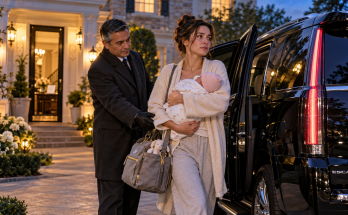
Then winced.
After a while, he whispered:
“I said it.”
My stomach tightened.
“What?”
“That day.”
I knew.
She’s the one we can afford to lose.
“I said it.”
“Yes.”
“I remember.”
“So do I.”
He cried.
“I didn’t know you heard.”
“Would it matter if I hadn’t?”
He closed his eyes.
“No.”
Good answer.
“I thought we were going to lose the house.”
he said.
“I know.”
“I was terrified.”
“I know.”
“Your mother suggested you stay with Henry.”
“I know.”
“And I said that.”
“Yes.”
“I thought Brian was more fragile.”
I swallowed.
“I thought you were like Henry.”
“Strong.”
“Independent.”
“You were nine.”
His voice broke.
“I know.”
There it was.
No explanation could survive that fact.
Nine.
“I am sorry.”
I looked at him.
“I believe you.”
He opened his eyes.
“Do you forgive me?”
I took my time.
“Some of it.”
He nodded.
That answer hurt him.
He accepted it.
That mattered.
Our relationship never became close.
Not the way Mom’s eventually did.
But it became honest.
Sometimes honest is the most repair a relationship can hold.
Brian married.
Had two daughters.
I became the aunt who bought them tools.
Not pink plastic tools.
Real ones.
Age appropriate.
Mostly.
Brian complained when I gave his eight-year-old a soldering iron.
“It has temperature control.”
“She is eight.”
“Supervised use.”
“You’re insane.”
“Grandpa gave me a pocketknife at seven.”
“And somehow that supports your argument?”
His wife, Rachel, confiscated the soldering iron until age eleven.
Probably wise.
I had one child.
A son.
Henry Adrian Ashford.
We called him Hank.
The first time Mom held him, she cried.
“I don’t deserve this.”
I looked at her.
“Don’t make him responsible for forgiving you.”
She nodded.
“Right.”
Then she simply held her grandson.
She became a good grandmother.
Not perfect.
Good.
She showed up.
Every birthday.
School plays.
Soccer games.
One dreadful recorder concert.
Afterward, she said:
“That was beautiful.”
I said:
“Now I know you’re capable of lying.”
Hank’s recorder performance had violated several international treaties.
Mom laughed until she cried.
Watching her show up for my son brought complicated feelings.
Gratitude.
Grief.
Anger for the girl I had been.
Joy for the boy he was.
Therapy helped me understand I did not have to choose one.
At forty-seven, I found Henry’s old red thermos in the workshop.
Dented.
Ugly.
Still smelled faintly like coffee despite decades of abuse.
Inside the cabinet behind it was an envelope.
My name.
I laughed.
“Seriously, Grandpa?”
Apparently Henry had planned to communicate with me until the end of time.
The letter was short.
Ev,
If you find this, you are snooping in my workshop, which means you remain poorly trained.
I laughed.
You may someday be tempted to turn what happened to you into a story about strength. Be careful.
I stopped.
You became strong. That does not mean you needed to be abandoned.
Tears filled my eyes.
Do not thank pain for teaching lessons people could have taught you with love.
I sat on the workshop floor.
That sentence changed something.
For years, people praised me.
Resilient.
Independent.
Remarkable.
Self-made.
I hated that last one.
Nobody is self-made.
Henry made breakfast.
Teachers taught me.
Sam taught horses.
Professor Cho taught engineering.
Marian protected the trust.
Employees taught me the company.
Adrian taught me partnership.
Brian taught me that siblings can begin again.
Even my mother, eventually, taught me that apology is a practice.
I was not self-made.
I had been abandoned.
Then raised.
Supported.
Corrected.
Loved.
Henry’s letter continued.
If you raise children, do not make hardship their curriculum simply because it was yours.
I cried.
Give them tools. Give them work. Give them consequences. But also give them softness.
Henry had worried about that.
So did I.
I had inherited his toughness.
Sometimes too much.
Hank once came home at fourteen after failing an algebra test.
My first instinct:
Sit down.
Find the error.
Fix it.
Henry.
Then I saw my son’s face.
So I asked:
“Do you need help or a hug first?”
He stared at me.
“Hug.”
So I hugged him.
Then we fixed algebra.
That was my improvement on Henry.
He would have approved.
Maybe pretended not to.
At fifty-two, Ashford Engineering crossed a valuation Henry would never have believed.
I will not give the number.
By then, numbers had become less interesting.
What mattered more was that employee ownership had expanded.
The pension plan was strong.
The Keeps Fellowship supported hundreds of students.
The ranch’s water usage had fallen dramatically while agricultural output improved.
We licensed low-cost irrigation technology to small farms.
That mattered.
Money is only stored possibility.
What you do with it gives it character.
Brian eventually joined the fellowship board.
Not because I appointed him.
The board elected him.
He had spent years mentoring young electricians.
He was good at it.
One evening after a meeting, he looked at Henry’s portrait.
“Think he’d be surprised?”
“That we’re working together?”
“Yes.”
“No.”
“Really?”
“He planned half our lives from beyond the grave.”
Brian laughed.
“True.”
Then he said:
“I never cashed the rest of the fifty thousand.”
“What?”
Henry’s bequest.
He had invested most of it.
It had grown.
“What are you doing with it?”
“I want to fund a fellowship.”
“You already donate.”
“No.”
He looked at me.
“I want this specific money to do something.”
“What?”
“A sibling grant.”
I raised an eyebrow.
“That’s oddly specific.”
“For students who were separated from siblings because of foster care, family breakdown, incarceration, whatever.”
My throat tightened.
“Brian.”
“I know money can’t fix it.”
“No.”
“But maybe it can pay for travel.”
“Counseling.”
“Reconnection.”
“Or education if reconnection isn’t healthy.”
I hugged him.
He froze.
Then hugged back.
“Grandpa said money can’t create a sibling relationship.”
Brian whispered.
“No.”
“But maybe it can give people a chance to decide whether they want one.”
The program still exists.
Mom died when I was fifty-eight.
Cancer.
She knew it was terminal for almost a year.
We had time.
A terrible gift.
Near the end, I sat beside her bed.
She was small beneath the blankets.
“Evelyn?”
“Yes?”
“Are you happy?”
I thought.
“Yes.”
“Really?”
“Yes.”
She smiled.
“Good.”
Then:
“Did I ruin your childhood?”
The question was too large for a dying room.
I answered honestly.
“You hurt it.”
Tears slipped down her face.
“But Grandpa gave me a good one too.”
She nodded.
“I am jealous of him.”
I laughed softly.
“I know.”
“I used to hate that he got to be the parent I wasn’t.”
I held her hand.
“You could have come.”
“I know.”
That was enough.
No excuses.
She knew.
“I am sorry.”
“I know.”
“Do you forgive me?”
I looked at her.
“Enough.”
She smiled.
“That’s fair.”
Those were among her last clear words.
Enough.
Not perfect.
Not total.
Enough.
She died two days later.
I grieved deeply.
That surprised some people.
It did not surprise me.
Reconciliation does not erase the abandoned child.
But the abandoned child does not erase the mother I eventually came to know either.
Both existed.
I buried her wearing the iron ring.
Ashford Keeps.
Glenn lived another nine years.
We spoke every few months.
Sometimes awkwardly.
Sometimes warmly.
He never asked for money.
Neither had Mom after reconciliation.
They lived modestly.
I quietly paid for some of Dad’s medical care near the end.
He did not know initially.
When he found out, he became angry.
“I don’t want Henry’s money.”
I said:
“It isn’t Henry’s.”
He stared.
“It is mine.”
That mattered.
“And I’m choosing to use some of it for you.”
He cried.
“I don’t deserve that.”
“Maybe not.”
He laughed through tears.
“You really are Henry’s granddaughter.”
“Yes.”
Then:
“But this isn’t about deserving.”
I said.
“It’s about what I want to do.”
Choice.
Always choice.
He accepted the help.
Before he died, he asked me to bring the iron ring.
I held up my hand.
He touched it.
“Ashford Keeps.”
“Yes.”
“I used to hate that.”
“Why?”
“Because Henry kept his promises better than I did.”
I said nothing.
“He made me feel small.”
“Did he?”
Dad thought.
“No.”
“I felt small around him.”
Different.
“I wish I’d understood that.”
“So do I.”
He looked at me.
“I am proud of you.”
I smiled.
“Thank you.”
Not hungry for it anymore.
Still glad to receive it.
That is another kind of healing.
He died peacefully.
Brian and I buried him beside Mom.
At seventy, I stepped down as CEO.
Hank did not replace me.
That shocked the business press.
Apparently dynasties are more entertaining than governance.
Hank had become an environmental lawyer.
He loved the ranch.
Hated corporate management.
Good.
The company appointed a CEO named Priya Raman.
Brilliant.
Steady.
Not related to me.
Henry’s legacy did not require his bloodline to occupy every chair.
That would have turned stewardship into vanity.
I remained involved with the trust and ranch.
Eventually, Hank became one of several trustees.
Not sole controller.
We changed the structure intentionally.
No nineteen-year-old in our family would ever again wake up owning responsibility for a hundred-million-dollar system alone.
That was my improvement.
Legacy should evolve.
At seventy-five, I attended the Keeps Fellowship’s fiftieth graduation celebration.
Lena, our first fellow, was there.
Gray hair.
Still bossy.
She had designed bridges across three continents.
“You look old.”
she told me.
“So do you.”
“Rude.”
“You started it.”
She hugged me.
More than nine hundred students had received support by then.
Not all became engineers.
One became a poet.
Henry would have pretended to object.
Another became a nurse.
Teachers.
Machinists.
Architects.
Farmers.
Software developers.
Some dropped out.
Some returned later.
The program never published a “success rate” based solely on degrees.
That was deliberate.
Human lives are not defective products if they change direction.
The ranch remained.
Smaller in active agriculture.
Larger in conservation.
The old workshop remained almost exactly as Henry left it.
Except safer wiring.
He would have hated that I mentioned the old wiring.
At eighty-one, Brian and I sat there together.
He picked up one of Henry’s wrenches.
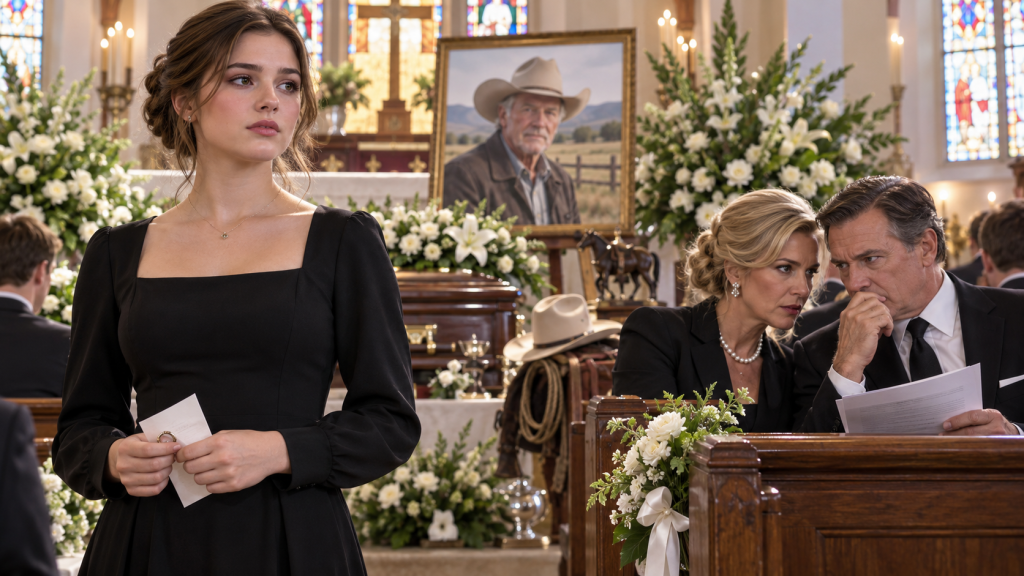
“You know what I remember most?”
“What?”
“His funeral.”
I smiled sadly.
“Not ideal.”
“Mom’s suit.”
I laughed.
“Perfectly pressed.”
“Dad whispering about the estate.”
“The attorney threat.”
“Your face when Marian said one hundred and four million.”
“I probably looked ill.”
“You looked like someone told you you’d inherited Mars.”
“That is approximately how it felt.”
He laughed.
Then became quiet.
“I almost sided with them.”
I looked at him.
“Really?”
“Yes.”
“Why didn’t you?”
“Grandpa’s letter.”
“Which part?”
“The part where he said I wasn’t responsible for what happened when I was ten.”
Brian stared at the wrench.
“I realized Mom and Dad were about to make me responsible for it as an adult.”
My throat tightened.
“They wanted me to choose them against you.”
“Yes.”
“And for once, I didn’t.”
I touched his shoulder.
“That was your choice.”
“I know.”
He smiled.
“Best fifty thousand dollars I never spent.”
Brian died before me.
Eighty-three.
Heart attack.
Quick.
I hated him for going first.
Siblings are apparently allowed to be unreasonable about death.
At his memorial, his daughters gave me a box.
Inside was Henry’s original fifty-thousand-dollar bequest paperwork.
Brian had written across the top years earlier:
Grandpa was right. Money didn’t make her my sister. Calling her did.
I sat down.
Cried until I could not breathe.
Underneath, he had added:
Evelyn, if you find this, I got the last word.
“Idiot.”
I whispered.
Then laughed.
I placed the document in the workshop.
Next to Henry’s red thermos.
At eighty-seven, I moved out of the main ranch house.
Not far.
A smaller cottage overlooking the eastern pasture.
The big house became part residence, part fellowship center.
Young people filled rooms that had once been too quiet.
I liked hearing them argue.
Music.
Laughter.
Bad cooking.
Life.
One fellow asked me:
“Does it bother you that strangers live in your grandfather’s house?”
I corrected him.
“It isn’t his house.”
She looked embarrassed.
“Sorry.”
“It isn’t mine either.”
“What do you mean?”
I looked around.
“We’re temporary.”
“Then whose is it?”
I smiled.
“Ask me in a hundred years.”
Henry had understood that.
Ashford Keeps did not mean Ashfords hoard.
It meant stewardship.
You keep a promise by carrying it until someone else can carry it better.
You keep land by protecting its future, not by freezing its past.
You keep family by showing up, not by claiming ownership.
You keep love by giving it freely enough that the other person is allowed to walk away.
At ninety, I visited Henry’s grave alone.
The iron ring was still on my hand.
Thin now.
Worn smooth.
I sat beside the stone.
“You caused a lot of trouble.”
Wind through grass.
No answer.
Typical.
“You could have warned me.”
Nothing.
“You could have told me about the money.”
Still nothing.
I smiled.
“You were right about some things.”
I touched the ring.
“Wrong about others.”
The older I became, the less interested I was in making Henry perfect.
He was stubborn.
Secretive.
Sometimes emotionally awkward.
He believed problems could be solved with enough work.
Some cannot.
He rescued me, yes.
But I no longer told the story as though rescue erased abandonment.
Henry gave me a home.
My parents should never have made that necessary.
Both truths.
I placed my hand against his headstone.
“Kept it.”
I whispered.
Not the money.
The promise.
The estate had grown.
Then changed.
Then given much away.
The ranch remained protected.
The company remained healthy.
But none of that was what I meant.
I kept showing up.
For Brian.
For Mom when she changed.
For Dad within the boundaries I could manage.
For Adrian.
For Hank.
For students.
Employees.
Myself.
Especially myself.
Henry taught me that last one indirectly.
For years, I thought Ashford Keeps meant never leaving.
Never quitting.
Never letting go.
Age taught me something subtler.
Sometimes keeping a promise requires leaving a harmful place.
Sometimes protecting what matters requires saying no to family.
Sometimes loyalty to your future means refusing loyalty to an old pattern.
Sometimes the person you most need to show up for is yourself.
I lived long enough to watch Hank become a grandfather.
His daughter named her first child Marian.
I cried when she told me.
Marian Voss had died years earlier.
Ninety-six.
Still terrifying attorneys until almost the end.
At her memorial, I told the story of her sitting on the office floor beside a nineteen-year-old heiress who wanted none of it.
People laughed.
Her son later gave me her old fountain pen.
I kept it beside Henry’s ring box.
At ninety-three, a young fellow named Maya interviewed me for an oral-history project.
She had read about Henry.
The estate dispute.
The company.
She asked:
“Was inheriting one hundred million dollars the moment your life changed?”
“No.”
She looked surprised.
“When did it change?”
I thought.
“Nine.”
“When your parents left you?”
“No.”
That was the moment circumstances changed.
Not me.
“When Grandpa showed me my room.”
She frowned.
“Why?”
“Because he didn’t ask what was wrong with me.”
I said.
“He didn’t treat me like the child someone had discarded.”
“He simply behaved as though I lived there.”
Maya became quiet.
“Belonging?”
“Yes.”
Then she asked:
“Did you ever understand why your parents chose you?”
I looked toward the pasture.
“Yes.”
“Why?”
“Because they thought I could survive it.”
“Were they right?”
I smiled sadly.
“Yes.”
“Does that make their decision okay?”
“No.”
Immediate.
Certain.
“No.”
That distinction mattered more than almost anything.
Surviving harm does not retroactively justify it.
Becoming strong does not make the people who hurt you wise.
Building something beautiful from pain does not mean pain deserves credit.
I survived because Henry loved me.
Because I found work meaningful.
Because teachers helped.
Because I was lucky in ways others are not.
And because something stubborn inside me refused to believe my parents’ choice defined my value.
But I should never have needed those things simply to compensate for being left.
Maya asked:
“What do you think your grandfather’s greatest legacy was?”
People expected:
Patents.
Land.
Money.
The company.
I answered:
“He stayed.”
She lowered her notebook.
“That’s it?”
“Yes.”
“He stayed.”
At nine, that was worth more than a hundred million dollars.
Near the end of my life, the trust board asked whether I wanted to change the name of the fellowship foundation to the Henry Ashford Foundation.
“No.”
“Why?”
“Because Henry would hate it.”
They laughed.
I continued.
“And because the point isn’t him.”
The Keeps Foundation remained.
Its charter included a sentence I wrote myself:
Resources should expand human choice, not purchase human loyalty.
That was my addition to Henry’s legacy.
He had given me freedom through money.
I wanted to make sure nobody receiving help from us felt owned by gratitude.
The final time I entered the old workshop, I was ninety-six.
Hank walked beside me.
Slowly.
Patiently.
He was seventy.
Ridiculous.
My child had become an old man.
I sat on Henry’s stool.
Hank picked up the red thermos.
“You keeping this forever?”
“Obviously.”
“It’s disgusting.”
“Heritage.”
“Biohazard.”
“Respect your elders.”
“You are abusing that phrase.”
“Correct.”
He laughed.
Then his eyes moved to the iron ring.
I had taken it off because my fingers had become swollen.
It sat on the workbench.
“Who gets that?”
he asked.
“You.”
He stared.
“Me?”
“Yes.”
“I thought maybe Marian.”
My great-granddaughter.
“No.”
“Why?”
“Because you know what it costs.”
He picked it up.
Read the engraving.
Ashford Keeps.
“What am I supposed to keep?”
I smiled.
“Not everything.”
“That is unhelpfully cryptic.”
“I’m ninety-six. I’m allowed.”
“Mom.”
I laughed.
Then became serious.
“Keep your word when you can.”
“Keep the land healthy.”
“Keep the company honest.”
“Keep enough humility to know when someone else can do a job better.”
“Keep showing up for people you love.”
I touched his hand.
“And don’t keep what needs to be released.”
He looked at me.
“Like what?”
“Resentment.”
“Control.”
“Money you don’t need.”
“Relationships that require you to disappear inside them.”
He swallowed.
“That doesn’t fit on the ring.”
“Your problem.”
He laughed through tears.
I closed his fingers around it.
For one moment, I saw Henry doing the same to me.
Nineteen.
Terrified.
Unprepared.
Keep it where they can see.
For years, I thought he meant my parents.
Show them.
Let them see what Henry chose.
Let them see who inherited.
Age changed that too.
Henry had not meant:
Flaunt victory.
He meant:
Do not hide what you stand for simply to make other people comfortable.
Keep the promise visible.
That was different.
I had spent most of my life wearing that ugly iron ring beside jewelry worth far more.
People often asked about it.
I always told them:
“It belonged to my grandfather.”
Sometimes they asked what Ashford Keeps meant.
My answer changed over the years.
At nineteen:
“We keep our promises.”
At forty:
“We protect what matters.”
At sixty:
“We show up.”
At ninety-six:
“We know what to carry forward and what to put down.”
All true.
Henry would probably have preferred the shortest one.
The winter before I died, snow covered the ranch.
Adrian had been gone twelve years.
Brian longer.
Mom.
Dad.
Henry most of all.
The world had become full of people I missed.
But it was also full of people who had arrived afterward.
Fellows.
Employees.
Children.
Grandchildren.
Friends.
The house glowed at night.
Someone was always making coffee.
Usually too weak.
Civilization continued its decline.
One evening, Marian—my great-granddaughter, not the attorney—sat beside me.
She was nine.
The same age I had been.
She asked:
“Were you scared when your mom and dad left you here?”
“Yes.”
“Did you cry?”
“Yes.”
“A lot?”
“Yes.”
“Did Grandpa Henry hug you?”
I thought.
“No.”
She looked horrified.
“He didn’t?”
“Not that day.”
“Why?”
“He wasn’t very good at hugging yet.”
“What did he do?”
“He showed me my room.”
“That’s it?”
“Then he asked if I knew how to use a socket wrench.”
She burst out laughing.
“Did you?”
“No.”
“Did he teach you?”
“Yes.”
She thought about that.
“Was that his way of saying he loved you?”
I smiled.
“Partly.”
“That’s weird.”
“Very.”
She leaned against me.
Children ask questions adults spend decades avoiding.
“Did your mom love you?”
“Yes.”
“Then why did she leave?”
I looked toward the window.
Snow falling over Henry’s ranch.
Because that was still how I thought of it.
Even after eighty-seven years.
“Because loving someone doesn’t automatically make every choice you make loving.”
Marian frowned.
“That’s confusing.”
“Yes.”
“Did she say sorry?”
“Eventually.”
“Did you forgive her?”
“Enough.”
She smiled.
“That sounds like a grandma answer.”
“It is.”
Then she pointed toward the ring on Hank’s hand.
“What does that say?”
“Ashford Keeps.”
“What does it mean?”
I looked at her.
“It means if you promise someone you’ll be there, you try very hard to be there.”
She nodded solemnly.
“Like birthdays?”
“Especially birthdays.”
“Christmas?”
“Yes.”
“School plays?”
“Yes.”
“Even boring ones?”
“Those matter most.”
She thought.
Then:
“What if you can’t come?”
“You tell the truth.”
“What if you mess up?”
“You apologize.”
“What if they don’t forgive you?”
“You respect that.”
“What if you have lots of money?”
“You don’t become annoying.”
She laughed.
Then ran off.
I watched her go.
Nine years old.
Loved.
Secure.
Free to run away from me because she knew she could come back.
That may have been the greatest thing our family ever built.
Not Ashford Engineering.
Not the ranch.
Not the trust.
A nine-year-old who did not have to wonder whether adults would return.
A few months later, I became ill.
Nothing dramatic.
Age.
The body eventually submits its resignation.
Hank wanted me in the hospital.
I refused.
We compromised.
Hospice at the ranch.
My room overlooked the eastern pasture.
The same sunrise Henry loved.
One morning, Hank sat beside me.
The iron ring on his hand.
“Mom?”
“Yes?”
“Do you want anything?”
I thought.
“Coffee.”
“You’re not supposed to have much caffeine.”
“I’m dying.”
“Fair.”
He brought coffee.
Terrible.
I complained.
He told me to make it myself.
Excellent parenting.
Later that day, he asked:
“Are you afraid?”
“Yes.”
He looked surprised.
“Really?”
“Of course.”
“I thought you weren’t scared of anything.”
“That’s because children are bad observers.”
He laughed.
I took his hand.
“Courage isn’t the absence of fear.”
“I know.”
“I know you know.”
I closed my eyes.
“Grandpa taught me how to fix things.”
Hank waited.
“It took me years to learn not everything should be fixed.”
“Some things should be grieved.”
“Some accepted.”
“Some forgiven.”
“Some left behind.”
He squeezed my hand.
“And some kept?”
I smiled.
“And some kept.”
On my final evening, the family gathered.
Not because an estate reading waited.
Not because anyone wanted money.
Because I was dying.
What a difference.
No pressed black suits.
No whispered valuations.
No lawyers.
Just people.
Hank.
His wife.
Children.
Grandchildren.
Great-grandchildren.
Lena’s daughter visited.
Former employees.
A ranch hand brought my favorite mare near the window, though I was too weak to go outside.
I could hear laughter downstairs.
Someone dropped a plate.
Someone swore.
A child was told not to run.
Life.
I thought of Henry’s funeral.
My parents asking about a hundred million dollars.
Me sitting alone with grief while everyone talked about assets.
If Henry could have seen this room, he would have understood.
This was the estate.
Not the acreage.
Not patents.
Not water rights.
This.
People who came.
People who stayed.
People who did not need signatures to tell them where they belonged.
Hank leaned closer.
“You okay?”
“Yes.”
“Need anything?”
“No.”
Then I changed my mind.
“The ring.”
He looked at his hand.
“You gave it to me.”
“I know.”
He took it off.
Placed it in my palm.
Cold iron.
Worn smooth.
Ashford Keeps.
I closed my fingers around it one final time.
“Grandpa?”
Hank asked.
“Yes.”
I smiled.
“He’d be insufferably pleased.”
Hank laughed.
Then cried.
I gave the ring back.
“Keep it where they can see.”
His face broke.
He understood.
“Okay.”
That night, before sleep, I thought about my parents.
Not with anger.
Not anymore.
Diane.
Glenn.
Two frightened people who made a terrible decision.
Then defended it for years because admitting what they had done felt unbearable.
Eventually, they admitted it.
Eventually, they changed.
Not soon enough to give me back childhood.
Soon enough to give us something before death.
I was grateful for that.
I thought of Brian.
Ten years old.
Watching a car leave.
Believing I had escaped him.
Then choosing, decades later, to turn fifty thousand dollars into chances for other siblings to find one another.
I thought of Marian Voss.
The paperwork already speaks.
I thought of Henry.
Most of all Henry.
His boots by the door.
His thermos.
His terrible cakes.
His workshop.
His rule:
Understand what is wrong before trying to force a solution.
He had taught me that about machines.
I spent a lifetime learning it applied to people too.
Understand the wound.
Understand the pattern.
Understand what belongs to you and what doesn’t.
Then choose.
Do not force forgiveness.
Do not force reconciliation.
Do not force loyalty.
Do not force children to carry adults.
Do not force money to become love.
Let actions speak.
Let time test them.
Let people change if they choose.
And if they don’t—
keep your promise to yourself.
Morning came pale over the ranch.
I was still awake.
Barely.
Hank opened the curtains.
Sunlight crossed the floor.
“Beautiful.”
I whispered.
He sat beside me.
“Yes.”
I looked toward the pasture.
Henry had been dead seventy-seven years.
And somehow I could still hear him.
Fence needs checking.
Coffee’s ready.
Bring the right wrench.
Don’t force it.
You live here now.
That last one.
The sentence he never actually said.
The sentence his entire life communicated.
You live here now.
You belong.
No audition.
No calculation of cost.
No question of which child could be lost.
I smiled.
My parents had arrived at Henry’s funeral believing the most important thing he left behind was worth one hundred million dollars.
They were wrong.
So was I, for a while.
The fortune mattered.
It funded lives.
Protected land.
Built opportunities.
It did enormous good.
But Henry’s greatest inheritance had been given ten years before his death.
A bedroom.
A place at the table.
A workshop.
A grandfather who showed up the next morning.
Then the morning after that.
And the morning after that.
Until a frightened nine-year-old stopped listening for a car that was not coming back.
Henry gave me the experience of being kept.
That was the inheritance I spent the rest of my life trying to pass on.
Not possession.
Presence.
Not wealth.
Choice.
Not obligation.
Belonging.
And that is what Ashford Keeps finally meant.
Not that we kept everything.
Not that we held people so tightly they could never leave.
Not that blood automatically deserved access.
It meant we kept our word.
We kept showing up.
We kept enough courage to tell the truth.
We kept what deserved protecting.
We released what had become harmful.
And when someone was placed in our care, we never made them wonder whether they were the one we could afford to lose.
Henry signed papers worth more than a hundred million dollars.
Those signatures survived every challenge my parents brought.
They determined ownership.
Protected the ranch.
Transferred patents.
Controlled trusts.
Lawyers argued about them.
Courts upheld them.
Financial papers would eventually call them one of the most carefully structured private estates in the region.
But the signature that changed my life was never on a legal document.
It was written through ten years of ordinary mornings.
Henry stayed.
And because he stayed, I learned something my parents had forgotten.
A child does not need to be profitable.
Easy.
Convenient.
Exceptional.
Strong.
Or useful.
To be worth keeping.
She only needs to be yours to love.
And if someday she becomes strong enough to inherit everything you built, let that be a blessing.
But never make her become strong because you abandoned her first.
That was the mistake I refused to pass forward.
The ranch remained after me.
So did the company.
The fellowship.
The sibling grant.
The conservation land.
The research center.
The patents eventually expired.
Of course they did.
Money moved.
Markets changed.
Buildings were renovated.
Names disappeared from letterheads.
That is what happens.
Nothing material keeps forever.
But years after my death, a child receiving a Keeps Fellowship would open a letter containing a sentence I had written decades earlier:
You do not owe us your loyalty for helping you. Your future belongs to you. We are only here to make sure you have enough room to choose it.
And on the bottom of that letter was a small symbol.
An iron ring.
Inside it:
ASHFORD KEEPS.
Not a family name anymore.
A promise.
One Henry made to a nine-year-old girl without ever saying it aloud.
One I spent my life learning how to understand.
One our family finally became worthy of carrying.
We show up.
We tell the truth.
We protect without possessing.
We help without buying loyalty.
We apologize without demanding forgiveness.
We give people room to choose.
And when somebody we love stands at the door with one small suitcase, wondering whether there is really a place for them—
we move aside.
We open the door wider.
And we say:
You live here now.
THE END STORIES! THANK YOU FOR READING GOOD LUCK !❤️
Related Posts