➡️ PART 3 ENDING PART ➡️
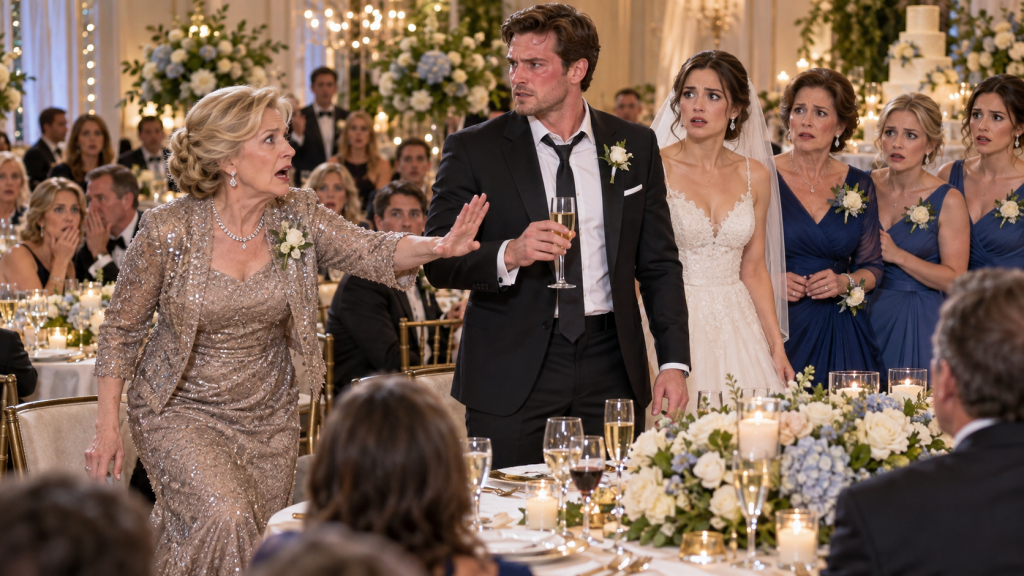
“And that’s not even the worst thing written here.”
The room became so quiet I could hear the faint hum of the air-conditioning above us.
Vanessa stood beside Grant with one hand still half-raised toward the paper.
Her face had lost every trace of bridal radiance.
“Give me that.”
Grant looked at her.
“No.”
It was such a small word.
But coming from my son, it sounded enormous.
Vanessa blinked.
“What?”
“I said no.”
Her mother, Patricia, stepped forward.
“This is ridiculous. Whatever private misunderstanding the two of you are having does not need to become entertainment for two hundred people.”
Grant looked at her.
“You’re right.”
For one hopeful second, Vanessa exhaled.
Then Grant continued.
“It should have been handled privately months ago.”
Vanessa’s shoulders stiffened.
“But every time I tried to talk privately, I was told I was overreacting.”
He looked at his new wife.
“Or being difficult.”
Then at Patricia.
“Or embarrassing Vanessa.”
Patricia crossed her arms.
“Grant, you’re emotional.”
I almost laughed.
Not because anything was funny.
Because I had heard that sentence in different forms my entire life.
When a quiet person finally raises his voice, everyone who benefited from his silence suddenly becomes concerned about his emotional state.
Grant unfolded the paper.
I wanted to stop him.
Part of me still did.
Not because Vanessa deserved protection from consequences.
Because my son was standing in the middle of his wedding reception, furious and humiliated, and I knew that whatever happened next would become a memory he carried for the rest of his life.
“Grant,” I said softly.
He looked at me.
For a moment, the anger disappeared.
He looked eight years old again.
Then twelve.
Then seventeen.
My calm boy.
The child who apologized when someone stepped on his foot.
“Mom.”
I shook my head gently.
“You don’t owe me a public defense.”
His face crumpled for half a second.
“I know.”
“Then don’t do this for me.”
He swallowed.
“I’m not.”
That frightened me more.
He looked at Vanessa.
“I’m doing it for myself.”
Vanessa whispered:
“Please.”
Grant stared at her.
“How many times have I said that word to you?”
She said nothing.
“How many times have I asked you to stop making decisions for me?”
“Grant—”
“How many?”
“This is our wedding.”
“I know.”
His voice broke.
“That’s why I finally noticed.”
He looked around the room.
“The whole day is supposed to be about us, and somehow I’m a guest at my own wedding.”
Nobody moved.
Vanessa’s father, Robert, slowly lowered his eyes.
Grant lifted the paper.
“This is a planning document Vanessa and her mother made.”
Patricia said immediately:
“It’s a wedding checklist.”
“No.”
Grant replied.
“It started as one.”
Then he read.
“Post-wedding boundaries.”
My stomach tightened.
Vanessa closed her eyes.
Grant continued.
“First six months: minimize unscheduled visits from Joan.”
My heart sank.
Several people turned toward me.
I wanted to disappear.
Grant read the next line.
“Holiday schedule: Christmas Eve and Christmas morning with Vanessa’s family. Grant may visit Joan separately on December twenty-sixth if convenient.”
Someone at my table whispered:
“Oh my God.”
Grant kept reading.
“Future children: Patricia primary grandmother contact.”
Patricia’s face reddened.
“Stop.”
“Joan visits should be planned and limited to avoid confusion over family roles.”
I stared at her.
Family roles.
Apparently mine had already been reassigned.
Grant looked at me.
His eyes were wet.
I suddenly understood why the blue dress mattered.
It had never been about a color.
It was a uniform.
A visual declaration.
One family in blue.
One mother deliberately outside it.
A photograph that would quietly explain the hierarchy without anyone needing to say it aloud.
Vanessa whispered:
“It wasn’t finalized.”
Grant laughed.
A wounded, exhausted sound.
“It was printed.”
“That doesn’t mean—”
“You highlighted it.”
A few people shifted uncomfortably.
Vanessa looked toward her bridesmaids.
None met her eyes.
Grant continued.
“Family photographs: bride’s family in blue.”
Then he paused.
“Groom’s mother neutral color.”
My throat tightened.
Patricia said:
“That is completely normal. Families coordinate photographs all the time.”
I looked at her.
“Then why lie to me?”
She opened her mouth.
Nothing came.
I asked again.
“Why didn’t Vanessa simply say her family was wearing blue?”
Patricia straightened.
“Because we knew you would make an issue of it.”
I almost admired the efficiency.
Exclude someone.
Lie about the exclusion.
Then use the possibility that they might object as justification for why the lie was necessary.
Grant shook his head.
“She wouldn’t have.”
Patricia looked at him.
“You don’t know that.”
“I do.”
His voice was suddenly calm.
“My mother bought another dress.”
He pointed toward me.
“She didn’t argue.”
“She didn’t call relatives.”
“She didn’t post anything.”
“She did exactly what Vanessa asked.”
My eyes burned.
Grant continued.
“And when she arrived and realized she’d been lied to, she still didn’t make a scene.”
He looked at me.
“Even when I let Vanessa embarrass her.”
I shook my head.
“Grant.”
“No, Mom.”
His voice cracked.
“I did.”
That hurt more than anything Vanessa had said.
Because I could see the shame on his face.
And I did not want my son confusing one failure with his whole character.
“You were under pressure.”
I said.
“I still did it.”
“Yes.”
I answered.
He looked surprised.
I continued.
“You did.”
The room went still again.
“But that doesn’t mean you have to punish yourself forever.”
Grant stared at me.
“You can acknowledge that you hurt somebody without deciding you’re a terrible person.”
Vanessa laughed bitterly.
“How convenient.”
Grant turned toward her.
“What?”
“Your mother gets to be gracious now.”
I stared at Vanessa.
She was crying.
Not delicately.
Mascara had begun to gather beneath her eyes.
“This is exactly what she wanted.”
I genuinely could not believe what I was hearing.
“What?”
“You wanted him to choose you.”
“No.”
“You’ve never liked me.”
“That isn’t true.”
“You tolerated me.”
I paused.
That was closer.
“I tried to know you.”
I said.
Vanessa shook her head.
“No. You watched me.”
“Because I’m his mother.”
“Exactly.”
She pointed toward me.
“You always looked at me like you were waiting to decide whether I was good enough for him.”
I thought about every dinner.
Every holiday.
Every awkward conversation.
Had I?
Maybe sometimes.
Parents do that.
It does not make every judgment fair.
“I may have.”
I said.
Vanessa seemed startled.
“I’m sorry if I made you feel constantly evaluated.”
Grant looked at me.
So did Patricia.
“But that doesn’t explain this.”
I pointed toward the document.
“You could have told me you wanted space.”
“You could have told me you wanted your mother more involved.”
“You could even have told me you didn’t like me.”
My voice shook.
“But you don’t get to quietly erase me from my son’s life and call it a boundary.”
Vanessa’s face tightened.
“It wasn’t erasing.”
Grant looked at the paper.
“Keep reading?”
She went pale.
“No.”
“Then stop pretending.”
He unfolded another page.
My stomach dropped.
There was more.
“Grant.”
I said.
He looked at me.
I wanted to tell him enough.
But then I noticed something.
His hands had stopped shaking.
The fury was still there.
But beneath it was something clearer.
Decision.
So I sat down.
Grant read:
“Financial boundaries.”
Robert suddenly looked up.
“Financial?”
Vanessa stared at the floor.
Grant continued.
“Joint accounts after wedding.”
“Redirect Grant’s salary to household account.”
“Close his separate savings once house purchase is complete.”
Patricia interrupted.
“That is normal for married couples.”
Grant nodded.
“It can be.”
Then he read the next line.
“Encourage Grant to sell his condo before discussing prenup revision.”
A murmur swept across the room.
I knew about the condo.
Grant had bought it at twenty-six.
Long before Vanessa.
He had almost paid it off.
Vanessa wanted them to buy a larger house after the wedding.
I had assumed the condo would be sold eventually.
Grant stared at her.
“You told me your lawyer said the prenup was finished.”
Vanessa swallowed.
“It basically was.”
“No.”
Grant said.
“It wasn’t.”
Her father stood.
“Vanessa.”
She turned.
“Dad, please.”
Robert looked at Patricia.
“What prenup revision?”
Patricia’s mouth tightened.
“Robert, sit down.”
He did not.
“What revision?”
Grant answered.
“The one that would convert proceeds from my condo into marital property if I put them toward the house.”
Robert stared at his wife.
“Did you know about this?”
Patricia did not answer.
That was an answer.
Robert closed his eyes.
Vanessa said:
“We were getting married. Why are you acting like sharing assets is some conspiracy?”
“It isn’t.”
Grant replied.
“Lying about legal documents is.”
“I wasn’t lying.”
“You told me the revisions were just language.”
“They were.”
“They changed ownership.”
“We’re married!”
The word exploded from her.
Everyone went silent.
Vanessa pressed both hands against her dress.
“We are married, Grant.”
Her voice cracked.
“You’re standing here humiliating me in front of everyone over a stupid document and a dress when we are already married.”
Grant looked devastated.
“I know.”
That was the first moment I understood the true size of what was happening.
This was not a dramatic breakup before vows.
They had said the vows.
Signed the license.
Kissed.
Taken photographs.
They were husband and wife.
Whatever Grant decided next would not erase the morning.
Vanessa stepped closer.
“Come outside.”
“No.”
“Please.”
Grant looked at her.
“I’ve spent two years going outside.”
She froze.
“What does that mean?”
“Every time something bothered me, you said not here.”
He counted quietly.
“Not in front of your parents.”
“Not during dinner.”
“Not before vacation.”
“Not when you were stressed.”
“Not when you had a headache.”
“Not during wedding planning.”
“Not the week before the wedding.”
“Not the night before.”
“Not today.”
His voice trembled.
“There was never a time when I was allowed to be unhappy without becoming the problem.”
Vanessa started crying harder.
“I didn’t know you felt that way.”
“Yes, you did.”
“No.”
“I told you.”
“You complained.”
Grant stared at her.
That sentence landed harder than shouting.
“You thought when I told you I was hurting, I was complaining.”
Vanessa covered her mouth.
Patricia stepped forward.
“That’s enough.”
Robert said:
“No.”
Everyone looked at him.
He had barely spoken all day.
Patricia turned.
“Excuse me?”
Robert looked exhausted.
“Let him finish.”
Her face changed.
“Robert.”
“You heard him.”
“This is our daughter.”
“And that is her husband.”
Robert looked at Grant.
“If he says he’s been trying to tell her something, let him speak.”
Patricia stared at her husband as though he had betrayed her.
Maybe, in her mind, he had.
I recognized the pattern.
Silence mistaken for agreement.
Accommodation mistaken for consent.
Then one day the quiet person speaks, and everyone acts shocked.
Grant lowered the paper.
“I don’t want to read the rest.”
Vanessa breathed.
“Thank God.”
“Not because it gets better.”
He looked at the guests.
“Because this shouldn’t be entertainment.”
I felt relief.
He had stopped before anger turned humiliation into spectacle.
He placed the pages on the table.
Then looked at Vanessa.
“I need to leave.”
Her face collapsed.
“What?”
“I need to leave.”
“You can’t.”
Grant gave a sad little laugh.
“There it is again.”
She caught herself.
“I mean—please don’t.”
Grant loosened his tie.
“I’m going to a hotel.”
“No.”
“Vanessa.”
“We can talk upstairs.”
“Tomorrow.”
“This is our wedding night.”
“I know.”
“You’re leaving me on our wedding night?”
Grant’s eyes filled.
“I think I left myself a long time ago.”
No one breathed.
Then he looked at me.
“Mom.”
Every maternal instinct in my body screamed to take him home.
Put him in the car.
Protect him.
Tell him Vanessa was terrible and he deserved better.
But I knew something else too.
If I turned this into me rescuing him from his wife, we would simply replace one form of control with another.
So I asked:
“What do you need?”
Grant stared.
Not what do you want me to do.
Not come with me.
Not I told you so.
What do you need?
“A ride.”
“Okay.”
Vanessa cried:
“Of course.”
I looked at her.
“What?”
“Of course he’s leaving with you.”
Grant answered before I could.
“No.”
He took his phone from his pocket.
“I’ll get a cab.”
Then he looked at me.
“Sorry, Mom.”
My heart cracked.
“You don’t need to apologize.”
“Yes, I do.”
“Not for choosing your own ride.”
A tiny smile passed over his face.
That was my son.
Still there.
I walked toward him.
Then stopped.
“Can I hug you?”
His face broke.
He nodded.
I held him.
Not like a child.
Not like something I owned.
Like a grown man having one of the worst days of his life.
“I love you.”
I whispered.
“I love you too.”
Then he pulled away.
Vanessa stood ten feet from us.
She looked shattered.
And despite everything, I felt sorry for her.
Because consequences do not become painless merely because someone contributed to creating them.
Grant walked out.
The reception ended forty minutes later.
Nobody knew what to do.
The DJ stopped playing.
Cake remained uneaten.
Guests whispered.
Some left immediately.
Some hugged Vanessa.
Some hugged me.
I hated all of it.
I went home.
Hung my non-blue dress over a chair.
Then took the navy dress I had originally bought from the back of my closet.
I sat on my bed holding it.
And cried.
Not because of blue.
Because a week earlier, I had thought the greatest problem was being excluded from a color palette.
Now my son’s marriage might be ending before the flowers wilted.
At 1:13 in the morning, Grant texted.
I’m safe. Hotel. Please don’t call. Need sleep.
I replied:
I love you. No decisions tonight. Sleep.
Then I put my phone down.
I did not text again.
That may sound insignificant.
For me, it wasn’t.
I wanted to ask everything.
Where are you?
Did Vanessa call?
What are you going to do?
Are you getting an annulment?
Did you sign the revised prenup?
What else was on the document?
Instead, I respected the boundary he had asked for.
Because if the lesson of the day was that Grant needed room to have his own voice, then I could not celebrate that voice only when it agreed with me.
The next morning, he called.
“Can I come over?”
“Yes.”
He arrived wearing yesterday’s trousers and a hotel T-shirt.
I made coffee.
He sat at my kitchen table.
For several minutes, neither of us spoke.
Then Grant said:
“I’m an idiot.”
“No.”
“Mom.”
“You made mistakes.”
“I married her.”
“Yes.”
“Yesterday.”
“I remember.”
He put his face in his hands.
“I knew.”
That surprised me.
“Knew what?”
“That something was wrong.”
He looked at me.
“Not the document.”
“Us.”
I waited.
Grant stared into his coffee.
“She started deciding little things.”
“Restaurants.”
“Vacations.”
“What we watched.”
“Where we spent holidays.”
“I didn’t care.”
He laughed bitterly.
“I genuinely didn’t care.”
“So I thought compromise meant letting her choose.”
“That isn’t necessarily bad.”
“I know.”
“But then things I did care about became treated like they were also small.”
I nodded.
“My friends.”
“My job.”
“The condo.”
“You.”
That last word hurt.
He continued.
“If I pushed back, she’d say I was being stubborn.”
“If I got upset, I was dramatic.”
“If I needed time alone, I was withholding affection.”
“If I wanted to see you, I was a mama’s boy.”
I winced.
Grant saw.
“Sorry.”
“I’ve been called worse.”
He smiled faintly.
Then:
“The wedding made everything worse.”
“How?”
“Because every disagreement had an emergency attached to it.”
“Deposits.”
“Deadlines.”
“Guests.”
“Her mother.”
He rubbed his eyes.
“Especially her mother.”
I hesitated.
“Did you know Patricia’s family was wearing blue?”
“Not until yesterday morning.”
“What happened?”
Grant stared at the table.
“I saw the photography schedule.”
“There was a note about the blue family portraits.”
“I asked Vanessa why you weren’t included.”
“She said you didn’t want to coordinate.”
My stomach turned.
“I told her you had literally changed your dress because she asked.”
“She got angry.”
“Then I found the document.”
“How?”
“She had printed it with the photography notes.”
He laughed without humor.
“Probably by accident.”
“Maybe not.”
I said.
He looked at me.
“Meaning?”
“Sometimes people leave things where they can be found because part of them wants the conflict they keep avoiding to finally happen.”
Grant considered that.
“Maybe.”
I appreciated that he did not immediately turn Vanessa into a cartoon villain.
Neither did I.
“What else was on it?”
I asked.
He looked at me.
“Mom.”
“You don’t have to tell me.”
He nodded.
Then:
“There were notes about where we’d live.”
“Children.”
“Childcare.”
“Schools.”
“Her parents moving closer.”
“And?”
He hesitated.
“You.”
My stomach tightened.
“What about me?”
“She wanted us to reduce contact after we had kids.”
“Why?”
“She thinks you’re too attached to me.”
I almost defended myself.
Then stopped.
“Am I?”
Grant smiled sadly.
“Sometimes.”
That hurt.
But I had asked.
“How?”
“You call when you’re worried instead of waiting.”
“Fair.”
“You sometimes offer advice before I ask.”
“Also fair.”
“You hate when I travel in winter.”
“That’s because ice exists.”
He laughed.
“Mom.”
“Fine.”
I sighed.
“Anything else?”
“You can be a little…”
He searched.
“Judgmental?”
I offered.
“Observant.”
“Coward.”
He smiled.
Then became serious.
“But none of that justified lying to you.”
“No.”
“Or planning my relationship with you without me.”
“No.”
We sat quietly.
Then I said:
“Grant, I need you to hear something.”
He looked up.
“If your marriage survives this, I will respect that.”
He stared.
“Really?”
“Yes.”
“If it doesn’t, I will respect that too.”
“Mom—”
“I mean it.”
I reached across the table.
“I don’t want you leaving Vanessa because she hurt me.”
“I don’t want you staying because you’re embarrassed to leave.”
“I want you to decide what kind of marriage you are willing to live inside.”
His eyes filled.
“That’s harder.”
“I know.”
He laughed through tears.
“I wanted you to say she’s awful.”
“I can do that privately with my sister.”
He laughed harder.
“Mom.”
“I’m joking.”
Mostly.
He stayed at a hotel for four nights.
Not my house.
I was initially hurt.
Then proud.
He needed neutral ground.
Vanessa called me on the third day.
I nearly did not answer.
Then I did.
“Hello?”
“Joan.”
Her voice sounded exhausted.
“Hi.”
“I want to apologize.”
I waited.
“For the dress.”
“That’s a start.”
Silence.
Then:
“And the document.”
“Vanessa, you don’t owe me an explanation of your marriage.”
“I know.”
“But I owe you one about me.”
I sat down.
She continued.
“My mother has always been… intense.”
I almost smiled.
“Okay.”
“She plans.”
“She organizes.”
“She decides what’s best.”
I said nothing.
“I used to hate it.”
Her voice cracked.
“Then I became exactly like her.”
That was more self-awareness than I expected.
“Why did you exclude me?”
I asked.
Vanessa took a long breath.
“Because I was jealous.”
I had not expected that.
“Of what?”
“You and Grant.”
I almost laughed.
“Grant calls me maybe twice a week.”
“I know.”
“He lived independently for years.”
“I know.”
“Then what?”
She was quiet.
“When Grant disagreed with me, I always thought it was because of you.”
“Did he say that?”
“No.”
“Did I interfere?”
“Sometimes.”
“Specifics.”
She hesitated.
“You told him not to sell the condo too quickly.”
“He asked my opinion.”
“I know.”
“You suggested we alternate Christmas.”
“He asked what I wanted.”
“I know.”
I let that settle.
“So the problem wasn’t that I was controlling him.”
I said.
“It was that he had another person whose opinion mattered.”
Vanessa began crying.
“Yes.”
That answer softened something in me.
Not enough to excuse her.
Enough to understand.
“My mother always told me marriage means your spouse becomes your family.”
“She’s right.”
I said.
Vanessa went silent.
I continued.
“Your spouse becomes your immediate family.”
“That does not mean everybody else becomes disposable.”
“I know that now.”
“Do you?”
“I’m trying.”
I thought about Patricia’s blue dress.
The corsages.
The photograph plan.
“Why blue?”
Vanessa cried harder.
“It was Mom’s idea.”
“Did you agree?”
“Yes.”
“Then don’t hide behind her.”
Silence.
“You’re right.”
“Why?”
“She said the pictures would look more cohesive if our side matched.”
“Our side.”
I repeated.
“I know.”
“And you deliberately told me not to wear it.”
“Yes.”
“Why?”
“Because Mom said it would be awkward if you matched.”
There it was.
Not accidental.
Not misunderstanding.
A hierarchy translated into fabric.
I closed my eyes.
“That was cruel.”
“I know.”
“No.”
I said.
“I need you to hear the word.”
“It was cruel.”
Vanessa cried.
“Yes.”
“It was.”
I breathed.
“Thank you for saying it.”
She asked:
“Do you hate me?”
I considered lying.
“No.”
“Really?”
“I’m angry.”
“I don’t trust you.”
“I think what you did to Grant is more serious than what you did to me.”
“But hate?”
“No.”
She whispered:
“Why not?”
“Because I don’t know you well enough to spend that much energy.”
She laughed despite herself.
Then cried again.
“What do I do?”
“That’s not mine to answer.”
“Please.”
“No.”
She went quiet.
“If I tell you how to fix your marriage, I become exactly what you accused me of being.”
That silenced her.
“You and Grant need to decide.”
“I can tell you one thing.”
“What?”
“If he says something hurts, don’t call it complaining.”
She sobbed.
“I know.”
We ended the call.
I did not tell Grant about it until he asked whether Vanessa had contacted me.
Then I told him exactly what was said.
No embellishment.
No interpretation.
He and Vanessa began marriage counseling.
That surprised almost everyone.
People expected an annulment.
Patricia wanted Vanessa to leave him.
My sister wanted Grant to leave Vanessa.
Facebook relatives wanted drama.
Grant wanted information.
“I made a promise yesterday.”
he told me.
“I’m not going to stay just because of the promise.”
“But I’m not going to leave solely because I’m humiliated either.”
“I need to understand what happened.”
That sounded like Grant.
Not passive.
Deliberate.
There is a difference.
Their therapist was Dr. Elise Warren.
I never met her then.
But Grant later told me about the first session.
Dr. Warren asked:
“Who makes decisions in your marriage?”
Vanessa answered:
“We both do.”
Grant said:
“Vanessa.”
Silence.
Then the therapist asked:
“Who decides when a disagreement is over?”
Again Vanessa said:
“We both do.”
Grant said:
“Vanessa.”
The third question was:
“What happens when Grant says no?”
Neither answered.
That became the center of everything.
Not blue.
Not me.
Not Patricia.
No.
Could Grant say it?
Could Vanessa hear it?
Could a marriage survive two complete people rather than one decisive person and one accommodating person?
They separated for three months.
Grant rented an apartment.
Vanessa stayed in theirs.
They froze major financial changes.
The condo remained Grant’s.
The disputed prenup revision was discarded.
Lawyers reviewed everything independently.
No secrets.
No rushing.
Patricia hated it.
She called Grant selfish.
Vanessa did something I did not expect.
She told her mother to stop.
That was their first major rupture.
Patricia called me.
I answered against my better judgment.
“This is your fault.”
she said.
I nearly laughed.
“Good afternoon, Patricia.”
“You turned Grant against Vanessa, and now Vanessa is turning against me.”
“I didn’t do either.”
“Don’t pretend.”
“I’m not.”
“You always wanted him to yourself.”
There it was.
I said:
“Patricia, our children are adults.”
“She is my daughter.”
“Yes.”
“He is my son.”
“Yes.”
“And neither sentence gives us ownership.”
She went silent.
I continued.
“If Vanessa tells you to stop interfering, listen.”
“You have no right—”
“Correct.”
I said.
“I have no right to tell you how to parent your adult daughter.”
“That is exactly my point.”
Then I hung up.
I was learning.
Slowly.
Six months after the wedding, Grant came to dinner.
Alone.
He seemed lighter.
Not happy exactly.
But clearer.
“What are you going to do?”
I asked.
He smiled.
“You promised not to ask.”
“I lasted six months.”
“Impressive.”
I rolled my eyes.
Then he said:
“We’re trying again.”
I kept my face neutral.
He laughed.
“That expression.”
“What expression?”
“The one where you’re trying so hard to be supportive that you look constipated.”
“Grant.”
He laughed.
I finally smiled.
“Are you sure?”
“No.”
That was not the answer I expected.
He continued.
“I don’t think certainty is available.”
“Then why?”
“Because she’s changing.”
“Actually changing?”
“Yes.”
“How do you know?”
“She disagrees with me now without punishing me.”
That sentence hit me.
“She asks what I want.”
“She went to therapy by herself.”
“She apologized to you without asking me to arrange it.”
“She told her mother no.”
He paused.
“And I’m changing.”
“How?”
“I’m learning that avoiding conflict isn’t kindness.”
I stared at him.
He smiled sadly.
“I thought being easygoing made me a good husband.”
“Sometimes it made me dishonest.”
That was hard to hear.
Because I had praised that trait his entire life.
My calm one.
My easy child.
My peacemaker.
Maybe we had all rewarded him for disappearing a little.
“Did I contribute to that?”
I asked.
Grant looked surprised.
“Mom.”
“Did I?”
He thought.
“Sometimes.”
“How?”
“When Dad died.”
My chest tightened.
Grant had been sixteen when my husband, Peter, died suddenly from a heart attack.
“You were destroyed.”
Grant said.
“I tried not to give you problems.”
I remembered.
He never missed curfew.
Never fought about college.
Never rebelled.
Everyone told me how lucky I was.
“He was such an easy teenager.”
Maybe he had simply decided grief had already filled the house and there was no room for his needs.
“I’m sorry.”
I whispered.
Grant shook his head.
“You didn’t ask me to do that.”
“No.”
“But maybe I enjoyed it too much.”
He smiled.
“That’s fair.”
I laughed through tears.
“I hate growth.”
“Same.”
He reached for my hand.
“I’m not blaming you.”
“I know.”
“I just don’t want to be the calm one anymore if calm means silent.”
I squeezed his hand.
“Then don’t.”
Grant moved back in with Vanessa eight months after the wedding.
Slowly.
No grand reunion.
No social media announcement.
One box at a time.
They continued therapy for two years.
Their marriage did survive.
But not because Vanessa became meek.
Thank God.
That would have been another kind of tragedy.
She remained outspoken.
Opinionated.
Organized.
She still loved schedules.
She could plan a weekend trip with the logistical sophistication of a military campaign.
Grant still preferred calm.
Still hated unnecessary arguments.
Still sometimes needed three business days to decide what he wanted for dinner.
They did not become different people.
They learned different behavior.
Vanessa learned that strength was not the same as control.
Grant learned that peace purchased with silence is not peace.
And I learned that being a mother to an adult son required a skill nobody had warned me about:
Stepping back without disappearing.
The blue dress stayed in my closet.
For years.
I never wore it.
Not because Vanessa had power over the color.
Because every time I saw it, I remembered that reception.
Then, four years later, Vanessa became pregnant.
She told me herself.
Not Grant.
She came to my house carrying a little box.
Inside were baby socks.
Blue.
I looked at her.
She immediately burst into tears.
“Oh God.”
I started laughing.
She laughed too.
“I didn’t think about the color until after I bought them.”
“That makes it better.”
“I can exchange them.”
“Absolutely not.”
I held those tiny socks.
My eyes filled.
“Are you happy?”
I asked.
Vanessa nodded.
“Terrified.”
“That’s normal.”
Then she took a breath.
“There’s something else.”
I braced.
“We want you involved.”
I looked at her.
“Okay.”
“No.”
She said.
“I need to say this properly.”
She sat across from me.
“I spent years treating family like a ranking.”
“My mother first.”
“Then me.”
“Then Grant.”
“Then everyone else.”
She swallowed.
“And I treated you like competition.”
I said nothing.
“I’m sorry.”
“You already apologized.”
“I know.”
“But this is different.”
She touched her stomach.
“I don’t want to become my mother with this child.”
I chose my words carefully.
“Patricia loves you.”
Vanessa nodded.
“I know.”
“That doesn’t mean every way she loved you was healthy.”
“I know.”
“And being afraid of becoming her can become another way of letting her control you.”
Vanessa stared at me.
“That sounds like something a therapist would say.”
“I steal.”
She laughed.
Then:
“Will you help me?”
“With what?”
“Know when I’m doing it.”
I shook my head.
“No.”
Her face fell.
I smiled.
“I’ll tell you if you’re rude to me.”
“But I’m not becoming your behavior monitor.”
“That’s your job.”
She stared.
Then laughed.
“Fair.”
Their daughter was born in October.
Emma.
The first time Grant placed her in my arms, I cried so hard I could barely see her.
Vanessa watched.
Not threatened.
Not measuring.
Just tired and smiling.
Patricia was there too.
That mattered.
She and Vanessa had rebuilt their relationship with firmer boundaries.
Patricia never became warm toward me.
I never became warm toward her.
That was okay.
Not every relationship needs a beautiful redemption arc.
Sometimes maturity means two people can occupy the same room without trying to conquer it.
At Emma’s first birthday, Patricia wore blue.
So did I.
Neither of us planned it.
We looked at each other.
Then Vanessa saw us.
Her face went pale.
Grant started laughing.
I laughed.
Patricia actually laughed too.
Vanessa covered her face.
“You have got to be kidding me.”
I lifted my glass.
“Blue is for family.”
The entire table went silent.
Then Patricia laughed so hard she nearly spilled her drink.
That was the moment the color finally became harmless again.
Years passed.
Grant and Vanessa had another child.
A boy named Peter after Grant’s father.
When Peter was five, he asked why Grandma Joan and Grandma Patricia were not friends.
I said:
“We are friendly.”
He frowned.
“That means not friends.”
Smart child.
Patricia answered:
“Your grandmother and I have different personalities.”
Peter considered that.
“Did you fight?”
“Yes.”
we both said.
He smiled.
“Who won?”
Neither of us answered.
Because eventually we understood there had been nothing to win.
Vanessa and I became close.
But never in the artificial way people expect mothers-in-law and daughters-in-law to describe themselves after reconciliation.
She did not become my daughter.
I did not become her second mother.
We became Joan and Vanessa.
Two women connected by people we both loved.
That was enough.
She called when she wanted advice.
I learned not to give it when she didn’t.
I babysat.
Not automatically.
They asked.
I sometimes said no.
That was healthy too.
Grandmothers are not unpaid employees.
Mothers are not emergency infrastructure.
Family works better when help is offered and appreciated rather than silently assigned.
Grant changed too.
The first time I really saw it was at Christmas.
Seven years after the wedding.
Everyone was at Vanessa and Grant’s house.
Patricia announced that Christmas dinner the following year would be at her home.
Vanessa said:
“We haven’t decided that.”
Patricia frowned.
“But we always—”
Grant calmly interrupted.
“We’ll decide together.”
No anger.
No shaking hands.
No dramatic toast.
Just a sentence.
Patricia looked at him.
Then Vanessa.
Then said:
“Fine.”
That was growth.
Not spectacular.
No audience applauded.
Nobody made a speech.
Healthy relationships often look boring from the outside.
That is one of their best qualities.
When Grant turned forty-five, he and I had lunch.
He asked:
“Do you remember the toast?”
“I have tried very hard not to.”
He smiled.
“I think about it sometimes.”
“Do you regret it?”
He considered.
“Yes.”
I was surprised.
“The decision?”
“No.”
“The public part.”
He stared out the restaurant window.
“I was so angry.”
“I know.”
“I wanted them to feel embarrassed.”
“I know.”
“I still think I needed to leave.”
“But I wish I’d put the glass down, taken Vanessa aside, and told her privately.”
I nodded.
“That might have been kinder.”
“Do you think I was wrong?”
I took a breath.
“I think you were hurt.”
“That isn’t an answer.”
I smiled.
“You’re becoming annoying.”
“Therapy.”
I considered.
“I think the document revealed something serious.”
“I think you had every right to confront it.”
“I think public humiliation created damage that private honesty might not have.”
Grant nodded.
“Me too.”
“But.”
I continued.
“You were also a human being discovering on your wedding day that major parts of your future had been planned without your consent.”
“I’m not going to judge you as though you had three weeks and a therapist standing beside you.”
He smiled.
“Dr. Warren would appreciate that.”
We ate.
Then he asked:
“Do you regret stopping me?”
“At first?”
“Yes.”
“No.”
“Why?”
“Because I thought you were defending me.”
“And?”
“You needed to defend yourself.”
He nodded.
“I did.”
That distinction remained important.
Years later, Emma got engaged.
The irony was not lost on any of us.
Wedding planning began.
One afternoon, Vanessa called me.
“Mom is making a spreadsheet.”
“Of course she is.”
“No, Joan.”
Her voice was grave.
“A color spreadsheet.”
I burst out laughing.
Vanessa did too.
Then she said:
“I’m trying very hard not to control Emma’s wedding.”
“How’s that going?”
“Terribly.”
“Good.”
“What?”
“The fact that it feels difficult means you’re noticing the urge.”
She groaned.
“I have opinions.”
“You’re allowed.”
“Strong opinions.”
“Also allowed.”
“About flowers.”
“Still legal.”
“What if she makes a mistake?”
“She will.”
Vanessa went quiet.
“That’s horrible advice.”
“No.”
“It’s adulthood.”
Emma chose yellow.
Not blue.
At the wedding, Vanessa wore green.
Patricia wore lavender.
I wore navy.
My old navy dress no longer fit.
Age had redistributed me.
So I bought another.
When Vanessa saw me, she smiled.
“Blue looks good on you.”
I smiled back.
“I know.”
Grant overheard.
He shook his head.
“You two are never letting this die, are you?”
“No.”
we said together.
Emma’s wedding was joyful.
Not perfect.
The florist delivered the wrong centerpieces.
A groomsman lost his shoes.
The cake leaned slightly.
Nobody died.
Nobody held a champagne-glass rebellion.
Progress.
During the mother-son dance, Vanessa stood beside me.
Grant was dancing with Emma.
My son had silver beginning at his temples.
I remembered him standing at his own wedding.
Face red.
Tie loose.
Glass trembling.
“I almost lost him.”
Vanessa whispered.
I looked at her.
“Yes.”
She nodded.
“I used to think you were the danger.”
“I know.”
“I thought if he loved you, there was less loyalty available for me.”
I watched Grant.
“Love isn’t a pie.”
I said.
Vanessa smiled.
“Dr. Warren said exactly that.”
“I should charge.”
She laughed.
Then became serious.
“Thank you for not trying to break us up.”
I looked at her.
“That wasn’t my decision.”
“I know.”
“That’s why I’m thanking you.”
I understood.
If I had pushed Grant to leave, maybe he would have.
Maybe not.
But either way, part of the choice might have become mine.
Instead, he had owned it.
Stay.
Leave.
Try.
Stop.
Those decisions belonged to the two people inside the marriage.
Parents can see danger.
Parents can speak honestly.
Parents can offer shelter.
But unless there is immediate safety at stake, adult children still need room to make their own choices.
That was hard for me.
Maybe the hardest lesson.
Peter died unexpectedly when Grant was sixteen.
After that, Grant became my emotional anchor more than a teenager should have been.
I had not consciously asked him.
That almost made it more dangerous.
Children can volunteer for roles no parent should accept.
The easy one.
The strong one.
The peacemaker.
The child who causes no trouble.
The child who understands.
Then everyone praises them for needing less.
I had done some version of that to Grant.
Vanessa later benefited from the same habit.
He disappeared politely.
Once I understood that, I stopped romanticizing his silence.
When he disagreed with me, I listened.
Mostly.
I was still his mother.
Perfection was never on the menu.
At seventy-three, I became ill.
Breast cancer.
Early stage.
Treatable.
Still frightening.
Grant wanted to attend every appointment.
I said no.
He frowned.
“Mom.”
“I have friends.”
“I’m your son.”
“Yes.”
“And Vanessa.”
“She has a job.”
“So do I.”
“Exactly.”
He stared at me.
I smiled.
“You don’t have to prove you love me by rearranging your entire life.”
His eyes filled.
“That sounds familiar.”
“It should.”
He attended the surgery.
Vanessa took me to two chemotherapy appointments.
My sister took three.
Friends handled others.
Patricia sent soup.
Terrible soup.
I ate it anyway.
When I recovered, I realized something.
Years earlier, I might have measured Grant’s love by how much he sacrificed.
Now I measured nothing.
He loved me.
That was not a debt requiring receipts.
Patricia developed dementia in her eighties.
It began slowly.
Lost keys.
Repeated questions.
Then names.
Vanessa struggled.
She wanted to do everything herself.
One afternoon, she called me crying.
“I can’t do this.”
“Yes.”
I said.
She became quiet.
“What?”
“You can’t do all of it.”
“I thought you were going to tell me I could.”
“No.”
“I can’t.”
“Correct.”
She laughed through tears.
“You’re awful.”
“I’m experienced.”
Vanessa hired professional care.
Her father had died years earlier.
Grant helped.
Emma helped.
Peter helped.
I helped occasionally.
But Vanessa did not disappear into caregiving.
That mattered.
One afternoon, Patricia looked at me and asked:
“Are you Grant’s mother?”
“Yes.”
She smiled.
“You wore the wrong color.”
I froze.
Then she laughed.
For a second, I thought she remembered.
Maybe she did.
Maybe it was coincidence.
I laughed too.
“Apparently.”
She touched my sleeve.
It was blue.
“Pretty.”
“Thank you.”
That was one of our final conversations.
Patricia died at eighty-seven.
At the funeral, Vanessa gave the eulogy.
She did not turn her mother into a saint.
I respected that.
“She loved fiercely,” Vanessa said.
“Sometimes so fiercely that she confused protecting people with directing them.”
My eyes filled.
“She taught me many beautiful things.”
“And she taught me some things I had to unlearn.”
“That does not make my love for her smaller.”
“It makes it honest.”
Grant held Vanessa’s hand.
I watched my son.
He had learned to stay without disappearing.
Vanessa had learned to love without possession.
Patricia, even late in life, had softened.
And I had learned that being excluded once did not require me to spend the rest of my life demanding inclusion.
After the funeral, Vanessa hugged me.
“I’m glad you’re here.”
“Me too.”
She whispered:
“You’re family.”
I smiled.
“No color requirement?”
She laughed into my shoulder.
“Shut up, Joan.”
I laughed.
Years moved faster after that.
Grant retired.
Vanessa retired three years later because she insisted he was enjoying himself too much without her.
They traveled.
Fought about maps.
Got lost.
Came home with stories.
Emma had children.
Peter married a man named Daniel, whom Vanessa adored so enthusiastically that Grant eventually accused her of replacing him.
I grew old.
Properly old.
The kind where people offer you chairs before you realize you need one.
At eighty-nine, I moved into a smaller apartment near Grant and Vanessa.
My decision.
Grant offered his house.
I refused.
“You’ll drive me crazy.”
he said.
“Exactly.”
He laughed.
I liked my apartment.
Sunlight.
Books.
A balcony.
Blue curtains.
Of course.
One afternoon, Grant came over carrying a box.
“What’s that?”
“Wedding stuff.”
I groaned.
“Why?”
“Emma found it in our attic.”
He opened the box.
Photographs.
Invitations.
The champagne glasses.
His old tie.
Then the paper.
That paper.
The post-wedding plan.
Vanessa had apparently kept it.
Grant stared.
“Want to read it?”
“No.”
“Me neither.”
We sat quietly.
Then I asked:
“Why did she keep it?”
Grant smiled.
“She wrote something on the back.”
He handed it to me.
Vanessa’s handwriting.
Keep this.
Not because this is who I am.
Because this is who I can become when fear convinces me control is love.
I read it twice.
Then handed it back.
“That’s good.”
“She wrote it during therapy.”
“Of course she did.”
Grant smiled.
“I almost threw it away a hundred times.”
“Why didn’t you?”
“Because sometimes remembering the worst version of yourself helps you notice when you’re walking toward them again.”
I nodded.
“Sometimes.”
Then:
“But don’t build a shrine to your mistakes.”
Grant looked at me.
I tapped the paper.
“Keep the lesson.”
“You don’t have to keep the evidence forever.”
He thought.
Then tore it in half.
I laughed.
“That was dramatic.”
“Runs in the family.”
We shredded it.
Not angrily.
Not ceremonially.
It had finished its job.
A year later, Vanessa was diagnosed with ovarian cancer.
Aggressive.
She fought for eighteen months.
Treatment.
Remission.
Recurrence.
More treatment.
Eventually, no more treatment.
Grant was eighty.
Vanessa seventy-eight.
I was ninety-one.
A mother should not have to watch her child lose his spouse.
But life does not consult rules of fairness.
Grant cared for Vanessa beautifully.
Not perfectly.
He got tired.
Angry.
Afraid.
He accepted help.
That was the part that made me proudest.
He did not turn suffering into proof of devotion.
Hospice came.
Emma and Peter rotated visits.
I sat with Vanessa some afternoons.
One day, she looked toward my sweater.
Blue.
“You did that on purpose.”
Her voice was weak.
I smiled.
“Obviously.”
She laughed.
Then winced.
“Joan?”
“Yes?”
“Were you ever sorry he stayed?”
I knew exactly what she meant.
“No.”
She studied my face.
“Never?”
“I was afraid.”
“Of me?”
“Yes.”
She nodded.
Fair.
“But I watched.”
“That sounds creepy.”
“Motherhood often is.”
She smiled.
“I watched what you did after.”
Her eyes filled.
“You changed.”
“So did he.”
“So did I.”
“Yes.”
She stared toward the window.
“I hate that our worst day was our wedding.”
I thought about it.
“Was it?”
She looked at me.
“It felt like it.”
“It was one terrible part of it.”
“You also married Grant.”
She smiled faintly.
“True.”
“You danced with your father.”
“Yes.”
“Emma’s favorite picture of Patricia came from that day.”
Vanessa closed her eyes.
“I forgot.”
“Life doesn’t sort neatly.”
I said.
“A day can contain cruelty and love.”
“Humiliation and commitment.”
“Bad choices and beginnings.”
She whispered:
“I’m sorry about the dress.”
After more than fifty years, she was apologizing for the dress.
I laughed.
“So am I.”
She opened her eyes.
“What did you do?”
“I returned the replacement.”
Vanessa stared.
“What?”
“Two days after the wedding.”
She started laughing.
“You never told me.”
“I bought something better.”
“What?”
“Shoes.”
She laughed until tears ran down her face.
Then she reached for my hand.
“Thank you.”
“For what?”
“For giving me another chance with you.”
I squeezed her fingers.
“You earned another chance.”
“That’s different.”
“Yes.”
It was.
Forgiveness and reconciliation are not identical.
Forgiveness can happen privately.
Reconciliation requires participation.
Vanessa had participated for fifty years.
She had apologized.
Changed.
Failed again sometimes.
Apologized again.
Listened.
Made room.
That is what earned trust.
Not one dramatic speech.
Not tears.
Pattern.
Vanessa died three weeks later.
Grant was beside her.
So were Emma and Peter.
I arrived an hour afterward.
My son stood in the hallway.
Eighty years old.
And for one impossible second, he was sixteen again.
“Mom.”
I opened my arms.
He came to me.
I held him.
I did not tell him to be strong.
He had been called strong enough.
I did not say Vanessa was in a better place.
I did not say everything happens for a reason.
Some sentences are only ways of making grief more comfortable for the person watching it.
I simply said:
“I’m here.”
He cried.
Months later, Grant told me:
“I don’t know who I am without her.”
I answered:
“You don’t have to know yet.”
He looked at me.
“That’s all?”
“That’s enough for today.”
He learned.
Slowly.
He joined a hiking group.
Saw friends.
Visited his children.
Sometimes spent entire afternoons sitting quietly in my apartment.
We talked about Vanessa.
Good stories.
Bad stories.
The wedding.
The blue dress.
Once he said:
“Can you believe I almost ended a fifty-year marriage over a color?”
I corrected him.
“You almost ended it over control.”
He nodded.
“Right.”
“The color just helped you see it.”
That was the truth.
Blue had never been the problem.
The problem was what blue represented that day.
Who belonged.
Who decided.
Whose family counted.
Whose voice mattered.
A color became a boundary drawn without consent.
Then, over decades, the same color became harmless again.
That is what healing does when it is real.
It does not erase memory.
It changes memory’s authority.
At ninety-four, I knew I did not have much time left.
Grant knew too.
We never said it dramatically.
Old age makes death less surprising.
One afternoon, he brought me a photograph from his wedding.
Not the formal portraits.
A candid.
Me standing near the reception doors in my replacement dress.
Grant several feet away.
Vanessa beside him.
Patricia in blue.
We all looked uncomfortable.
I laughed.
“Why would anyone save this?”
“Look closer.”
I did.
In the background was Peter.
My late husband’s brother had apparently been telling a joke.
Several guests were laughing.
A little flower girl was stealing frosting from the cake.
Life.
Even inside disaster.
“What am I supposed to see?”
I asked.
Grant sat beside me.
“That we didn’t know the ending.”
I looked at him.
He continued.
“You were standing there thinking my marriage was falling apart.”
“I was standing there thinking my life was falling apart.”
“Vanessa probably thought everyone hated her.”
“Patricia thought she was protecting her daughter.”
He smiled sadly.
“None of us knew what happened next.”
“No.”
“That’s strange.”
“Why?”
“Because when something terrible is happening, it feels like the whole story.”
I looked at my son.
There are moments when your children become your teachers so quietly you almost miss the exchange.
Grant was right.
That wedding had once seemed enormous.
Final.
Defining.
But it became one chapter.
A serious one.
A painful one.
Not the whole book.
“I’m glad you stood up.”
I said.
Grant looked surprised.
“Even after everything?”
“Yes.”
“I thought you regretted the public scene.”
“I do.”
“Both?”
“Life permits multiple thoughts.”
He smiled.
I continued.
“I’m glad you finally said no.”
“I’m glad you realized you were disappearing.”
“I’m glad Vanessa had to see what she was doing.”
“And I’m glad neither of you treated one terrible day as proof that change was impossible.”
Grant took my hand.
“Me too.”
Then he asked:
“Why did you yell no?”
I laughed.
“At the toast?”
“Yes.”
“Because I thought you were going to defend me.”
“I was.”
“I know.”
“Why was that bad?”
“It wasn’t.”
I looked at him.
“But you had spent your whole life trying to manage everyone else’s feelings.”
“I didn’t want your first act of independence to be another act performed for somebody else.”
He became quiet.
“That’s annoyingly wise.”
“I’m ninety-four.”
“I’ve had time.”
He kissed my forehead.
When Grant left, I looked at the photograph again.
Patricia’s blue gown.
My beige dress.
Vanessa in white.
Grant beside her.
The photograph no longer made me angry.
I thought about the woman I had been that morning.
She believed she had been insulted.
She had.
But she had not yet understood the deeper story.
She thought Vanessa was trying to exclude her.
True.
She had not yet understood Vanessa was also trying to control Grant.
She had not understood Grant’s silence had roots stretching back to his father’s death.
She had not understood her own role in praising his self-erasure.
She had not understood Patricia was repeating a family pattern Vanessa had inherited before she learned to question it.
None of that excused anyone.
Explanation is not absolution.
But understanding gives us better choices than simple villains and heroes.
Vanessa had been wrong.
Clearly.
Cruelly.
Grant had been hurt.
Deeply.
I had been excluded.
Deliberately.
Patricia had interfered.
Repeatedly.
Those facts did not change.
What changed was what everyone did after the facts became impossible to ignore.
That is where character lives.
Not only in the mistake.
In the next choice.
And the one after that.
Vanessa chose therapy.
Grant chose honesty.
I chose not to make his marriage about my wounded pride.
Patricia eventually learned to loosen her grip.
Then everyone failed again in smaller ways.
Then tried again.
That is family.
Not people who never wound each other.
People who become responsible for what they do with the wound.
My final Christmas was at Grant’s house.
Emma came with her family.
Peter and Daniel came.
Great-grandchildren filled the rooms.
Someone spilled cider.
A dog stole ham.
Grant fell asleep in a chair.
I sat near the window wearing a blue cardigan.
Emma’s youngest daughter, Lucy, climbed beside me.
“Why do you always wear blue?”
I smiled.
“I don’t.”
“Yes, you do.”
“Maybe I like it.”
“Is it your favorite color?”
I looked across the room.
Grant was awake now.
Watching me.
He knew.
Vanessa’s photograph stood on the mantel.
Patricia’s too.
Peter, my husband, beside them.
An entire family of people who had loved badly sometimes.
Loved beautifully sometimes.
Failed.
Changed.
Left.
Stayed.
Died.
Were remembered.
I looked at Lucy.
“Yes.”
I said.
“Blue is one of my favorites.”
“Why?”
I thought of the answer Patricia had given me decades earlier.
Blue is for family.
Back then, the sentence had been designed to push me outside a circle.
Now I understood something Patricia had not.
Family is not a color people permit you to wear.
It is not a seating chart.
It is not a photograph.
It is not possession.
It is not unlimited access.
It is not silence.
It is not agreeing to keep the peace.
Family is relationship.
And relationship is made through repeated choices.
To listen.
To respect.
To tell the truth.
To apologize.
To change.
To let someone say no without punishing them.
To let someone love other people without treating that love as theft.
So I smiled at my great-granddaughter.
“Because it reminds me of something important.”
“What?”
“That belonging shouldn’t have a uniform.”
She frowned.
“I don’t get it.”
“You’re eight.”
“Rude.”
I laughed.
“Ask me again when you’re thirty.”
“Will you be here?”
The question caught me.
Grant looked away.
I took Lucy’s little hand.
“I hope so.”
“But probably not.”
Her eyes widened.
Children are still shocked by honest mortality.
“That’s sad.”
“Yes.”
“Are you scared?”
“A little.”
She leaned against me.
“I don’t want you to die.”
“I know.”
“I can tell you not to.”
“That would be convenient.”
She giggled.
Then hugged me.
Across the room, Grant watched.
I smiled at him.
No words.
None needed.
Later that evening, he drove me home.
At my door, he asked:
“Need help getting inside?”
“I’m old, not furniture.”
“Mom.”
“I’m fine.”
He kissed my cheek.
Then hesitated.
“What?”
I asked.
“Nothing.”
“Grant.”
He smiled.
“Are you happy?”
The same question I had asked him on his wedding day.
I felt the circle close.
I looked at my son.
At the lines around his eyes.
The silver hair.
The grief he had survived.
The life he had built.
“Yes.”
I said.
“Are you?”
He thought.
Then smiled.
“Yes.”
Not because everything had worked out perfectly.
It hadn’t.
Vanessa was gone.
Peter was gone.
Patricia was gone.
Age hurt.
Loss accumulated.
But happiness had never required the absence of grief.
It required enough room for life beside it.
Grant hugged me.
This time, I held him a little longer.
Then let go.
That part matters.
Hold.
Then let go.
The next morning, I opened my closet.
My blue cardigan hung beside dresses in gray, green, black, red.
I touched the sleeve.
And remembered.
A bride telling me not to wear blue.
A mother telling me blue was for family.
My son unable to meet my eyes.
A champagne glass.
A folded document.
A marriage nearly breaking before the cake was cut.
Then everything afterward.
Counseling.
Boundaries.
Children.
Apologies.
Laughter.
Cancer.
Funerals.
Grandchildren.
Fifty years of ordinary Tuesdays no wedding photograph could have predicted.
If I could return to that reception and speak to the woman I had been, I would not tell her to expose Vanessa.
I would not tell her to drag Grant away.
I would not tell her to smile and accept disrespect either.
I would tell her:
Pay attention.
Not only to how Vanessa treats you.
Watch how your son disappears when conflict enters the room.
Ask him what he wants.
Then listen without deciding for him.
Do not confuse silence with peace.
Do not confuse compromise with surrender.
Do not confuse boundaries with exclusion.
Do not confuse family with ownership.
And when the truth finally comes out, resist the temptation to make yourself the center of somebody else’s awakening.
Grant needed to find his voice.
Vanessa needed to learn how to hear it.
I needed to learn when to step back.
Patricia needed to learn that a daughter does not remain an extension of her mother forever.
We all had work.
Blue simply revealed it.
Years earlier, when Patricia said, “Blue is for family,” I had felt humiliated.
At the end of my life, I almost wanted to thank her for saying it.
Almost.
Because the cruelty of that sentence exposed a question none of us had been brave enough to ask.
What does family actually mean?
My answer became simpler with age.
Family is not the person who claims you most loudly.
It is the person who respects your personhood while loving you.
It is the spouse who hears no.
The parent who releases control.
The adult child who speaks honestly.
The mother-in-law who stops competing.
The daughter who asks for help instead of assigning it.
The husband who learns peace is not silence.
The wife who learns leadership is not domination.
The grandmother who understands being wanted is sweeter than being obeyed.
That was our family eventually.
Imperfect.
Occasionally exhausting.
Real.
And Grant?
My calm son never stopped being calm.
He simply stopped using calmness as a place to hide.
That may have been the greatest change of all.
He learned to disagree without cruelty.
To say no without apology.
To ask for what he needed before resentment turned into fury.
He learned that a raised voice is not the only sign of conflict.
Sometimes the most dangerous conflict is the one a person keeps swallowing.
Vanessa learned something equally difficult.
Love cannot be secured by reducing someone’s alternatives.
If a person stays because you control the schedule, money, family access, and emotional weather, you have not created closeness.
You have created compliance.
Real love leaves the door unlocked.
Then trusts what happens.
Vanessa eventually did that.
Grant stayed.
Not because she trapped him.
Because he chose her again.
That second choice meant more than the first vows ever could.
And I learned that motherhood changes shape.
At first, you hold their hand crossing streets.
Then you teach them to drive.
Then you watch them choose careers, homes, spouses, mistakes.
Sometimes every instinct screams to grab the wheel.
But adult children do not need a permanent driver.
They need somewhere safe to pull over.
That became my role.
Not steering.
Not choosing the destination.
A place to stop when the road became hard.
I was proud of that.
More proud than I had ever been of winning an argument.
So no, the blue dress did not destroy my son’s wedding.
It exposed something that was already cracking.
And the confrontation did not magically fix it.
Nothing worthwhile was fixed in one speech.
The real repair happened afterward.
Behind closed doors.
In therapy rooms.
At kitchen tables.
During apologies nobody applauded.
In small moments when Vanessa wanted to decide for Grant and instead asked.
When Grant wanted to avoid conflict and instead spoke.
When I wanted to interfere and instead waited.
When Patricia wanted to control Vanessa and eventually learned that her daughter’s no did not mean her daughter had stopped loving her.
Those moments never appeared in photographs.
But they were the ones that saved the marriage.
That is the strange thing about weddings.
We spend enormous energy photographing the beginning.
The dress.
The flowers.
The cake.
The families arranged into neat rows.
But marriage is built in all the moments nobody photographs afterward.
Who listens when someone says stop.
Who apologizes without demanding immediate forgiveness.
Who changes behavior after the apology.
Who lets the other person remain separate.
Who stays because they choose to.
The wedding photograph captured four people pretending everything was settled.
Life taught us nothing was.
And maybe that was okay.
Because people are not finished at the altar.
Families are not finished in photographs.
Love is not proven once.
It is practiced.
Again and again.
Until eventually, if you are fortunate, the color that once represented exclusion becomes nothing more than a color.
And the family that once tried to divide itself into sides learns there was never supposed to be a winning side at all.
There were simply people.
Trying.
Failing.
Learning.
Choosing each other more freely than before.
I looked at my blue cardigan one last time and smiled.
“Blue is for family.”
I whispered.
Then I shook my head.
“No.”
Blue was blue.
And family was something far more difficult.
Something far more beautiful.
Family was showing up as yourself—and making enough room for the people you loved to do the same.
That was the lesson my son’s wedding gave all of us.
It took decades to understand it.
But some lessons are worth arriving late.
THE END STORIES! THANK YOU FOR READING GOOD LUCK !❤️
Related Posts