➡️ PART 3 ENDING PART ➡️
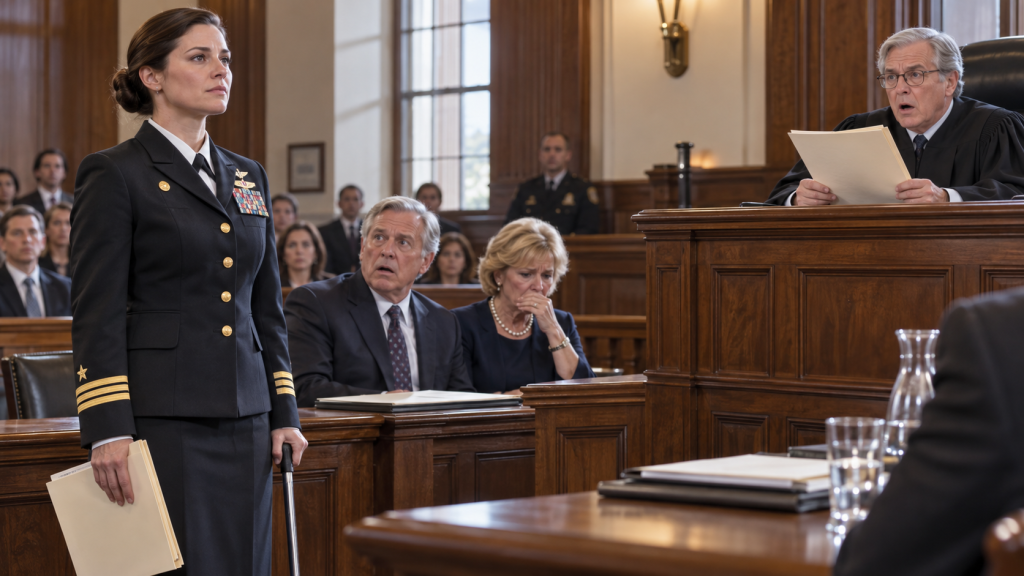
“Mr. Carter,” Judge Simmons said quietly, “I strongly suggest you tell your attorney the truth before I read this aloud.”
My father did not move.
For the first time in my life, Robert Carter looked small.
Not physically.
He was still a broad man, even in his late sixties, with shoulders that filled his charcoal suit and hands that had once seemed enormous when I was a child.
But something inside him had folded.
His attorney leaned toward him.
“Robert?”
Dad kept staring at the envelope.
“Your Honor,” his attorney said carefully, “may I request five minutes to confer with my clients?”
Judge Simmons looked at the clock.
“No.”
Dad’s attorney blinked.
The judge continued.
“Your clients filed a sworn petition asserting ownership interests in property that, according to the documents before me, they may have known they did not possess.”
His eyes moved to my mother.
“Mrs. Carter?”
Mom swallowed.
“I don’t understand.”
I almost admired the performance.
Almost.
Judge Simmons lifted the page.
“You don’t understand your father-in-law’s signature?”
She looked toward Dad.
Dad stared straight ahead.
“Robert.”
Mom whispered.
He said nothing.
The judge unfolded the second page.
My grandfather’s handwriting appeared beneath the typed legal language.
I recognized it instantly.
Grandpa had written in block letters because arthritis had made cursive difficult near the end.
Judge Simmons began.
To any court, attorney, family member, or other person reviewing this statement:
My throat tightened.
Suddenly I could hear Grandpa again.
His boots on the porch.
His old radio in the kitchen.
The scrape of his chair against the floor.
The way he used to call me Evie even after I had become old enough to hate being called Evie.
The farmhouse located on Carter Road is Evelyn’s.
Simple.
Grandpa had always preferred simple sentences.
It is not Robert’s.
My father closed his eyes.
It is not Margaret’s.
Mom went still.
It is not family property to be divided according to whoever becomes loudest after I am gone.
A few people in the courtroom shifted.
Judge Simmons continued.
I purchased that land in 1968. I rebuilt the house with my own hands, with help from friends, neighbors, and later my wife. Robert did not build it. He did not finance it. He has no ownership interest in it.
Dad’s jaw tightened.
I remembered him saying almost exactly the opposite when I was young.
“This will all be mine someday.”
Grandpa had never corrected him in front of me.
Apparently, he had corrected him somewhere that mattered more.
On paper.
I have transferred the property to my granddaughter Evelyn because she understands something her father never did. A thing does not become yours simply because you expected to inherit it.
My eyes burned.
Dad’s attorney slowly leaned back.
The judge read on.
Evelyn has never asked me for this land.
True.
She has never asked me for money.
True.
She has never treated this house as an entitlement.
My mother whispered:
“Enough.”
Judge Simmons stopped.
“Excuse me?”
She looked horrified by her own interruption.
“I’m sorry.”
The judge studied her.
Then continued.
When Evelyn was seventeen and told her parents she intended to enlist, Robert came to this house and demanded that I help him stop her.
I looked at Dad.
His face hardened.
I had never known that.
He told me she was humiliating the family. He said military service was beneath the future they had planned for her.
My fingers tightened around the edge of the table.
There it was.
The old wound.
Still alive.
I had graduated near the top of my class.
My parents had already selected the version of my future they preferred.
University.
Law school.
Maybe politics.
Maybe corporate law.
Something respectable.
Something that looked good in Christmas letters.
Then I told them I wanted the Navy.
Dad had stared at me across our dining table as though I had confessed to a crime.
“You’re throwing everything away.”
Mom cried.
Dad shouted.
For weeks.
Then months.
When I refused to change my mind, he stopped calling it a decision.
He called it rebellion.
When I made it through training he did not congratulate me.
When I advanced, he said nothing.
When I earned responsibility he did not understand, he dismissed it.
When I deployed, Mom sent me prayers but never asked what I did.
When I came home injured, neither visited the hospital.
I had spent years telling myself I no longer cared.
That was mostly true.
Mostly.
Judge Simmons continued reading Grandpa’s words.
I refused to interfere.
Evelyn’s life belongs to Evelyn.
My vision blurred.
Five words.
That was all.
Five words my parents had never understood.
My life belongs to me.
Robert told me that if I supported her, I was choosing her over him.
Dad looked down.
I told him love is not a contest in which supporting one person requires controlling another.
A painful little laugh escaped me.
Grandpa.
Of course.
Robert did not appreciate my answer.
Even Judge Simmons’ mouth twitched.
Then his expression became serious again.
Our relationship deteriorated afterward.
That is not why I gave Evelyn the farmhouse.
Dad looked up.
I gave it to her because she came here.
I stopped breathing.
She came when the roof leaked.
I remembered.
I had been nineteen.
Home on leave.
Grandpa called because a storm had torn shingles from the west side.
I spent two days on that roof with him.
She came when I needed help replacing the pump.
Twenty-one.
Freezing February.
She came when I had pneumonia.
Twenty-three.
I had driven overnight.
She called from overseas even when she could only talk for minutes.
I pressed my lips together.
She remembered my birthday.
I started crying.
Not dramatically.
The tears simply came.
She asked me questions and listened to the answers.
When my hands became too stiff to repair the south fence, she repaired it.
When my truck stopped running, she paid for the parts and refused repayment.
When I became afraid of dying alone in this house, she sat at my kitchen table and told me that if the time came, she would come home.
I had forgotten that conversation.
Or buried it.
Grandpa was eighty-four.
I was about to deploy again.
He had been staring at his coffee.
“You ever worry about dying, Evie?”
I tried to joke.
“Not before breakfast.”
He didn’t smile.
So I stopped.
“Sometimes.”
He nodded.
“I don’t mind dying.”
Then:
“I mind nobody being here when it happens.”
I reached across the table.
“If I can get here, I’ll get here.”
He looked at me.
“Don’t promise things you can’t control.”
So I changed it.
“I promise you won’t be forgotten.”
He nodded.
That was enough.
He died in his sleep two years later.
A neighbor found him.
I had been at sea.
I did not get there.
For years, I carried guilt over that.
Grandpa’s letter continued.
Evelyn did not get here when I died.
I closed my eyes.
I hope she knows I never held that against her.
My breath broke.
I covered my mouth.
Judge Simmons paused.
The courtroom disappeared.
There was only that sentence.
Twelve years.
I had needed it for twelve years.
I had stood at Grandpa’s grave in dress uniform and apologized.
I had sat on his porch afterward and apologized.
I had carried the apology through deployments.
Through surgery.
Through nights when my knee throbbed and sleep refused to come.
I had promised to come home.
I hadn’t.
And now, long after the man himself was gone, he was telling me he understood.
Judge Simmons waited.
“Commander?”
I nodded.
“Please continue.”
He did.
She was serving her country. She was doing the work she had chosen, and I was proud of her.
My father looked away.
I cried harder.
Proud.
Grandpa had told me that in life.
But seeing it there, in a legal document meant to survive him, felt different.
Permanent.
I leave her the farmhouse not because she chose the life I would have chosen for her, but because she chose her own life and accepted its cost.
If Robert or Margaret ever challenge this transfer, claim abandonment, or assert that they maintained the property in Evelyn’s absence, the following records should be reviewed.
Judge Simmons lowered the letter.
Then reached into the envelope.
There were copies.
Bank statements.
Receipts.
Correspondence.
Property tax records.
Maintenance invoices.
Insurance payments.
My payments.
Every one.
But there was more.
A second ledger.
Judge Simmons frowned.
My father shifted.
That was when I knew.
The farmhouse lawsuit was not merely about the farmhouse.
The judge asked:
“Mr. Carter, do you recognize this account?”
Dad said nothing.
His attorney whispered:
“Answer only after consulting me.”
Judge Simmons looked at the attorney.
“You may consult.”
They whispered.
Then Dad’s lawyer said:
“My client recognizes the account number.”
“What was it?”
“A maintenance account.”
My stomach tightened.
I had never heard of it.
Judge Simmons turned toward me.
“Commander Carter?”
“I don’t recognize it, Your Honor.”
He nodded.
“Your grandfather apparently created a property maintenance account approximately fifteen years ago.”
I looked at Dad.
Grandpa had been getting older.
That made sense.
The judge continued.
“Robert Carter was initially authorized to use the account for repairs while his father’s health declined.”
Dad’s attorney closed his eyes.
There it was.
Judge Simmons flipped through the ledger.
“According to these records, approximately forty-three thousand dollars was deposited over several years.”
My mother’s hands began trembling.
“After the property transferred to Evelyn Carter, the remaining balance should have been returned to the estate or transferred according to the trust instructions.”
He looked at Dad.
“It was not.”
Silence.
Dad finally spoke.
“It was family money.”
The sentence was so familiar I almost smiled.
Judge Simmons did not.
“That was not my question.”
Dad’s voice rose.
“My father gave me access.”
“For maintenance.”
“I maintained the place.”
I stared at him.
“No, you didn’t.”
He turned.
“You weren’t even here.”
“I paid the contractor who replaced the roof.”
Dad stopped.
“I paid the insurance.”
Silence.
“The county tax records show my payments.”
He looked at me with the same expression he used when I was sixteen and had contradicted him at dinner.
I continued.
“The well repair was mine.”
His face reddened.
“The tree removal after Hurricane Matthew was mine.”
Mom whispered:
“Evelyn.”
“No.”
My voice remained calm.
“You brought me here.”
“You filed this case.”
“You said I abandoned that house.”
“So let’s talk about the house.”
Dad’s attorney looked miserable.
I almost felt sorry for him.
Almost.
Judge Simmons asked:
“Where did the maintenance funds go, Mr. Carter?”
Dad crossed his arms.
“Expenses.”
“Which expenses?”
“Various.”
“Do you have documentation?”
“My wife handled some of it.”
Mom snapped her head toward him.
“What?”
Dad realized too late.
Judge Simmons noticed.
“So Mrs. Carter handled the account?”
“No.”
Dad said quickly.
Mom said:
“I never touched it.”
Their attorney whispered something I could not hear.
The judge flipped another page.
“Records attached by Samuel Carter indicate concerns regarding withdrawals beginning in 2011.”
Samuel.
Grandpa.
“Withdrawals unrelated to the farmhouse.”
Dad’s face had gone gray.
Judge Simmons read.
“Country club dues.”
Mom closed her eyes.
“Automobile payment.”
Dad said:
“That was temporary.”
“Vacation deposit.”
My stomach turned.
“Credit-card payment.”
Another page.
“Personal loan repayment.”
Judge Simmons looked at him.
“These are not farmhouse expenses.”
Dad exploded.
“He was my father!”
The words echoed.
Nobody moved.
Dad stood.
“He had more than enough.”
His attorney pulled at his sleeve.
“Sit down.”
“He was my father.”
Dad repeated.
“And I was the one who had to deal with him getting old.”
Something inside me went cold.
Judge Simmons asked:
“Did you take the money?”
Dad’s lawyer stood.
“Your Honor, given the potential implications—”
“I am not conducting a criminal trial.”
Judge Simmons said.
“I am evaluating the credibility of a plaintiff who filed sworn statements asserting that he financially maintained this property.”
Dad sat.
The judge looked at him.
“Did you?”
Dad’s jaw worked.
Finally:
“I used some.”
Mom turned.
“How much?”
“Margaret.”
“How much?”
“This isn’t the place.”
She laughed.
A strange, broken sound.
“You brought us to court.”
Dad looked away.
Mom stared at him.
“You told me your father gave you that money.”
“He did.”
“The document says he didn’t.”
“He would have.”
I closed my eyes.
There it was.
The philosophy underneath everything.
He would have.
I deserved it.
I expected it.
Therefore it was mine.
Grandpa had understood him perfectly.
A thing does not become yours simply because you expected to inherit it.
Judge Simmons called a brief recess.
This time, Dad’s attorney nearly dragged him into the hallway.
Mom remained seated.
She looked at me.
For several seconds, neither of us spoke.
Then she said:
“You look ridiculous in that uniform.”
It was such an astonishing sentence that I almost laughed.
Instead, I looked down at myself.
Ribbons.
Insignia.
Years.
Pain.
People I had buried.
People I had brought home.
People whose families had trusted people like me to make decisions no parent should ever have to imagine.
Then I looked at my mother.
“No.”
I said quietly.
“I don’t.”
Her mouth opened.
I continued.
“You just never learned how to look at me without seeing the daughter you wanted instead.”
Her eyes filled.
“You think this makes you better than us?”
“No.”
“Look at you.”
She gestured at the uniform.
“Marching in here.”
“I walked.”
“You know what I mean.”
“Yes.”
I did.
“You wanted to humiliate us.”
I thought about that.
Had I?
When I opened the Navy chest, part of me had been angry.
Part of me had wanted them to see.
The medals.
The rank.
The proof.
Proof that I had not ruined my life.
Proof that their rejection had been wrong.
Proof that the daughter they had dismissed had become someone a judge addressed as Commander.
So I told the truth.
“Part of me did.”
Mom looked surprised.
“But mostly, I needed to stop hiding the part of myself you taught me to be ashamed of.”
She stared.
“I never taught you shame.”
“You said you raised a daughter, not a soldier.”
Her face changed.
She remembered.
“You were angry.”
“I know.”
“People say things.”
“Yes.”
“Then they apologize.”
Mom looked away.
I let the silence finish the sentence.
She never had.
Twelve years.
Not once.
She whispered:
“You could have come home.”
I almost laughed.
“Home to what?”
“To us.”
“You told me I was a disgrace.”
“Your father was upset.”
“You agreed with him.”
“I was trying to keep the family together.”
“No.”
I said.
“You were trying to keep Dad comfortable.”
That landed.
Mom’s face hardened.
“You always blamed him.”
“No.”
I looked at her.
“I blamed you too.”
Tears filled her eyes.
Good.
Not because I wanted to hurt her.
Because for once, I wanted the truth to reach the place politeness had protected.
“You stood beside him.”
I said.
“When he refused to come to my graduation.”
“When he ignored my promotions.”
“When I deployed.”
“When I got hurt.”
Mom flinched.
“You told us you were fine.”
“I was in a military hospital.”
“We didn’t know how serious—”
“My knee was reconstructed.”
She fell silent.
“I sent you the hospital information.”
“I know.”
“You didn’t come.”
She looked down.
“I was afraid.”
“Of what?”
“Seeing you like that.”
I stared at her.
“You were afraid to see me hurt, so you left me alone while I was hurt.”
Her face crumpled.
“I didn’t think of it that way.”
“I know.”
That was the tragedy.
They rarely did.
The bailiff announced the judge’s return.
Mom wiped her face.
Dad came back with his attorney.
He would not look at either of us.
Judge Simmons resumed.
The legal part became almost anticlimactic.
The deed was valid.
The transfer had been properly executed.
My tax payments were documented.
My insurance records were documented.
My deployment status did not constitute abandonment.
Dad’s claim of having maintained the property was contradicted by receipts, banking records, and Grandpa’s own contemporaneous notes.
Judge Simmons dismissed my parents’ claim with prejudice.
But he did not stop there.
He referred the questionable financial records to the appropriate authorities for review.
Dad’s attorney looked as though he wanted the floor to open.
My father looked furious.
Mom looked exhausted.
Then Judge Simmons turned toward me.
“Commander Carter.”
I stood.
“Yes, Your Honor.”
“I want to clarify something.”
“Yes, sir.”
“This court’s ruling is not based on your military service.”
That surprised me.
He glanced at my ribbons.
“Your service deserves respect.”
Then he tapped the property records.
“But property law does not become more or less valid depending on whether the owner is decorated, admired, or accomplished.”
I nodded.
He continued.
“You could have walked into this courtroom wearing jeans.”
A few people smiled.
“The deed would still be the deed.”
Something inside me loosened.
I had spent so much of my life collecting evidence of worth.
Ranks.
Qualifications.
Commendations.
Responsibilities.
Proof.
And here was a judge telling me something simple.
I did not need medals to deserve what was legally mine.
I did not need medals to deserve respect either.
The judge continued.
“Your parents’ apparent misunderstanding of your life does not determine your legal rights.”
Then his voice softened.
“Nor, I suspect, does it determine your value.”
My throat tightened.
“Thank you, Your Honor.”
He nodded.
“Case dismissed.”
The gavel came down.
That should have been the end.
It wasn’t.
Courtrooms settle claims.
They do not settle families.
Outside, Dad caught up with me.
“Evelyn.”
I kept walking.
My knee hurt.
The weather had turned humid.
Knox was waiting at home.
I wanted my dog.
Coffee.
Silence.
“Evelyn!”
I stopped.
Turned.
Dad marched toward me.
Mom followed more slowly.
His attorney had disappeared.
Smart man.
“You’re proud of yourself?”
Dad demanded.
I looked at him.
“No.”
That confused him.
“You just dragged your own parents through court.”
I almost laughed.
“You sued me.”
“Because you wouldn’t discuss the property.”
“You never asked.”
“We shouldn’t have to ask.”
There it was again.
Entitlement dressed as family.
Dad pointed toward the courthouse.
“You let that man read private family matters in public.”
“You filed them into a public case.”
His face reddened.
“You could have signed the farmhouse over.”
“Why?”
“Because you don’t use it.”
“I own it.”
“You live near Norfolk.”
“I know where I live.”
“It’s sitting there rotting.”
That hurt because it was partly true.
The porch sagged.
Paint peeled.
The oak was dying.
My deployments and injury had made restoration difficult.
But neglecting repairs was not abandonment.
And it certainly did not make the house his.
“What did you want it for?”
I asked.
Dad hesitated.
I saw Mom close her eyes.
“Dad.”
I said.
“What did you want?”
He looked away.
Then:
“There’s a developer.”
Of course.
I laughed.
Not because it was funny.
Because sometimes betrayal is so predictable it becomes absurd.
“How much?”
Dad said nothing.
Mom answered.
“Eight hundred thousand.”
I stared.
The farmhouse itself was not worth that.
The land was.
Growth had spread outward.
Developers were buying acreage.
Dad continued quickly.
“The house needs work.”
“The land is wasted.”
“We could sell.”
“We?”
His jaw tightened.
“It belonged to my father.”
“It belongs to me.”
“He should have left it to me.”
“But he didn’t.”
“He did it to punish me.”
“No.”
I said.
“You need that to be true.”
Dad stopped.
“Because if Grandpa gave it to me for reasons that had nothing to do with punishing you, then you have to face something harder.”
“What?”
“That not everything is about you.”
His face twisted.
For one second, I thought he might slap me.
He didn’t.
Maybe because we were outside a courthouse.
Maybe because I was forty now, not seventeen.
Maybe because my uniform finally forced him to notice that I was no longer someone he could frighten into obedience.
Mom whispered:
“Robert.”
He stepped back.
Then looked at my ribbons.
“What are those supposed to prove?”
I followed his gaze.
I could have explained each one.
I could have told him what I had done.
Where I had been.
Who Lewis was.
What happened to our convoy.
Why my knee would never bend properly again.
Why thunderstorms sometimes woke me.
Why I still hated the smell of burning rubber.
But suddenly, I did not want to.
“They’re not for you.”
I said.
He stared.
“What?”
“I didn’t earn them to prove anything to you.”
That may have been the first time I truly understood it.
The uniform had not been waiting in that Navy chest for my parents.
It belonged to my life.
My service.
My people.
My choices.
I had worn it into court thinking I was finally forcing them to see me.
But their sight was not my responsibility.
If Dad looked at a uniform and saw disgrace, no ribbon could fix his eyes.
Mom started crying.
“Can we please talk somewhere?”
“Not today.”
“Evelyn.”
“No.”
Her face fell.
I softened.
Not the boundary.
The tone.
“Mom, I have spent twelve years waiting for one of you to want a relationship with me instead of a corrected version of me.”
She wiped her cheek.
“I’m tired.”
Dad scoffed.
“You’re always the victim.”
I looked at him.
“No.”
I said.
“I survived being your disappointment.”
“That isn’t the same thing.”
Then I walked away.
My knee screamed with every step.
I did not limp less for them.
That mattered too.
For years, I had learned to hide pain.
Military culture had rewarded endurance.
My family had rewarded appearance.
I had become very good at looking unhurt.
That day, I let myself limp.
The world did not end.
At home, Knox nearly knocked me over.
“Easy.”
He ignored me.
One hundred pounds of German shepherd had never respected rank.
I changed out of uniform carefully.
When I removed the jacket, I sat on the edge of my bed.
Then I cried.
Not victorious tears.
Not defeated tears.
Just twelve years.
They came out all at once.
I cried for Grandpa.
For Lewis.
For the girl whose parents did not come to graduation.
For the woman whose parents did not come to the hospital.
For the commander who had spent years telling younger sailors that their worth did not depend on family approval while secretly wishing her own father would call.
Knox pressed against my leg.
I buried my hand in his fur.
“I’m tired, buddy.”
He sighed.
Dogs understand enough.
The criminal investigation into Dad’s use of Grandpa’s maintenance account took months.
I did not drive it.
I did not interfere.
I gave records when asked.
That was all.
Some withdrawals were too old for certain remedies.
Others became part of a civil recovery action involving Grandpa’s estate.
Dad eventually agreed to restitution rather than drag the matter further.
The amount was significant.
Not ruinous.
He had wanted eight hundred thousand dollars from land that was never his.
Instead, he paid back money he had convinced himself had always belonged to him.
There was symmetry in that.
I did not celebrate it.
Mom called three weeks after court.
I almost ignored her.
Then answered.
“Hello?”
“Evelyn.”
“Hi, Mom.”
Silence.
Then:
“Your father is furious.”
“I assumed.”
“He says you’re destroying the family.”
I looked around my quiet kitchen.
Knox slept beneath the table.
“Mom, what family?”
She gasped.
I immediately regretted the cruelty.
But not the question.
She whispered:
“We’re still your parents.”
“Yes.”
“Doesn’t that mean anything?”
“It means a lot.”
“Then why are you doing this?”
“I’m not doing anything to you.”
“You let the estate pursue him.”
“He took money.”
“He says Grandpa intended—”
“Mom.”
She stopped.
“You called me.”
I said.
“If the purpose of this call is to make me protect Dad from the consequences of his choices, we can hang up now.”
Silence.
Then, unexpectedly:
“No.”
I waited.
“I called because…”
Her voice broke.
“I found something.”
“What?”
“A box.”
My stomach tightened.
“Your things.”
I said nothing.
“From high school.”
“Okay.”
“Letters.”
“What letters?”
She began crying.
“From you.”
I stopped breathing.
“What letters?”
“The ones you sent after you enlisted.”
I stood slowly.
“I sent three.”
“I know.”
“You never answered.”
“I know.”
“Dad told me you threw them away.”
Mom sobbed.
“I didn’t.”
My anger came fast.
“Then why didn’t you answer?”
“I was angry.”
“For twelve years?”
“No.”
She cried harder.
“For months.”
“Then I was ashamed.”
That stopped me.
She continued.
“The longer I waited, the harder it became.”
I sat back down.
“There was always tomorrow.”
“I kept thinking I would call.”
“Then you advanced.”
“Then deployed.”
“Then…”
She struggled.
“The accident.”
“IED.”
“Yes.”
“You can say it.”
“The IED.”
Her voice shook.
“I wanted to come.”
“But?”
“Your father said if we went, we would be rewarding you for choosing that life.”
I closed my eyes.
There are sentences that change how you remember an entire decade.
Not because they excuse anything.
Because they reveal the architecture.
Dad had turned love into leverage.
If they visited me, I might interpret it as approval.
Therefore they withheld comfort.
Mom had allowed it.
That part mattered.
“Why did you listen?”
I asked.
She cried.
“I don’t know.”
“Yes, you do.”
Silence.
“Because it was easier.”
she whispered.
There.
Truth.
Ugly.
Small.
Human.
“Easier than fighting him.”
“Yes.”
“Easier than standing up for me.”
“Yes.”
I felt tears.
“Thank you.”
She sounded confused.
“For what?”
“For not saying you were helpless.”
Mom sobbed.
“I wasn’t.”
“No.”
“I failed you.”
I said nothing.
“I’m sorry.”
The words entered quietly.
No orchestra.
No miracle.
Twelve years late.
Still, I heard them.
“I’m sorry, Evelyn.”
I closed my eyes.
“Okay.”
“Can you forgive me?”
Not yet.
I knew immediately.
“I don’t know.”
She cried.
“I understand.”
That was the first good thing she did with my pain.
She did not demand relief from it.
We spoke for twenty minutes.
Then stopped.
She called again two weeks later.
Not to discuss Dad.
She asked about Knox.
I was suspicious.
“Why?”
“I remember Grandpa liked shepherds.”
“He did.”
“What’s Knox like?”
“Judgmental.”
She laughed.
It startled me.
I had forgotten my mother’s laugh.
Not the polite one.
The real one.
We talked for twelve minutes.
Then she said:
“I won’t keep you.”
That mattered.
No guilt.
No “you never call.”
No demand.
She called again.
And again.
Slowly.
Dad did not.
For almost a year.
The farmhouse became my next problem.
Winning it in court did not repair the porch.
Property rights do not replace rotten beams.
I drove there one Saturday with Knox.
Walked through every room.
Dust.
Old furniture.
Grandpa’s tools.
His coffee tin still above the stove.
I stood in the kitchen and realized I had spent years preserving the property legally while allowing it to remain emotionally frozen.
A monument.
I did not want a monument.
I wanted a house.
So I called a contractor.
His name was Daniel Ruiz.
He walked through with a clipboard.
“Roof is decent.”
“I replaced it.”
“Foundation?”
“Needs evaluation.”
“Electrical?”
“Old.”
“Replace it.”
He looked at me.
“Didn’t even let me finish.”
“I’ve been blown up once.”
“I’m not dying because Grandpa liked 1950s wiring.”
Daniel laughed.
“Fair.”
The restoration took fourteen months.
I kept the original wood floors.
Saved the porch where possible.
Rebuilt what could not be saved.
Removed the dying oak only after an arborist confirmed it was dangerous.
I cried when it came down.
That embarrassed me more than court.
Daniel pretended not to notice.
Good man.
We milled some of the oak.
I had part of it turned into a kitchen table.
Grandpa had built his life on that land.
Now the tree that had shaded his porch became the place people would sit.
That felt right.
I did not move into the farmhouse permanently.
At first.
I still had my house near Norfolk.
Medical appointments.
Friends.
Work with veterans.
But I spent weekends there.
Then weeks.
Then longer.
I retired fully from active service not long afterward.
That was harder than court.
Uniforms end.
Titles change.
People stop saying Commander.
Your phone rings less.
For years, my work had answered a question every morning:
What am I needed for?
Retirement replaced it with silence.
I struggled.
My knee worsened.
Sleep got strange.
I drank too much for several months.
Not catastrophically.
Enough that I noticed.
One night I sat on Grandpa’s rebuilt porch with whiskey in my hand.
Knox, older now, lay beside me.
I thought about Lewis.
He had died in the convoy attack.
Twenty-nine.
Engaged.
Funny.
Terrible singer.
His flag was still in my Navy chest.
I had spent years carrying survivor guilt in professional language.
Operational loss.
Casualty.
After-action review.
But grief does not care about vocabulary.
I poured the whiskey into the grass.
Then called the VA therapist whose card had been in my wallet for six months.
“Dr. Patel?”
“Yes?”
“This is Evelyn Carter.”
“Commander Carter?”
“Not anymore.”
There was a pause.
Then:
“Evelyn, then.”
I cried.
Therapy did not magically fix me.
I hated parts of it.
Dr. Patel asked irritating questions.
“Who are you when you are not useful?”
“I’m leaving.”
“You say that every week.”
“Eventually I mean it.”
“You keep making appointments.”
Infuriating woman.
I kept going.
I learned that service had given me purpose.
It had also given me places to hide.
If someone else needed saving, I did not have to ask what I needed.
If a mission needed completing, I did not have to wonder who I was without one.
Grandpa had left me a farmhouse.
Retirement forced me to inhabit myself.
That restoration took longer.
Mom visited the farmhouse two years after court.
Alone.
I almost said no.
Then I said yes.
She arrived carrying a pie.
Store-bought.
Mom never baked.
“Peace offering?”
I asked.
“Bribery.”
“More honest.”
She smiled nervously.
Knox sniffed her.
She froze.
“Does he bite?”
“Only liars.”
Her eyes widened.
I smiled.
“Joke.”
“Evelyn.”
“Sorry.”
Not very.
She walked through the house slowly.
Touched the banister.
The kitchen counter.
Then the oak table.
“This was the tree?”
“Yes.”
She sat.
For several minutes, we said nothing.
Then she whispered:
“Your grandfather hated me.”
I frowned.
“No.”
“He did.”
“He disliked how you handled some things.”
“That’s a polite version.”
“Grandpa was not polite.”
Mom smiled.
True.
Then:
“He loved you.”
“Yes.”
“You were always his favorite.”
I felt the old trap.
Competition.
Favorite.
Winner.
Loser.
“No.”
Mom looked at me.
“He showed up for me when you and Dad wouldn’t.”
“That’s different.”
She stared at the table.
“I was jealous.”
I did not expect that.
“Of Grandpa?”
“Of you and Grandpa.”
“Why?”
“Because he respected you.”
Her voice broke.
“Your father respected him.”
“But your grandfather respected you.”
I sat across from her.
“And you thought there wasn’t enough respect to go around?”
She smiled sadly.
“When you say it like that, it sounds pathetic.”
“Most jealousy does when translated accurately.”
She laughed.
Then cried.
“I should have defended you.”
“Yes.”
“I should have gone to your graduation.”
“Yes.”
“I should have come to the hospital.”
My eyes filled.
“Yes.”
“I should have told Robert that loving you did not require agreeing with you.”
“Yes.”
She wiped her face.
“I don’t know how to fix twelve years.”
“You can’t.”
That hurt her.
But I continued.
“You can decide what you do with the next twelve.”
She looked at me.
“Is there a next twelve?”
“I don’t know.”
“Can we try?”
I thought.
Then nodded.
“Slowly.”
She smiled through tears.
“Slowly.”
That became our word.
Slowly.
Coffee.
Phone calls.
Lunch.
A birthday.
She met some of my Navy friends.
At first, she was uncomfortable.
Then curious.
She asked Chief Ramirez how we knew each other.
Ramirez looked at me.
“Can I tell her?”
I shrugged.
“Your funeral.”
Mom frowned.
Ramirez smiled.
“Your daughter once kept thirty-seven people moving during a situation where every plan had already gone to hell.”
“Ramirez.”
“What?”
“Operational discretion.”
“I’m retired.”
“So am I.”
Mom stared at me.
“What happened?”
“Nothing I’m discussing over potato salad.”
Ramirez laughed.
Mom did too.
Later, she asked:
“Were you good at it?”
I looked at her.
“At what?”
“Your job.”
The question was so late.
So ordinary.
So devastating.
“Yes.”
I said.
“I was.”
She nodded.
“I wish I’d known.”
“You could have.”
“I know.”
That answer mattered more than an excuse.
Dad finally contacted me three years after court.
A letter.
Not a call.
His handwriting was still strong.
Evelyn,
Your mother tells me you’ve repaired the house.
No hello.
Classic Dad.
I assume you’re satisfied.
I nearly stopped reading.
Then:
I have had time to think about what happened.
Promising.
I still believe my father treated me unfairly.
Less promising.
But I acknowledge the property was legally yours.
Legally.
Not morally, apparently.
I should not have filed the case using statements about expenses that were inaccurate.
Inaccurate.
Not lies.
Dad could turn an apology into tax language.
I almost laughed.
Then the final paragraph changed.
I also know I did not come when you were injured. Your mother says this was unforgivable. I don’t know whether I agree with that word, but I know I think about it more now than I used to.
I read it twice.
I was angry that you chose a life I could not understand. I mistook not understanding it for having the right to reject it.
There.
I stopped.
That was the first sentence Dad had ever written that sounded like truth.
I don’t expect you to answer.
Dad
I did answer.
Three weeks later.
One page.
Dad,
Thank you for acknowledging the lawsuit and the hospital.
Grandpa’s decision about the farmhouse was his. I will not continue arguing about whether he should have made a different one.
My military service is also not open for retrospective approval or disapproval. It was my life.
If you want a relationship with me, it has to begin with who I am, not who you wish I had been.
Evelyn
He did not respond for six months.
Then a Christmas card arrived.
No emotional speech.
Just:
Merry Christmas, Evelyn.
I hope the house is warm.
I stared at it.
Then laughed.
For Dad, that was practically poetry.
I sent one back.
Slowly.
He visited the farmhouse the following spring.
Mom did not come.
His choice.
Mine too.
I wanted to see whether we could exist in one room without her translating.
Dad parked near the porch.
Got out.
Looked at the house.
For a long time, he said nothing.
Then:
“You changed the windows.”
“Yes.”
“Grandpa would hate that.”
“They’re replicas.”
“Double-pane?”
“Yes.”
He nodded.
“Good.”
We were apparently beginning reconciliation through energy efficiency.
Fine.
He walked around.
Touched the porch rail.
Then saw the oak table.
He stopped.
“That’s the tree.”
“Yes.”
He ran his hand over it.
“I used to climb that.”
I looked at him.
“You?”
“I was ten.”
For the first time, I pictured my father as a child.
Not the man who rejected me.
A boy.
Ten.
Climbing Grandpa’s oak.
Probably afraid of disappointing the same difficult father I adored.
Families are strange that way.
The person who protects you may have wounded someone else.
The person who wounds you may carry wounds you never saw.
Understanding that does not erase responsibility.
It does complicate hatred.
Dad sat at the table.
“I thought the house would be mine.”
“I know.”
“Since I was a kid.”
“I know.”
“Dad never told me otherwise until late.”
“Did he promise it?”
Dad hesitated.
“No.”
There it was.
Expectation had hardened into ownership without a promise ever being made.
“I felt cheated.”
“I believe you.”
He looked surprised.
“You do?”
“Yes.”
“Feeling cheated and being cheated aren’t the same.”
His mouth tightened.
Then relaxed.
“No.”
he admitted.
“They aren’t.”
We drank coffee.
He asked about my knee.
Not the uniform.
Not politics.
Not whether I regretted anything.
My knee.
“How bad?”
“Depends on weather.”
“Today?”
“Six.”
“Out of ten?”
“Yes.”
He nodded.
“Anything they can do?”
“Eventually another surgery.”
“Are you going to?”
“Probably.”
He stared into his cup.
Then:
“I should have come.”
My throat tightened.
“Yes.”
“I was angry.”
“I know.”
“I thought if I came, it meant I approved.”
“I know.”
He looked at me.
“That sounds stupid now.”
“Yes.”
Dad laughed.
A real laugh.
“You could soften it.”
“I’ve had years of therapy to stop doing that.”
He smiled.
Then cried.
I had seen my father cry twice.
At Grandpa’s funeral.
And that day.
“I’m sorry.”
he said.
Not “if.”
Not “but.”
Not “for how you felt.”
“I’m sorry I left you alone in that hospital.”
I looked at him.
“I accept the apology.”
He nodded.
“Do you forgive me?”
I thought.
“Some of it.”
Pain crossed his face.
But he nodded.
“Fair.”
That mattered.
He did not demand all.
Our relationship never became close.
That is important.
Reconciliation is often told as if an apology restores childhood.
It doesn’t.
I did not suddenly call Dad every Sunday.
We did not vacation together.
He did not become the father I had needed at seventeen.
Time does not run backward because someone finally understands.
But we became honest.
That was valuable.
He visited occasionally.
I visited him when Mom asked.
We talked about practical things.
Woodworking.
Cars.
The house.
Sometimes my service.
Eventually.
One afternoon he asked about my ribbons.
We were on the porch.
I almost said:
“They’re not for you.”
Then I realized he was not asking what they proved.
He was asking what they meant.
So I told him.
Not everything.
Enough.
I explained one commendation.
One deployment ribbon.
One award connected to leadership after the convoy attack.
Dad listened.
No interruption.
When I finished, he said:
“Lewis was your friend?”
My breath caught.
“Yes.”
“The flag in your house?”
“Yes.”
Dad nodded.
“I’m sorry.”
“Thank you.”
Then:
“Were you scared?”
I stared at him.
That question reached somewhere deep.
People had asked whether it hurt.
Whether I remembered the blast.
Whether I was proud.
Whether I would do it again.
My father asked whether I had been scared.
“Yes.”
I said.
“Very.”
He nodded.
“I would have been too.”
That was one of the closest conversations we ever had.
Mom and I became closer.
Not mother-daughter fantasy close.
Real close.
Which was better.
She learned to ask before giving advice.
I learned to tell her when I was angry instead of disappearing for six months.
We had fights.
Healthy ones.
Once she criticized my decision not to sell the farmhouse.
“You could make almost a million dollars.”
“Mom.”
“I’m only saying—”
“Mom.”
She stopped.
Then laughed.
“Right.”
“My property.”
“Your property.”
“Good.”
Growth can be boring.
Thank God.
Dad died at seventy-eight.
Heart failure.
I was there.
So was Mom.
He had been sick for months.
Near the end, he asked me to bring my Navy jacket.
I almost refused.
“Why?”
“I want to see it.”
“You’ve seen it.”
“Not properly.”
I brought it.
Not the full uniform.
Just the jacket.
He touched one of the ribbons.
Then looked at me.
“I was wrong.”
My eyes filled.
“About what?”
“You know.”
“I want to hear you say it.”
Old Evelyn might have spared him.
I did not.
He smiled weakly.
“You’re still difficult.”
“Genetic.”
He laughed.
Then:
“I was wrong to be ashamed of you.”
My breath caught.
“I was wrong to think I got to choose what kind of woman you became.”
Tears slid down my face.
“And I was wrong not to come.”
He touched my hand.
“I don’t know if saying it now helps.”
“It helps some.”
He nodded.
“Some is enough.”
Those were almost the same words I had given him years earlier.
He died two days later.
I grieved.
Complicatedly.
I grieved the father I had.
The father I did not have.
The years we lost.
The years we recovered.
I was angry at him during his funeral.
Loved him during the burial.
Resented him while driving home.
Missed him the next morning.
Human emotions do not line up politely.
They arrive together.
Mom lived another eleven years.
After Dad died, she changed.
Not dramatically.
She simply became more herself.
I realized how much of her life had been organized around keeping Dad comfortable.
She took a pottery class.
Terrible pottery.
Absolutely terrible.
My cabinets filled with bowls that leaned.
I kept every one.
She traveled with friends.
Got a short haircut Dad would have hated.
The first time I saw it, I stared.
“What?”
she demanded.
“Nothing.”
“You hate it.”
“I’m processing.”
She laughed.
“I love it.”
“Then I love it.”
“That’s not how opinions work.”
“Look who discovered autonomy.”
She threw a pillow at me.
We laughed until we cried.
At eighty-three, Mom moved into a small cottage on the farmhouse property.
Her suggestion.
I said no initially.
Then we discussed boundaries.
Separate kitchen.
Separate entrance.
No unannounced entry into my house.
No commentary on my coffee consumption.
She negotiated the last point.
Denied.
We made it work.
Not because we erased the past.
Because we stopped pretending the past gave either of us permission to control the present.
Knox died before that.
Fourteen years old.
I buried him near the edge of the field under a young oak planted from one of Grandpa’s old tree’s acorns.
I cried harder than I expected.
Mom stood beside me.
“He was a good dog.”
“The best.”
“He did bite liars?”
I laughed through tears.
“No.”
“I knew it.”
“He considered it.”
The farmhouse changed again as I aged.
I had money.
Enough.
My pension.
Investments.
The land.
But I kept thinking about people like Lewis.
People who came home injured.
People who retired and discovered silence was harder than danger.
People whose families did not understand what service had changed in them.
I did not want the farmhouse to become a museum to my grandfather or a monument to my courtroom victory.
So I created the Lewis House Initiative.
Small at first.
Weekend retreats for veterans transitioning out of active service.
No flags everywhere.
No performative patriotism.
No one calling anyone a hero unless they wanted to.
Just rooms.
Counselors.
Career support.
Physical rehabilitation connections.
Legal assistance.
A workshop.
Garden.
Dogs eventually.
Always dogs.
We converted the old barn.
Daniel Ruiz helped.
Dr. Patel joined the advisory board after complaining that retirement had made me “dangerously productive.”
The first group had six people.
One left after four hours.
One barely spoke.
One cried during dinner.
One fixed a broken porch light without asking.
I understood all of them.
A former corpsman named Tasha stayed after everyone left.
She stood on the porch.
“I don’t know who I am anymore.”
I looked at her.
I had once said almost the same thing.
“You don’t have to know this week.”
She cried.
“That’s it?”
“That’s enough for now.”
She came back.
Years later, she became a counselor at Lewis House.
The farmhouse found its purpose.
Not because Grandpa had planned it.
Because inheritance should not freeze the dead person’s life in place.
It should give the living enough ground to build something honest.
Mom loved Lewis House.
At first, she volunteered in the kitchen.
Then veterans started talking to her.
One young Marine told her his parents refused to speak to him after he came out as gay.
Mom sat with him for an hour.
Afterward, she came to my cottage crying.
“I did that to you.”
“Not exactly.”
“I made my love conditional.”
I said nothing.
She continued.
“I thought because the condition was about a career instead of who you loved, it was different.”
I sat beside her.
“The details were different.”
“The message wasn’t.”
She nodded.
“Become acceptable, then come home.”
My throat tightened.
“Yes.”
She covered her face.
“I’m sorry.”
I put my arm around her.
This time, forgiveness came more easily.
Not because the original wound had become smaller.
Because Mom had spent years behaving differently.
Apologies are words.
Trust is accumulated evidence.
She had built evidence.
One ordinary day at a time.
Mom died at ninety-four.
In the cottage.
Peacefully.
I found her in bed one morning with one of her terrible pottery bowls on the nightstand holding wrapped peppermints.
She had become obsessed with peppermints.
At her funeral, I wore my uniform.
The last time.
It barely fit.
I was old.
My knee had been replaced by then.
My hair was silver.
My shoulders had softened.
The medals still sat where they belonged.
Not to prove anything.
Mom had asked.
Years earlier, she said:
“When I die, wear it.”
“Why?”
“Because I want the last picture people have of me to include the daughter I should have been proud of from the beginning.”
I told her that was melodramatic.
She said age had earned her melodrama.
So I wore it.
After the funeral, I came home and removed the jacket.
Folded it.
Placed it in the Navy chest.
Then closed the lid.
I never wore it again.
I did not need to.
By then, the uniform had become what it should always have been.
Part of my life.
Not a courtroom argument.
Not a rebellion.
Not a wound.
Not proof.
Mine.
I lived into my eighties.
Then my nineties.
Longer than I expected.
Lewis House expanded.
We added transitional apartments on another section of land.
Scholarships for veterans and spouses.
Legal clinics.
Family counseling.
Not because families were always the answer.
Sometimes families were the problem.
We never forced reconciliation.
That became one of my rules.
A counselor once asked:
“Shouldn’t healing include forgiveness?”
I said:
“Sometimes.”
“And reconciliation?”
“Sometimes.”
“What if the family wants it?”
“What does the veteran want?”
She nodded.
That was the point.
Choice.
Grandpa had understood before any of us.
Evelyn’s life belongs to Evelyn.
That sentence became part of the Lewis House philosophy, though we changed the name.
Your life belongs to you.
Not the Navy.
Not your parents.
Not your trauma.
Not your medals.
Not your mistakes.
Not the people who praise you.
Not the people who reject you.
You.
We put it on a small card given to every resident.
Never on a giant wall.
I hated inspirational walls.
At eighty-seven, Judge Simmons visited.
I nearly fell over.
He was retired.
Ninety-one.
Walking with a cane.
His granddaughter had heard about Lewis House and brought him to an anniversary event.
I recognized him immediately.
“Your Honor.”
He laughed.
“Not anymore.”
“Habit.”
He looked around the restored property.
“You kept it.”
“Yes.”
“Your grandfather would be pleased.”
“I hope so.”
Then I remembered.
“Do you remember the case?”
He raised an eyebrow.
“Commander Carter, I was old, not dead.”
I laughed.
“Yes.”
“I remember.”
“You said something that day.”
“I said many things. Judges are paid by the word.”
“You told me the ruling wasn’t based on my service.”
He nodded.
“I needed that.”
His expression softened.
“Did you?”
“Yes.”
“I walked in there wanting my parents to see the medals.”
“And did they?”
“Eventually.”
“Good.”
I shook my head.
“No.”
He looked at me.
“Eventually I stopped needing them to.”
Judge Simmons smiled.
“Better.”
We sat beneath the young oak.
The one planted near Knox.
He asked about the house.
I told him.
Before leaving, he said:
“You know, when I looked at your ribbons that morning, I recognized one in particular.”
“Which?”
He told me.
I nodded.
“My son earned the same one.”
I stared.
“He served?”
“Army.”
“Did he come home?”
Judge Simmons looked toward the field.
“Yes.”
“Different.”
I understood.
That was why he had whispered when he first saw me.
“My God… is that really her?”
Not because he knew me.
Because the ribbons told him enough to recognize a language of service.
I had spent years wondering whether his reaction meant my reputation preceded me.
It didn’t.
The truth was simpler.
He was a father.
A father who had once waited for his own child to come home.
Life loves revising our assumptions.
At ninety-two, I received a letter from a girl named Hannah.
Nineteen.
Her mother had served in the Navy and stayed at Lewis House years earlier.
Hannah wanted to enlist.
Her mother was terrified.
Not opposed.
Terrified.
“She says she supports me,” Hannah wrote, “but every time I talk about it, she cries. How do I know if I’m making the right choice?”
I wrote back.
You don’t.
Then I stared at the page.
Not encouraging.
I continued.
You gather information. You understand the risks. You ask whether the choice belongs to your values or to someone else’s expectations. Then you decide.
Your mother’s fear belongs to her.
Your future belongs to you.
Be compassionate with her fear. Do not make it your commander.
I smiled at that.
Then:
And remember: choosing a difficult path does not make you superior to someone who chooses another one. Service can be honorable. So can a thousand other lives. The point is not to prove courage. The point is to live deliberately.
Hannah enlisted.
Then left after her first contract.
Became a teacher.
Good.
The uniform was never supposed to become another prison.
At ninety-five, I began using a cane.
Hated it.
Named it Robert.
This delighted everyone who knew the story.
“Why Robert?”
Tasha asked.
“Because it annoys me, but occasionally I have to lean on it.”
She laughed for five straight minutes.
Dad would probably have laughed too.
That realization surprised me.
Age had softened some memories.
Not erased.
Softened.
I no longer pictured him only outside the courthouse demanding land.
Sometimes I pictured him at ten climbing the oak.
Sometimes beside my hospital bed in the version of history that never happened.
Sometimes on the porch asking whether I had been scared.
We are allowed to remember people in more than one frame.
That does not rewrite harm.
It makes memory honest.
Near my ninety-seventh birthday, Lewis House asked to record an oral history.
I refused.
They asked again.
I refused more creatively.
Then Tasha threatened to tell everyone the story about me falling into Grandpa’s duck pond while repairing a fence.
Blackmail.
I agreed.
A young historian named Maya interviewed me at the oak table.
“What do people misunderstand about your story?”
she asked.
“Which story?”
“The court case.”
I laughed.
“They think it was about the uniform.”
“Wasn’t it?”
“No.”
“The uniform made a good entrance.”
Maya smiled.
“But?”
“It was about ownership.”
“The farmhouse?”
“That too.”
I leaned back.
“My father thought he owned a future because he imagined inheriting it.”
“He thought he owned some authority over my life because he was my father.”
“I thought I needed his approval because I was his daughter.”
“We were all confused about ownership.”
Maya went quiet.
I continued.
“Grandpa understood better.”
“What did he understand?”
“That love doesn’t create ownership.”
“Neither does sacrifice.”
“Neither does blood.”
“Neither does service.”
“Neither does money.”
“People belong to themselves.”
She asked:
“Did your parents love you?”
“Yes.”
The answer came easily.
“Then why did they reject you?”
“Because love and wisdom are not the same skill.”
Maya stared.
I continued.
“People can love you and still be controlling.”
“Love you and still be cowardly.”
“Love you and still fail you.”
“That doesn’t mean you must accept the failure.”
“And it doesn’t mean the love was imaginary.”
She asked:
“Did you forgive them?”
“Parts.”
“Both?”
“Yes.”
“Completely?”
“No.”
“Do you regret that?”
“No.”
She hesitated.
“Why not?”
“Because forgiveness isn’t a debt the injured person owes the person who finally understands.”
Maya nodded.
“Did forgiving only part keep you angry?”
“No.”
“Boundaries are not preserved anger.”
“They’re information.”
I tapped the table.
“This holds weight because it knows where its edges are.”
She smiled.
“You rehearse these lines?”
“Ninety-seven years.”
“I’ve had time.”
She laughed.
Then:
“What was your greatest military accomplishment?”
I stared at her.
“I’m not answering that.”
“Classified?”
“Some.”
“Then greatest personal accomplishment?”
I looked toward the barn.
Veterans talking.
A dog barking.
Someone laughing near the garden.
The oak moving gently in the wind.
“I learned not to turn accomplishment into evidence that I deserved love.”
Maya stopped writing.
“That’s the answer?”
“Yes.”
“It doesn’t sound like an accomplishment.”
“Exactly.”
She smiled.
The interview lasted four hours.
I complained for all four.
Then asked for a copy.
At ninety-eight, my health declined quickly.
Heart.
Kidneys.
Age.
Nothing dramatic.
My body had served long enough too.
I moved into a room at the farmhouse overlooking the field.
Not a hospital if I could help it.
Hospice came.
Tasha visited.
Old Navy friends who remained visited.
Children of friends visited.
I had never married.
Never had children.
For years, people had treated that as a tragedy waiting for explanation.
It wasn’t.
I had loved.
A few times.
One relationship lasted eleven years.
Her name was Claire.
She died before me.
Cancer.
We never married because neither of us cared about the ceremony and legal planning handled the rest.
She had been an aviation mechanic.
Stubborn.
Brilliant.
She could rebuild an engine and destroy a kitchen.
I missed her.
My life was not empty because it did not follow my parents’ original blueprint.
That, perhaps, was the final proof I no longer needed.
I had friends.
Godchildren.
Veterans who became family.
Neighbors.
Tasha.
Daniel.
Dr. Patel, until she died at ninety-three.
Mom’s pottery.
Dad’s old pocketknife.
Grandpa’s house.
Knox beneath the oak.
Lewis’s flag.
A full life.
Not the life anyone selected for me.
Mine.
One evening, a young resident named Marcus came to my room.
Twenty-six.
Former Navy.
Medical discharge.
Angry at everything.
Especially himself.
He stood at the door.
“Can I ask you something?”
“You just did.”
He rolled his eyes.
Good.
“You know what I mean.”
“Sit.”
He sat.
“Does it ever stop feeling like the best part of your life is over?”
I looked at him.
I remembered retirement.
Silence.
Whiskey in the grass.
“Maybe.”
“That’s useless.”
“I’m dying. Customer service has declined.”
He laughed despite himself.
Then I said:
“The mistake is thinking your life has one best part.”
He frowned.
“My Navy years mattered.”
“Grandpa mattered.”
“Lewis mattered.”
“Claire mattered.”
“Knox mattered.”
“Lewis House mattered.”
“Rebuilding this table mattered.”
I touched the oak.
“Different seasons can matter differently.”
Marcus stared.
“What if I don’t know what’s next?”
“You’re twenty-six.”
“Not knowing what’s next is practically your job.”
He smiled.
Then:
“My dad says I quit.”
There it was.
“What do you say?”
“I got medically discharged.”
“Then your father is factually wrong.”
“He says I could’ve fought harder.”
“Could you?”
Marcus looked down.
“No.”
“Then stop putting his sentence in your mouth.”
His eyes filled.
“How?”
“Practice.”
“That’s it?”
“Most difficult things have disappointing instructions.”
He laughed.
I liked him.
Before leaving, he noticed the Navy chest.
“Is that your uniform?”
“Yes.”
“Can I see it?”
I thought.
Then:
“No.”
He looked surprised.
“Why?”
“Because tonight you need to stop comparing your service to mine.”
He stared.
Then nodded.
“Fair.”
After he left, I smiled.
The uniform remained in the chest.
Where it belonged.
A few days later, Tasha brought me the original court file.
Case 4238B.
She had gotten a copy from my personal archive.
Cream-colored folder.
Carter versus Carter.
I laughed.
“Burn it.”
Her eyes widened.
“Seriously?”
“No.”
“Good.”
“Fire jokes are still questionable around here.”
She smiled.
“What do you want done with it?”
I looked at the file.
Once, it had seemed enormous.
A threat.
Then a victory.
Now it was paper.
“Archive it with Lewis House.”
“Why?”
“Training.”
“For lawyers?”
“For families.”
She frowned.
I explained.
“Use it to teach that deployment isn’t abandonment.”
“That ownership needs documentation.”
“That elderly people need clear estate plans.”
“That adult children are not automatically entitled to parents’ property.”
“That veterans should keep records.”
Tasha smiled.
“Anything else?”
“Yes.”
“Never sue a Navy officer who keeps receipts.”
She laughed.
“Putting that on the brochure.”
“Absolutely not.”
The final week of my life was quiet.
Rain.
Virginia spring.
Azaleas beginning to bloom.
The same flowers I had been trimming when the summons arrived decades earlier.
I found that funny.
Life circles back with strange props.
Tasha brought clippers to my room.
“You want to trim them?”
“I’m ninety-eight and dying.”
“So no?”
“Bring me the branch.”
She clipped one.
I trimmed it badly from bed.
“Terrible.”
she said.
“Court-martial her.”
“Retired.”
“Convenient.”
We laughed.
That afternoon, she asked:
“Do you ever wish your parents had seen who you became sooner?”
“Yes.”
No hesitation.
“Still?”
“Yes.”
She seemed surprised.
“I thought you made peace with it.”
“I did.”
“Peace doesn’t mean rewriting desire.”
I looked out the window.
“I wish Dad had come to graduation.”
“I wish Mom had answered my letters.”
“I wish they had come to the hospital.”
“I wish Grandpa had lived long enough to see more.”
“I wish Lewis had come home.”
“I wish Claire were sitting here annoying me.”
My eyes filled.
“Peace means I can wish all of that without demanding reality change before I let myself have had a good life.”
Tasha wiped her eyes.
“That’s annoyingly wise.”
“Everyone keeps saying that.”
She held my hand.
“Are you scared?”
I smiled.
Dad’s question.
Decades later.
“Yes.”
“Very?”
“Enough.”
She nodded.
“What do you need?”
“Nothing heroic.”
“Okay.”
“Open the window.”
She did.
Virginia air entered.
Damp.
Green.
Familiar.
I could hear people near the barn.
A dog barked.
Someone called its name.
For a moment, I remembered Knox.
Then Grandpa.
Then Mom.
Dad.
Lewis.
Claire.
Not ghosts.
Memory.
Enough.
On the bedside table lay Grandpa’s original statement.
Tasha had brought it at my request.
I read the line one final time.
Evelyn’s life belongs to Evelyn.
I smiled.
For years, I thought Grandpa’s greatest gift was the farmhouse.
Then I thought it was his pride in my service.
Later, I thought it was the legal foresight that protected me from Dad’s lawsuit.
I was wrong each time.
His greatest gift was permission I should never have needed.
Permission to belong to myself.
To choose.
To fail.
To serve.
To retire.
To hurt.
To heal.
To forgive partly.
To love imperfect people without returning ownership of myself to them.
To build something new on inherited ground.
To wear the uniform.
Then put it away.
That was freedom.
The next morning, Marcus stopped by.
He had an interview for an apprenticeship.
He looked terrified.
“You’ll be fine.”
I told him.
“You don’t know that.”
“Correct.”
He laughed.
“What if I mess it up?”
“Then you’ll have survived an awkward interview.”
“Commander.”
“Evelyn.”
He smiled.
“Evelyn.”
“Better.”
He left.
Later, Tasha asked if I wanted the Navy jacket brought out.
I thought about it.
The jacket that had silenced a courtroom.
The ribbons Judge Simmons recognized.
The fabric Mom once treated as embarrassment.
The medals Dad finally asked about.
The uniform Mom asked me to wear at her funeral.
For a moment, I almost said yes.
Then I shook my head.
“No.”
“Sure?”
“Yes.”
“Why?”
I looked down at the plain blue sweater I wore.
“Because I know who I am.”
Tasha cried.
I pretended not to notice.
Good leadership.
That evening, the sunset turned the field gold.
I asked to sit on the porch.
They argued.
I won.
Still Commander somewhere inside.
They wrapped me in blankets.
My body hurt.
My breathing was shallow.
But the porch was solid beneath me.
The same porch Grandpa had once repaired.
The same place Dad had stood as a child.
The same place Mom had eventually learned to visit without judgment.
The same place veterans now sat when they did not know what came next.
I ran my fingers over the rail.
Grandpa had built the original.
Daniel rebuilt part.
Time had touched everything.
That did not make it less real.
Tasha sat nearby.
Neither of us spoke for a long time.
Then she asked:
“What do you think Grandpa would say if he could see this?”
I smiled.
“He’d complain about the windows.”
She laughed.
“And then?”
I looked toward the barn.
The garden.
The young oak.
The lights beginning to glow inside Lewis House.
“He’d ask if the roof leaks.”
“Does it?”
“No.”
“Then?”
I thought.
“He’d probably say, ‘Good.’”
That was Grandpa.
Praise in one syllable.
Enough.
I closed my eyes.
For a moment, I was seventeen.
Standing in my parents’ dining room.
Dad furious.
Mom crying.
My future hanging between us like a crime.
I wished I could speak to that girl.
I would tell her:
You do not need to become extraordinary to justify disappointing people.
You do not need medals.
You do not need rank.
You do not need a judge to stare at your ribbons.
You do not need a courtroom to declare you worthy.
Choose carefully.
Understand the cost.
Accept responsibility.
Then live.
If the people who love you cannot understand immediately, give them room if you want.
But do not hand them the steering wheel merely because they are afraid.
And if they reject you, grieve it.
Do not pretend it does not hurt.
Strength is not numbness.
Then build anyway.
Build a life.
Build a home.
Build friendships.
Build purpose.
Build boundaries.
Build doors that open for people who arrive carrying the same shame you once carried.
And if one day the people who hurt you return with genuine change, you may open the door.
Or not.
Your life belongs to you.
That includes the door.
I opened my eyes.
Tasha was still there.
“Promise me something.”
I said.
She groaned.
“Dangerous.”
“Lewis House.”
“What about it?”
“Don’t turn me into a saint.”
She laughed.
“I’m serious.”
“I know.”
“No giant portrait.”
“Fine.”
“No statue.”
“Wasn’t planning one.”
“No annual Commander Carter Inspirational Courage Gala.”
“That name is terrible.”
“Exactly.”
“What do you want?”
I looked at the farmhouse.
“Keep the work useful.”
She nodded.
“And?”
“If something stops helping people, change it.”
“Even if you started it?”
“Especially if I started it.”
She smiled through tears.
“Okay.”
“And keep the oak table.”
“That sentimental?”
“It weighs six hundred pounds.”
“I don’t want to move it.”
She laughed.
“Deal.”
Night settled.
Someone brought tea.
I barely drank it.
My hands were cold.
Tasha tucked the blanket tighter.
I thought about the courthouse one last time.
Dad chuckling when he saw me.
Mom saying “Uniform” like an accusation.
Judge Simmons looking at my ribbons.
My father’s face when Grandpa’s signature appeared.
For decades, people who heard the story loved that part.
The reveal.
The humiliation.
The powerful daughter.
The parents proven wrong.
But that was never the best part.
The best part happened afterward.
Mom calling.
Dad eventually apologizing.
Me learning that forgiveness could be partial.
The farmhouse becoming useful.
Veterans finding room to become people again.
Me retiring without disappearing.
Me learning to limp without shame.
Me realizing that even if Judge Simmons had never recognized a single ribbon, even if my parents had remained unimpressed forever, my life would still have been mine.
That was the victory.
Not making them regret underestimating me.
Outgrowing the need for them to regret it.
I had once walked into court thinking:
They’re finally going to see who I became.
Near the end, I understood the more important sentence.
I see who I became.
That was enough.
More than enough.
My breathing grew harder.
Tasha noticed.
“Want to go inside?”
“No.”
“Evelyn.”
“No.”
She smiled.
“Stubborn.”
“Decorated.”
“Not the same thing.”
“Close.”
She held my hand.
The porch light came on automatically.
I hated automatic lights.
Grandpa would have hated them too.
I smiled.
“What?”
Tasha asked.
“Nothing.”
I looked toward the road.
Once, I had imagined my parents driving up that road.
Dad stepping out.
Mom behind him.
Coming to tell me they were proud.
For years, some part of me waited.
Then they came.
Not the way I imagined.
With lawsuits.
Anger.
Apologies.
Coffee.
Time.
They came imperfectly.
So did I.
Maybe that was all any family ever does.
We arrive carrying what we know.
Sometimes it is enough.
Sometimes it hurts people.
If we are fortunate, someone tells us the truth before there is no time left to change.
My parents changed late.
Late is not the same as never.
And late does not erase what came before.
Both truths can live together.
I squeezed Tasha’s hand.
“Your life belongs to you.”
I whispered.
She cried.
“I know.”
“Good.”
I closed my eyes.
The night smelled like wet earth and azaleas.
Home.
Not because a deed said so.
Not because Grandpa gave it to me.
Not because a judge protected it.
Home because I had chosen what to build there.
The girl my parents once called a disgrace had spent half her life trying to prove she had become someone worthy.
The old woman on the porch no longer needed the argument.
I had served.
I had led.
I had been wounded.
I had survived.
I had failed.
I had healed.
I had loved.
I had forgiven what I could.
I had refused what I could not.
I had inherited a house.
Then turned it into something larger than inheritance.
And somewhere along the way, I stopped being the daughter standing at the door waiting for permission to come home.
I became the woman who opened the door for herself.
That was who I had become.
Not Commander Carter.
Not the decorated veteran.
Not the defendant in Case 4238B.
Evelyn.
Simply Evelyn.
Grandpa had known her before I did.
And in the end, that was enough.
THE END STORIES! THANK YOU FOR READING GOOD LUCK !❤️
Related Posts