➡️ PART 3 ENDING PART ➡️
“I need a partner, not another person to take care of.”
Claire said it quietly.
That was what made it impossible to argue with.
She wasn’t trying to hurt me.
She wasn’t trying to win.
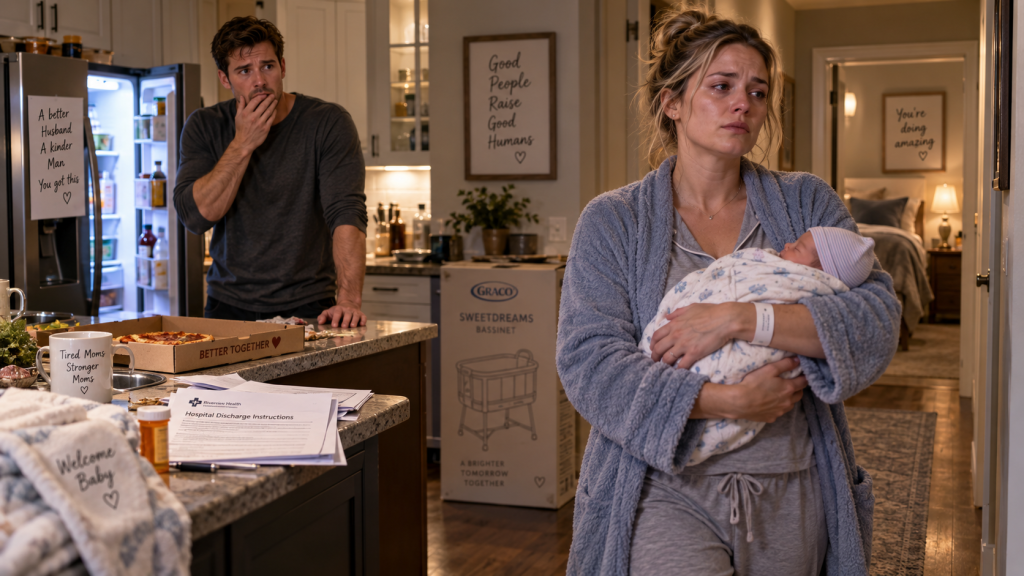
She was standing in our hallway three days after major abdominal surgery, holding our newborn son against her chest, telling me something I should have understood before she ever needed to say it.
Marlene looked at me.
“The medicine.”
I handed her the pharmacy bag.
She checked the label, then the discharge sheet.
“When was Claire’s last dose at the hospital?”
I didn’t know.
Marlene looked up.
“You were there when the nurse explained it.”
“I know.”
“So when?”
“I don’t remember.”
Claire answered from the hallway.
“Eleven-thirty.”
Her voice was exhausted.
Marlene checked the time.
12:31 a.m.
Thirteen hours.
Claire had gone thirteen hours after a C-section without the medication she had specifically asked me to collect the night before.
Because I had forgotten.
Then delayed.
Then complained about dinner.
Marlene poured water.
I stood there holding my keys.
“Claire, I’m sorry.”
She didn’t answer.
Marlene gave her the medication according to the instructions and helped her back toward the bedroom.
I followed.
Claire stopped.
“No.”
One word.
I stopped too.
“I can help.”
“I don’t want you in there right now.”
That hurt.
My first instinct was to defend myself.
I lived there.
It was my bedroom.
Luca was my son.
Then I remembered what I had done when Claire said she needed medicine.
What I had done when she needed food.
What I had done when she needed the bassinet assembled.
I had treated every need as a negotiation.
So I nodded.
“Okay.”
Claire disappeared into the bedroom.
The door closed.
Marlene came back ten minutes later.
She looked around the kitchen.
“Where are the garbage bags?”
“Under the sink.”
“Good.”
She pointed toward the trash.
“Start.”
Something inside me bristled.
I was thirty-four years old.
This woman had entered my house and was ordering me around like a teenager.
Then I saw the hospital discharge papers on the counter.
I took out the trash.
When I came back, Marlene was standing beside the unopened bassinet box.
“Tools?”
“Garage.”
“Get them.”
“I know how to assemble it.”
“I didn’t say you didn’t.”
I brought the toolbox.
The instructions were inside.
I nearly threw them aside.
Then I remembered that Luca would be sleeping in this thing.
So I read every page.
Twice.
It took forty-three minutes.
Not because the bassinet was complicated.
Because I kept thinking about Tuesday.
I had been home.
The box had been there.
I had walked past it repeatedly.
I had spent nearly two hours playing a video game that afternoon.
The bassinet would have taken forty-three minutes.
Probably less if I had not been shaking with shame.
I had told myself I was preparing the house.
What had I prepared?
Nothing.
I had treated Claire’s hospitalization like a strange little vacation from responsibility.
Then expected her to resume responsibility the moment she crossed the threshold.
At 1:28 a.m., I carried the assembled bassinet into the hallway.
Marlene inspected it.
“You follow the instructions?”
“Yes.”
“All fasteners tight?”
“Yes.”
“Mattress flat?”
“Yes.”
“Yes.”
She nodded.
“Put it beside the bed.”
I looked toward the closed door.
“She said she doesn’t want me in there.”
“Then knock.”
I did.
“Claire?”
Silence.
“Claire, the bassinet is ready.”
After a moment:
“Mom can bring it in.”
Not me.
I swallowed.
“Okay.”
Marlene carried one end.
I carried the other only as far as the doorway.
Claire was sitting upright against pillows.
Luca was asleep on her chest.
She looked pale.
Not the delicate kind of pale people write about in novels.
Sick pale.
Exhausted pale.
Her lips were almost colorless.
I had spent the afternoon thinking she was being irritable.
Now, with my appetite satisfied and my pride finally quiet, I actually looked at her.
“Are you okay?”
I asked.
She almost laughed.
“No.”
That answer frightened me.
“Should we call someone?”
“We already did.”
“What?”
“The nurse line.”
Marlene answered.
“When?”
“While you were at the pharmacy.”
My stomach tightened.
“What did they say?”
“That Claire needs to take her medication as directed, monitor her temperature and incision, hydrate, eat, rest, and call immediately if certain symptoms appear.”
I looked at Claire.
“Do you have a fever?”
“No.”
“Bleeding?”
“Evan.”
“What?”
“I cannot take care of your panic too.”
I stopped.
She was right.
Again.
“Okay.”
I backed away.
“I’ll be in the living room.”
Claire looked down at Luca.
I wanted her to say something.
Anything.
She didn’t.
I left.
At 2:03 a.m., I put the towels through the washing machine again.
At 2:10, I loaded the dishwasher.
At 2:19, I cleaned the kitchen counter.
At 2:31, I put the casserole in the oven.
Nobody had asked for casserole at two-thirty in the morning.
I simply couldn’t stand looking at it anymore.
While it heated, I opened Claire’s discharge packet.
Really opened it.
There were pages of instructions.
Activity restrictions.
Incision care.
Medication timing.
Warning signs.
Hydration.
Follow-up appointments.
Information about feeding Luca.
Numbers to call.
Things I had nodded through at the hospital.
I made a schedule.
Then I almost laughed.
Not because anything was funny.
Because I realized Claire had probably already made one mentally.
Women are often described as “naturally better” at remembering these things.
I had used that idea for years.
Claire remembers appointments.
Claire knows where the thermometer is.
Claire knows when we need detergent.
Claire knows which dog food to buy.
Claire knows birthdays.
Claire knows whether the milk is low.
I had treated her competence as evidence that she should be responsible.
Maybe she had become competent because someone had to be.
At 2:47 a.m., Luca cried.
I stood.
Then froze.
I waited for Claire.
That was my reflex.
The crying continued.
I walked toward the bedroom.
Before I reached the door, Marlene came out holding him.
“Diaper.”
“I’ll do it.”
She looked at me.
Then handed me my son.
Luca was tiny.
Seven pounds and change.
His face was red with outrage.
“Hey.”
I whispered.
He screamed.
“Yeah, I know.”
I carried him to the changing table.
Marlene followed.
“You don’t need to supervise me.”
“I’m not.”
She was.
I changed him.
Badly.
His little legs kept moving.
The clean diaper ended up crooked.
I fixed it.
Then he peed on me.
Marlene laughed.
I stared at her.
“Seriously?”
“He has excellent timing.”
For the first time that night, something almost human passed between us.
Then she became serious.
“Evan.”
“What?”
“You need to understand something.”
“I know.”
“No.”
She folded her arms.
“You keep saying that.”
I looked at her.
“You keep saying you know.”
“You knew Claire needed medication.”
“You knew she had surgery.”
“You knew the bassinet needed assembly.”
“You knew the trash needed to go out.”
“You knew there was food in the refrigerator.”
“Knowing has not been your problem.”
I had no answer.
She continued.
“My daughter cannot survive the next several weeks on what you know.”
“She needs what you do.”
Luca stopped crying.
I looked down at him.
Marlene lowered her voice.
“Do not make her manage your improvement.”
“What does that mean?”
“It means don’t wake her tomorrow and ask for a list.”
I felt exposed because that was exactly what I had planned.
“What am I supposed to do?”
Marlene gave me a look.
“Look.”
One word.
“Look at the hamper.”
“Look at the sink.”
“Look at the baby.”
“Look at the clock.”
“Read the discharge instructions.”
“Open the refrigerator.”
“Check the diapers.”
“Notice.”
She pointed toward the bedroom.
“Claire has been noticing for both of you for years.”
Then she walked away.
I stood there holding Luca.
Notice.
It sounded embarrassingly simple.
At 3:15, I ate casserole.
Not because I wanted it.
Because it was food.
I had spent hours earlier acting as though my preference mattered more than Claire’s pain.
Now the casserole tasted like shame.
It was actually pretty good.
That made the whole thing worse.
At 4:06, Luca woke again.
Marlene was asleep on the couch.
I changed him.
Then knocked on the bedroom door because he needed to feed.
Claire let me bring him in.
I placed him beside her.
“Do you need water?”
“Yes.”
I brought it.
With a straw.
“Pillow?”
She nodded.
I adjusted one.
Wrong.
She winced.
“Sorry.”
I moved it.
Then I started to leave.
“Evan.”
I turned.
“Take him when I’m finished.”
“I will.”
She looked skeptical.
That hurt.
But skepticism was not cruelty.
It was information.
I had given her reasons not to trust me.
At 4:38, she called my name.
I was awake.
I went in.
Luca had fallen asleep against her.
I lifted him carefully.
Claire closed her eyes.
“Thank you.”
Two words.
They nearly destroyed me.
She was thanking me for holding my own child so she could sleep after surgery.
The standard had fallen so low that basic fatherhood qualified as assistance.
I put Luca into the bassinet.
Then checked that he was positioned safely.
I stood there for a moment.
Claire was already asleep.
I wanted to kiss her forehead.
I didn’t.
I had spent enough time assuming access.
I left.
The next morning, I called work.
My manager, Paul, answered.
“How’s fatherhood?”
I stared at the sink.
“Bad.”
He laughed.
“That rough already?”
“No.”
I sat down.
“I’m bad at it.”
Silence.
“What happened?”
“My wife came home from a C-section yesterday.”
“Okay.”
“And I hadn’t picked up her medicine.”
Another silence.
“I asked what was for dinner.”
Paul didn’t laugh.
“Evan.”
“I know.”
“You asked the woman who just had surgery what she was making you for dinner?”
“Yes.”
“Why?”
“I don’t know.”
That wasn’t true.
“I expected her to.”
There.
The ugly answer.
Paul exhaled.
“What do you need from me?”
“I want to use the rest of my parental leave.”
“You told me you were only taking three days.”
“I was wrong.”
“How much?”
“All of it.”
We had six weeks available under company policy.
I had originally planned to use three days and save vacation time for a fishing trip later that year.
That fact now made me feel physically ill.
“All six weeks?”
Paul asked.
“Yes.”
“Good.”
I wasn’t expecting that.
“Good?”
“Yes.”
“You have a newborn.”
“I know.”
“And a wife recovering from surgery.”
“Yes.”
“Then be there.”
I rubbed my face.
“Paul?”
“Yeah?”
“Did you take leave when your daughter was born?”
“Eight weeks.”
“I thought your wife stayed home.”
“She did.”
I waited.
Paul said:
“What does that have to do with whether I’m her father?”
Another sentence I should have learned years earlier.
I thanked him.
Before hanging up, he said:
“Evan?”
“Yeah?”
“Don’t spend six weeks asking Claire what she needs.”
I almost laughed.
“Everybody seems to know this except me.”
“Then catch up.”
I did not transform that morning.
I want to make that clear.
There was no montage in which I suddenly became the perfect husband because I had one uncomfortable night.
For years, I had practiced not noticing.
Habits practiced for years do not disappear because shame arrives.
The first week, I still waited too long.
I still asked unnecessary questions.
“Where are the wipes?”
“What should Luca wear?”
“Should I start laundry?”
“What do you want for lunch?”
Claire finally said:
“Evan, every question is another decision you’re giving me.”
That irritated me.
For approximately five seconds.
Then I understood.
So I started solving what I could solve.
Where are the wipes?
Find them.
What should Luca wear?
Something clean and appropriate for the temperature.
Should I start laundry?
Is there dirty laundry?
Then yes.
What does Claire want for lunch?
Make two simple options and ask which sounds tolerable.
Better yet, remember what she has been able to eat.
I wrote things down.
Not because Claire told me to.
Because my memory was not a morally superior excuse for her exhaustion.
Medication times.
Feeding notes.
Diapers.
Doctor appointments.
Grocery needs.
At night, I took everything I safely could.
I could not breastfeed.
I could change Luca.
Burp him.
Rock him.
Bring him to Claire.
Return him to the bassinet.
Refill her water.
Wash pump parts when needed.
Track supplies.
Make breakfast.
Clean the kitchen.
Walk the dog.
Answer relatives.
Protect Claire’s rest.
It was astonishing how much existed between “feed the baby” and “do nothing.”
By the end of the first week, I was exhausted.
That realization humbled me too.
Because Claire was more exhausted.
She was doing everything I was doing while healing from surgery and producing food with her body.
One morning, I complained:
“I feel like I haven’t slept in a year.”
Claire looked at me.
I immediately said:
“That was stupid.”
She almost smiled.
“Very.”
Progress.
Not absolution.
Progress.
At her two-week appointment, the doctor checked her incision.
I went with her.
I carried Luca.
I brought the diaper bag.
I knew what was inside it because I had packed it.
The doctor asked Claire questions.
Pain.
Bleeding.
Sleep.
Mood.
Appetite.
Then she asked:
“Do you have support at home?”
Claire hesitated.
That hesitation hurt more than if she had said no.
Finally:
“Now I do.”
Now.
The word stayed with me.
Not:
Yes.
Now.
I had become useful after proving I might not be.
On the drive home, I said:
“I’m sorry.”
Claire stared out the window.
“I know.”
“I mean it.”
“I know.”
I tightened my hands on the steering wheel.
“Does it matter?”
She looked at me.
“Yes.”
Hope rose too quickly.
Then she continued.
“But an apology isn’t the same as repair.”
Hope settled into something more honest.
“What does repair look like?”
“I don’t know yet.”
That scared me.
“Are you thinking about leaving?”
“Yes.”
There it was.
No drama.
No threat.
Just truth.
I pulled into a parking lot because I did not trust myself to keep driving.
Claire looked at me.
“I don’t want you to panic.”
“I am panicking.”
“I know.”
“Do you want a divorce?”
“I don’t know.”
“Do you still love me?”
She closed her eyes.
“Yes.”
I exhaled.
Then she said:
“That isn’t enough.”
I looked at her.
“I need you to understand that.”
She rested one hand protectively over her abdomen.
“I loved you when you left my prescription at the pharmacy.”
“I loved you when you asked about dinner.”
“I loved you when you compared me to your mother.”
“I loved you when I locked the bedroom door.”
“Love did not make me safe to depend on you.”
I had never heard marriage described that way.
Safety to depend.
Not physical safety.
Reliability.
The belief that when your body failed, your partner would not stand in the kitchen asking what you were making him.
“I don’t know how to trust that this isn’t temporary.”
she said.
“It isn’t.”
“You don’t know that.”
“I do.”
“No, Evan.”
She shook her head.
“You know you are ashamed.”
“That isn’t the same thing.”
I hated how accurate she was.
“What do you want me to do?”
“Keep doing it.”
“For how long?”
Her face changed.
I heard the stupidity as soon as it left my mouth.
Claire almost laughed.
“For how long?”
“I didn’t mean—”
“For as long as you’re Luca’s father.”
“Claire—”
“For as long as you live in a house where laundry gets dirty and people need dinner.”
She was crying now.
“For as long as you’re married to someone whose needs are not optional because yours are louder.”
“I know.”
“Stop saying that!”
The words exploded from her.
Luca startled in the back seat.
Claire covered her mouth.
Then she began sobbing.
Not angry sobbing.
Exhausted.
Painful.
Weeks of everything.
I reached toward her.
Stopped.
“Can I hold your hand?”
She nodded.
I took it.
Her fingers were cold.
“I’m sorry.”
I said.
“I’m going to stop telling you I know.”
She cried.
“Good.”
“And I’m going to keep doing the work whether you stay married to me or not.”
She looked at me.
That was the first promise I made after Luca’s birth that I actually understood.
Because fatherhood could not be conditional on Claire forgiving me.
Housework could not be a courtship strategy.
Changing diapers could not be a performance designed to save my marriage.
If Claire left me, Luca would still need a father.
If Claire stayed, she would still deserve a partner.
Three weeks after Luca was born, my mother visited.
Her name is Diane.
She arrived with two casseroles, a blanket she had knitted, and an entire suitcase of opinions.
She hugged Claire.
Then looked around the kitchen.
I was washing bottles.
“Well.”
she said.
“What?”
“Look at you.”
I waited.
“My son has become Mr. Mom.”
I turned off the water.
“No.”
She laughed.
“No?”
“I’m Luca’s dad.”
“You know what I mean.”
“I do.”
That was the problem.
Mom sat at the table.
Claire was feeding Luca in the living room.
My mother lowered her voice.
“Don’t overdo this.”
“What?”
“She’ll get used to it.”
I stared at her.
“Used to what?”
“You doing everything.”
I almost could not believe what I was hearing.
Then I remembered who had raised me.
“Mom.”
“I’m just saying marriage is give-and-take.”
“Claire had seventeen staples in her abdomen.”
“So?”
My stomach turned.
“So she couldn’t stand straight.”
“I had two babies.”
“I know.”
“And your father went back to work.”
“I know.”
“I managed.”
I pulled out a chair.
“Sit down.”
She frowned.
“Why?”
“Please.”
She sat.
I sat opposite her.
“Did Dad pick up your medication?”
Her expression changed.
“What?”
“After Matt was born.”
“That was forty years ago.”
“Did he?”
“I don’t remember.”
“Did he cook?”
She laughed.
“Your father?”
“Did he do laundry?”
“No.”
“Night feedings?”
“I breastfed.”
“Diapers?”
“Sometimes.”
“How soon did you cook after you came home?”
She smiled automatically.
“Breakfast the next morning.”
The family story.
The legendary breakfast.
Eggs.
Bacon.
Toast.
My father had told it dozens of times.
Your mother came home with a newborn and still made breakfast.
“What did you have?”
I asked.
“What?”
“After Matt.”
“An episiotomy.”
She looked embarrassed saying it.
“Stitches?”
“Yes.”
“Were you in pain?”
“Of course.”
“Then why were you cooking?”
Her face hardened.
“Because families needed feeding.”
“Dad was there.”
“He worked.”
“It was Saturday.”
She stared at me.
I remembered that detail from the story.
Dad had always said Saturday morning.
Mom looked away.
“He wasn’t good in the kitchen.”
“He could make toast.”
“Evan.”
“He could fry eggs.”
“This is ridiculous.”
“Did you want to cook?”
Silence.
“Mom.”
She stood.
“I did what women did.”
That sentence hurt.
Not because it excused what she had taught me.
Because suddenly I could see the woman inside the legend.
Twenty-six years old.
Postpartum.
Bleeding.
Sore.
Exhausted.
Standing at a stove because everyone around her considered endurance proof of love.
My father had turned her abandonment into a compliment.
Then passed the compliment to me as instruction.
And I had almost handed it to Claire.
“Mom.”
She looked at me.
“I’m sorry.”
“For what?”
“For thinking that story was beautiful.”
Her eyes filled.
She became angry immediately.
“Don’t pity me.”
“I don’t.”
“Yes, you do.”
“I think you deserved breakfast.”
She stared at me.
“What?”
“I think somebody should have made you breakfast.”
That broke something.
Her face folded.
She sat down again.
For several minutes, my mother cried at our kitchen table.
I had seen her cry at funerals.
Never about herself.
“Your father wasn’t a bad man.”
she finally said.
“I didn’t say he was.”
“He loved us.”
“I know.”
“He worked hard.”
“I know.”
“I chose to stay home.”
“I know.”
She wiped her eyes.
“Then don’t make him into a villain.”
“I’m not.”
I reached across the table.
“I’m saying you were tired too.”
Mom looked toward the living room.
Claire was still feeding Luca.
Quiet.
“Did you really ask her what was for dinner?”
“Yes.”
“Four hours after she came home?”
“Yes.”
Mom closed her eyes.
“Oh, Evan.”
“I also hadn’t picked up her medication.”
Her eyes opened.
“What?”
“I forgot it Wednesday.”
“Evan.”
“Then Thursday.”
“My God.”
“I know.”
She looked furious.
For once, not at Claire.
At me.
“You knew she needed it.”
“Yes.”
“Why didn’t you go?”
“I kept deciding something else was more convenient.”
My mother stood.
“Idiot.”
“Fair.”
She marched into the kitchen.
“What are you doing?”
“Making soup.”
“We have two casseroles.”
“Those are for later.”
She pointed at me.
“And you’re chopping vegetables.”
I smiled.
“Yes, ma’am.”
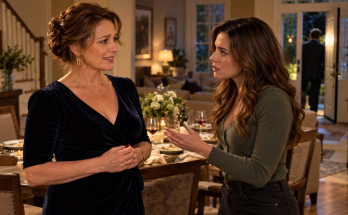
That afternoon, my mother apologized to Claire.
Not for me.
For herself.
“I think I praised the wrong things in front of Evan.”
Claire looked confused.
Mom continued.
“I taught him that a good woman keeps going no matter what hurts.”
She looked at me.
“I should have taught him a good man notices when she shouldn’t have to.”
Claire started crying.
So did Mom.
I stood there holding Luca.
Then Mom pointed toward me.
“You.”
“What?”
“Take the baby.”
“I have him.”
“Good.”
For the first time since Luca was born, Claire laughed hard enough to hurt her incision.
She immediately grabbed her abdomen.
“Don’t make me laugh.”
Mom glared at me.
“You heard her.”
“I didn’t do anything.”
“Keep it that way.”
Claire laughed again.
It was the beginning of something.
Not forgiveness.
Not yet.
But warmth returned in tiny pieces.
A joke.
A cup of coffee left beside her chair.
A shower she could take without wondering whether I would come knocking after three minutes.
One afternoon, she slept for four uninterrupted hours while I walked Luca around the neighborhood.
When she woke, she looked panicked.
“What time is it?”
“Five-twenty.”
“Luca?”
“With me.”
“He hasn’t eaten?”
“I gave him the expressed milk you said was available.”
“Diaper?”
“Twice.”
“Did he sleep?”
“An hour.”
She stared.
“What?”
“Nothing.”
Then she began crying.
I panicked.
“What happened?”
“Nothing.”
“Are you in pain?”
“No.”
“Then—”
“I slept.”
I stopped.
She covered her face.
“I slept four hours.”
I sat beside her.
“Good.”
“No, you don’t understand.”
She cried harder.
“I haven’t slept four hours in weeks.”
I wanted to say:
I’m glad I could give you that.
But I didn’t.
Sleep should not be my gift to the mother of my child.
It should have been something we worked together to protect.
So I said:
“You needed it.”
She nodded.
Then leaned her head against my shoulder.
The first time she had touched me voluntarily since coming home.
I did not move.
I barely breathed.
After a minute, she whispered:
“Don’t make this a big deal.”
“Wouldn’t dream of it.”
“It’s just a shoulder.”
“Excellent shoulder, though.”
She laughed softly.
I smiled.
Then kept still.
At six weeks, my parental leave ended.
The night before I returned to work, Claire became quiet.
“What?”
I asked.
“Nothing.”
I waited.
Old me would have accepted nothing because it required no effort.
Newer me was learning that noticing does not mean interrogating, but it sometimes means leaving room.
“You’re worried about tomorrow.”
She nodded.
“I don’t want everything to become mine again.”
“It won’t.”
She looked at me.
I almost said:
I promise.
Instead:
“Let’s figure out what needs to happen before work, after work, overnight, and on weekends.”
We sat at the table.
Not so Claire could assign me tasks.
Together.
We listed recurring work.
Laundry.
Meals.
Groceries.
Dog.
Bills.
Pediatric appointments.
Claire’s follow-ups.
Cleaning.
Night care.
Supplies.
Trash.
Yard.
Family communication.
The list was embarrassingly long.
Then Claire said:
“And remembering.”
“What?”
“Remembering the things.”
She tapped the page.
“If I have to tell you every Thursday that trash goes out Friday, trash is still mentally mine.”
I nodded.
“So ownership means remembering.”
“Yes.”
That changed everything.
I took complete ownership of certain things.
Not “help with.”
Ownership.
If diapers were low, I ordered them.
If the dog needed food, I knew before the bag was empty.
If Luca had a pediatric appointment I owned, I put it on my calendar, arranged work, packed the bag, knew what questions we had.
Claire did the same with other areas.
It wasn’t always equal minute by minute.
Life doesn’t divide perfectly.
It became visible.
Negotiable.
Shared.
That was the difference.
When Luca was four months old, Claire said:
“I think I want to try counseling.”
I thought she meant for herself.
“Okay.”
“With you.”
My heart jumped.
“Marriage counseling?”
“Yes.”
“Does that mean—”
“Don’t.”
I stopped.
She smiled faintly.
“You still try to turn every positive thing into a verdict.”
She was right.
“Counseling means counseling.”
“Okay.”
We started with a therapist named Dr. Naomi Patel.
At the first session, she asked why we were there.
I told the story.
All of it.
Or what I thought was all of it.
When I finished, Dr. Patel looked at Claire.
“What did Evan leave out?”
Claire stared at the floor.
Then said:
“The loneliness.”
I felt something sink inside me.
“What loneliness?”
Dr. Patel looked at me.
“Let Claire answer.”
Claire folded her hands.
“The dinner question wasn’t the beginning.”
I knew that.
I just hadn’t wanted to know how far back the beginning went.
She talked about pregnancy.
How I attended major appointments but missed smaller ones.
How I called buying baby furniture “her department.”
How she researched car seats while I said they all looked the same.
How she washed newborn clothes.
Organized insurance.
Selected a pediatrician.
Registered for childbirth classes.
Made lists for the hospital.
Scheduled the dog sitter.
Prepared freezer meals.
Packed my hospital bag along with hers.
I interrupted.
“You packed mine because you said—”
Dr. Patel raised a hand.
I stopped.
Claire continued.
“The week before Luca was born, I asked Evan to install the car seat.”
I remembered.
“I did.”
“The night before I went into labor.”
Right.
After she reminded me four times.
She looked at me.
“You always eventually did things.”
“That made me think I couldn’t complain.”
“Because if I asked enough times, you did them.”
“But asking became my job.”
I looked down.
She cried.
“I was scared before Luca was born.”
“Not only about labor.”
“I was scared because I knew I would become responsible for everything.”
“I told myself I was being unfair.”
“I told myself Evan would step up when the baby came.”
Her voice broke.
“Then I came home.”
I could barely breathe.
“And the trash smelled.”
“The towels smelled.”
“The bassinet was still in the box.”
“My medicine wasn’t there.”
“And he asked what I was making him for dinner.”
She covered her face.
Dr. Patel waited.
I did too.
Finally Claire said:
“That was when I realized I hadn’t been imagining it.”
“What?”
I whispered.
“That I was alone.”
I cried.
I wanted to explain.
To say I had been there.
That I loved her.
That I had attended the birth.
Cut Luca’s cord.
Worked.
Paid bills.
None of it answered what she had said.
So I said:
“I’m sorry you were alone while I was standing next to you.”
Claire looked at me.
Dr. Patel did too.
That sentence became a turning point.
Not because it fixed us.
Because it finally named what I had done.
Absence is not always physical.
Sometimes a person can be in the room and still leave you carrying everything.
Counseling lasted two years.
Not because our marriage was constantly in crisis.
Because change took longer than remorse.
There were setbacks.
At eight months postpartum, Claire returned to work part-time.
The first week, I said:
“Just tell me what you need me to do in the mornings.”
She stared at me.
I heard it.
“Oh.”
“Yeah.”
“Sorry.”
“What do you think needs doing?”
I looked around.
Luca needed dressing.
Bottle packed.
Daycare bag checked.
Claire needed time to shower.
Dog needed feeding.
Kitchen needed cleaning.
“Got it.”
She smiled.
“Good.”
At eleven months, I forgot a daycare closure.
Claire remembered.
I said:
“Why didn’t you remind me?”
The room went silent.
I wanted to swallow the sentence.
Claire raised one eyebrow.
“Nope.”
I said.
“That was mine.”
“Yes.”
“I’ll fix it.”
I took the day off.
At eighteen months, Claire got the flu.
She slept nearly fourteen hours.
I handled Luca.
Meals.
Laundry.
Everything.
My mother called that evening.
“How’s Claire?”
“Asleep.”
“Poor thing.”
“Yeah.”
“What are you eating?”
I laughed.
“What?”
“What are you eating?”
“I made pasta.”
A pause.
Then Mom started laughing too.
“What?”
“Nothing.”
“I’m proud of you.”
“For boiling noodles?”
“No.”
She became quiet.
“For not asking the sick woman.”
I sat down.
That landed harder than she intended.
“Mom?”
“Yes?”
“Were you ever angry at Dad?”
Silence.
“Yes.”
“Did you tell him?”
“Not enough.”
“Why?”
“I thought being needed was the same as being loved.”
I closed my eyes.
“Was it?”
“No.”
She sighed.
“Being loved should have meant I was allowed to need somebody too.”
I wrote that sentence down after we hung up.
Years later, I still had it.
Claire and I had another child.
That surprises people when I tell the story.
Her name is Maya.
She was born four years after Luca.
The decision was not simple.
Claire wanted another child.
She was also terrified.
Not primarily of birth.
Of postpartum.
Of me.
One night, before we even started trying, she said:
“If we do this again, I need to know I will never come home to that house again.”
“You won’t.”
She shook her head.
“Don’t promise emotionally.”
So we planned practically.
We arranged help.
Meals.
Childcare for Luca.
Medication pickup assigned before discharge.
Bassinet assembled six weeks early.
House cleaned.
Laundry finished.
My leave scheduled.
Her mother invited.
My mother invited too, because by then Diane had become the loudest advocate for women sitting down.
Maya’s birth was a scheduled C-section.
The night before, Claire could not sleep.
I found her in the nursery at 2 a.m.
“What if I can’t do it?”
“You can.”
She glared at me.
I corrected myself.
“You don’t have to prove anything.”
Her eyes filled.
“What if I fall apart?”
“Then we take care of you while you fall apart.”
“What if I’m horrible?”
“Then you’re horrible.”
She laughed.
“What?”
“You’re allowed.”
“What if I don’t want visitors?”
“No visitors.”
“What if I want my mom?”
“I call Marlene.”
“What if I want your mom?”
“I call mine.”
“What if I want everyone gone?”
“I become a bouncer.”
She smiled.
Then whispered:
“What if I can’t trust you?”
That one hurt.
Even after four years.
Even after counseling.
Even after thousands of ordinary acts.
Some wounds leave scar tissue.
I sat beside her.
“Then you tell me.”
“And I don’t punish you for it.”
She cried.
“I do trust you.”
“I know.”
“But I’m still scared.”
“I know.”
This time, saying I know was not dismissive.
Because I had spent four years listening.
Maya was born at 9:12 a.m.
Healthy.
Loud.
Furious.
Claire came out of surgery shaking again.
Just like after Luca.
I remembered the heated blankets.
The fear.
The helplessness.
But this time I did not stand there thinking the medical staff had everything handled so my job was finished.
I stayed.
I listened.
I wrote down medication times.
When the nurse explained discharge care, I asked questions.
Claire looked at me once and smiled.
Just barely.
We went home three days later.
The house smelled like lemon cleaner.
The trash was empty.
Fresh sheets on the bed.
Bassinet ready.
Medication on the bedside table because I had collected it the day before discharge.
Water bottle filled.
Straw.
Freezer meals labeled.
Luca’s schedule taped inside the pantry.
Marlene walked in behind us.
She inspected everything.
I waited.
“Well?”
I asked.
She opened the refrigerator.
“Acceptable.”
“That’s all?”
“Don’t get arrogant.”
Claire laughed.
Four hours after we came home, I made dinner.
Nothing impressive.
Soup.
Bread.
Claire sat in bed with Maya.
I brought her a bowl.
She looked at it.
Then at me.
“What?”
I asked.
She started crying.
I panicked.
“Is it bad?”
“No.”
“Too hot?”
“No.”
“What’s wrong?”
She laughed through tears.
“Four hours.”
I understood.
Exactly four hours.
Four years earlier, four hours after she came home with Luca, I had asked what she was making me.
Now I had brought dinner to her.
I sat on the edge of the bed.
“Claire.”
She wiped her eyes.
“I didn’t plan the timing.”
“I know.”
“I swear.”
“I know.”
“Do you want something else?”
“No.”
She took my hand.
“This is fine.”
Fine.
Sometimes fine is a beautiful word.
We did not celebrate my making soup.
That mattered.
It wasn’t heroic.
It wasn’t exceptional.
It was dinner.
Exactly as it should have been.
Our children grew.
Luca became a serious little boy who wanted to know how everything worked.
At five, he dismantled a flashlight and could not reassemble it.
At seven, he informed us our recycling system was inefficient.
At nine, he learned to make scrambled eggs.
The first morning he cooked them, I stood in the kitchen.
He cracked shells everywhere.
Claire came in.
“What happened?”
“Breakfast.”
Luca beamed.
“I made eggs.”
Claire kissed his head.
“Wonderful.”
Then Luca looked at me.
“Dad says everybody should know how to make food.”
Claire’s eyes found mine.
She smiled.
“Dad is right.”
I thought of my father.
I thought of my mother cooking breakfast after childbirth.
I thought of myself standing in front of an open refrigerator asking a woman with staples in her body what was for dinner.
“Everybody eats.”
I told Luca.
“So everybody should know how to feed people.”
He nodded as though this were obvious.
I wanted it to become obvious.
That was the point.
Not raising a son who congratulated himself for “helping women.”
Raising a person who understood that care belonged to everyone.
When Luca was twelve, he complained:
“Why do I have to do laundry?”
“Because you wear clothes.”
“Maya doesn’t do hers.”
“She’s eight.”
“I was doing laundry at eight.”
“You were folding towels.”
“Same thing.”
“Would you like me to assign Maya more?”
He thought.
“No.”
“Excellent.”
At fourteen, he had his first girlfriend.
One evening I heard him tell Claire:
“I bought her flowers.”
Claire smiled.
“That’s sweet.”
I asked:
“What does she like?”
“Flowers.”
“Which flowers?”
He paused.
“I don’t know.”
I smiled.
“Find out.”
He rolled his eyes.
But he did.
Noticing.
It always came back to noticing.
Maya was different.
Loud.
Funny.
Fearless.
At sixteen, she called me out because I had started leaving coffee mugs beside the sink.
“Dad.”
“What?”
“You live here.”
Claire nearly choked laughing.
I put the mug into the dishwasher.
“Thank you for the accountability.”
“You’re welcome.”
Then Maya said:
“Mom says you used to be terrible.”
I looked at Claire.
She suddenly became fascinated by the newspaper.
“Does she?”
“Something about pizza and medicine.”
I sat down.
Maya stared at me.
“What happened?”
Claire looked at me.
My story.
My responsibility.
So I told her.
Not every detail.
Enough.
When I finished, Maya looked horrified.
“You asked Mom to cook?”
“Yes.”
“After surgery?”
“Yes.”
“You didn’t get her medicine?”
“No.”
“Dad.”
“I know.”
“That’s awful.”
“Yes.”
“Why would you do that?”
The same question I had asked myself for sixteen years.
“Because I had learned to believe caring for the home was your mother’s responsibility.”
“But you lived there.”
“Yes.”
“And she had just had Luca.”
“Yes.”
“And you weren’t injured.”
“No.”
Maya stared at me.
“That’s really stupid.”
Claire laughed.
“It was.”
I agreed.
Maya became serious.
“Did Mom almost leave you?”
“Yes.”
Her eyes widened.
“Really?”
“Yes.”
“Why didn’t she?”
I looked at Claire.
Claire answered.
“Because your dad changed.”
I felt something in my chest.
Then she added:
“And because I wanted to stay.”
Important distinction.
My change did not obligate her.
She chose.
Maya nodded.
“Would you have left if he didn’t?”
“Yes.”
Immediately.
I smiled.
Not because losing Claire would have been funny.
Because I was glad my daughter heard her mother say it.
Love does not require accepting permanent neglect.
Maya looked at me.
“Would you have blamed her?”
I thought.
“At the time, maybe.”
Claire raised an eyebrow.
“I was still learning.”
I continued.
“But she would have been right to leave if staying meant carrying me too.”
Maya absorbed that.
Then:
“Can I tell my boyfriend this story?”
“No.”
“Why?”
“Because I have dignity.”
“You lost that at the pizza part.”
Claire laughed so hard she had to leave the room.
I loved that my worst night eventually became something we could talk about without reopening the wound.
That took years.
Not every wound needs to become a joke.
This one sometimes did.
On our twenty-fifth anniversary, Claire handed me a small box.
Inside was a pizza cutter.
I stared.
She was laughing before I even looked up.
“You are evil.”
“Read it.”
The handle was engraved.
WHAT’S FOR DINNER?
I laughed until I cried.
Then I actually cried.
Claire stopped laughing.
“Hey.”
“I’m okay.”
“You sure?”
“Yes.”
I held the ridiculous pizza cutter.
“I can’t believe you stayed.”
She became serious.
“I didn’t stay because of one good week.”
“I know.”
“I stayed because the good week became another.”
“Then another.”
“Then years.”
I nodded.
She touched my hand.
“And because you stopped asking me to grade you.”
That was true.
For a long time, I had wanted reassurance.
Am I doing better?
Do you trust me now?
Have I made up for it?
Those questions still made Claire carry something.
My need to feel redeemed.
Eventually I stopped asking.
Repair became less about how I felt about myself and more about how we lived.
When Luca was twenty-six, he called me.
His wife, Elena, was pregnant.
“Dad?”
“What’s wrong?”
“Nothing.”
A pause.
“Can I ask you something?”
“Sure.”
“What was the biggest mistake you made when I was born?”
I laughed.
“How much time do you have?”
“Mom told me.”
Of course.
“Pizza?”
“Yes.”
“Medicine?”
“Yes.”
“Dinner?”
“Yes.”
I rubbed my forehead.
“Wonderful.”
“She wasn’t making fun of you.”
“I know.”
“She said I should ask you.”
I became serious.
“The biggest mistake wasn’t the dinner question.”
“What was?”
“Believing your mother was the default parent before you’d even been home four hours.”
Silence.
“I thought anything I did was help.”
“I thought anything she did was responsibility.”
“That meant I could congratulate myself for doing ten percent while wondering why she was struggling with ninety.”
Luca was quiet.
“What should I do?”
“Before the baby?”
“Yeah.”
“Learn everything.”
“About birth?”
“About the whole thing.”
“Know where the diapers are before you need one.”
“Know the pediatrician.”
“Know the medication plan.”
“Know how feeding works, including how you can support it if Elena breastfeeds.”
“Know the warning signs her doctors tell you.”
“Know what food is in your refrigerator.”
“Know how to run your own washing machine.”
He laughed.
“I know that.”
“Good.”
“And take leave.”
“I am.”
“How much?”
“Ten weeks.”
“Good.”
Then I said:
“And don’t turn into her employee.”
“What?”
“Don’t stand around saying, ‘Tell me what to do.’”
“Oh.”
“Notice.”
There was that word again.
Notice.
Luca’s daughter, Amelia, was born on a rainy Thursday.
Claire and I visited two days later.
Before entering, I texted.
Not:
Can we come?
I asked:
Would a visit be helpful today, or would another day be better?
Luca answered:
Come at four. Please bring groceries. No need to stay long.
So we did.
When we arrived, Luca was washing pump parts.
Elena was asleep.
The baby was asleep.
Dinner was in a slow cooker.
Laundry was running.
I looked at my son.
He looked exhausted.
“Welcome.”
I whispered.
“To what?”
“Fatherhood.”
He smiled.
Then:
“Dad?”
“Yeah?”
“Thanks for telling me the ugly version.”
I knew exactly what he meant.
Families often polish their histories.
My father had polished my mother’s suffering into a story about devotion.
I could have polished mine too.
I could have told Luca:
Your mom and I had a difficult adjustment.
I was overwhelmed.
New fatherhood was hard.
We figured it out.
All technically true.
None honest enough.
Instead, he knew.
I failed your mother when she was vulnerable.
I almost lost her trust.
I changed because she should never have needed to become less needy for me to become more responsible.
That was the inheritance I wanted to change.
Not erase the past.
Tell it accurately enough that the next person does better.
My father lived long enough for me to confront him too.
He was seventy-eight.
We were sitting on his porch.
Mom had gone inside.
I asked:
“Do you remember breakfast after Matt was born?”
He smiled.
“Of course.”
There it was.
The legend.
“Your mother was something else.”
“Dad.”
“What?”
“Why didn’t you cook?”
His smile disappeared.
“What?”
“Why didn’t you make breakfast?”
He looked annoyed.
“This again?”
“Mom told you?”
“She got emotional about it years ago.”
“I’m asking you.”
“I couldn’t cook.”
“You were thirty.”
“So?”
“You knew how to fry eggs.”
He stared across the yard.
“That was how things were.”
“I know.”
“Your mother didn’t complain.”
“That doesn’t mean she wasn’t hurting.”
He became defensive.
“I worked sixty hours a week.”
“I know.”
“I provided.”
“I know.”
“You kids had everything.”
“I know.”
“Then what do you want from me?”
I thought about it.
“Nothing.”
That surprised him.
“I wanted to understand.”
“Understand what?”
“How a good man can love his family and still fail to notice what the people he loves are carrying.”
He looked at me.
“Are you calling me a bad husband?”
“No.”
“Sounds like it.”
“I’m calling you a husband who got something wrong.”
He looked away.
I continued.
“And I copied you.”
That softened him.
I told him what happened after Luca was born.
He had heard pieces.
Not all.
When I reached the dinner question, he grimaced.
“Your mother told me that.”
“Did she?”
“She called you an idiot.”
“Accurate.”
Dad smiled.
Then became quiet.
“Claire almost left?”
“Yes.”
“Because you asked about dinner?”
“No.”
“Because that question showed her how much I expected her to carry.”
Dad stared at his hands.
Finally:
“Your mother never almost left.”
“Are you sure?”
His face changed.
That question followed him inside.
Two weeks later, Mom called me.
“What did you say to your father?”
“Why?”
“He made breakfast.”
I laughed.
“What?”
“Pancakes.”
“Were they edible?”
“Barely.”
We both laughed.
Then Mom became quiet.
“He apologized.”
I sat down.
“For what?”
“For forty-eight years of bragging about that breakfast.”
My eyes filled.
“What did you say?”
“I told him I was angry.”
“Were you?”
“Yes.”
“Still?”
“Apparently.”
She laughed through tears.
“Forty-eight years late.”
“Better late than never?”
“Sometimes.”
My parents did not reinvent their marriage in old age.
Dad did not become a domestic revolutionary.
He did start cooking twice a week.
Badly.
Mom refused to rescue him.
He learned.
At eighty-one, he made soup without instructions.
Mom sent me a photograph as proof.
Underneath she wrote:
MIRACLES REMAIN POSSIBLE.
When Dad died, Mom spoke at his funeral.
She told the breakfast story.
For one horrifying second, I thought we had gone backward.
Then she said:
“For years, my husband told that story because he thought it proved I was extraordinary.”
She smiled.
“He eventually learned it proved he should have made the eggs.”
People laughed.
Mom did too.
“He apologized forty-eight years late.”
“Then he spent his final years making me the worst pancakes I have ever eaten.”
More laughter.
“I ate every one.”
Her voice broke.
“Not because they were good.”
“Because eventually, he understood breakfast could be love in both directions.”
I cried.
So did Claire.
That was the thing about changing family patterns.
You rarely change only the future.
Sometimes honesty reaches backward too.
Not enough to alter history.
Enough to let people name it differently.
Claire and I grew old.
Not gracefully.
Anyone who says gracefully has never watched two people argue over reading glasses.
We traveled after retirement.
Claire loved museums.
I tolerated them.
I loved fishing.
Claire tolerated exactly forty-five minutes of it.
We became grandparents.
Then grandparents again.
Our house remained messy sometimes.
Laundry accumulated.
Dinner occasionally came from a box.
The difference was that mess no longer had an invisible owner.
At sixty-eight, Claire needed knee replacement surgery.
The night before she came home, I cleaned the house.
Medication ready.
Ice packs frozen.
Walker positioned.
Meals prepared.
I put a glass of water beside the bed.
With a straw.
When Claire saw it, she stopped.
“What?”
I asked.
“The straw.”
I looked at it.
Then remembered.
Thirty-four years earlier.
The water without the straw because sitting upright hurt her incision.
“I remembered.”
“I know.”
She kissed me.
Four hours after we got home, I asked:
“What do you want for dinner?”
She stared at me.
I panicked.
“I mean I’m making it!”
She burst out laughing.
“You should have seen your face.”
“You’re horrible.”
“Hair-trigger trauma.”
“Very funny.”
She pointed toward the kitchen.
“Soup.”
“Yes, ma’am.”
“And bread.”
“Anything else?”
“Chocolate.”
“That is not dinner.”
“I had surgery.”
“Excellent point.”
I brought chocolate.
When I was seventy-two, I found the old discharge packet from Luca’s birth.
We were clearing a filing cabinet.
There it was.
Yellowed.
Stapled pages.
Medication schedule.
Postoperative instructions.
The same packet Claire had placed on the counter the night everything changed.
I sat on the floor holding it.
Claire found me.
“What are you doing?”
“Look.”
She recognized it.
“Oh.”
“I can’t believe we kept this.”
“You keep tax returns from 1998.”
“Those could be important.”
“They are older than our daughter.”
I smiled.
Then looked at the packet again.
“I hate this thing.”
“Why?”
“It reminds me who I was.”
Claire sat beside me.
“You weren’t only that.”
“I know.”
“But I was that.”
“Yes.”
I appreciated that she didn’t rush to comfort me.
She had spent enough years doing emotional work on my behalf.
“Do you ever still get angry?”
I asked.
“About that night?”
“Yes.”
She thought.
“Sometimes.”
Even after decades.
I nodded.
“Does that bother you?”
“No.”
“Why not?”
“Forgiveness isn’t amnesia.”
She took the packet from me.
“I forgave you.”
“I trusted you again.”
“We had another child.”
“We built a life.”
“None of that changes the fact that when I think about myself standing in that kitchen in pain and you asking about dinner, I want to slap seventy-year-old you on behalf of twenty-nine-year-old me.”
I laughed.
“Fair.”
She smiled.
“Then I remember the soup after Maya.”
“The midnight diapers.”
“The counseling.”
“The years.”
“The way you took care of your mother.”
“The way you taught Luca.”
“The way you apologized without turning your apology into a demand.”
She touched my cheek.
“The bad night stayed true.”
“So did everything after.”
We threw away the discharge packet.
Not ceremonially.
It went into recycling.
That felt right.
We did not need the paper anymore.
The lesson had already entered the family.
Claire died before me.
I hate that sentence.
Even now.
She was eighty-three.
Cancer.
Not sudden.
Not fair.
But we had time.
People call time a gift when someone is dying.
It does not feel like one while you’re watching the person disappear.
It feels like being given advance notice of an earthquake.
You know what’s coming.
You still cannot stop it.
During her final months, I became her primary caregiver.
Our children offered constantly.
We accepted help.
That was another lesson.
I did not turn caregiving into proof of devotion by exhausting myself.
Nurses came.
Luca cooked.
Maya handled appointments.
Grandchildren visited.
Friends brought food.
And I cared for Claire.
Bathing.
Medication.
Meals.
Sheets.
Water.
Pain.
One evening, she could barely eat.
I brought soup.
She looked at it.
Then at me.
“What’s for dinner?”
I froze.
Then she smiled.
I laughed.
“You waited fifty years for that.”
“Worth it.”
“You’re evil.”
“You married me.”
“I was young.”
She took three spoonfuls.
That was all she could manage.
I did not ask for more.
I put the bowl aside.
Then she said:
“Evan?”
“Yes?”
“Come here.”
I sat beside her.
“Closer.”
I moved closer.
She touched my face.
“You became a good husband.”
I cried immediately.
“Claire.”
“You did.”
“I should have been one from the beginning.”
“Yes.”
That was Claire.
No unnecessary absolution.
Then she smiled.
“But people are not born knowing how to love well.”
“No.”
“They learn.”
“Some refuse.”
“You didn’t.”
I held her hand.
“I almost lost you.”
“Yes.”
“I deserved to.”
She shook her head.
“Stop.”
“What?”
“Don’t turn our life into a punishment story.”
I looked at her.
“I didn’t stay so you could spend fifty years proving you deserved me.”
“Then why did you stay?”
She smiled.
“Because eventually I liked being married to you again.”
I laughed through tears.
“Romantic.”
“Put it on my tombstone.”
I kissed her hand.
She became serious.
“I stayed because you changed without making me responsible for keeping you changed.”
That sentence was the closest thing to forgiveness I ever needed.
Claire died three weeks later.
I was holding her hand.
Luca stood on one side.
Maya on the other.
Marlene had died years earlier.
Diane too.
Paul.
My father.
So many people who had once filled rooms had become names inside stories.
Claire’s last clear words to me came the night before.
“Did you eat?”
I laughed.
“Yes.”
“What?”
“Casserole.”
She smiled.
“Good.”
Then she slept.
She died the next afternoon.
For months afterward, I kept expecting to hear her.
The house had sounds I had never noticed because Claire had always been inside them.
Cupboards.
Floorboards.
The washing machine finishing.
The kettle.
Silence has texture after someone dies.
I learned that.
I also learned to cook for one.
I hated it.
For fifty years, dinner had become something Claire and I shared.
Not her responsibility.
Not mine.
Ours.
Now every evening I opened the refrigerator and had nobody to ask.
Sometimes I ate cereal.
Sometimes soup.
Sometimes the casserole recipe Claire’s sister had made after Luca was born.
I eventually learned to make it myself.
The first time, I burned the edges.
Claire would have laughed.
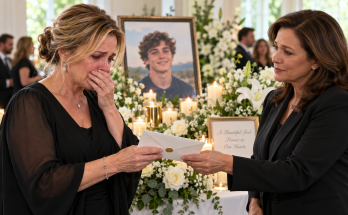
At her memorial, Luca spoke.
He told stories about his mother.
Her terrible singing.
Her obsession with detective novels.
Her refusal to throw away jars.
Her ability to remember every birthday except her own wedding anniversary.
Then he told the dinner story.
I wanted to sink through the floor.
“Dad said I could tell this.”
he began.
Technically, I had said:
If you absolutely must.
He continued.
“Four hours after Mom came home from the hospital with me, Dad asked her what she was making for dinner.”
The room groaned.
My granddaughter Amelia covered her face.
“Grandpa!”
“I know.”
I muttered.
People laughed.
Luca smiled.
“That isn’t the important part.”
The room quieted.
“The important part is that my father told me this story himself when my wife became pregnant.”
“He could have hidden it.”
“He could have turned it into a joke.”
“He could have said he was tired.”
“He could have blamed being young.”
“He didn’t.”
“He told me exactly how he failed my mother because he wanted me to recognize the same failure before I repeated it.”
I looked down.
Luca’s voice broke.
“My mother once told me she did not measure Dad’s apology by what he said that first week.”
“She measured it by the thousands of ordinary mornings afterward.”
“The meals.”
“The diapers.”
“The calendars.”
“The appointments.”
“The laundry.”
“The nights he noticed she was tired before she had to announce it.”
“The times he got it wrong and corrected himself without asking for a medal.”
“The way he raised me.”
“The way he cared for her when she became sick.”
He looked at me.
“Mom said the opposite of neglect wasn’t grand romance.”
“It was attention.”
I cried.
Luca continued.
“She said love is often the person who notices the water glass is empty and fills it without being asked.”
That was Claire.
Making an entire marriage fit inside a water glass.
After her death, I moved closer to Maya.
Not into her house.
She had boundaries.
I respected them.
At eighty-eight, I became a great-grandfather.
A boy.
His name was Samuel.
When Samuel was six, I visited one afternoon.
His mother was sick in bed with the flu.
Samuel’s father, Jordan, was in the kitchen making soup while answering work messages.
Samuel asked:
“What’s for dinner?”
Jordan said:
“Soup.”
“Mom making it?”
“No.”
“Why?”
“Mom’s sick.”
Samuel accepted this as though it were the most obvious thing in the world.
“Okay.”
Then he ran away.
I stood in the doorway.
Jordan looked at me.
“You all right?”
“Yes.”
I was more than all right.
A family story had finally become boring.
That was success.
Nobody in that kitchen thought a sick woman should cook because she was the woman.
Nobody praised Jordan for being extraordinary because he made soup.
Nobody called it helping.
Dinner simply needed making.
So somebody capable made it.
I went into the bathroom and cried anyway.
At ninety-one, I was invited to Luca’s retirement dinner.
He had become a pediatrician.
Not because of his birth.
At least he insisted not.
During his speech, he thanked Elena.
Then his children.
Then he pointed at me.
“My father taught me two important things.”
I groaned.
“Here we go.”
Everyone laughed.
“First, never ask a woman recovering from abdominal surgery what she’s making for dinner.”
More laughter.
“Second, being ashamed of who you were is useless unless it changes what you do next.”
That one quieted the room.
He raised his glass.
“To Mom.”
Everyone did.
“To Claire.”
I whispered.
At ninety-three, I found the pizza cutter.
The anniversary gift.
WHAT’S FOR DINNER?
The engraving had faded.
I gave it to Amelia.
She laughed so hard she nearly dropped it.
“You’re serious?”
“Family heirloom.”
“This is the worst family heirloom in history.”
“Respect your heritage.”
She kept it.
Years later, she told me she used it every Friday.
Apparently our generational trauma became pizza night.
Claire would have approved.
Near the end of my life, I thought often about that Thursday.
People imagine their lives turn on enormous events.
Sometimes they do.
Births.
Deaths.
Marriages.
Accidents.
But sometimes a life turns around a small sentence spoken in an ugly kitchen.
What’s for dinner?
Five words.
The sentence itself was not extraordinary.
What made it terrible was everything beneath it.
Expectation.
Entitlement.
Inattention.
The belief that Claire’s pain should remain invisible if it interfered with my comfort.
Then another sentence came.
I need a partner, not another person to take care of.
That sentence gave me a choice.
Not once.
Repeatedly.
The next diaper.
The next meal.
The next morning.
The next year.
Change is rarely one brave decision.
It is usually the same decent decision made enough times that it becomes character.
At ninety-five, I moved into assisted living.
I hated the phrase.
Maya said:
“You need assistance.”
“Rude.”
“Accurate.”
She had become Claire.
That was comforting and terrifying.
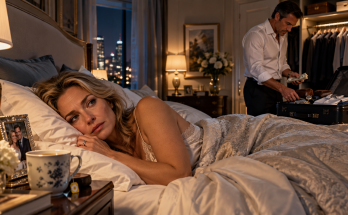
I kept photographs beside my bed.
Claire holding newborn Luca.
Claire pregnant with Maya.
Our twenty-fifth anniversary.
Our fiftieth.
Claire at seventy laughing because I dropped an entire birthday cake.
The last photograph of us together.
Her hair thin from treatment.
My arm around her.
Both of us smiling.
Beside the photographs sat the pizza cutter.
Amelia returned it.
“Why?”
I asked.
“Because it belongs with you.”
“I gave it to you.”
“I’ll take it back later.”
“Planning ahead?”
“You’re ninety-five.”
“Heartless.”
“Genetic.”
I laughed.
One evening, Maya sat beside me.
“Dad?”
“Yes?”
“Do you still feel guilty?”
I knew what she meant.
“Sometimes.”
“After all this time?”
“Yes.”
“Why?”
“Because becoming better doesn’t travel backward.”
She thought about that.
“No.”
“It doesn’t.”
“I wish I could give your mother a different first week.”
“I know.”
“I wish I had been the man I became later.”
Maya took my hand.
“But then you wouldn’t have become him in the same way.”
I looked at her.
“Careful.”
“What?”
“That sounds like you’re saying Mom needed to suffer so I could learn.”
She immediately shook her head.
“No.”
“Good.”
“I mean you can’t change what happened.”
“But you did change what happened next.”
I smiled.
“That I can live with.”
She squeezed my hand.
“You already did.”
I died at ninety-six.
Not dramatically.
Not during dinner.
Which would have been too obvious.
Maya was with me.
Luca arrived shortly before midnight.
Amelia brought the pizza cutter because our family has a terrible sense of humor.
My final days were mostly sleep.
When I was awake, I talked about Claire.
Not the night I failed her.
The life after.
Her laugh.
Her hands.
The way she hated raisins.
The way she stole hotel soap despite buying expensive soap at home.
The way she held Luca.
The way she danced with Maya at her wedding.
The way she looked at me when I finally learned something without being told.
Near the end, Luca asked:
“Dad?”
“Hmm?”
“If you could go back to that night, what would you do?”
I knew immediately.
“Which part?”
“All of it.”
I closed my eyes.
“I’d pick up the medicine Wednesday.”
He smiled.
“Good start.”
“I’d wash the towels.”
“Take out the trash.”
“Build the bassinet.”
“Put clean sheets on the bed.”
“Bring your grandmother with us because your mother wanted her.”
“I’d make food.”
“Put water beside the bed.”
“With a straw?”
I smiled.
“With a straw.”
“And when Mom came home?”
“I’d put her in bed.”
“Bring you to her when you needed feeding.”
“Take you away when you didn’t.”
“And dinner?”
I opened my eyes.
“I’d heat the casserole.”
Luca laughed.
“Was it good?”
“Excellent.”
“That’s tragic.”
“Deeply.”
Then I became serious.
“But that’s not the thing I’d change most.”
“What is?”
“I’d look at her.”
Luca frowned.
“I saw your mother.”
“I just didn’t look.”
“I saw the bracelet.”
“The way she walked.”
“The way she held her abdomen.”
“The pain on her face.”
“And I kept translating what I saw into how it affected me.”
I was hungry.
I was tired.
I felt criticized.
I wanted quiet.
I wanted dinner.
“I’d look at her and ask myself what she was carrying before deciding what I needed from her.”
Luca’s eyes filled.
“That’s what I’d change.”
He nodded.
Then whispered:
“She knew you learned.”
“I hope so.”
“She did.”
I closed my eyes.
That was enough.
After my funeral, Amelia took the pizza cutter home.
She hung it on her kitchen wall.
Her husband thought that was strange.
He was correct.
Underneath it, she framed a handwritten note.
Not mine.
Claire’s.
She had found it among old anniversary cards.
It said:
Love is not proving how much one person can carry. Love is noticing when the load needs another pair of hands.
Years passed.
The story traveled.
Like family stories do.
But this time, we tried not to polish it.
Nobody told my great-grandchildren I had always been a wonderful husband.
I wasn’t.
Nobody told them Claire saved our marriage by being patient.
She did not owe me patience.
Nobody said having a baby was stressful and we both made mistakes.
That would have blurred responsibility until it meant nothing.
They were told the truth.
Evan failed Claire badly when Luca was born.
Claire named the failure.
Evan listened late.
Then he spent the rest of his marriage listening earlier.
That was the story.
Not:
A bad man became good.
Human beings are rarely that tidy.
I was a man who loved his wife while carrying assumptions that harmed her.
Both were true.
Love did not automatically correct those assumptions.
Being confronted did not automatically correct them either.
Practice did.
Humility did.
Claire’s boundaries did.
Counseling did.
Watching my mother finally admit she had been abandoned inside a story our family called devotion did.
Raising children differently did.
Making dinner did.
Remembering medicine did.
Learning that noticing is an action did.
And time proved whether any of it was real.
Decades after Claire died, one of our great-great-grandchildren asked Amelia why an old pizza cutter hung on her kitchen wall.
Amelia smiled.
“It’s a long story.”
The child looked at the engraving.
“What’s for dinner?”
“Yes.”
“Why is that important?”
Amelia thought for a moment.
Then she said:
“Because a long time ago, your great-great-grandfather asked that question when he should have been asking a different one.”
“What question?”
Amelia smiled.
“What can I do?”
The child considered this.
Then pointed toward the kitchen.
“Can I help make dinner?”
Amelia handed him a bowl.
“Absolutely.”
And that, more than any apology I ever gave, was the ending I would have wanted.
Not a family of perfect men.
Not women who never needed help.
Not marriages where nobody failed.
Something simpler.
People who noticed.
People who knew care was not assigned by gender.
People who understood that bringing home a paycheck did not exempt them from bringing someone a glass of water.
Sons who could make dinner.
Daughters who did not apologize for needing rest.
Partners who knew that a baby belonged equally to the exhausted adults staring at it at three in the morning.
Children who grew up never hearing their mothers praised for suffering silently.
And men who did not wait for a locked bedroom door to discover that the woman they loved had been carrying too much.
That Thursday afternoon, I thought Claire had spent three days resting.
I had been wrong about almost everything contained in that word.
She had labored for twenty-two hours.
She had been rushed into surgery frightened for our son.
She had been cut open.
Stitched and stapled.
Monitored.
Pressed on.
Woken.
Fed around the clock.
Taught to care for a newborn while her own body needed care.
She had come home hurting.
And I looked at her and saw somebody who should make me dinner.
For years, that memory embarrassed me.
Then shame matured into something more useful.
A warning.
Do not confuse someone’s endurance with an absence of need.
Do not call recovery rest simply because you are not the one hurting.
Do not praise a person for carrying everything when what they actually need is for you to lift your share.
And when someone you love finally tells you they cannot depend on you, do not waste the moment defending all the reasons you thought they should.
Listen.
Then become dependable.
Not for a week.
Not until they forgive you.
Not until the crisis passes.
Become dependable because love without responsibility eventually becomes another burden for the person doing the carrying.
Claire once told me she needed a partner.
It took me far too long to understand that “partner” was not a title I received on our wedding day.
It was a job.
A practice.
A thousand ordinary decisions.
And, fortunately for me, after the worst dinner question of my life, Claire gave me the opportunity to start making better ones.
What does Luca need?
What does Claire need?
What needs doing?
What have I failed to notice?
What belongs to me without anyone assigning it?
What can I carry?
Those questions saved far more than our marriage.
They changed what our children thought love looked like.
They changed what my mother believed she had deserved.
They changed the final years of my parents’ marriage.
They changed the kind of husband my son became.
They changed the stories our family handed forward.
And in the end, that mattered more than whether Claire ever forgot the night I failed her.
She never did.
Neither did I.
We simply built so many better days afterward that the worst one no longer had to carry the weight of defining us.
Four hours after my wife came home with seventeen surgical staples and our newborn son, I asked her what was for dinner.
Nearly sixty-two years later, the last meal she and I shared was soup I carried to her bedside.
She managed three spoonfuls.
Then she was too tired to continue.
I put the bowl down.
I did not ask her to try harder.
I did not tell her how much effort I had put into making it.
I did not make her comfort me because she couldn’t eat.
I simply took her hand.
And stayed.
It had taken me a lifetime to learn what I should have understood in that kitchen when I was thirty-four.
Sometimes the person you love does not need you to solve everything.
Sometimes they need medicine picked up when you said you would pick it up.
A bassinet assembled before they come home.
Trash taken outside.
A meal warmed without discussion.
A baby changed at four in the morning.
A glass of water.
A straw.
A pair of hands that notice theirs are already full.
And sometimes love is nothing more glamorous than seeing the person in front of you clearly enough that they do not have to collapse before you finally ask what you can carry.
Claire taught me that.
I wish she hadn’t needed to.
But once she did, I spent the rest of my life making sure the lesson did not stop with me.
THE END STORIES! THANK YOU FOR READING GOOD LUCK !❤️
Related Posts