➡️ PART 3 ENDING PART ➡️
“What did you do?”
Travis was still standing on the gravel driveway with the divorce papers in one hand and his phone in the other.
For the first time in nine years of marriage, he looked at me as though he did not know who I was.
Maybe he didn’t.
Maybe I didn’t either.
The June he knew had spent years asking whether we could afford a new washing machine while he bought fishing rods that cost more than our monthly grocery budget.
She apologized when the electric bill increased.
She waited three summers for a properly functioning upstairs air conditioner because Travis said replacing it would be irresponsible.
She mowed eleven acres herself because hiring somebody was supposedly wasteful.
She stood in grocery aisles comparing prices down to the ounce while her husband transferred thousands of dollars into accounts she did not know existed.
That June had been useful to Travis.
Quiet.
Careful.
Easy to underestimate.
But seventeen days was enough time for a frightened woman to discover that fear and helplessness were not the same thing.
“I asked you a question.”
Travis’s voice sharpened.
I looked at the phone in his hand.
“Who called?”
“That isn’t your business.”
I almost laughed.
Nine years of marriage, and apparently even now he thought that sentence still worked.
“Then I suppose whatever I did isn’t yours.”
His jaw tightened.
“June.”
The screen door creaked behind me in the wind.
Somewhere near the pond, a frog croaked.
It was absurdly ordinary.
The afternoon did not understand that my marriage was ending.
Travis looked down at his phone again.
Then back at me.
“My card was declined.”
There it was.
I folded my arms.
“I didn’t touch your card.”
“Don’t lie to me.”
“I’m not.”
“My fuel card worked this morning. My personal card worked yesterday. Now the bank says there’s some kind of hold.”
“I didn’t put a hold on anything.”
“Then who did?”
“I imagine you’ll have to ask your bank.”
He took two steps toward me.
I did not move.
That mattered.
A month earlier, I would have stepped backward automatically.
Not because Travis had ever hit me.
He hadn’t.
But control does not always arrive with a raised fist.
Sometimes it arrives as certainty.
The certainty that one person gets to occupy more space.
Speak louder.
Know better.
Decide.
And the other person learns to retreat before being told.
I had been retreating for years.
That afternoon, I stayed exactly where I was.
“You went through my finances.”
he said.
“No.”
I shook my head.
“I went through ours.”
His face reddened.
“It’s my money.”
“You’ve mentioned that.”
“I earned it.”
“Yes.”
“And now you’re trying to take it.”
“No, Travis.”
I looked directly at him.
“I’m trying to find it.”
Something flickered across his face.
Tiny.
But I saw it.
Fear.
My attorney had seen the same thing when I described his behavior.
Her name was Rebecca Sloan.
I had found her the day I crossed the street from the tax office to the courthouse.
Technically, I had found her name on a referral sheet and called her office from my truck.
She agreed to see me that afternoon after a cancellation.
I walked into her office believing my problem was a bank account.
Forty minutes later, she looked at me over her glasses and said:
“Mrs. Hale, your problem may be considerably larger than that.”
She had asked questions I had never thought to ask.
Did I know Travis’s exact salary?
Approximately.
Bonuses?
Sometimes.
Overtime?
Probably.
Retirement accounts?
He handled them.
Life insurance?
He handled it.
Investment accounts?
He handled them.
Tax returns?
I signed where he told me.
Credit cards?
One joint card and whatever Travis carried.
Savings?
He said we had some.
How much?
I didn’t know.
Rebecca had stopped writing.
“Mrs. Hale, when was the last time you saw a complete financial statement for your household?”
I could not answer.
That silence embarrassed me.
Rebecca did not let me stay embarrassed.
“Don’t confuse lack of access with lack of intelligence.”
she said.
“Those are different things.”
That sentence followed me home.
Over the next two weeks, I started looking.
Really looking.
I found old tax returns in a filing cabinet Travis assumed I never opened.
His income had not been around $141,000 every year.
That was base pay.
Some years, with offshore differentials, bonuses, overtime, and hazard pay, he earned considerably more.
Yet every year, he told me we were barely keeping up.
I found statements for an investment account I had never seen.
Then another.
I found evidence of a safe-deposit box.
I found a credit union account opened three years earlier.
I found transfers leaving our old joint checking account in regular increments.
$1,500.
$2,000.
$3,500.
Small enough not to look catastrophic individually.
Together, they were enormous.
And then Rebecca obtained an emergency order requiring financial disclosures and restricting certain transfers while the divorce was pending.
That was probably what Travis’s bank was calling about.
I had not frozen his life.
I had simply stopped letting him move pieces off the board before anyone could count them.
“Call your lawyer.”
I said.
He laughed.
“I don’t need a lawyer.”
“You do now.”
“You really think you’re getting half my paycheck?”
“This isn’t about your next paycheck.”
“Then what is it about?”
“Nine years.”
His expression changed.
I continued.
“Nine years of income.”
“Nine years of tax returns.”
“Nine years of accounts.”
“Nine years of you telling me we couldn’t afford an air conditioner while you apparently moved money somewhere else.”
His eyes narrowed.
“You had a roof over your head.”
The words hit me strangely.
Not because they hurt.
Because suddenly I heard them clearly.
You had a roof over your head.
As though I had been his dependent.
His guest.
As though the roof had been something he provided.
I looked behind me.
At the porch.
The columns Daddy repaired with his own hands.
The oak tree he planted the year I was born.
The workshop where he taught me to change oil and sharpen mower blades.
The roof Travis was referring to sat on a house my father left me.
I almost smiled.
“Actually, Travis.”
I said softly.
“You had a roof over your head.”
His face changed.
That one landed.
He pointed at the house.
“I paid for this place.”
“No.”
“I paid taxes.”
“Some years.”
“I paid insurance.”
“From marital income.”
“I paid repairs.”
“And I managed them.”
“You couldn’t have kept this property without my salary.”
“Maybe not.”
I nodded.
“But that still didn’t put your name on Daddy’s deed.”
His mouth opened.
Then closed.
The legal truth offended him more than any insult could have.
He had spent nine years believing money gave him ownership over whatever it touched.
My house.
My labor.
My decisions.
My time.
Me.
“I’m going inside.”
I said.
“You can’t keep me out.”
“My attorney has already explained what I can and cannot do while the temporary orders are pending.”
His eyes widened.
“Temporary orders?”
“Yes.”
“You filed something against me?”
“I filed for divorce.”
“You know what I mean.”
“I know exactly what you mean.”
He stared at me.
“Who have you been talking to?”
There was such accusation in the question that I almost pitied him.
Control feels normal to the person benefiting from it.
The moment the controlled person receives outside information, it can feel like betrayal.
“A lawyer.”
I said.
“A forensic accountant.”
His face drained.
There.
That was the answer.
Not anger.
Fear.
“A what?”
“A forensic accountant.”
“You’re wasting money.”
“Maybe.”
“June, listen to me.”
“No.”
He blinked.
One word.
No.
It felt enormous.
“I listened to you for nine years.”
I continued.
“Now somebody else gets to look at the numbers.”
He lowered his voice.
“You don’t understand what you’re doing.”
“I think that’s what you’re afraid of.”
He stared at me for several seconds.
Then he said something I will never forget.
“You’d have nothing without me.”
I looked at the house.
The eleven acres.
Daddy’s workshop.
My calloused hands.
The mower I maintained.
The fence I patched after Hurricane Laura.
The receipts I had organized.
The garden I planted.
The home I had kept alive during twenty-one-day stretches when Travis was ninety miles offshore.
Then I looked back at him.
“That’s what you needed me to believe.”
I said.
I went inside.
And this time, when I closed the door, I did not feel like I was locking my husband out.
I felt like I had finally stopped locking myself in.
The next several weeks were ugly.
Not cinematic.
Ugly in the exhausting, administrative way real separation often is.
Emails.
Statements.
Affidavits.
Phone calls.
Passwords.
Copies.
Dates.
Questions.
Rebecca told me to document everything.
So I did.
Travis hired an attorney.
Then changed attorneys.
The first one apparently told him things he did not want to hear.
His second attorney was more aggressive.
Letters arrived accusing me of withholding marital property.
Rebecca answered them.
Travis claimed he had invested heavily in improving my separate property and therefore deserved reimbursement.
Rebecca requested proof.
He produced some receipts.
So did I.
Mine were better.
Because for nine years, while Travis called paperwork “his department,” I had quietly kept nearly every receipt associated with the property in labeled envelopes.
Roof.
Fence.
Hurricane.
Septic.
HVAC.
Workshop.
Insurance.
Taxes.
Travis had forgotten that.
He had also forgotten something more important.
Money was not the only contribution made to a marriage.
I had spent nine years maintaining the property.
I coordinated repairs.
Met adjusters.
Cleaned storm debris.
Handled contractors.
Maintained equipment.
Kept records.
Ran the household.
The legal questions were more complicated than either of us had imagined, and Rebecca never promised me that every dollar or every improvement would be treated exactly the way I wanted.
She promised something better.
“We’ll use records.”
she said.
“Not his story.”
That became our rule.
Records.
Not stories.
The records became devastating.
Our forensic accountant was named Martin Cho.
He was quiet, meticulous, and apparently incapable of becoming emotionally impressed by anything.
I liked him immediately.
The first time he came to Rebecca’s office, he placed three folders on the conference table.
“Mr. Hale appears to have maintained at least four accounts not fully disclosed to Mrs. Hale.”
At least.
I stared at him.
“How much?”
“We’re still tracing.”
Travis had transferred money among accounts.
Some went into brokerage investments.
Some into a credit union.
Some toward purchases.
A substantial amount had gone into what Martin called “nonessential personal expenditures.”
I asked what that meant.
He turned a page.
Fishing equipment.
A boat-share arrangement.
Watches.
Electronics.
Hotels.
Restaurants.
Cash withdrawals.
I felt sick.
“Hotels?”
Rebecca looked at Martin.
“Recurring?”
“Yes.”
My stomach tightened.
“Where?”
Mostly Houston.
A few in Galveston.
Some during Travis’s supposed offshore hitches.
Rebecca looked at me.
“You don’t have to make assumptions yet.”
But my marriage had already taught me what happened when I ignored patterns because the explanation might hurt.
“Is there another woman?”
I asked.
Martin was careful.
“Financial records cannot tell me that.”
Good answer.
But they could tell me someone had eaten expensive dinners with Travis while I was at home clipping coupons.
They could tell me he had purchased jewelry I never received.
They could tell me a hotel room for two had been booked on our anniversary the year Travis claimed weather had delayed his return from offshore.
I went outside and vomited beside Rebecca’s office building.
Rebecca found me.
She did not say anything sentimental.
She handed me tissues.
Then a bottle of water.
“I feel stupid.”
I whispered.
“No.”
“Please don’t tell me I’m not.”
“I wasn’t going to.”
I looked at her.
She leaned against the wall.
“Feeling stupid is not proof that you were stupid.”
she said.
“You trusted your spouse.”
“He exploited that trust.”
“Those are separate facts.”
I cried.
Not only because he might have cheated.
Because suddenly the entire architecture of my marriage looked different.
Money had always been the place where Travis held the most power.
I thought he was cautious.
Responsible.
Better with finances.
Now I wondered how much of our supposed scarcity had been engineered.
How many things had I denied myself because scarcity kept me obedient?
New shoes.
Dental work I postponed.
A trip to see my cousin in Tennessee.
Replacing my ten-year-old laptop.
Hiring someone to help with the acreage.
A professional course I once wanted to take.
The upstairs air conditioner.
Every time, Travis had sighed.
“June, money doesn’t grow on trees.”
Meanwhile, money had apparently been growing somewhere.
Just not where I could see it.
Martin eventually traced more than $230,000 across accounts and investments that I had either never known about or could not access.
Not all of it was hidden illegally.
Not all of it automatically belonged to me.
The legal classification mattered.
Dates mattered.
Sources mattered.
But the emotional truth was simpler.
My husband had spent years telling me we were struggling while building a financial life that excluded me.
That knowledge changed something permanently.
Not only how I saw Travis.
How I saw myself.
I had called myself frugal.
I had actually been afraid.
Afraid to spend.
Afraid to ask.
Afraid to need.
Afraid of becoming the kind of wife Travis called “high maintenance.”
One afternoon, I walked upstairs.
It was ninety-six degrees outside.
The second floor was miserable.
The old air conditioner rattled like a bucket of bolts.
I stood beneath the vent.
Then laughed.
I called an HVAC company.
The technician came the next morning.
“Ma’am, this unit should have been replaced years ago.”
“I know.”
He gave me the price.
Old June would have called Travis.
Asked.
Waited.
Negotiated against herself.
Instead I said:
“Do it.”
Three days later, cold air poured through the upstairs vents.
I stood in the hallway crying.
Over an air conditioner.
The technician probably thought I was unstable.
Maybe I was.
But that cold air felt like proof.
Comfort was not a moral failure.
I was allowed to repair things before they became emergencies.
That included houses.
That included lives.
Travis called constantly at first.
I stopped answering.
Communication went through attorneys unless there was a practical reason.
Then he changed tactics.
He became kind.
June, can we talk?
I think this has gotten out of hand.
We were married nine years.
We can work this out without strangers digging through everything.
That last sentence almost made me laugh.
Without strangers digging through everything.
Exactly.
That was what he wanted.
I forwarded it to Rebecca.
She replied:
Do not engage.
I didn’t.
Then came anger.
You are trying to destroy me.
Then guilt.
After everything I did for you.
Then nostalgia.
He sent a photograph from our honeymoon.
I stared at it for a long time.
I looked happy.
So did he.
That mattered.
I did not need to turn every day of our marriage into a lie.
Travis had loved me once.
I believed that.
Maybe part of him still did.
But love without respect can become possession frighteningly easily.
And possession always resents being told it has limits.
I deleted the photograph from the message thread.
Not from my life.
There was a difference.
Three months after filing, Travis admitted there had been another woman.
Her name was Kelly.
She lived near Houston.
They had met through friends connected to the offshore industry.
The affair had lasted almost two years.
Two years.
I sat in Rebecca’s office when I learned.
I stared at the table.
“Did he spend marital money on her?”
Martin answered.
“Yes.”
That was all I needed legally.
Emotionally, there was no answer large enough.
Two years meant birthdays.
Christmases.
Our eighth anniversary.
The hurricane cleanup.
The summer Daddy’s pond nearly dried out.
Two years meant there had been evenings when Travis called me from “offshore,” complained about work, asked whether I had paid the insurance, then hung up and called another woman.
I drove home afterward.
I parked beside Daddy’s workshop.
Then I sat in my truck until sunset.
I expected rage.
Instead, I felt grief.
Deep, embarrassing grief.
Because betrayal does not cancel love on schedule.
I still remembered Travis at twenty-nine, standing under the oak trees asking me to marry him.
I remembered him carrying me across the threshold as a joke even though the house was already mine.
I remembered the first hurricane we weathered together.
I remembered dancing in the kitchen.
I remembered his hand on the back of my neck when he kissed me.
Those memories did not disappear because newer ones were ugly.
That was one of the hardest lessons.
You can know someone treated you badly and still mourn the person you believed they were.
I went into Daddy’s workshop.
Nothing had changed much.
His old workbench remained against the wall.
Travis had wanted to tear it out once.
Said it was taking up space.
I refused.
That might have been one of the only things I refused without apology.
I ran my fingers across the worn wood.
Daddy had been dead more than a decade.
Still, I could hear him.
Not actual words.
Just his way of thinking.
Measure twice.
Don’t force a stripped screw.
Keep receipts.
Read before signing.
Own what is yours.
Daddy had protected the deed.
But he could not protect the woman living on it.
That part had been my job.
I just hadn’t known it.
Until now.
The divorce took fourteen months.
Travis fought.
Then fought less.
The financial records did what arguments could not.
They removed his ability to control reality simply by speaking more confidently.
Some assets were classified as marital.
Some were separate.
Some expenditures were treated as dissipation.
Some were not.
There were credits, offsets, valuations, negotiations.
The final result was not the fantasy people imagine when they hear stories like mine.
I did not take everything Travis owned.
I did not want to.
The house and acreage remained mine, subject to the legal treatment of certain marital contributions and negotiated financial adjustments.
Travis retained his retirement interests according to the settlement structure, while I received the share and offsets to which I was entitled.
Hidden accounts were disclosed.
The money spent on the affair mattered.
So did other transfers.
The final financial settlement was enough to make Travis furious.
It was also fair enough that Rebecca looked at me and said:
“You can sign this and sleep.”
That was what I wanted.
Not victory.
Sleep.
I signed.
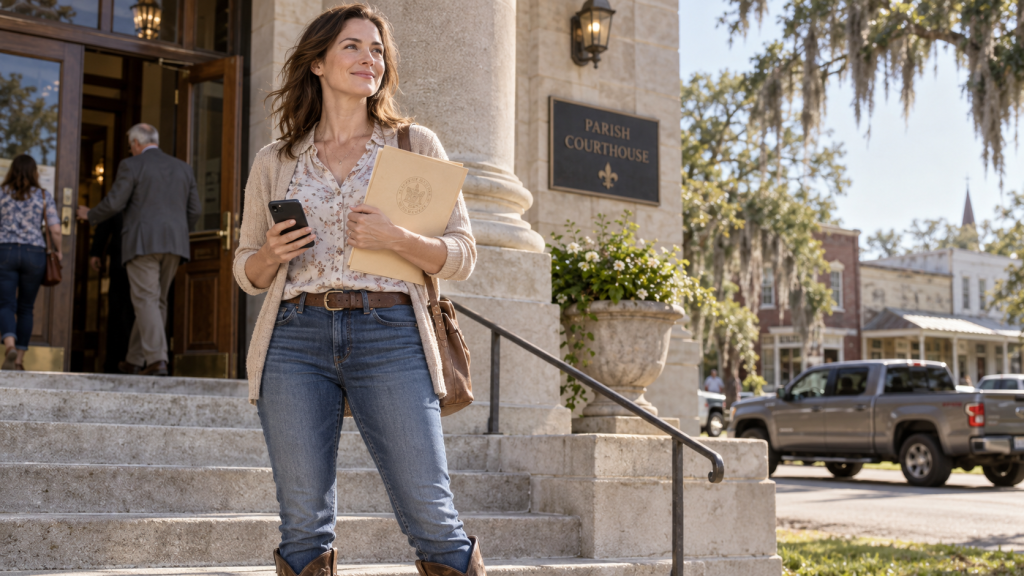
When it was finished, Travis waited outside the courthouse.
The same courthouse I had crossed toward seventeen days after discovering what he had done.
He looked older.
Not old.
Just stripped of certainty.
“June.”
I stopped.
Rebecca remained several feet behind me.
“It’s done.”
he said.
“Yes.”
“You happy?”
I thought about that.
“No.”
He looked surprised.
“You got the house.”
“It was already mine.”
“You got money.”
“I received a settlement.”
“You exposed everything.”
“You hid everything.”
His mouth tightened.
“You always have an answer now.”
I almost smiled.
“No.”
“I always had thoughts.”
“I just stopped saying them.”
That silenced him.
He looked toward the courthouse doors.
Then back at me.
“Kelly’s gone.”
I said nothing.
“She left months ago.”
Still nothing.
“Apparently all this was too much for her.”
I finally spoke.
“I’m not the person to talk to about Kelly.”
He nodded.
“I know.”
Then:
“Do you hate me?”
The question surprised me.
I thought carefully.
“Sometimes.”
His face tightened.
“But mostly?”
I looked across the street.
At the tax office where Denise had first told me the billing profile had changed.
At the parking lot where I had discovered the closed account.
At the courthouse where I had walked in shaking.
“Mostly, I’m tired.”
I said.
Travis nodded.
“I never thought you’d do this.”
“I know.”
“You were never interested in money.”
“That was convenient for you.”
He flinched.
“I didn’t mean—”
“Yes, you did.”
I wasn’t angry when I said it.
That made it heavier.
“You needed me to believe finances were your territory.”
“You earned.”
“You decided.”
“I maintained.”
“I asked.”
“And because you brought home the paycheck, you gradually convinced both of us that my work existed outside the economy.”
He looked at me.
“I never said your work didn’t matter.”
“No.”
I nodded.
“You just made sure it had no authority.”
His eyes filled.
I had not expected that.
“I worked hard, June.”
“I know.”
“Twenty-one days offshore isn’t easy.”
“I know.”
“I missed holidays.”
“I know.”
“I broke my body out there.”
“I know.”
My voice softened.
“That was never the argument.”
“Your work mattered.”
“So did mine.”
He looked away.
“I thought because I earned it—”
“You owned it.”
“Yes.”
Finally.
Truth.
“I don’t know when I became that guy.”
he whispered.
I looked at him.
I could have answered cruelly.
Slowly.
Conveniently.
Every time I let you.
But the truth was more complicated.
“I don’t know either.”
I said.
He wiped his eyes.
“I’m sorry.”
I waited.
“For what?”
He looked startled.
“Everything.”
“No.”
I shook my head.
“Name it.”
He stared at me.
I could see the old irritation rise.
Then fall.
Maybe he finally understood that “everything” was sometimes a way to avoid looking directly at anything.
“I’m sorry I removed you from the accounts.”
I waited.
“I’m sorry I moved money without telling you.”
Another pause.
“I’m sorry I lied about how much we had.”
His voice broke.
“I’m sorry I made you feel guilty for spending money while I spent whatever I wanted.”
I felt tears in my eyes.
He continued.
“I’m sorry about Kelly.”
I nodded.
“And?”
He looked confused.
“The house.”
His expression changed.
“What about it?”
“You lived on my father’s property for nine years and spoke about it as though I should be grateful you let me stay.”
He closed his eyes.
“Yes.”
“I’m sorry.”
“And the work.”
“What work?”
There it was.
Even now.
I almost laughed.
“The eleven acres, Travis.”
His face changed.
“The repairs.”
“The contractors.”
“The insurance.”
“The storms.”
“The bills.”
“The house.”
“Your meals.”
“Your laundry.”
“Your appointments.”
“Your life when you were ninety miles offshore.”
I swallowed.
“I worked too.”
He nodded slowly.
“You did.”
“No.”
I said.
“Say it like you mean it.”
He looked at me.
“You worked too, June.”
Something inside me loosened.
Not healed.
Not vanished.
Loosened.
“Thank you.”
He stared at me.
“Is there any chance for us?”
There it was.
The question I had once feared.
Because months earlier, part of me would have wanted him to ask.
Not because I wanted him back.
Because I wanted proof I had mattered.
Now I did not need proof from him.
“No.”
He looked down.
“I figured.”
“I don’t say that to punish you.”
“I know.”
“I hope you build something better after this.”
His eyes lifted.
“You mean that?”
“Yes.”
“Why?”
“Because bitterness is another kind of account.”
I said.
“And I’m done letting you manage mine.”
He laughed once through tears.
Then nodded.
We walked in opposite directions.
That was the end of our marriage.
But it was not the end of my story.
For the first six months after the divorce, I did something that would have horrified Travis.
I spent money on the property.
Not recklessly.
Intentionally.
I replaced the washing machine.
The old one finally gave up with a metallic shriek that sounded almost theatrical.
I stood beside it and laughed.
Then bought a good one.
Not the cheapest.
Not the most expensive.
The one I wanted.
I repaired the porch.
Had the pond cleared.
Repainted the upstairs rooms.
Replaced damaged fencing.
Hired someone to mow part of the acreage.
That last one was hardest.
The first time I watched another person on a commercial mower, guilt crawled up my spine.
I should do that.
Why pay for something I can do myself?
Then I asked a better question.
Why had I spent years proving I could exhaust myself?
I went inside.
Made tea.
Sat on the porch.
And let somebody else mow.
The world did not end.
I also went back to work.
Not because I needed Travis’s income.
Because I needed a part of my identity that did not begin with maintaining what other people left behind.
Years earlier, before marriage, I had done bookkeeping for a construction supplier.
I had been good at it.
Numbers never frightened me.
That irony made me laugh.
Travis had not controlled finances because I was incapable of understanding them.
He controlled them because I had stopped looking.
I took accounting software courses.
Updated my certifications.
Started part-time with a local contractor.
Within two years, I was managing books for four small businesses.
The first time a client told me:
“I don’t know what we’d do without you.”
I smiled.
But I did not build my identity around being indispensable.
That was another trap.
Being needed feels dangerously similar to being valued when you have spent years proving your worth through labor.
I learned to go home.
I learned to take weekends.
I learned to invoice properly.
I learned not to discount my work because it felt easy to me.
I learned that competence deserved compensation even when it did not leave blisters.
At forty-three, I opened my own bookkeeping and property-management consultancy from Daddy’s workshop.
I renovated one side into an office.
I kept his workbench.
Above it, I framed a copy of the deed.
Not because I was obsessed with property.
Because that piece of paper had once reminded me of something larger.
Ownership requires knowing what belongs to you.
Land.
Money.
Time.
Labor.
Voice.
Life.
Travis remarried four years later.
Her name was Melissa.
I knew almost nothing about her.
That was intentional.
He and I had no children together, so there was no reason to remain closely connected.
Once a year, maybe twice, a message.
A tax document.
A piece of mail.
Then nothing.
One afternoon, six years after our divorce, I saw him at a hardware store.
He looked good.
Older.
Calmer.
He was holding a box of cabinet hinges.
“June.”
“Travis.”
We stood awkwardly between plumbing and paint supplies.
Then he smiled.
“You look good.”
“So do you.”
“I heard you started a business.”
“Who told you?”
“Lake Charles isn’t Paris.”
Fair.
“Yeah.”
I said.
“It’s doing well.”
“I’m glad.”
He looked at the hinges.
Then said:
“Melissa has her own account.”
I blinked.
“Okay.”
He laughed nervously.
“That sounded stupid.”
“A little.”
“I just meant…”
He rubbed his forehead.
“I don’t handle all the money.”
I understood.
“Good.”
“She earns less than I do.”
“Okay.”
“But that doesn’t mean—”
“I know what you mean.”
He nodded.
“I learned something.”
I smiled faintly.
“Expensive lesson.”
“Very.”
There was no bitterness in his answer.
That mattered.
Then he said:
“I sold the boat.”
“You had a boat?”
His face froze.
I started laughing.
For the first time in years, Travis laughed with me.
“Bad choice of subject.”
“Apparently.”
We said goodbye.
I walked away smiling.
Not because I missed him.
Because healing sometimes announces itself through absence.
No racing heart.
No need to prove anything.
No fantasy of revenge.
Just two people standing beside cabinet hinges with a complicated history behind them.
Daddy’s land changed too.
At first, I believed preserving it exactly as he left it was a form of loyalty.
Then one day I realized Daddy had never preserved anything simply because it was old.
He repaired.
Adapted.
Built.
So I did too.
I leased four acres to a young couple who wanted to start a small vegetable farm.
Their names were Elena and Marcus.
They had two children and very little capital.
The first time we discussed rent, Marcus looked nervous.
“We can’t afford market rate yet.”
“I know.”
I offered a stepped lease.
Low at first.
Increasing as production grew.
Elena stared at me.
“Why?”
The question made me uncomfortable.
Because I remembered how easily help could become control.
So I answered carefully.
“Because empty land earns me nothing, and you have a plan.”
Not:
Because I’m saving you.
Not:
Because you owe me.
A deal.
Clear terms.
Respect.
Three years later, their farm was profitable.
They insisted on moving to full market rent early.
I argued.
They won.
The old barn became a farm stand on Saturdays.
Children came to feed chickens.
The pond got a small dock.
The property became louder.
Alive.
Different from Daddy’s version.
Still ours.
When I turned fifty, I held a birthday dinner beneath the oak trees.
Fifty.
For years, I had imagined turning fifty with Travis.
Instead, there were friends.
Clients.
Neighbors.
Elena and Marcus.
Denise from the parish tax office, who had somehow become a friend after accidentally detonating my marriage by updating me on a billing profile.
Rebecca came too.
So did Martin.
I pointed at him.
“You are not allowed to discuss hidden accounts tonight.”
“I wasn’t planning to.”
“Or forensic accounting.”
“I have other interests.”
“Name one.”
He thought.
“Gardening.”
We laughed.
After dinner, Denise raised a glass.
“To June.”
I groaned.
“No speeches.”
She ignored me.
“To the woman who came into my office looking for a missing tax notice and walked out with a deed.”
Everyone laughed.
I looked toward the house.
Then Denise added:
“Actually, she already had the deed.”
“She just needed reminding.”
That silenced me.
Because that was the entire story.
I already owned the land.
I already knew how to work.
I already understood numbers.
I already had judgment.
I already had strength.
The courthouse had not given those things to me.
The divorce had not created them.
Travis had not taken them.
I had simply stopped using them.
Or maybe I had been using them for everyone except myself.
At fifty-five, I received a letter from Travis.
Actual paper.
His handwriting.
I almost threw it away.
Then opened it.
He wrote:
June,
I don’t expect an answer.
Good beginning.
Melissa and I went through a difficult year.
I caught myself saying something to her that sounded exactly like something I used to say to you.
She wanted to make a large purchase for her business.
I said, “I earn more, so I think I should have the final say.”
The moment I heard it, I felt sick.
I sat down.
She looked at me and said, “Then you don’t want a wife. You want an employee you don’t pay.”
I laughed out loud.
I liked Melissa immediately.
We went to counseling.
We separated finances more clearly.
We built a shared household account and kept individual accounts.
We review everything together.
I am writing because I finally understand something I should have understood before you had to take me to court.
Earning more did not make me more married.
That line hurt.
In a good way.
I treated income like voting shares.
I thought because my paycheck was larger, my vote should count more.
I see now what that did to you.
I am sorry.
Then:
I also want to apologize for saying you had nothing without me.
The truth is that I had a home because of you.
Not only the house.
The life.
I came home every twenty-one days to groceries, clean sheets, paid bills, repaired fences, handled storms, appointments, insurance, meals, and a person who had arranged everything so smoothly that I started pretending it arranged itself.
I cried.
Not because I wanted Travis back.
Because there is a particular relief in having invisible labor finally named.
Even years late.
You did not owe me forgiveness then.
You do not owe me a response now.
I just wanted to put the truth somewhere outside my own head.
Travis.
I kept the letter.
For three months, I did not answer.
Then I wrote:
Travis,
I received your letter.
Thank you for naming it clearly.
I hope you and Melissa build something healthier than we knew how to build.
June.
That was enough.
At sixty-one, I paid off every remaining obligation connected to improvements on the property.
I walked into the courthouse again.
Same building.
Different clerk.
I filed the final documents associated with an easement adjustment and updated estate planning.
When I stepped outside, I stopped on the same sidewalk where I had stood years earlier after Travis laughed at me over the phone.
I remembered the sound.
“I earn it, June. I decide who touches it.”
At the time, the sentence made me feel small.
Now it sounded almost childish.
Money matters.
Of course it does.
Money can determine whether someone eats, leaves, repairs, heals, escapes, rests.
That is precisely why controlling another adult’s access to it can become so powerful.
But money is not the only wealth inside a household.
There is time.
Labor.
Care.
Opportunity surrendered.
Risk absorbed.
Homes maintained.
Children raised.
Parents cared for.
Storms handled.
Meals planned.
Appointments remembered.
A thousand tasks so ordinary nobody notices them until they stop happening.
I had spent years treating Travis’s paycheck as proof that he was supporting me.
I had never asked who was supporting the life that allowed him to earn it.
Both things were work.
Different work.
Neither should have erased the other.
I never remarried.
Not because Travis ruined love for me.
He didn’t.
I dated.
I had a serious relationship in my late fifties with a widower named Paul.
He was kind.
We traveled.
We laughed.
We loved each other for six years.
Eventually, he wanted to move to Colorado to be near his sons.
I wanted to remain on Daddy’s land.
We ended gently.
No affair.
No hidden accounts.
No villain.
Just two lives bending in different directions.
I learned that an ending did not have to prove the beginning was a mistake.
Paul remained someone I was grateful to have loved.
When he died years later, his son called me.
I cried.
Then planted a pecan tree near the pond.
By seventy, I had reduced my workload.
Elena and Marcus eventually purchased the four acres they had leased.
I sold it fairly.
Not cheaply enough to turn generosity into dependence.
Not expensively enough to squeeze them.
The day we signed, Elena cried.
“You sure?”
I looked at her.
“It’s land.”
“No.”
She shook her head.
“You know it isn’t.”
I did.
Daddy’s eleven acres had become seven.
For a moment, that felt like loss.
Then I looked at the family who would own those four acres.
Their daughter planned to study agriculture.
Their son wanted to build greenhouses.
Land does not honor the dead by refusing to serve the living.
I signed.
At seventy-six, I began having trouble maintaining the remaining property.
For the first time, I considered selling.
The idea terrified me.
Not because I needed the house.
Because the house had become tangled with identity.
Daddy.
Marriage.
Divorce.
Freedom.
Who would I be without the deed?
That question embarrassed me.
Had I escaped one form of dependence only to create another?
I sat in Daddy’s workshop one evening.
The framed deed still hung above his bench.
I stared at my name.
Then I laughed.
The deed had taught me ownership.
Now ownership had to teach me something else.
You can own something without letting it own you.
I sold another three acres to a conservation group protecting the pond and oak corridor.
I kept the house, workshop, and surrounding acreage.
Enough.
Not because I was afraid to let go.
Because I wanted to stay.
There is a difference between being trapped somewhere and choosing it.
At eighty-two, I developed arthritis badly enough that mowing even the small section around the house became ridiculous.
I hired Marcus’s grandson.
His name was Caleb.
Sixteen.
He arrived every Saturday.
One afternoon, I found him staring at the framed deed in the workshop.
“Miss June?”
“Yes?”
“Why do you have that framed?”
I smiled.
“Long story.”
“I’ve got time.”
So I told him.
Not every detail.
Enough.
About Travis.
The accounts.
The tax office.
The courthouse.
The deed.
The seventeen days.
Caleb listened.
Then asked:
“Did your husband really think the house was his?”
“Yes.”
“That’s dumb.”
I laughed.
“It was more complicated than that.”
“His name wasn’t on it.”
“Legally, yes.”
“So why’d he think it was his?”
I looked at the boy.
Because adults spend decades complicating truths children can sometimes see immediately.
“Because he paid for things.”
Caleb frowned.
“So?”
I smiled.
“Exactly.”
He looked at the deed again.
“Were you scared?”
“Yes.”
“Like really scared?”
“Terrified.”
“But you still did it.”
“Yes.”
He shrugged.
“Then you were brave.”
I shook my head.
“I don’t know.”
He looked confused.
I explained.
“People make bravery sound like you stop being scared.”
“I never stopped.”
“I just started doing things while scared.”
Caleb nodded.
Then:
“That’s still brave.”
I let him have that one.
At eighty-seven, Travis died.
Melissa called me.
I had not spoken to him in years.
Not because we were angry.
Life simply moved.
“June?”
“Melissa.”
“He asked me to call you when it happened.”
I sat down.
“How?”
“Heart failure.”
“Was he in pain?”
“Not at the end.”
I closed my eyes.
“Good.”
She was crying.
“He kept your letter.”
“What letter?”
“The one you sent after his apology.”
I barely remembered it.
Three sentences.
Apparently, he had kept it.
“He talked about you sometimes.”
Melissa said.
“I hope not too much.”
She laughed through tears.
“No.”
“Enough.”
Then she said something unexpected.
“Thank you.”
“For what?”
“For leaving him.”
I almost dropped the phone.
“What?”
“If you hadn’t…”
She stopped.
Then tried again.
“He became a better man because he finally had to look at what he’d been.”
I felt uncomfortable.
“Melissa, I didn’t leave him to improve him.”
“I know.”
“And his growth wasn’t my responsibility.”
“I know that too.”
She paused.
“I’m just grateful he did the work afterward.”
That I understood.
“So am I.”
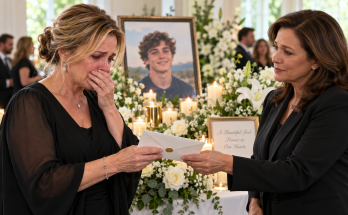
I attended Travis’s funeral.
Quietly.
I sat near the back.
A photograph of him offshore stood near the flowers.
Hard hat.
Work clothes.
Sunburned face.
Smiling.
I looked at that photograph and remembered the man I married.
He had not begun as a villain.
That matters to say.
He was funny.
Hardworking.
Protective.
Ambitious.
He made me laugh.
He once drove three hours through a tropical storm because Daddy had been hospitalized and I was terrified.
He held me at the funeral.
He slept beside me the night I inherited the house.
He told me we would build a life there.
And we did.
Then, slowly, habits hardened.
Income became authority.
Authority became entitlement.
Entitlement became secrecy.
Love did not disappear in one dramatic instant.
Respect eroded quietly.
That was more dangerous.
At the funeral, Melissa spoke.
She said Travis had spent his later years mentoring younger offshore workers.
Not only about safety.
Money.
Marriage.
He apparently told newly married men:
“Don’t come home thinking the size of your paycheck decides the size of your voice.”
I cried when I heard that.
Not because it repaired my marriage.
Nothing could.
But because pain that teaches nothing is especially tragic.
At least ours had taught something.
After the service, Melissa handed me a small envelope.
Inside was a note.
Travis had written it months earlier.
June,
You once told me your work mattered too.
It took me years to understand how badly I had needed it not to.
If your work counted, then my paycheck couldn’t make me king.
And I liked being king.
I stopped reading.
Even dead, Travis could still surprise me with honesty.
I am sorry.
Not because you divorced me.
Not because I lost money.
Not because Kelly left.
I am sorry because I made the person I loved ask permission to participate in her own life.
My eyes filled.
You were never powerless.
I just benefited from you believing you were.
Thank you for stopping.
Travis.
I folded the note.
Melissa touched my arm.
“He meant it.”
“I know.”
“Do you forgive him?”
I looked toward the photograph.
“Enough.”
She smiled sadly.
“That sounds like him.”
“No.”
I shook my head.
“That sounds like me.”
I went home.
The gravel drive was quieter than I remembered from youth.
The oak trees were enormous.
Daddy had planted some of them before I was born.
I sat on the porch until dark.
Then I took Travis’s letter into the workshop.
I placed it in a drawer.
Not beside the deed.
The deed did not need his apology.
Neither did I.
But I kept it because forgiveness does not require amnesia.
At ninety-one, I began preparing to leave the house.
Not dying.
Leaving.
My knees were terrible.
The nearest hospital was inconvenient.
The acreage needed more attention than I wanted to give.
I chose a small cottage community outside Lake Charles.
The first night after deciding, I cried until two in the morning.
Then I realized why.
Somewhere deep inside me, selling Daddy’s house felt like surrendering the thing that had saved me.
I went outside.
Touched the porch column.
Then whispered:
“You did your job.”
The house had protected me.
Daddy’s paperwork had protected me.
The land had given me room to rebuild.
But a home is not loyal because you die inside it.
Sometimes the most loving thing you can do with a place is allow another life to begin there.
I sold the remaining property to Elena and Marcus’s daughter, Sofia.
She was forty-three by then.
An agricultural engineer.
She and her wife had two children.
They wanted to restore the workshop, maintain the oaks, and keep the pond undeveloped.
At closing, Sofia cried.
I did not.
Not until I signed.
Then I cried harder than she did.
The attorney asked whether I needed a minute.
“No.”
I wiped my face.
“I’ve had nearly sixty years.”
I signed my name.
June Parker Hale.
I had kept Hale.
People sometimes asked why.
Because it was my name too by then.
Travis did not own those four letters.
I stood.
Handed Sofia the keys.
And for the first time since Daddy died, the deed no longer had my name on it.
I expected to feel less powerful.
Instead, I felt light.
That surprised me.
The courthouse had taught me to protect what was mine.
Age taught me I could choose to release it.
Both were power.
At ninety-three, a local community group asked me to speak about financial abuse and household money.
I refused.
Then they asked again.
I refused.
Then Denise’s granddaughter called.
Apparently Denise had told the story for years.
“Mrs. Hale, women need to hear this.”
I finally agreed.
I sat before maybe sixty people in a library meeting room.
Some young.
Some old.
Some married.
Some divorced.
I told them one thing first.
“My story is not a legal template.”
They listened.
“Property laws differ.”
“Accounts differ.”
“Marriages differ.”
“If something like this is happening to you, get qualified advice for your own circumstances.”
Then I told them the human part.
“Control often becomes normal gradually.”
Nobody wakes up one morning and announces:
I think I’ll surrender my voice today.
It happens in inches.
One person earns more.
So they handle the bills.
Then they know the passwords.
Then they decide what is necessary.
Then questions become arguments.
Then the other person stops asking.
Eventually, both people forget that access and authority were ever supposed to be shared.
A woman in the second row began crying.
I looked at her.
She wiped her face.
I continued.
“Being careful with money is not abuse.”
“Having separate accounts is not abuse.”
“One spouse earning more is not abuse.”
“But secrecy, coercion, intimidation, restricting access, or using money to make another adult powerless can become something very different.”
Afterward, the crying woman approached me.
“My husband says I don’t need to know anything because he pays everything.”
I did not tell her to leave him.
I did not know her life.
Instead I said:
“You deserve to understand your own financial situation.”
She nodded.
“I’m scared to ask.”
“I understand.”
“What did you do when you were scared?”
I smiled.
“I asked somebody who knew more than I did.”
That was the real beginning.
Not revenge.
Not changing locks.
Not court papers.
Information.
The first thing control fears is often accurate information.
At ninety-five, I lived in my little cottage with two rooms, a garden, and absolutely no acreage requiring mowing.
It was glorious.
Caleb, the boy who once mowed my grass, was now a father.
He visited occasionally.
Sofia sent photographs of Daddy’s old property.
The workshop had been restored.
The framed copy of the deed stayed there.
I had left it intentionally.
Underneath, Sofia added another frame.
A handwritten note from me:
OWNERSHIP IS NOT ONLY ABOUT WHAT YOU KEEP. IT IS ABOUT HAVING THE FREEDOM TO DECIDE.
I liked that.
Near the end of my life, people sometimes asked whether I regretted marrying Travis.
No.
That answer confused them.
Shouldn’t a woman regret nine years with a controlling husband who hid money and cheated?
Maybe.
I didn’t.
Regret is not the same as wishing harm had not happened.
I wish Travis had never removed me from those accounts.
I wish he had never lied.
I wish there had been no Kelly.
I wish I had not spent years asking permission for ordinary comfort.
But I did love him.
There were good years.
Good days inside bad years.
Laughter.
Storms survived together.
Sunday mornings.
Dancing in Daddy’s kitchen.
I refuse to hand the worst parts of my marriage enough power to erase every beautiful moment that came before them.
But I also refuse to use the beautiful moments to excuse what came later.
Both truths fit.
That became one of the greatest freedoms of age.
I did not need Travis to be entirely monster or entirely good man.
He was a man.
A flawed one.
He loved me.
He controlled me.
He worked hard.
He lied.
He provided income.
He discounted my labor.
He betrayed me.
He eventually changed.
None of those truths had to kill the others.
My job was not to simplify him.
My job was to stop simplifying myself.
I was not merely the wife who stayed home.
Not the poor woman whose husband controlled the money.
Not the clever woman who discovered the deed.
Not the triumphant divorcee.
I was June.
Daughter of Raymond Parker.
Bookkeeper.
Landowner.
Wife once.
Business owner later.
Friend.
Neighbor.
Woman who could repair a fence but eventually learned she was allowed to pay someone else to do it.
Woman who spent too many years believing sacrifice proved goodness.
Woman who learned comfort did not require permission.
Woman who crossed a street.
That last part remained my favorite.
People loved the dramatic version.
Travis laughed.
I said okay.
I went to the courthouse.
Seventeen days later, he discovered the house was mine.
Good story.
But the truth was quieter.
The most important moment happened between his laugh and my first step.
I stood in that parking lot holding my phone.
Across the street was a courthouse.
Behind me was the tax office.
Inside me were nine years of habit telling me:
Go home.
Wait for Travis.
Don’t make him angry.
You don’t understand finances.
He earns the money.
Maybe you’re overreacting.
Maybe there is an explanation.
Maybe peace is more important.
Then another thought appeared.
Small.
Almost embarrassingly simple.
Find out.
That was it.
Not:
Destroy him.
Not:
Take everything.
Not:
Win.
Find out.
I crossed the street.
And information did what courage alone could not.
It gave fear edges.
Names.
Numbers.
Documents.
Options.
The deed had my name.
The accounts had histories.
Transfers left trails.
Income created records.
Lawyers explained choices.
Accountants traced money.
Suddenly Travis’s certainty was no longer the only version of reality available to me.
That is why I never told women my story as a revenge fantasy.
Revenge would have made Travis the center of it.
He wasn’t.
The story was about me becoming a participant in my own life again.
The house mattered.
The settlement mattered.
The money mattered.
But the real inheritance from Daddy was not eleven acres.
It was the piece of paper proving someone had once thought far enough ahead to protect me.
Daddy could not have known what my marriage would become.
He could not have known I would stand in a courthouse parking lot years after his death feeling like a guest in my own life.
But he had signed carefully.
Filed correctly.
Left the land directly to his daughter.
And when I finally needed evidence that I was not as powerless as I felt, there was his name in the chain of title.
Then mine.
Sometimes love looks like a hug.
Sometimes it looks like paperwork completed properly twelve years before anyone knows why it will matter.
Near my ninety-sixth birthday, Sofia drove me back to the old property.
I had not visited in three years.
The gravel drive remained.
The oaks formed a tunnel overhead.
Children’s bicycles lay near the porch.
The farm stand had expanded.
The pond reflected the afternoon sky.
I cried before we reached the house.
“Want to go back?”
Sofia asked.
“No.”
I smiled.
“Keep driving.”
She parked beside the workshop.
A little girl ran outside.
Sofia’s granddaughter.
Her name was Ruby.
She was seven.
She had dirt on both knees.
“Miss June!”
She hugged me.
Then dragged me inside.
“We made a new shelf!”
“Did you?”
“I used the drill.”
“You’re seven.”
“Grandma helped.”
“Good.”
Daddy’s workbench was still there.
So was the framed deed.
Ruby pointed.
“That’s your name.”
“It is.”
“Grandma says you used to own everything.”
“Not everything.”
“All this.”
“Once.”
“Why’d you give it away?”
“I sold it.”
“Why?”
I looked around.
At the tools.
The sunlight.
The little girl standing where I once stood beside Daddy.
“Because I was finished needing it.”
She frowned.
Children do not accept vague answers.
“But didn’t you love it?”
“Very much.”
“Then why leave?”
I smiled.
“Loving something and owning it forever aren’t the same thing.”
Ruby considered that.
Then pointed to the old workbench.
“Can I keep this forever?”
“No idea.”
“I’m going to.”
“Ask me again when you’re ninety-six.”
She laughed.
I touched the bench.
For one second, I could almost feel Daddy’s hand beneath mine.
Then Travis.
Then younger me.
Lives layered over wood.
Sofia asked whether I wanted to take the framed deed.
I shook my head.
“No.”
“It belongs here.”
“But it’s yours.”
“No.”
I smiled.
“It was.”
That afternoon, before leaving, I stood on the porch.
The same porch where Travis had shouted:
“You can’t lock me out of my own house!”
The memory no longer hurt.
It almost felt like something I had read in a book.
I remembered handing him the envelope.
His face when he saw the divorce papers.
His phone ringing.
His card being declined.
“What did you do?”
he had asked.
For years, I thought the answer was:
I filed for divorce.
I protected the property.
I hired a lawyer.
I found the money.
But standing there at ninety-six, I finally understood the better answer.
What did I do?
I stopped asking the wrong person what I was allowed to know.
That was all.
Everything else followed.
I died the following spring.
Quietly.
No dramatic final speech.
I had lived long enough to use most of my good lines already.
Sofia visited the week before.
Caleb came with his grandchildren.
Rebecca had died years earlier.
Martin too.
Denise had been gone nearly twenty years.
Travis almost a decade.
So many people had become stories.
On my final afternoon, a nurse opened the window.
Rain was coming.
I could smell it.
Louisiana rain has a particular smell when it hits warm earth.
For a moment, I was young again.
Daddy’s house.
Oak trees.
Thunder.
A mower waiting.
Travis offshore.
Bills on the kitchen table.
A woman who had no idea how much of herself she had surrendered because the surrender had happened too slowly to feel like surrender.
I wanted to reach backward through time.
Not to warn her about Travis.
Not exactly.
I wanted to tell her:
Look at the statements.
Know the passwords.
Read what you sign.
Understand what you own.
Know what you owe.
Know what you earn.
Know what your labor is worth.
Do not make ignorance a love language.
Trust is not refusing to look.
Partnership is not one person knowing while the other believes.
And if somebody becomes angry because you want to understand the life you share, pay attention to the anger.
Most of all, I wanted to tell her:
Peace that requires you to become smaller is not peace.
It is quiet.
Those are different things.
After my death, Sofia carried out the final request in my will.
It was simple.
I left a modest fund to a local organization providing financial education and legal referrals to women rebuilding after controlling relationships.
Not because every marriage like mine ends in divorce.
Some change.
Some heal.
Some do not.
But nobody should remain powerless merely because information was kept from them.
The rest went where I had chosen.
Not where Travis would have chosen.
Not where Daddy would have chosen.
Where I chose.
That distinction would have seemed selfish to younger me.
Older me understood it as adulthood.
Several months after my death, the library hosted a small event about local women and property history.
Sofia brought the framed copy of Daddy’s deed.
For the first time, it left the workshop.
Beside it, the organizers displayed a photograph.
It showed me around forty.
Work boots.
Jeans.
Hair pulled back.
Standing beside a broken fence after a hurricane.
I looked exhausted.
Strong too.
I had never noticed the strength when the picture was taken.
Underneath, the caption read:
JUNE PARKER HALE
She inherited eleven acres from her father, but spent years believing the person with the larger paycheck held the greater claim to the life built upon them. Her story became a reminder that financial knowledge is not disloyalty, domestic labor is still labor, and ownership means little if fear prevents a person from exercising their own voice.
Ruby attended.
She was eight now.
Almost the age I had been when Daddy first taught me how to read a property line marker.
She stared at my photograph.
Then asked Sofia:
“Was Miss June famous?”
Sofia laughed.
“No.”
“Then why is she in a museum?”
“It’s a library exhibit.”
“Same thing.”
Sofia knelt beside her.
“June learned something important.”
“What?”
“That sometimes people can make you feel like you have no choices even when you do.”
Ruby frowned.
“How?”
“By convincing you not to look for them.”
Ruby looked at the deed.
“Her name was right there.”
“Yes.”
“So why didn’t she know?”
“She knew.”
Sofia smiled sadly.
“She just forgot what knowing meant.”
Ruby thought about that.
Then pointed to my name.
“That’s silly.”
“Yes.”
Sofia said.
“Adults can be very silly.”
They moved to the next display.
The deed remained beneath the glass.
One name.
Mine.
But by then, the name mattered less than it once had.
Because the deepest lesson was never that I owned a house Travis did not.
That was only the twist.
The deeper lesson was that I had spent years living like ownership belonged to whoever spoke with the most confidence.
Travis earned more money.
So he believed he owned the decisions.
I avoided conflict.
So I handed him more decisions.
He interpreted my silence as agreement.
I interpreted his certainty as expertise.
And slowly, almost politely, our marriage became a place where one adult had information and the other had permission.
That is not partnership.
The courthouse did not save me.
The deed did not save me.
Rebecca did not save me.
Martin did not save me.
They helped.
That distinction matters.
I saved myself in the least glamorous way imaginable.
I asked questions.
Then I kept asking.
Where did the money go?
Whose name is on the deed?
What accounts exist?
What are my rights?
What did I sign?
What happens next?
What can be documented?
What is fact?
What is fear?
What belongs to him?
What belongs to me?
What was shared?
What was hidden?
And finally:
What do I want my life to look like now?
That last question was the hardest.
Because after years of letting someone else define necessity, desire feels irresponsible.
I had to practice wanting things.
Cold air upstairs.
A washing machine that worked.
Help mowing.
A business.
Rest.
Honesty.
Quiet that was actually peaceful.
A home I chose to stay in.
Eventually, a home I chose to leave.
None of those things made me selfish.
They made me present.
Travis once told me:
“I earn it, so I decide who touches it.”
He believed money had made him powerful.
For a while, I believed it too.
But money was only one form of power.
Knowledge was power.
Paperwork was power.
Boundaries were power.
A question was power.
A signature was power.
Walking across a street was power.
And sometimes the greatest power available to a person who has spent years being told what she cannot do is not shouting.
Not revenge.
Not destruction.
It is simply saying:
“Okay.”
Then finding out for herself.
Seventeen days after Travis laughed at me, he came home expecting the same wife.
The house looked the same.
The oak trees looked the same.
The gravel still crunched beneath his tires.
The porch still needed paint.
The pond still caught the afternoon light.
Only one thing had changed.
I knew.
I knew whose name was on the deed.
I knew there were accounts I had never seen.
I knew I had legal options.
I knew I could ask for records.
I knew his paycheck was not a crown.
I knew my labor had not been worthless simply because nobody issued me a pay stub for it.
And most importantly—
I knew the woman standing on that porch did not need his permission to understand her own life.
Travis had not come home to discover I had suddenly become powerful.
He came home to discover I had finally remembered that I always was.
And once I remembered that, I never forgot it again.
THE END STORIES! THANK YOU FOR READING GOOD LUCK !❤️
Related Posts