➡️ PART 3 ENDING PART ➡️
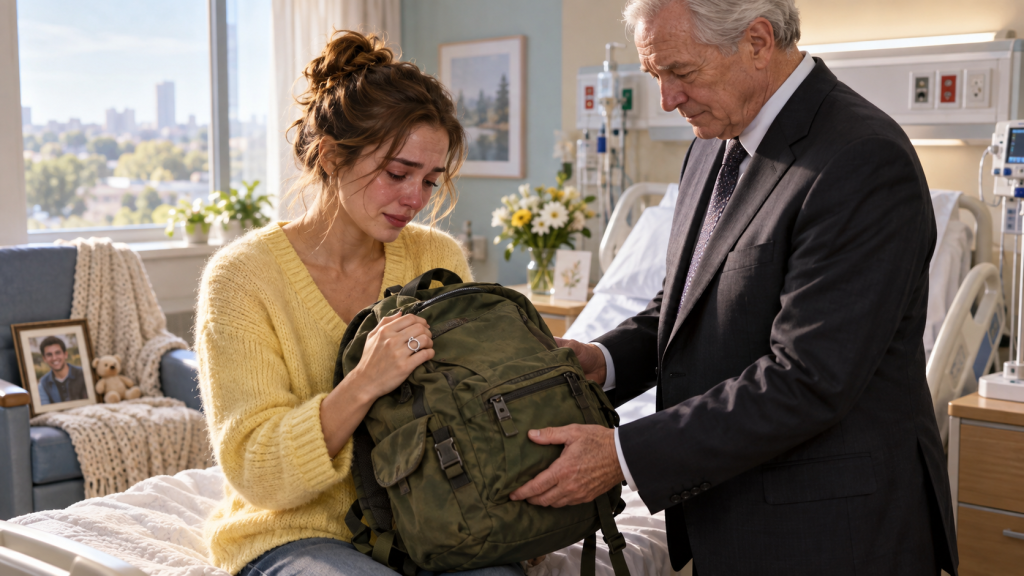
For several seconds, I could hear nothing except the fluorescent lights humming above us.
My father’s face stared back at me from the photograph.
Younger.
Thinner.
Alive.
He stood several feet behind my mother and Julian beneath that flowering apple tree, one hand buried in the pocket of a dark jacket.
I knew that face.
I had seen it in exactly six photographs my mother kept in a shoebox at the top of her closet.
David Mercer.
My father.
The man I had been told died before my second birthday.
I looked at Mr. Whitaker.
“What do you mean they didn’t die the way I was told?”
The attorney’s expression tightened.
“Your mother died exactly the way you remember being told.”
“Cancer.”
“Yes.”
“But your father…”
He stopped.
I felt anger rise through my grief.
“Don’t do that.”
“Do what?”
“Pause because you think I need protecting.”
Mr. Whitaker looked at me.
Then nodded.
“Your father did not die when you were a child.”
The room tilted.
I grabbed the edge of Julian’s hospital bed.
“No.”
“Nora—”
“No.”
“My mother told me he died.”
“I know.”
“She showed me his grave.”
Mr. Whitaker became very still.
“What grave?”
My stomach dropped.
“Greenwood Cemetery.”
“David Mercer.”
“She took me there every year until I was ten.”
Mr. Whitaker closed his eyes.
“There is no David Mercer buried there.”
My fingers went numb.
“You’re lying.”
“I wish I were.”
I stood.
The backpack fell from my lap.
The wooden box hit the floor.
The little silver key skittered beneath the chair.
I barely noticed.
“You walk into this room an hour after my husband dies—”
The word husband caught in my throat.
Seven days.
Seven strange, tender days.
“And you tell me my entire childhood was a lie?”
“I’m telling you what Julian asked me to tell you.”
“Then Julian lied too.”
Mr. Whitaker looked toward the empty bed.
“Yes.”
That stopped me.
He did not defend him.
“He recognized me.”
“Yes.”
“He knew my mother.”
“Yes.”
“He knew my father wasn’t dead.”
“Yes.”
“And he sat here for days talking to me about grief while knowing that?”
“Yes.”
I slapped him.
The sound cracked through the room.
He did not move.
I stared at my own hand.
Horror followed immediately.
“Oh my God.”
“I’m sorry.”
Mr. Whitaker touched his cheek.
“I probably earned part of that.”
“No.”
I shook my head.
“You didn’t.”
I covered my mouth.
“I’m sorry.”
He bent slowly and retrieved the silver key.
Then placed it on the table.
“You’re angry.”
“That doesn’t give me permission to hit you.”
“No.”
“I’m sorry.”
“I accept your apology.”
The simplicity of his answer embarrassed me more than anger would have.
I sat again.
My entire body shook.
“Start at the beginning.”
Mr. Whitaker looked at the photograph.
“Julian knew your mother when they were young.”
“How?”
“They grew up in the same town.”
“What town?”
“Bellweather.”
I knew it.
Forty miles north.
Mom had said she spent a few childhood summers there with relatives.
Apparently that was another edited version of the truth.
“Her family?”
“Your mother, Eleanor, was raised by her aunt after her own parents died.”
“Julian lived two streets away.”
“They became friends when she was fourteen.”
“Later, business partners.”
I laughed bitterly.
“My mother was a librarian.”
“Eventually.”
“What business?”
“Restoration.”
“Of what?”
“Historic properties.”
I stared.
Mr. Whitaker continued.
Julian had not always been the frail old man I met in a hospital bed.
At thirty, he was a carpenter.
At thirty-five, a contractor.
At forty, he and my mother began buying neglected houses.
Nothing glamorous.
One property.
Then another.
My mother handled research, financing, permits, and records.
Julian handled construction.
They restored buildings other people considered worthless.
Sold some.
Rented others.
Kept a few.
Over twenty years, the small partnership grew.
Not into an empire.
Into something quieter.
A portfolio.
Apartments.
Storefronts.
A warehouse.
Land.
Investments.
My mother owned forty percent.
I stared at him.
“No.”
“Yes.”
“She died with almost nothing.”
“No.”
“She rented her house.”
“Yes.”
“She drove a twelve-year-old Honda.”
“Yes.”
“She clipped coupons.”
“I know.”
“Then where was the money?”
Mr. Whitaker looked at the key.
“Protected.”
“From whom?”
He looked at the photograph.
My father.
I felt sick.
“David?”
“Yes.”
The story became darker.
My mother met David Mercer when she was thirty-one.
Charming.
Ambitious.
Beautiful, according to Julian’s letter.
He worked in commercial finance.
He understood immediately that Eleanor’s modest clothes and quiet job did not reflect her actual assets.
At first, that did not matter.
They fell in love.
Or Mom did.
Mr. Whitaker would not tell me whether David had.
He said nobody alive could answer that honestly.
I appreciated that.
They married.
Then David began asking questions about the partnership.
He wanted Mom to sell.
Julian refused.
Mom refused too.
David wanted capital for a development company.
Mom loaned him money once.
Then twice.
He lost both investments.
When she refused a third loan, the marriage changed.
“How?”
I whispered.
“Financial control.”
Mr. Whitaker said.
“Pressure.”
“Threats.”
“Isolation.”
My stomach tightened.
“Did he hit her?”
“I don’t know.”
“Julian never claimed he did.”
“Your mother never documented physical abuse.”
That distinction mattered.
I nodded.
“What did he do?”
“He forged her signature.”
The room went cold.
On loan guarantees.
On a transfer authorization.
On documents attempting to pledge one of her partnership interests as collateral.
Julian discovered it.
He confronted David.
There was an investigation.
Not criminal at first.
Civil.
Financial.
Messy.
Mom was pregnant with me.
She wanted out.
So she left.
“Then why tell me he died?”
Mr. Whitaker looked tired.
“Because he disappeared.”
“What?”
“After the forged documents were discovered, David left.”
“Where?”
“Canada initially.”
“Then Europe.”
“He contacted your mother intermittently.”
“Always asking for money.”
“Then?”
“He threatened custody.”
I felt something tear inside me.
“He wanted me?”
Mr. Whitaker answered carefully.
“He threatened to seek custody.”
“That isn’t necessarily the same thing.”
Again.
The distinction.
I was beginning to understand why Julian trusted this man.
“Did he ever?”
“No.”
“Why?”
“Because your mother offered him a settlement.”
My throat tightened.
“How much?”
“Enough.”
“How much?”
“Two hundred and fifty thousand dollars.”
In the early 1990s.
A fortune to my mother.
A bargain to my father, apparently.
“He took money to leave me?”
Mr. Whitaker said nothing.
I closed my eyes.
“Say it.”
“He signed an agreement relinquishing financial claims against your mother and agreeing not to contact her except through counsel.”
“He could not legally sell parental rights in the simplistic way you’re imagining.”
“But yes.”
“Money was part of the separation.”
I felt nauseated.
“Then why the grave?”
“That was Eleanor.”
“Julian hated it.”
“What was she thinking?”
Mr. Whitaker looked at me.
“She was terrified you would spend your childhood waiting for a man who had repeatedly chosen money over being your father.”
“So she killed him in a story.”
“Yes.”
I started crying.
“My mother lied to me every year.”
“Yes.”
“She took me to an empty grave.”
“Yes.”
“Why would Julian let her?”
“He argued with her.”
“Not enough.”
“No.”
Mr. Whitaker lowered his eyes.
“That’s part of what he wanted you to know.”
I opened Julian’s letter.
My hands trembled.
Dear Nora,
If Samuel Whitaker has given you this letter, then I have died, which means I have committed the cowardly act of leaving you with questions I should have answered while I was alive.
I laughed bitterly through tears.
“At least he knew.”
Mr. Whitaker almost smiled.
I continued.
I recognized you on the second day.
The first day, I thought grief and medication were playing tricks on an old man’s mind.
Then you told me your mother’s name.
Eleanor Mercer.
There are names that remain young in your memory even when the people who carried them grow old.
Your mother’s was one of those names for me.
I stopped.
Breathed.
Continued.
Your mother was my closest friend for forty-three years.
I loved her.
My heart tightened.
Not romantically, though people always assumed that. Eleanor would laugh if she knew I felt compelled to clarify this after death. She used to say I was the brother she would have returned to the store if receipts were accepted.
A laugh escaped me.
That sounded like Mom.
Exactly like her.
Suddenly I could hear her voice.
I cried harder.
We built a business together because we were young enough to believe broken buildings wanted rescuing.
Perhaps we were really talking about ourselves.
Your mother was better with money than anyone I ever knew, mostly because money did not impress her.
She understood that wealth is useful only when it purchases freedom rather than obedience.
David did not understand that.
I read until the letters blurred.
Mr. Whitaker waited.
When your father forged her signature, I wanted him prosecuted.
Eleanor wanted you safe.
Those goals were not necessarily incompatible, but frightened people often behave as though only one choice exists.
She settled.
He left.
Then she made a decision I never forgave while she was alive.
She told you he was dead.
I stopped again.
I helped her maintain that lie.
That is my shame, Nora.
Not hers alone.
Mine.
I told myself I was respecting a mother’s decision.
Later I told myself you were too young.
Then too fragile.
Then too busy.
Then Eleanor became ill, and I told myself the truth would steal the little time you had left together.
Cowardice becomes sophisticated when an intelligent person has enough years to invent explanations for it.
I looked toward Julian’s empty bed.
For seven days, he had held my hand.
Asked about Mom.
Asked what I remembered.
I had told him everything.
Her pancakes.
Her books.
Her terrible singing.
Her funeral.
The empty grave I thought belonged to Dad.
He knew.
And still he had remained silent.
I was furious.
I missed him.
Both were true.
I kept reading.
When Eleanor learned she was dying, she changed her estate plan.
She transferred her partnership interests into a trust.
You are the sole beneficiary.
I stopped.
“That’s the money?”
Mr. Whitaker nodded.
“How much?”
“The document you saw is an old valuation.”
“How old?”
“Eleven years.”
My stomach tightened.
“What is it worth now?”
“Approximately fourteen point eight million dollars.”
I stared.
“No.”
“Yes.”
“No.”
“I understand.”
“No, you don’t.”
I stood again.
“My mother borrowed money from me once.”
Mr. Whitaker frowned.
“What?”
“Eight hundred dollars.”
“She needed dental work.”
“I was twenty-three.”
“I emptied half my savings.”
“She cried when I gave it to her.”
Mr. Whitaker’s eyes softened.
“She repaid you?”
“Every dollar.”
“Forty dollars a month.”
“Why would someone with fourteen million dollars borrow eight hundred dollars from her daughter?”
“She didn’t have fourteen million in cash.”
“I don’t care!”
My voice cracked.
“She had something.”
“Yes.”
“She let me worry about her.”
“Yes.”
“Why?”
“I cannot answer for Eleanor.”
“Then what good are you?”
The cruelty left my mouth before I could stop it.
Mr. Whitaker said nothing.
I closed my eyes.
“I’m sorry.”
“You don’t need to apologize for every angry sentence.”
“I do if I don’t mean it.”
That made him look at me.
I sat.
He said:
“Your mother lived on her librarian’s salary.”
“Why?”
“Because she believed the partnership assets were for your future.”
“Why not tell me?”
“She feared David returning.”
“He knew?”
“He knew she had assets.”
“He did not know how they were structured after the settlement.”
I looked at the photograph again.
“Is he alive?”
Mr. Whitaker did not answer immediately.
That was answer enough.
“Is my father alive?”
“Yes.”
My hands became ice.
“Where?”
“Arizona.”
“How old?”
“Sixty-eight.”
“Married?”
“Yes.”
“Children?”
Mr. Whitaker looked at me.
That look told me before the words.
“Two sons.”
I stood so quickly the chair toppled.
I walked out.
Mr. Whitaker did not follow.
I made it to the hospital bathroom.
Locked myself in a stall.
Then vomited.
My father was alive.
My father had children.
Sons.
Brothers.
Half brothers.
People who might not know I existed.
Or worse.
People who did.
I sat on the closed toilet lid and cried until my ribs hurt.
Mom was dead.
Julian was dead.
And suddenly the two people who could explain my childhood had left me alone with paperwork.
I hated them.
For perhaps ten minutes, I hated both of them.
Then I hated myself for hating Mom.
Then I became angry at myself for policing my grief.
Eventually, someone knocked.
“Nora?”
Mr. Whitaker.
“I’m fine.”
“No, you’re not.”
“Go away.”
“All right.”
Footsteps.
Then silence.
He actually left.
That mattered.
I stayed another twenty minutes.
When I returned to Julian’s room, the attorney was sitting where I had left him.
He had righted the chair.
The backpack remained open.
I sat.
“Why did Julian marry me?”
Mr. Whitaker looked surprised.
“That part was true.”
“What?”
“He did not marry you to transfer the trust.”
“Your mother’s trust was already yours.”
“Then why?”
“He was dying.”
“I know.”
“He was alone.”
“I know.”
“And he was afraid.”
“Of what?”
“Dying without ever telling you.”
I stared.
“That makes no sense.”
“I agree.”
“Then explain.”
Mr. Whitaker folded his hands.
“Julian believed that if he told you immediately who he was, you would leave.”
“I might have.”
“Yes.”
“He thought you would think he had arranged your volunteer assignment.”
“Did he?”
“No.”
“Did he know I volunteered there?”
“No.”
“Then we really met by accident?”
“As far as anyone can call such things accidents.”
I hated that lawyer answer.
“Why marriage?”
“Partly what he told you.”
“He had no close family.”
“He wanted someone legally empowered to make certain decisions if necessary.”
“But mostly…”
Mr. Whitaker hesitated.
“Mostly what?”
“He wanted to give you the backpack.”
“He could’ve handed it to me.”
“Yes.”
“Why marry me?”
“Because he wanted one week where he was not only the man who helped your mother lie to you.”
That hurt.
“He wanted you to know him first.”
“Yes.”
“That was selfish.”
“Yes.”
“Cruel, even.”
“Possibly.”
I looked toward the bed.
“Did he manipulate me?”
Mr. Whitaker took his time.
“Yes.”
I appreciated the answer.
“He also cared about you.”
“Those facts can coexist.”
I nodded slowly.
That would become one of the most important lessons of my life.
Someone can love you and still manipulate you.
Someone can protect you and still deny you agency.
Someone can regret a lie and still postpone telling the truth because truth threatens the version of themselves they want you to remember.
Love does not erase accountability.
Accountability does not erase love.
I opened the wooden box again.
“What does the key open?”
“A safe-deposit box.”
“Where?”
“Bellweather Community Bank.”
“What is inside?”
“I don’t know.”
“You’re the lawyer.”
“Your mother placed the contents herself.”
“Julian knew?”
“No.”
“She instructed that the key go to you only after Julian’s death or your thirty-fifth birthday, whichever came first.”
“Why?”
“I have theories.”
“I don’t want theories.”
“Good.”
I looked at him.
For the first time, Mr. Whitaker smiled.
“You’re very much Eleanor’s daughter.”
That made me cry again.
Three days later, I drove to Bellweather.
I almost did not go.
The key sat on my kitchen table for two nights.
The green backpack sat beside it.
I could barely look at either.
The bank occupied an old brick building on Main Street.
A manager verified documents.
Made phone calls.
Then led me downstairs.
Box 317.
The silver key turned.
Inside was no cash.
No jewelry.
No secret diamonds.
There were letters.
Dozens.
Some addressed to Mom.
Some addressed to me.
All from David Mercer.
My father.
The earliest was dated twenty-seven years earlier.
The newest:
Eight months ago.
My hands shook.
Mom had kept them.
Every one.
I opened the first.
Eleanor,
I made a mistake.
Of course.
Men always begin there when the mistake is already large enough to require stationery.
I read.
He wanted more money.
Not me.
Money.
The second letter was the same.
The third mentioned me.
Tell Nora I love her.
Then two paragraphs asking for financial help.
The letters changed over years.
At first entitled.
Then angry.
Then apologetic.
Then pleading.
Then absent for long stretches.
One arrived after eleven years of silence.
I got sober.
I froze.
Another:
I have remarried. I told Rebecca about Nora. She says I should write without asking for anything. So this letter asks for nothing.
Another:
My son Daniel asked whether he has siblings. I told him yes. I realized I have spent years pretending Nora was a closed chapter because I was ashamed of how I left. She isn’t a chapter. She’s a person.
My eyes filled.
The final letter was addressed directly to me.
Mom had never opened it.
Nora,
I don’t know whether this will ever reach you.
Your mother has every reason not to trust me.
Julian has more.
You have the most.
I am your father.
That sentence describes biology. It does not describe what I earned.
I stopped.
Then continued.
I left when you were too young to remember me.
I told myself I was being forced out.
That was a lie I preferred because it made me less ashamed.
Your mother offered money.
I accepted it.
I could have fought to remain your father without fighting for her money.
I did not.
I chose the easier thing.
I have two sons now.
I stayed for them.
That fact may hurt you.
It should.
I sobbed.
The bank manager quietly left the room.
Staying for them does not prove I was always capable of being the father you deserved.
It proves I became capable later.
That does not repair your childhood.
I am sorry.
If you never want contact, I will respect that.
If you want one conversation, I will answer anything I can without blaming your mother for my choices.
David.
No “Dad.”
Good.
He had not earned it.
At the bottom was a phone number.
I did not call.
Not that day.
Not that week.
I went home.
I put the letters in Julian’s green backpack.
Then I started therapy.
Again.
Grief had brought me to volunteering.
Truth brought me to Dr. Lena Morris.
On our third session, she asked:
“What do you want from David?”
“I don’t know.”
“Then don’t contact him yet.”
“What if he dies?”
She looked at me.
“That is possible.”
The bluntness shocked me.
She continued.
“But fear of losing an opportunity is not the same as readiness.”
I waited six months.
Then I called.
A man answered.
“Hello?”
My throat closed.
His voice sounded nothing like anything.
Of course it didn’t.
I had no memory of it.
“David Mercer?”
“Yes?”
“This is Nora.”
Silence.
Then a breath.
Not dramatic.
Not cinematic.
Just a breath.
“Oh.”
Another silence.
“Nora.”
I almost hung up.
He said:
“Thank you for calling.”
Not:
My baby.
Not:
My daughter.
Not:
Finally.
Thank you.
That helped.
“I have questions.”
“I’ll answer.”
“If you lie once, I’m done.”
“I understand.”
We spoke for two hours.
He did not make himself look good.
That surprised me.
Yes, he had loved Mom.
Yes, he also wanted access to her money.
Yes, he forged signatures.
Yes, he rationalized it as temporary.
Yes, he accepted the settlement.
Yes, he knew it meant walking away.
No, Mom never told him she had told me he was dead.
He discovered that years later from Julian.
He had been furious.
Julian told him he had forfeited the right to moral outrage.
I almost smiled.
“Why didn’t you come find me when I turned eighteen?”
David became quiet.
“Cowardice.”
“That’s it?”
“No.”
“Shame.”
“Fear you’d reject me.”
“Fear your mother would expose what I’d done.”
“Fear my sons would learn who I had been.”
“Lots of fear.”
“None of it good enough.”
“No.”
“Did you love me?”
He cried.
“I don’t know how to answer that without insulting you.”
“Try.”
“I thought about you.”
“That isn’t love.”
“I kept your baby photograph.”
“That isn’t love.”
“I sent letters.”
“That isn’t love either.”
“No.”
He breathed.
“I think I loved the idea that somewhere I had a daughter who might someday forgive me.”
I closed my eyes.
“That was about you.”
“Yes.”
“Did you love me?”
“I didn’t know you.”
There.
The truth.
Painful.
Clean.
“No.”
he whispered.
“Not in the way a father who raises a child loves her.”
“I wish I had.”
I cried silently.
He continued.
“I would like to know you now.”
“I don’t know if I want that.”
“I understand.”
“I might never call again.”
“I understand.”
“I’m not calling you Dad.”
“You shouldn’t.”
That was our first conversation.
There were more.
Not many at first.
Then slowly.
I met him a year later.
Public place.
Arizona.
Coffee shop.
He stood when I entered.
My father’s face.
Older.
My nose.
Mom used to say I had her nose.
Apparently she had lied about that too.
That irritated me more than it should have.
David did not hug me.
Good.
We talked.
Then I met Rebecca.
His wife.
She knew everything.
Or the version he had eventually learned to tell honestly.
Then Daniel and Matthew.
My half brothers.
Daniel was thirty-two.
Matthew twenty-nine.
Matthew stared at me.
“You look like Dad.”
“Apparently.”
“Sorry.”
I laughed.
That broke something open.
They had known about me for years.
Neither contacted me because David insisted the choice belonged to me.
For once, he had made the right decision.
My relationship with him never became a normal father-daughter relationship.
There was no way to manufacture the missing decades.
But something grew.
A cautious friendship.
He told me stories about Mom from before I knew her.
I told him stories about the woman she became.
Sometimes we argued about her.
He once said:
“Eleanor could be stubborn.”
I replied:
“You forged her signature.”
He nodded.
“Fair.”
That became our rule.
No rewriting.
Not Mom.
Not David.
Not Julian.
Not me.
The money remained.
Fourteen point eight million dollars.
I did not know what to do with it.
For a while, I hated it.
It felt like hush money that had multiplied.
Then Mr. Whitaker corrected me.
“No.”
“What?”
“You keep calling the trust dirty.”
“Isn’t it?”
“No.”
“David’s settlement and Eleanor’s assets were separate.”
“Your mother earned her ownership.”
“Julian earned his.”
“The properties appreciated.”
“Investments grew.”
“Do not erase your mother’s work because a man once tried to control it.”
That sentence changed everything.
I learned the business.
Slowly.
I visited the buildings Mom and Julian restored.
One was a children’s bookstore.
One housed twelve apartments.
One was a bakery.
One was an old firehouse converted into offices.
I touched brick Mom had fought to preserve.
Read permits bearing her signature.
Found photographs of her wearing work boots and holding blueprints.
My librarian mother.
My coupon-clipping mother.
My secret property investor mother.
I laughed.
Then cried.
She had been larger than the version of her I knew.
That did not mean the version I knew was false.
People contain rooms even their children never enter.
I kept most of the assets.
Not because I wanted to become wealthy.
Because I finally understood they represented her work.
I sold two properties.
Paid taxes.
Restructured the trust with independent advisors.
Then created something.
The Eleanor Mercer Companion Fund.
It paid for trained end-of-life companions for patients who had nobody.
Not volunteers replacing medical care.
Not strangers pretending to be family.
Just human presence.
Someone to sit.
Read.
Listen.
Hold a hand when invited.
Call the nurse.
Keep the room from becoming entirely empty.
The first year, we served thirty-seven patients.
The fifth year, four hundred.
By year ten, the program operated in nine hospitals.
I never called it Julian’s legacy.
He would have hated that.
But I kept the soda-can tab.
For years, it sat in the wooden box beside Mom’s silver key.
People asked whether I had really been married to a seventy-two-year-old man for seven days.
“Yes.”
“Was it romantic?”
“No.”
“Did you love him?”
That question was harder.
“Yes.”
Not the way I would later love a partner.
Not the way I loved Mom.
Not exactly friendship either.
There are relationships language handles poorly.
Julian and I met at the edge of his life.
For seven days, I was his wife.
That was legally true.
Emotionally, we were two grieving strangers who gave each other something neither expected.
He gave me a mystery I did not ask for.
I gave him a hand to hold.
Years later, I understood the marriage differently.
It was selfish of him.
It was generous of me.
It was meaningful to both of us.
It was also built partly on information he withheld.
All of those things could be true.
I refused to simplify it.
At thirty-four, I met Aaron.
He was a physical therapist at one of the hospitals where our program operated.
He asked me to dinner.
I said no.
Six months later, he asked again.
I said:
“You’re persistent.”
He replied:
“No. You smiled this time.”
Annoying.
Accurate.
We had dinner.
On the third date, I told him:
“I’m technically a widow.”
He blinked.
“Technically?”
I told him the story.
All of it.
At the end, Aaron stared at me.
“You married a dying stranger with a soda tab.”
“Yes.”
“And inherited fourteen million dollars.”
“Not from him.”
“Right.”
“Your secretly wealthy librarian mother.”
“Yes.”
“Whose business partner was the dying stranger.”
“Yes.”
“And your dead father was alive.”
“Yes.”
He drank water.
“I feel like my childhood is underwritten.”
I laughed until I cried.
That was the beginning.
Aaron never treated my money as interesting.
That was one reason I loved him.
The first time I took him to one of Mom’s restored buildings, he spent twenty minutes admiring the staircase.
Not the property value.
The craftsmanship.
“Julian rebuilt this.”
I said.
Aaron touched the railing.
“He was good.”
“Yes.”
“Your mom?”
“Financing and historical approvals.”
“They made a good team.”
“They did.”
We married when I was thirty-seven.
Real rings this time.
Although Aaron secretly attached a soda tab to my bouquet.
I nearly killed him.
Then cried.
David attended.
He sat in the third row.
Not beside me.
Not in a father’s place.
I walked myself down the aisle.
He understood.
At the reception, he approached Aaron.
I overheard him say:
“I don’t get to give you advice about being good to her.”
Aaron replied:
“Probably not.”
I loved him for that.
David laughed.
Then said:
“But thank you.”
Aaron answered:
“You don’t have to thank me for loving my wife.”
David looked away.
I saw him cry.
My relationship with him became easier after that.
Not because the past changed.
Because we stopped trying to force the present to compensate for it.
At forty, I became pregnant.
I was terrified.
Mom wasn’t there.
Julian wasn’t there.
And suddenly I wanted both.
Grief is strange that way.
It waits behind joy because joy knows exactly who is missing.
Our daughter was born on a rainy Tuesday.
We named her Eleanor Grace.
When the nurse put her against my chest, I understood my mother differently.
Not completely.
Never completely.
But enough to feel the terror she must have experienced when David threatened custody.
Enough to understand why fear could make a good woman choose a terrible lie.
Not enough to excuse it.
Understanding and excusing are different.
That distinction saved me many times.
David met Eleanor when she was three weeks old.
He held her carefully.
Then cried.
“I don’t deserve this.”
I took her back.
“Don’t say that around her.”
He looked startled.
“What?”
“She isn’t a reward for your rehabilitation.”
His face changed.
“You’re right.”
“She doesn’t exist to prove you’re forgiven.”
“Yes.”
“If you’re in her life, you’re Grandpa David because I allow it and because you behave like someone safe.”
He nodded.
“Understood.”
He became a good grandfather.
That hurt too.
Just like seeing someone give another person the version of them you once needed can hurt.
But I did not make Eleanor pay for my childhood.
If David could show up safely for her, she was allowed to love him.
She did.
He taught her chess.
Badly.
She cheated.
Worse.
When she was seven, she asked:
“Was Grandpa David a good dad to you?”
I almost dropped a plate.
Aaron looked at me.
I looked at him.
Then at our daughter.
“No.”
Eleanor frowned.
“Why?”
“He wasn’t around when I was little.”
“Why?”
“He made some bad choices.”
“Did he say sorry?”
“Yes.”
“Did that fix it?”
“No.”
She thought.
“Then why do you talk to him?”
There are moments when children accidentally ask the questions adults spend thousands of dollars in therapy avoiding.
“Because saying sorry didn’t fix the past.”
I said.
“But he changed how he behaved afterward.”
“And I decided I wanted to know the person he became.”
She nodded.
“Is he still your dad?”
“Biologically.”
“What’s biologically?”
Aaron saved me with a science explanation.
Coward.
David died when I was fifty-one.
Lung disease.
I flew to Arizona.
Sat beside him.
His sons were there.
Rebecca too.
At one point, everyone left the room.
David looked at me.
“Nora.”
“Yes?”
“I have something selfish to ask.”
“At least you label it now.”
He laughed weakly.
“Did you forgive me?”
I thought carefully.
“Yes.”
He cried.
“When?”
“I don’t know.”
“Does that mean what I did was okay?”
“No.”
“Good.”
I smiled.
“Still afraid I’ll let you off easy?”
“Yes.”
“David.”
He looked at me.
“I forgave you because I stopped needing you to suffer in order to prove I mattered.”
His eyes filled.
“That doesn’t change what you did.”
“It changes what I carry.”
He nodded.
“I’m sorry I missed you.”
That sentence hurt more than any apology.
Not:
I’m sorry I left.
Not:
I’m sorry I took the money.
I’m sorry I missed you.
My childhood.
First day of school.
Broken wrist.
Prom.
College.
Mom’s illness.
Her funeral.
All of it.
“I’m sorry too.”
I whispered.
“For what?”
“That you missed me.”
He smiled.
Then cried.
He died the next morning.
I attended the funeral.
Daniel asked whether I wanted to speak.
I declined.
His sons knew him as a father.
Rebecca knew him as a husband.
I knew him as something unfinished.
They deserved their grief without me correcting it.
At the cemetery, Matthew stood beside me.
“Was he terrible?”
I looked at him.
“To me?”
“Yes.”
“For a while.”
Matthew’s face tightened.
“He was good to us.”
“I know.”
“Does that make you angry?”
“Sometimes.”
He looked ashamed.
I touched his arm.
“You’re allowed to love the father you had.”
“And you’re allowed to hate him.”
“I don’t hate him.”
“What do you feel?”
I looked toward the coffin.
“Everything.”
Matthew nodded.
“That sounds exhausting.”
“It is.”
We laughed quietly.
My brothers became family.
Slowly.
Not because blood demanded it.
Because we liked one another.
Daniel became an architect.
Matthew a high school counselor.
Our children knew each other.
Holidays became loud.
Mom would have hated the noise.
Julian would have encouraged it.
Mr. Whitaker lived to ninety-four.
He remained my attorney until eighty-six, when I told him retirement was not a moral failure.
He disagreed.
Eventually his knees voted against him.
Before retiring, he handed me one final envelope.
“Julian asked me to give you this when I believed you no longer needed it.”
“That sounds manipulative.”
“It was.”
“When did you decide?”
“Yesterday.”
“Why?”
“You stopped asking me what Julian would’ve wanted.”
That silenced me.
I opened the envelope at home.
One page.
Julian’s handwriting.
Nora,
If Samuel gives you this too early, fire him.
I laughed.
If he gives it to you at the right time, you will understand that the money was never the point.
Neither was David.
Neither was even your mother.
The truth I wanted you to know was about me.
I stopped.
I was not the lonely old man you thought I was.
I had money.
Property.
Friends once.
A business.
A life full enough to leave photographs behind.
And yet I ended up alone because I spent too many years confusing being useful with being close to people.
My chest tightened.
I fixed buildings.
I fixed contracts.
I fixed Eleanor’s problems whenever she let me.
But I was terrible at allowing anyone to care for me when I had nothing useful to offer in return.
So people gradually stopped trying.
By the time my heart failed, Samuel was the only person who reliably answered my calls, and I paid him.
At the bottom, Mr. Whitaker had written:
For the record, he was a terrible client.
I laughed through tears.
Julian continued.
Then you sat beside me.
You did not know I had money.
You did not know I knew your mother.
You thought I was simply an old man with nobody.
And you stayed.
That terrified me.
Because for the first time in years, kindness arrived without an invoice.
I put my hand over my mouth.
I asked you to marry me partly because I was afraid of dying as a file number.
That was true.
I also asked because I was selfish.
I wanted to belong to someone before I died.
For seven days, you let me.
I should have told you the truth first.
I am sorry I did not.
Please never turn my fear into romance.
That sentence stayed with me forever.
What I did was not noble simply because I was dying.
Dying people remain capable of selfishness.
Remember that.
But remember this too:
Those seven days mattered to me.
Not because you became my wife.
Because you became the last person who looked at me without seeing a balance sheet, a medical chart, or an old mistake.
Thank you.
Then the final lines:
Do something better with the truth than we did.
Tell it while people are alive.
Love,
Julian
I sat at the kitchen table for an hour.
Then I put the letter in the green backpack.
I kept my promise.
Or tried.
With Eleanor, Aaron and I built our family around age-appropriate truth.
Not brutal honesty.
Not children carrying adult burdens.
But no invented graves.
No fake stories.
No rewriting people into saints because death made contradiction uncomfortable.
When Eleanor was twelve, she asked about Julian.
I told her.
At sixteen, she asked about David.
I told her more.
At twenty-one, I gave her copies of Mom’s letters.
Not because she needed to inherit my pain.
Because family history should not require archaeology.
She read everything.
Then asked:
“Grandma Eleanor was complicated.”
“Yes.”
“Grandpa David too.”
“Yes.”
“Julian sounds insane.”
“Also yes.”
She smiled.
“Do you regret marrying him?”
I thought.
“No.”
“Would you do it again?”
That was harder.
“Not knowing what I know now.”
She looked surprised.
“Why?”
“Because consent matters.”
I said.
“I married the person I believed Julian was.”
“He withheld something enormous.”
“If he had told me first, maybe I still would’ve married him.”
“Maybe not.”
“I deserved the choice.”
Eleanor nodded.
“Then why don’t you regret it?”
“Because something can be wrong in one way and still become meaningful in another.”
She stared.
“Adults are exhausting.”
“Correct.”
Aaron and I grew old.
Ordinarily.
Beautifully.
He left socks beside the hamper instead of inside it for forty-three years.
I considered divorce weekly.
He claimed this was excessive.
We traveled.
Argued.
Gardened badly.
Watched Eleanor become a physician.
Cardiology.
Of course.
When she told me, I laughed until I cried.
“What?”
she asked.
“Nothing.”
“Mom.”
“You’re going to spend your life treating failing hearts.”
“Yes?”
I looked toward the green backpack in my closet.
“Julian would think that’s hilarious.”
Aaron died when I was eighty-two.
Stroke.
Fast.
He was making coffee.
Then he wasn’t.
There are losses that give you months to prepare.
Others split a Tuesday morning in half.
I sat beside him on the kitchen floor until paramedics came.
Afterward, I returned to volunteering.
Not immediately.
Two years later.
The Companion Fund had become a large nonprofit by then.
I no longer ran it.
Younger people should be allowed to improve what older people built.
But once a week, I returned to a hospital.
Not as founder.
Not as wealthy donor.
Volunteer Nora.
Yellow sweater sometimes.
I sat with people.
One man talked for three hours about baseball.
I hate baseball.
I listened anyway.
One woman refused conversation and wanted television.
Fine.
One patient asked me:
“Are you afraid of dying?”
“Yes.”
She smiled.
“Good.”
“Why good?”
“I don’t trust people who say no.”
Fair.
At ninety, I moved into assisted living.
My choice.
Eleanor protested.
I reminded her that respecting elderly autonomy was apparently one of our family values.
She accused me of weaponizing therapy language.
Correct.
I brought three sentimental objects.
Mom’s photograph.
Aaron’s wedding ring.
The green backpack.
The soda tab remained inside.
At ninety-two, my heart began failing.
I laughed when the cardiologist told me.
“What?”
she asked.
“Family joke.”
She wisely did not inquire.
Eleanor came every day.
So did my grandchildren.
One afternoon, she noticed the green backpack.
“Still have that thing?”
“Yes.”
“It’s hideous.”
“Your taste is poor.”
“What’s actually in it now?”
“Everything.”
She opened it.
Letters.
Photographs.
Silver key.
Soda tab.
Julian’s final note.
Mom’s partnership documents.
David’s last letter.
A photograph of Aaron wearing the soda tab on his pinky at our wedding.
Eleanor laughed.
Then she found something else.
A letter addressed to her.
“Mom?”
“After.”
“No.”
“Yes.”
“I hate that.”
“I know.”
“Family tradition?”
“Unfortunately.”
She glared.
“Why not tell me now?”
I smiled.
“Fair point.”
Julian would have laughed.
“Open it.”
She did.
Dear Eleanor,
If you’re reading this while I’m alive, congratulations. Your mother finally learned something from her own story.
She laughed.
Then cried.
You inherited money through me.
You inherited history through people you never met.
Neither is an instruction.
You do not owe your life to the dead.
Do not become a doctor because Julian died of heart failure.
Eleanor looked at me.
“I didn’t.”
“I know.”
She continued.
Do not run the Companion Fund because I founded it.
Do not keep buildings because your grandmother restored them.
Do not forgive someone because I forgave them.
Do not marry because I married.
Do not remain because I remained.
Inheritance should give you options, not obligations.
If what we leave you becomes a cage, change it.
Sell it.
Donate it.
Rebuild it.
Choose.
She stopped.
“Mom.”
“Yes?”
“Why didn’t you give me this years ago?”
“I was editing.”
“For twenty years?”
“I’m thorough.”
She laughed.
Then finished.
There is one thing I hope you keep.
Tell the truth kindly when you can.
Tell it firmly when you must.
But tell it before silence hardens into family history.
Love, Mom.
Eleanor folded the letter.
“You’re annoying.”
“I know.”
“I love you.”
“I know that too.”
My final days were quiet.
No dramatic machines.
No secret millions left to reveal.
No unknown fathers.
No attorneys with backpacks.
Just breath becoming harder.
Hands holding mine.
One evening, Eleanor sat beside me.
“Mom?”
“Yes?”
“Do you think you’ll see Grandma?”
“Maybe.”
“Julian?”
“Possibly.”
“Dad?”
I smiled.
“If there’s an afterlife, your father has already reorganized the kitchen badly.”
She laughed through tears.
“David?”
I thought.
“Maybe.”
“What would you say to him?”
“Nothing.”
“Nothing?”
“We finished.”
That surprised her.
Some relationships do finish.
Not angrily.
Not perfectly.
Simply enough.
“And Julian?”
I smiled.
“I’d ask why he thought a soda tab was acceptable jewelry.”
Eleanor laughed.
Then:
“Do you still have it?”
“Backpack.”
She retrieved the little wooden box.
The aluminum tab was dull now.
Worth nothing.
I held it.
For seven days, it had been my wedding ring.
For decades, it had been evidence of something I could never explain cleanly.
A strange marriage.
A dying man’s fear.
A young woman’s compassion.
A secret.
A betrayal.
A gift.
A lesson.
“Mom?”
“Yes?”
“Did you love him?”
I smiled.
“Yes.”
“In what way?”
“I never found the word.”
“That’s frustrating.”
“Life doesn’t label everything for us.”
She rested her head beside my arm.
“Are you scared?”
“Yes.”
“Want me to stay?”
I looked at her.
“Very much.”
So she stayed.
Not because the state required a spouse.
Not because paperwork said family.
Not because I was afraid of becoming a nameless file.
She stayed because she loved me.
That was enough.
I died the next morning.
Eleanor held my hand.
My granddaughter Grace sat on the other side.
The green backpack rested beneath the chair.
At my memorial, Eleanor did not begin with the money.
She did not begin with David.
Or Mom.
She began with Julian.
“My mother once married a stranger in a hospital.”
People laughed softly.
“She knew him for days.”
“They were married for one week.”
“His wedding ring to her was a soda-can tab.”
She held it up.
“She kept it for sixty-three years.”
Then she told them why.
Not because the marriage was a fairy tale.
It wasn’t.
Not because Julian secretly made Mom rich.
He didn’t.
Not because the stranger was actually her father.
He wasn’t.
The truth was stranger and quieter.
Julian had known Eleanor Mercer.
He had helped protect her.
He had also helped her lie.
He recognized her daughter decades later.
He wanted forgiveness.
He was too frightened to ask for it honestly.
So he asked for something else.
Marriage.
Presence.
One final human bond.
It was flawed.
Beautiful.
Selfish.
Tender.
Human.
Then Eleanor read my final letter.
If you’re hearing this, I have finally managed to stop talking. Please appreciate the rarity.
Laughter.
I spent much of my life surrounded by secrets people claimed were kept for love.
My mother lied because she wanted to protect me.
Julian stayed silent because he feared losing the small relationship we had formed.
David stayed away because shame was easier than rejection.
Every one of them had an explanation.
Some explanations were understandable.
None gave them the right to choose my reality for me.
So if you remember anything from my life, remember this:
Love without truth eventually sends someone a bill.
The room became still.
Sometimes the bill arrives as anger.
Sometimes grief.
Sometimes twenty-seven years of visiting an empty grave.
Sometimes a green backpack in a hospital room.
Pay attention to the debts silence creates.
Tell the truth sooner.
Eleanor’s voice trembled.
But do not confuse truth with cruelty.
You do not need to throw every painful fact at a person the moment you learn it.
Timing matters.
Age matters.
Safety matters.
Compassion matters.
The goal is not brutal honesty.
The goal is a relationship in which nobody must live inside a fiction for someone else’s comfort.
She paused.
My mother was not a liar.
She was a woman who told a terrible lie.
There is a difference.
David was not only the father who abandoned me.
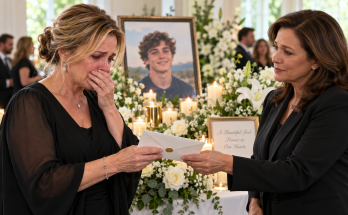
He was also a man who eventually stopped hiding from what he had done.
Julian was not only the dying stranger I married.
He was also a man who helped my mother survive, helped her deceive me, loved her, failed her, protected her, frustrated her, and spent his last week trying very imperfectly to put truth back into my hands.
People are rarely one sentence.
That became one of the lines people remembered.
People are rarely one sentence.
Do not reduce yourself to your worst decision.
Do not reduce another person to their best apology.
Look at the whole pattern.
Then decide what access they should have to your life.
Forgiveness is not the same as access.
Understanding is not the same as excusing.
Love is not the same as permission.
And inheritance is not the same as destiny.
Then:
The money my mother left me changed lives.
But the amount was never the meaningful part.
My mother earned those assets by restoring things other people had abandoned.
Old houses.
Storefronts.
Buildings with cracked foundations and boarded windows.
I sometimes think that was the family metaphor none of us noticed.
A soft laugh moved through the room.
We were all restoration projects.
Some of us needed new foundations.
Some needed windows opened.
Some needed entire walls removed.
And some things could not be restored at all.
That is important too.
Not everything broken must be rebuilt.
Sometimes wisdom is knowing which structure can become a home again and which one should be released.
Eleanor stopped to wipe her eyes.
I did not restore my childhood with David.
It was gone.
I built an adult relationship with him instead.
I did not repair Julian’s deception.
He died before we could have that conversation.
I carried both gratitude and anger until neither required an answer.
I could not ask my mother why she took me to an empty grave.
So I stopped pretending there was one explanation that would make it painless.
Sometimes closure is not receiving the missing answer.
Sometimes closure is deciding the unanswered question no longer gets to run your life.
The room was completely silent.
And now the backpack.
Eleanor smiled through tears.
Yes, that ugly green backpack.
People laughed.
Keep it if you want.
Throw it away if it becomes clutter.
Objects are allowed to finish their work too.
Inside it is a soda tab worth approximately nothing.
A silver key that opens a box that no longer exists.
Letters from dead people.
Photographs.
Old legal documents.
None of those things are sacred.
What matters is what they taught us.
Then she reached the final page.
I was twenty-nine when I sat beside a dying stranger because I understood what it meant to lose someone.
I thought grief had emptied me.
Instead, it had made room for compassion.
That compassion led me into something complicated.
I was deceived.
I was trusted.
I was manipulated.
I was loved.
I was given a truth I did not want.
And from that truth, I built a life I chose.
That last word matters most.
Chose.
My mother made choices for me.
Julian made choices for me.
David made choices that affected me before I was old enough to know my own name.
Eventually, I learned that adulthood was not getting revenge for those choices.
It was reclaiming my own.
Eleanor cried openly now.
I chose whether to call David.
I chose whether to forgive him.
I chose what to do with my mother’s money.
I chose Aaron.
I chose motherhood.
I chose the Companion Fund.
I chose to keep volunteering.
I chose what family history to pass down.
And at the end, I chose not to die alone.
Not because being alone would have made me less worthy.
But because when my daughter asked what I wanted, I finally knew how to answer.
Stay.
Eleanor stopped.
The word hung in the room.
Then she continued.
That was all Julian had wanted too.
Beneath the strange proposal.
Beneath the paperwork.
Beneath the fear.
Stay.
So if someone you love is frightened and you do not know what to say, you do not always need a speech.
Sometimes you need a chair.
Sometimes a hand.
Sometimes silence.
Sometimes the courage to tell the truth.
And sometimes you simply stay.
I hope I did enough of that.
Love, Nora.
After the memorial, Eleanor returned to my apartment.
She opened the green backpack one final time.
The soda tab.
The key.
Letters.
Photographs.
She kept the letters.
Donated the historical business records to a local archive.
Returned the old photographs to acid-free boxes.
Then she held the backpack itself.
Ugly.
Faded.
One strap repaired twice.
She laughed.
And did something I would have loved.
She gave it to the Companion Fund.
Not to display behind glass.
To use.
Years later, volunteers carried training materials in it.
Pens.
Notebooks.
Tissues.
Phone chargers.
A deck of cards.
A paperback novel.
Ordinary things.
Eventually, the zipper broke.
Someone replaced it.
Then the lining tore.
Someone stitched it.
Nobody treated it as sacred.
Good.
Julian had spent too much of his life turning objects and documents into substitutes for conversations.
The backpack became useful instead.
Decades after my death, a young volunteer named Maya carried it into a hospital room.
Inside was an elderly woman named Helen.
No family had arrived.
Maya pulled a chair beside the bed.
Helen opened her eyes.
“Who are you?”
“I’m Maya.”
“Are you a nurse?”
“No.”
“Doctor?”
“No.”
“Family?”
Maya smiled.
“No.”
Helen frowned.
“Then why are you here?”
Maya set the green backpack beside the chair.
“Because you don’t have to be alone if you don’t want to be.”
Helen looked at her for a long time.
Then held out one hand.
Maya took it.
No marriage.
No inheritance.
No secret father.
No millions.
No mystery.
Just a hand.
Just a chair.
Just one human being staying beside another because loneliness did not need to be the price of dying.
And perhaps that was the truth Julian had been trying to give me all along.
Not the truth about money.
Not even the truth about my parents.
Something simpler.
A person does not become meaningful because of what they leave behind.
Not a trust.
Not property.
Not a letter.
Not a backpack.
Not even a name.
Meaning lives in what we do while another person is still here to feel it.
My mother restored buildings.
David eventually learned to tell the truth about the man he had been.
Julian spent his final week belonging to someone.
Aaron gave me forty-three years of ordinary love.
I turned grief into chairs beside hospital beds.
And somewhere, long after all of us were gone, a frightened woman reached for a stranger’s hand.
The stranger stayed.
That was enough.
More than enough.
Because my story had begun with a dying man who did not want to leave the world as a nameless file.
But it ended with something I wished I could have told him during those seven strange days.
“Julian, you never needed a wife to prove you mattered.”
“You never needed money.”
“You never needed a secret.”
“You only needed someone to know you were here.”
I knew.
I remembered.
And then I spent the rest of my life making sure other lonely people could be known too.
The soda-can ring eventually tarnished.
The silver key stopped opening anything.
The fourteen million dollars became buildings, salaries, hospital programs, scholarships, and thousands of hours of human presence.
The people in the photograph beneath the apple tree all died.
Even the tree eventually fell during a storm.
But kindness kept moving.
Hand to hand.
Room to room.
Generation to generation.
And in the end, that was the only inheritance I ever truly wanted.
Not money.
Not property.
Not answers.
The courage to sit beside another human being and say, without needing vows or blood or a shared last name:
You are still here.
I see you.
And until you are ready to go, I will stay.
THE END STORIES! THANK YOU FOR READING GOOD LUCK !❤️
Related Posts