➡️ PART 3 ENDING PART ➡️
For several seconds, neither Mom nor I moved.
Her phone remained on the kitchen table between us, the screen glowing in the dim room.
I wasn’t running from the police. I was running from the man who ordered me killed.
Mom read the message again.
Then again.
Her face had gone pale.
“What does that mean?”
“I don’t know.”
“You worked on the investigation.”
“Not this part.”
She looked at me sharply.
“How can you not know?”
“Because I wasn’t law enforcement, Mom. My company handled part of the internal compliance review. We saw financial records, approvals, emails, vendor accounts. We didn’t see everything investigators had.”
She looked down at Marcus’s message.
“Could he be lying?”
“Yes.”
The word hurt her.
I continued before fear could turn suspicion into certainty.
“He could also be telling the truth.”
Mom picked up the phone.
“What should I do?”
That question surprised me.
For most of my life, I had asked her what to do.
Now she was asking me.
And for one dangerous second, I wanted to decide everything.
Block him.
Never see him again.
Change the locks.
Forget him.
I wanted my mother safe.
But safety and control can sometimes wear similar clothes from a distance.
So I forced myself to answer differently.
“I think you should get facts before you decide anything.”
Mom looked at me.
“That sounds like something you say at work.”
“It probably is.”
“What would you do?”
“I’d ask him to explain somewhere public.”
“Tonight?”
“No.”
She nodded.
Then Marcus called.
Mom stared at the phone until it stopped ringing.
A minute later, another message appeared.
I won’t come back unless you ask me to. I know how this looks. I should have told you months ago. I was afraid that once you knew Daniel Price, you would stop seeing Marcus Bennett. I’m sorry.
Mom sat down.
“Daniel Price.”
She whispered the name as though testing whether it belonged to the man who had kissed her goodbye twenty minutes earlier.
“Why would he change his name?”
“I don’t know.”
“He told me Bennett was his mother’s name.”
“It might be.”
“He showed me photographs of her.”
“Then that part could be true.”
Mom laughed bitterly.
“I hate that every sentence suddenly needs the words ‘could be.’”
I understood.
Trust rarely collapses all at once.
Sometimes it simply becomes grammatical uncertainty.
Maybe.
Apparently.
Supposedly.
According to him.
Every fact needs a footnote.
Mom rubbed her forehead.
“I was happy.”
“I know.”
“I feel stupid.”
“Don’t.”
“Please don’t tell me how to feel.”
I stopped.
She was right.
“Okay.”
“I know you’re trying to help.”
“I am.”
“But if I’ve been fooled, I need to be allowed to feel fooled.”
I nodded.
Mom looked at the phone.
“I’m not answering tonight.”
“Good.”
Her eyes narrowed.
“That sounded like approval.”
“Sorry.”
Despite everything, she almost smiled.
We stayed at the table until midnight.
The food from dinner remained untouched.
Marcus’s wineglass still sat beside his plate.
His chair looked offensively ordinary.
I kept expecting Mom to cry.
She didn’t.
Not until I was leaving.
I had reached the front door when she said my name.
I turned.
She stood in the hallway.
“Do you think people can really have two lives?”
“What do you mean?”
“Daniel and Marcus.”
I thought.
“No.”
Her face fell.
Then I added:
“I think people can have chapters they desperately wish belonged to someone else.”
Mom’s eyes filled.
“That sounds worse.”
“Maybe.”
I hugged her.
She held me tightly.
“Stay tonight?”
“Of course.”
At fifty-three years old, my mother did not need a babysitter.
She needed someone who loved her nearby.
There is a difference.
The next morning, Mom replied to Marcus.
Tomorrow. 11 a.m. Riverside Café. Public table. My child will be there. Bring anything that proves what you’re about to tell me. Do not come to my house.
Marcus answered three minutes later.
Understood.
Nothing else.
That restraint was the first thing he did right.
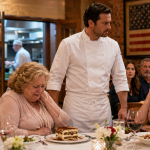
The next morning, Marcus was already sitting in the café when we arrived.
He looked as though he had not slept.
There was a thick folder on the table.
Mom did not kiss him.
She sat across from him.
I took the chair beside her.
Marcus looked at me.
Then at Mom.
“I’m sorry.”
Mom held up one hand.
“No apologies yet.”
He stopped.
“I need facts.”
“All right.”
“Your legal name.”
“Marcus Daniel Bennett.”
“You were Daniel Marcus Price?”
“Yes.”
“When did you change it?”
“Six years ago.”
“Why?”
“My mother’s maiden name was Bennett. After she died, I petitioned for the change.”
“Why reverse Daniel and Marcus?”
He looked down.
“Because I wanted distance from the name Daniel Price.”
“Distance from what?”
“Whitmore.”
Mom leaned back.
“Start there.”
Marcus opened the folder.
The first document was a legal name-change order.
The second was an old employment record.
DANIEL MARCUS PRICE.
Same birth date.
Same face.
Same man.
Then came newspaper articles.
Regulatory filings.
A copy of a federal deposition transcript.
Marcus placed his hands flat on the table.
“I worked at Whitmore for seventeen years.”
“What did you do?”
“I became regional operations director.”
“Were you stealing money?”
“No.”
“Did you know money was being stolen?”
His silence frightened me.
“Eventually.”
Mom’s face hardened.
“How eventually?”
Marcus took a breath.
“For almost a year, I noticed discrepancies between vendor payments and completed work.”
“You noticed fraud for a year and said nothing?”
“I noticed discrepancies.”
“That isn’t what I asked.”
“No.”
He swallowed.
“I did not know it was fraud at first.”
“When did you know?”
“About two months before I reported it.”
Mom’s jaw tightened.
“Two months.”
“Yes.”
“Why wait?”
“Because I was afraid.”
There was no decoration around the answer.
No heroic language.
Marcus continued.
“My boss, Victor Hale, controlled three shell vendors through intermediaries. Whitmore paid those companies for work that either cost far less than invoiced or never happened.”
I remembered the name.
Victor Hale.
Senior vice president.
One of the executives who disappeared from the company shortly before the investigation became public.
Marcus continued.
“At first I thought we were dealing with kickbacks.”
“Then I discovered something worse.”
“What?”
“Money was moving out through consulting accounts tied to organized criminal activity.”
Mom stared.
I had never seen that in our internal file.
Marcus looked at me.
“You wouldn’t have.”
“How do you know?”
“Because Whitmore’s board kept the criminal side out of the internal review until federal investigators took over.”
That was plausible.
But plausible was not enough.
“Proof?”
I asked.
Marcus nodded.
He pushed forward a document.
Federal case number.
Witness designation.
Redactions.
His old name.
I read.
My stomach tightened.
Mom asked:
“What did you do?”
“I copied records.”
“Why?”
“Because by then I knew internal reporting wasn’t safe.”
“How?”
Marcus looked toward the window.
“A colleague named Aaron Wells reported a suspicious vendor.”
I remembered that name too.
“He resigned.”
I said.
Marcus looked at me.
“No.”
“What?”
“He disappeared.”
The café suddenly felt colder.
Mom whispered:
“Disappeared how?”
“His car was found at a train station.”
“Was he killed?”
“I don’t know.”
“Marcus.”
“I genuinely don’t know, Ella.”
He rubbed his hands together.
“His body was never found.”
“Police treated him as missing.”
“But three days after Aaron vanished, Victor called me into his office.”
Marcus stopped.
Mom waited.
“He asked whether Aaron had ever spoken to me.”
“What did you say?”
“No.”
“Was that true?”
“No.”
Mom’s expression changed.
Marcus continued.
“Aaron had told me two days earlier that he’d found vendor accounts connected to Hale.”
“He said he was going to report everything.”
“And then he disappeared.”
“Yes.”
“What did Victor say?”
“He told me Aaron had made the mistake of forgetting that companies have ways of protecting themselves.”
My skin prickled.
Mom whispered:
“And you still waited two months?”
Marcus closed his eyes.
“Yes.”
There was shame in his face.
Not performative shame.
The kind that does not ask to be comforted.
“I was terrified.”
“I went to work.”
“I smiled.”
“I signed documents.”
“I pretended I knew nothing.”
“I started copying records at night.”
“I hated myself every morning.”
Mom said:
“You also kept yourself alive.”
Marcus looked at her.
“Yes.”
“But that’s not the whole truth.”
“What is?”
“I was also protecting my career.”
That answer mattered.
“I wish I could tell you everything I did was strategic courage.”
“It wasn’t.”
“Part of me was afraid of being killed.”
“Part of me was afraid of losing my job.”
“Part of me still hoped there was some explanation that would let me walk away without destroying my life.”
He looked at me.
“You work in compliance.”
“Yes.”
“You know how people behave when the truth threatens everything.”
I did.
Not everyone becomes brave at the first opportunity.
Most people bargain with reality first.
Marcus continued.
“Eventually I contacted an attorney outside the company.”
“The attorney contacted federal investigators.”
“I became a cooperating witness.”
“Was Victor arrested?”
“Yes.”
That confused me.
“I thought Hale vanished.”
“He did.”
“When?”
“After he learned someone inside Whitmore was cooperating.”
Mom stared.
“And you?”
“I was moved.”
“Moved where?”
Marcus hesitated.
“Temporarily relocated.”
Mom looked at the folder.
“Witness protection?”
“Not exactly.”
“Then what?”
“Protective measures. Temporary relocation. Different residence. Restricted contact. The case never reached the level where I entered the permanent witness-security program.”
“Was there actually an attempt on your life?”
Marcus looked at her.
“Yes.”
The word barely left his mouth.
Mom’s fingers tightened.
“What happened?”
“I came home one night and smelled gas.”
I felt my stomach drop.
“My stove line had been loosened.”
“Accident?”
“The investigator didn’t believe so.”
“Why?”
“My back door had been forced and repaired badly enough that whoever entered probably expected me not to notice immediately.”
Mom covered her mouth.
Marcus continued quietly.
“Two weeks later, someone followed me from work.”
“I drove to a police station.”
“The car left.”
“Then I received a photograph.”
“What photograph?”
“My daughter.”
Mom froze.
“You have a daughter?”
Marcus closed his eyes.
That was another secret.
Mom pushed her chair back.
“You told me you didn’t have children.”
“I told you I wasn’t close to my family.”
“You told me you had no children.”
“Yes.”
“That’s not the same thing.”
“No.”
Her voice shook.
“Where is she?”
“Seattle.”
“How old?”
“Thirty-one.”
“Why didn’t you tell me?”
Marcus looked destroyed.
“Because she hasn’t spoken to me in nine years.”
Mom stood.
“Ella—”
“No.”
She grabbed her purse.
“You had a chance.”
“I know.”
“You came here because I discovered one lie and brought me another.”
“I know.”
“You let me sit across from you and ask for the truth, and you still waited until the truth forced itself into the room.”
Marcus stood too.
“Please.”
Mom’s eyes filled.
“I don’t care how frightening your past is.”
“I care that you keep deciding which parts of reality I’m allowed to have.”
That silenced him.
Mom walked out.
I followed.
In the parking lot, she started crying.
Hard.
Not because Marcus had a daughter.
Because the lie had repeated itself while he was supposedly confessing.
I held her.
“He’s done.”
she whispered.
I did not say good.
I did not say I told you so.
I simply said:
“Okay.”
For six months, Marcus disappeared from our lives.
This time, respectfully.
No flowers.
No unexpected visits.
No friends calling on his behalf.
One letter arrived.
Mom left it unopened for three weeks.
Then she read it.
She did not show me immediately.
Months later, she did.
It said:
Ella,
You were right.
I came to that café believing I was finally telling you everything, and even then I was still editing myself.
That is not honesty.
It is confession managed for effect.
I told myself my daughter was irrelevant because she was no longer in my life.
The truth is uglier.
I was ashamed.
Her name is Sophie.
When the Whitmore case became dangerous, I sent her and her mother away. I believed I was protecting them. I refused to explain enough for either of them to understand what was happening.
After the case, I became controlling about their safety. I monitored where Sophie went. I demanded she call constantly. I treated fear like authority.
She eventually told me I had survived Victor Hale only to bring him into our home as a ghost.
She was right.
I had to stop reading.
That sentence hurt.
Mom continued later.
My wife left. Sophie eventually stopped speaking to me.
I blamed the case.
Then I blamed my ex-wife.
Then I blamed Sophie.
It took years before I admitted that trauma may explain why I behaved that way, but it did not give me ownership over other people’s lives.
Then:
Changing my name helped me escape strangers’ assumptions.
It also gave me an excuse to stop telling the full story.
I became Marcus Bennett because I wanted a second life.
I forgot that a second life built on omissions eventually becomes another kind of first lie.
And finally:
I love you.
That does not mean you should return.
You owe me nothing.
I will not contact you again.
Thank you for making me understand that being loved as Marcus means nothing if I am still ashamed to introduce Daniel.
Mom folded the letter.
“What do you think?”
she asked me.
I answered carefully.
“I think it’s a good letter.”
“That’s all?”
“A good letter isn’t the same as a changed person.”
Mom smiled sadly.
“Exactly.”
Life moved on.
Mom turned fifty-four.
Then fifty-five.
She traveled to Portugal with friends.
Joined a community theater group despite having absolutely no acting ability.
Started painting again.
She dated twice.
Neither relationship lasted.
She was okay.
That mattered.
Marcus had not been the source of her happiness.
He had simply arrived during a period when she had finally given herself permission to experience it.
She kept that permission after he left.
Nearly two years passed.
Then something happened none of us expected.
A woman named Sophie emailed my mother.
Mom called me immediately.
“His daughter.”
I stared at the phone.
“What does she want?”
“To meet me.”
“Why?”
“She says she found the letter Marcus wrote me.”
“How?”
“He had a heart attack.”
My stomach tightened.
“Is he alive?”
“Yes.”
“Okay.”
Mom became quiet.
“You still care.”
I said.
She did not deny it.
Two weeks later, we met Sophie.
She had Marcus’s eyes.
That was the first thing I noticed.
She was thirty-three.
A physical therapist.
Married.
One child.
She sat across from Mom in a quiet restaurant.
“I know this is strange.”
Mom smiled nervously.
“Strange has become something of a theme.”
Sophie laughed.
Then cried.
“I hadn’t spoken to my dad properly in eleven years.”
Mom said nothing.
“He contacted me after you left him.”
Mom’s expression changed.
“When?”
“About a month later.”
“What did he say?”
“He apologized.”
“For what?”
“Everything.”
Sophie looked down.
“Not the kind of apology he used to give.”
“What was different?”
“He didn’t ask me to forgive him.”
That sounded familiar.
Sophie continued.
“He told me about you.”
“He said he’d finally met someone who made him understand what I’d been trying to tell him for years.”
Mom’s eyes filled.
“What was that?”
“That hiding information because you’re afraid of someone’s reaction is still a way of controlling them.”
Mom looked away.
Sophie continued.
“He said he had spent half his life calling secrecy protection.”
“He did it during Whitmore.”
“He did it with Mom.”
“He did it with me.”
“Then he did it with you.”
“He finally saw the pattern.”
“Did you forgive him?”
Mom asked.
Sophie considered.
“I started talking to him.”
“That’s not what I asked.”
Sophie smiled faintly.
“You sound like him.”
“I’m sorry.”
“No.”
She laughed.
“It’s okay.”
Then:
“I don’t know whether forgiveness is one thing.”
“We started with emails.”
“Then phone calls.”
“Then therapy together.”
“My son met him last year.”
Mom’s eyes widened.
“He has a grandson?”
“Yes.”
“Does Marcus…”
She stopped herself.
Sophie noticed.
“He adores him.”
Mom looked down.
Sophie reached into her bag.
“I found something when I was at Dad’s apartment after his heart attack.”
She placed an envelope on the table.
Mom’s name.
Unsent.
The date was fourteen months earlier.
Mom opened it.
Ella,
Today Sophie called me Dad again.
Mom stopped.
Tears fell.
She continued.
I wanted to tell you.
Then I remembered that wanting to share good news does not give me the right to reenter a life I damaged.
So I am writing this and not sending it.
Maybe that’s what respecting a boundary feels like: love with nowhere to go, choosing not to turn itself into intrusion.
Mom covered her mouth.
Sophie said:
“He wrote you a lot.”
“How many?”
“Twenty-three letters.”
“Did he send any?”
“No.”
“Why are you giving me this one?”
“Because I think it says something about who he has been trying to become.”
Mom folded the letter.
“Is he dying?”
“No.”
Sophie smiled.
“He’s dramatic, but not that dramatic.”
Mom laughed through tears.
The heart attack had been moderate.
He needed rehabilitation.
Medication.
Lifestyle changes.
No imminent death.
Good.
I did not want mortality forcing decisions nobody was ready to make.
Mom waited another month.
Then she called Marcus.
I was not there.
I did not need to be.
Their first conversation lasted twelve minutes.
Their second lasted an hour.
Three months later, Mom told me she was going to have coffee with him.
I asked one question.
“Do you want me nearby?”
“No.”
“Okay.”
Then she smiled.
“Look at you.”
“What?”
“Learning.”
I laughed.
She met him.
Nothing magical happened.
They did not kiss.
They did not resume dating.
They talked.
Again the next month.
And the month after.
Marcus introduced Mom to Sophie.
This time properly.
Not as a secret accidentally exposed.
As his daughter.
Sophie introduced her son, Noah.
Mom adored him immediately.
Of course she did.
She had been waiting years for me to provide grandchildren and had become increasingly unsubtle about my failure.
Now she stole someone else’s.
Noah called her Miss Ella.
Then Ella.
Eventually Grandma Ella, though nobody told him to.
The first time it happened, Marcus cried.
Mom pretended not to notice.
Their relationship returned differently.
Not younger.
Not innocent.
Mom once told me:
“The first time I loved him, I loved the man I thought had no history.”
“The second time, I loved a man whose history had a seat at the table.”
That was harder.
But real.
Marcus never asked her to forget.
Mom never used his past as a weapon in unrelated arguments.
That mattered too.
Forgiveness, when freely chosen, should not become a leash either.
They married when Mom was fifty-eight.
No grand wedding.
No dramatic proposal.
One morning over breakfast, Mom said:
“If we’re still doing this when we’re eighty, I’d rather not keep introducing you as my boyfriend.”
Marcus replied:
“Is that a proposal?”
“No.”
“Sounds like one.”
“Don’t ruin it.”
“So yes?”
She sighed.
“Yes, Marcus.”
He cried.
Mom called me afterward.
“I proposed.”
“You what?”
“Apparently.”
I walked her down the aisle the following spring.
Sophie stood beside Marcus.
Noah carried the rings and nearly lost one beneath a pew.
It was imperfect.
Which felt appropriate.
During his vows, Marcus did not promise never to hurt Mom.
Instead, he said:
“I promise I will not hide the truth because I am afraid of losing you.”
Mom’s eyes filled.
Her vow answered:
“And I promise that when truth frightens me, I will try not to punish you for telling it.”
That was their marriage.
Not a guarantee against pain.
An agreement about what to do with reality.
Years passed.
Marcus became a grandfather before he became comfortable calling himself one.
He and Sophie continued therapy occasionally.
Their relationship never returned to what it might have been before Whitmore.
It became something new.
That distinction mattered.
Repair does not always restore the original shape.
Sometimes the original shape is gone.
You build something else.
When Mom turned sixty-five, Marcus organized a surprise dinner.
I arrived early.
He was panicking over place cards.
“You survived a corporate fraud conspiracy.”
I said.
“And this is what breaks you?”
“Your mother has opinions about seating.”
“She has opinions about oxygen.”
“Exactly.”
Mom walked in.
Saw everyone.
Cried.
Marcus looked at me.
“I did good?”
“You did fine.”
“Fine?”
“Don’t get greedy.”
He laughed.
The man I had once recognized from a corporate investigation photograph had become the person who texted me pictures of Mom asleep during movies.
Life is strange.
Victor Hale was eventually captured abroad.
That happened years after Mom and Marcus remarried.
The news reopened old wounds.
Marcus testified again.
This time publicly.
No hidden identity.
No running.
He stood outside the courthouse afterward with Sophie on one side and Mom on the other.
A reporter asked:
“Do you consider yourself a whistleblower hero?”
Marcus answered:
“No.”
That clip went briefly viral.
He continued:
“I waited when I should have acted.”
“I was afraid.”
“Then I acted.”
“Other people were braver sooner.”
“Some paid more than I did.”
“I cooperated because it was the right thing to do and because I wanted to survive.”
“You don’t need to turn people into heroes before you’re willing to hear the truth they bring you.”
I watched the interview at home.
Mom called.
“Did you see?”
“Yes.”
“What did you think?”
“He finally sounds like someone who doesn’t need to control the story.”
She became quiet.
“That is exactly what I thought.”
Hale was convicted on multiple charges connected to the financial crimes and other offenses supported by evidence.
But Aaron Wells’s disappearance was never definitively solved.
That haunted Marcus.
For years, he had carried Aaron like a debt.
Eventually Sophie told him:
“You don’t honor a missing man by destroying every remaining day of your own life.”
Marcus wrote that down.
He kept it in his wallet.
At seventy-two, Marcus had another heart attack.
This one was worse.
Mom called me from the hospital.
By the time I arrived, Sophie was already there.
Marcus survived surgery.
When he woke, Mom sat beside him.
He looked at her.
Then at Sophie.
Then at me.
“Am I dead?”
Mom said:
“No.”
Marcus sighed.
“Then why are all my mistakes in one room?”
Sophie laughed so loudly a nurse came in.
Even Mom laughed.
That was Marcus.
Not Daniel.
Not the Whitmore witness.
Not the man who lied.
Not the man who changed his name.
Not the man who repaired everything.
All of them.
A whole human being.
He lived another eleven years.
Mom and Marcus traveled.
Badly.
He overpacked.
She refused itineraries.
They argued in airports.
Made up in hotel rooms.
Got lost in Rome.
Missed a train in Switzerland.
Spent three weeks in Japan.
Once Mom called me from Greece.
“Your stepfather has lost his passport.”
From the background:
“I haven’t lost it.”
“Then where is it?”
“I temporarily don’t know.”
“That is the adult definition of lost.”
They found it in his shoe.
I never received a satisfactory explanation.
At eighty-three, Marcus’s heart finally began failing beyond what doctors could repair.
There was no sudden tragedy.
Just gradual narrowing.
Fewer stairs.
Shorter walks.
More appointments.
A hospital bed eventually arrived at home.
Mom was eighty-one.
Sophie was beside him often.
So was I.
One evening, Marcus asked me to stay after everyone else left the room.
“You remember the first dinner?”
I smiled.
“Unfortunately.”
“You hated me.”
“I didn’t hate you.”
“You looked like you were deciding whether a butter knife could kill me.”
I laughed.
“I was concerned.”
“That’s a compliance officer’s word for hate.”
“Maybe.”
He became serious.
“Thank you.”
“For what?”
“For telling her.”
I looked toward the doorway where Mom had disappeared.
“You already thanked me.”
“Not enough.”
“You don’t owe me anything.”
“I do.”
He struggled for breath.
“If you hadn’t recognized me, I don’t know when I would have told her.”
“That still bothers you.”
“Yes.”
“Good.”
He looked surprised.
I smiled.
“Some things should bother us.”
“Not enough to destroy us.”
“But enough to keep us honest.”
Marcus nodded.
“You sound like your mother.”
“Terrifying accusation.”
He laughed weakly.
Then:
“Take care of her.”
I shook my head.
“No.”
He frowned.
“Excuse me?”
“You spent years learning this lesson and you’re trying to fail it on your deathbed.”
“What?”
“Mom is not something you’re handing to me.”
Marcus stared.
Then laughed until coughing interrupted him.
When he recovered, tears were in his eyes.
“You’re right.”
“I know.”
“What should I say?”
“Ask me to love her.”
He nodded.
“Love her.”
“Already do.”
Marcus died six days later.
Mom held one hand.
Sophie held the other.
His grandson Noah stood at the foot of the bed.
I stood behind Mom.
Before he died, Marcus opened his eyes once.
Looked at Ella.
And whispered:
“Everything.”
Mom leaned closer.
“What?”
“No more missing pieces.”
She kissed his forehead.
“No more.”
He died just before sunrise.
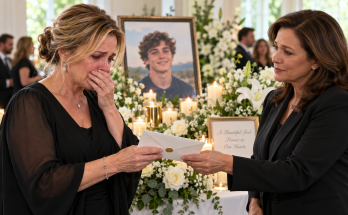
His funeral was crowded.
Former colleagues.
Neighbors.
People from Sophie’s life.
People from Mom’s.
Several federal investigators.
Even a few people from Whitmore who had not seen him in decades.
Sophie spoke first.
She did not turn him into a saint.
That was important.
“My father loved me.”
she said.
“And my father hurt me.”
The room became still.
“For years, I believed I had to choose which sentence was true.”
“I don’t anymore.”
“Both are.”
“He experienced something terrifying.”
“He responded by trying to control everything he could still lose.”
“That included me.”
“I left.”
“He blamed me.”
“Then, years later, he stopped.”
“He apologized.”
“Then he did something harder.”
“He changed how he behaved.”
Sophie looked at Mom.
“Ella helped him see what I had been trying to say.”
“Not because it was her job to fix him.”
“It wasn’t.”
“But because when Dad lied to her, she refused to accept his favorite excuse—that hiding truth was protection.”
Then Sophie smiled through tears.
“My father spent the second half of his life learning that love without truth becomes another kind of fear.”
Then Mom spoke.
She stood at the podium.
Eighty-one years old.
Silver hair.
Still beautiful.
Still unmistakably Ella.
“When I met Marcus, he made me feel twenty-five.”
Soft laughter.
“At fifty-three, I thought that was the greatest compliment love could give me.”
She paused.
“I was wrong.”
“Feeling young is lovely.”
“But eventually I learned something better.”
“He made me feel my actual age.”
People smiled.
“Fifty-three.”
“Then fifty-eight.”
“Sixty.”
“Seventy.”
“Eighty.”
“He loved the woman I was becoming, not a younger version of me I was supposed to recover.”
Mom looked toward his photograph.
“Marcus lied to me.”
No euphemism.
“He lied because he was ashamed.”
“He lied because he was frightened.”
“He lied because he believed if I knew everything, I might leave.”
“I did leave.”
The room remained silent.
“Then he learned the lesson he should have learned before we met.”
“You cannot make someone stay by hiding the information they would need to decide whether to stay.”
“That is not love.”
“That is control.”
She breathed.
“When I came back, I did not come back because his lies became acceptable.”
“I came back because his behavior became different.”
“And I had the freedom to choose.”
Mom’s voice broke.
“That freedom was the gift he finally learned to give me.”
After the funeral, I drove Mom home.
She sat in the passenger seat holding Marcus’s wedding ring.
Halfway there, she said:
“You were right.”
I glanced at her.
“About what?”
“That first night.”
“No.”
“Yes.”
“You said there was something I needed to know.”
“That was true.”
“But I wasn’t right about everything.”
“No.”
“I thought recognizing him meant I understood him.”
Mom looked out the window.
“And you didn’t.”
“No.”
She smiled sadly.
“Neither did I.”
We drove in silence.
Then she said:
“Thank you for telling me.”
I swallowed.
“Thank you for not making me responsible for what you did afterward.”
Mom reached across the console and took my hand.
“That was never your burden.”
She lived another fourteen years.
Fourteen years without Marcus.
But not without a life.
That distinction mattered to her.
She traveled with Sophie.
Became an absurdly devoted great-grandmother when Noah had children.
Took painting seriously enough to have two pieces displayed at a local gallery.
Complained that the gallery lighting was terrible.
Started a book club that read approximately one-third of each book and spent the rest of the evening gossiping.
At eighty-eight, Mom gave me a painting.
It showed a front door.
Nothing else.
Just a door standing slightly open.
“What is this?”
I asked.
“You don’t recognize it?”
“No.”
“It’s my old house.”
The house where I met Marcus.
The door I had opened.
“Oh.”
“You opened that door.”
she said.
“I remember.”
“You froze.”
“I remember that too.”
She smiled.
“For years, I thought that was the moment everything almost went wrong.”
“And now?”
“Now I think it was the moment everything became real.”
I looked at the painting.
“That’s generous.”
“No.”
She shook her head.
“Real isn’t the same as good.”
“That night hurt.”
“But truth entered the room.”
She touched the edge of the canvas.
“And after truth enters, at least everybody gets to make actual choices.”
I hung the painting in my home.
It remained there until after Mom died.
She was ninety-five.
No dramatic final illness.
Age simply gathered around her until the body could no longer carry everything the heart still wanted.
Sophie came.
So did Noah.
So did his children.
Mom’s room filled with people who technically had no reason to be family except that life had decided blood was only one way to build a table.
On her final afternoon, Mom asked me to sit beside her.
“You know what I regret?”
“What?”
“Not dating sooner.”
I laughed.
“Seriously?”
“Absolutely.”
“After everything?”
“Especially after everything.”
I stared.
“Explain.”
She smiled faintly.
“I spent so many years believing being a good mother meant putting my life in storage until you no longer needed me.”
“You were a good mother.”
“I know.”
Of course she said it that way.
No false modesty.
“But I could have been a good mother and a woman with her own life sooner.”
She squeezed my hand.
“I don’t regret raising you.”
“I regret believing love required disappearing into the job.”
Tears filled my eyes.
“You never disappeared.”
“Sometimes I did.”
She smiled.
“Then you grew up and annoyed me back into existence.”
“You’re welcome.”
“Don’t be smug.”
We laughed.
Then she became quiet.
“Do you remember what you told me?”
“That night?”
“Yes.”
“Mom, before you get any closer to him, there’s something you need to know.”
“Exactly.”
She looked toward the window.
“I hated that sentence.”
“I know.”
“I thought it was about to steal my happiness.”
“Did it?”
“For a while.”
Then she looked at me.
“But information doesn’t steal happiness.”
“What people do with truth can hurt.”
“Truth itself simply turns the light on.”
I cried.
Mom continued.
“If you love someone, don’t keep them in darkness because you’re afraid of what they’ll do once they can see.”
That was Ella.
Still teaching.
Still mothering.
Even at ninety-five.
She died two nights later.
Peacefully.
Her hand in mine.
After her funeral, I found an envelope in her desk.
My name.
Inside was a letter.
My darling,
If you are reading this, then apparently I have finally managed to stop giving advice in person.
I laughed through tears.
Do not celebrate too quickly.
Of course.
There is something I want you to understand about Marcus.
And about me.
And perhaps about yourself.
Then:
The night you recognized him, you believed your job was to protect me.
You were partly right.
People who love us should warn us when they know something that may affect our safety or choices.
Silence is not respect when silence withholds important truth.
But after warning me, you did something more difficult.
You eventually let me choose.
I stopped.
That is where love becomes respect.
You gave me information without demanding ownership of my decision.
I know that frightened you.
Thank you for doing it anyway.
Then:
Marcus failed at that for much of his life.
He believed protection meant controlling information.
During Whitmore, fear taught him secrecy.
With Sophie, fear taught him control.
With me, shame taught him omission.
He kept learning the same wrong lesson until enough people he loved refused to cooperate with it.
Then, finally, he learned another.
The next paragraph was underlined.
People are allowed to make decisions you fear once they know the truth.
I read it twice.
That is the price of loving adults rather than possessing them.
Then:
I did not forgive Marcus because I was lonely.
I did not return because I was old.
I did not stay because I believed women should tolerate dishonesty.
I returned because I observed change over time and freely decided that the relationship we could build was worth the risk to me.
Someone else might have made a different decision.
That would also have been valid.
Forgiveness was not my obligation.
It was my choice.
Then:
Please never tell my story as though Marcus’s redemption was the important part.
That sentence stopped me.
My life was not a classroom built for a man’s moral education.
I laughed through tears.
That was Mom.
I was happy before him.
I was happy with him.
I was devastated by him.
I was happy after leaving him.
I chose him again.
I grieved him.
Then I lived fourteen more years.
All of those years belonged to me.
I pressed the letter against my chest.
Women are too often described according to what men did to them, gave them, took from them, or learned because of them.
Remember me differently.
Remember that I painted.
Remember that I traveled.
Remember that I raised a wonderful child.
Remember that I once got thrown out of a pottery class for arguing with the instructor about glazing.
I laughed aloud.
I had forgotten that.
Remember that I danced badly in Lisbon.
Remember that I hated raisins.
Remember that I proposed to Marcus because he was taking too long.
Remember that I was fifty-three when I finally understood my life was not finished merely because the hardest work of motherhood was behind me.
Then:
And remember Marcus honestly too.
He was not secretly innocent.
He delayed when he should have acted.
He hid things he should have told.
He hurt Sophie.
He hurt me.
He was also frightened, brave, funny, irritating, loyal, capable of change, and eventually far more honest than the man I first met.
Human beings become dangerous stories when we reduce them to one adjective.
Then came the final page.
The evening you opened my door and saw Marcus, your face changed before either of you said a word.
I remember thinking, Oh no.
I was right.
Something difficult was coming.
But difficult was not the same as ruin.
That is something age taught me.
A truth can break the future you expected without breaking your entire future.
I had to stop reading.
When I continued, the words blurred.
Sometimes the truth ends a relationship.
Sometimes it rebuilds one differently.
Sometimes it tells you to run.
Sometimes it tells you to wait.
Truth does not promise a comfortable answer.
It only gives you a real question.
Then:
That night, the real question was never: Is Marcus a good man or a bad man?
Life is rarely generous enough to be that simple.
The questions were these:
What did he do?
What is he hiding?
What has he changed?
What remains dangerous?
What am I willing to accept?
What do I choose with my eyes open?
Then:
Those questions saved me from two mistakes.
The first would have been trusting him blindly.
The second would have been believing his worst chapter was the only chapter he was permitted to write.
I sat alone for a long time.
Then I read the ending.
My darling, you once told me you wanted to see me doing things that made me happy.
You got your wish.
Happiness was not simple.
It never is.
But I had more of it than I expected.
Thank you for wanting a life for me beyond motherhood.
Thank you for warning me when you were afraid.
Thank you for learning when to stop warning and start trusting.
And please stop staring suspiciously at every person your loved ones date.
You are exhausting.
I laughed.
Then cried.
The final line was beneath her signature.
P.S. Marcus really did make me feel twenty-five again. But growing old beside him turned out to be much better.
Years later, I still kept Mom’s painting of the open door.
People occasionally asked what it meant.
For a long time, I gave different answers.
Second chances.
Truth.
Love.
Choice.
Eventually, I stopped explaining.
Because the painting was not really about Marcus.
It was not even about Mom.
It was about what doors do.
They let people enter.
They also let people leave.
A locked door decides for you.
An open one requires judgment.
That Saturday night, when I opened my mother’s front door and recognized the man standing outside, I thought my job was to slam it shut before he could hurt her.
I was wrong.
My job was to tell her what I knew.
Her job was to decide whether he ever walked through it again.
For a while, she closed it.
Marcus learned to stand on the other side without pounding.
Without demanding.
Without claiming that love entitled him to entry.
And years later, when my mother opened that door again, she did so herself.
Eyes open.
History known.
Choice intact.
That was what made the second beginning different from the first.
Not that Marcus had become perfect.
Not that Mom had forgotten.
Not that I stopped worrying.
It was that nobody needed darkness anymore.
And when I think of my mother now, I do not picture the frightened woman sitting at her kitchen table reading a message about a man who had once been marked for death.
I picture her years later.
Seventy-something.
Barefoot in her kitchen.
Music playing.
Marcus trying to dance with her.
Mom laughing because he had absolutely no rhythm.
Sophie and Noah arriving through the back door.
Me carrying dessert.
Everybody talking too loudly.
Nothing hidden.
Nothing perfect.
Just a family assembled from truth, consequences, boundaries, forgiveness, and choices nobody could have predicted on the night it all nearly fell apart.
Mom once told me that happiness did not require a spotless past.
It required enough truth to know what you were choosing.
She had that.
In the end, so did Marcus.
So did Sophie.
And eventually, so did I.
The sentence I had once feared would destroy my mother’s happiness—
“Mom, before you get any closer to him, there’s something you need to know.”
—did not destroy it.
It simply demanded that whatever happiness came afterward be built on something stronger than ignorance.
And perhaps that is one of the hardest forms of love:
not deciding for someone,
not hiding reality to preserve a beautiful illusion,
not confusing protection with possession,
but turning on the light,
telling the truth,
and trusting the person you love to decide what they can live with once they can finally see.
My mother did.
And she lived beautifully.
Not because nothing ever broke.
But because after it broke, the pieces were never again hidden from her.
THE END STORIES! THANK YOU FOR READING GOOD LUCK !❤️
Related Posts