➡️ PART 3 ENDING PART➡️
My hands were shaking before I even opened Grandpa’s letter.
The envelope was yellowed at the edges, though it could not have been more than a few months old. Grandpa had always kept old stationery in the bottom drawer of his desk, the kind with thick cream paper and a faint blue line running along the border. Grandma used to tease him about saving things until they became antiques.
I ran my thumb beneath the flap.
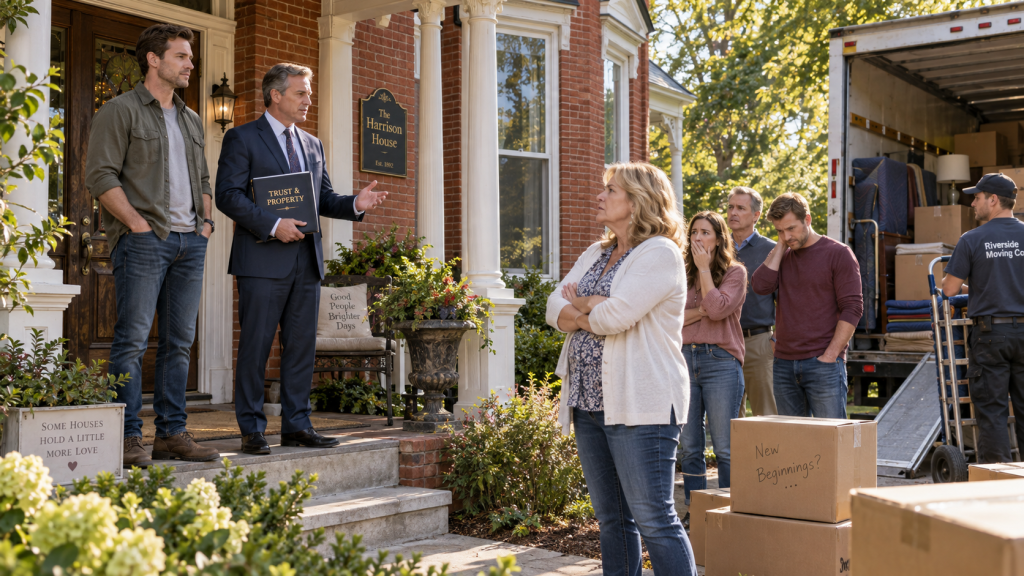
My mother watched from the driveway.
My aunt stood beside her.
Two cousins hovered near the moving truck, suddenly fascinated by their phones.
The movers had stopped pretending this was an ordinary job.
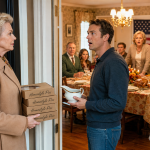
The man in the navy suit—Mr. Harlan, the attorney who had helped me create the trust—stood beside me without saying anything.
Inside the envelope was one page.
Grandpa’s handwriting leaned slightly to the right, strong at the beginning, weaker near the bottom.
Aiden,
If you are reading this, then I suppose your grandmother and I were right about one thing we hoped to be wrong about.
Your mother is probably angry.
Someone has probably used the word “fair.”
Someone may have reminded you how much room the house has.
I stopped.
My throat tightened.
My mother’s face changed.
She could not read the letter from where she stood, but she knew.
She knew those words were about her.
I continued.
You have spent too much of your life confusing kindness with surrender.
That is partly our fault.
We praised you for being easy.
We praised you for being dependable.
We said you were mature whenever you swallowed what you actually wanted so everyone else could be comfortable.
I am sorry for that.
A good heart is not supposed to make you available for taking.
The porch blurred.
I blinked hard.
Grandpa had never apologized to me before.
Not because he was proud.
Because there had never seemed to be anything to apologize for.
He had been one of the safest people in my life.
But somehow, even he had noticed what I had not.
I read the next paragraph.
We did not leave the estate to you because we forgot anyone.
We did not leave it to you because your mother was less loved.
We did not leave it to you because your cousins failed some secret test.
We left it to you because you were the person who came when there was no audience.
Grandma remembered every Thursday you brought groceries after my surgery.
I remembered you fixing the porch rail in the rain because I was too stubborn to call someone.
We remembered who visited when there was nothing to inherit yet.
My mother looked at me.
I had not realized I was crying until a drop hit the page.
The driveway had become absolutely silent.
Even the diesel engine had been turned off.
I kept reading.
Your family may tell you that receiving more means you owe more.
Do not let guilt turn our gift into their invoice.
Help anyone you choose.
Give anything you choose.
Open the door whenever you choose.
But make sure the choosing remains yours.
That house is not a reward.
The money is not a test.
They are tools.
Use them to build a life in which you do not have to apologize for taking up space.
At the bottom, Grandpa had written one final sentence.
If somebody arrives with a truck, send the truck home.
I laughed.
Actually laughed.
A broken, wet sound escaped me before I could stop it.
Mr. Harlan lowered his head, smiling.
One of the movers coughed into his hand to hide a laugh.
My mother did not find it funny.
“What does it say?”
I folded the letter carefully.
“It says to send the truck home.”
Her face went rigid.
“Aiden.”
“That’s what he wrote.”
“Give me that.”
“No.”
“I am his daughter.”
“And the letter is addressed to me.”
She stepped toward the porch.
Mr. Harlan moved half a step.
Not threatening.
Just enough.
My mother stopped.
“I cannot believe this.”
Neither could I.
But for different reasons.
For years, I had believed my grandparents simply liked having me around.
I thought the Thursday groceries were nothing.
I thought fixing the porch was nothing.
Driving Grandpa to his cardiology appointments.
Changing the batteries in Grandma’s smoke detectors.
Replacing the upstairs showerhead because Grandpa’s shoulder hurt.
Sitting at the kitchen table after Grandma forgot the name of her pharmacist and became embarrassed.
I had never kept score.
Apparently, they had not either.
They had simply noticed.
There is a difference between keeping score and remembering who showed up.
My aunt finally spoke.
“This is ugly.”
I looked at her.
“What is?”
“Reading private letters in front of everyone.”
“You were moving furniture into my house.”
“Our family’s house.”
“No.”
I heard the change in my own voice.
Not louder.
Clearer.
“My grandparents’ house became mine when they died. Then I transferred it into my trust. It has never belonged to you.”
My cousin Mason shoved his phone into his pocket.
“So that’s it?”
“What?”
“You get almost a million dollars and a whole house, and everyone else gets told to go away?”
“You weren’t told to come here.”
He laughed bitterly.
“You know what I mean.”
I did.
I knew exactly what he meant.
What he meant was that a large inheritance had appeared near him, and proximity felt like entitlement.
That was the strange thing money did.
It made people interpret another person’s good fortune as an accusation.
If I had inherited an old pickup and three thousand dollars, nobody would have arrived with a truck.
Nine hundred thousand changed the moral vocabulary.
Suddenly “family” meant percentage.
“Need” became claim.
“Fairness” became a word people used when they wanted control over somebody else’s decision.
My mother looked toward the movers.
“Do not leave.”
The driver looked at me.
“Who hired you?”
“My mother did.”
He nodded.
“Who owns the property?”
“I control it through the trust.”
He glanced at Mr. Harlan.
The attorney said, “Correct.”
The driver turned to my mother.
“Ma’am, we’re not unloading.”
“You were paid.”
“We can move your belongings somewhere you have permission to occupy.”
Her face flushed.
“There has been a misunderstanding.”
“No.”
I looked at her.
“There hasn’t.”
That hurt her.
I could see it.
Sometimes clarity is more insulting than accusation because it takes away the possibility that everyone merely got confused.
My mother had not misunderstood my no.
She had decided it was temporary.
Negotiable.
Something she could overpower with momentum.
That had worked before.
Birthday plans.
Vacations.
Money.
Favors.
If she could make the situation inconvenient enough, I usually surrendered.
She had expected the truck to do what guilt alone had not.
The movers began closing the back.
Metal clanged.
My aunt grabbed my mother’s arm.
“Come on.”
“No.”
Mom pulled away.
“We are not leaving until he explains what he thinks happens next.”
I stared.
“What happens next?”
“Yes.”
“You go home.”
Her face changed completely.
Something cracked beneath the anger.
“Home?”
“Yes.”
“I gave up my lease.”
My stomach dropped.
“What?”
She crossed her arms.
“You heard me.”
“Why would you do that?”
“Because you knew I was moving here.”
“No.”
I almost shouted it.
“No, I didn’t.”
“We discussed it.”
“You said you were having trouble with rent.”
“And you said the house had four bedrooms.”
“That is not permission.”
“You knew what I meant.”
“You knew what I meant when I said no.”
Her eyes filled.
For one dangerous second, guilt rushed back with full force.
My mother had given up her lease.
If that was true, she might not have anywhere to go.
The old part of me rose immediately.
The fixer.
The cleaner.
The person who said, It’s fine.
Mr. Harlan must have seen it on my face.
He leaned slightly toward me.
“You do not have to decide anything right now.”
My mother heard.
“This has nothing to do with you.”
Mr. Harlan looked at her.
“Actually, my client asked me to be here precisely because he expected pressure.”
“My client.”
She laughed bitterly.
“He’s my son.”
I looked at her.
“Then treat me like one.”
Silence.
Her eyes moved back to me.
“What is that supposed to mean?”
“It means stop acting like being my mother makes my no less important.”
She stared.
I continued before courage disappeared.
“You have done this my entire life.”
Her face tightened.
“Done what?”
“Made your emergency my obligation.”
“That is not true.”
“Mason’s tuition.”
My cousin looked up.
“What?”
I ignored him.
“Aunt Clara’s car repair.”
Clara’s mouth opened.
“Christmas when you told me everybody had already agreed I’d cover the cabin deposit.”
My mother went pale.
“The credit card you asked me to put groceries on because you promised to repay me.”
“I did repay some of that.”
“Seven months later.”
She looked toward Mr. Harlan as if embarrassed by the audience.
I almost stopped.
Then Grandpa’s letter burned inside my pocket.
You have spent too much of your life confusing kindness with surrender.
So I kept going.
“The family phone plan.”
“That saved everyone money.”
“I paid the bill for two years.”
“You made more.”
“There.”
She frowned.
“There what?”
“That.”
I pointed between us.
“You think because I have more, my consent becomes optional.”
“That is not what I said.”
“It is what you have always meant.”
My voice shook.
I hated that.
I wanted this moment to sound strong.
Instead it sounded like a son trying not to cry in front of his mother.
Maybe strength is not always a steady voice.
Maybe sometimes it is saying the sentence anyway.
She stared at me for a long time.
Then said:
“I raised you.”
There it was.
The oldest invoice.
I closed my eyes.
“Yes.”
“I worked two jobs after your father left.”
“I know.”
“I went without things.”
“I know.”
“I kept you fed.”
“I know.”
“I paid for school.”
“You were my parent.”
Her face went white.
The moment the words left my mouth, I wanted them back.
Not because they were untrue.
Because they hurt her.
“Aiden.”
“I am grateful.”
I stepped off the porch.
“I am. I know what you did.”
“Do you?”
“Yes.”
“Because you sound like some stranger standing there explaining motherhood to me.”
I swallowed.
“I am saying raising me does not create a mortgage on everything I ever have.”
My aunt muttered, “Unbelievable.”
I turned.
“No.”
She froze.
“You don’t get to do that either.”
“Do what?”
“Stand beside her and act like the problem is how I’m reacting instead of what you all did.”
Clara’s face flushed.
“We thought your mother had permission.”
“You helped load a moving truck.”
“She said—”
“You never called me.”
Nothing.
Mason looked away.
Another cousin, Jeremy, suddenly found something interesting near the curb.
Every person there had my number.
Nobody asked.
Because asking created the risk of hearing no.
I understood that now.
People who rely on assumption often do so because assumption is more useful than consent.
The movers finished securing the truck.
The driver approached.
“We need a destination.”
Everyone looked at my mother.
She looked at me.
I could almost see the old script waiting.
Aiden will solve it.
Aiden always solves it.
I took a breath.
“Mom, where do you want your things delivered?”
Her eyes widened.
“You’re serious.”
“Yes.”
“I told you. My apartment is gone.”
“A storage facility?”
She laughed.
Cruel and shocked.
“My whole life in storage?”
“For now.”
“And where do I sleep?”
I nearly said here.
The word rose all the way into my throat.
Grandpa’s letter stopped it.
I put my hand into my pocket and touched the paper.
Choose.
Not never help.
Choose.
“I can pay for a hotel for one week,” I said.
My mother stared.
“That’s it?”
“Yes.”
“You have nine hundred thousand dollars.”
There it was again.
Not nine hundred thousand.
A loaded number.
A moral accusation.
I looked at her.
“And you had a lease.”
Her eyes flashed.
“I canceled it because I thought I was moving into my parents’ house.”
“My house.”
She said nothing.
“Seven nights,” I repeated. “I will cover the hotel. After that, you need to make your own plan.”
My aunt shook her head.
“This is cold.”
“Then you take her.”
Clara froze.
I had never turned the logic around before.
It worked beautifully.
“You have a guest room,” I said.
“That’s different.”
“How?”
“My husband works nights.”
“What does that have to do with anything?”
She looked away.
Mason stepped backward.
Nobody volunteered.
That was when my mother finally saw what I had known my entire life.
Family generosity is often loudest when somebody else is expected to provide it.
She looked at them.
Then at me.
Something in her face broke.
“Fine.”
She gave the movers her storage facility information.
I booked a hotel seven miles away.
I paid through the following Saturday.
Not Sunday.
Seven nights.
I sent the confirmation to her phone.
She did not thank me.
I did not ask her to.
The truck left first.
Then Clara.
Then my cousins.
My mother stood beside her SUV.
For a moment, it was only the two of us.
Mr. Harlan had gone inside to give us privacy.
The driveway suddenly seemed too large.
Mom looked at the Victorian.
Grandma’s roses lined the front path.
Grandpa had painted the porch rail every other summer whether it needed it or not.
My mother had grown up there.
I remembered that.
This house was not just an asset to her.
It had been childhood.
Safety.
Maybe grief.
Maybe she had imagined returning and making herself a daughter again.
That truth softened me.
But it did not erase the truck.
“I loved this house before you existed,” she said.
I nodded.
“I know.”
“I took my first steps in that hallway.”
“I know.”
“Your grandfather taught me to ride a bike in this driveway.”
I looked toward the cracked concrete.
“I know.”
“You act like I’m some stranger trying to steal it.”
“No.”
“Then what am I?”
I took a long time.
“My mother.”
She waited.
“That’s why this hurts.”
Her eyes filled.
“If some stranger did this, I’d call the police and never think about them again.”
She looked away.
I continued.
“You’re the person I kept hoping would hear me before it got this far.”
She wiped one cheek angrily.
“I just thought we could all benefit.”
“From what?”
“The house.”
“By moving in?”
“There’s space.”
“For how long?”
She did not answer.
“How long, Mom?”
She stared at the porch.
“I don’t know.”
“Would you pay rent?”
“Aiden.”
“Utilities?”
“I raised you.”
There it was again.
I nodded.
“Exactly.”
She flinched.
“What happens when Clara needs somewhere to stay?”
“That’s not the same.”
“Mason?”
Silence.
“Jeremy?”
She closed her eyes.
“Grandma and Grandpa knew.”
“What?”
“They knew this would happen.”
She looked at me.
“That letter.”
I touched my pocket.
“They knew.”
My mother’s chin trembled.
Something like shame moved through her.
“Did they hate me?”
The question stunned me.
“No.”
“Then why leave me nothing?”
I knew the answer only partly.
I had spent nights asking it myself.
Grandma and Grandpa had loved her.
No question.
There were photographs everywhere.
Birthdays.
Graduation.
Her wedding.
Me as a baby in her arms.
Love had existed.
But inheritance was not a report card.
“Maybe they knew you would see the estate as something already owed.”
Her face hardened.
“That sounds like them.”
“What does?”
“Judging me.”
“Mom.”
“You don’t know what it was like growing up here.”
That was new.
I waited.
She looked toward the second-floor windows.
“Your grandfather controlled every dollar.”
I frowned.
“Grandpa?”
“To you, he was sweet.”
She laughed bitterly.
“To me, he was the man who made me bring receipts home at sixteen if I used five dollars for lunch.”
I had never heard that.
“Grandma checked my clothes.”
“What do you mean?”
“She wanted to know what everything cost.”
Mom shook her head.
“They loved me. I know that. But this house was not some perfect place.”
That mattered.
Stories become dangerous when we polish dead people until the living are not allowed to remember pain.
I looked at the windows differently.
Grandpa had been gentle with me.
Maybe he had learned.
Maybe age changed him.
Maybe grandchildren receive softened versions of the people their parents survived.
“I didn’t know.”
“No.”
She looked at me.
“You never asked.”
That hurt because it was true.
We stood there.
Two people both holding versions of the same dead couple.
Neither complete.
“I’m sorry,” I said.
Mom’s face changed.
She had not expected that.
“I’m sorry I never asked what growing up here was like.”
She looked away.
“Doesn’t change anything.”
“No.”
I took a breath.
“But it matters.”
She nodded faintly.
Then opened her SUV door.
“Seven nights.”
“Yes.”
She climbed in.
Before closing the door, she looked at me.
“What happens after?”
“I hope you figure it out.”
That was the hardest answer I had ever given her.
She drove away.
I stood in the driveway long after the SUV disappeared.
Then I went inside.
The house was silent.
Not peaceful.
Not yet.
Grandma’s clock ticked above the mantel.
Grandpa’s mug still sat beside the sink because I had not been able to move it.
I went into the living room.
Mr. Harlan was standing near the window.
“You okay?”
“No.”
He nodded.
“Good answer.”
I sat.
“What if I’m wrong?”
“About?”
“Everything.”
He took the chair opposite me.
“That’s broad.”
“What if this is selfish?”
“Keeping your own inheritance?”
“Not helping her more.”
“You did help.”
“A hotel for a week.”
“Yes.”
“She’s my mother.”
“Yes.”
“I have enough.”
“Yes.”
Every answer irritated me.
I laughed weakly.
“Can you stop agreeing with everything?”
“No.”
That actually made me smile.
Then he leaned forward.
“Aiden, having the capacity to solve someone else’s problem does not automatically create the duty to solve it.”
I looked at him.
“That sounds like something lawyers say.”
“It sounds like something people need lawyers to say after family starts treating capacity as obligation.”
I rubbed my face.
“Was the trust overkill?”
“No.”
“Would they really have been able to take anything?”
“Not simply by wanting it.”
“So why do this?”
“Because pressure is sometimes more dangerous than paperwork.”
He nodded toward my pocket.
“Your grandfather understood that.”
The trust structure was stronger than I had realized.
I remained trustee and primary beneficiary during my lifetime.
The house belonged to the trust.
No relative had occupancy rights.
Nobody could force a partition.
Nobody could claim informal ownership simply by living there.
If something happened to me, the trust named independent successor trustees before any family beneficiary gained control.
My grandparents had not built those protections.
I had.
But Mr. Harlan had recommended them after I told him about the calls.
“Why did you bring the letter today?” I asked.
He looked toward Grandpa’s desk.
“Your grandfather left it with the estate attorney.”
“What?”
“He instructed them to release it if there was ever a dispute over the house.”
“Why didn’t I know?”
“Because that was the instruction.”
I stared.
“They really expected this.”
“Apparently.”
“Did they leave anything else?”
Mr. Harlan hesitated.
That hesitation told me yes.
“What?”
“There’s a memorandum.”
“What kind?”
“Not legally binding. Personal.”
“About the inheritance?”
“Yes.”
“Can I see it?”
He looked at me.
“I think you should.”
We drove to his office that afternoon.
The memorandum was four pages.
Grandma had written part.
Grandpa the rest.
They explained the will.
Not defensively.
Carefully.
My mother had received substantial help from them over the years.
Far more than I knew.
A down payment after her divorce.
Two mortgage rescues.
Credit-card debt paid twice.
A business loan that was never repaid.
Money for Mason’s first year of college because Aunt Clara could not afford it.
Grandpa had kept records.
Of course he had.
Not because he intended to punish anyone.
Because he kept records of everything.
At the bottom of one page, Grandma had written:
We have already shared with some while we were alive. Aiden rarely asks. We wish to give him something that does not arrive because he is fixing a problem.
I sat in Mr. Harlan’s conference room and cried.
That sentence hurt more than the letter.
Something that does not arrive because he is fixing a problem.
My grandparents had seen me.
Not as useful.
Not dependable.
Me.
I covered my face.
For thirty-two years, being needed had been the closest thing I knew to being valued.
Grandma and Grandpa had given me something without attaching a crisis.
No broken car.
No tuition deadline.
No overdue bill.
Just a gift.
That was almost impossible to receive.
Maybe that was why I had felt guilty from the moment the estate transferred.
I did not know how to keep something that had not been assigned to me as a responsibility.
“What do I do with this?”
Mr. Harlan looked at the memorandum.
“Whatever you want.”
“I mean the estate.”
“I know.”
“That answer is terrifying.”
He smiled.
“That is freedom.”
The first legal letter arrived nine days later.
My mother had hired an attorney.
I knew before opening it.
Certified mail has a particular kind of weight when it contains family conflict.
The claim was not yet a lawsuit.
It challenged the will and trust transfer.
Undue influence.
Lack of testamentary capacity.
Alleged isolation of my grandparents.
The phrases made me nauseous.
Isolation.
I had been the one taking them to appointments because everyone else was busy.
Now that care was being reframed as manipulation.
My aunt joined the challenge.
So did two cousins.
Not because they were named beneficiaries under the original estate plan.
Because they argued my grandparents had intended a broader distribution.
Mr. Harlan read the letter twice.
Then said:
“Expected.”
“I’m starting to hate that word.”
“Most litigation is predictable after the first family dinner.”
“What happens?”
“We respond.”
“Can they win?”
“Anyone can win something until evidence is tested.”
Again, the lawyer answer.
I stared.
He sighed.
“The will was executed properly. Capacity was documented. Your grandparents had independent counsel. Their physician evaluated them near the relevant dates. We have correspondence showing their intent. The trust you created after inheritance does not affect whether the inheritance was valid.”
“What about undue influence?”
“That is the emotional center of their claim.”
“Because I visited?”
“Because you benefited and had access.”
My stomach turned.
“So the thing Grandpa praised me for could be used against me.”
“It can be alleged.”
“Great.”
“Aiden.”
I looked up.
“Allegation and proof are not twins.”
That helped.
Slightly.
The family group chat became unbearable.
My aunt posted vague messages.
Some relatives left.
Some stayed silent.
My mother wrote:
All I ever wanted was fairness. I never thought I’d have to fight my own son for what my parents meant for the family.
I typed a response.
Deleted it.
Typed another.
Deleted that too.
Finally, I left the group.
My phone immediately started ringing.
I turned it off.
That night, I sat alone at Grandma’s dining table.
The chandelier buzzed faintly.
There were scratches in the wood from decades of dinners.
I could point to almost every one.
Christmas 2008.
Thanksgiving 2014.
The year Mason dropped the carving knife.
Family had happened here.
Real family.
Laughter.
Fights.
Birthdays.
Funerals.
Now lawyers would discuss this table as property.
That angered me more than I expected.
Money had not created our problems.
It had translated them.
Everything already present became visible.
Entitlement.
Silence.
History.
Resentment.
The estate simply gave each thing a dollar sign.
Discovery began two months later.
I learned far more about my grandparents’ finances than I ever wanted.
So did my family.
Bank records showed transfers to my mother.
Checks.
Loan agreements.
Debt payments.
My grandparents had paid almost one hundred seventy thousand dollars toward her financial emergencies over twenty years.
My mother claimed much of it had been gifts.
Some probably had.
The point was not repayment.
The point was intent.
Grandma and Grandpa had not ignored their daughter.
They had supported her repeatedly while alive.
My mother’s attorney argued that this did not explain disinheriting her.
Mr. Harlan produced a letter Grandpa had written to his own attorney three years before his death.
Our daughter has been helped many times. We love her. We no longer believe giving her additional assets will improve her life. Aiden has spent much of adulthood assisting family and rarely builds for himself. We want whatever remains to go to him.
I read that sentence in a deposition room.
My mother sat twenty feet away.
Her face collapsed.
For the first time, the fight stopped looking like greed.
It looked like rejection.
That changed something inside me.
She was not only fighting for money.
She was fighting against a message she believed her dead parents had sent:
You were not worthy.
Maybe that was why “fairness” mattered so much.
Money was easier to argue about than love.
During a break, I found her alone near the courthouse vending machines.
We had not spoken privately in two months.
“Mom.”
She looked at me.
“What?”
I sat beside her.
She stared ahead.
“They hated me.”
“No.”
“You heard the letter.”
“I did.”
“They thought I was irresponsible.”
“Yes.”
She laughed bitterly.
“Thanks.”
“That is not hatred.”
“It feels close.”
I thought about the memorandum.
About her childhood confession in the driveway.
“Maybe they didn’t know how to tell you they were tired.”
Her eyes filled.
“Parents don’t get tired of their children.”
“Yes, they do.”
She turned toward me.
“Does that make you feel good?”
“No.”
I rubbed my hands together.
“I think parents can love a child and still become tired of rescuing them.”
She stared at the floor.
“And I think children can love parents and still be hurt by how they were raised.”
Her face changed.
I continued.
“You said Grandpa controlled money when you were young.”
“He did.”
“Maybe some of the way you handle money came from that.”
She looked at me sharply.
“Do not psychoanalyze me.”
“I’m not.”
“I know what you’re doing.”
“What?”
“Trying to make this sentimental so I drop the case.”
I stood.
“No.”
Her walls had returned.
“Then what?”
“I’m trying to have one conversation with my mother that isn’t through an attorney.”
She looked away.
“I don’t know how to do that right now.”
That was honest.
I nodded.
“Okay.”
I walked back to the deposition room.
My mother cried after I left.
I know because I saw her reflection in the glass door.
I did not go back.
The lawsuit lasted eleven months.
Eleven months of invoices.
Declarations.
Questions.
Family stories dissected under fluorescent lights.
My aunt claimed Grandma once told her “everything should stay in the family.”
True.
Grandma said things like that.
She also once told me she wanted to leave the dining set to the church.
People speak casually.
Wills exist because casual speech cannot carry estates.
Mason testified that Grandpa had called me “the responsible one.”
That helped me more than him.
My mother’s attorney suggested I had manipulated my grandparents by making myself indispensable.
That phrase made me laugh in the deposition.
The attorney frowned.
“Is something amusing?”
“Yes.”
“What?”
“My family spent years asking me to be indispensable.”
Silence.
I continued.
“Now you’re arguing I did it as a scheme.”
He changed questions.
The strongest evidence came from Grandma.
Not a ghost.
A video.
Six months before her death, their attorney had recorded an estate-planning review.
Grandma sat in the same chair she always used at their kitchen table.
Small.
Silver hair.
Cardigan buttoned wrong at the bottom.
The attorney asked:
“Do you understand that under this plan, your daughter will not receive a direct share of the remaining estate?”
Grandma nodded.
“Yes.”
“Why?”
She took a breath.
“Because we have helped her while we were alive.”
“Are you angry with her?”
“No.”
“Do you intend to punish her?”
“No.”
“Are you being pressured by Aiden?”
Grandma laughed.
Actually laughed.
“If anything, that boy would give the whole thing away if we let him.”
Everyone in the mediation room looked at me.
I wanted to disappear.
Grandma continued.
“That is why we are writing it down.”
The attorney asked:
“What do you want Aiden to understand?”
Grandma became quiet.
Then she looked directly toward the camera.
“Keep something.”
My chest broke.
Two words.
Keep something.
The mediator paused the video.
My mother was crying.
So was I.
Nobody spoke for several minutes.
Finally, my mother whispered:
“She knew.”
The mediator looked at her.
“Knew what?”
Mom shook her head.
“Nothing.”
But I knew.
Grandma had known the family would come asking.
She had known I would want to give.
She had known exactly how hard keeping anything would be for me.
That video changed the case.
Not legally by itself.
But emotionally.
My mother’s position softened.
Her attorney requested settlement discussions.
The first proposal demanded two hundred fifty thousand dollars.
I said no.
Not instantly.
I thought about it for three days.
I had the money.
That was the dangerous part.
Writing a check would have been easier than continuing.
Mr. Harlan asked me one question.
“If you pay this amount, what lesson do you think your family takes from the dispute?”
I hated him for that.
I knew the answer.
Pressure works.
So I refused.
The second demand was one hundred fifty thousand.
No.
Then eighty.
No.
My aunt withdrew from the case.
Mason followed.
Jeremy never formally joined after discovery revealed the financial history.
Eventually, only my mother remained.
By then, legal fees had become painful for both sides.
I offered something.
Not to settle ownership.
To settle relationship.
I would cover one year of rent for my mother in a modest apartment.
Paid directly to the landlord.
No cash transfer.
No claim on the estate.
In exchange, she would dismiss the challenge with prejudice and acknowledge the estate plan.
Her attorney called it insulting.
My mother accepted.
That surprised everyone.
Including me.
The settlement was signed in a conference room that smelled like coffee and printer toner.
My mother sat across from me.
When the lawyers finished, they left us alone.
The signed papers lay between us.
“You won,” she said.
I shook my head.
“That’s not how this feels.”
“It’s what happened.”
“I kept what they left me.”
“Same thing.”
“No.”
I looked at her.
“I lost a year with my mother.”
Her expression shifted.
“You chose that.”
“So did you.”
Silence.
She traced one finger over the edge of the settlement.
“I needed you to understand.”
“What?”
“How it felt.”
“To be left out?”
“Yes.”
I nodded.
“I think I do.”
“No, you don’t.”
“Probably not completely.”
Her eyes filled.
“They paid my bills and resented me for it.”
“I’m sure it felt that way.”
“They made me feel incapable, then punished me for being incapable.”
That sentence landed hard.
I thought about the down payments.
The debt rescues.
Grandpa’s records.
Maybe help had come with shame.
I had only seen the checks.
Not the conversations.
“I’m sorry.”
She looked at me.
“For what?”
“For acting like records tell the whole story.”
Her mouth trembled.
“They don’t.”
“No.”
She wiped her eyes.
“But I was wrong too.”
I waited.
“I should never have come with the truck.”
“No.”
“I thought if I got there, you’d give in.”
“I know.”
“You always did.”
There it was.
Clean.
No excuse.
I looked down.
“Yes.”
“I used that.”
My throat tightened.
“Yes.”
“I’m sorry.”
I had waited almost a year for those words.
When they came, they did not erase anything.
They opened a door.
That was enough.
“I love you,” she said.
“I love you too.”
“Are you still angry?”
“Yes.”
She nodded.
“Me too.”
We both laughed.
Small.
Tired.
Real.
That was the beginning.
Not the end.
Relationships do not reset because two people finally tell the truth in a conference room.
My mother moved into the apartment.
I paid twelve months as agreed.
She got a part-time bookkeeping job at a dental office.
That surprised me.
Not because she could not work.
Because for years, every conversation about money had sounded as if disaster was permanent.
Once someone stopped solving every emergency, she began solving some herself.
The first time she paid her own car repair, she called me.
“Seven hundred forty dollars.”
“Ouch.”
“I paid it.”
“Good.”
“You are supposed to sound impressed.”
“I am.”
“More impressed.”
I laughed.
“I’m very proud of you, Mom.”
She went quiet.
“So am I.”
That mattered.
My relationship with Aunt Clara took longer.
She sent me a Christmas card.
No apology.
Just:
Family should not stay divided forever.
I did not answer.
The next year, another card.
Then a birthday text.
Eventually she called.
“I was wrong.”
I almost dropped the phone.
“About?”
“Do not make me say every detail.”
“Then this call will be short.”
She groaned.
“You’re different.”
“Yes.”
“You used to be easier.”
“I know.”
Silence.
Then:
“I helped your mother because I thought it would benefit all of us later.”
There it was.
“What benefit?”
“If the house became shared.”
“It never was going to.”
“I know that now.”
“And if Mom had moved in?”
Clara sighed.
“I thought eventually we could use it for holidays.”
A family house.
The fantasy revealed itself.
My grandparents’ Victorian transformed into a communal asset because one person owned more bedrooms than others thought he needed.
“I’m sorry,” Clara said.
I believed her enough to have lunch.
Not enough to give her a key.
That distinction became important.
Forgiveness did not restore access automatically.
Trust returned separately.
Mason never apologized.
He did something stranger.
He stopped talking to me for three years.
Then invited me to his wedding.
I went.
At the reception, after too many drinks, he found me near the bar.
“You know I was mad because I was broke.”
I looked at him.
“I guessed.”
“I thought Grandpa and Grandma leaving you everything meant they thought you were better.”
“They didn’t.”
“I know.”
He looked at his drink.
“I hated you for being chosen.”
That was honest enough that I softened.
“I hated being chosen for a while.”
He laughed.
“Poor guy with nine hundred grand.”
“Exactly.”
He nodded.
Then said:
“You didn’t deserve what we did.”
“Neither did you.”
He frowned.
“What?”
“You didn’t deserve to feel less loved because of a will.”
His face broke a little.
We hugged.
Not dramatically.
Two cousins repairing something money had exposed.
I stayed in the Victorian.
At first because leaving felt like surrender.
Then because I loved it.
I restored the upstairs bathroom.
Repaired the roof.
Had the old electrical system updated because Grandpa’s homemade wiring scared three different electricians.
I kept Grandma’s reading chair.
Grandpa’s coffee mug moved from the sink to a shelf.
Not a shrine.
A memory.
The trust paid property taxes and repairs.
The investments remained largely untouched.
That surprised everyone, including me.
For the first year, I was afraid to spend anything.
I had spent so long defending the inheritance that using it felt dangerous.
As if every purchase might prove my family right.
Then I reread Grandpa’s letter.
They are tools.
Use them.
So I did.
Carefully.
I paid off my remaining student debt.
I reduced my work hours.
Not quit.
I liked my job.
But I no longer took every overtime project because panic told me security could disappear overnight.
I traveled.
Not extravagantly.
I went to Nova Scotia because Grandma had always wanted to see it.
I brought her scarf.
It was sentimental and ridiculous.
I liked it.
I donated some money to the hospice that cared for Grandpa.
Anonymous.
That mattered.
For once, giving did not make me responsible for anyone’s gratitude.
I created a scholarship at my old community college.
Small.
One student a year.
For people returning after caring for a family member.
I told nobody in my family for two years.
Privacy became something I learned to love.
Not secrecy.
Privacy.
The difference is consent.
My mother visited the house for the first time again eighteen months after the settlement.
She called first.
That mattered.
“Can I come by Sunday?”
“Yes.”
“What time?”
“Three.”
“Do you want me to bring anything?”
“No.”
She arrived at 2:58.
No bags.
No boxes.
No plans.
Just a pie.
We stood awkwardly in the hallway.
She looked around.
“You changed the wallpaper.”
“It was hideous.”
“Grandma loved that wallpaper.”
“Grandma had questionable taste.”
Mom laughed.
It startled both of us.
We drank coffee in the kitchen.
She touched the counter.
“Dad put this in himself.”
“I know.”
“It used to be yellow.”
“I’m glad I missed that.”
She smiled.
Then grew quiet.
“Can I see my old room?”
I almost said no.
Not because I needed to.
Because part of me feared the house would begin belonging to her again the moment she walked upstairs.
Then I recognized that fear for what it was.
A scar.
Not a rule.
“Sure.”
We went upstairs.
Her childhood bedroom had become my office.
Bookcases.
Desk.
A couch.
Mom stood near the window.
“My bed was here.”
She pointed.
“I had a David Cassidy poster over there.”
“Seriously?”
“Do not judge me.”
She laughed.
Then her eyes filled.
“Grandma used to sit right there when I was sick.”
She pointed at the corner.
For a few minutes, the house contained her childhood instead of our lawsuit.
That was healing too.
Not erasing conflict.
Allowing other memories to exist beside it.
Before leaving, Mom stopped at the front door.
“Thank you.”
“For what?”
“Letting me come.”
I looked at her.
“You do not need permission to be my mother.”
She smiled sadly.
“I need permission to enter your house.”
“Yes.”
She nodded.
“I think I understand that now.”
After she left, I stood in the hallway.
Grandpa’s letter was framed inside my office.
Not the whole thing.
Just one paragraph.
Help anyone you choose. Give anything you choose. Open the door whenever you choose. But make sure the choosing remains yours.
That became the rule.
Not keep everything.
Not trust nobody.
Choose.
That distinction saved me from becoming hard.
For a while, after the moving truck, I thought boundaries meant walls.
Permanent ones.
High enough that nobody could ever reach me.
Therapy taught me otherwise.
Yes, therapy.
Mr. Harlan suggested it once.
I told him to mind his business.
Then scheduled an appointment two weeks later.
My therapist, Dr. Chen, asked me a question during our third session.
“What do you think would happen if your family became disappointed in you?”
I said:
“They’d be angry.”
“And then?”
“They might stop speaking to me.”
“And then?”
I stared.
She waited.
Eventually I said:
“I would be alone.”
There it was.
The real engine behind every yes.
Not kindness.
Fear.
I had learned early that usefulness secured belonging.
If I was helpful, quiet, generous, flexible—people stayed pleased.
Boundary became danger.
No risked abandonment.
The inheritance forced me to test that belief.
Some people did leave.
For a while.
And I survived.
More importantly, some returned differently.
That taught me something I wish I had understood at twenty.
People who only stay while you surrender are not staying with you.
They are staying with access.
Real relationships survive no.
Not always happily.
Not instantly.
But they adjust.
Three years after the truck incident, my mother’s apartment lease increased.
She called.
I saw her name.
My old body reaction happened immediately.
Tight chest.
Here comes the problem.
I answered.
“My rent is going up two hundred dollars.”
I waited.
She sighed.
“I’m not asking you to pay it.”
I laughed.
“What?”
“I heard your silence.”
“Sorry.”
“I found another place.”
“Oh.”
“It’s smaller.”
“Okay.”
“And I might need help moving.”
That was it.
Help moving.
Not financing.
Not housing.
Not rescuing.
“I can do Saturday.”
“Good.”
Then she added:
“And before you ask, no truck is coming to your house.”
I laughed so hard I had to sit down.
She laughed too.
Humor returned where fear used to live.
That Saturday, I helped move my mother into a one-bedroom apartment above a pharmacy.
It was small.
Bright.
Affordable.
She complained about the stairs.
Then decorated them with plants.
At the end of the day, she handed me a sandwich.
“Everybody pays their share.”
I stared.
She grinned.
“My share is sandwiches.”
We ate on cardboard boxes.
No inheritance discussed.
No fairness.
Just my mother and me.
Years passed.
The estate grew.
That was the funny part.
I spent some.
Gave some.
Invested most.
By thirty-eight, the trust was worth more than when I inherited it.
Money behaves differently when it is not being used to extinguish everyone else’s emergencies.
I never told my extended family the exact number again.
They stopped asking.
Mostly.
At Christmas one year, Clara joked:
“Aiden’s probably secretly a millionaire now.”
Everyone looked at me.
Old me would have laughed nervously and answered.
New me took a bite of pie.
“Maybe.”
Mason laughed.
“Look at him.”
Mom raised her glass.
“Don’t ask questions you’re not entitled to answers for.”
I nearly choked.
My mother.
Saying that.
Clara rolled her eyes.
I smiled.
Growth can be hilarious.
When I turned forty, I hosted Thanksgiving at the Victorian.
For years, I had avoided it.
Too loaded.
Too many memories of claims and moving trucks.
Then one October morning, I looked at the dining room and thought:
It is a table.
Just a table.
So I invited everyone.
Not because the house was “family property.”
Because I wanted them there.
That mattered.
The invitation said:
Thanksgiving, 3 p.m. Please bring one dish. No overnight guests.
Mason replied:
THE LEGAL TERMS 😂
I wrote:
Sign below.
He sent a picture of a fake signature.
Mom arrived first.
She brought sweet potatoes.
Clara brought rolls.
Mason brought wine.
Jeremy brought nothing, as usual.
Some family traditions survive every crisis.
We filled Grandma’s table.
At one point, Clara said:
“It’s nice being back in the family house.”
The room went quiet.
She froze.
Then immediately corrected:
“Aiden’s house.”
I looked at her.
Everyone waited.
I smiled.
“Tonight it can be the family house.”
Clara’s eyes filled.
That sentence would have been impossible five years earlier.
Back then, sharing sounded like surrender.
Now it could be generosity because choice came first.
That was the thing nobody had understood when the estate arrived.
I was not afraid of family enjoying what I had.
I was afraid of losing the right to decide.
Once that right became secure, giving became easy again.
Grandpa had known.
Help anyone you choose.
I understood now why the sentence began with help.
He never wanted me to become selfish.
He wanted kindness to stop being automatic.
At dinner, my mother raised her glass.
“I want to say something.”
Everyone groaned.
She glared.
“I’m seventy. Let me talk.”
That shut us up.
She looked at me.
“When my parents died, I thought their will was a judgment.”
My stomach tightened.
She continued.
“I thought every dollar they left Aiden was a dollar proving they loved him more.”
Clara stared at her.
Mom looked around the table.
“I was wrong.”
Silence.
“I was also angry that Aiden had something I didn’t.”
She laughed softly.
“Apparently parents can be jealous of their children. Nobody tells you that.”
Mason smiled faintly.
My mother looked at me.
“I tried to solve that feeling by taking control.”
Her eyes filled.
“I arrived with a moving truck because I knew if I asked again, he would say no.”
Nobody moved.
“That was one of the ugliest things I have ever done.”
My throat closed.
“I spent years thinking Aiden’s kindness meant he did not mind being used.”
She shook her head.
“He minded.”
A few people laughed softly.
So did I.
Mom continued.
“And then he taught me something I should have taught him.”
She raised her glass.
“Love does not become less loving when it has boundaries.”
I looked down because I was crying.
Everyone drank.
Grandma’s chandelier glowed above us.
Grandpa’s old chair sat empty near the window.
For the first time since their deaths, the inheritance did not feel like something separating us.
It had become part of the story.
Not the whole story.
Later that night, after everyone left, Mom stayed to help wash dishes.
I handed her a plate.
“You practiced that speech.”
“Three times.”
“I knew it.”
“Was it too much?”
“No.”
She dried the plate.
“Your grandfather would have loved Thanksgiving here.”
“I think so.”
“Your grandmother would complain about the centerpiece.”
“She always did.”
We laughed.
Then Mom looked toward the living room.
“You know, I don’t want the house anymore.”
I smiled.
“Good.”
“No, I mean it.”
“I know.”
“I used to think having it would prove something.”
“What?”
“That they hadn’t rejected me.”
I leaned against the counter.
“And now?”
She thought.
“I think I finally believe they loved me badly sometimes.”
That sentence startled me.
“Badly?”
“Yes.”
She put down the towel.
“They loved me. They helped me. They also made mistakes. Both can be true.”
I nodded.
“And you?”
“What about me?”
“Do you believe they loved you?”
I looked around the kitchen.
Grandma’s copper pans.
Grandpa’s mug.
The handwriting framed upstairs.
“Yes.”
“Good.”
Mom smiled.
“So do I.”
She left.
I locked the door.
Not because I feared anyone.
Habit.
Boundary.
Both.
The trust remained.
I never dissolved it.
Years later, when people asked why I kept an inheritance in trust despite being the primary beneficiary, I answered:
“Because clarity is kind.”
That usually confused them.
But it was true.
Clear ownership prevented fantasies.
Clear beneficiary instructions prevented future fights.
Clear rules protected relationships from assumption.
I added my own letters eventually.
One for any future spouse.
One for future children if I had them.
One for my mother.
One for whoever became successor trustee.
I learned from Grandma and Grandpa.
Not only from what they did right.
From what happened because so much had remained unsaid until death.
I wrote:
Money is not proof of love. Unequal distributions do not always mean unequal affection. If you are reading this because you are angry, please wait before turning grief into litigation.
Mr. Harlan laughed when he read it.
“Very subtle.”
“I’m learning from the best.”
“Your grandfather?”
“No. Lawyers.”
He looked offended.
By forty-two, I married.
Her name was Elise.
She knew the entire moving-truck story before our third date because Mason told it at a barbecue.
Badly.
“He says your mother tried to invade your inheritance with a U-Haul.”
“That is an aggressively simplified version.”
Elise smiled.
“Did she?”
“Yes.”
“Did you really have a lawyer waiting?”
“Yes.”
“That’s attractive.”
I laughed.
She was the first person I ever dated who did not treat my boundaries like puzzles to solve.
Before we married, I showed her the trust.
All of it.
Assets.
Terms.
Protections.
She did not ask to become co-trustee.
She asked:
“What do you want this money to do for your life?”
Nobody had phrased it that way.
Not what should we do.
What do you want it to do?
I loved her before that.
I trusted her more afterward.
We signed a prenup.
My mother surprised me again.
“Good.”
I stared at her.
“Who are you?”
She laughed.
“You taught me.”
Elise and I lived in the Victorian.
At first, it felt strange seeing someone else put shampoo in Grandma’s shower.
Life moves forward in small invasions.
Eventually, the house became ours in daily life without ever losing its legal clarity.
Elise painted one room green.
Grandma would have hated it.
I loved it.
We had a daughter at forty-four.
Named Clara.
Not after Aunt Clara.
Everyone assumed.
My aunt took credit anyway.
Our Clara grew up running through hallways where generations had fought over ownership.
She knew nothing about the lawsuit until she was older.
To her, the Victorian was simply home.
That became my greatest triumph.
Not the trust.
Not winning mediation.
Not keeping nine hundred thousand dollars.
A child could run through the house without sensing the argument in the walls.
When she was six, she asked:
“Daddy, who owns our house?”
I laughed.
“What kind of six-year-old asks that?”
“Grandma said Grandpa built a house once.”
My mother had become Grandma.
The word softened her.
I crouched.
“A trust owns the house.”
Clara frowned.
“Who is Trust?”
Elise nearly fell over laughing.
I explained badly.
Eventually I said:
“Think of it like a box that holds the house safely for us.”
“Can I see the box?”
“No.”
“Then I don’t believe you.”
Fair.
Children understand property law about as well as most relatives do.
Years later, when Clara was old enough, I told her the story.
The inheritance.
The truck.
Grandpa’s letter.
Her grandmother’s lawsuit.
Everything.
She looked horrified.
“Grandma did that?”
Mom was sitting right there.
“Yes,” she said.
Clara stared.
“But you’re nice now.”
Mom laughed so hard she cried.
“Apparently.”
Then she looked at me.
“Your father gave me the chance to become nicer.”
I shook my head.
“You did that.”
She nodded.
“Yes.”
That mattered.
Nobody gets credit for another person’s change.
We can set boundaries.
Offer doors.
But people walk through them themselves.
My mother did.
Not perfectly.
Until the end, she sometimes pushed.
Once, at seventy-eight, she asked if I could “just put her name on one little savings account for emergencies.”
I stared.
She stared back.
Then sighed.
“Too far?”
“Yes.”
“Fine.”
Progress, not sainthood.
When she became ill in her eighties, I helped.
A lot.
Doctors.
Groceries.
Appointments.
Medication.
Financial organization.
Some relatives looked at me and said:
“After everything, you still do all this?”
That question irritated me.
Boundaries had never been revenge.
I helped because I chose to.
The difference was everything.
One afternoon, near the end of her life, Mom sat in Grandma’s old reading chair.
She had lost weight.
Her hands looked like Grandma’s.
Thin.
Blue veins.
Time has a strange sense of humor.
She looked toward the window.
“I’m glad you didn’t give me the house.”
I smiled.
“That is a bizarre deathbed confession.”
“I’m not dying today.”
“You say that with confidence.”
She rolled her eyes.
Then became serious.
“If you had let me move in that day, I would have taken over.”
“I know.”
“I would have invited Clara.”
“I know.”
“Maybe Mason.”
“I know.”
“And you would have hated all of us quietly.”
“Yes.”
She laughed.
“I know.”
I sat beside her.
“For years I thought you saying no meant you loved me less.”
Her eyes filled.
“Now I think saying no was the first time you trusted me enough to survive disappointment.”
I stared.
That was better than anything my therapist had ever said.
“Where did you get that?”
“Old age.”
“Convenient.”
She smiled.
Then looked toward Grandpa’s framed letter.
“Read it to me.”
I hesitated.
“You sure?”
“Yes.”
So I read.
The entire thing.
For when they make you feel guilty.
My voice cracked halfway through.
Mom listened.
At the sentence about “someone may have used the word fair,” she laughed weakly.
“Your grandfather was obnoxious.”
“Yes.”
At “send the truck home,” she closed her eyes.
“I deserved that.”
“Maybe.”
She looked at me.
“Do you forgive me?”
“Yes.”
No hesitation.
By then, it was true.
“Completely?”
I thought.
“I don’t know what completely means.”
She smiled.
“Lawyer answer.”
“Mr. Harlan corrupted me.”
“Do you still remember?”
“Of course.”
“Does it still hurt?”
“Sometimes.”
She nodded.
“Then maybe forgiveness isn’t forgetting pain.”
“No.”
“What is it?”
I held her hand.
“Not needing you to keep paying for it.”
Her eyes filled.
“That’s good.”
“Therapy.”
“Worth every dollar.”
She died four months later.
At her funeral, Aunt Clara sat beside me.
Mason behind us.
My daughter held my hand.
Elise leaned against my shoulder.
The pastor spoke about my mother as generous.
Complicated.
Resilient.
No mention of lawsuits.
No mention of moving trucks.
A life cannot be reduced to its ugliest afternoon.
I was grateful.
After the service, I drove back to the Victorian.
Alone.
I went upstairs to my office.
Grandpa’s letter hung on the wall.
Below it, inside the desk drawer, was the original memorandum.
Grandma’s sentence:
We wish to give him something that does not arrive because he is fixing a problem.
I sat there a long time.
Then I understood how completely the gift had worked.
The estate changed more than my finances.
It forced me to become someone who could receive without immediately redistributing himself.
It taught me that generosity without consent becomes extraction.
That family history can explain behavior without excusing it.
That dead people can love imperfectly and still leave wisdom behind.
That living people can do terrible things and still grow.
Most importantly, it taught me that being the quiet one does not mean being the weak one.
Silence had once been my strategy.
I swallowed conflict.
Accepted assumptions.
Cleaned messes.
Said it was fine.
Then one Saturday morning, a moving truck backed into my driveway.
Maybe that was the greatest gift my family ever accidentally gave me.
They made surrender impossible to disguise.
There is nothing subtle about a truck.
It forced me to see what was happening.
Not misunderstanding.
Not tradition.
Not fairness.
A boundary being crossed in public.
I finally stepped in front of it.
Years later, the house was worth more than when I inherited it.
So was the trust.
People hearing the story sometimes asked the wrong question first.
“How much did you end up with?”
Numbers fascinated them.
I always answered differently.
“I ended up with my family.”
That confused people.
“But they sued you.”
“Yes.”
“Your mother tried to move in.”
“Yes.”
“So how is that a happy ending?”
Because happy endings are not stories where nobody hurts you.
Those are fantasies.
A real happy ending can be a family learning how to return after hurting one another without demanding the wound disappear.
My mother and I got years we would not have had if I surrendered that morning.
If I had let her move in, resentment would have poisoned everything.
I know myself.
I would have smiled.
Paid utilities.
Moved into a smaller bedroom.
Watched relatives arrive.
Eventually, I would have snapped.
Maybe at forty.
Maybe fifty.
Maybe after everyone had forgotten the original trespass.
Instead, the conflict happened loudly and early.
It was terrible.
And useful.
Truth often is.
When my daughter turned eighteen, I gave her a copy of Grandpa’s letter.
Not the original.
She read it in the kitchen.
At the end, she smiled.
“Send the truck home?”
“Family legend.”
She laughed.
Then looked at me.
“Were you scared?”
“Terrified.”
“You always tell it like you were calm.”
“That is storytelling.”
She folded the copy.
“Grandpa sounds smart.”
“He was.”
“Was Grandma?”
“Smarter.”
She smiled.
Then asked:
“What if I need help someday?”
I knew what she meant.
Would I become like them?
Would I keep money behind glass?
Would boundaries harden into distance?
I reached across the table.
“Ask.”
“That’s it?”
“Yes.”
“What if you say no?”
“Then you can be disappointed.”
“What if I’m angry?”
“You can be angry.”
“What if I really need it?”
“Then we talk.”
She frowned.
“That sounds simple.”
“It took our family three generations and several lawyers.”
She laughed.
Then I said the part that mattered.
“You never need to earn my love by being easy.”
Her face changed.
I had taken that line directly from the wound my grandparents had accidentally helped create.
I continued.
“You can need things.”
“Okay.”
“You can make mistakes.”
“Okay.”
“You can disagree with me.”
She smiled.
“Already excellent at that.”
“Yes.”
“But my money, your money, your choices, my choices—we talk clearly.”
She nodded.
“No trucks?”
“No surprise trucks.”
“Seems reasonable.”
That was how inheritance should work, I decided.
Not only transferring assets.
Transferring better patterns.
Grandpa left me money.
The greater inheritance was an instruction:
Choose.
I passed that down.
The Victorian eventually became too large for Elise and me.
By the time I was sixty-seven, my knees hated the stairs.
Clara had her own family.
Nobody needed five bedrooms.
We discussed selling.
The first conversation made me emotional.
Not because of the money.
Because I heard my mother’s voice.
You cannot seriously expect one person to keep this entire place.
The sentence had once been pressure.
Now, strangely, it was true.
I did not need the space.
The difference was timing.
Choice.
I called Clara.
“We’re thinking of selling.”
She was quiet.
“You okay?”
“Yes.”
“Do you want me to buy it?”
I laughed.
“Can you afford it?”
“No.”
“Then ambitious.”
She laughed.
Then surprised me.
“You should sell.”
“What?”
“You and Mom deserve something easier.”
“No sentimental fight?”
“It’s a house.”
I closed my eyes.
Grandpa would have liked that.
“It’s just a house?”
“It’s a very beautiful house that costs too much to heat.”
Also true.
We sold it the following spring.
Market value.
No family discount.
No secret expectation.
The trust invested the proceeds.
Before closing, we held one final dinner.
Everyone came.
Mason.
Aunt Clara, very old by then.
My daughter.
Grandchildren.
People who had been born long after the moving truck.
We ate at Grandma’s dining table.
The table was going with Clara.
My daughter, not my aunt.
I had to clarify that constantly.
After dinner, I took Grandpa’s letter off the wall.
Everyone gathered in the living room.
I read it aloud.
Again.
When I reached the last line—
If somebody arrives with a truck, send the truck home.
Everyone laughed.
Even Aunt Clara.
She raised one finger.
“For the record, I told your mother the truck was too much.”
Mason shouted:
“You were in the truck!”
“I was under pressure.”
We laughed harder.
That was family too.
Not rewriting history.
Reaching the point where history no longer had to be defended.
Before leaving, I stood alone on the porch.
The same porch where Mr. Harlan had stepped out in a navy suit decades earlier.
The same driveway.
No moving truck this time.
Just cars.
People saying goodbye.
Elise stood beside me.
“You okay?”
“Yes.”
“Really?”
I looked at the house.
Grandma’s curtains.
Grandpa’s repaired rail.
My daughter’s childhood window.
My mother’s old room.
Everything.
“Yes.”
The new owners arrived the next morning.
A young couple with two children.
The little boy ran through the front door and shouted because the stairs curved.
His sister claimed the room overlooking the garden.
Their parents apologized.
I smiled.
“It’s theirs now.”
The phrase came easily.
That surprised me.
Ownership could change without loss when it changed willingly.
At closing, I handed over the keys.
No fear.
No attorney standing behind me.
No relative arguing.
Just choice.
The trust received the money.
We drove away.
I did not look back until the end of the street.
Then I did.
One last time.
And I thought about my grandparents.
What they had intended.
Not a monument.
Not a battlefield.
A tool.
They had said so.
The house protected me when I needed protection.
Then I let it go when I no longer needed it.
That felt like honoring them more than keeping every brick until death.
Years later, my grandson asked why our family always joked about moving trucks.
I told him the story.
He listened with enormous eyes.
“Your mom tried to steal your house?”
“No.”
I smiled.
“She tried to move into a house after I said no.”
“That’s stealing.”
“Life is more complicated.”
He thought.
“Did she become nice?”
“She was always more than one thing.”
That answer confused him.
Good.
People should learn early that family members are not villains or heroes.
They are people.
Capable of entitlement.
Fear.
Growth.
Damage.
Repair.
He asked:
“What happened to the money?”
I looked around.
Some became his mother’s education.
Some became travel.
Some became scholarships.
Some became donations.
Some remained invested.
Some paid for care when I got older.
Some was simply there, doing what money does best when nobody is fighting over it:
Providing choices.
“What money?” I asked.
“The nine hundred thousand.”
I laughed.
“Oh.”
By then, the original amount barely mattered.
“That was a long time ago.”
“Are we rich?”
There it was.
The question every generation eventually asks.
I smiled.
“We’re fortunate.”
“What does that mean?”
“It means we have enough to make some choices other people don’t get.”
“Like what?”
“Like helping when we want.”
He grinned.
“So we should help everybody.”
I thought of Grandpa.
Help anyone you choose.
“Not everybody.”
His forehead wrinkled.
“That’s mean.”
“No.”
I pulled him closer.
“It means when you give something, it should come from your heart, not because somebody made you afraid they’d stop loving you.”
He did not completely understand.
He was nine.
There would be time.
That was another inheritance.
Time to learn something before the lesson became expensive.
When I became old enough to think about my own will, I returned to Mr. Harlan’s firm.
He was long retired.
His daughter, also an attorney, handled the trust.
She brought out the original file.
There was Grandpa’s envelope.
Copies of Grandma’s video transcript.
The first trust documents.
The moving-truck incident had become one paragraph in a legal history.
That made me smile.
Things that once feel enormous eventually become records.
“What do you want your estate to do?” she asked.
I thought about it.
Not who gets what.
What do I want it to do?
Grandpa would have appreciated the question.
“Prevent people I love from becoming enemies if possible.”
She laughed.
“Ambitious.”
“I know.”
We built a plan.
Clear.
Transparent.
I spoke to every beneficiary before signing.
No surprises.
No tests.
No secret messages from beyond the grave except one.
A letter.
I could not resist.
For Clara.
For her children.
For anyone who might someday feel guilty about receiving something.
I wrote:
If you are reading this because money has made somebody angry, remember that love and ownership are not the same thing.
You may share.
You may give.
You may keep.
You may say yes.
You may say no.
Whatever you do, make sure the choice is actually yours.
And if someone arrives with a moving truck—
I paused.
Then smiled.
You already know what to do.
I folded the letter.
Placed it in the envelope.
Across the front I wrote:
For when they make you feel guilty.
My grandfather’s words.
My handwriting.
Different generation.
Same lesson.
For most of my life, I thought being a good person meant becoming convenient.
Then I inherited a house.
Nine hundred thousand dollars.
A trust.
A fight.
A letter.
And finally, a self.
People remember the man in the navy suit stepping onto the porch.
They think he saved me.
He did not.
Mr. Harlan gave me information.
The trust gave me structure.
Grandpa’s letter gave me courage.
But none of those things could say no for me.
That part was mine.
It always had been.
I simply had to use it.
So if you ask me what my grandparents truly left behind, I no longer say the Victorian.
I do not say the investments.
I do not say company shares.
Those things mattered.
But money gets spent.
Houses get sold.
Documents get replaced.
What lasted was simpler.
They left me permission to keep something.
Not only money.
My voice.
My time.
My peace.
My right to disappoint people.
My right to give without being emptied.
My right to receive without turning gratitude into debt.
My right to stand on my own porch and decide who crossed the threshold.
That was worth more than nine hundred thousand dollars.
Much more.
And on the morning I finally handed the old house to its new owners, I understood one last thing.
Grandpa’s instruction had never really been about a moving truck.
It was about any moment when another person’s expectation arrived louder than my own choice.
Send the truck home.
Send the guilt home.
Send the assumption home.
Send the old version of yourself—the one who always says “It’s fine”—home too.
Then close the door.
Stand in the quiet.
And listen.
You might finally hear your own life waiting on the other side.
THE END STORIES! THANK YOU FOR READING GOOD LUCK !❤️
Related Posts