➡️ PART 3 ENDING PART➡️
“Evelyn… what exactly did you leave your son?”
Paige’s question hung in the kitchen longer than it should have.
Graham looked at me.
Not at the eviction notice.
Not at the ownership disclosure.
At me.
For the first time that morning, he looked less angry than frightened.
That almost undid me.
Almost.
I reached for my coffee cup, though it was already cold.
“Paige,” I said quietly, “I’m still alive.”
She blinked.
“I know, but—”
“No.”
I set the cup down.
“Do you?”
The room went still.
The grandchildren had not come downstairs yet.
Thank God.
Some conversations should not become inheritance lessons before breakfast.
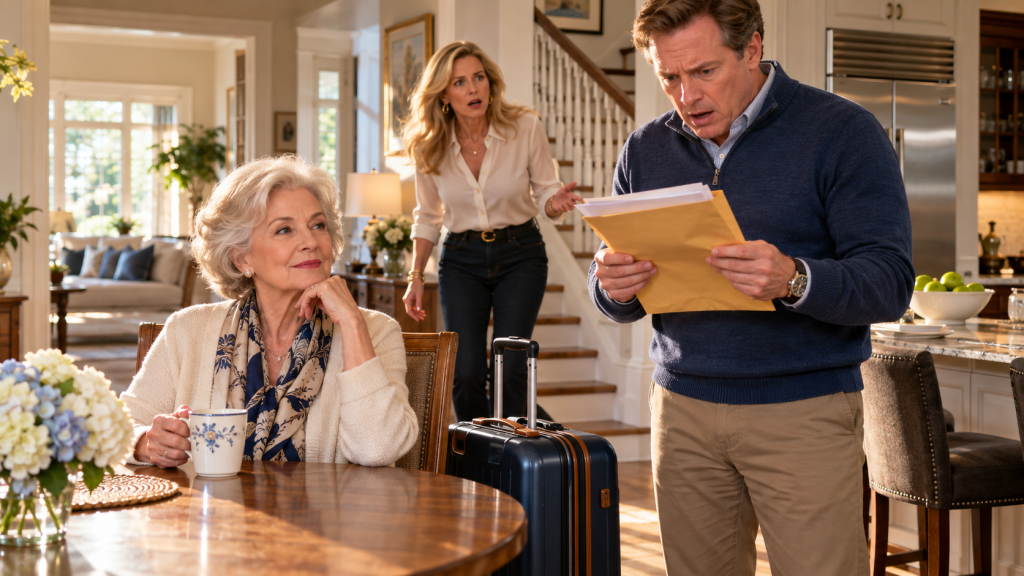
Graham held my handwritten letter in one hand and the notice in the other.
“Mom, this says T&E Property Holdings owns the house.”
“Yes.”
“And you own T&E?”
“Yes.”
“How?”
“You already read how.”
He stared at me.
“The ticket?”
“Yes.”
“The scratch-off?”
“Yes.”
His eyes widened.
“The one from your birthday?”
“Yes.”
For a second, the only sound in the kitchen was the refrigerator humming.
Paige slowly lowered herself into a chair.
“You won eleven million dollars.”
“The advertised prize was eleven million.”
I corrected gently.
“After the actual payout structure, taxes, legal planning, and everything else, I received less than that.”
“How much less?”
Graham asked.
I looked at him.
“Enough.”
That irritated him.
I could see it.
A year ago, I would have rushed to make him comfortable.
Explained.
Given exact numbers.
Made sure he did not think I was withholding anything.
Now I let silence do some work.
Graham ran a hand over his face.
“You knew for ten months.”
“Yes.”
“And you lived here.”
“Yes.”
“You cooked.”
“Yes.”
“You paid for groceries.”
“Yes.”
“You babysat.”
“Yes.”
“You let us think you had almost nothing.”
I frowned.
“I did have almost nothing when I moved in.”
“But after the ticket.”
I looked at him.
“What should I have done?”
He laughed without humor.
“I don’t know, Mom. Maybe told your family you became a millionaire?”
“Why?”
He stared.
“Because we’re your family.”
There it was.
The sentence that sounds like an answer until you ask what it means.
I folded my hands.
“When I became a widow, you told me I shouldn’t live alone.”
“I remember.”
“You asked me to move in.”
“Yes.”
“For a while, I thought you wanted me here because I was your mother.”
His face tightened.
“I did.”
“I believe you.”
That surprised him.
I continued.
“I believe you did in the beginning.”
Paige looked down.
“Then somewhere along the way, I stopped being your mother and became part of the household system.”
“That’s not fair.”
Graham’s voice sharpened.
“I cooked.”
I counted on one finger.
“I cleaned.”
Second finger.
“I bought groceries.”
Third.
“I folded laundry.”
Fourth.
“I picked the children up.”
Fifth.
“I cancelled doctor appointments because Paige had late meetings.”
Her face flushed.
“That happened twice.”
“Yes.”
“I changed my plans when your family needed something.”
“I stayed home during holidays because traveling to see Ruth made childcare complicated.”
“I started asking before using the television in a room I helped keep clean.”
I let my hand fall.
“And then one night I heard Paige say I was becoming a problem.”
Paige covered her mouth.
Graham’s face changed.
“You heard that?”
“Yes.”
His eyes closed.
I continued before he could explain.
“And you said, ‘What do you expect me to do? She’s still my mother.’”
He looked at me.
There are sentences people forget because they were casual when spoken.
The person who receives them may carry them for years.
“Mom.”
“I know you were tired.”
“I know Paige was stressed.”
“I know I was living in your house.”
“I know none of you sat down and deliberately decided to make me feel unnecessary.”
That was the important part.
Cruelty does not always need a meeting.
Sometimes it grows by convenience.
Paige started crying.
“I’m sorry.”
I looked at her.
“I believe you.”
That surprised her too.
But an apology can be real and still arrive after a decision has been made.
Graham placed the notice on the table.
“You bought this house before we talked about Pine Harbor.”
“Yes.”
“How long before?”
“March.”
His eyes widened.
“Eight months.”
“Yes.”
“Why?”
“The owner planned to sell.”
“I knew you liked the neighborhood.”
“The property was a reasonable investment.”
“And…”
I paused.
“And I wanted to know I could leave this house on my own terms if I ever needed to.”
His face fell.
“You were planning this.”
“No.”
“Mom, you bought our house.”
“The house you rent.”
“That is not the point.”
“It is one of them.”
He looked wounded.
Good.
Not because I wanted to hurt him.
Because he needed to feel the difference between what he controlled and what he merely occupied.
“I did not buy it so I could evict you.”
I said.
“I bought it because the opportunity existed.”
“I had no move-out date.”
“I had no plan to sell.”
“I never raised your rent.”
“I never changed your lease.”
“I kept the management company between us specifically so you would not feel watched.”
Graham stared.
“You could see our rent payments?”
“Yes.”
“That’s…”
He stopped.
“Invasive?”
“Yes.”
“I never opened your management file unless Martin sent me something requiring ownership approval.”
That was true.
“I did not inspect your personal life.”
“I did not check whether you paid on the third or the fourth.”
“I did not use ownership to enter the home.”
“I did not use it to control you.”
Paige looked at the notice.
“Until now.”
I nodded.
“Yes.”
“Now I’m using my ownership to end the lease lawfully.”
“Because we found you a senior residence.”
I looked at her.
“No.”
“Because you found me a room, placed a deposit, selected a move-out date, and organized my future without asking whether I wanted any of it.”
She whispered:
“We thought you’d be happier.”
“You thought Owen would be happier with my bedroom.”
Neither one answered.
That was the truth underneath the brochure.
Not the whole truth.
But part.
Graham sat across from me.
“You could have said no.”
“I did.”
He frowned.
“No, you said it seemed fine.”
“Exactly.”
“That’s not no.”
“No.”
I looked at him.
“That was me realizing the conversation had already happened without me.”
He swallowed.
“You had visited the place.”
“You had paid the deposit.”
“You had chosen January first.”
“You had discussed my room.”
“What exactly was I supposed to negotiate?”
His face crumpled.
“You were supposed to tell me you didn’t want to go.”
“I shouldn’t have had to compete with a plan my son was already relieved to see accepted.”
That landed.
He looked toward the letter.
Then at my suitcase.
“Where are you going?”
“My house.”
He almost laughed.
“This is your house.”
“No.”
I smiled gently.
“This is my property.”
“Different thing.”
The distinction mattered to me more than he could understand.
A property is an asset.
A house is walls.
A home is where you do not feel like an obligation.
“My home is near Wilmington.”
Paige whispered:
“You bought another house?”
“Yes.”
Graham stared.
“How long?”
“June.”
“Mom.”
“I found a yellow cottage fifteen minutes from Ruth.”
His eyes filled.
“You were going to leave.”
“Eventually.”
“When?”
“I didn’t know.”
“Until we gave you the brochure.”
“Yes.”
Silence.
Then footsteps on the stairs.
Owen appeared first.
Fifteen.
Tall enough now that every month seemed to require new pants.
Behind him came Lucy, eleven, rubbing sleep from her eyes.
They stopped when they saw the papers.
Owen looked at my suitcase.
“Grandma?”
I smiled.
“Morning.”
“Are you leaving?”
Graham stood.
“Kids, go get breakfast upstairs.”
Owen frowned.
“There’s no breakfast upstairs.”
Under any other circumstances, I might have laughed.
Lucy stared at my suitcase.
“Grandma, where are you going?”
Paige wiped her face.
“Not now.”
I looked at her.
“No.”
Then at the children.
“They deserve an answer.”
Graham stiffened.
I chose my words carefully.
“I bought a little house near Aunt Ruth.”
Owen’s eyes widened.
“You’re moving?”
“Yes.”
“When?”
“Today.”
Lucy’s mouth fell open.
“Today?”
“Yes.”
“Why?”
There are adult truths children should not be made to carry.
I was not going to turn my grandchildren into judges.
“Because I think it’s time I had a home of my own again.”
Lucy looked toward Graham.
“Did Dad make you leave?”
My heart broke.
“No.”
Immediate.
“This is my decision.”
Not the full story.
Enough.
Owen looked at the notice.
“What’s that?”
Graham grabbed it first.
“Nothing you need to worry about.”
Owen did not buy that.
Teenagers are suspicious by profession.
Then Lucy spotted the envelope with her name and Owen’s.
“What’s that?”
Paige closed her eyes.
I had almost forgotten the second envelope.
Martin had prepared it because once Graham learned the truth, I wanted no confusion about what I had done for the grandchildren.
I picked it up.
“This is for you and Owen.”
Graham’s jaw tightened.
“Mom.”
“What?”
“Not now.”
I looked at him.
“Why?”
His answer came too slowly.
Because he did not want the children learning that money existed before he understood where he stood.
That realization hurt.
Not enough to change my mind.
I gave the envelope to Owen.
“You can read it with your parents.”
Paige said sharply:
“Evelyn.”
I looked at her.
“There is nothing in that letter that asks these children to choose sides.”
“That is exactly why Martin wrote it with me.”
Graham’s face darkened.
“You involved a lawyer in letters to my kids?”
“I established trusts for your children.”
The room stopped.
Owen looked at the envelope.
“What kind of trusts?”
Graham stared at me.
“How much?”
I almost smiled sadly.
There it was again.
First question.
How much?
Not:
Why?
Not:
What for?
How much?
I said:
“Enough to help with education.”
Paige stood.
“You created money for the kids?”
“Yes.”
“Without telling us?”
“Yes.”
“Why?”
“Because I wanted the money to belong to their futures, not to household decisions.”
Graham’s eyes narrowed.
“What does that mean?”
“It means neither of you controls it.”
His face changed.
“The trusts are professionally administered.”
“Education, vocational training, certain approved first-home assistance later, and specific emergency needs.”
“They cannot use it for cars at sixteen.”
“They cannot use it to fund a vacation.”
“You cannot borrow against it.”
“Paige cannot redirect it.”
“Neither can I.”
Owen stared.
“Grandma, are you rich?”
There it was.
Child’s version.
Straight.
I smiled.
“I am comfortable.”
“That means rich.”
Graham whispered:
“Owen.”
I laughed.
“Probably.”
Lucy sat down slowly.
“Did you rob a bank?”
For the first time that morning, everyone laughed.
Even Paige.
Just for one second.
Thank God.
“No.”
I looked at her.
“Remember the scratch ticket from my birthday?”
Her eyes widened.
The grandchildren remembered.
Of course they did.
Children remember laughter more than adults think.
Owen’s mouth dropped open.
“No way.”
Lucy gasped.
“You won?”
“Yes.”
“How much?”
I smiled.
“Enough.”
Owen groaned.
“Why does everybody old say that?”
“Practice.”
Then Lucy did something none of the adults had.
She crossed the kitchen and hugged me.
Tight.
“Are you going to buy a horse?”
I laughed against her hair.
“No.”
“Can you?”
“Probably.”
“Then why not?”
“Because horses are work.”
She looked offended on behalf of horses everywhere.
Owen asked:
“Does this mean you don’t have to live at Pine Harbor?”
“No.”
“I never had to.”
Graham looked away.
That was the sentence he needed.
I never had to.
He had planned my move believing my choices were limited.
That was part of the wound.
If I had been poor, would my wishes have mattered less?
That question troubled me more than anything else.
I looked at both children.
“You are not responsible for anything happening between the adults.”
Owen stiffened.
Teenagers hate being treated like children right until adults need them to carry adult weight.
“This is not because you wanted my room.”
I added.
He flushed.
“I didn’t—”
“I know you need space.”
“You’re growing.”
“That’s normal.”
I touched his arm.
“Nothing about my decision is your fault.”
His eyes filled despite his best effort.
“Are we still going to see you?”
There.
The real inheritance question.
Not money.
Access.
“Yes.”
I said.
“If you want to.”
Lucy hugged me again.
“Obviously.”
Graham turned away.
He was crying.
Quietly.
I had rarely seen my son cry as an adult.
Not when Thomas died.
Not at the funeral.
He had stayed busy.
Organized flowers.
Managed paperwork.
Thanked guests.
My son handled grief the way his father handled fishing knots.
Tight.
Useful.
Hidden.
Now he stood at the kitchen window with one hand over his mouth.
I wanted to go to him.
Every mother instinct moved.
Then I stopped.
Not because I wanted him to suffer.
Because I had spent too much of my life interrupting the lessons pain sometimes brings.
He needed to finish feeling it before I rushed in and explained that everything would be fine.
Everything would not be fine.
Different.
Maybe eventually better.
Not fine.
The doorbell rang at 9:13.
My taxi was early.
Of course.
When you finally decide to leave somewhere, transportation becomes punctual.
I picked up my handbag.
Owen grabbed my suitcase.
“I’ll carry it.”
Graham turned.
“You don’t have to.”
Owen looked at him.
“I know.”
That sentence almost broke me.
Choice.
Again.
He carried the suitcase to the front door.
Lucy followed with my smaller bag.
Paige stood beside the table.
“Evelyn.”
I stopped.
She looked at me.
No defense left.
“I’m sorry.”
I nodded.
“I know.”
“I mean for more than Pine Harbor.”
I waited.
She swallowed.
“For treating your help like something we were entitled to.”
“For joking on your birthday.”
“For saying you were becoming a problem.”
“I did say it.”
“Yes.”
She cried.
“I hate that you heard me.”
I looked at her gently.
“I’m glad I did.”
Her face changed.
“Why?”
“Because sometimes overhearing the truth is kinder than continuing to live inside a performance.”
She covered her mouth.
I continued.
“I do not think you are a terrible person, Paige.”
“I think you got used to me being useful.”
“So did Graham.”
“So did the children.”
“So did I.”
That last part mattered.
I had participated.
Every time I said:
“It’s easier if I do it.”
Every time I cancelled my plans.
Every time I refolded towels someone else could have folded.
Every time I took pride in being needed even while resenting it.
Love can become a bargain without anyone admitting the terms.
Mine had.
“I should have said no sooner.”
I told her.
“I didn’t.”
“That is on me.”
She cried harder.
Then:
“Will you ever forgive us?”
I smiled sadly.
“This is not a courtroom.”
“You don’t need a verdict today.”
I opened the front door.
Cold December air came inside.
Graham followed me to the porch.
“Mom.”
I turned.
He held my letter.
Folded now.
His thumb pressed against the crease.
“You still haven’t answered Paige’s question.”
I knew what he meant.
What did I leave him?
Money does this to language.
Turns future grief into present accounting.
I looked at my son.
“You’re in my will.”
His face changed.
Paige went still behind him.
I continued.
“But not the way you probably think.”
He swallowed.
“What does that mean?”
“You are not disinherited.”
“I am not punishing you from the grave.”
His shoulders loosened a little.
“But most of what remains after my lifetime is divided between the grandchildren’s trusts, several charities Thomas cared about, and a family fund.”
“What family fund?”
“For health needs.”
“Education gaps.”
“Emergency housing.”
“Things that keep people from being destroyed by one bad year.”
He nodded slowly.
“And me?”
I smiled.
“You receive Thomas’s fishing journals.”
His expression collapsed.
Not because he hated them.
The opposite.
His father’s journals.
Forty years of tide tables.
Hand-drawn maps.
Notes about Graham’s first fish.
The little blue book Thomas carried on every trip.
Graham whispered:
“Dad’s journals?”
“Yes.”
“I thought Ruth had those.”
“No.”
“I kept them.”
His eyes filled.
“You also receive his old compass.”
He looked down.
“And a cash bequest.”
“How much?”
Then he closed his eyes.
“Sorry.”
I waited.
He shook his head.
“I heard myself.”
That was the first change.
Small.
Immediate.
He looked at me.
“Why the journals?”
“Because money is the least important thing I have that connects you to your father.”
He cried.
I stepped closer.
This time, I hugged him.
Because lesson and tenderness are not enemies.
My son folded against me like he had when he was ten.
For a moment, I saw the boy with scraped knees who used to wait at the window for Thomas’s truck.
The boy who believed I could fix fevers with ginger ale.
The teenager who pretended he didn’t want me at his baseball games and searched the bleachers anyway.
The man had hurt me.
The boy had not disappeared.
People are rarely only the version that disappoints us most.
“I’m sorry.”
he whispered.
“I know.”
“Why didn’t you tell me?”
“About the money?”
“Yes.”
I pulled back.
“Because I needed to know whether I was loved differently once I had something people wanted.”
He stared.
That hurt him.
Good.
Not because I wanted guilt.
Because it was true.
“And?”
he asked.
I looked at the house.
The brochure still on the kitchen table behind him.
My suitcase beside the steps.
“I learned enough.”
Then the taxi pulled up.
Ruth was already inside.
She had insisted on coming.
She rolled down the window and shouted:
“Are we escaping or having a family reunion?”
Classic Ruth.
I laughed.
Graham did too.
Weakly.
Owen put my suitcase in the trunk.
Lucy hugged me one more time.
Paige hugged me after asking.
That mattered.
Graham stood beside the car.
“Mom.”
“Yes?”
“Can I visit?”
My throat tightened.
“Ask first.”
He smiled sadly.
“I deserve that.”
“No.”
I touched his cheek.
“You need it.”
Different.
Then I got into the taxi.
Ruth took my hand.
The car pulled away.
I watched the house shrink through the rear window.
For four years, I had thought leaving would feel like rejection.
It didn’t.
It felt like an exhale.
Not triumph.
Not revenge.
Air.
Ruth squeezed my fingers.
“How bad?”
I looked at her.
“They know.”
“All of it?”
“Enough.”
“Did Paige faint?”
“No.”
“Disappointing.”
I laughed.
Then cried.
Ruth put her arm around me.
That was my sister.
Comfort first.
Mockery second.
Healthy order.
The drive to Wilmington took nearly two hours.
I watched bare trees pass.
Strip malls.
Gas stations.
Church signs.
Ordinary December.
The world did not look different because I had millions.
That was one of the first things wealth taught me.
Numbers change possibilities.
They do not automatically change weather.
When we pulled into the cottage driveway, Ruth watched my face.
The house looked exactly as I remembered.
Soft yellow siding.
White porch.
Rose bushes sleeping for winter.
Blue curtains.
One porch light left on by the woman Martin hired to check the property.
My house.
My home.
I stepped out.
For a moment, I could not move.
Thomas should have been there.
That thought arrived before any happiness.
Of course.
I had imagined growing old with him in dozens of places.
Not this one.
Still.
I walked up the steps.
Put my key in the lock.
Opened the door.
No one yelled:
“Grandma, where are my socks?”
No one called from another room:
“Evelyn, did you remember milk?”
No dishes waited.
No laundry.
No Pine Harbor brochure.
My oak table stood beneath the window.
My blue sofa.
My books.
Photographs of Thomas.
One lamp glowing.
I started crying.
Ruth stood behind me.
“Good cry?”
“I don’t know.”
“Those are the expensive kind.”
I laughed.
Then stepped inside.
The first thing I did was make tea.
Not dinner.
Tea.
That felt radical.
At six-thirty, I became hungry.
I made toast.
Only toast.
Nobody starved.
Nobody complained.
The kitchen survived.
I almost called Graham to tell him that.
Didn’t.
The first week was harder than I expected.
Freedom can be lonely before it becomes peaceful.
I woke at five-thirty out of habit.
Listened for the grandchildren.
Nothing.
I cooked too much.
First night, enough soup for six.
Ruth ate leftovers for three days and threatened legal action.
I kept checking my phone.
Graham sent messages.
Not too many.
He had learned something.
Hope you got there safely.
I answered:
I did.
Next day:
The kids miss you.
I answered:
I miss them too.
Then:
Can we call Sunday?
I stared at the message.
Ask first.
He remembered.
I wrote:
Yes. 4:00.
At exactly four, the phone rang.
Lucy appeared first.
“Grandma! Show me the cottage.”
So I gave them a video tour.
Kitchen.
Porch.
Guest room.
Rose bushes.
Owen asked where he would sleep.
I pointed to the second bedroom.
“So we can visit?”
“Yes.”
Graham appeared behind them.
He looked exhausted.
“Hi, Mom.”
“Hi.”
“How’s the house?”
“Quiet.”
He winced.
Not my intention.
Still true.
“Do you like it?”
“Yes.”
“I’m glad.”
That mattered.
Then he said:
“We looked at three rentals.”
There it was.
The notice.
Reality.
“How did it go?”
“Expensive.”
“Yes.”
“We may have to move farther from the school.”
I felt the old instinct rise.
Offer money.
Fix it.
Protect.
I let it pass.
“You’ll figure it out.”
His face changed.
Those had been Paige’s words to me, years earlier, about other small things.
Now they sounded different.
He nodded.
“We will.”
Good.
The house sold four months later.
Not to punish them.
Because I had decided I no longer wanted landlord income tied to my son’s family.
Graham and Paige moved into a smaller place.
Three bedrooms.
Owen did not get the big downstairs room he imagined.
He survived.
He shared a bathroom with Lucy.
A greater test.
The sale made a modest profit.
I placed it into the family emergency fund.
Graham learned about that only because my annual estate letter summarized major trust changes.
He called.
“You put the house money into the family fund?”
“Yes.”
“Why?”
“Because property made from family tension should become something less personal.”
He was quiet.
Then:
“Does that fund help us if something happens?”
“Yes.”
“Even after everything?”
“Yes.”
He whispered:
“I don’t deserve you.”
I sighed.
“Stop.”
“What?”
“That sentence turns love into merit.”
Silence.
“You are my son.”
“That is permanent.”
“My boundaries are also permanent.”
“Both can be true.”
He cried.
So did I.
Our relationship became slower.
Which made it more real.
Before, calls happened because somebody needed something.
Pickup.
Childcare.
Dinner.
Errand.
Now he called because he wanted to talk.
At first, he didn’t know how.
Neither did I.
“What did you do today?”
he asked once.
“I read.”
“What?”
“A mystery.”
“Was it good?”
“Yes.”
Silence.
Then:
“I don’t know why this feels weird.”
“Because usually you call to ask if I can watch the kids.”
He laughed painfully.
“Yeah.”
We learned.
Ordinary conversation is a skill when usefulness has been your family language.
Paige took longer.
For six months, we were cordial.
Then she called me one evening alone.
No Graham.
“Can I ask you something?”
“Yes.”
“Why did you create the children’s trusts before you told us anything?”
I thought.
“Because I did not want gratitude from you.”
Silence.
“What?”
“If I had told you I won millions and then offered money for the children, your behavior toward me might have changed.”
“That sounds manipulative.”
“Maybe.”
I did not defend myself.
“I was scared.”
“Of what?”
“Of buying kindness without meaning to.”
That silenced her.
I continued.
“I wanted Owen and Lucy protected because I love them.”
“I did not want access to them in exchange.”
“I did not want you tolerating me because of money.”
“I did not want Graham calling every day because my estate became interesting.”
Paige cried quietly.
“Do you think we’re that awful?”
“No.”
“I think money can make ordinary people behave strangely.”
“It can also make old women suspicious.”
I smiled.
“I was protecting all of us.”
Then Paige said:
“I miss you.”
I did not expect that.
“You miss the dinners?”
“No.”
A small laugh.
“Maybe a little.”
Then:
“I miss you humming while you cooked.”
“I miss coming downstairs and knowing somebody was already awake.”
“I miss you and Lucy arguing about whether matching socks matter.”
My throat tightened.
Those were not chores.
Those were me.
For the first time, Paige named things about my presence rather than my usefulness.
“I miss you too.”
I said.
That call changed us.
Not immediately.
But enough.
They visited the cottage in spring.
All four.
I insisted on two nights.
Not a week.
Boundary.
Lucy loved the porch.
Owen pretended not to.
Then sat there for hours.
Paige brought groceries.
I tried to unpack them.
She stopped me.
“You’re not cooking.”
“I can cook in my own house.”
“I know.”
“We’re taking you out.”
That sentence felt wonderful.
Not because restaurants are better.
Because someone else had made a plan that included me without assigning me a task.
At dinner, Graham reached for the check.
I let him pay.
That was harder than you think.
Wealth had given me the ability to pay for everything.
That did not mean I should.
Receiving is also part of relationship.
The grandchildren learned about their trusts slowly.
Owen tried to use his for a car at seventeen.
Denied.
He called me.
“Grandma.”
“Yes?”
“They said no.”
“Who?”
“The trust people.”
“What did you ask for?”
“A car.”
I smiled.
“And what does the trust say?”
“Education.”
“Training.”
“First-home help later.”
“Emergency.”
“No car?”
“No car.”
He groaned.
“But you could tell them yes.”
“No.”
“What is the point of being rich?”
“Learning disappointment safely.”
He hung up on me.
Called back ten minutes later.
“Sorry.”
Good boy.
He worked that summer.
Bought an old Honda.
Was incredibly proud of it.
One rainy night, the Honda would not start.
Graham drove out to get him.
On the way home, Owen said something Graham later repeated to me.
“Grandma could’ve bought me a new car and then I’d think she bought my independence too.”
Graham asked:
“Did Grandma say that?”
“No.”
Owen shrugged.
“She probably would.”
The boy understood more than I expected.
Lucy used part of her trust years later for college.
She wanted to study marine biology.
Graham initially worried.
“What job do you get with that?”
I laughed.
Thomas would have loved her.
The trust covered tuition.
Lucy worked part-time anyway.
When she graduated, she gave me a framed photograph of herself beside the ocean.
On the back:
Thank you for giving me choices instead of instructions.
I cried for an hour.
That was the legacy I wanted.
Not:
Grandma paid.
Grandma gave.
Grandma bought.
Choice.
My own life expanded too.
I joined a book club.
Quit after three meetings because everyone discussed wine more than books.
Joined another.
Better.
I learned watercolor badly.
Ruth and I took a trip to Charleston.
Then Maine.
Then nowhere for a year because I discovered I enjoyed my porch more than airports.
I volunteered at a hospice twice a month.
Not because I needed to be useful.
That distinction mattered.
I chose it.
When I wanted to stop, I stopped.
No guilt.
My money stayed mostly boring.
Martin had invested it conservatively through professionals.
I had a monthly budget larger than anything I once imagined.
Still clipped coupons for six months.
Habit.
Then one afternoon I caught myself comparing thirty-cent differences on canned tomatoes.
I laughed in the aisle.
A woman looked at me strangely.
I bought both brands.
Reckless.
Thomas would have been proud.
On what would have been our forty-seventh anniversary, I sat on the porch with one of his old fishing journals.
Pages smelled faintly of damp paper.
His handwriting:
Graham caught first bass today. Wouldn’t touch fish. Cried when I threw it back because he wanted to keep it as pet.
I laughed until I cried.
I had nearly given those journals to Ruth after Thomas died because looking at them hurt.
Instead, I kept them.
Then changed my will so Graham would receive them.
Not because I wanted to teach him a lesson.
Because inheritance should connect.
Not merely enrich.
The cash bequest to Graham was meaningful.
Enough to help.
Not enough to change his life entirely.
I told him the number eventually because secrecy was no longer serving us.
He looked surprised.
“Why not more?”
The question escaped him before he could stop it.
His face went red.
I laughed.
“Progress is slow.”
“Sorry.”
“Do you want the honest answer?”
“Yes.”
“Because you don’t need it.”
He frowned.
“That’s it?”
“Mostly.”
“You have a career.”
“A home.”
“Retirement savings.”
“Your children are protected.”
“I would rather direct more money toward things where it changes someone’s options.”
He nodded.
“That makes sense.”
Then:
“And because of Pine Harbor?”
I thought.
“A little.”
He appreciated the honesty.
Good.
My will was not a revenge note.
But choices have histories.
Pretending otherwise would be dishonest.
He asked:
“Do you trust me now?”
That was harder.
“With what?”
He looked surprised.
“Everything?”
“No one should trust anyone with everything.”
I smiled gently.
“I trust you to show up.”
“I trust you to ask before deciding something that affects me.”
“I trust you more than I did that morning.”
“That is enough.”
He cried.
Then:
“Do you trust Paige?”
“Yes.”
“With my money?”
“No.”
He laughed through tears.
Fair.
Paige and I built our own relationship after that.
Without Graham in the middle.
She started calling once a month.
Sometimes we talked for twenty minutes.
Sometimes forty.
One day she said:
“I think I resented you because you made my life easier.”
I frowned.
“That sounds backward.”
“I know.”
She explained.
“The more you did, the more I felt like the house ran better because of you.”
“Then I felt guilty.”
“Instead of admitting guilt, I started telling myself you liked doing everything.”
I stared out at my roses.
“That sounds possible.”
“Then when you slowed down, I felt irritated.”
“Like you were changing the agreement.”
“There was no agreement.”
“No.”
“That was the problem.”
She sighed.
“I’m sorry.”
“I know.”
Then:
“I’m also sorry for the scratch ticket.”
I smiled.
“That turned out fine.”
She groaned.
“Evelyn.”
“What?”
“I’m trying to apologize.”
“Go ahead.”
“It was mean.”
“Yes.”
“The bus-ticket joke.”
“Yes.”
“I wanted the kids to laugh.”
“Yes.”
She cried.
“I hate that I modeled that.”
I remembered the children laughing because their parents did.
“They learned something later too.”
“What?”
“That you can apologize.”
She went quiet.
That mattered.
Children do not need flawless parents.
They need adults who show what repair looks like.
Graham’s biggest reckoning came two years after I moved.
He lost his job.
Not permanently.
Company restructuring.
Three months unemployed.
Suddenly, the mortgage—rent then? They moved to rental, later maybe purchased. Let’s keep rent and bills—looked different.
For the first time, he called me and said:
“Mom, I’m scared.”
Not:
Can you loan me money?
Not:
Can you fix this?
Scared.
I listened.
Then asked:
“What do you need?”
He laughed weakly.
“That question makes me nervous.”
“Good.”
He had some savings.
Severance.
Paige’s income.
They were not in crisis.
Yet.
I offered to cover health insurance premiums for three months from the family emergency fund if needed under the trust’s terms.
He refused at first.
Then accepted when Paige pointed out that emergency funds exist for emergencies.
That was important too.
Receiving help without entitlement.
Different from expecting rescue.
When he returned to work, he repaid nothing because the fund did not require repayment.
He instead made annual donations to a nonprofit that helped older adults remain in their homes.
He never told me.
Ruth did.
My sister knows everything.
I called him.
“Why that charity?”
Silence.
“Graham?”
He sighed.
“Because of Pine Harbor.”
My eyes filled.
“I can’t undo what I did.”
“No.”
“But maybe I can help somebody else get asked before decisions get made.”
I cried.
Not because guilt had transformed into money.
Because it had transformed into attention.
That was different.
I visited Pine Harbor once.
Years after the brochure.
Not as a resident.
My friend Marjorie moved there voluntarily after her husband died.
She loved it.
Bridge club.
Swimming pool.
Shuttle.
No yard maintenance.
I walked through the lobby and laughed at the strange irony.
It was a lovely place.
That mattered.
Graham and Paige had not selected some horrible institution.
That was never the point.
The point was choice.
Marjorie said:
“You should move here.”
I said:
“I’d rather wrestle a bear.”
She laughed.
Different people.
Same age.
Different lives.
That experience softened something in me.
I stopped treating the brochure as proof they wanted to discard me.
It was proof they had become comfortable making decisions for me.
Subtle difference.
Still wrong.
Less monstrous.
Understanding usually becomes more precise as anger cools.
Years passed.
Owen married first.
At his wedding, he danced with me.
Halfway through, he whispered:
“Grandma, Dad told me about the morning you left.”
I looked at him.
“How much?”
“Enough.”
“Are you angry with him?”
“No.”
Good.
“He was scared telling me.”
“Why?”
“Because he thought I’d think less of him.”
“What did you say?”
“That I already knew he used to be kind of an idiot.”
I laughed so loudly people turned.
Then Owen said:
“He said the worst part was watching your taxi leave.”
My throat tightened.
“He thought you looked relieved.”
I closed my eyes.
I had been.
“He said that’s when he realized home had become somewhere you needed to escape from.”
The music kept playing.
I held my grandson tighter.
“Your father became a better man.”
“I know.”
“And your mother?”
“Terrifying.”
Accurate.
We laughed.
Lucy married later.
Small beach ceremony.
She carried Thomas’s old compass tied inside her bouquet.
Graham had loaned it to her.
When I saw it, I cried.
My husband’s object.
My son’s inheritance.
My granddaughter’s wedding.
That was what legacy looked like when money was not allowed to swallow everything else.
At eighty-one, I made another change.
Not to my will.
To my life.
I sold the cottage.
Everyone panicked.
Graham:
“Are you okay?”
Paige:
“Do you need more help?”
Owen:
“Did somebody scam you?”
Lucy:
“Grandma, please tell me you did not join a cult.”
I laughed.
“No.”
I wanted a smaller condo near Ruth because stairs were becoming annoying and roses apparently believe retirement means growing twice as fast.
I chose the place myself.
Visited three.
Rejected two.
Signed the paperwork.
Then invited Graham over.
I handed him the brochure.
His face went pale.
I almost felt bad.
Almost.
He looked at the picture.
A smiling elderly couple.
Pool.
Dining room.
Activities.
Very Pine Harbor.
Then he looked at me.
“You’re joking.”
“Independent condos.”
“Private ownership.”
“Community amenities.”
“Ruth is seven minutes away.”
He stared.
“You picked it?”
“Yes.”
“You want to go?”
“Yes.”
“You’re sure?”
I smiled.
“Now you’re asking the right questions.”
He laughed.
Then cried.
We toured together.
Not because I needed permission.
Because I wanted company.
Difference.
I bought the condo.
My yellow cottage sold to a young widow with a teenage daughter.
At closing, I told her the roses were aggressive.
She promised to survive.
Good.
The condo years were peaceful.
Graham visited.
Paige visited more often than he did, surprisingly.
Ruth and I played cards.
I lost badly.
The grandchildren brought babies.
Suddenly I was great-grandmother Evelyn.
Terrifying.
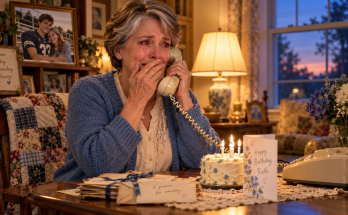
My great-granddaughter Sophie once found an old birthday photograph.
Me at seventy-three.
Cake.
Paige.
Graham.
Scratch ticket on the table.
She asked:
“Grandma Evelyn, is that the winning ticket?”
“Yes.”
Everyone in the room groaned because the story had become family legend.
Sophie’s eyes widened.
“You won millions?”
“Yes.”
“What did you buy first?”
I thought.
Not the rental house.
Not the cottage.
Legally, accountants bought investments first.
But emotionally?
“Privacy.”
She frowned.
“You can buy that?”
“Sometimes.”
Nobody laughed.
Then I said:
“After that, I bought a blue sofa.”
Much better answer for a child.
As I grew older, Graham became more involved in my care.
Carefully.
Almost comically carefully.
“Mom, would you like me to drive you Thursday?”
“Yes.”
“Would you like me to come into the appointment?”
“No.”
“Okay.”
“Do you want me to wait nearby?”
“Yes.”
Good.
He never again told me what was “best” without asking what I wanted.
When I stopped driving, it was my decision.
When I hired help twice a week, my decision.
When I updated medical directives, my decision.
I named Graham as one healthcare agent along with Ruth’s daughter.
That surprised him.
He cried.
“After everything?”
I looked at him.
“Because of everything.”
He had learned.
Trust should not ignore history.
Sometimes history is exactly why renewed trust means something.
I gave him very specific instructions.
No heroic measures under certain conditions.
Music I wanted.
Who could visit.
Who could not.
He wrote everything down.
Then looked at me.
“No Pine Harbor?”
I laughed so hard I had to use my inhaler.
“Maybe hell has an opening.”
“Mom.”
“Too soon?”
“Thirty years too late.”
We laughed.
Paige had tears in her eyes.
Then she said:
“For the record, Pine Harbor had excellent reviews.”
We laughed harder.
Finally.
The brochure had become safe enough for humor.
That took decades.
And the scratch-off?
Martin kept the original ticket documentation in the estate archive after the claim process.
I had a photocopy.
For years, I considered framing it.
Never did.
A lottery ticket is not wisdom.
Luck is not virtue.
I did not become more deserving the second those symbols matched.
That was something I wanted the family to understand.
The money did not prove I was secretly more important than they thought.
Their treatment of me would have been wrong if I had never won a cent.
That became the central truth.
Sometimes people loved telling the story as:
“They thought Grandma was poor, but surprise, she was rich.”
I corrected them.
“No.”
They looked confused.
“The problem was not that they underestimated my bank account.”
“The problem was that they underestimated my right to choose.”
Money simply gave me a dramatic way to protect that right.
If the ticket had been worthless, I still deserved to be asked before being moved.
If I had needed Pine Harbor financially, I still deserved dignity.
If I had owned nothing, my room should not have become someone else’s plan before it stopped being my home.
That was the lesson.
Do not confuse financial independence with human worth.
I said it often enough that the grandchildren started quoting me mockingly.
Good.
Let them remember.
When Paige turned seventy-three, I bought her a scratch-off ticket.
One.
Two dollars.
Graham nearly choked.
Paige stared at me.
Then laughed until she cried.
“You are evil.”
“Growth.”
She scratched it.
Won ten dollars.
We framed it.
On the back, I wrote:
For the bus.
She laughed harder.
That joke worked because she made herself part of it.
Because decades of apology sat underneath.
Because no one was small.
Humor became safe again.
That pleased me.
I never wanted the family to become humorless.
I wanted us to learn that laughter does not excuse cruelty.
Same lesson every family seems to need in different forms.
One evening, near the end of Ruth’s life, she and I sat together at my condo.
She asked:
“Do you ever regret not telling Graham sooner?”
“About the money?”
“Yes.”
I thought.
“Sometimes.”
“Why?”
“Because secrecy made me feel powerful.”
Ruth looked at me.
“That’s honest.”
“I needed that feeling.”
“After Thomas died, I felt dependent.”
“In Graham’s house, more so.”
“Knowing I had money nobody knew about felt like having a locked door inside myself.”
Ruth squeezed my hand.
“Did you enjoy the surprise?”
I smiled.
“A little.”
She laughed.
“Good.”
Then I grew serious.
“But if I had let that become the whole point, I would have become cruel.”
“What stopped you?”
“Martin.”
“Thomas.”
“You.”
“Age.”
I thought.
“And the grandchildren.”
I never wanted Owen and Lucy to believe love was a trick where you test people secretly and then reward winners.
That is why their trusts had no conditions about loyalty.
No requirement to visit.
No requirement to call.
No clause excluding them if they upset me.
They were protected because I loved them.
Period.
Graham’s inheritance, too, was not contingent on obedience.
Boundaries belong in the present.
Wills should not become ghostly weapons.
Martin agreed.
He once said:
“If your estate plan is designed to make somebody feel bad after you’re dead, spend more time alive talking.”
Expensive wisdom.
Worth it.
When Ruth died, I was eighty-eight.
I thought losing Thomas had taught me everything about grief.
It had not.
Sister grief is different.
She knew the version of me before marriage.
Before motherhood.
Before wrinkles.
When she died, I felt like a witness to my own childhood disappeared.
Graham came immediately.
No asking whether I needed anything.
He simply said:
“I’m coming.”
Then caught himself.
“Is that okay?”
I laughed through tears.
“Yes.”
He stayed two nights.
Made terrible scrambled eggs.
Sat with me.
Did not clean unless I asked.
That last part made me laugh.
“You can wash the dishes.”
He smiled.
“Just waiting for authorization.”
That was Graham now.
Not perfect.
Changed.
Paige came the third day.
She brought no tasks.
Sat beside me.
Held my hand.
“I loved Ruth.”
“I know.”
“She scared me.”
“She enjoyed that.”
We cried.
Family repaired itself so gradually I sometimes did not notice until a crisis showed me the new shape.
Years earlier, when Thomas died, Graham moved me because he thought grief meant I could no longer decide.
When Ruth died, he came to where I was.
That difference mattered more than every apology.
My ninetieth birthday was quiet.
No scratch ticket.
I forbade it.
Everyone came.
Graham gave me a small wooden box.
Inside were copies of Thomas’s fishing journals.
Not the originals.
Those were already legally designated to him and kept safely.
He had scanned them all.
Underneath was a note.
So you don’t have to die before I’m allowed to read Dad’s stories.
I laughed until I cried.
He sat beside me.
“I should’ve asked years ago.”
“Yes.”
“Can we read one?”
So we did.
Thomas writing about a storm.
Graham at nine.
Me yelling from shore.
Ordinary family history.
No millions.
No trust documents.
No property holdings.
The best kind.
Paige gave me a birthday card.
Inside:
Thank you for teaching me that a person can forgive you and still refuse to go back to the old arrangement.
That sentence stayed with me.
Because forgiveness is often misunderstood.
People think if you forgive, the boundary was temporary.
No.
I forgave Paige long before I ever lived with her again.
I never lived with her again.
Those truths coexist.
Graham once asked whether I would have moved back if the cottage had not worked out.
“No.”
“Why?”
“Because leaving changed something.”
“What?”
“I stopped being afraid that independence meant loneliness.”
That was the gift the lottery gave me.
Not luxury.
Not status.
The money let me discover that my own company was not punishment.
I liked mornings alone.
I liked choosing dinner.
I liked seeing family because we planned it rather than because we shared a refrigerator.
Distance improved our love.
Some families need that.
Near the end of my life, I asked Graham to bring me the original Pine Harbor brochure.
He stared.
“You kept it?”
“Of course.”
“Why?”
“Same reason you keep old scars.”
“That is not an answer.”
“Bring it.”
He found it in my files.
Still glossy.
Cheerful couple.
Studio apartment.
Meals.
Transportation.
Activities.
I ran my hand over it.
“Nice place.”
Graham groaned.
“Mom.”
“I’m serious.”
“It was never about the building.”
“I know.”
He sat beside me.
“I wish I had asked.”
“Yes.”
“I wish I had said, ‘Mom, what do you want the next few years to look like?’”
“Yes.”
“I wish I had asked whether living with us still made you happy.”
I looked at him.
“Yes.”
His eyes filled.
“I’m sorry.”
“I know.”
Then he asked:
“Did the ticket change your life more, or did this?”
He touched the brochure.
Good question.
I thought.
“The ticket changed what I could do.”
“The brochure changed what I was willing to do.”
He looked at me.
“That sounds like something you’ve been saving.”
“Age gives you time to edit.”
We laughed.
He held the brochure.
“Can I throw this away?”
“No.”
“Why?”
“It’s yours.”
His face changed.
“Mine?”
“It’s in the box with your father’s journals.”
He groaned.
“Mom.”
“Read the note attached.”
He opened the file.
My handwriting:
Graham — This is not here to shame you. It is here because this piece of paper changed both of us. Remember to ask before love starts making decisions for someone. — Mom
He cried.
Then tucked it back carefully.
Good.
The last major estate meeting happened when I was ninety-one.
Martin had retired.
His daughter, Celia, handled things now.
Graham attended because I invited him.
Paige too.
Owen and Lucy joined by video.
I explained everything openly.
No surprises.
Grandchildren’s trusts.
Great-grandchildren education fund.
Charities.
Family medical fund.
Graham’s bequest.
Thomas’s journals.
Compass.
Personal photographs.
The cottage? Sold. The condo maybe will be sold.
My condo would be sold after my death, with proceeds distributed through the plan.
Everyone knew.
No mystery.
No hidden test.
At the end, Celia asked if anyone had questions.
Owen raised his hand on video.
“Can I have Grandma’s recipe box?”
I smiled.
“Yes.”
Lucy said:
“I want the blue sofa.”
Everyone laughed.
That sofa had started my new life.
Paige asked:
“Can I have the framed ten-dollar scratch ticket?”
I stared.
“Absolutely not.”
She laughed.
Graham said:
“I want the Pine Harbor brochure.”
Silence.
Then we all laughed.
Progress.
I looked at my family.
This was what I had wanted without knowing how to name it.
People wanting pieces of memory instead of calculating shares.
The money still mattered.
Of course.
Anyone who says it doesn’t has probably never worried about rent.
But it no longer dominated the room.
That was enough.
When people later told me I was lucky, I always agreed.
I was.
A two-dollar ticket changed my financial life.
But luck did not make the decisions afterward.
I did.
Some good.
Some questionable.
Buying the rental house secretly was legally clean but emotionally complicated.
I know that now.
Part of me wanted insurance.
Part wanted an escape hatch.
Part wanted to know something they did not.
Human.
I am not rewriting myself into a saint because the story ended well.
There was satisfaction in watching Graham’s face when he learned.
I am not proud of that.
I understand it.
A woman who has felt invisible may briefly enjoy becoming impossible to ignore.
The important thing is what she does next.
I did not raise the rent.
I did not throw them into the street.
I gave proper notice.
I sold the property.
I did not use the grandchildren against their parents.
I did not make inheritance depend on apologies.
I did not buy obedience.
At least, I tried not to.
That mattered.
And Graham?
He once told me the worst morning of his adult life was December first.
Not because he lost the rental.
Because he learned I had built an entire new future ten months earlier and never felt safe enough to tell him.
That was the wound he carried.
He said:
“I thought I knew everything important about you.”
I answered:
“You knew everything I did for you.”
He cried.
That sentence was harsher than I intended.
Still true.
Then he spent the next decades learning who I was beyond service.
My favorite author.
The song I hated.
The fact that I preferred tea after three.
The places I wanted to visit.
My fear of deep water.
The way Thomas proposed.
The job I almost took before Graham was born.
The painting class I quit.
The reason roses reminded me of my mother.
He learned his mother.
Not just Grandma.
Not just childcare.
Not just dinner.
Me.
That was the greatest thing he ever gave me.
Attention without need.
Paige learned too.
The grandchildren learned.
So did I.
I learned to stop measuring love by how indispensable I could make myself.
That habit had been with me longer than Graham.
My mother had it.
Her mother too.
Women who believed the safest place in a family was the center of its chores.
Cook enough.
Clean enough.
Remember enough.
Make yourself so useful they cannot imagine life without you.
Then feel betrayed when they imagine it anyway.
I stepped out of that pattern late.
Still stepped out.
That is why I loved my yellow cottage.
It was the first home where nobody needed me to justify my presence.
The walls did not care whether I cooked.
The porch did not ask me to babysit.
The roses bloomed even if I left towels unfolded.
I was allowed to exist.
That sounds small.
It was enormous.
If there is one thing I would tell women my age, it is this:
Do not wait for a lottery ticket to believe you deserve choices.
Money helps.
Of course it does.
But dignity cannot be an investment account.
You are still allowed to say:
I don’t want that.
I want to live here.
I’m tired.
No.
Ask me first.
Even if the answer makes somebody’s schedule harder.
Especially then.
My final birthday with the whole family gathered around me was nothing like seventy-three.
No jokes about buses.
No cheap card with the price sticker attached.
Graham made the cake.
It leaned slightly.
Paige said he used too much sugar.
I looked at her.
She froze.
Then we both started laughing.
The grandchildren brought photographs.
The great-grandchildren made drawings.
No one gave me a scratch-off ticket.
Cowards.
After dinner, Graham poured wine.
He raised his glass.
I braced.
He smiled.
“To Mom.”
Then stopped.
“No.”
He lowered it.
“Not Mom.”
Everyone looked confused.
He tried again.
“To Evelyn.”
That got me.
His eyes filled.
“To the woman we spent too many years knowing only by what she did for us.”
Paige cried.
So did I.
“To the woman who taught us that being loved and being useful are not the same thing.”
He looked at me.
“And thank God she was rich enough to hire lawyers, because apparently we needed professional help learning it.”
Everyone laughed.
Good joke.
No victim.
I raised my glass.
“To asking first.”
They repeated it.
“To asking first.”
That was enough.
The scratch ticket itself is long gone.
Claimed.
Processed.
Meaningless paper after that.
But I still remember the silver dust on my thumb.
The little symbols appearing.
My pulse racing.
Paige slicing cake.
Graham laughing.
Children on phones.
Nobody watching.
That moment once felt like a secret victory.
Now it feels like something quieter.
A door opening.
I could not see everything beyond it yet.
The trusts.
The cottage.
The eviction notice.
The difficult conversations.
The apologies.
The grandchildren growing.
Graham becoming a man who finally asked what I wanted.
Paige learning to receive boundaries without calling them rejection.
Me learning to live without earning my chair at the table.
All of that sat beneath a layer of silver paint.
Not fate.
Possibility.
The morning after they tried to choose Pine Harbor for me, a letter arrived.
Graham read it and looked at me as though he had never truly known his own mother.
He was right.
He hadn’t.
But the most beautiful part of the story is this:
He learned.
And so did I.
By the time I was old enough to need help again, he did not arrive with a brochure.
He arrived with a notebook.
Sat beside me.
And asked:
“Mom, what do you want?”
I smiled.
Then told him.
And this time, he listened.
THE END STORIES! THANK YOU FOR READING GOOD LUCK !❤️
Related Posts