➡️ PART 3 ENDING PART➡️
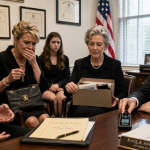
Maya placed the document on the small table between us.
For several seconds, I could not touch it.
Somewhere beyond the double doors at the end of that hospital corridor, surgeons were cutting into my father’s chest, trying to repair an aorta that had almost killed him without warning.
And in front of me sat a document signed by my wife three weeks before our wedding.
Maya waited.
She did not rush me.
Finally, I pulled the page closer.
The heading read:
BENEFICIARY RESEARCH AND PRIVATE INVESTIGATION AGREEMENT
My eyes moved down the page.
Client: Jessica Lang.
Her maiden name.
Subject: Ethan Hayes.
My name.
I stopped.
Then kept reading.
The agreement authorized a private investigator named Lucas Bennett to research my birth records, adoption history, biological parentage, and any financial interests connected to the Mercer family.
One paragraph had been highlighted.
I read it twice.
Client requests complete confidentiality from subject until research is concluded. Subject is not to be contacted directly. Arthur Hayes should not be approached without further authorization because he may disclose the investigation.
My mouth went dry.
“Maya…”
“There’s another page.”
I turned it.
At the bottom was Jessica’s signature.
The same elegant curve in the J.
The same small hook beneath the final a.
I had watched her sign birthday cards, mortgage papers, Christmas gifts, hotel receipts.
I knew that handwriting.
The date beside it was twenty-three days before we got married.
Beneath the signature, someone had added a handwritten note.
Client states marriage is scheduled in three weeks. Primary objective is to determine whether subject is a potential beneficiary of Jonathan Mercer’s estate or Mercer Descendants Trust before marriage occurs.
The hallway tilted.
I placed one hand against the table.
“She knew.”
Maya’s voice was gentle.
“She knew there was a possibility.”
“No.”
I looked at her.
“She knew enough to investigate me before marrying me.”
“Yes.”
“And never told me.”
“No.”
I stared at Jessica’s signature again.
All those photographs.
The wedding.
Her walking toward me beneath white flowers.
Her crying when she read her vows.
Her saying:
I choose you for who you are, not for what you have.
Had she known?
Had she been looking at me that day and seeing a possible trust worth millions?
I hated myself for thinking it.
Then hated her for making the thought possible.
“Why did Dad have this?”
I asked.
Maya leaned back.
“He didn’t have it until three days ago.”
“What happened?”
“Arthur contacted me after receiving a letter from a records-retrieval service.”
“What kind of letter?”
“They were asking him to verify information connected to an old adoption.”
“Mine.”
“Yes.”
I rubbed both hands over my face.
“Why now?”
“That is what bothered him.”
She opened another folder.
“Arthur remembered that several years ago, shortly before your wedding, a man came to his house and asked questions about your childhood.”
My stomach tightened.
“Lucas Bennett?”
“Yes.”
“Dad met him?”
“Briefly.”
“What did Bennett say?”
“He claimed he was doing genealogical research.”
“For whom?”
“He wouldn’t say.”
Maya looked toward the surgical doors.
“Arthur didn’t answer many questions.”
“He told me Bennett asked whether your mother, Lillian, had ever named another man as your biological father.”
I stared at her.
“And Dad said?”
“Nothing.”
“He told Bennett to leave.”
That sounded like Arthur.
Maya continued.
“Arthur forgot most of it until two months ago.”
“What happened two months ago?”
Maya hesitated.
Then:
“Jessica visited him.”
Every part of me went still.
“Alone?”
“Yes.”
“She never told me.”
“I know.”
“What did she want?”
“Arthur wrote it down for you.”
Maya pushed the sealed envelope closer.
“Read his letter.”
My name was written across the front.
Ethan.
Dad’s handwriting.
Hard block letters from a man who had spent his life filling out lumber orders and construction invoices with pencils sharpened by pocketknife.
I opened it.
Inside were four folded pages from a yellow legal pad.
The first line almost destroyed me.
Son, if you are reading this before I get a chance to explain it myself, then life has once again proved that I should stop assuming I have more time.
I swallowed.
Then continued.
First: I am sorry.
I should have told you a long time ago that I adopted you. There is no good excuse for waiting this long, only reasons that became easier to hide behind every year.
My hands started shaking.
Your mother was already pregnant when I met her. I knew that before our first real date. She told me because she did not want anyone thinking she had trapped him. That was Lillian. Pride first, everything else second.
A laugh escaped me.
That was my mother.
She had once driven thirty miles on a flat tire because she refused to call Dad after they had argued.
The tire had been ruined.
She never apologized.
Neither did he.
They laughed about it for twenty years.
I read on.
Your biological father was Jonathan Mercer. He was older than your mother, wealthy, and frightened of what acknowledging you would do to the life he had already built. He offered money. Your mother refused most of it. He did not come to the hospital when you were born. I did.
My vision blurred.
I stopped.
Maya said nothing.
I wiped my eyes and continued.
I held you six hours after you were born. You wrapped your entire hand around my little finger. You were ugly as a boiled potato and screamed like someone had personally offended you. I loved you immediately.
I laughed through tears.
Of course he wrote that.
Your mother and I married four months later. I adopted you legally when you were six months old. I never called you my adopted son because I have never had another kind of son.
I lowered the paper.
My chest hurt worse than I knew grief could hurt.
Arthur Hayes.
Not my blood.
Every scraped knee.
Every school project.
Every baseball game.
Every punishment.
Every breakfast.
Every sacrifice.
Choice.
He had chosen every one.
I kept reading.
Jonathan contacted us twice over the years. The first time was through a lawyer when you were little. Your mother refused. The second time was when you were thirteen. He wanted to meet. Your mother believed he wanted forgiveness without responsibility. I agreed with her. We did not let him see you.
My hands tightened.
Anger arrived.
Even with Dad lying in surgery.
Anger.
They had decided for me.
We may have been wrong.
That sentence softened something.
I know now that keeping someone’s history from him because you think you are protecting him is still keeping his history from him. I cannot change that.
I read faster.
Jonathan died years later. I heard there might have been a trust containing provisions for biological children who were proven later, but I never investigated. I did not want money from a man who never raised you becoming bigger in your mind than the family that did. That was pride. Mine this time.
I closed my eyes.
Then came Jessica.
Three weeks before your wedding, Lucas Bennett came asking questions. I sent him away. I did not know Jessica hired him.
Two months ago, Jessica came to my house while you were at work. She asked whether Jonathan Mercer had ever contacted us about money.
My breathing stopped.
I asked how she knew that name.
She told me you had mentioned him. I knew that was not true because you did not know the name.
I stared at those words.
Maya’s face remained still.
I read on.
When I challenged her, she told me I was mixing up old memories. She said grief and age can do that. She said if I came to you with stories I could not prove, I might damage your marriage for no reason.
My eyes burned.
Now I understood my father’s words in the backyard.
Otherwise, someone will say I’m confused or trying to interfere with your marriage.
Jessica had already said it.
I almost believed her.
My hand tightened around the page.
That is the part I am most ashamed of. Not asking you for money. Doubting myself because someone younger and more confident looked me in the eye and told me my memory could not be trusted.
I had to stop.
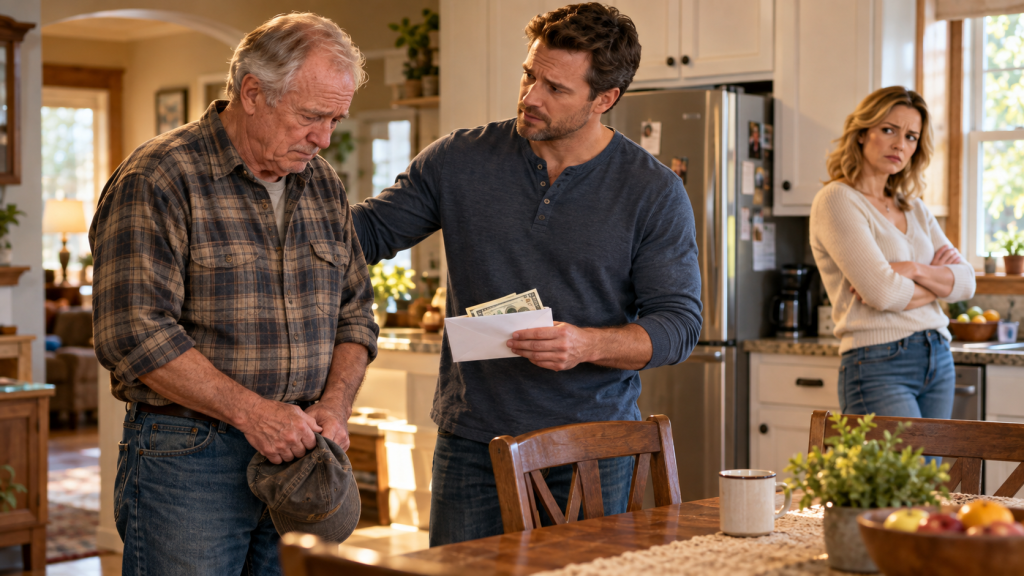
Dad had stood in my kitchen humiliated.
Not merely because he needed a thousand dollars.
Because my wife had made him afraid that telling the truth would make him look senile.
I could hear Jessica again.
Tell him to get a job. We aren’t a bank.
Had she known why he needed the money?
Maybe not exactly.
But she had been afraid.
Dad knew it too.
The letter continued.
Last week, I received another request connected to your adoption records. That convinced me someone was still looking. I called Maya. She found Bennett. She ordered records legally. I agreed to take the DNA test. I needed money because I wanted everything documented before I came to you. I was afraid Jessica would deny it and you would think I was trying to break up your marriage.
My eyes filled again.
Son, if I was wrong about her, then forgive me for causing trouble. If I was right, do not let being angry make you stupid. Talk to Maya. Protect what needs protecting. Do not threaten anybody. Do not move money around just because you are afraid. Get advice. Then decide what kind of marriage you actually have.
Only Arthur could turn emotional betrayal into instructions that sounded like a roofing checklist.
Then the final paragraph:
If the Mercer trust exists, remember something for me. Money might tell you something about where you came from. It cannot tell you who showed up.
Blood can explain you.
It does not automatically earn you.
I love you.
Dad.
I held the pages against my chest.
Then I folded forward and cried.
Not quietly.
Not elegantly.
The kind of crying where your body seems to realize before your mind that too much has happened at once.
My father might die.
My wife had investigated me before our wedding.
My father was not my biological father.
My biological father had been a wealthy man who chose absence.
There might be millions of dollars attached to a name I had learned less than an hour earlier.
And Arthur Hayes had borrowed a thousand dollars because, even at the edge of retirement, he was still trying to protect me.
Maya moved the tissue box toward me.
That was all.
Eventually, I asked the only question that mattered.
“Is Dad going to live?”
“I don’t know.”
Of course she didn’t.
No one did.
I stared toward the operating-room doors.
“Then none of the rest matters yet.”
Maya nodded.
“For tonight, I agree.”
We waited.
Jessica called twice.
I did not answer.
Then she texted.
Where are you?
Another.
Did something happen with Arthur?
Then:
Ethan, call me.
I stared at the screen.
Did she already know?
Had Arthur contacted her before collapsing?
Had Bennett?
Had someone called?
I turned my phone facedown.
Three hours later, the surgeon finally walked through the doors.
He pulled down his mask.
“Family of Arthur Hayes?”
I stood.
“I’m his son.”
The word came automatically.
Then hit me differently.
His son.
Yes.
Still.
Entirely.
The surgeon introduced himself as Dr. Malcolm Pierce.
“The aneurysm was extensive.”
My knees weakened.
“But we were able to repair it.”
I grabbed the back of the chair.
“He’s alive?”
“Yes.”
The world came back.
Not all at once.
Just enough.
“He lost a significant amount of blood, and the next twenty-four to forty-eight hours are important.”
“Can I see him?”
“Once he’s settled in intensive care.”
I covered my face.
Relief can hurt almost as much as fear.
Maya touched my shoulder.
“He made it.”
I nodded.
Dad made it.
Everything else could wait.
He was unconscious when I first saw him.
Tubes.
Monitors.
His skin looked gray beneath the lights.
My father had always looked impossible to break.
He had fallen off roofs.
Cut his hand badly enough to need twenty stitches and finished the job before going to urgent care.
Once carried a washing machine up a porch alone because he said waiting for help “wasted daylight.”
Now a machine monitored every fragile beat of his heart.
I sat beside him.
Took his hand.
Those hands.
Thick fingers.
Old scars.
Calluses that never fully disappeared even after he stopped doing construction full-time.
“Dad.”
Nothing.
“I read it.”
The monitor kept its rhythm.
“I know.”
My throat closed.
“I’m angry.”
Nothing.
“I’m really angry.”
I looked at his face.
“But you’re still my father.”
My voice broke.
“You hear me?”
I squeezed his hand.
“I do not care what that DNA test says about that.”
Silence.
Then maybe imagination.
Maybe not.
His finger moved slightly against mine.
I cried again.
I stayed until the ICU nurse made me leave.
In the hallway, my phone showed seven calls from Jessica.
I finally answered.
“Ethan.”
She sounded breathless.
“Where have you been?”
“Hospital.”
“What happened?”
“Dad had an aortic aneurysm.”
Silence.
Then her voice softened.
“Oh my God.”
“Is he…”
“He survived surgery.”
“I’m sorry.”
I watched nurses move through the corridor.
“Okay.”
“Do you want me to come?”
“No.”
The answer came too quickly.
She noticed.
“Why not?”
“He’s in ICU.”
“So?”
“I don’t want you here tonight.”
Silence.
Long.
“Ethan, what’s going on?”
“Nothing I’m discussing over the phone.”
Her breathing changed.
Then she asked:
“Did he leave you anything?”
There.
One sentence.
My entire body became cold.
“What do you mean?”
“His wallet.”
“Keys.”
“Medical paperwork.”
She answered too quickly.
“Normal things.”
“Why are you asking?”
“I’m trying to help.”
Then:
“He had that money you gave him.”
“Maybe there were receipts.”
Receipts.
She was fishing.
I closed my eyes.
“Jessica.”
“Yes?”
“Go to sleep.”
“What?”
“I’ll call tomorrow.”
“Ethan—”
I ended the call.
Maya, standing several feet away, had heard enough.
She said:
“Do not make any decisions tonight.”
“I know.”
“And do not go home furious.”
“I know.”
“Do you?”
I looked at her.
“No.”
“Good.”
That was the first sensible answer I had given all day.
I stayed in a hotel near the hospital.
At 2:00 a.m., I sat at a desk with my laptop.
I wanted to search everything.
Jonathan Mercer.
The trust.
Jessica.
Lucas Bennett.
Instead, I read Dad’s letter again.
Then again.
At 3:17, I found myself staring at one line:
Do not let being angry make you stupid.
Fine.
I closed the laptop.
The next morning, Maya introduced me to a family-law attorney named Daniel Cho.
I hated that immediately.
“I’m not divorcing my wife.”
Daniel nodded.
“I didn’t say you were.”
“Then why am I talking to you?”
“So that if you eventually decide something, the decision is informed.”
I stared at him.
Calm people were beginning to irritate me.
He asked about the house.
Legally mine before marriage.
Arthur had provided a significant portion of the down payment by selling inherited land.
Jessica contributed to household costs after marriage.
Joint accounts existed.
My retirement was individual.
I had not received anything from the Mercer trust.
Daniel said:
“Do not start moving marital money.”
“I wasn’t going to.”
“Good.”
“Preserve statements.”
“Secure personal identification.”
“Change passwords on accounts that are legally yours alone.”
“Do not hide assets.”
“Do not destroy records.”
“And if you confront your wife, understand what you want from that conversation first.”
“I want the truth.”
He looked at me.
“That is a good beginning.”
Not answer.
Beginning.
I returned to the hospital.
Arthur opened his eyes late that afternoon.
The breathing tube was still in.
He saw me.
His face changed.
He tried to speak.
The nurse stopped him.
“Mr. Hayes, don’t fight the tube.”
Arthur glared at her.
The man had survived his aorta tearing and already found someone to argue with.
I leaned close.
“Dad.”
His eyes filled.
“I know everything.”
He closed them.
A tear slipped down the side of his face.
“No.”
I touched his hand.
“Look at me.”
He opened his eyes again.
“You are my father.”
His fingers closed weakly around mine.
“I’m mad you lied.”
His eyebrows shifted.
Good.
“I’m really mad.”
Another tiny squeeze.
“But nothing about Mercer changes you.”
Arthur cried.
So did I.
The nurse pretended to check a machine for a very long time.
Two days later, the breathing tube was gone.
Dad’s voice sounded like gravel.
His first request was water.
His second:
“Jessica?”
Of course.
I handed him a cup.
“She doesn’t know I have the documents.”
Arthur nodded.
“Good.”
“Why didn’t you tell me two months ago when she visited?”
He stared at the blanket.
“Proof.”
“That’s not good enough.”
“No.”
I blinked.
He continued.
“Cowardice too.”
“Dad.”
“I was scared.”
Arthur Hayes almost never admitted fear.
That silenced me.
“She said you’d think I was confused.”
He swallowed painfully.
“She said you were happy.”
“She asked why I wanted to ruin that.”
“I started wondering if maybe I had remembered Jonathan wrong.”
His face tightened.
“I’m getting older.”
“I forget things.”
“I walked into the garage last month and forgot why I went in.”
“That happens to everyone.”
“Still.”
He looked at me.
“I wanted paper.”
“So I borrowed money.”
“Yes.”
“You could have told me.”
“I know.”
“I would have believed you.”
Arthur looked at me for a long time.
“Would you?”
That hurt.
Not because he doubted my love.
Because I remembered every time I had defended Jessica.
Every time Dad made a small comment.
“She worries too much about money.”
“She keeps score.”
“She doesn’t speak to you kindly when she’s angry.”
I had told him:
You never gave her a chance.
Maybe he honestly did not know whether I would believe him.
“I want to say yes.”
I admitted.
“That’s not the same.”
“No.”
We sat quietly.
Then I asked:
“Tell me about Jonathan.”
Arthur looked toward the window.
“What do you want to know?”
“Everything you actually know.”
So he did.
My mother, Lillian, was twenty-four when she met Jonathan Mercer.
He was thirty-seven.
Recently divorced.
Already wealthy from a regional shipping company that later became much larger.
The relationship had been private.
Unequal in ways Mom only understood later.
When she became pregnant, Jonathan panicked.
He offered money.
He did not offer a family.
Then Arthur met her.
A carpenter working on renovations at the hotel where Mom worked.
“She told me she was pregnant before I finished my first cup of coffee.”
Dad said.
“Why?”
“She thought I was flirting.”
“Were you?”
“Obviously.”
Despite the pain medication, he smiled.
“She said, ‘Before you waste your time, I’m pregnant and the father is gone.’”
“What did you say?”
“I asked whether she still wanted pie.”
I laughed.
“Seriously?”
“Coconut cream.”
“You hate coconut.”
“I liked her.”
That was Arthur.
Love expressed through terrible dessert decisions.
He was at the hospital when I was born.
Jonathan was not.
Arthur changed my diapers before I had his surname.
Married Mom.
Adopted me.
Worked.
Stayed.
Jonathan tried to reconnect twice.
At thirteen, he wanted to meet me.
Mom refused.
Arthur agreed.
“Do you regret it?”
I asked.
“Yes.”
Immediate.
That surprised me.
“Why?”
“Because it should have been your decision eventually.”
“You were thirteen.”
“You could’ve been told something.”
He closed his eyes.
“We were afraid you’d think I wasn’t your dad anymore.”
There it was.
Not protection only.
Fear.
Dad’s fear.
My mother’s fear.
They had hidden the truth partly because they were afraid blood would outrank love.
I took his hand.
“It wouldn’t have.”
“You don’t know that.”
“No.”
I smiled sadly.
“But I know it now.”
He squeezed my fingers.
The DNA process took almost a month.
Jonathan Mercer had two publicly acknowledged children.
One, a son named Peter, had died years earlier.
The other was Caroline Mercer Shaw, fifty-one, living in Seattle.
My half-sister.
The phrase felt like clothing in the wrong size.
Caroline agreed to genetic testing after speaking with her attorney and the trustee.
Before she did, she requested a phone call with me.
I almost refused.
Dad said:
“She didn’t create this mess.”
So I called.
Caroline answered after one ring.
“Ethan?”
“Yes.”
A pause.
“I don’t know what people say in this situation.”
“Neither do I.”
She laughed nervously.
Something about the sound caught me.
Maybe imagination.
Maybe biology.
She asked:
“Did you know anything about our father?”
I looked at Arthur asleep in his recliner across my living room.
He had been discharged from rehabilitation that week and refused to stay alone.
So he stayed with me.
Jessica was temporarily living with her sister.
“I learned his name a month ago.”
Caroline went quiet.
Then:
“I’m sorry.”
“For what?”
“For him.”
That answer surprised me.
She told me Jonathan had not been an easy father even to the children he acknowledged.
He provided.
Paid tuition.
Bought homes.
Sent expensive gifts.
But work came first.
Image second.
Emotional presence somewhere much lower.
“He was generous with money.”
Caroline said.
“He was less generous with himself.”
I looked at Arthur.
He had almost no money.
He had given me nearly all of himself.
The comparison was almost too neat.
Life is rarely that polite.
Caroline continued.
“After Dad died, I found a letter he never sent.”
“To whom?”
“Lillian.”
My mother.
My heart tightened.
“He apologized.”
“For abandoning her?”
“Yes.”
“For you.”
“What did it say?”
“I don’t think I should read it without permission.”
That answer made me trust her.
“I can send it to Maya.”
she said.
“You decide.”
“Okay.”
She agreed to the DNA test.
The result came back overwhelmingly consistent with us sharing a biological father.
The Mercer trustee formally began reviewing my claim.
The trust was real.
And worth more than Jessica’s investigator had estimated years earlier.
My eventual beneficial share was approximately $18.4 million before taxes, administration, and future investment changes.
Eighteen point four million dollars.
I sat in Maya’s office staring at the number.
She asked:
“Are you all right?”
“No.”
“Reasonable.”
I laughed.
“What am I supposed to do with that?”
“Nothing today.”
Good answer.
Arthur had a different reaction.
“Eighteen million?”
“Yes.”
He whistled.
Then returned to his crossword.
I stared.
“That’s it?”
“What do you want?”
“Something.”
He looked up.
“Buy better coffee.”
I laughed.
Then he became serious.
“Are you taking it?”
“I think so.”
“Good.”
That surprised me.
“You don’t care?”
“Why would I?”
“You spent my whole life keeping Mercer money away.”
Arthur’s eyes narrowed.
“I spent your childhood keeping Mercer money from defining you.”
“You are not a child.”
He put the crossword down.
“If the trust says the money is legally yours, take it.”
“Use it.”
“Save it.”
“Give it away.”
“Buy a stupid car.”
“Do not refuse it because you think rejecting money proves I’m your real father.”
My throat tightened.
“I don’t need proof.”
“Good.”
Then:
“Still don’t buy a stupid car.”
Dad recovered slowly.
Cardiac rehabilitation humbled him.
He hated asking nurses for help.
Hated lifting restrictions.
Hated not being allowed to carry a grocery bag.
One afternoon, I found him trying to move a small bookcase.
“What are you doing?”
“Nothing.”
“You’re moving furniture.”
“It weighs twenty pounds.”
“Doctor said no.”
“Doctor is dramatic.”
I took it from him.
He muttered:
“Millions of dollars and suddenly you’re a dictator.”
I laughed.
Then remembered Jessica.
The laughter died.
Dad noticed.
“You need to talk to her.”
“I have.”
“Really talk.”
I looked at him.
“Why are you defending her?”
“I’m not.”
“Then why?”
Arthur sat slowly.
“Because I don’t want to become the reason you end your marriage.”
“She lied to me.”
“Yes.”
“She lied to you.”
“Yes.”
“She investigated me.”
“Yes.”
“Then stop acting sad about it.”
His eyes softened.
“Being right about something bad doesn’t make the bad thing good, Ethan.”
I looked away.
That was Dad.
No victory.
No revenge.
Just loss measured honestly.
Before I confronted Jessica fully, Daniel advised me to preserve everything I could access lawfully.
Joint statements.
Emails in shared accounts.
Tax records.
No hacking.
No sneaking into accounts that belonged only to her.
I searched our shared cloud drive.
That was where I found the second thing.
A folder buried inside tax planning.
Long-Term Scenarios.
Inside was a PDF created seven months before our wedding.
Prepared by a financial consultant I had never met.
One line:
Potential future Mercer Descendants Trust interest: estimated $10M–$25M.
Another:
If beneficiary recognition occurs after marriage, discuss whether distributions should remain separate or be voluntarily transferred into jointly managed vehicles.
That sentence by itself was not sinister.
Married couples plan finances.
But I had not known there was anything to plan.
A scanned page of Jessica’s handwritten notes sat at the end.
E is extremely loyal to Arthur. If Arthur frames acceptance as betrayal, E may refuse claim. Need to approach carefully after marriage.
I stopped reading.
Went to the sink.
Washed my face.
Returned.
Another note:
Do not discuss until status confirmed. Wedding too close.
Wedding too close.
Not:
Ethan deserves to know who his father was.
Not:
I discovered my fiancé was adopted and may not know.
Wedding too close.
Something broke cleanly inside me.
When Jessica came to the house two days later, Dad was at physical therapy.
I had asked him not to be there.
This conversation belonged to my marriage.
Jessica walked into the kitchen.
The same kitchen.
The same table.
She sat where Dad had stood asking for one thousand dollars.
I placed the investigator agreement in front of her.
Her face emptied.
Then the financial-planning memo.
She closed her eyes.
“How much do you know?”
“Enough that I’m asking you to tell me the rest.”
“Ethan—”
“No speeches first.”
She looked at me.
“One question.”
I said.
“When did you learn Arthur adopted me?”
“About seven months before our wedding.”
My throat tightened.
“When did you learn Jonathan Mercer was my biological father?”
“Six months before.”
“When did you learn there might be a trust?”
“Five months before.”
I nodded slowly.
“And when did you plan to tell me?”
She cried.
I waited.
“Jessica.”
“I don’t know.”
That was worse than a lie.
“You married me without knowing when you intended to tell me who my biological father was.”
“I didn’t know if the investigator was right.”
“Then tell me that.”
“I was scared.”
“Of what?”
She looked at me.
“That you would leave.”
I almost laughed.
“Why would discovering I was adopted make me leave you?”
“Not because of that.”
“Then why?”
“The investigation.”
There.
“You knew that if you told me the truth, I might be angry that you hired someone to investigate me.”
“Yes.”
“So you kept lying because the first lie became inconvenient.”
Her face crumpled.
“Yes.”
I sat back.
The room felt very quiet.
Then I asked:
“Did you love me?”
Jessica looked shocked.
“Yes.”
“Before you knew about Mercer?”
“Yes.”
“How do I know?”
Her pain looked real.
“You don’t.”
That answer saved some piece of her humanity in my mind.
She did not point to photographs.
Did not demand I validate our history.
“You don’t.”
she repeated.
“But I did.”
I believed her.
That was the tragedy.
If she had hunted me from the beginning, she would have been easier to leave.
But we met at a friend’s birthday dinner.
She had no idea about Jonathan.
Neither did I.
We dated almost two years before she found the birth-record discrepancy.
She had loved me.
Then fear and money entered the room.
And instead of trusting me, she began managing me.
“What did you think the trust would change?”
I asked.
Jessica wiped her face.
“Everything.”
“Meaning?”
“We’d never worry about the mortgage.”
“Retirement.”
“Medical bills.”
“Children.”
“My mother getting old.”
“Your father.”
I almost laughed.
“My father?”
“Yes.”
“I thought we could take care of him.”
“You humiliated him over a thousand dollars.”
She flinched.
“I know.”
“No.”
My voice rose for the first time.
“You do not get to say you planned to use my inheritance to care for Dad after you made him feel like garbage for asking me for one thousand dollars.”
“I was scared that day.”
“Of what?”
“That he had found proof.”
There it was.
The ugliest truth.
Jessica had not been angry about the money.
She had been afraid of what Arthur was buying with it.
“Did you know he was researching the adoption?”
“I suspected.”
“So when you told him to get a job…”
She covered her face.
“I was cruel.”
“Yes.”
“I know.”
“He nearly died believing he had caused trouble in my marriage.”
“I’m sorry.”
“Tell him.”
She looked up.
“I will.”
“If he wants to hear it.”
She nodded.
Then I asked:
“Why did you tell him his memory was failing?”
Jessica sobbed.
No defense.
“I panicked.”
“You gaslit an old man because he remembered something inconvenient.”
“I know.”
“Stop saying you know.”
She flinched.
I stood.
Walked to the window.
Breathed.
Dad’s line:
Do not let being angry make you stupid.
I turned back.
“I need you to stay somewhere else.”
Jessica stared.
“This is my home.”
“I know.”
“I’m not changing locks.”
“I’m not putting your belongings outside.”
“I spoke to a lawyer.”
Her face went pale.
“A divorce lawyer?”
“A family-law attorney.”
“So you’re divorcing me.”
“I don’t know yet.”
She started crying again.
That was true.
I did not know.
“I cannot sleep beside you while I’m deciding whether the last several years were a marriage or a financial plan I wasn’t allowed to read.”
“That’s not fair.”
The words came automatically.
Then she stopped.
Shook her head.
“No.”
“You’re right.”
She looked down.
“I’ll stay with Melissa.”
Her sister.
I nodded.
She packed a suitcase.
At the door, she turned.
“I never wanted to take your money.”
I looked at her.
“Then what did you want?”
“Security.”
“That can become greed if you decide someone else’s choices no longer matter.”
She cried.
“I know.”
This time I let her say it.
After she left, I sat alone in the kitchen.
Dad had once stood there ashamed.
Jessica had once stood there angry.
Now neither was there.
The house felt borrowed from another version of my life.
Arthur returned from therapy two hours later.
He took one look at my face.
“She’s gone.”
“Temporarily.”
He nodded.
Then limped toward the refrigerator.
“You hungry?”
I stared.
“My marriage may be ending.”
“People still eat.”
He made sandwiches.
Bad ones.
Too much mustard.
We ate in silence.
Then Dad said:
“I’m sorry.”
“For what?”
“My secrets.”
I looked at him.
“This isn’t your fault.”
“Part of this is.”
“No.”
“Yes.”
He put the sandwich down.
“If I had told you the truth when you were twenty-five, Jessica could never have discovered it before you.”
I hated that logic.
Because it was partly true.
“But she still chose to hide what she knew.”
“Yes.”
“And you were not responsible for that.”
“No.”
“Then stop trying to take responsibility for everyone.”
Arthur stared.
“You learned that from me.”
“Yes.”
“Damn.”
I smiled.
For the next six months, Jessica and I went to marriage counseling.
People were surprised.
I was surprised.
Dad was furious at first.
“You’re considering taking her back?”
“I’m considering understanding.”
He thought about it.
Then:
“Fine.”
That was Arthur’s version of enthusiastic support.
Our therapist, Dr. Renee Collins, made both of us uncomfortable.
Good therapists do.
Jessica admitted things in layers.
She had grown up poor.
Not modest.
Poor.
Her father lost their home when she was twelve.
For six months, she and her mother lived in her aunt’s basement.
She remembered her mother crying over electric bills.
Remembered hiding free-lunch forms at school because she was ashamed.
By sixteen, she had decided poverty was a moral failure she would never repeat.
She studied accounting.
Worked constantly.
Saved aggressively.
Tracked everything.
When she discovered the Mercer trust, she did not see luxury first.
She saw immunity.
No foreclosure.
No unpaid medical bill.
No child hearing parents argue about groceries.
Her fear was real.
Dr. Collins asked:
“Does that justify hiding Ethan’s parentage from him?”
Jessica answered:
“No.”
“Does it justify hiring an investigator without telling him?”
“No.”
“Does it justify manipulating Arthur?”
Jessica cried.
“No.”
Then Dr. Collins asked me:
“Can you understand Jessica’s fear without forgiving what she did?”
“Yes.”
That became important.
Understanding is not acquittal.
In another session, Jessica said:
“I thought once we were married, I’d tell him.”
I asked:
“Why didn’t you?”
“Because we were happy.”
That sentence hurt more than almost anything.
“You kept lying because the marriage was going well.”
“Yes.”
“And then?”
“I thought I would tell you when the trust became certain.”
“Then Dad started asking questions.”
“Yes.”
“And you tried to silence him.”
She covered her face.
“Yes.”
I looked at Dr. Collins.
“What exactly am I supposed to rebuild from?”
The therapist said:
“That is the question.”
Not:
You should divorce.
Not:
Marriage can heal.
The question.
Jessica changed during counseling.
Truly.
She apologized to Dad.
Not immediately.
Arthur refused to see her for months.
Then one afternoon he said:
“I’m tired of her apology sitting in your phone like an unpaid bill.”
So they met.
Neutral café.
I sat nearby but not at the table.
Jessica said:
“I’m sorry I told you your memory was unreliable.”
Arthur nodded.
“I’m sorry I treated you like your age made you easier to dismiss.”
He said nothing.
“I’m sorry about the kitchen.”
Still nothing.
Then she said:
“I was afraid of what you knew, and I punished you for making me afraid.”
Arthur looked at her.
“That’s finally honest.”
Jessica cried.
“I don’t expect forgiveness.”
“Good.”
Dad took a sip of coffee.
Then:
“You’re not the only person who hid things from Ethan because you thought you knew what information he could handle.”
Jessica looked surprised.
Arthur continued.
“I did it too.”
“Different reasons.”
“Still wrong.”
He never let himself become morally comfortable.
That was one reason I loved him.
Jessica whispered:
“Can you forgive me?”
Arthur thought.
“Maybe.”
Then:
“Forgiveness doesn’t decide whether my son should stay married to you.”
“I know.”
“Good.”
They finished coffee.
Dad came back to my table.
“Well?”
I asked.
“She means it.”
My heart tightened.
“Does that change anything?”
“No.”
He stood.
“I need pie.”
Of course.
The Mercer trust was formally recognized while Jessica and I were still separated.
The final amount allocated to my share was $18.4 million.
It remained separately administered under the trust structure while legal and tax work continued.
Daniel made sure I understood every decision.
I told Jessica about the recognition during counseling.
She cried.
Not joy.
Shame.
“What?”
I asked.
“That number.”
“What about it?”
“It used to feel like the answer to everything.”
“And now?”
“It feels like the price tag on everything I ruined.”
I looked at her.
“The money didn’t ruin us.”
“No.”
“I did.”
That was the first time she said it without explaining.
Something inside me softened.
Not enough.
But something.
I met Caroline Mercer Shaw in person six months after the DNA result.
Seattle.
Coffee shop overlooking Elliott Bay.
I recognized her immediately.
Not because she looked exactly like me.
She did not.
But she had my mother’s? No, impossible. She shared Jonathan. There was something in the eyebrows.
Maybe I invented it.
She stood.
“Ethan.”
“Caroline.”
We hugged awkwardly.
Then laughed.
“What do half-siblings talk about?”
she asked.
“Weather?”
“Seattle makes that easy.”
We talked for three hours.
Jonathan.
His company.
His temper.
His love of jazz.
His habit of tapping a pencil against his thumb while thinking.
I did that.
The first time Caroline noticed, she stopped talking.
“What?”
“Dad did that.”
I looked at my hand.
A tiny genetic ghost.
It unsettled me.
Not because I hated Jonathan.
Because the body carries people without permission.
Caroline gave me a copy of his unsent letter to my mother.
I read it alone later.
Jonathan admitted cowardice.
Admitted he had thought money could substitute for presence.
Admitted he had watched from a distance once when I was thirteen.
That hurt.
Apparently he had been across the street when Arthur and I loaded lumber into Dad’s truck.
He wrote:
He looked like your father. I realized I had no right to interrupt that simply because regret had become uncomfortable.
I read the sentence several times.
Jonathan had recognized what I was only beginning to understand.
Fatherhood is not a biological vacancy waiting for the richest claimant.
He ended:
If Ethan ever wants to know me, I will answer. If he does not, I have earned that too.
He died before I ever knew there was a question.
I brought the letter home.
Arthur asked:
“Did you read it?”
“Yes.”
“What did he say?”
“That you looked like my father.”
Arthur frowned.
“I look nothing like you.”
I laughed.
“You know what he meant.”
Dad stared at the floor.
Then:
“Was he sorry?”
“Yes.”
Arthur nodded.
“Good.”
“That’s all?”
“What else?”
“I don’t know.”
“Do you hate him?”
Arthur thought.
“No.”
That surprised me.
“Why not?”
“I had you.”
Simple.
Jonathan’s absence had given Arthur a place in my life he considered a gift.
That did not excuse Jonathan.
It explained Dad.
I started using some of the trust money slowly.
First, Dad’s medical bills.
He protested.
Of course.
“I have insurance.”
“You also have deductibles.”
“I’ll pay them.”
“No.”
“Mercer money isn’t paying for my heart.”
“Dad.”
“No.”
I stared.
Then smiled.
“Fine.”
I paid the hospital directly from my own salary savings and later reimbursed myself from the trust with proper records.
When Arthur discovered it, he called me a criminal mastermind.
He eventually gave up.
I offered to buy him a new house.
He refused.
“A house is walls.”
“I have walls.”
“Your roof leaks.”
“I know how to fix roofs.”
“You’re not allowed on roofs anymore.”
He looked personally offended by medicine.
We compromised.
New roof.
Professional contractor.
Dad stood in the yard criticizing them every day.
They hated him.
He loved it.
Then I created something he could not easily reject.
A scholarship.
For children of construction workers, tradespeople, and single parents entering engineering, nursing, skilled trades, or community college programs.
I named it the Arthur and Lillian Hayes Opportunity Fund.
Dad found out after paperwork was final.
He stared at me.
“You put Mom first alphabetically?”
“That’s your concern?”
“She would have liked that.”
His eyes filled.
“How much?”
“Enough.”
“Ethan.”
“Five hundred thousand to start.”
He sat down.
“Too much.”
“It’s my money.”
“You sound like me.”
“Good.”
He wiped his face.
“Why my name?”
I looked at him.
“Because Jonathan Mercer gave me money.”
“You gave me a life.”
Arthur cried.
So did I.
The first scholarship recipient was a seventeen-year-old girl whose mother installed commercial HVAC systems.
Arthur insisted on attending the small award dinner.
He wore a suit.
Not a new one.
I offered.
He refused.
“This one still closes.”
Barely.
The girl shook his hand.
“Mr. Hayes, thank you.”
Dad looked uncomfortable.
“Study.”
That was his speech.
On the drive home he said:
“She’ll do fine.”
Then stared out the window for ten minutes.
I pretended not to see him wiping his eyes.
Jessica heard about the scholarship.
She sent a card.
Not to me.
To Arthur.
He showed me.
You gave Ethan the part no trust could give him. I am sorry I did not understand that sooner.
Dad kept the card.
That mattered.
Marriage counseling continued.
By the ninth month, Jessica and I could sit in the same room without every conversation becoming an autopsy.
She moved into her own apartment.
Not her sister’s.
Paid her own rent.
Started individual therapy in addition to marriage counseling.
She gave me access to every document related to Bennett voluntarily.
Not because I demanded it.
She wrote a full timeline.
Painful.
Specific.
No minimizing.
That helped.
Then Dr. Collins asked me one day:
“If Jessica became completely trustworthy from this moment forward, would you want to be married to her?”
I froze.
Jessica looked at me.
I knew the answer before I wanted to.
“No.”
Her face collapsed.
I cried too.
Dr. Collins let the silence exist.
Jessica whispered:
“Because you can’t forgive me?”
“No.”
I looked at her.
“I think I can forgive you.”
She stared.
“Then why?”
“Because I don’t want to spend the rest of my marriage trying to detect whether your fear is managing me.”
Her tears fell.
“I’m changing.”
“I know.”
“And I believe you.”
That was the tragedy.
“But when I imagine coming home to you again, I don’t feel relief.”
I swallowed.
“I feel like I need to check what you know that I don’t.”
Jessica covered her face.
I continued.
“I don’t want to punish you with a marriage where every kindness becomes evidence I’m evaluating.”
“That wouldn’t be fair to either of us.”
She whispered:
“So this is it?”
“I think so.”
The marriage ended quietly.
No courtroom battle.
No fight over the Mercer trust.
Her lawyer reviewed everything.
My lawyers reviewed everything.
We divided marital property under negotiated terms.
Jessica never claimed the Mercer trust as hers.
That surprised me.
Daniel said:
“Do not over-romanticize legal cooperation.”
Fair.
Still, it mattered.
She received her share of the assets we had built together.
I kept the house because it had been mine before marriage and because Dad’s contribution to the original purchase was documented.
I offered a fair settlement on marital contributions.
Jessica accepted.
No revenge.
No humiliating her.
No trying to leave her poor because she once feared poverty enough to lie.
Punishment was not my job.
The last time we sat together as husband and wife was in a conference room.
Our attorneys stepped out after papers were signed.
Jessica looked at me.
“I’m sorry.”
“I know.”
“I loved you.”
“I know.”
She cried.
“Do you believe that?”
“Yes.”
Her face crumpled harder.
“I almost wish you didn’t.”
“Me too.”
Because love would have made the story easier if it had been absent.
It wasn’t.
She had loved me and still betrayed me.
Humans are capable of both.
I said:
“I hope you build a life where money stops feeling like oxygen.”
She smiled through tears.
“I hope you learn that not every person who loves you needs you to rescue them.”
Fair.
Dad would approve.
We hugged once.
Then walked away.
I did not hate Jessica.
That took time.
At first, anger occupied every room.
Then resentment.
Then curiosity.
Eventually, distance.
Years later, I learned through mutual friends that she remarried.
An elementary-school principal.
No fortune.
Good.
I hoped she told him the truth about herself earlier than she told me.
That was no longer my business.
Arthur recovered better than doctors predicted.
He never fully regained his old strength.
Thank God.
His old strength had been dangerous to furniture.
He walked every morning.
Cut salt.
Complained about both.
At seventy-one, he started volunteering with the scholarship fund.
He was terrible at paperwork.
Excellent with students.
One young man named Diego wanted to quit community college because his mother lost work.
Arthur took him to breakfast.
Came home.
“What did you say?”
I asked.
“Nothing.”
Diego stayed enrolled.
“Dad.”
Arthur shrugged.
“I told him quitting is allowed after you’ve considered whether you’re quitting the problem or the fear.”
That was not nothing.
Diego graduated two years later.
Arthur sat in the front row.
I sat beside him.
We had become closer after the secret.
Not immediately.
For months, I still got angry at him.
Randomly.
A commercial for genealogy kits.
A medical form asking family history.
A doctor asking whether heart disease ran in the family.
I would think:
I should have known.
Once I snapped.
We were filling out paperwork at a cardiology appointment.
“Do you realize I’ve been giving doctors the wrong family history my entire life?”
Arthur froze.
“Yes.”
“You let me do that.”
“I know.”
“You could have endangered me.”
His face drained.
I regretted the delivery.
Not the point.
“I’m sorry.”
he said.
No defense.
That mattered.
Later, I apologized for shouting.
He said:
“You were right.”
“I was still cruel.”
“Both.”
That became our family word.
Both.
Love and anger.
Gratitude and betrayal.
Jonathan and Arthur.
Jessica loving me and deceiving me.
Dad protecting me and withholding my truth.
Both.
Adulthood became easier when I stopped demanding every person fit in one column.
Caroline became part of my life too.
Slowly.
No instant sibling bond.
We missed each other’s birthdays the first year.
Argued about Jonathan.
She remembered a father.
I remembered an absence.
Neither memory canceled the other.
At our third Thanksgiving as known relatives, she came to Oregon with her husband.
Arthur cooked the turkey.
Badly.
Caroline insisted it was good.
I whispered:
“Don’t encourage him.”
Dad heard.
“Buy your own turkey.”
During dinner, Caroline asked Arthur:
“Can I say something strange?”
He looked suspicious.
“You people usually do.”
She smiled.
“I’m glad Ethan had you.”
The room went quiet.
Arthur stared at his plate.
Then:
“He was expensive.”
I laughed.
Caroline cried.
Dad finally looked at her.
“Your father was still your father.”
he said.
“You don’t have to make him smaller because I was here.”
Caroline’s face softened.
“Thank you.”
That was Arthur too.
He had no need to defeat a dead man.
Fatherhood was not a competition if you knew what you had done.
Years passed.
The Mercer trust grew because I did not immediately change my life around it.
I left my job eventually.
Not because I wanted to stop working.
Because I wanted to expand the scholarship and create a workforce-development nonprofit.
Dad called it “paying people to learn what employers used to teach.”
He was not entirely wrong.
We funded apprenticeships.
Trade certifications.
Community college.
Emergency grants for students whose families faced medical crises.
The first time the organization paid a $900 emergency housing bill for a student who otherwise would have dropped out, I thought of Jessica.
Poverty fear was real.
That part of her had never been false.
I understood more of what drove her as I watched people make desperate choices over amounts that meant nothing to someone with eighteen million dollars.
Understanding her became easier after she could no longer use that understanding to control me.
I did not rewrite our marriage.
She had been wrong.
She had also been afraid.
Both.
Arthur never let me become smug about wealth.
One afternoon I complained about a contractor charging too much.
Dad asked:
“How much?”
I told him.
He stared.
“You made that much in interest while complaining.”
“That is not the point.”
“It should be.”
Annoying man.
At seventy-five, Arthur finally stopped driving.
Not voluntarily.
He clipped a mailbox.
Nobody hurt.
The mailbox did not survive.
I took his keys.
He glared.
“You waited your whole life for this.”
“A little.”
“I’m putting you in a bad nursing home someday.”
“You’re older than me.”
“Details.”
He kept the old truck in the driveway for another year because selling it “felt rude.”
Eventually, he gave it to Diego, the scholarship student.
Diego cried.
Dad said:
“Oil every five thousand miles.”
That was Arthur’s language for love.
When I turned fifty, Dad gave me the old adoption decree.
Original certified copy.
I had seen scans.
Not the paper.
He placed it inside a plain brown envelope.
“What am I supposed to do with this?”
“Whatever.”
I opened it.
His signature.
Arthur James Hayes, petitioner.
My mother’s.
A judge’s order.
Legal words stating that Arthur accepted all rights and responsibilities of parenthood.
I looked at him.
“You were twenty-nine.”
“Terrible age.”
“You adopted a baby that wasn’t yours.”
His eyes narrowed.
“There.”
“What?”
“Don’t say that.”
“What?”
“Wasn’t yours.”
He tapped the page.
“Read better.”
My throat tightened.
I laughed.
“Fine.”
“You adopted me.”
“Yes.”
“Regret it?”
“Daily.”
We smiled.
Then he said:
“Ethan.”
“Yes?”
“I’m glad you took the Mercer money.”
That surprised me.
“Why?”
“Because now I know you didn’t need to reject one father to love another.”
I stared at him.
He had feared that for forty years.
Maybe longer.
I touched the adoption decree.
“You know what Jonathan gave me?”
“Bad cholesterol?”
“That too.”
Dad smiled.
“Money.”
“A sister.”
“Some answers.”
I leaned toward him.
“You know what you gave me?”
Arthur looked uncomfortable.
He hated compliments.
“Everything that taught me what to do with it.”
His eyes filled.
“Don’t get dramatic.”
“I’m fifty.”
“I can.”
“No.”
He stood.
Slowly now.
Old heart.
Old back.
Same father.
Seven years after the hospital call, Arthur had another health scare.
This time we knew it was coming.
Heart failure.
Gradual.
Manageable until it wasn’t.
He moved into a small cottage behind my house for his final year.
His idea.
“I’m not living in your guest room.”
“Why?”
“Too close.”
“You’ll be thirty feet farther away.”
“Exactly.”
Caroline visited.
Diego visited.
Scholarship students visited.
Jessica sent a card after hearing through mutual friends.
Dad read it.
Smiled.
Put it in the drawer.
“What did she say?”
“Private.”
I stared.
“Really?”
“Boundaries.”
Therapy had infected everyone.
One evening, Dad and I sat outside the cottage.
Oregon rain had stopped.
Everything smelled like wet cedar.
He said:
“Remember the thousand dollars?”
I laughed.
“Yes.”
“I still owe you.”
“You gave me seventy-three dollars.”
“Not full amount.”
“Dad.”
“I borrowed a thousand.”
“You paid for the lawyer and tests.”
“That was for you.”
“So was the thousand.”
Arthur frowned.
“I hate accounting with rich people.”
I looked at him.
“You know what that thousand bought?”
“What?”
“The truth.”
He stared toward the trees.
“Expensive truth.”
“Cheap, actually.”
He smiled.
Then:
“I’m sorry I waited.”
“I know.”
“Your mom would be angry with me.”
“She’d also be angry I learned at all.”
“Probably.”
We laughed.
Then Dad grew quiet.
“Do you wish Jonathan had lived long enough for you to meet him?”
I thought.
“Yes.”
Arthur nodded.
No hurt.
Just listening.
“I wish I could’ve asked why.”
“Why he left?”
“Yes.”
“What do you think he would say?”
“Fear.”
“Cowardice.”
“Ambition.”
“All the usual words people use after they understand the cost of what they chose.”
Dad nodded.
“Would you call him Dad?”
I looked at Arthur.
“No.”
He swallowed.
“I’d call him Jonathan.”
Arthur stared at the ground.
“Good.”
Then he shook his head.
“No.”
“What?”
“That was selfish.”
I smiled.
“You’re allowed one.”
“I already had plenty.”
We sat until the air became cold.
Arthur died the following spring.
Not dramatically.
Not in emergency surgery.
Not with another sealed envelope.
He fell asleep in the cottage after breakfast and did not wake.
I found him sitting in his recliner.
Crossword on his lap.
Glasses crooked.
For several seconds, I thought he was asleep.
Then I knew.
There are moments the body understands before the mind.
I sat beside him.
Held his hand.
Not warm.
Not yet cold.
The same hand I had held in intensive care years earlier.
The same hand I had apparently grabbed six hours after being born.
I whispered:
“You showed up.”
That was all.
At his funeral, the church was full.
Construction workers.
Nurses from cardiac rehab.
Students.
Neighbors.
Caroline and her family.
Maya.
Daniel.
Even Dr. Collins came? No, professional boundaries; she did not. Good.
Jessica attended quietly.
She sat near the back.
I saw her.
Did not object.
After the service, she approached.
Older.
Different.
She handed me a small envelope.
“Your dad sent me this last Christmas.”
I stared.
“What is it?”
“I think you should have it.”
Inside was a photocopy of a note Arthur wrote.
Jessica,
Ethan tells stories where people become either heroes or idiots depending on how angry he is. Do not let him do that to you forever. You hurt him. You also loved him. Both are true. Build something better with what you learned.
Arthur.
I laughed through tears.
Jessica smiled sadly.
“He forgave me.”
“I know.”
“I never forgave myself completely.”
“You should.”
She looked at me.
“Why?”
“Because guilt is useless if it only keeps you staring backward.”
Dad would have said something like that.
Jessica nodded.
“I’m sorry for your loss.”
“Thank you.”
We hugged.
No romance.
No reopening.
Just two people who had once promised forever and later learned forever was not always the honest outcome.
After the funeral, I found another envelope in Dad’s cottage.
Of course.
The man loved envelopes apparently.
On the front:
ETHAN — NOT AN EMERGENCY. STOP PANICKING.
I laughed before opening it.
Inside was one page.
Son,
If you found this because I am dead, I would like credit for finally planning ahead.
Typical.
There are a few things I want you to remember.
One: Jonathan Mercer gave you blood. Do not disrespect that just because I was the one who raised you. Blood is not meaningless. It gave you Caroline. It gave you part of your face. It probably gave you that ridiculous pencil-tapping habit. Accept what is true without turning it into a threat.
Two: Jessica hurt you. Do not spend the rest of your life making her pay after the bill is already settled.
I stopped.
Even dead, he was interfering.
Three: money is useful. Use it. Don’t worship it. Don’t pretend you’re morally superior because you can live without more. You have more. That gives you responsibility, not sainthood.
I laughed.
Then the final paragraph.
Four: I never once thought of you as somebody else’s son. Not when you were born. Not when you were thirteen. Not when Mercer contacted us. Not when the trust showed up. The only time I ever worried about losing you was when I realized the truth had been kept from you so long that you had every right to be angry with me. Thank you for staying angry and staying my son at the same time.
My vision blurred.
That was more forgiveness than I deserved.
Love, Dad.
Below his name, he had added:
P.S. The red toolbox is Caroline’s. There’s a letter from Jonathan in the false bottom. Don’t be dramatic about it.
I shouted into the empty cottage:
“You could have told me that!”
Nothing.
He would have enjoyed that.
The toolbox contained Jonathan’s original unsent letter to my mother.
Arthur had kept it all those years.
I gave it to Caroline.
She asked:
“You don’t want it?”
“I have a copy.”
“Are you sure?”
“Yes.”
She held it carefully.
Then looked at me.
“Arthur really wasn’t jealous of Dad.”
“No.”
“That’s unusual.”
“Arthur was unusual.”
We sat among boxes.
She said:
“I wish I’d met him earlier.”
“He would have complained you use expensive coffee.”
“I do.”
“He’d hate you.”
We laughed.
The Arthur and Lillian Hayes Opportunity Fund grew after Dad’s death.
I increased it substantially from the Mercer trust.
Not because I wanted to convert guilt into philanthropy.
Because the work mattered.
We added a small emergency grant.
Exactly one thousand dollars.
Students could apply when a sudden expense threatened to derail school.
Car repair.
Medical bill.
Rent.
Certification fee.
Childcare.
No one had to stand in a kitchen with trembling hands and prove their dignity before asking.
We called it the Arthur Grant.
Maya laughed when I told her.
“Exactly a thousand?”
“Exactly.”
“Why?”
“You know why.”
The first recipient was a welding student whose transmission failed two weeks before certification exams.
She got the money.
Passed.
Found work.
Later wrote:
I was embarrassed to ask. Thank you for not making me feel small.
I sat in my office holding the letter and cried.
Dad’s thousand dollars had traveled a long way.
Years later, I stood at a scholarship dinner.
Caroline beside me.
Diego now on the board.
A photograph of Arthur and Lillian near the stage.
Someone introduced me as the founder.
I hated that.
The foundation director asked me to speak.
I walked to the microphone.
Looked at the room.
Young people.
Parents.
Tradesmen.
Nurses.
Teachers.
People whose lives could be changed by amounts smaller than the restaurant bill at some Mercer family dinners.
I told them about Dad.
Not the trust first.
Not Jonathan.
Arthur.
A man who worked construction for thirty years.
Sold a motorcycle for tuition.
Sold a suit for school shoes.
Sold inherited land so his son could buy a house.
Then stood in that same house asking to borrow a thousand dollars.
“I thought that day my father needed money.”
I said.
“I was wrong.”
“He needed enough resources to finish telling me the truth.”
The room became quiet.
“I later inherited more money than Arthur Hayes ever saw in his life.”
I looked at his photograph.
“But every useful thing I knew about money came from him.”
“When to give it.”
“When not to use it as control.”
“Why a person asking for help should not have to surrender dignity.”
“And why the person who can afford the check is not automatically the person who understands the situation.”
I paused.
“Jonathan Mercer left me wealth.”
“Arthur Hayes left me a way to carry it.”
That was the truth.
After the dinner, a student approached.
“Mr. Hayes?”
“Yes?”
“Were you angry when you found out he wasn’t your biological dad?”
I smiled.
“Yes.”
“Did it feel different?”
I thought carefully.
“For a little while, every memory felt like it had a question mark beside it.”
“What changed?”
“I realized the memory had not changed.”
“He was still the man in it.”
The student nodded.
Then left.
I stood alone for a moment.
That was what had taken me years to understand.
Truth can change the meaning around a memory without erasing what happened inside it.
Arthur really packed my lunch.
Really sold the motorcycle.
Really stayed up with me when I had pneumonia.
Really fought with me when I dropped out of a college course because I was embarrassed I might fail.
His DNA did not need to be present in those rooms.
Neither did Jonathan’s absence erase the biological connection that eventually gave me Caroline and a fortune.
Both.
Always both.
I never changed my last name.
That surprised some people.
Caroline once asked:
“Did you consider Mercer?”
“No.”
“Not even hyphenated?”
“I’m not filing that much paperwork.”
She laughed.
The real answer was simpler.
Hayes was not a disguise.
It was not a name borrowed from a man pretending I was his.
Arthur had given it to me legally.
Deliberately.
With full knowledge of who I was.
There was nothing false about that.
As I grew older, I stopped telling the story as a story about inheritance.
People liked that version.
Man discovers millionaire biological father.
Wife knew.
Secret trust.
Divorce.
It sounds clean.
Dramatic.
Almost satisfying.
But the money was never the revelation that mattered most.
The real revelation came in that hospital corridor when I saw Jessica’s signature on an investigator agreement and Arthur’s handwriting on yellow paper.
One person had discovered my hidden history and treated it like a financial opportunity.
Another had known the same history from the beginning and spent nearly forty years proving that parenthood could be an action instead of a chromosome.
Jessica’s betrayal hurt.
But I learned from it.
Arthur’s secrecy hurt too.
I learned from that.
I learned that good intentions do not give people the right to manage someone else’s truth.
I learned that fear can make loving people controlling.
Jessica feared poverty.
Arthur feared losing his place as my father.
My mother feared Jonathan’s rejection would wound me.
Every one of them made choices on my behalf because fear convinced them they knew what I could handle.
They were all wrong.
Love should sometimes protect.
But love must eventually trust.
Trust the person with truth.
Trust them with choices.
Trust that knowing more may change them without destroying them.
I wish Arthur had told me sooner.
I wish Jessica had told me immediately.
I wish Jonathan had shown up.
I wish my mother had believed I could understand complexity.
Those wishes never disappeared.
They just stopped ruling me.
One evening many years after Arthur died, I found the old envelope from the hospital while cleaning my office.
The one that originally said:
Do not let your wife see this.
The paper had yellowed at the edge.
I sat down.
For a long time, I stared at the warning.
It sounded dramatic.
Almost paranoid.
At the time, it had terrified me.
Now I heard Dad’s voice.
Practical.
Careful.
Protect the facts before emotion destroys them.
I opened the letter again.
Read the final lines.
Money might tell you something about where you came from. It cannot tell you who showed up.
Then I looked around the office.
On one wall hung a photograph of Arthur in an old work shirt, laughing because he hated photographs.
Beside it was a picture of Caroline and me.
On another wall was a photograph from the first scholarship dinner.
Three pieces of my history.
None canceled the others.
I inherited Jonathan Mercer’s blood.
His trust.
His unfinished regret.
I inherited Lillian’s pride.
Her stubbornness.
Her habit of pretending she was fine until everyone around her became exhausted.
And from Arthur?
I inherited no genes at all.
Yet somehow, when I catch myself tapping a student’s shoulder and saying, “Eat first, panic later,” I hear him.
When I give someone money without demanding humiliation in return, I hear him.
When I refuse to solve someone’s life just because I can afford to, I hear him.
When I apologize without defending myself, I hear him.
When someone I love makes a mistake and I try to separate the person from the worst thing they did, I hear him.
Maybe inheritance is larger than biology.
Maybe we inherit whoever repeats themselves through the choices we make after they are gone.
If so, Arthur Hayes left me more than Jonathan Mercer ever could.
The last time I visited Dad’s grave, I brought no flowers.
He thought flowers at graves were “a racket.”
I brought coffee.
Black.
Terrible.
The way he liked it.
I sat on the grass.
His stone read:
ARTHUR JAMES HAYES
FATHER. BUILDER. STAYED.
That last word had been my choice.
Caroline thought it was perfect.
I placed the coffee beside the stone.
“Still owe me nine hundred twenty-seven dollars.”
Wind moved through the trees.
Nothing.
Then I smiled.
“Keep it.”
I sat there until sunset.
Thinking of the trembling hands in my kitchen.
The thousand dollars.
The hospital call.
The envelope.
Jessica’s signature.
Jonathan’s trust.
All the things that followed.
Then I finally understood something I should have known from the beginning.
My father had never been ashamed because he needed my money.
Arthur Hayes had spent his entire life giving me everything he could carry.
That afternoon in my kitchen, he was simply asking me to carry something for him once.
A thousand dollars.
A little trust.
Enough time to finish the truth.
I am grateful I gave it to him.
Because the money came back to me a thousand different ways.
Not from the Mercer trust.
From Arthur.
Always Arthur.
Jonathan Mercer left me millions.
But the richest inheritance I ever received came from the man who had no biological obligation to love me at all—
and chose me every single day anyway.
THE END STORIES! THANK YOU FOR READING GOOD LUCK !❤️
Related Posts