A teenage girl had been vomiting for three days, and her father said she was just being dramatic, until in the emergency room she screamed a sentence that left her mother frozen: “He knows why it hurts.”

At 3:18 a.m., I stood outside our bathroom listening to my fifteen-year-old daughter cry into the sink.
The bathroom light buzzed overhead. Bleach mixed with fever sweat, sour vomit, and cheap hand soap. Emily was folded over the porcelain bowl with one arm locked around her stomach so tightly her fingertips had gone white.
Her father watched her like her pain was an inconvenience.
“If you drag her to the ER over one of her little performances, don’t expect me to pay a dime.”
Michael said it from the doorway, rubbing his face as though she had gotten sick just to wake him.
Emily had been vomiting for almost three days. Then came the fever. But what frightened me most was when she stopped complaining altogether.
She started moving through the hallway bent at the waist, one hand against the wall because standing straight drained the color from her face. Whenever Michael’s footsteps crossed the bedroom floor, her eyes snapped toward the door before dropping again.
“She’s exaggerating,” he said. “She always does this when she has a test.”
For fifteen years, I had known that voice. It could turn concern into weakness and a question into disrespect. I had handed Michael my paycheck, my passwords, my schedule, and more of my judgment than I wanted to admit.
Emily had learned the same survival habit I had: stay quiet, stay small, don’t make him angry.
Then she spit something pink into the sink.
“We’re going to the emergency room,” I said.
Michael took the thermometer from my hand and stared at the number.
“Don’t be ridiculous, Sarah. You make her weak by babying her.”
I looked past him at Emily and made the first decision in years that didn’t depend on whether Michael approved.
Before dawn, she collapsed beside the shower.
Water tapped behind the curtain. Her gray hoodie was twisted beneath one shoulder, and her cracked phone was pressed against her chest. Her lips were dry. Her eyes barely opened when I touched her cheek.
“Mom,” she whispered. “Don’t tell Dad.”
That hurt more than the fever.
My daughter wasn’t afraid of the hospital.
She was afraid of going home.
At 4:06 a.m., I pulled emergency cash from between the clean towels, grabbed her hoodie, and helped her through the back door without turning on a light.
In the rideshare, Emily rested her head against my shoulder while my hands shook in my lap.
“If he finds out,” she whispered, “he’s going to get worse.”
“It doesn’t matter anymore,” I told her.
I needed those words to become true before we reached the hospital.
At the county hospital intake desk, a nurse wrapped an orange triage band around Emily’s wrist. The form reduced three terrifying days to three clean phrases: abdominal pain, fever, persistent vomiting.
“How long has she been like this?” the nurse asked.
“Three days.”
Her expression changed.
The doctor pressed gently on Emily’s abdomen.
Emily screamed.
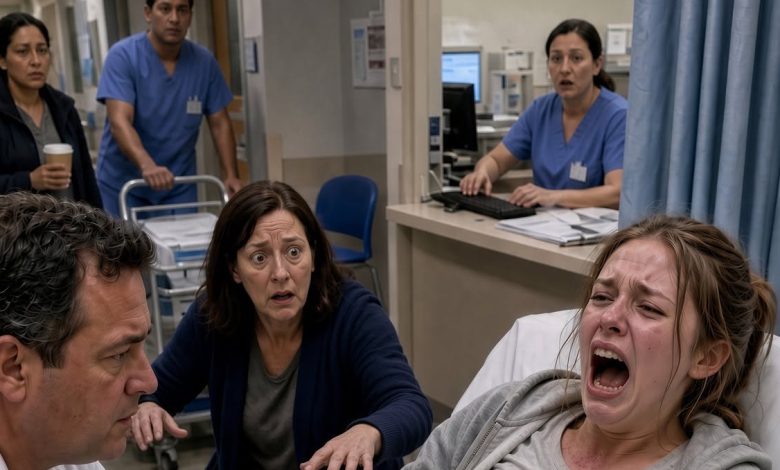
A woman holding a paper coffee cup froze. An orderly stopped with one hand on a metal bed rail. The receptionist’s fingers hovered above her keyboard.
“I need blood work and an ultrasound now,” the doctor said.
Then he stopped looking at the monitor and started watching Emily.
He saw her flinch when a man’s voice carried down the corridor. He saw her fingers close around my sleeve. He saw her glance toward the doorway every time shoes approached.
“I need to speak with her alone,” he told me.
My phone began vibrating.
Michael.
Fifteen missed calls.
Then a message appeared: Where are you?
Another arrived before I could answer.
If you took her to the hospital, you’re going to regret it.
Twenty minutes later, the doctor returned and closed the curtain behind him.
“Mrs. Bennett, your daughter needs urgent surgery.”
My knees almost gave out.
“What does she have?”
“An advanced infection. Likely complicated appendicitis. If you had waited much longer, it could have been fatal.”
I gripped the plastic chair until my fingers hurt.
Then a man’s voice rose at reception.
“I’m her father. I want to see my daughter now.”
Michael had found us.
PART 2
The doctor stepped into the corridor before Michael could reach the exam rooms.
Michael still wore the controlled expression he used whenever he expected strangers to believe him. He said he was Emily’s father, said I had panicked, said our daughter had always been dramatic about pain.
But this time, the room had already seen her.
The doctor looked back at me. “Is Emily safe if he comes in?”
For years, questions like that had terrified me because answering them honestly meant admitting what our house had become.
Before I could speak, Emily screamed from behind the curtain.
“Don’t let him in!”
The woman with the paper coffee cup turned toward us. The receptionist stopped typing. Michael’s jaw tightened as every set of eyes in the corridor shifted from him to the curtain.
I moved closer to the doorway instead of stepping aside.
Emily’s hand clutched the hospital blanket as she looked toward the entrance. Her voice broke, but she forced the words out anyway.
“He knows why it—”
The hospital hallway changed the moment Emily’s voice came through the curtain. Her father had arrived demanding to see her, but instead of stepping aside, her mother moved closer to the doorway and heard the words her daughter had been too afraid to say at home.
For years, Sarah Bennett believed she was protecting her family by keeping the peace. She thought patience could solve almost anything. She thought choosing the right moment, avoiding arguments, and staying calm would eventually make things better.
But standing outside an emergency room while her fifteen-year-old daughter fought through severe pain, Sarah finally understood something she had ignored for too long: silence had not protected Emily. It had only allowed fear to grow.
Three days earlier, the warning signs had started in their own bathroom.
At 3:18 in the morning, Sarah had stood outside the door listening to Emily cry into the sink. The sound was different from normal sickness. It was not the frustrated complaint of a teenager who wanted to stay home from school. It was the sound of someone trying to endure something she could no longer hide.
The bathroom smelled like bleach, fever sweat, and cheap hand soap. The overhead light buzzed. Emily was bent over the porcelain bowl, one arm wrapped tightly around her stomach. Her fingers had gone pale from the pressure.
Sarah saw her daughter trying to make herself smaller.
That was what hurt the most.
Michael, Emily’s father, stood in the doorway watching instead of helping. He treated the situation like an inconvenience. Like another problem that needed to disappear before it interrupted his night.
He told Sarah that if she took Emily to the emergency room over another performance, he would not pay for it.
Those words stayed with Sarah.
Because they were not really about the hospital.
They were about control.
Emily had been sick for almost three days. The vomiting was followed by a fever. But Sarah’s biggest concern was not the symptoms themselves. It was what happened after.
Emily stopped talking about the pain.
She stopped asking for help.
She moved through the house bent forward, one hand touching the wall for balance. She looked exhausted. She looked scared. And whenever Michael walked across the bedroom floor, Emily’s eyes immediately moved toward the door.
Sarah noticed.
She just did not want to admit what it meant.
Michael called Emily dramatic. He said she always reacted this way when school became stressful. He acted like concern was weakness and compassion was a mistake.
Sarah had lived with that attitude for fifteen years.
Over time, she had given Michael more than she realized. Her paycheck. Her passwords. Her schedule. Her confidence in her own decisions.
She had learned to measure every choice by one question:
Would Michael be angry?
And Emily had learned the same lesson.
Stay quiet.
Stay small.
Do not make him upset.
Then Emily spit something pink into the sink.
That was the moment Sarah stopped asking permission.
She told Michael they were going to the emergency room.
He argued immediately. He said she was making their daughter weaker by treating her like a child. He said Sarah was overreacting.
But Sarah looked at Emily and realized something simple.
A mother did not need approval to protect her child.
Before sunrise, everything changed.
Emily collapsed near the shower.
Her gray hoodie was twisted under one shoulder. Her cracked phone was pressed against her chest. Her lips were dry, and her eyes barely opened when Sarah touched her face.
“Mom,” Emily whispered. “Don’t tell Dad.”
That sentence frightened Sarah more than the fever.
Her daughter was not afraid of the hospital.
She was afraid of what would happen after they returned home.
At 4:06 in the morning, Sarah pulled emergency cash from between clean towels, grabbed Emily’s hoodie, and helped her quietly out the back door.
She did not turn on the lights.
She did not announce where they were going.
For the first time in years, she made a decision without waiting for Michael’s reaction.
During the ride, Emily rested against her mother’s shoulder. Sarah’s hands shook in her lap.
Emily whispered that if her father found out, he would get worse.
Sarah told her it did not matter anymore.
She needed those words to become real before they reached the hospital.
At intake, the nurse wrapped an orange band around Emily’s wrist. The paperwork reduced three terrifying days into simple medical phrases: abdominal pain, fever, persistent vomiting.
But the nurse looked up when she heard how long Emily had been sick.
Three days was not a small detail.
The doctor examined Emily and pressed gently on her abdomen.
Emily screamed.
The entire room changed.
A woman holding a paper coffee cup stopped moving. An orderly paused beside a hospital bed. The receptionist looked up from the computer.
The doctor immediately ordered blood work and an ultrasound.
Then he stopped focusing only on the medical information.
He started watching Emily.
He noticed the way she reacted when a man’s voice traveled down the hallway. He noticed how her fingers tightened around Sarah’s sleeve. He noticed how she looked toward the doorway every time someone approached.
The doctor asked to speak with Emily alone.
While Sarah waited outside, her phone began vibrating.
Michael was calling.
Again and again.
Then the messages arrived.
Where are you?
Then:
If you took her to the hospital, you’re going to regret it.
Sarah stared at the screen.
For years, she had been afraid of upsetting him.
Now she was afraid of what would happen if she did nothing.
Twenty minutes later, the doctor returned.
He closed the curtain behind him.
Sarah immediately knew something was wrong.
He told her Emily needed urgent surgery.
Her knees almost gave out.
The doctor explained that Emily had an advanced infection, likely from complicated appendicitis. Waiting much longer could have been dangerous.
Sarah gripped the chair and tried to process everything.
She had spent years being told she worried too much.
But her fear had not been the problem.
Ignoring the warning signs had been.
Then Michael arrived.
His voice carried through the reception area before Sarah saw him.
He announced that he was Emily’s father and wanted to see his daughter.
He still had the same controlled expression he used when he wanted other people to believe his version of events.
He said Sarah had panicked.
He said Emily had always been dramatic.
But this time, people had already seen Emily.
They had seen her fear.
The doctor stepped into the hallway before Michael could reach the exam rooms.
He asked Sarah a question she would never forget.
“Is Emily safe if he comes in?”
For years, Sarah had avoided answering questions like that.
Because answering honestly meant admitting what their home had become.
Before she could respond, Emily’s voice came from behind the curtain.
“Don’t let him in!”
The hallway went still.
The woman with the coffee cup turned around. The receptionist stopped typing. Michael’s expression changed as everyone looked toward the curtain instead of him.
Sarah moved closer to the doorway.
She did not step aside.
She did not apologize.
She did not explain.
She chose her daughter.
Emily held onto the hospital blanket. Her voice shook, but she forced herself to speak.
“He knows why it hurts.”
Those words revealed that the medical emergency was only part of the story.
The pain in Emily’s body had finally brought them to the hospital.
But the fear she carried had been there much longer.
Sarah had spent years believing she was keeping the family together.
Now she understood she had been carrying the weight of a secret her daughter should never have carried alone.
And as doctors prepared Emily for surgery, Sarah faced a decision that had nothing to do with whether Michael approved.
She had to decide whether she was finally ready to stop protecting the person who made her daughter afraid.
Because sometimes the most important moment in a family crisis is not when the truth is discovered.
It is the moment someone finally chooses not to look away.
THE END STORIES! THANK YOU FOR READING GOOD LUCK !❤️
Related Posts