➡️ PART 3 ENDING PART➡️
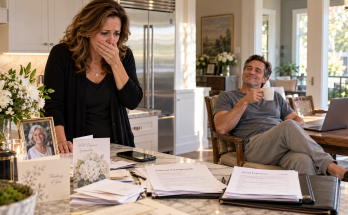
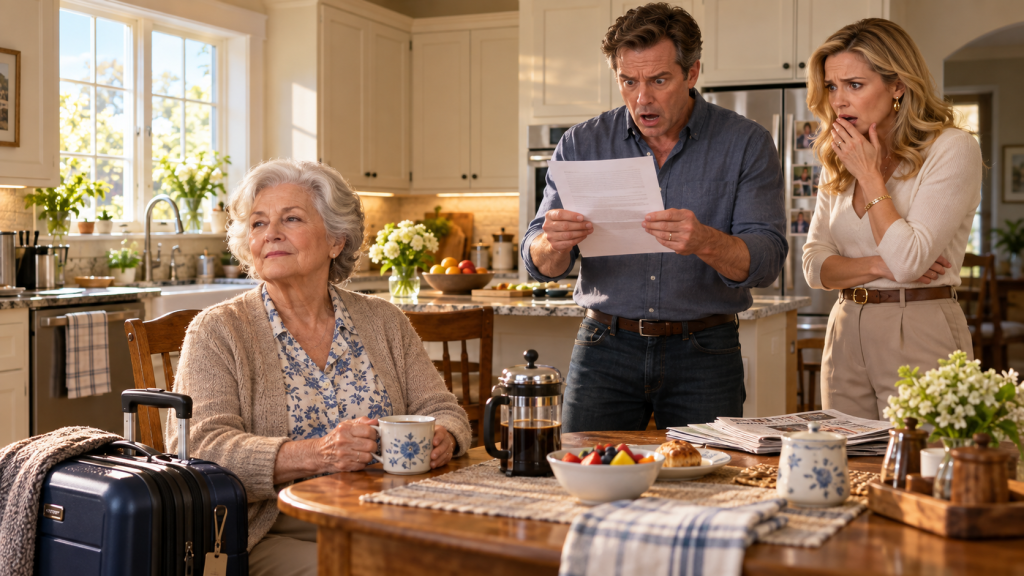
Renata stared at the two-dollar birthday card as though it had just grown teeth.
Daniel looked from the card to me.
Then to my suitcase.
Then back to the letter in his hand.
For the first time in years, nobody at that kitchen table had anything clever to say.
I almost enjoyed it.
Almost.
Then Daniel whispered:
“Mom…”
There it was.
That small voice.
The one I remembered from when he was seven and had fallen out of the oak tree behind our first house.
The one that had called for me before pride learned to live in his mouth.
“What was under the silver?”
I picked up my handbag.
“Enough.”
Renata’s eyes widened.
“Enough for what?”
I looked around the kitchen.
The refrigerator covered in school calendars.
The crooked fruit bowl I had bought three years earlier.
The stain on the ceiling above the sink that Daniel had complained to his “useless landlord” about for months.
My ceiling.
My refrigerator.
My kitchen.
Funny.
I had lived there four years and never once thought of it as mine.
Ownership is not the same as belonging.
I understood that now.
“Enough to make different choices.”
I said.
Daniel stepped around the table.
“Mom, wait.”
The taxi horn sounded again outside.
I checked the clock.
7:18.
My train left at 9:05.
“I have to go.”
“Go where?”
“Savannah.”
Renata frowned.
“Why?”
“My sister lives there.”
“You’re going to Aunt Eleanor’s?”
“Near Eleanor.”
Daniel stared.
“For how long?”
I smiled.
“That depends.”
Renata held up the landlord letter.
“What about this?”
“What about it?”
“You can’t just…”
She stopped.
Interesting.
She did not know what verb to use.
Evict?
Abandon?
Own?
Daniel finished for her.
“You can’t just throw us out.”
“I am not throwing you out.”
“The letter says our lease won’t be renewed.”
“Yes.”
“You know what rent costs around here.”
I did.
I had listened to him complain about it while he paid below-market rent to the LLC I owned.
“I do.”
“Then why would you do this?”
That question almost made me laugh.
Not because it was funny.
Because ten months earlier, they gave me a dollar-store birthday card containing a scratch ticket as a joke.
Two weeks earlier, they placed a deposit on the budget wing of Sunrise Pines and announced that I would be gone by January first.
And now Daniel looked honestly confused that I might make a housing decision without consulting him.
I put my cardigan on.
“You told me it was time for me to live somewhere else.”
“That’s different.”
“Of course it is.”
“Mom.”
His voice sharpened.
“We were trying to do what was best.”
“For who?”
He opened his mouth.
Closed it.
Renata jumped in.
“For everybody.”
There.
The family phrase.
Everybody.
It had always meant:
Everybody except the person being moved.
Everybody except the person babysitting.
Everybody except the person cooking.
Everybody except the woman holding the coupon pile.
I nodded.
“Then we agree.”
Renata blinked.
“On what?”
“Living arrangements need to change.”
Her face tightened.
“That’s not what I meant.”
“I know.”
I picked up my suitcase.
Daniel reached for it.
“Let me carry that.”
“No.”
“Mom, stop being dramatic.”
The old Dolores almost appeared.
The one who would have set the suitcase down just to make the room comfortable again.
Instead, I held the handle.
“I am seventy-three years old.”
I said.
“I packed it myself.”
“I can roll it twelve feet.”
His face softened.
That almost broke me.
Then he looked again at the card.
“How much did you win?”
I looked at my son.
“Goodbye, Daniel.”
“Mom.”
“I’ll call when I’m settled.”
“You can’t leave after saying something like that.”
“I just did.”
I walked toward the door.
Behind me, Renata said:
“This is cruel.”
I stopped.
For one second, anger flashed hot enough to make me turn around.
Then I thought of Harold.
My husband had hated wasted motion.
“Once you know where you’re going,” he used to say, “stop walking backward just to explain yourself.”
So I kept walking.
The cab driver put my suitcase in the trunk.
I climbed into the back seat.
Daniel came onto the porch barefoot.
“Mom!”
I lowered the window.
He stood beneath the porch light holding the landlord letter.
“Is this because of Sunrise Pines?”
I looked at him.
“No.”
That surprised him.
“This is because I should have left long before Sunrise Pines.”
His face changed.
I rolled up the window.
The taxi pulled away.
For the first time in four years, I left Daniel’s house without knowing what time I would be expected back to make dinner.
It felt terrifying.
It felt rude.
It felt like breathing.
I cried at the train station.
Of course I did.
People imagine liberation as a clean, triumphant thing.
It is not.
Sometimes freedom is crying into a paper napkin beside a vending machine because the son you raised is still standing in your mind barefoot on a porch calling you Mom.
I loved Daniel.
That did not disappear because I had won the lottery.
Money can buy distance.
It cannot erase attachment.
I sat with my suitcase between my knees and remembered him at two.
At nine.
At seventeen.
His wedding.
The day his first child was born.
The day Harold died and Daniel sat beside me on the funeral-home sofa holding my hand so tightly my fingers hurt.
That man existed too.
That was the difficulty.
If Daniel had always been cruel, leaving would have been simple.
He had not.
He had become comfortable.
Then careless.
Then entitled.
And I had helped him.
Four years of cooking every night.
Laundry.
School pickups.
Coupon clipping.
The occasional utility bill I covered from my Social Security because “things were tight this month.”
I had made myself useful until usefulness became the only part of me the household noticed.
Then when usefulness began to look like cost, they found Sunrise Pines.
The cheap wing.
I cried harder.
Then my phone buzzed.
Daniel.
I did not answer.
Again.
Daniel.
Then Renata.
Then Daniel.
A text appeared.
Mom please call me.
Another.
We need to understand what is happening.
Then:
How much did you win?
I stared at that one.
There are questions that reveal priorities more clearly than accusations ever could.
I turned off my phone.
Then boarded the train.
Savannah smelled like rain, river water, and something flowering that I could not name.
Eleanor was waiting at the station.
My sister was seventy-six and wore sunglasses even though the sky was gray.
She saw me.
Then saw the suitcase.
Then started crying.
“You actually came.”
I laughed.
“You thought I wouldn’t?”
“I thought you’d forgive them before lunch.”
“Rude.”
“Accurate.”
She hugged me.
Hard.
There are embraces that ask nothing.
I had forgotten.
Eleanor drove me to the yellow house.
Mine.
I had seen it only twice in person.
Once before closing.
Once after.
For months, I had looked at photographs while sitting in Daniel’s guest room beneath a framed sign Renata bought that said:
HOME IS WHERE FAMILY IS.
The irony had almost killed me.
The yellow house sat on a quiet street twenty minutes from Eleanor.
Small.
Two bedrooms.
One bathroom.
A porch stretching across the front.
Rose bushes along the walkway.
The kitchen really was the color of butter.
Not bright yellow.
Warm.
Soft.
Harold would have called it “ridiculous but cheerful.”
I stood in the doorway with my hand over my mouth.
Eleanor whispered:
“Welcome home.”
I cried again.
Apparently becoming rich had not improved my tear ducts.
The first thing I did after unpacking was make tea.
Not dinner.
Not snacks for children.
Not Daniel’s coffee for the morning.
Tea.
For myself.
I sat on the porch while rain tapped against the roof.
My phone came back on.
Thirty-seven missed calls.
Fourteen texts.
Three voicemails.
One from my granddaughter Maya.
She was sixteen.
Her message said:
“Grandma, Dad says you left. Are you okay?”
That was the first message I answered.
I’m okay, sweetheart. I’m safe. I love you. I’ll call you tomorrow.
No details.
No using children as messengers.
Harold and I had spent enough years arguing about other people’s parenting to know one rule:
Children should never become couriers for adult conflict.
Then I listened to Daniel’s voicemail.
“Mom, I don’t understand why you’re doing this. Renata is crying. The kids are upset. We thought Sunrise Pines would be good for you. If this is about the rent, we can talk. Just call me.”
Second voicemail.
“Mom, please. This isn’t funny. The letter says we have until the end of the lease. That’s four months. You know we can’t find something comparable for what we pay now.”
Third.
Longer silence before he spoke.
“How much did you win?”
I deleted none of them.
But I did not answer.
Not yet.
The next morning, I met with my lawyer.
His name was Peter Langley.
Fifty-two.
Navy suits.
Nervous habit of rotating pens between his fingers when clients said something foolish.
I had made him rotate that pen a great deal over the previous ten months.
“I assume they know.”
he said.
“They know I won something.”
“How much?”
“Not yet.”
“Good.”
I frowned.
“You sound pleased.”
“I sound like an attorney who prefers facts to panic.”
I placed my handbag on the chair beside me.
“What happens with the house?”
“Nothing different from what we already planned.”
“The lease runs through the end of February.”
“They have proper notice that it will not be renewed.”
“No eviction.”
“No lockout.”
“No surprises.”
“Afterward, the trust can sell, re-rent, or hold the property.”
I nodded.
“What if I change my mind?”
“You can.”
He rotated the pen once.
Then:
“But decide because you want to change your mind.”
“Not because someone makes you uncomfortable.”
There it was.
The rule behind everything.
I hated how much money I was paying people to tell me obvious truths.
Then again, perhaps if obvious truths were easy, lawyers would be unemployed.
Peter continued.
“Have you decided how much you want your family to know?”
“No.”
“The lottery amount is public enough that determined people could eventually find it.”
“I know.”
“Then secrecy is temporary.”
“I know.”
“Good.”
I sighed.
“What would you do?”
He smiled.
“I would never buy a winning ticket.”
“Coward.”
“Yes.”
Then:
“But I would tell them before they hear it from somebody else.”
I stared out the window.
Eleven million dollars.
Even after taxes, professional fees, property purchases, and the conservative reserve my lawyers insisted upon, I still possessed more money than Harold and I had earned in decades.
Enough for the yellow house.
Enough to never worry about the price of prescription glasses again.
Enough to help grandchildren.
Enough to become interesting to relatives who had never called on Sundays.
Money is a strange perfume.
People smell it from remarkable distances.
“I’ll tell Daniel.”
I said.
“When?”
“After I speak to the children.”
Peter nodded.
“Good.”
Then I surprised myself.
“I want to sell the rental house.”
“To Daniel?”
“No.”
“Open market?”
“Probably.”
“Why?”
I thought.
“Because I don’t want to remain his landlord.”
Peter stopped rotating the pen.
That answer pleased him.
“Excellent.”
“I don’t want his rent.”
“I don’t want leverage.”
“I don’t want to spend every month wondering whether he paid me.”
“He needs a home that is not secretly tied to his mother.”
“And I need a life that is not tied to whether he keeps one.”
Peter nodded.
“That sounds less like revenge.”
“It started as revenge.”
I admitted.
He smiled.
“Most good boundaries begin with messier emotions than people admit.”
I spoke to Maya and her younger brother Ben that evening.
Video call.
Daniel was not in the room.
I confirmed twice.
Maya looked angry.
Ben looked confused.
“Why did you leave?”
Ben asked.
“Because it was time for me to live in my own home.”
“Dad says you own ours.”
Maya said.
Children find facts quickly.
“Yes.”
Ben stared.
“Like…the landlord?”
“Technically.”
“That’s weird.”
“Very.”
Maya did not smile.
“Did you buy it because you were mad at Dad?”
Smart girl.
“No.”
I answered carefully.
“I bought it months before they told me about Sunrise Pines.”
“Why didn’t you tell us?”
“Because I had financial matters I wanted to keep private while I decided what to do.”
Maya leaned closer.
“Did you really win the lottery?”
There it was.
“Yes.”
Both children froze.
Ben’s mouth opened.
“How much?”
“Enough that I don’t need to worry about money.”
“Grandma.”
Maya said.
“Dad says it might be millions.”
I looked at her.
“It is.”
Ben shouted something I could not repeat in polite company.
Maya slapped his arm.
Then she looked at me.
Her eyes filled.
“Were you rich when Mom made you clip coupons?”
My chest tightened.
Children see humiliation differently once the context changes.
“No.”
I said.
“I mean, yes, financially.”
“But coupons are not humiliation.”
“She used them too.”
Maya frowned.
“You know what I mean.”
I did.
“Yes.”
“I know.”
“Why didn’t you tell them?”
Because I wanted to see who they were when they thought I had nothing.
That was the sharp answer.
The true answer was softer.
“Because money changes conversations.”
I said.
“I wanted to make decisions before everybody had opinions about what I should do.”
Maya looked down.
Then whispered:
“I laughed at your birthday card.”
There.
I had been waiting for that.
“You laughed because everyone else did.”
“I still laughed.”
“Yes.”
Her eyes filled.
“I’m sorry.”
I smiled.
“Thank you.”
Ben looked guilty now.
“I laughed too.”
“Yes.”
“I’m sorry.”
“Thank you.”
I did not say it was fine.
It had hurt.
Children can survive learning that their actions hurt someone.
They do not need lies to protect them.
Then Maya asked:
“Are we losing our house because of us?”
“No.”
I said firmly.
“This is between adults.”
“You did nothing that requires fixing the housing situation.”
“Your parents will find another place.”
“Can we still visit you?”
My heart broke.
“Of course.”
“Even after…”
She stopped.
“Even after anything.”
I said.
“You do not inherit adult fights.”
That was the best thing I said all year.
Daniel called immediately after.
“You told the kids before me?”
“I answered their questions.”
“You told them you’re a millionaire?”
“Yes.”
“How much?”
I closed my eyes.
“Eleven million before taxes.”
Silence.
Not even breathing.
Then:
“What?”
“You asked.”
“Eleven…”
Another silence.
I imagined him sitting at the kitchen table.
My kitchen table once.
The card probably still there.
Renata beside him.
“Eleven million dollars?”
“Yes.”
“Ten months ago?”
“Yes.”
He made a sound somewhere between a laugh and a gasp.
“You’ve had eleven million dollars for ten months?”
“Not exactly eleven after taxes.”
“Mom.”
“I am not discussing account balances.”
“You lived here.”
“Yes.”
“You cooked.”
“Yes.”
“You let us…”
He stopped.
“Let you what?”
I asked.
Silence.
Good.
He had reached something.
Then:
“You let us think you had nothing.”
I stared at the butter-colored kitchen wall.
“I had a pension.”
“I had savings.”
“I had my own dignity.”
“I did not have nothing.”
“That’s not what I meant.”
“I know.”
Daniel’s breathing grew louder.
“Why didn’t you tell me?”
“Why would I?”
“I’m your son.”
“Yes.”
“That is not the same as being my financial adviser.”
“You hid eleven million dollars from me.”
“I kept private money private.”
“You were living under my roof.”
I nearly laughed.
Then remembered.
Technically, he had been living under mine.
“Daniel.”
I said.
“You charged me rent.”
The silence became total.
He had forgotten that.
Not market rent.
Three hundred dollars a month.
He and Renata called it “contributing to household costs.”
I paid for groceries too.
And cooked them.
“And I paid it.”
I continued.
“I was not a dependent child hiding income from a parent.”
“You were an adult woman renting a room from her son.”
He whispered:
“That’s not fair.”
“What part?”
“You make us sound terrible.”
“No.”
“I am saying what happened.”
“You’re twisting it.”
There it was.
The family emergency phrase.
When facts sounded ugly, I was accused of arranging them badly.
I breathed.
“I am not doing this tonight.”
“Mom, wait.”
“No.”
“We need to talk about the house.”
“We can.”
“With Peter.”
“Your lawyer?”
“Yes.”
“Why do I need a lawyer to talk to my mother?”
“Because the house is business.”
Silence.
“And family?”
I looked out the window.
Rain again.
“Family can call me on Sunday.”
Then I hung up.
The next morning, my bank froze a transfer attempt.
Not from Daniel.
From me.
I was trying to move money into a charitable account and had entered a number incorrectly.
Nothing sinister.
Still, the phone call terrified me.
That taught me something.
I had become so alert for betrayal that even ordinary mistakes felt like threats.
Peter recommended a financial therapist.
I laughed at him.
Then made an appointment.
Rich people apparently have therapists for things I used to solve with tea.
Her name was Dr. Helen Avery.
She asked:
“What do you want the money to do?”
I said:
“Keep me safe.”
She nodded.
“And after that?”
I had no answer.
For ten months, every decision had been defensive.
Lawyers.
Trusts.
LLCs.
Property.
Privacy.
Protection.
I had not asked what I wanted.
Not from the money.
Not from the years I had left.
That question frightened me more than winning.
I made a list.
Not a rich-person list.
No yacht.
No private plane.
Harold would have risen from the grave out of pure irritation.
My list said:
A porch swing.
A good mattress.
A train trip across Canada.
A piano.
I do not play piano.
I simply always wanted one.
Dental implants.
Not exciting.
Very expensive.
A scholarship for widowed women returning to school.
College accounts for Maya and Ben that their parents could not access.
A fund for each grandchild to use later for education, training, or a first home.
A garden with too many roses.
A dog.
That last one surprised me.
I had not had a dog since Harold died.
He said no other animal would tolerate me.
I decided to test the theory.
Eleanor helped me adopt a six-year-old beagle mix named Walter.
I renamed him Harry.
Eleanor called that sentimental.
I called her old.
We remain close.
Renata called me two weeks after I left.
First time without Daniel.
“Dolores.”
Her voice was careful.
“Renata.”
“I wanted to apologize.”
I waited.
“For what?”
That question matters.
People sometimes apologize hoping you will write the confession for them.
Renata inhaled.
“For Sunrise Pines.”
“Anything else?”
Silence.
Then:
“For the card.”
I looked at Harry sleeping beside my chair.
“What about it?”
“It was mean.”
Yes.
“It was supposed to be funny.”
“Yes.”
“But it was mean.”
Better.
She continued.
“And I called you a burden.”
I went very still.
“You heard that?”
“Twice.”
Her voice broke.
“I’m sorry.”
I believed she felt sorry.
That was different from forgiveness.
“Thank you.”
Then:
“I need to tell you something.”
I almost laughed.
Of course.
“We cannot afford another house in the kids’ school district.”
There it was.
The apology opened.
The request followed.
At least she waited three minutes.
“The lease ends in February.”
I said.
“I know.”
“Peter sent information.”
“I know.”
“We were wondering…”
She stopped.
“If you’d sell us the house.”
That surprised me.
“At fair market value?”
Silence.
Then:
“We were hoping maybe what we’ve paid in rent could count toward it.”
I closed my eyes.
Nine years of rent paid to the previous landlord.
Months to my LLC.
Now retroactively imagined as equity.
“No.”
Renata’s voice hardened.
“That was fast.”
“It was.”
“Could we at least get a family price?”
“No.”
“Dolores.”
“You have four months to decide whether you want to make an offer at market value or find another home.”
“That is cruel.”
My jaw tightened.
There was the word again.
Cruel.
Apparently refusing to turn my lottery win into a discount was cruelty.
“Renata.”
I said.
“You arranged a budget room at Sunrise Pines for me without asking what I wanted.”
“That is not the same.”
“I agree.”
“It cost less.”
Silence.
I hated myself for enjoying that.
So I corrected.
“That was unkind.”
I said.
“I shouldn’t have said it like that.”
Renata said nothing.
I continued.
“But my answer is still no.”
That mattered too.
Apologizing for tone did not require surrendering the boundary.
She whispered:
“Daniel is terrified.”
“I know.”
“He thinks you hate him.”
“I don’t.”
“What do you want from us?”
Finally.
Not what do you owe us.
What do you want.
I thought.
“I want you to stop talking about me as though I am a resource with feelings attached.”
Silence.
Then Renata cried.
Not loudly.
“I don’t know when we started doing that.”
I believed her.
Neither did I.
Daniel and Renata did not buy the house.
They could not qualify for enough financing at the market value without changing several things.
So they changed several things.
Renata sold the luxury SUV.
Daniel took on extra contract work.
They canceled a club membership.
They moved into a smaller rental six blocks outside the school boundary.
The children changed bus routes.
Nobody died.
Important.
For years, I had absorbed inconvenience for everyone because I believed discomfort was disaster.
It wasn’t.
They found a place.
Three bedrooms.
No finished basement.
No oversized kitchen island.
Maya later told me she liked her room better.
Ben missed the old backyard.
Life.
I sold the house.
Not immediately.
After they moved.
I walked through it once when it was empty.
That was harder than I expected.
The dining room table was gone.
The refrigerator magnets removed.
The guest room where I slept was bare.
Four pale squares marked the wall where Renata had hung motivational signs.
I stood in the kitchen.
For years, I had cooked at that stove.
Chicken soup when Maya had influenza.
Birthday cakes.
Meatloaf Daniel complained was dry.
Lasagna I made better than Renata’s mother and never said so out loud.
The room did not feel vindictive.
Just empty.
Peter joined me.
“Still want to sell?”
“Yes.”
“You could keep it as an investment.”
“No.”
“Why?”
“Because if Daniel is late on rent somewhere else, I don’t want to know.”
Peter laughed.
“Fair.”
The house sold to a young couple expecting their first baby.
They loved the backyard.
I did not tell them the previous owner used to live in the guest room.
Technically, I had been both tenant and landlord.
Too complicated for closing.
The profit went back into the trust.
No victory dinner.
No rubbing hands together.
Just a transaction.
That was healthier.
Sunrise Pines mailed me a refund.
Apparently Daniel had paid a deposit before realizing I might not go willingly.
I stared at the check.
Then laughed until Eleanor came running from the kitchen.
“What?”
I held it up.
She read.
“Keep it.”
“No.”
“Cash it.”
“No.”
“Frame it.”
I considered.
Then returned it to Daniel.
With one note:
You paid this. It belongs to you.
Nothing else.
A week later, he called.
“Why did you send it back?”
“Because it was your money.”
Silence.
“Mom.”
“Yes?”
“I’m sorry.”
I closed my eyes.
“For what?”
He breathed.
“Thinking I could decide where you lived.”
My throat tightened.
“Thank you.”
“And…”
He stopped.
“Keep going.”
He laughed weakly.
“For not seeing how much you were doing.”
I stared at the roses outside my window.
“That one may take me longer.”
“I know.”
Then:
“Can I visit?”
I had known this question would come.
“Yes.”
“Really?”
“Yes.”
“When?”
“Next month.”
Not tomorrow.
Not immediately.
Boundaries need time too.
He agreed.
Daniel came alone.
That mattered.
He arrived in Savannah with one carry-on bag and no plan to discuss money.
I knew because I had asked.
He stood on my porch holding flowers.
Not expensive ones.
Daisies.
Harold hated daisies.
I loved them.
Daniel looked around.
“So this is yours.”
“Yes.”
“It’s yellow.”
“Observant.”
He laughed nervously.
Then Harry barked at him.
“You got a dog?”
“Yes.”
“You hate dogs.”
“I hated your father’s opinion about dogs.”
Daniel smiled.
We stood.
Two people who knew each other too well and not well enough.
Then he said:
“Can I come in?”
He asked.
That alone nearly made me cry.
“Yes.”
He noticed the piano first.
“You play?”
“No.”
“Why do you have a piano?”
“Because I wanted one.”
“That doesn’t make sense.”
“It does when you have money.”
He froze.
We both did.
Then I smiled.
“That was a joke.”
He laughed.
Good.
We drank coffee on the porch.
For almost an hour, we talked about ordinary things.
Maya’s school.
Ben’s soccer.
Daniel’s work.
Eleanor’s arthritis.
Then finally:
“Mom.”
“Yes?”
“Why didn’t you tell me after you won?”
There was no anger in the question now.
Just hurt.
That was harder.
I took my time.
“Because I did not trust what the information would do to our relationship.”
His face tightened.
“That hurts.”
“I know.”
“Did you really think I would take your money?”
“No.”
He looked surprised.
“Then what?”
“I thought you would start planning with it.”
Daniel looked away.
Accurate.
I continued.
“I thought Renata would think about schools.”
“Cars.”
“Vacations.”
“You would think about retirement.”
“Helping people.”
“Paying things off.”
“And eventually I would become the bad person every time I said no.”
Daniel stared at his hands.
“I did ask how much before I asked if you were okay.”
“Yes.”
He closed his eyes.
“I keep thinking about that.”
“Good.”
He laughed painfully.
“Thanks.”
“You asked.”
Then he whispered:
“Were we really that bad?”
There is no answer a parent wants to give.
“No.”
I said.
Daniel looked up.
“You were not monsters.”
“You were comfortable.”
“You had stopped seeing me.”
He cried.
So did I.
I continued.
“You saw dinner appear.”
“Laundry folded.”
Children picked up.”
“Groceries clipped.”
“Rent paid.”
“Then you saw a seventy-three-year-old woman taking up a room.”
“I don’t think you sat down and decided I had no value.”
“I think you stopped asking whether I had a life outside what I did for your family.”
Daniel covered his face.
“I’m sorry.”
I waited.
He lowered his hands.
Then:
“I told myself Sunrise Pines would be easier for you.”
“Did you ask me?”
“No.”
“Why?”
He thought.
“Because I knew you’d say no.”
There it was.
Same logic behind so many violations.
We avoid asking when consent might interfere with convenience.
Daniel cried harder.
“God.”
I reached for his hand.
Not to rescue.
Because I loved him.
“That is the part you need to understand.”
He nodded.
“I do.”
“Maybe.”
I said.
“Understanding takes longer than one apology.”
He smiled through tears.
“Still strict.”
“I’m rich now.”
He laughed.
So did I.
That was our first good afternoon.
Not reconciliation.
Beginning.
Renata came later.
Much later.
Six months.
She did not want to.
Neither did I.
Then Maya graduated from high school, and we ended up sharing a hotel breakfast.
Awkward.
Coffee can only do so much.
Renata finally said:
“I was jealous of you.”
I nearly choked.
“Of me?”
“Yes.”
“That’s absurd.”
“I know.”
She looked down.
“You had no job.”
My eyebrows rose.
She corrected quickly.
“I mean no outside job.”
“You were home.”
“The kids loved you.”
“Daniel asked your opinion.”
“You could make one roast feed everybody.”
“I felt like you made me look incompetent in my own house.”
I stared.
Years of small sharpness rearranged themselves.
Coupons.
Criticism.
The sweater returned publicly.
The jokes.
“Why didn’t you tell me?”
Renata laughed bitterly.
“How?”
“Hello, Dolores, your competence annoys me?”
“That would’ve been memorable.”
She smiled.
Then:
“So I started making you smaller.”
That sentence took courage.
I listened.
“I called you cheap.”
“Old-fashioned.”
“A burden.”
“I made the birthday card into a joke.”
“The nursing home…”
She cried.
“I wanted my house back.”
There.
“I thought if you moved, I would finally feel like the mother again.”
My anger weakened.
Not disappeared.
Changed shape.
“You could have asked me to move.”
“I know.”
“You could have said living together wasn’t working.”
“I know.”
“You didn’t have to humiliate me.”
“No.”
She wiped her face.
“I’m sorry.”
I believed her.
Still did not immediately forgive.
There is a difference between believing remorse and rushing to make the remorseful person comfortable.
I said:
“Thank you.”
Renata nodded.
Then:
“Can I ask you something?”
“Depends.”
She almost smiled.
“Do you hate me?”
I thought.
“No.”
She began crying again.
“That doesn’t mean I trust you the same way.”
She nodded.
“I understand.”
Good.
Maybe she did.
I never gave Daniel or Renata money for themselves.
Not for years.
This surprised everyone.
People imagined that once emotions settled, I would buy them a house anyway.
I did not.
I paid for Maya’s college through a trust.
Ben’s too.
Directly.
No cash handed to parents.
When Maya needed a laptop, the education trust bought it.
When Ben needed orthodontics, I offered to cover it after Daniel told me their insurance left a large balance.
Daniel hesitated.
Then said:
“Only if you want to.”
There.
I smiled.
“I want to.”
That sentence became our new rule.
Not:
Can you?
Not:
You should.
Not:
Family helps.
Do you want to?
Sometimes yes.
Sometimes no.
Both survived.
Relatives found out about the lottery.
Of course.
My cousin Phyllis, who had not called me in eight years, suddenly remembered that our grandmothers were sisters.
A nephew I had met twice asked whether I might invest in a food truck.
A woman from Harold’s old church sent me a thirty-page business proposal for Christian-themed candles.
I changed my phone number.
Eleanor laughed.
“Welcome to wealth.”
“I hate wealth.”
“Then give it to me.”
“No.”
“So you love wealth.”
We remain sisters.
I did give a great deal away.
Quietly.
The scholarship fund for widowed women began with three recipients.
Then five.
Then ten.
Not glamorous.
Tuition.
Books.
Childcare.
Certification programs.
A fifty-eight-year-old widow studied medical coding.
A sixty-three-year-old woman became a paralegal.
A thirty-nine-year-old mother finished nursing school after her husband died suddenly.
At the first small luncheon, one recipient hugged me and said:
“You changed my life.”
I hated the phrase.
Too much responsibility.
“No.”
I told her.
“You were already changing it.”
“I paid a bill.”
That distinction mattered.
Money can help.
It should not become the author of someone else’s dignity.
I knew what happened when money began narrating people.
I also bought something ridiculous.
A convertible.
Used.
Red.
Eleanor laughed for ten straight minutes.
“You are seventy-four.”
“Yes.”
“You have a bad left knee.”
“Yes.”
“You drive like a librarian.”
“What does that mean?”
“No one knows.”
I bought it anyway.
Harold had wanted one.
Never did.
Too practical.
Mortgage.
College.
Retirement.
Life.
The first afternoon I drove it, I cried at a red light.
Not because of the car.
Because there was nobody beside me saying:
“Can we afford this?”
We could.
I could.
That felt strange.
Then I realized something.
Money had not made me free.
The decision had.
The money simply removed one obstacle.
A year after I moved, Daniel sent me a birthday card.
Not dollar store.
Not expensive either.
Inside was a lottery ticket.
I stared at it.
Then laughed so hard I called him immediately.
“Very funny.”
He was laughing too.
“I almost didn’t.”
“Coward.”
“Renata said you might disown me.”
“Reasonable.”
“Scratch it.”
“No.”
“Mom.”
“I learned my lesson.”
We laughed.
Then I scratched.
Nothing.
Thank God.
Inside the card, Daniel had written:
Last year we laughed because we thought the ticket was the gift. I know now the gift should have been making you feel loved whether it won or not. I am sorry. Happy birthday, Mom.
I cried.
Then called him again.
“Now I hate you.”
“Why?”
“Because you made me sentimental.”
Progress.
Maya confronted her parents more fiercely than I ever did.
Teenagers are useful that way.
At nineteen, she visited me during spring break.
One evening she said:
“Dad told me everything.”
I winced.
“His version.”
“He showed me the Sunrise Pines paperwork.”
I stared.
“He kept it?”
“Apparently.”
“Why?”
“Therapy.”
Of course.
Maya continued.
“I used to think you were kind of dramatic for buying the house secretly.”
I laughed.
“Fair.”
“Now I think all of you were insane.”
“Also fair.”
Then she became serious.
“Did you buy it to punish them?”
I thought.
“At first, part of me wanted the power.”
“Because they made you feel powerless?”
“Yes.”
She nodded.
“What stopped you from doing something worse?”
I smiled.
“Lawyers are expensive conscience rentals.”
She laughed.
Then:
“Seriously.”
“Your grandfather.”
Maya’s eyes softened.
“Grandpa Harold?”
“Yes.”
“He hated revenge.”
“He loved consequences.”
“There is a difference.”
“What would he have said?”
I could hear Harold perfectly.
If you want to teach someone a lesson, make sure you’re not the one still taking the class ten years later.
I told her.
Maya smiled.
“I wish I remembered him better.”
My heart tightened.
So I told stories.
The lottery disappeared.
Harold returned.
That was a good night.
Daniel and Renata stayed married.
Barely, for a while.
My departure exposed things between them too.
Renata resented Daniel’s habit of letting me solve domestic problems.
Daniel resented Renata’s resentment of me.
Both had used me as a third person inside their marriage.
My leaving removed the convenient center.
They fought.
Went to counseling.
Almost separated.
Did not.
I stayed out.
Very difficult.
Very healthy.
When Daniel called once and said:
“Renata and I are having trouble.”
The old me immediately asked:
“What happened?”
Then started planning a train trip.
I stopped.
“Do you want me to listen or help solve something?”
Silence.
Then Daniel laughed.
“Who are you?”
“Expensive therapy.”
He said:
“Listen.”
So I did.
No solutions.
The world kept turning.
I visited their new rental two years later.
First time sleeping under their roof since leaving.
Renata gave me the guest room.
She placed a basket on the bed.
Water.
Snacks.
Fresh towels.
Too much.
I smiled.
“You don’t have to audition.”
She looked embarrassed.
“I know.”
Then:
“I wanted you to feel welcome.”
That landed differently.
“Thank you.”
At dinner, Daniel cooked.
Badly.
We ate anyway.
Afterward, Renata started gathering plates.
I stood automatically.
She touched my arm.
“Sit.”
My body stiffened.
She realized.
“No.”
she said.
“I don’t mean because you’re old.”
Everyone froze.
Then Daniel started laughing.
Maya too.
Ben nearly fell off his chair.
Renata covered her face.
“Great.”
I laughed until my stomach hurt.
Eventually she laughed too.
That was healing.
Not perfect language.
Enough safety to survive bad language.
I never went to Sunrise Pines.
But I visited once.
Not to prove anything.
A woman from my scholarship fund worked there as an administrator.
She invited me to speak to residents about fraud prevention after several scams targeted seniors.
Life is funny.
I walked through the lobby.
Beautiful plants.
Piano.
Residents laughing.
The “budget wing” was not a dungeon.
That mattered.
My pain had never been about assisted living itself.
It was about being placed.
Decided for.
Moved like furniture.
There were people at Sunrise Pines who chose it and loved it.
There were people who needed care and found safety.
I was not better than them because I bought a yellow house.
Dignity was never about where someone lived.
It was about whether they had a voice in the decision when choice was possible.
I learned that too.
At seventy-eight, I had a small stroke.
Very small.
Still terrifying.
For three days, my left hand felt strange.
My speech slurred for an hour.
The hospital admitted me.
Daniel arrived before Eleanor.
He came into the room looking twenty years younger with fear.
“Mom.”
I smiled crookedly.
“Don’t buy me a nursing home.”
He burst into tears.
Then laughed.
Then I cried.
Humor survives strange places.
The stroke did something important.
It forced us to revisit the question we had avoided.
What happens if I actually need help?
I had money.
Long-term care insurance.
A trust.
A lawyer.
A medical directive.
Everything neat.
Still, paperwork cannot hug you.
Daniel sat beside my bed.
“What do you want?”
Not:
Here’s what we decided.
What do you want?
I almost cried again.
“For now?”
“Yes.”
“I want to go home.”
“Okay.”
“With help.”
“Okay.”
“And no one moves in with me.”
He laughed.
“Definitely okay.”
“I love you.”
“I love you too.”
There.
He had learned.
So had I.
I hired a home-care aide for two weeks.
Recovered almost fully.
Harry slept beside my chair through all of it.
Eleanor complained that the dog got more sympathy than she did after her hip surgery.
I told her to win the lottery.
Normal family cruelty.
Healthy.
When I turned eighty, the money still existed.
Less.
More.
Depends on markets.
I stopped checking frequently.
That surprised me.
At first, every statement felt like proof that nobody could trap me again.
Eventually, the balance became numbers.
My life was elsewhere.
Porch.
Sister.
Dog.
Grandchildren.
Scholarship letters.
Daniel calling on Sundays.
Renata sending recipes.
The red convertible I finally sold after my knee decided entering it was an Olympic sport.
I cried when it left.
Then bought a boring car.
Harold won.
The most expensive thing I ever purchased was not the yellow house.
Not the old rental.
Not the car.
It was privacy.
Legal structures.
Trust management.
Accountants.
Security.
It cost money.
Worth every dollar.
Because sudden wealth does not merely give.
It exposes.
It exposes who asks.
Who assumes.
Who resents.
Who celebrates.
Who sees you.
And, more dangerously, it exposes parts of yourself.
My desire to punish.
My fear of becoming invisible again.
My temptation to test people.
For a while, I secretly enjoyed knowing Daniel and Renata thought I was still poor.
That made me feel powerful.
I had to admit that.
Power can intoxicate old women too.
The question is not whether money changes you.
It will.
The question is whether you notice what direction.
One afternoon, Peter asked me:
“Do you regret buying Daniel’s house?”
I thought.
“No.”
“Would you do it again?”
That was harder.
“Maybe not.”
He smiled.
“Interesting.”
“I bought it because I wanted security.”
“Then I enjoyed the secret too much.”
“Both can be true.”
“Yes.”
He had taught me that phrase.
Then:
“Did owning it help you leave?”
“Yes.”
“Then perhaps it bought something useful.”
“Courage?”
“No.”
I shook my head.
“The courage was mine.”
Peter smiled.
“Good answer.”
Lawyers love when clients finally stop crediting money for everything.
Daniel eventually bought a home again.
Seven years after I left.
Smaller than the old rental.
His.
He called before closing.
“Mom.”
“Yes?”
“I want to tell you something before you hear it from the kids.”
“Oh God.”
“No.”
he laughed.
“We bought a house.”
My chest tightened.
“Congratulations.”
“You’re not going to ask the price?”
“No.”
“Who are you?”
“Rich and evolved.”
He laughed.
Then:
“We did it ourselves.”
That sentence carried more pride than any inheritance could have given him.
“I’m proud of you.”
He became quiet.
“Thanks.”
“Do you want help with furniture?”
Silence.
I smiled.
Then he said:
“No.”
My heart lifted.
“Good.”
Then:
“Maybe a housewarming plant.”
“Done.”
Boundaries can turn generosity back into pleasure.
Renata gave me a key to their new house.
I stared at it.
“What’s this?”
“You’re family.”
I raised one eyebrow.
She immediately added:
“Emergency key.”
“Do not use it without calling.”
I smiled.
“Look at you.”
“Therapy.”
We hugged.
I used that key once.
Three years later.
Daniel fell off a ladder and Renata was at the hospital.
I went in to feed their cat.
Nothing dramatic.
I called first anyway.
Old women can learn too.
When Maya got engaged, she asked me to pay for the wedding.
Directly.
No manipulation.
Just:
“Grandma, would you be willing to help?”
I smiled.
“How much?”
She handed me a budget.
A real budget.
I nearly fainted from pride.
“I’ll cover the venue.”
Her eyes widened.
“Really?”
“Yes.”
“Thank you.”
No expectation of more.
I paid.
At the reception, Daniel toasted her.
Then me.
I hated him for that.
He said:
“My mother taught me that a gift is only a gift if the person giving it is free to say no.”
I cried into my napkin.
Renata squeezed my hand.
No joke.
No lottery ticket.
Just family.
Ben became a teacher.
Nobody predicted that.
He used part of his education trust for graduate school.
The rest remained.
At twenty-eight, he asked whether he could use some toward a first home.
The trust allowed it.
I approved.
Then asked:
“Can you afford the mortgage without me afterward?”
He smiled.
“Dad asked the same thing.”
I almost fell over.
“Did he?”
“Yes.”
“What did you say?”
“That I ran the numbers.”
“Excellent.”
Then:
“Your grandfather Harold would have asked whether the roof was old.”
Ben frowned.
“It is.”
“Then save.”
“Grandma.”
“I’m leaving.”
Growth has limits.
At eighty-two, Eleanor died.
That was the loss that made the yellow house feel different.
My sister had been twenty minutes away.
Then she was nowhere.
I sat on the porch for weeks feeling as though one side of the world had gone quiet.
Daniel came.
Not because I called.
Because I told him after it happened and he asked:
“Do you want company?”
I said yes.
He stayed three days.
Did not rearrange anything.
Did not make plans.
Did not suggest moving me.
He cooked soup.
Bad soup.
I ate it.
On the second night, he sat beside me.
“I’m scared you’re alone.”
There it was.
Old instinct.
New language.
“I am alone.”
I said.
“That is not the same as helpless.”
He nodded.
“I know.”
“Do you?”
“I’m trying.”
Good enough.
Then he asked:
“What do you want to do now?”
That question again.
My son had finally learned the phrase that saved us.
I looked at the roses.
“Stay.”
I said.
“For now.”
He smiled.
“Okay.”
I stayed in Savannah.
The house grew older with me.
Roses became unruly.
Harry died.
That broke me.
I adopted another dog six months later despite announcing I never would.
Her name was Dot.
Tiny.
Bossy.
Renata loved her more than she loved me.
Fair.
At eighty-four, I changed my estate plan.
Not because I was angry.
That mattered.
Daniel did not inherit eleven million dollars.
Neither did Maya.
Neither did Ben.
The trust divided thoughtfully.
Enough for family to have security.
Not enough for anyone to abandon their own life while waiting for mine to end.
Large portions went to the scholarship program, elder legal-aid services, and a housing fund for widowed seniors transitioning after a spouse’s death.
Peter asked why that last one mattered.
I smiled.
“Because people deserve choices about where they live.”
He did not ask again.
The yellow house would eventually be sold unless one of my grandchildren wished to buy it at fair terms.
No automatic entitlement.
No secret landlords.
I had learned.
I told Daniel the broad structure.
Not amounts.
He listened.
Then said:
“Good.”
I stared.
“That’s all?”
“What should I say?”
“I expected you to ask what you get.”
He smiled sadly.
“Seventeen years ago I would have.”
“Yes.”
“I don’t want to be that man anymore.”
My eyes filled.
“You aren’t.”
He looked away.
That sentence mattered to him.
Maybe more than I realized.
Then he said:
“Leave me Dad’s tackle box.”
I laughed.
“H and D.”
“Yeah.”
“The old blue one.”
“You can have it.”
“Really?”
“Yes.”
“Better than money.”
“Now you’re exaggerating.”
We laughed.
Inheritance had finally returned to objects that told stories instead of numbers that told people who they were.
The original dollar-store card stayed with me.
Of course.
Not framed.
Not displayed.
In a drawer.
The price sticker still attached.
Two dollars.
Every few years, I took it out.
The scratch ticket was gone.
Claimed.
Processed.
Archived in some lottery office.
But the card remained.
Inside, Renata had written:
Hope this is your lucky year!
At the time, sarcasm.
Then prophecy.
Life has terrible comedic timing.
One day, Maya found it.
“Is this the card?”
“Yes.”
She touched the sticker.
“Two dollars.”
“Yes.”
“Do you hate it?”
I thought.
“No.”
“Why keep it?”
I smiled.
“Because it reminds me money did not create the problem.”
She frowned.
“What did?”
“Being unseen.”
She sat beside me.
“And winning fixed that?”
“No.”
“Leaving did.”
Not entirely.
But close.
People love the lottery part when they hear the story.
Eleven million dollars.
Secret trust.
Hidden house.
Landlord letter.
Suitcase.
Cab at the curb.
Perfect revenge.
That is not the part I remember most.
I remember baking my own birthday cake.
I remember holding the two-dollar card while my family laughed.
I remember saying:
“It is a pretty card.”
Because that sentence was the last polite thing the old Dolores said before something inside her began waking up.
I remember the kitchen table on the morning I left.
Daniel asking how much.
Renata calling me cruel.
My suitcase feeling heavier than it was.
I remember crying at the train station because leaving people who undervalue you still hurts when you love them.
I remember the first cup of tea in my yellow kitchen.
No one calling:
“Mom, where are the clean towels?”
No one asking:
“Dolores, did you use the coupon?”
Silence.
Mine.
Winning eleven million dollars did not save me.
That sounds ridiculous.
Of course it helped.
Money bought lawyers.
A house.
Privacy.
Medical care.
Freedom from fear.
It created choices many people never receive.
I will never pretend otherwise.
But the ticket itself could not teach me how to use those choices.
I could have handed Daniel five million dollars and remained the same woman.
I could have bought Renata a mansion and still felt like a burden.
I could have moved into Sunrise Pines with seven figures in the bank if I believed their convenience mattered more than my consent.
The money gave me leverage.
Dignity had to come from somewhere else.
It came slowly.
From saying no.
From staying gone.
From letting Daniel be upset.
From letting Renata misunderstand me.
From refusing to repair every uncomfortable feeling I caused by finally taking up space.
That was the real jackpot.
I never told Daniel this, but the night before I left, I almost changed everything.
I stood outside his bedroom.
The letter from the LLC had already been mailed.
My suitcase was packed.
The Savannah keys were in my pocket.
I could hear him and Renata talking.
Nothing cruel.
They were discussing Sunrise Pines.
Renata said:
“I hope she makes friends.”
Daniel said:
“She will.”
Then:
“I feel bad.”
My hand went to the door.
I almost knocked.
Almost confessed.
The money.
The house.
Everything.
Then Renata said:
“She’ll adjust.”
Daniel answered:
“She always does.”
I stepped away.
That sentence sent me to Savannah.
Not because it was hateful.
Because it was true.
I always adjusted.
That was the problem.
Everybody else had built a life around it.
Somebody had to stop.
I did.
Years later, I told Daniel.
He closed his eyes.
“I said that?”
“Yes.”
“I don’t remember.”
“I do.”
“I’m sorry.”
I smiled.
“I know.”
Then:
“You were right.”
He looked confused.
“I did adjust.”
“To leaving.”
He laughed through tears.
“So did you.”
That was the ending.
Not me winning.
All of us adjusting to a family in which Dolores Fenn was no longer the softest object in the room.
On my ninetieth birthday, Daniel gave me another cheap card.
He had developed a dangerous sense of humor.
The price sticker said $1.25.
Inflation had apparently spared sentimental cruelty.
Inside was no lottery ticket.
Just a note.
Mom, I spent years thinking taking care of you meant deciding what you needed. Thank you for living long enough to teach me that love asks first.
I cried.
Then checked every pocket in case there was a scratcher.
Nothing.
Disappointing.
At dinner, my family gathered in the yellow house.
Maya had children.
Ben brought his wife.
Renata brought a pie.
Daniel burned the rolls.
Some traditions survive personal growth.
They sang.
Ninety candles would have required a fire permit, so we used one.
Maya’s little daughter asked:
“Great-Grandma, what are you wishing for?”
I looked around.
At Daniel.
At Renata.
At grandchildren.
At photographs of Harold and Eleanor.
At the old H and D tackle box sitting beneath the sideboard because Daniel still had not taken it home.
At a life I had nearly allowed other people to pack away for me.
Then I smiled.
“I don’t need a wish.”
Daniel laughed.
“Be careful saying that around lottery tickets.”
Everyone laughed.
I blew out the candle.
I lived long enough to understand something else.
Sometimes people do not know they are mistreating you because you have made mistreatment easy to survive.
You laugh.
Adjust.
Forgive quickly.
Cook dinner anyway.
Take the smaller room.
Pay your share.
Say:
“It’s fine.”
Eventually, everyone believes it is.
That does not absolve them.
But it does mean one of the most powerful things you can do is stop helping the lie.
Stop saying fine when it is not.
Stop saying no problem when there is one.
Stop shrinking the cost so everyone else can stay comfortable.
Speak.
Then act.
That is what my suitcase was.
An action after too many quiet sentences.
I do not regret the secret.
Not entirely.
I needed those ten months.
To learn who I was with money before my family told me who they needed me to become.
To grieve Harold without becoming somebody’s bank.
To build safeguards.
To buy a house because I loved it, not because somebody else thought I should.
To understand that eleven million dollars was not permission to control people.
Including the people who had hurt me.
That is why I did not throw Daniel into the street.
Why I honored the lease.
Why I sold the house instead of using it as a chain.
Why I never bought Renata’s obedience.
Why I paid for grandchildren through independent accounts.
Why my apologies did not come with checks.
I wanted money to expand choices.
Not replace them.
Harold would have liked that.
After complaining about taxes for three hours.
The last time I held that birthday card, I was ninety-one.
My hands had become thin.
Veins visible.
The sticker had started peeling.
I thought about the woman who first held it.
Seventy-three.
Cardigan pocket.
Thumbnail scraping silver.
Three matching amounts.
She had no idea what she was about to become.
Not rich.
Free.
Eventually.
I touched the words Renata had written.
Hope this is your lucky year.
Then I laughed.
Luck gave me the ticket.
Everything afterward required decisions.
Lawyers.
Silence.
A taxi.
A train.
A yellow house.
A closed door.
An open one later.
Forgiveness that arrived slowly enough to be real.
Boundaries strong enough that love no longer needed resentment to survive.
If Harold had been alive, none of it would have happened exactly this way.
I probably would not have moved in with Daniel.
I probably would not have been given that card.
I probably would not have bought Daniel’s rental.
Maybe I would never have won.
But sometimes I imagine telling Harold.
“Eleven million.”
He would stare.
Then ask:
“Before or after taxes?”
Because romance had limits.
I would tell him about the LLC.
He would laugh until he coughed.
Then:
“You used H and D?”
“Yes.”
“Daniel didn’t notice?”
“No.”
“He never did read paperwork.”
Exactly.
Then I would tell him about Sunrise Pines.
His face would darken.
Not because assisted living was an insult.
Because nobody asked me.
Then I would tell him I left.
Harold would nod.
Probably say:
“Took you long enough.”
Rude man.
I miss him every day.
The lottery ticket was worth eleven million dollars.
The birthday card cost two.
The lesson cost much more.
Years.
Pride.
Tears.
A house.
A relationship broken and rebuilt.
But I would pay that price again for one reason:
My grandchildren learned a different version of family.
Maya asks.
Ben asks.
Daniel asks now too.
Even Renata asks.
“Would you like help?”
“Would you like to come?”
“Would you like us to stay?”
“Would you like to contribute?”
Would you like.
Four small words.
Choice inside them.
That was what I had been missing.
Not gratitude.
Not wealth.
Choice.
So when people hear the story and say:
“Oh, I would have kicked them out the next day.”
I smile.
No.
That would have made them homeless and me powerful for a moment.
I wanted something better.
I wanted my son to learn how to stand without using me as a floor.
I wanted Renata to learn that needing space did not require making someone else feel worthless.
I wanted my grandchildren to see adults admit harm without pretending love erased it.
And I wanted to live long enough to discover whether the family still wanted me when nothing depended on me washing dishes.
They did.
Eventually.
That is why I forgave them.
Not because they were family.
Because they changed.
And because I changed enough not to call change unnecessary just so we could feel close faster.
The morning that landlord letter arrived, Daniel looked at me and asked:
“Mom?”
I had waited ten months to hear that word differently.
Not as:
Mom, cook.
Mom, watch the kids.
Mom, pay your share.
Mom, adjust.
Just:
Mom?
A question.
For the first time in years, he did not know what I would do.
Neither did I.
That was the beginning.
I picked up my suitcase.
Walked outside.
And finally said the thing I had been saving for ten months:
“You were right, Daniel.”
He stared.
“It is time I lived somewhere I am wanted.”
Then I left.
Years later, my son stood on the porch of my yellow house with daisies in his hand and asked permission to come inside.
That is the part I hold closest.
Because money can buy a house.
Eleven million dollars can buy several.
But no amount of money can buy the moment when someone finally learns that your door is yours to open.
He asked.
I opened it.
And this time, both of us understood what it meant.
THE END STORIES! THANK YOU FOR READING GOOD LUCK !❤️
Related Posts