➡️ PART 3 ENDING PART ➡️
Rachel, he lied about how the fire started.
I read those seven words until they stopped looking like words.
My father’s living room was quiet except for the old clock above the fireplace.
Tick.
Tick.
Tick.
My burned arm rested against my chest.
The photograph glowed in my hand.
Daniel.
Vanessa.
My kitchen.
My house.
Forty-three minutes before the first emergency call.
Daniel’s hands were around her waist.
Vanessa’s fingers were buried in his hair.
Behind them, on the counter, was the blue ceramic bowl I had bought on our second anniversary.
I remembered choosing it.
Daniel had complained that it cost too much.
Now it sat in the background of a photograph documenting his affair.
Life has a cruel sense of composition.
“Rachel?”
My father stood in the doorway.
I couldn’t answer.
He came closer.
“What happened?”
I held out the phone.
He took it.
His face changed.
Not dramatically.
My father was not a dramatic man.
His jaw tightened.
His eyes narrowed.
Then he read the message.
He handed the phone back.
“Who sent this?”
“I don’t know.”
“Call the number.”
“No.”
He looked at me.
“Why?”
“Because I don’t know who it is.”
“Then don’t call.”
He sat beside me.
“Save everything.”
That sentence cut through the panic.
Save everything.
Not:
Confront Daniel.
Not:
Call Patricia.
Not:
Drive over there.
Save everything.
I took screenshots.
Forwarded the message to my email.
Saved the photograph.
Then another message arrived.
My name is Vanessa Cole. Daniel told you I disappeared. I didn’t. I left because he threatened me. I have copies of the messages. I want to give them to you and the investigators.
I stopped breathing.
My father read over my shoulder.
“Don’t meet her alone.”
“I wasn’t going to.”
“Good.”
Then:
I am sorry, Rachel. I knew he was married. I didn’t know he would let you run back into that house.
That sentence hurt differently.
I stared at it.
Would let you.
Not:
Couldn’t stop you.
Not:
Didn’t know.
Would let you.
My father whispered:
“What does she mean?”
“I don’t know.”
But I did know something.
Daniel had told investigators he came home alone.
That was false.
He had told me he fell asleep almost immediately.
Maybe false.
He had told me he knew nothing about the electrical fault.
According to Patricia, false.
And now Vanessa was telling me there was something worse.
My father stood.
“We’re calling the fire investigator.”
I grabbed his wrist.
“Wait.”
He looked down.
“I need to know what she has.”
“No.”
“What?”
“You don’t need to investigate this yourself.”
His voice was gentle.
“You’ve spent four months surviving what happened inside that house.”
He sat again.
“You don’t have to become the detective too.”
That sentence saved me from making several stupid decisions.
So we contacted an attorney.
Then the investigator who had handled the original fire.
Within hours, arrangements were made.
Vanessa agreed to speak with authorities.
I did not meet her that night.
I did not drive to Patricia’s house.
I did not call Daniel.
For the first time in months, I stopped chasing my husband for answers.
I let the truth come to me.
And it did.
Piece by piece.
Ugly piece by ugly piece.
The next morning, Detective Elena Ruiz and a fire investigator named Marcus Bell sat at my parents’ dining table.
My mother made coffee nobody drank.
Bell had investigated the original fire.
I remembered him vaguely from the hospital.
At the time, my face had been wrapped and pain medication made every conversation feel underwater.
He placed a folder on the table.
“Rachel, the original determination was accidental electrical ignition.”
I nodded.
“Is that changing?”
“We’re reviewing new information.”
“Did Daniel cause it?”
Bell did not rush.
“I can’t tell you that yet.”
“Did he know the outlet was dangerous?”
“We have evidence that he had been warned.”
My stomach tightened.
“What evidence?”
“A maintenance email sent by the property manager eleven days before the fire.”
I stared.
“I never saw it.”
“It was sent to Daniel because his email was the primary address on the lease.”
“What did it say?”
Bell opened the folder.
“The electrician had inspected an overheating outlet and damaged power strip in the home office. Daniel was instructed not to use that outlet or the high-load equipment connected to it until repairs were completed.”
I closed my eyes.
I remembered that week.
Daniel had told me the office outlet was “acting weird.”
I asked if we should call someone.
He said:
Already handled.
Already handled.
Two words.
Two lies.
Bell continued.
“The repair appointment was scheduled for the Monday after the fire.”
The fire happened Saturday morning.
“Why would Daniel use it?”
“We’re trying to establish exactly what happened.”
Detective Ruiz spoke.
“Vanessa has provided messages.”
My throat tightened.
“What do they say?”
Ruiz looked at me.
“Some concern the affair.”
“I don’t care.”
That was a lie.
I cared.
Of course I cared.
But compared with the fire, adultery had suddenly become the smaller wound.
“Show me what concerns the fire.”
Ruiz hesitated.
My father touched my shoulder.
I nodded.
“Please.”
She placed printed pages in front of me.
Messages between Daniel and Vanessa.
The night before the fire.
10:48 p.m.
Vanessa:
Are you sure she isn’t coming home?
Daniel:
She’s staying with her sister. Relax.
I hadn’t been staying with my sister.
I had been working a late cosmetics event.
I had told Daniel I expected to be home after midnight.
He knew.
11:13 p.m.
Vanessa:
Your office smells weird.
Daniel:
Old wiring.
Vanessa:
Then unplug that stuff.
Daniel:
It’s fine.
11:41 p.m.
Vanessa:
Breaker went again.
Daniel:
I’ll reset it.
My hands started shaking.
12:02 a.m.
Vanessa:
Seriously Daniel the strip is hot.
Daniel:
Stop worrying.
12:17 a.m.
Vanessa:
I’m leaving. You’re drunk and being an asshole.
Then a message from Daniel.
Fine. Go.
12:21.
Don’t tell Rachel you were here.
12:24.
Vanessa?
12:31.
Answer me.
1:08.
I’m sorry.
1:15.
Come back.
The messages stopped.
I stared at the page.
“What time did I get home?”
My father answered.
“You told us around one-thirty.”
Yes.
I remembered.
Daniel was already in bed.
Or pretending to sleep.
I showered.
Removed my makeup.
Checked emails.
Then slept beside him.
At some point before sunrise, I smelled smoke.
Bell spoke carefully.
“The fire alarm activated at 4:52 a.m.”
I remembered that sound.
Beeping.
Smoke.
Heat.
Daniel not waking.
Me screaming his name.
The hallway turning black.
Running outside.
Cold pavement.
Then realizing—
Daniel.
Still inside.
I had gone back.
“Did he know the outlet might cause a fire?”
I asked.
Bell answered carefully.
“He had been warned not to use it because of an overheating hazard.”
“That’s not what I asked.”
“I understand.”
He looked at me.
“We do not currently have evidence that Daniel intentionally started the fire.”
I nodded.
Important.
Truth mattered.
Even now.
Especially now.
“So it wasn’t arson.”
“We have not established intentional ignition.”
“Then what did Vanessa mean when she said he lied about how it started?”
Ruiz answered.
“Because Daniel told investigators he had not used the office equipment that night.”
I stared.
“He had?”
“Vanessa says he did.”
“How does she know?”
“She saw him reconnect it after the breaker tripped.”
My stomach turned.
“He knowingly plugged it back in.”
“That is her statement.”
“After being warned?”
“Yes.”
I pressed my fingers against my forehead.
Then remembered Patricia.
“His mother knew.”
Ruiz nodded.
“We’re speaking with her.”
“She helped him.”
“We’re determining what she knew and when.”
My father asked:
“Why would Daniel lie after the fire?”
Bell looked toward me.
“Liability.”
Of course.
Insurance.
The agency.
The rental property.
His reputation.
Everything except me.
I laughed.
My mother flinched.
“Rachel.”
“I ran into a burning house for a man worried about liability.”
Nobody answered.
I looked at the photograph again.
Daniel kissing Vanessa.
Forty-three minutes before the emergency call?
Wait.
Something didn’t fit.
I pointed to the timestamp.
“This says forty-three minutes before the emergency call.”
Bell leaned closer.
“Yes.”
“But Vanessa’s messages say she left around twelve-thirty.”
He nodded.
“The photograph timestamp metadata appears to have been altered when it was exported.”
I stared.
“So it isn’t from forty-three minutes before the fire?”
“No.”
My heart shifted.
Not relief.
Precision.
“When was it taken?”
“Based on the original file Vanessa provided, approximately 11:36 p.m.”
I nodded.
“Thank you.”
Bell seemed surprised.
“For what?”
“For correcting it.”
I looked at him.
“I don’t want to make Daniel guilty of things he didn’t do just because he’s guilty of lying.”
That sentence became important later.
Anger wanted everything to be his fault.
Truth was narrower.
The fire appeared accidental.
Daniel had not poured gasoline.
He had not struck a match.
But he had ignored a known electrical hazard.
He had lied about using the equipment.
He had lied about Vanessa.
And after the fire, he had concealed facts that investigators should have known.
Then there was the question that haunted me most.
Did he know I had gone back inside?
Vanessa’s next evidence answered part of it.
Three days after the fire, while I was unconscious in the hospital, Daniel messaged her.
She went back for me.
Vanessa:
What?
Daniel:
Rachel got outside and went back in because I wasn’t there.
Vanessa:
Jesus.
Daniel:
She’s badly burned.
Vanessa:
You need to tell them about the outlet.
Daniel:
No.
Vanessa:
Daniel.
Daniel:
If they know I reconnected it after the warning, I’m finished.
Vanessa:
Your wife almost died.
Daniel:
I KNOW.
Then:
Please don’t do this to me right now.
I stared at that sentence.
Please don’t do this to me.
Vanessa had asked him to tell the truth about why his wife nearly died.
He had interpreted that as something being done to him.
That was Daniel.
I had simply never seen it so clearly before.
Another message.
Vanessa:
Does Rachel know I was there?
Daniel:
No.
Vanessa:
Tell her.
Daniel:
She’s barely conscious.
Vanessa:
When she’s better.
Daniel:
I can’t.
Then:
She saved me. How am I supposed to tell her I was cheating while she was burning because of something I did?
My hand went numb.
I dropped the page.
My father caught it before it hit the floor.
I stood.
“I need air.”
Outside, I walked to the edge of my parents’ yard.
Morning sunlight touched the left side of my face.
The reconstructed skin tightened slightly.
I hated sunlight now.
Not because it hurt.
Because doctors had taught me to fear what it could do to healing scars.
Hat.
Sunscreen.
Shade.
My old life had required sunlight.
Photo shoots.
Outdoor campaigns.
Perfect skin glowing under reflected light.
Now I stood beneath a tree.
Half my face changed.
My arm changed.
My marriage gone.
And I suddenly realized I was still trying to understand Daniel as if understanding him could return something.
It couldn’t.
My mother came outside.
She did not touch me immediately.
After the surgeries, unexpected touch sometimes hurt.
She had learned to ask.
“Can I hug you?”
I nodded.
She did.
Very gently.
“I look terrible.”
I whispered.
She pulled back.
“No.”
“Mom.”
“You look hurt.”
I started crying.
“That isn’t the same thing.”
“I used to be beautiful.”
She looked at me for a long time.
“You still are.”
“Please don’t.”
“What?”
“Don’t say that because you’re my mother.”
She nodded.
“All right.”
That surprised me.
Then she said:
“You look different.”
I cried harder.
“Yes.”
“You have scars.”
“Yes.”
“Some people will stare.”
“Yes.”
“Some people won’t know where to look.”
“Yes.”
“Some days you’ll hate the mirror.”
I nodded.
She held my uninjured hand.
“But Rachel, none of those things mean you stopped being beautiful.”
My throat tightened.
“You don’t have to believe that today.”
She kissed my forehead on the unburned side.
“I’ll believe it until you can.”
That afternoon, Patricia asked to see me.
I said no.
Then she asked through Detective Ruiz whether she could provide a written statement directly to investigators.
Yes.
She did.
The truth was worse than I expected.
Patricia had known about Vanessa before the fire.
Not for months.
For three weeks.
She discovered the affair after seeing Daniel and Vanessa together at a restaurant.
She confronted her son.
Daniel begged her not to tell me.
He said the affair was ending.
Patricia believed him.
Or wanted to.
Then the fire happened.
At the hospital, Daniel told Patricia about the electrical warning.
He admitted reconnecting the equipment.
She panicked.
Her son could face lawsuits.
Insurance problems.
Professional ruin.
Maybe criminal scrutiny.
So Patricia told him:
“Rachel doesn’t need another trauma right now.”
That sentence became their permission.
Don’t tell Rachel.
She’s recovering.
Don’t tell Rachel.
She almost died.
Don’t tell Rachel.
It will upset her.
For four months, they transformed my suffering into the reason I shouldn’t be allowed to know why I suffered.
Patricia helped him preserve the lie.
Then Daniel resumed contact with Vanessa.
That was when Patricia’s loyalty began to crack.
Vanessa had been demanding that Daniel correct his statement.
Daniel refused.
Patricia started calling him.
At first to protect him.
Then to pressure him.
Then to threaten him.
Those were the calls I had heard behind closed doors.
His mother.
Not his mistress.
Patricia had been saying:
Tell Rachel.
Tell investigators.
Fix this.
Daniel responded by becoming colder with me.
Every time his mother called, he looked at my scars afterward.
And perhaps the truth became harder to bear.
I had thought he couldn’t look at me because I was disfigured.
That was partly true.
He later admitted it.
But there was another reason.
My scars were evidence.
Not legal evidence.
Moral evidence.
Every time he looked at the left side of my face, he saw the cost of what he had hidden.
So he stopped looking.
It was easier to move into another bedroom than face the woman who had paid for his choices with her skin.
Patricia finally broke when Daniel announced he was leaving me.
She realized he intended to abandon me before telling the truth.
That was when she contacted Vanessa.
Together, they began gathering records.
Not heroically.
Late.
Far too late.
But eventually.
Daniel was questioned.
Then questioned again.
His story changed.
First he denied knowing about the electrical warning.
The email disproved that.
Then he claimed he forgot.
Messages with the property manager showed he hadn’t.
Then he admitted knowing but claimed he thought the risk was minor.
Maybe.
Then he denied reconnecting the equipment.
Vanessa’s messages contradicted him.
Investigators also recovered data showing several office devices were powered that night.
Daniel’s attorney told him to stop improvising.
That was probably the best advice he received all year.
The original fire determination remained accidental electrical ignition.
But the circumstances around it were no longer simple.
Civil claims followed.
Insurance questions followed.
The landlord’s insurer became involved.
Daniel’s agency faced financial consequences.
I filed for divorce.
That was the easiest decision.
Daniel came to my parents’ house once before attorneys made communication more formal.
My father answered the door.
“Rachel doesn’t want to see you.”
“I need five minutes.”
“No.”
“Sir—”
“You had four months.”
Silence.
My father closed the door.
I stood at the top of the stairs listening.
I didn’t go down.
That was difficult.
A part of me wanted Daniel to see me.
Wanted him to beg.
Wanted him to look at my face and understand what he had lost.
But another part understood something new.
I didn’t need to display my wounds to make them real.
I went back to my room.
Three weeks later, I received a letter from Daniel.
I almost burned it.
Irony stopped me.
I opened it.
Rachel,
There is no version of this letter that makes me less ashamed.
I read that sentence twice.
Then:
I loved you before the fire. I know saying that may sound insulting now, but it is true.
I wanted to throw the letter away.
I continued.
I also betrayed you before the fire. Both things were true, and I used to think that was impossible. I thought if I still loved you, then the affair must not mean what it obviously meant.
Coward.
At least accurate.
He wrote about Vanessa.
About drinking.
About the outlet.
He insisted he never believed a fire would start.
I believed that.
Not because I trusted him.
Because the evidence supported recklessness, not intention.
Then:
When I woke up outside and learned you had gone back for me, I thought I would spend the rest of my life making it up to you.
My eyes filled.
For the first month, I meant every promise I made.
Then the guilt became unbearable.
I stopped.
The letter shook in my hand.
Every time I looked at you, I remembered that you had gone into the fire for me while I had spent that same night betraying you.
I began avoiding you because being near you made me see myself clearly.
Then came the sentence that finally made me sob.
Your scars were never what disgusted me, Rachel. I was disgusted by the man I became when I looked at them.
I cried until I couldn’t see.
Then I became angry.
Because even that sentence centered him.
His disgust.
His guilt.
His pain.
My scars had become another mirror for Daniel.
Not my body.
Not my suffering.
His reflection.
I continued.
But I also need to admit something uglier. I missed the way you looked before. I hated myself for that. Instead of facing it honestly and learning how to love you through what had changed, I withdrew. You noticed. I lied. You asked me whether there was someone else, and I made you question yourself. I have no excuse.
That part mattered.
Not enough.
But it mattered.
At the end:
I don’t expect forgiveness. I will cooperate with the investigation. I will accept the divorce. I am sorry that the person who ran into a burning house for me came home from the hospital and still had to be braver than I was.
I folded the letter.
I did not reply.
For months, my life became appointments.
Physical therapy.
Scar treatment.
Counseling.
Legal meetings.
Occupational therapy for my arm.
Another procedure.
Then another.
My left hand worked, but not the way it had before.
Fine movements exhausted me.
My shoulder tightened.
Some mornings, putting my hair into a ponytail became a twenty-minute battle.
I learned adaptive techniques.
I hated them.
Then I became grateful for them.
Healing is full of contradictions.
I wanted independence.
I needed help.
I wanted people not to stare.
I also wanted them not to pretend they couldn’t see.
I wanted my old face.
I also wanted to stop treating my new face like a punishment.
Therapy helped.
Not quickly.
Nothing meaningful happened quickly.
My therapist, Dr. Miriam Shaw, once asked:
“What do you see when you look in the mirror?”
I answered:
“The fire.”
“For how long?”
“What?”
“When you look at yourself, how long before you see Rachel?”
I became angry.
“That’s a therapist question.”
“Yes.”
“I hate therapist questions.”
“Also yes.”
I almost smiled.
She waited.
Finally:
“I don’t know.”
“Then don’t force yourself to love the mirror.”
“What?”
“Start smaller.”
“How?”
“Look long enough to identify something that isn’t the fire.”
I thought it was ridiculous.
That night, I tried.
I stood in front of my parents’ bathroom mirror.
Scars.
Discoloration.
Uneven texture.
My left eyebrow partly gone.
The corner of my mouth still slightly tight.
Fire.
Fire.
Fire.
Then I looked at my right eye.
Brown.
Same as before.
“My eye.”
I whispered.
The next night:
“My hair.”
Another:
“My nose.”
It hadn’t changed.
Then:
“My mouth.”
Changed.
But mine.
Weeks later:
“My face.”
I cried.
Not beautiful.
Not ugly.
Just:
My face.
That was enough.
My former employer contacted me.
The cosmetics company.
For months, I had ignored their messages.
Finally, I agreed to meet my old manager, Celeste.
She hugged me carefully.
Then cried.
I hated that.
“Please don’t.”
“Sorry.”
She wiped her eyes.
“I’m just happy you’re alive.”
“That sentence is allowed.”
She laughed.
We talked.
Then she surprised me.
“We want you back.”
I stared.
“As what?”
“Whatever you want.”
“Celeste.”
“I mean it.”
“You want me selling beauty products?”
“Yes.”
I almost laughed.
“With this face?”
The words escaped before I could stop them.
Celeste became still.
“Yes.”
I looked away.
“That’s cruel.”
“No.”
“You know what customers expect.”
“I know what customers are taught to expect.”
I stared at her.
She continued.
“You were one of our best consultants because you understood people.”
“Because I looked like the campaign.”
“No.”
“Come on.”
“Fine.”
She sighed.
“Your appearance helped. Of course it did.”
Thank you.
Truth.
“But that wasn’t the only reason.”
She leaned forward.
“We’re rebuilding our training program. I want you consulting on it.”
“Training?”
“Customer education. Product accessibility. Scar-sensitive skincare. People undergoing reconstructive treatment. Burn survivors. Cancer patients. Anyone whose relationship with appearance has changed.”
I froze.
“You already have a program?”
“No.”
“Then why—”
“Because you told me three years ago our definition of beauty was too narrow.”
I remembered.
A staff meeting.
I had complained that every campaign featured perfect skin.
Celeste smiled.
“You were annoying before the fire too.”
I laughed.
Really laughed.
It hurt the tight skin near my jaw.
I didn’t care.
I went back part-time.
The first day was terrifying.
I wore too much makeup.
Not because I wanted it.
Because I wanted camouflage.
Halfway through the day, my skin hurt.
I went into the restroom.
Looked at myself.
Then washed some of it off.
Not all.
Enough.
I returned.
Nobody died.
A customer stared.
Another didn’t.
One woman approached me after a workshop.
She had surgical scarring along her jaw.
“I haven’t worn lipstick in two years.”
“Why?”
She touched her scar.
“Feels stupid.”
“Do you like lipstick?”
“I used to.”
I handed her a mirror.
“Then the scar doesn’t get a vote.”
She cried.
So did I.
We found her a shade.
She bought two.
That night, I realized something.
Before the fire, beauty had been my profession.
After the fire, I began understanding it.
The divorce became final fourteen months after Daniel left with his suitcase.
There were financial disputes.
Property.
Insurance.
The agency.
Civil claims.
Nothing happened like television.
No single courtroom speech destroyed him.
No judge declared me morally victorious.
Paperwork simply moved through systems until one day I received a document saying the marriage was over.
I sat in my car.
Read it.
Then whispered:
“Okay.”
That was it.
Three years of marriage.
A fire.
Four months of abandonment.
An affair.
A lifetime’s worth of pain.
And the legal ending fit inside an envelope.
I went home.
My parents had bought cake.
“Why?”
I asked.
My mother shrugged.
“People buy cake for beginnings.”
Dad added:
“And endings.”
I laughed.
We ate it.
Chocolate.
Daniel eventually resolved the civil matters arising from his conduct.
His agency suffered.
Several clients left after the circumstances became public.
I did not celebrate.
Vanessa testified and cooperated.
She and I eventually met.
One time.
Neutral location.
My attorney knew.
She walked in looking nothing like the villain I had imagined.
No dramatic red dress.
No cruel smile.
Jeans.
Gray sweater.
Tired eyes.
She sat across from me.
“Hi.”
“Hi.”
Then silence.
Finally:
“I’m sorry.”
I nodded.
“I know.”
“No.”
She swallowed.
“I knew he was married.”
“Yes.”
“He told me you were basically separated.”
“We weren’t.”
“I know that now.”
“You knew enough.”
She flinched.
“Yes.”
I appreciated that.
No excuses.
“Why did you send the photograph?”
“Because Patricia called me.”
“Why did you keep it?”
Vanessa looked down.
“I had feelings for him.”
That hurt.
“But after the fire, I wanted him to tell you.”
“Why didn’t you?”
“I was afraid.”
“Of Daniel?”
“At first, of everything.”
She looked at me.
“Then of him.”
“What did he do?”
“He said if I exposed him, he’d tell the agency I had harassed him.”
“Did you?”
“No.”
I believed her.
Not because I trusted her automatically.
Because investigators had found messages supporting her account.
“He threatened my career.”
She continued.
“I left the agency.”
“Why disappear?”
“I moved in with my sister.”
I nodded.
Then asked the question I had been carrying.
“Did he love you?”
Vanessa looked shocked.
“I don’t know.”
“Did you love him?”
“I thought I did.”
“That’s not what I asked.”
She smiled sadly.
“Yes.”
I looked out the window.
Strangely, that answer hurt less than a lie would have.
“Thank you.”
“For what?”
“For not making me feel crazy.”
She cried.
“I’m sorry you ever had to ask.”
We never met again.
I didn’t need friendship with Vanessa.
I needed truth.
She gave me what she could.
Patricia was harder.
For two years, I refused contact.
She sent letters.
Birthday cards.
Apologies.
I returned nothing.
Then one afternoon, she appeared at a public event where I was speaking.
My company had launched a campaign featuring people with visible differences.
Burn scars.
Birthmarks.
Surgical scars.
Vitiligo.
Amputations.
Alopecia.
Not as inspiration.
Not as “brave” decorations.
As customers.
People.
Faces.
Bodies.
Patricia sat in the back.
Afterward, she waited.
I could have walked away.
Instead, I approached.
“You shouldn’t have come without asking.”
“I know.”
“Then why?”
“Because I wanted to see you.”
“You’ve seen photographs.”
“No.”
She shook her head.
“I wanted to see who you became.”
I almost walked away at that sentence.
“I didn’t become this for you.”
“I know.”
“Or Daniel.”
“I know.”
“Or the fire.”
“I know.”
She started crying.
“I’m sorry.”
“Which part?”
She understood.
Specific.
“I’m sorry I knew Daniel was having an affair and didn’t tell you.”
I waited.
“I’m sorry I helped him hide the electrical warning.”
More.
“I’m sorry I let him use your recovery as an excuse to keep lying.”
More.
“I’m sorry I cared more about protecting my son’s future than telling the truth to the woman who saved his life.”
My throat tightened.
More.
“And I’m sorry I stopped visiting.”
That one surprised me.
“Why did you?”
She looked ashamed.
“Because I couldn’t look at you.”
There it was.
Just like Daniel.
“Because of my scars?”
“At first I told myself yes.”
She cried.
“But really because I knew.”
I stared.
“Every time I saw your face, I knew I was participating in a lie.”
I nodded.
“That seems to be a Carter family problem.”
She almost smiled.
Then:
“Can you forgive me?”
“No.”
The answer came easily.
She nodded.
“Okay.”
I was surprised.
“You’re not going to ask again?”
“No.”
“Why?”
“Because an apology shouldn’t become another demand.”
That sentence stayed with me.
Years later, it would matter.
I walked away.
I did not forgive her that day.
But I stopped carrying the conversation I wished we’d had.
She had finally said enough truth.
Three years later, Patricia became ill.
She wrote again.
This time I answered.
Not warmly.
Not cruelly.
We exchanged occasional letters.
When she died, I attended the funeral.
Daniel was there.
It was the first time I had seen him since our divorce.
He looked older.
His hair was thinner.
His shoulders seemed smaller.
He saw me.
Then stopped.
I felt my body prepare.
The old instinct.
Hide the left side.
Turn slightly.
Offer the unscarred profile.
I almost did.
Then I didn’t.
I faced him directly.
Both sides.
All of me.
“Rachel.”
“Daniel.”
His eyes filled.
“You look…”
I waited.
He stopped himself.
Good.
“How are you?”
“Good.”
“You?”
“Getting there.”
We stood beside the coffin of the woman who had helped him lie to me and later helped expose the lie.
Life is untidy.
“I’m sorry about Patricia.”
“Thank you.”
He looked at my left arm.
Not rudely.
Just noticing.
“How’s the mobility?”
“Better.”
“Good.”
Silence.
Then:
“I read about your program.”
I smiled.
“Which one?”
He looked surprised.
Apparently, there were enough to require clarification.
That pleased me.
“The scar-care workshops.”
“Those are still running.”
“You built something incredible.”
“Thank you.”
He swallowed.
“I’m proud of you.”
That irritated me.
“You don’t get to be proud of me.”
His face changed.
I immediately regretted the sharpness.
Then didn’t.
It was true.
“Fair.”
He nodded.
“Sorry.”
I looked at him.
“How’s the agency?”
“Gone.”
I hadn’t known.
“When?”
“Last year.”
“I’m sorry.”
He shrugged.
“I held on longer than I should have.”
“Doing what now?”
“Marketing for a manufacturing company.”
“Do you like it?”
“Actually, yes.”
Good.
Ordinary.
No punishment soundtrack.
Just life.
He hesitated.
“Rachel.”
“Yes?”
“I need to tell you something.”
My body tightened.
He noticed.
“Nothing bad.”
I almost laughed.
“Your track record with that sentence isn’t great.”
He smiled sadly.
“Fair.”
Then:
“I used to tell myself the fire ruined our marriage.”
I said nothing.
“It didn’t.”
“No.”
“I did.”
“Yes.”
He nodded.
“I know.”
Then:
“And I used to tell myself I left because I couldn’t handle what happened to you.”
My jaw tightened.
“But the truth is, I couldn’t handle what it revealed about me.”
I remembered his letter.
“Daniel.”
“Yes?”
“I know.”
He looked at me.
“I know all of that now.”
He nodded.
“What I don’t know is what you want me to do with it.”
His eyes filled.
“Nothing.”
Good answer.
“Then maybe keep it.”
He smiled.
“I will.”
We parted.
No hug.
No dramatic forgiveness.
At the cemetery, I stood beside Patricia’s grave and felt something unexpected.
Peace.
Not because everyone had been punished.
Not because every apology had been accepted.
Because nobody was lying anymore.
That was enough.
My work expanded.
I stopped modeling professionally for years.
Then, at forty-one, a photographer asked me to sit for a campaign.
I laughed.
“You know what I look like.”
“Yes.”
“That’s why you’re asking?”
“No.”
That answer interested me.
“Why then?”
“Because you’re good in front of a camera.”
I had forgotten.
Before the fire, I knew how to find light.
How to angle my shoulders.
How to let expression move through stillness.
Those skills had not burned.
I agreed.
The morning of the shoot, a makeup artist asked:
“Do you want the scarring softened?”
I looked in the mirror.
Old Rachel would have said yes before the sentence ended.
I thought.
“A little around the neck where the texture catches harshly.”
“Okay.”
“But don’t erase it.”
She nodded.
“We won’t.”
The photograph ran nationally.
I expected comments about courage.
There were some.
I hated most of them.
But there were also messages from people with scars.
A teenager wrote:
I have a burn on my cheek. I always thought beautiful people were the people who didn’t have what I have.
I read that sentence five times.
Then:
You looked beautiful without pretending your scar wasn’t there. I didn’t know that was allowed.
I cried at my desk.
That became the reason I continued.
Not to prove scars were beautiful.
They didn’t need to be.
Some scars are ugly.
Some are painful.
Some distort movement.
Some itch.
Some tighten.
Some require surgery after surgery.
People do not need to romanticize injury to respect the person carrying it.
That distinction became central to everything I taught.
I did not owe the fire gratitude.
The fire nearly killed me.
I did not need to call it a blessing.
I did not need to say:
Everything happens for a reason.
Some things happen because wiring fails and people make reckless choices.
Meaning comes later.
We make it.
I made mine.
At forty-three, I met a man named Adrian.
Not at work.
Not at a support group.
At a grocery store.
Very glamorous.
I dropped oranges.
He helped.
One rolled beneath a shelf.
He got on his knees to retrieve it.
“Heroic.”
I said.
“I trained for this.”
He handed it to me.
He looked at my face.
Of course he did.
Everyone does.
Then he looked at my eyes.
That mattered.
We dated.
Slowly.
The first time he touched the scarred side of my face, he asked.
“Can I?”
My throat tightened.
“Yes.”
His fingers barely touched my cheek.
I started crying.
He immediately pulled away.
“Did I hurt you?”
“No.”
“Then why—”
“Because you asked.”
He understood enough not to say anything.
He simply waited.
I took his hand.
Placed it back against my cheek.
That moment was more intimate than any kiss.
Adrian never called me brave unless I had actually done something brave.
He never called my scars beautiful just because he thought he was supposed to.
Once, while I was complaining about them, he said:
“That one near your neck looks annoying.”
I stared.
Then laughed until I cried.
“Thank you.”
“For insulting your scar?”
“For not turning me into a greeting card.”
He smiled.
“You’re welcome.”
We married four years later.
Small ceremony.
My father walked beside me.
Not because I needed to be given away.
Because his knees were bad and he needed help down the aisle.
We joked about it.
My mother cried.
I cried.
Adrian cried more than both of us.
At the reception, my father raised a glass.
“When Rachel was little, she used to rescue injured animals.”
I groaned.
“Dad.”
He continued.
“Birds.”
“Cats.”
“Once a possum.”
“It was unconscious.”
“It was pretending to be dead, Rachel.”
Everyone laughed.
Then Dad became serious.
“She always ran toward things that needed help.”
My throat tightened.
“I used to think that was the best thing about her.”
He looked at me.
“But I learned something.”
The room quieted.
“Knowing when not to run back into the fire is also courage.”
I cried.
Adrian held my hand.
My father finished:
“To Rachel, who spent years learning she deserves rescue too.”
I never forgot that.
Years passed.
My arm never fully returned to what it had been.
That was another truth.
Some endings do not restore everything.
I adapted.
My face changed through additional reconstructive procedures.
Some scarring softened.
Some remained.
At fifty, I looked nothing like the thirty-three-year-old beauty consultant who ran into that house.
Good.
No fifty-year-old looks exactly like thirty-three.
The fire didn’t get to claim every change.
Some wrinkles were mine.
I loved those.
One appeared near my right eye when I laughed.
Eventually, a smaller one appeared along the reconstructed side.
The first time I noticed it, I smiled.
A wrinkle.
Ordinary aging.
I had never expected to be grateful for a wrinkle.
I touched it.
“Welcome.”
Adrian heard.
“Talking to yourself?”
“Go away.”
He laughed.
Daniel contacted me one final time when we were both in our fifties.
Email.
He had remarried.
He had children.
That surprised me.
I was happy for them.
He wrote:
My daughter asked me today what the bravest thing I’ve ever seen was.
I almost deleted it.
Then:
I told her about a woman who ran into a burning house to save someone who did not deserve what she gave him.
I frowned.
I disliked that framing.
Then he corrected himself.
Actually, that isn’t fair. I did not tell my daughter I didn’t deserve to be saved. I don’t want her growing up believing human worth is earned that way.
Better.
I continued.
I told her you saved my life, and afterward I failed you badly. Someday, when she’s old enough, I’ll tell her more. I will not make myself the victim in that story.
I sat quietly.
Then:
I hope you’re well. No response necessary.
I responded anyway.
Tell your daughter the person you were that night and the person you became afterward do not have to be identical. But don’t edit the truth to make either version easier.
Rachel.
He replied:
I won’t.
That was our last conversation.
My parents aged.
My father died first.
My mother followed four years later.
Losing them hurt in a way the fire hadn’t prepared me for.
Nothing prepares you for everything.
That is another lie people tell survivors.
“You’ve survived worse.”
Maybe.
Pain does not become easy because you’ve previously experienced more dramatic pain.
Grief is not a competition.
I let myself fall apart.
Adrian carried what I couldn’t.
Friends brought food.
Colleagues covered work.
I had spent years teaching people to ask for help.
Finally, I became good at receiving it.
At sixty, I stepped away from the company.
Younger people took over the program.
Better ideas.
Better technology.
Broader representation.
Exactly as it should be.
At my retirement event, they displayed photographs from my career.
Before the fire.
After.
At first, I hated that arrangement.
Two Rachels.
Before.
After.
As though fire had divided me into separate species.
Then the final photograph appeared.
Not a professional one.
Me at seventy—
No.
I wasn’t seventy yet.
Everyone laughed because the slide had the wrong date.
Even better.
The photograph showed me sitting on a beach with Adrian.
Hair messy.
Scarred arm bare.
No makeup.
Holding a sandwich.
I stared.
“That one?”
The organizer smiled.
“Your staff voted.”
“Why?”
“Because you look happy.”
I did.
Not brave.
Not inspiring.
Happy.
That became my favorite photograph.
Adrian died when I was sixty-eight.
Cancer.
Eleven months from diagnosis to goodbye.
Near the end, he lay beside me at home.
He touched the scarred side of my face.
By then, he no longer had to ask.
Decades of permission lived between us.
“You know what I thought the first time I saw you?”
I smiled.
“That I was devastatingly attractive.”
“No.”
“Wrong answer.”
He laughed weakly.
“I thought you looked angry.”
I stared.
“Angry?”
“Very.”
“At the grocery store?”
“You were fighting with the self-checkout machine.”
I remembered.
“It accused me of having an unexpected item.”
“You were furious.”
“It was wrong.”
He smiled.
“Then you dropped the oranges.”
“Dark day.”
“I thought, I want to know her.”
I cried.
“Why?”
“Because anyone willing to argue with a machine that passionately must be interesting.”
I laughed.
Then cried harder.
He whispered:
“I’m glad you didn’t stop waiting for everyone.”
I looked at him.
“What?”
“You stopped waiting for Daniel.”
His thumb moved gently over my cheek.
“But you didn’t stop letting people come close.”
That was true.
Hardest thing I ever did.
Not the fire.
Not surgery.
Not divorce.
Letting closeness become possible again.
Adrian died three days later.
I missed him every day.
But unlike Daniel, his absence did not make me doubt myself.
It made me grateful.
That was the difference between abandonment and loss.
One says:
You were not worth staying for.
The other says:
We would have stayed if time had allowed.
Years later, I found Daniel’s old letter in a box.
The one he wrote after I left.
Your scars were never what disgusted me. I was disgusted by the man I became when I looked at them.
I read it.
Then looked in the mirror.
My scars were old.
Pale.
Softened.
Still visible.
I touched my cheek.
For decades, people had asked whether I wished the fire had never happened.
Of course.
Yes.
Without hesitation.
I would choose unburned skin.
I would choose my original arm function.
I would choose fewer surgeries.
I would choose not to smell smoke in dreams.
I would choose not to know what graft dressings feel like.
I would choose not to have my marriage exposed through catastrophe.
I would choose a hundred ordinary mornings instead.
But wishing something had not happened is not the same as wishing away the person who survived it.
I loved her.
Finally.
Not because she was stronger.
Not because she inspired anyone.
Because she was me.
At seventy-two, I was invited to speak to a group of burn survivors.
I almost declined.
I was tired of speeches.
Then a young woman wrote me personally.
She was twenty-six.
Burned in a car accident.
Her fiancé had left during rehabilitation.
I went.
Afterward, she approached.
Half her neck scarred.
One hand compressed inside a glove.
“He said he couldn’t do it.”
I knew who she meant.
Her fiancé.
“I’m sorry.”
“Do you think he left because I’m ugly?”
There are questions that tempt easy kindness.
No, you’re beautiful.
But she deserved more.
“I don’t know why he left.”
She looked disappointed.
I continued.
“But if someone can only stay while your body matches the version they expected, their leaving tells you something about their capacity.”
She cried.
“Not your worth.”
She looked at me.
“Will I ever feel beautiful?”
“Maybe.”
That surprised her.
“Maybe?”
“Yes.”
I smiled.
“Some days I do.”
“And the other days?”
“I have other things to be.”
She laughed through tears.
That line followed me for years.
I have other things to be.
Beautiful is lovely.
But no woman should have to make beauty her full-time proof of worth.
I had been beautiful before the fire.
I remained beautiful in different ways afterward.
But I was also intelligent.
Funny.
Difficult.
Generous.
Stubborn.
Skilled.
Impatient.
Tender.
Occasionally petty.
Excellent at choosing lipstick.
Terrible at keeping plants alive.
A whole person.
The fire had changed my face.
Daniel’s betrayal had almost convinced me that my face had been the thing holding love in place.
It wasn’t.
Real love had more anchors.
My parents proved that.
My friends.
Celeste.
Adrian.
Eventually, me.
Near the end of my life, I kept one photograph on my bedside table.
Not the campaign.
Not my wedding to Adrian.
Not the photograph before the fire.
It was taken four months after the fire.
The same week Daniel left.
My father had taken it without asking.
I was sitting in his kitchen.
Bandages around my arm.
Face swollen.
Hair unwashed.
One hand wrapped around a mug.
I looked exhausted.
I hated that photograph for twenty years.
Then I saw something.
I wasn’t looking at the camera.
I was looking through the window.
Morning light touched the uninjured side of my face.
My expression wasn’t broken.
It was empty.
At first I thought that was why I hated it.
Then I realized:
That woman had just stopped waiting.
Daniel had left.
The truth hadn’t emerged yet.
She didn’t know Vanessa would send the photograph.
She didn’t know Patricia would confess.
She didn’t know investigators would reopen questions.
She didn’t know she would return to work.
She didn’t know she’d model again.
She didn’t know Adrian existed.
She didn’t know she would someday touch her scars without flinching.
She knew nothing about what came next.
But she had called her father.
Packed one bag.
Walked out.
That was enough.
Beginnings rarely feel like beginnings while you’re inside them.
Sometimes they feel like defeat.
That photograph became precious to me because it captured the exact moment my life was empty enough to become mine again.
If I could speak to that woman now, I would not tell her:
Everything will be okay.
I hate that sentence.
Some things would never be okay.
Her arm would always ache in winter.
She would endure more surgeries.
She would lose her parents.
She would eventually lose Adrian.
She would carry scars until death.
Instead, I would tell her:
Rachel, you are going to become larger than what happened to you.
Not untouched.
Not restored.
Larger.
You will learn that the face Daniel stopped looking at is not a tragedy.
You will discover people who look directly at it and keep listening to what you are saying.
You will learn that being desired is not the same as being valued.
You will learn that being saved by someone does not give you permission to abandon them when the debt becomes emotionally uncomfortable.
You will learn that guilt without honesty becomes another form of selfishness.
You will learn that an apology can matter without repairing everything.
You will learn that forgiveness is optional.
Truth isn’t.
And one day, you will look at yourself in a mirror and the first thing you see will not be fire.
It will simply be you.
That happened to me at fifty-six.
I remember because I wrote down the date.
I woke.
Brushed my teeth.
Looked up.
And only several seconds later realized:
I hadn’t checked the scar.
I had just looked at my face.
My face.
No qualifier.
I laughed with toothpaste in my mouth.
Adrian shouted from the bedroom:
“What?”
“Nothing!”
“Are you okay?”
“Yes!”
And I was.
Not because the scar disappeared.
Because for one ordinary morning, it stopped requiring an introduction.
That was healing.
Quiet.
Almost invisible.
Years later, when people asked me when I finally got over the fire, I said:
“Never.”
They looked uncomfortable.
So I explained.
“You don’t get over everything.”
Some things become part of the landscape.
You build roads around them.
Plant gardens near them.
Learn where the ground is uneven.
Eventually, you stop falling in the same places.
That is different from forgetting.
Better, maybe.
Daniel once believed leaving me would allow him to escape what my scars reminded him of.
He was wrong.
You cannot outrun yourself by abandoning the person who reflects you most clearly.
I once believed losing Daniel meant losing the witness to the woman I had been before the fire.
I was wrong too.
I remembered her.
Then I became the witness.
I carried her forward.
The beauty consultant.
The model.
The wife.
The woman running through smoke.
The patient.
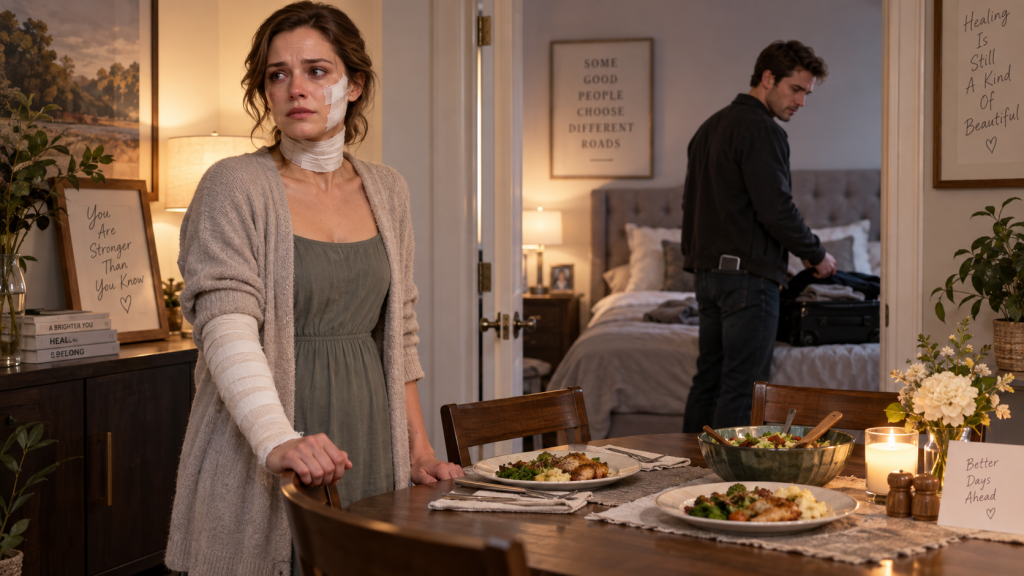
The abandoned woman beside two untouched dinner plates.
The daughter packing one small bag.
The survivor reading Vanessa’s message.
The consultant returning to work.
The woman washing camouflage makeup off in a bathroom.
The speaker.
The model again.
The grocery-store woman arguing with a machine.
Adrian’s wife.
The widow.
The old woman with a new wrinkle running through a scar.
All Rachel.
None erased the others.
That was the final truth.
Daniel’s betrayal was not the end of my marriage because he packed a suitcase.
The marriage had been dying in every silence he chose before that.
Every hidden call.
Every lie.
Every time he saw my pain and turned away because acknowledging it would require acknowledging himself.
But my life did not die with the marriage.
It expanded beyond it.
The last time I ever heard Daniel’s name, I was eighty-one.
A mutual acquaintance told me he had died.
Peacefully.
Family around him.
I sat quietly.
Then asked:
“Was he happy?”
The acquaintance seemed surprised.
“I think so.”
“Good.”
And I meant it.
Not because what happened no longer mattered.
Because it no longer required his suffering to validate mine.
I hoped he had become better.
I hoped his children knew a more honest father.
I hoped he had learned to stay in rooms where shame told him to run.
Then I went outside.
Sunlight touched my face.
Both sides.
I wore sunscreen.
Some habits remain practical.
I sat beneath a tree.
Closed my eyes.
For one second, I remembered heat.
Smoke.
Daniel’s weight against me as I dragged him.
Neighbors shouting.
The terrible brightness behind us.
Then the memory passed.
A breeze touched my cheek.
I opened my eyes.
No fire.
Just afternoon.
That is what I wish people understood about surviving.
The grand moments matter.
Running out of the house.
Waking after surgery.
Leaving a marriage.
Discovering a lie.
But life is mostly what comes afterward.
Thousands of afternoons when nothing burns.
Thousands of meals nobody abandons.
Thousands of phone calls you don’t have to fear.
Thousands of mirrors that become ordinary again.
Thousands of mornings when your body is simply your body.
The fire lasted less than an hour.
Its consequences lasted decades.
But so did everything I built afterward.
And the afterward became much larger.
When I was very old, a nurse once asked about the scars.
“Fire?”
“Yes.”
“Long time ago?”
“Very.”
“You’re lucky.”
I smiled.
That word again.
Lucky.
Maybe.
I survived.
Daniel survived.
Many people helped me.
I found work I loved.
I found Adrian.
I found myself.
But luck wasn’t the word I chose.
“I had a lot of help.”
The nurse smiled.
“That’s good.”
“Yes.”
It was.
Before she left, she asked:
“Did you save someone?”
I looked at the scarred arm.
“Yes.”
“Your husband?”
“My first husband.”
She waited, sensing a story.
I smiled.
“Long story.”
She laughed.
“Most good ones are.”
After she left, I thought about Daniel.
I had saved his life.
For years, that fact felt like a cruel joke.
I had sacrificed my body for a man who later abandoned me.
People sometimes asked:
“Do you regret going back?”
That was the hardest question.
Eventually, I found my answer.
No.
Not because Daniel deserved the marriage afterward.
Not because sacrifice made me noble.
Not because I wanted the scars.
I didn’t regret going back because in that moment, I believed a human being was trapped inside a burning house and I thought I could reach him.
I acted according to who I was.
Daniel’s later betrayal could not retroactively corrupt my courage.
That belonged to me.
His choices belonged to him.
For years, I had accidentally given him ownership of both.
I took mine back.
I saved a life.
He betrayed a marriage.
Those were separate truths.
One did not cancel the other.
And I no longer needed to feel foolish for having been brave.
That may have been my final freedom.
So if you ask me what became of the woman who stood in the kitchen four months after a fire, wrapped in bandages, asking her husband why he kept calling her his wife if he couldn’t even look at her face—
She stopped asking.
Not because the answer didn’t matter.
Because eventually she understood that his inability to look was never a reliable measure of what was worth seeing.
She called her father.
Packed one small bag.
Left two plates cooling on a table.
Stopped waiting for the typing bubble.
Stopped translating silence into love.
Stopped protecting explanations that only protected the people hurting her.
And when the truth finally arrived—from Vanessa, from Patricia, from investigators, from Daniel himself—she did not let it burn her twice.
She used it.
Not as fuel for revenge.
As light.
Enough to see the door.
Enough to walk through.
Enough to recognize herself on the other side.
Daniel once promised he would stay through every surgery.
He didn’t.
But my father did.
My mother did.
My friends did.
My doctors did.
Later, Adrian did.
And eventually—
I did.
I stayed with myself.
Through every surgery.
Every mirror.
Every bad day.
Every photograph.
Every anniversary of the fire.
Every moment I wished I could unzip my damaged skin and step back into the woman I had been.
I stayed.
That was the promise Daniel broke that I finally learned to keep for myself.
Near the end, when my hands were old and the scars had faded into pale maps across my skin, I touched the left side of my face and felt no anger.
Just history.
The fire had taken skin.
Daniel had taken trust.
Time had taken people I loved.
But none of them had taken me.
I was still there.
Changed.
Scarred.
Loved.
Whole.
And that is why, when I remember Daniel standing beside that suitcase saying, “Call your parents, I have to go,” I no longer hear abandonment.
I hear the sound of a door opening.
I didn’t know it then.
I thought my husband was leaving me at the weakest moment of my life.
But weakness was not what that moment contained.
It contained the first quiet decision of everything that came afterward.
I didn’t chase him.
I didn’t beg.
I didn’t call.
I called my father instead.
Then I packed what I could carry with one injured arm.
And I left.
For the first time since the fire, I stopped waiting for Daniel to come back.
What I could not have known was that I was finally coming back to myself.
And this time—
I stayed.
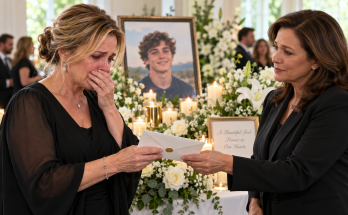
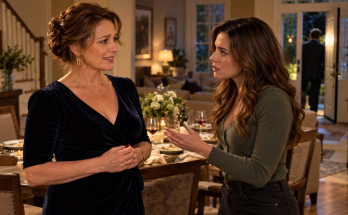
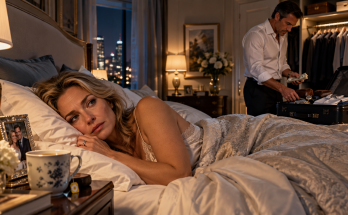
THE END STORIES! THANK YOU FOR READING GOOD LUCK !❤️
Related Posts