➡️ PART 3 ENDING PART ➡️
Thomas was silent for three seconds.
I could hear papers moving on the other end of the line.
Then my attorney said, very carefully, “Baldric, I need to make sure you understand what you’re asking me to do.”
“I understand.”
“If I issue formal notice under Section Fourteen, Vance Dynamics gets forty-eight hours to cure the violations.”
“I know.”
“If they don’t, the license suspends automatically.”
“I know.”
“They manufacture nearly seventy percent of their high-pressure control assemblies using your protected design.”
“I know that too.”
Thomas exhaled.
“Then you also know their primary defense contracts could be affected.”
“That’s their problem.”
“Baldric.”
I looked through the hospital window.
Arianne lay beneath a white blanket, one hand resting beside her face.
Even asleep, she looked afraid.
There were bruises around her wrists.
Another dark mark beneath her jaw.
The doctors had photographed everything.
My daughter had spent six years hiding pain beneath sleeves, makeup, excuses, and the careful smile abused people sometimes learn to wear so the rest of the world will stop asking questions.
I had spent six years seeing enough to worry but not enough, I told myself, to interfere.
Now I understood how convenient that sentence had been.
Not enough to interfere.
Not enough to ask harder questions.
Not enough to risk making her angry.
Not enough to make myself uncomfortable.
Until my daughter was unconscious on a bathroom floor.
“Thomas,” I said, “send the notice.”
“All right.”
“And send copies to their board, general counsel, lenders, and every party entitled to notification under the agreement.”
He became quiet again.
“You’ve been waiting twenty-seven years to use this clause.”
“No.”
I watched Arianne breathe.
“I’ve been hoping for twenty-seven years that I never would.”
Thomas’s voice softened.
“I’ll handle it.”
“Thank you.”
I ended the call.
Then I immediately made another.
Not to a banker.
Not to a board member.
Not to some executive who owed me a favor.
I called the detective.
“Detective Ramos?”
“Yes, Mr. Vale?”
“My grandson is still inside that house.”
“We have officers en route.”
“I’m coming.”
“No.”
That word stopped me.
“I beg your pardon?”
“You heard me.”
“My grandson—”
“Needs police officers arriving at a volatile domestic situation, not an angry grandfather.”
“I’m not angry.”
“Mr. Vale, you just carried your unconscious daughter out of the house where you believe her husband hurt her.”
I looked at my hands.
He was right.
I was beyond angry.
Anger was too simple.
“I can help.”
“You can help by staying with your daughter.”
I hated him for being right.
“When you have Gideon, call me.”
“I will.”
“And Detective?”
“Yes?”
“He’s six.”
“I know.”
“He sleeps with a green dinosaur.”
A pause.
“All right.”
“If he asks for his mother, tell him she’s alive.”
“I will.”
“And tell him Grandpa is waiting.”
“I promise.”
I hung up.
For the next forty-one minutes, I learned what helplessness actually felt like.
At 3:18 a.m., Arianne woke.
Her eyes opened slowly.
Confusion came first.
Then terror.
She tried to sit up.
“Gideon.”
I stood immediately.
“The police are getting him.”
“No.”
“Arianne—”
“No, Dad.”
She clawed at the blanket.
“You don’t understand.”
“Lie down.”
“Bertha won’t let them.”
“She doesn’t have a choice.”
“You don’t know her.”
Her breathing accelerated.
“She’ll tell them I’m unstable.”
“She’ll say I attacked Derek.”
“She’ll say I take pills.”
“She’ll say Gideon is afraid of me.”
“She’ll have paperwork.”
“What paperwork?”
Arianne froze.
I saw the answer before she spoke.
“What paperwork?”
I asked again.
She whispered, “Derek made me sign things.”
My stomach tightened.
“What things?”
“I don’t know.”
“Arianne.”
“I don’t know!”
She started crying.
“He would put papers in front of me.”
“He’d say they were school forms, insurance forms, household accounts.”
“If I asked questions, he’d get angry.”
“Sometimes he wouldn’t let me sleep until I signed.”
I sat beside her.
“Did you read them?”
“Sometimes.”
“And?”
“Sometimes the pages I signed weren’t attached to the pages he showed me.”
I closed my eyes.
God.
“How long?”
“Years.”
“Why didn’t you tell me?”
The second the question left my mouth, I regretted it.
Arianne looked at me.
Not defensively.
Sadly.
“Because you would have come.”
“Yes.”
“And Derek said if you came, he’d ruin you.”
I almost laughed.
“Me?”
“He said your garage was barely surviving.”
“He said Bertha knew people at the bank.”
“He said they could take your house.”
“Arianne—”
“He showed me documents.”
“What documents?”
“Financial reports.”
“About me?”
She nodded.
“He said you had debt.”
“He said you had no retirement.”
“He said you were one medical emergency away from losing everything.”
I stared at her.
None of it was true.
Not remotely.
My old garage had been sold twelve years earlier for enough money to keep me comfortable for life.
The patent royalties brought in more every year than I spent in five.
I lived in the same modest house because I liked it.
I drove an old truck because it started every morning.
I wore work shirts because I preferred them.
Derek had mistaken simplicity for poverty.
Bertha had done the same.
Worse, they had weaponized that assumption against my daughter.
“They lied to you.”
Arianne looked confused.
“About what?”
“Me.”
“What do you mean?”
“I’m fine.”
“Dad, you still fix your own truck because mechanics are expensive.”
“I fix my own truck because I was a mechanic for forty-three years and I don’t trust nineteen-year-olds with impact wrenches.”
For the first time that night, something almost like a smile touched her face.
It vanished quickly.
“Are you really okay?”
“Yes.”
“They can’t take your house?”
“No.”
“Your retirement?”
“No.”
“Your garage?”
“I don’t own the garage anymore.”
Her eyes widened.
“Since when?”
“Twelve years.”
“You never told me.”
“You never asked.”
She stared at me.
Then gave a weak, disbelieving laugh.
“That is such a Dad answer.”
“I know.”
Her face crumpled again.
“I stayed partly because of you.”
That sentence entered my chest like a blade.
“What?”
“Not only because of you.”
She wiped her face.
“There were a hundred reasons.”
“Gideon.”
“Money.”
“Fear.”
“Shame.”
“Derek apologizing.”
“Derek crying.”
“Derek promising.”
“Bertha telling me marriage was difficult.”
“Then he’d be kind for two weeks.”
“Sometimes a month.”
“I’d think maybe it was over.”
She stared at the bruises around her wrists.
“Then something would happen.”
“What?”
“Dinner wasn’t ready.”
“Gideon made noise.”
“I spent too much at the grocery store.”
“I looked at him wrong.”
“I didn’t look at him enough.”
“The reasons changed.”
“The punishment didn’t.”
I could barely breathe.
“Arianne.”
“He said if I left, he’d get Gideon.”
“He said his family owned half the judges in the county.”
“That isn’t how courts work.”
“I know that now.”
“Do you?”
She looked at me.
“No.”
At least she was honest.
“Dad, when someone tells you something every day for six years, eventually you stop asking whether it’s true.”
That sentence stayed with me for the rest of my life.
At 3:41, Detective Ramos called.
I answered before the first ring finished.
“Gideon?”
“We have him.”
I sat down.
“Is he hurt?”
“Physically, he appears okay.”
“Appears?”
“Paramedics are checking him.”
“Can I talk to him?”
“One second.”
There was movement.
A voice.
Then:
“Grandpa?”
My eyes closed.
“Hey, buddy.”
“Where’s Mommy?”
“She’s with me.”
“Is she dead?”
Arianne heard him.
She made a sound beside me.
“No.”
I forced my voice to remain steady.
“No, Gideon.”
“She’s alive.”
“Can I talk to her?”
I handed Arianne the phone.
Her hands shook.
“Baby?”
“Mommy!”
She sobbed.
Gideon sobbed.
I stood and walked to the window because some moments belong to a mother and her child, even when the mother is thirty-two and the child is six and the grandfather wants to break the world apart with his bare hands.
“I’m okay.”
Arianne kept saying.
“I’m okay.”
Then Gideon said something that made her stop.
“No, baby.”
She listened.
“No.”
More silence.
Then:
“You did not make Daddy angry.”
I turned.
Arianne had both hands around the phone.
“Listen to Mommy.”
“You did not make him hurt me.”
“That was not because of you.”
Another pause.
“No.”
“You are not bad.”
Her voice broke.
“You have never been bad.”
She looked at me.
Tears streamed down her face.
“Grandpa is here.”
“Yes.”
“He came.”
I looked away.
Because that sentence hurt.
He came.
As though there had ever been another possible ending once she called me.
At 4:22, Gideon arrived at the hospital.
A police officer carried his green dinosaur.
Gideon ran.
Arianne could barely move because of the IV, but she opened her arms.
He climbed carefully onto the bed.
They held each other.
I stood in the doorway.
Detective Ramos came beside me.
“Mr. Vale?”
I nodded.
“We arrested Derek.”
I looked at him.
“On what?”
“Initial charges related to assault and unlawful restraint. More may follow.”
“And Bertha?”
“Not arrested.”
I didn’t like that.
Ramos saw it.
“She didn’t make this easier.”
“What did she do?”
“She tried to prevent officers from entering the upstairs hallway.”
“Of course.”
“She also claimed your daughter was abusing prescription medication and had attacked her husband.”
Arianne had predicted every word.
“Did you believe her?”
“We don’t decide cases based on whoever owns the largest house.”
I looked at him.
“Good.”
“Mr. Vale, we found a camera.”
“What?”
“In the hallway.”
“Security?”
“Maybe.”
His expression told me otherwise.
“It was pointed toward the master bedroom door.”
“So?”
“There are others.”
“How many?”
“Eleven.”
“Inside the house?”
“Yes.”
“Where?”
“Hallways.”
“Kitchen.”
“Living room.”
“One in the garage.”
“One in your grandson’s playroom.”
I felt sick.
“Why?”
“We’re obtaining warrants for the recording system.”
I looked through the doorway at Arianne.
“Does she know?”
“Not yet.”
“Let me tell her.”
Ramos nodded.
Then his phone rang.
He stepped away.
At 5:03 a.m., Thomas called.
“The notice is served.”
“All parties?”
“Yes.”
“What happened?”
“Nothing yet.”
“Good.”
“Baldric.”
“Yes?”
“They’re going to call you.”
“I know.”
“Do not negotiate without me.”
“I know.”
“I mean it.”
“So do I.”
He sighed.
“You always were difficult.”
“That’s why you’ve billed me for twenty-seven years.”
“Go sit with your daughter.”
I did.
By noon, the first call came.
Bertha.
I let it ring.
Then another.
Derek’s brother.
Then Vance Dynamics general counsel.
Then the board chairman.
Then a number I didn’t recognize.
I answered that one.
“Mr. Vale?”
“Yes.”
“My name is Nathan Cross. I’m chief operating officer of Vance Dynamics.”
“I know who you are.”
“I understand a suspension notice was issued this morning.”
“Talk to Thomas.”
“Mr. Vale, this could cause significant operational disruption.”
“Talk to Thomas.”
“We employ twenty-eight hundred people.”
That mattered.
He knew it mattered.
I said nothing.
“If production stops—”
“Mr. Cross.”
“Yes?”
“Did you read the notice?”
“Yes.”
“Then you know the suspension isn’t because I woke up angry.”
A pause.
“It cites multiple breaches.”
“Correct.”
Some of those breaches had nothing to do with Arianne.
For three years, Vance Dynamics had been quietly moving production methods to subsidiaries not covered by the original license.
They had modified reporting systems.
Delayed royalty disclosures.
And, most importantly, used derivative applications of my valve architecture without required certification.
Thomas had warned them twice.
I had chosen not to escalate.
I believed old Henry Vance’s children would fix it.
They hadn’t.
Now their arrogance had crossed from business into my family.
But I refused to lie to myself.
I was not shutting down a company because Derek hurt my daughter.
That would make me another powerful man using unrelated people as weapons in a personal war.
I was enforcing an agreement they were already violating.
The timing was mine.
The breach was theirs.
“Can this be resolved?”
Cross asked.
“Yes.”
“How?”
“Comply with the agreement.”
“That simple?”
“That simple.”
“And the family situation?”
“Has nothing to do with the license.”
He sounded surprised.
“You’re not demanding anything regarding Derek?”
“No.”
“That will be handled by police, prosecutors, lawyers, and courts.”
“Then why now?”
I looked at Arianne.
“Because your owners spent years believing rules applied only when someone stronger enforced them.”
I paused.
“I decided to enforce mine.”
Then I hung up.
Bertha arrived at the hospital at 1:37 p.m.
I saw her before Arianne did.
She walked toward the room in a cream-colored suit with an attorney beside her.
I stood.
“No.”
Bertha stopped.
“This concerns my grandson.”
“No.”
“I have every right—”
“You have no right to enter this room.”
The attorney stepped forward.
“Mr. Vale, my client merely wants to ensure—”
“Leave.”
Bertha smiled.
There was no warmth in it.
“You’re enjoying this.”
“No.”
“Oh, please.”
She lowered her voice.
“You’ve been waiting for years to humiliate us.”
I stared at her.
“Bertha, until last night I barely thought about you.”
That wounded her more than an insult would have.
“You think your little patent stunt frightens me?”
“No.”
Her eyes narrowed.
“It should.”
She stepped closer.
“You have no idea what you’re interfering with.”
“My daughter’s marriage?”
“A complicated marriage.”
“Bruises are not complicated.”
“Arianne is unstable.”
“Doctors disagree.”
“She abuses medication.”
“Her bloodwork says otherwise.”
“She provokes Derek.”
I felt something cold move through me.
“Say that again.”
Her attorney touched her arm.
“Mrs. Vance.”
She pulled away.
“You don’t know what she’s like.”
I stepped closer.
“No.”
“I know exactly what my daughter is like.”
“She apologizes when someone else bumps into her.”
“She saves wrapping paper because throwing away something pretty feels wasteful.”
“She calls me every Sunday unless someone makes her believe I don’t want to hear from her.”
“She sings badly when she cooks.”
“She reads the ending of novels first.”
“And when she was nine years old, she carried an injured bird three miles because she thought putting it in my truck would scare it.”
Bertha stared.
“So don’t stand in a hospital hallway and tell me bruises around her wrists are evidence that she is difficult to love.”
Her attorney said quietly:
“We should go.”
Bertha ignored him.
“You think you won because you made one phone call.”
“No.”
I looked through the glass at Arianne holding Gideon.
“My daughter called me.”
“That was the important phone call.”
Bertha’s face changed.
For once, she had nothing.
Then my phone rang.
Thomas.
I answered.
“Baldric.”
“Yes?”
“They’re in default.”
I checked the clock.
1:41 p.m.
Not forty-eight hours yet.
“What happened?”
“The board discovered an undisclosed sublicense.”
I became still.
“To whom?”
“Vance Applied Systems.”
I knew the name.
Derek’s private subsidiary.
“Derek?”
“Yes.”
Thomas continued.
“He transferred protected technical drawings into a company he controls.”
“Without authorization?”
“Without authorization, disclosure, or royalty reporting.”
I looked at Bertha.
She was watching me.
Thomas said:
“And there’s more.”
“What?”
“His company pledged the derivative technology as collateral on a credit facility.”
My hand tightened around the phone.
“He borrowed against my patent?”
“Effectively, yes.”
“How much?”
“Forty-two million.”
For the first time, Bertha looked frightened.
She knew.
I could see it.
“Thomas.”
“Yes?”
“Send everything to counsel.”
“Already doing it.”
“And the board?”
“They know.”
“What about regulators?”
“We’re assessing mandatory disclosure obligations.”
“Do it properly.”
“I will.”
I ended the call.
Bertha stared at me.
“What did he tell you?”
I said nothing.
“What did Thomas tell you?”
Her attorney looked between us.
“Mrs. Vance?”
She ignored him.
“Baldric.”
I had never heard her say my name without contempt before.
“Derek used the technology as collateral.”
Her face went white.
The attorney turned sharply.
“What technology?”
Bertha whispered:
“Not here.”
I understood.
“You knew.”
“No.”
“You knew something.”
She stepped backward.
“You don’t understand business.”
I almost smiled.
That sentence.
After everything.
“You’re right.”
I said.
“I’m only a mechanic.”
Then I walked into my daughter’s room and closed the door.
The next forty-eight hours broke the Vance family’s illusion of invulnerability.
Not their company.
Not completely.
I did not want twenty-eight hundred employees losing jobs because the owners behaved badly.
Thomas and I negotiated with the independent directors.
Emergency compliance measures were implemented.
Derek was removed from every operational role pending investigation.
His subsidiary lost access to protected designs.
The questionable credit facility was frozen.
An outside audit began.
My license remained temporarily active for compliant production under independent oversight.
Bertha called it blackmail.
It wasn’t.
I demanded no money beyond what the contract already required.
I demanded no custody arrangement.
No dropped charges.
No apology.
No mansion.
No shares.
Nothing.
That disappointed people who wanted the story to become revenge.
Revenge would have been easier.
Justice required separating things that anger wanted to combine.
Derek’s alleged crimes belonged to the criminal process.
Arianne’s safety belonged to protective orders and family court.
My patent belonged to contract law.
The company belonged to employees, shareholders, lenders, customers, and owners whose interests were larger than my hatred for one man.
I could hurt Derek without becoming Derek.
That distinction mattered.
The cameras in the mansion changed everything.
Police obtained the recordings.
Derek had installed them years earlier.
He claimed they were for security.
But several captured audio.
Weeks of recordings survived.
Some showed nothing.
Some showed ordinary family life.
Gideon eating cereal.
Arianne folding laundry.
Derek leaving for work.
Then investigators found the archived files.
Months.
Years.
Not everything.
Enough.
One recording showed Derek taking Arianne’s phone while she begged for it back.
Another showed him blocking a doorway.
Another captured him telling her:
“If you leave, I’ll make sure your father dies broke and Gideon grows up knowing you abandoned him.”
Arianne watched only part of one video.
Then she vomited.
Her attorney stopped the playback.
“You don’t have to watch everything.”
“But the jury—”
“We don’t have a jury yet.”
“What if nobody believes me?”
Her lawyer looked at her.
“Arianne, the question is no longer whether evidence exists.”
That sentence made her cry.
For six years, Derek had convinced her that truth without power was useless.
Now the truth had timestamps.
Audio.
Medical records.
Photographs.
Witnesses.
It still hurt.
But it existed outside her body now.
She no longer had to carry all of it alone.
Derek was released on bond with strict conditions.
No contact with Arianne.
No unsupervised contact with Gideon.
No access to the marital home.
Bertha paid for an expensive legal team.
The first motion they filed sought emergency custody.
They alleged Arianne was psychologically unstable, financially dependent, and living under the influence of an “aggressive elderly father with undisclosed business motives.”
I laughed when I read that.
Arianne did not.
“They’re going to take him.”
“No.”
“You don’t know.”
“No.”
“Dad, stop saying no like you control everything.”
That silenced me.
She was right.
I sat across from her at my kitchen table.
Gideon slept upstairs.
Arianne had been living with me for eleven days.
“I’m sorry.”
She looked surprised.
“What?”
“I said I’m sorry.”
“For what?”
“For talking like certainty is comfort.”
She stared at me.
“I don’t control the judge.”
“I don’t control Derek.”
“I don’t control what happens next.”
Her eyes filled.
“Then how are you so calm?”
“I’m not.”
“You look calm.”
“I spent forty years working around engines.”
“What does that have to do with anything?”
“When a machine starts shaking, panicking doesn’t stop it.”
“You shut it down.”
“You find the failure.”
“You fix what you can.”
“You replace what you can’t.”
She gave me a tired smile.
“You always turn everything into a car.”
“Occupational damage.”
She looked down.
“I’m scared.”
“I know.”
“What if he gets Gideon?”
“Then we keep fighting lawfully.”
“What if I lose?”
“Then we don’t pretend losing once means losing forever.”
“What if everyone finds out?”
“About what?”
“That I stayed.”
There it was.
Not fear of Derek.
Shame.
The quiet poison that keeps people inside dangerous homes because leaving requires admitting how long they stayed.
I leaned forward.
“Arianne.”
She wouldn’t look at me.
“You called me.”
“Eventually.”
“You called me.”
“After six years.”
“You called me.”
She started crying.
“I should have left the first time.”
“Maybe.”
Her eyes snapped toward mine.
I did not lie to her.
“Maybe you should have.”
“Maybe I should have pushed harder.”
“Maybe a hundred people should have done a hundred things differently.”
“But we cannot build a door in yesterday.”
Her face crumpled.
“So what do I do?”
“Walk through the one that’s open now.”
The custody hearing lasted two days.
Bertha testified for Derek.
She described Arianne as emotional.
Unpredictable.
Ungrateful.
She said Derek had been “under extraordinary pressure.”
Arianne’s lawyer asked:
“Does extraordinary pressure justify restraining a spouse by the wrists?”
Bertha stiffened.
“I did not witness that.”
“You witnessed injuries?”
“I saw bruises.”
“What did you believe caused them?”
“Arianne bruises easily.”
“Did you ask?”
“She told me it was private.”
“Did she?”
Bertha hesitated.
The lawyer produced a text message.
It was from Arianne to Bertha.
Please make him stop. Gideon can hear us.
Bertha had replied:
Stop provoking him. A wife should know when to let an argument end.
The courtroom became silent.
Arianne stared at the table.
Bertha looked suddenly old.
Her attorney objected to context.
The judge allowed the message.
Another appeared.
He locked my cards again. I need groceries.
Bertha:
Then apologize.
Another.
He shoved me.
Bertha:
Derek says you slapped him first. I will not get involved.
Arianne had never slapped Derek.
But that wasn’t the worst message.
The worst came eight months before the bathroom floor.
Arianne:
I’m afraid one day he is going to kill me.
Bertha:
Do not write dramatic things you may regret later. Delete this conversation.
I looked at Bertha.
She did not look at me.
The judge issued temporary orders placing Gideon primarily with Arianne, with Derek’s contact supervised pending further review.
When the ruling came, Arianne did not celebrate.
She bent forward and cried into both hands.
Outside, reporters waited because the patent dispute had made the Vance name news.
I moved to shield her.
Arianne stopped me.
“Dad.”
I looked at her.
“I can walk.”
So I moved aside.
That was harder than stepping in front of her.
But she needed a father, not another man deciding where she was allowed to stand.
She walked past the cameras herself.
The divorce took fourteen months.
The criminal case took longer.
Derek denied intentional abuse.
Then the recordings became impossible to explain away.
His attorneys negotiated.
He eventually pleaded guilty to multiple offenses related to assault, unlawful restraint, coercive conduct, and financial wrongdoing uncovered through the investigation into his subsidiary.
Not every allegation resulted in conviction.
Some counts were dismissed.
Others were resolved separately.
He served time.
Lost his executive position.
Lost access to the company his family had always assumed would belong to him.
But I learned something during those months.
Punishment did not heal Arianne.
Safety began healing her.
Choice began healing her.
Money she could access without permission began healing her.
A bedroom door nobody could lock from the outside.
A phone nobody inspected.
A grocery store where she did not photograph receipts.
A haircut she chose without asking whether Derek liked it.
Those things healed her.
The first time she bought herself a red coat, she stood in the store for twenty minutes.
“Do you like it?”
I asked.
“Yes.”
“Then buy it.”
“It’s expensive.”
“You can afford it.”
“What if—”
She stopped.
There was no what if.
No Derek.
No Bertha.
No punishment waiting at home.
She bought the coat.
Then cried in the parking lot.
I pretended not to notice until she hugged me.
“It’s just a coat.”
she said.
“No.”
I hugged her back.
“It isn’t.”
Arianne started therapy.
At first, she hated it.
Then she hated it less.
Then one afternoon she came home furious.
“My therapist says you rescued me too much when I was young.”
I stared.
“I dislike this therapist.”
She laughed.
It was the first full laugh I had heard from her in months.
“She says you fixed everything.”
“That’s what fathers do.”
“She says sometimes children need to learn they can fix things.”
“Children?”
“Dad.”
“You’re thirty-two.”
“Exactly.”
I grumbled for three days.
Then I thought about it.
When Arianne was ten and her bicycle chain came off, I fixed it before she could touch it.
At sixteen, when her car wouldn’t start, I arrived with jumper cables before she finished describing the problem.
At twenty-two, when her first landlord kept her deposit, I called him myself.
I had loved her through solutions.
Derek had controlled her through solutions.
Those things were not morally equal.
But I understood the therapist’s point.
So when Arianne decided she wanted work, I did not call anyone.
I did not arrange an interview.
I did not invest in a business.
I did not ask Thomas to “make a few introductions.”
I kept my mouth shut.
It nearly killed me.
She had studied interior design before marrying Derek.
She had stopped working when Gideon was born because Derek said there was no reason for “a Vance wife to chase paychecks.”
She applied to eleven firms.
Four rejected her.
Three never responded.
Two interviewed her.
One offered part-time work.
She accepted.
Her first paycheck was $1,146.38.
She brought it to my house.
“Look.”
I looked.
“That’s money.”
“Dad.”
“Very impressive.”
“Do you understand what this is?”
I did.
“It’s yours.”
Her eyes filled.
“Yes.”
She framed the pay stub.
I mocked her.
She told me to shut up.
I had never been happier to hear my daughter tell me that.
Gideon struggled too.
Children hear more than adults want to believe.
For months, he had nightmares.
He feared loud voices.
If a glass broke, he froze.
He believed anger inevitably ended in pain.
A child therapist helped him give language to things he should never have needed words for.
One evening, he asked me:
“Grandpa, is Daddy bad?”
I put down my wrench.
He was sitting on a stool in my garage.
I still kept a small workshop behind the house.
“What do you think?”
“I don’t know.”
“That’s okay.”
“Mommy says Daddy made bad choices.”
“She’s right.”
“Grandma Bertha says Mommy made him mad.”
I became very still.
“When did Grandma Bertha tell you that?”
“Before.”
“Before what?”
“Before the police.”
I took a slow breath.
“Gideon.”
“Yes?”
“You are allowed to love your dad.”
He looked surprised.
“I am?”
“Yes.”
“You’re not mad?”
“No.”
I was.
But not at him.
“You’re also allowed to be angry with him.”
“Both?”
“Both.”
He thought.
“Was it Mommy’s fault?”
“No.”
“Was it mine?”
“No.”
“Was it because Daddy was stressed?”
“No.”
“Then why?”
I looked at my grandson.
Because Derek had grown up wealthy enough to mistake obedience for love?
Because Bertha had excused cruelty until her son believed consequences were for poorer men?
Because control often begins with tiny permissions?
Because Arianne had been isolated gradually enough not to see the cage until every door seemed locked?
Those were adult answers.
So I gave him the child-sized truth.
“Your dad was responsible for what he did with his anger.”
Gideon nodded.
“Even if Mommy made him mad?”
“Yes.”
“Even if I made him mad?”
“Yes.”
“Even if everybody made him mad?”
“Yes.”
He thought.
“Okay.”
Then he picked up a socket wrench.
“Can I help?”
“Yes.”
He chose the wrong size.
I almost corrected him.
Then I remembered the therapist.
I let him discover it himself.
It took him six minutes.
Those were the longest six minutes of my life.
Eventually he said:
“This doesn’t fit.”
I smiled.
“What do you think you need?”
“A smaller one?”
“Try it.”
He did.
It fit.
His face lit up.
And I understood something embarrassingly late.
Helping someone does not always mean taking the tool from their hand.
The Vance Dynamics investigation continued.
The outside audit found that Derek had treated the company like an inheritance instead of an institution.
Unauthorized transfers.
Related-party contracts.
Improper use of intellectual property.
Expenses disguised as development costs.
Bertha was not involved in all of it.
She was involved in enough.
The board removed her as chair.
For the first time in forty years, no member of the Vance family controlled the board.
People expected me to take over.
I refused.
“Why?”
Thomas asked.
“I’m seventy.”
“You’re sixty-eight.”
“Close enough.”
“You own leverage.”
“I own patents.”
“You could negotiate equity.”
“I could also buy a circus.”
“That’s not the same.”
“Both sound exhausting.”
I agreed to revised licensing terms.
Stronger oversight.
Clear audit rights.
Employee protections during restructuring.
Royalties properly calculated.
No family exceptions.
No hidden subsidiaries.
The company survived.
In fact, without Derek’s schemes draining it, Vance Dynamics eventually became healthier.
That pleased me more than destroying it would have.
Thousands of people had mortgages.
Children.
Medical bills.
Retirement plans.
They had not hurt Arianne.
They did not deserve to become collateral damage in my anger.
Bertha hated that outcome.
She wanted to believe I had attacked the company because I hated her family.
It was easier than admitting the company had nearly collapsed because her son had treated rules the way he treated people:
as obstacles to control.
She came to see me two years after that night.
I was in my workshop.
No attorney.
No driver.
No expensive suit.
Just Bertha.
She looked smaller.
“May I come in?”
I almost said no.
Then:
“Yes.”
She entered.
Her eyes moved over the old tools.
“You really still work on engines.”
“Sometimes.”
“Why?”
“Machines are honest.”
She almost smiled.
“I suppose you rehearsed that.”
“No.”
She sat.
For a while, neither of us spoke.
Then she said:
“I owe you an apology.”
“No.”
Her eyebrows rose.
“No?”
“You owe Arianne one.”
“I’ve tried.”
“She doesn’t want to see you.”
“I know.”
“Then respect that.”
Bertha looked down.
“I lost my son.”
“No.”
She looked up.
“Your son is alive.”
“You know what I mean.”
“I do.”
“Then don’t say you lost him as though somebody took him from you.”
She flinched.
“He made choices.”
“Yes.”
“So did I.”
“Yes.”
She swallowed.
“I thought protecting him was loving him.”
I looked at her.
“That’s something parents tell themselves when consequences frighten them.”
Tears entered her eyes.
“I knew he had a temper.”
I said nothing.
“I knew he controlled money.”
Silence.
“I knew Arianne was afraid.”
Still I said nothing.
“I saw bruises.”
There it was.
The sentence she had spent years avoiding.
“I saw them.”
Her voice broke.
“And?”
“I asked Derek.”
“Not Arianne?”
“No.”
“Why?”
“Because I knew what she would say.”
I stared at her.
“What would she say?”
“The truth.”
Bertha began crying.
For the first time, I understood that her arrogance had always been partly fear wearing expensive clothes.
That did not excuse her.
Understanding is not absolution.
“I thought if I confronted it, the family would break.”
I looked around my workshop.
“So you let my daughter break instead.”
Bertha closed her eyes.
“Yes.”
That was the first thing she said that made me believe she might someday become someone different.
Not because she apologized.
Because she stopped editing the sentence to protect herself.
“Will she ever forgive me?”
“I don’t know.”
“Can you ask her?”
“No.”
“Baldric.”
“No.”
She looked wounded.
Good.
Some boundaries feel cruel only to people accustomed to access.
“You don’t get to send me into my daughter’s life carrying your need for forgiveness.”
She nodded slowly.
“You’re right.”
“I know.”
She almost laughed.
“Still arrogant.”
“Retired mechanic.”
“Apparently.”
She stood.
At the door, she stopped.
“I was wrong about you.”
“About the patent?”
“About everything.”
I shook my head.
“No.”
She looked back.
“You were wrong about my money.”
“You were wrong about what my clothes meant.”
“You were wrong about my truck.”
“But don’t make the mistake of deciding I mattered because I turned out to have power.”
She stared.
“I mattered when you thought I was poor.”
A long silence.
“So did Arianne.”
Bertha lowered her head.
“Yes.”
Then she left.
I never became her friend.
We did eventually become civil.
There is a strange cultural obsession with forgiveness as though every meaningful story must end with enemies hugging.
Ours didn’t.
Some people belong at a respectful distance.
That can be peace too.
Arianne’s divorce became final when she was thirty-four.
She kept primary custody.
Derek received structured contact after completing required programs and meeting court conditions.
Over time, his relationship with Gideon became more stable.
Not perfect.
Not erased.
Stable.
I did not like it.
That wasn’t my decision.
Arianne told me:
“Gideon deserves the chance to know his father if it’s safe.”
“What if Derek hurts him?”
“Then we act.”
“What if—”
“Dad.”
I stopped.
She smiled.
“Remember what my therapist taught you?”
“I don’t like your therapist.”
“She likes you.”
“That makes one of us.”
Arianne became a full-time designer.
Then a project lead.
At thirty-eight, she opened a small studio.
She did not ask me for money.
I offered once.
She refused.
I did not offer twice.
That was growth.
For both of us.
Her first office was above a bakery.
Every morning it smelled like cinnamon.
She hired two employees.
Then five.
Then twelve.
She specialized in redesigning transitional housing, shelters, and community spaces.
One day I asked why.
She shrugged.
“Because rooms matter.”
“What do you mean?”
“When I was with Derek, every room belonged to him.”
“The bedroom.”
“The kitchen.”
“The car.”
“Even Gideon’s playroom had a camera.”
She looked around her studio.
“I like making spaces where people can breathe.”
I swallowed.
“That sounds expensive.”
She threw a pencil at me.
Years later, her company designed a new family safety center.
Not named after her.
She refused.
The center had private apartments, legal offices, childcare rooms, medical consultation space, and a workshop where residents could learn practical skills.
I donated equipment anonymously.
Arianne found out.
She called.
“Dad.”
“Yes?”
“Did you buy twelve thousand dollars’ worth of tools?”
“No.”
“Thomas sent me the invoice.”
“Traitor.”
“I told you I didn’t need you funding this.”
“You needed tools.”
“We had a budget.”
“The tools were bad.”
“You haven’t seen them.”
“I saw the brand.”
She laughed despite herself.
“You are impossible.”
“I’m old.”
“You’ve been using that excuse since sixty-eight.”
“It gets stronger with age.”
At the opening, Arianne gave a speech.
I stood at the back.
She said:
“For years, I thought leaving meant admitting I had failed.”
The room became silent.
“I thought strong women left immediately.”
“I thought intelligent women recognized control immediately.”
“I thought good mothers never allowed their children to witness fear.”
“So every year I stayed became evidence, in my own mind, that I was weaker than I had believed.”
She paused.
“I was wrong.”
My eyes filled.
“Leaving danger is not an exam where you lose points for taking too long.”
“People leave when a path becomes possible.”
“Sometimes that path is money.”
“Sometimes it is evidence.”
“Sometimes it is a shelter bed.”
“Sometimes it is a friend.”
“Sometimes it is a police officer.”
“Sometimes it is a father answering his phone at 1:12 in the morning.”
I looked down.
People turned toward me.
I hated that.
Arianne smiled.
“My father carried me out of a bathroom.”
“But that was not the end of my story.”
“He could carry my body out.”
“He could not carry my life for me.”
“I had to learn to do that myself.”
That was the proudest moment of my life.
Not because she thanked me.
Because she no longer needed to.
Gideon grew into a tall, thoughtful teenager.
At sixteen, he asked to work in my shop for the summer.
“You don’t need money.”
he said.
“I know.”
“You’re secretly rich.”
I stared.
“Who told you?”
“Mom.”
“Untrustworthy woman.”
He grinned.
“So why do you still work?”
“I like fixing things.”
He looked around.
“Mom says you used to think everything could be fixed.”
“Your mother talks too much.”
“Can everything?”
“No.”
He waited.
“Some things can’t be restored to what they were.”
“Then what do you do?”
“You decide whether they can become something else.”
He looked at an old engine block on the bench.
“Like rebuilding?”
“Sometimes.”
“And if it can’t?”
“Then you stop pretending.”
He nodded.
Derek was released when Gideon was older.
By then, Derek had lost much of what once defined him.
The mansion had been sold during the divorce and financial restructuring.
His company interest was gone.
His executive career was over.
He lived quietly.
He asked to meet me.
I refused.
Then, a year later, I changed my mind.
Not for him.
For myself.
We met at a diner.
Derek arrived early.
He looked older.
He stood when I approached.
“Mr. Vale.”
“Sit.”
He sat.
For a moment, I saw the young man who had once asked permission to marry my daughter.
He had been charming.
Polite.
Ambitious.
I had liked him.
That memory still angered me.
“I owe you—”
“No.”
He stopped.
“You don’t owe me an apology first.”
He nodded.
“Arianne.”
“Yes.”
“I’ve apologized.”
“I know.”
“She doesn’t forgive me.”
“That’s her right.”
“Yes.”
He stared at his coffee.
“I blamed you for years.”
“Why?”
“For destroying everything.”
I almost smiled.
“And now?”
“I destroyed it.”
The waitress approached.
I ordered coffee.
Derek continued after she left.
“I used to tell myself you ruined the company.”
“You didn’t.”
“No.”
“You enforced a contract.”
“Yes.”
“I stole from the company.”
“Yes.”
“I hurt Arianne.”
“Yes.”
“I scared Gideon.”
“Yes.”
He looked up.
“You really aren’t going to make this easier.”
“No.”
He laughed once.
A hollow sound.
“I deserve that.”
“Stop.”
“What?”
“Don’t turn accountability into another performance.”
He stared.
“If you’re sorry, be different when nobody is watching.”
He nodded.
“I’m trying.”
“Good.”
“I don’t expect you to forgive me.”
“Good.”
He looked almost relieved.
Then he asked:
“Did you ever want to kill me?”
I took a sip of coffee.
“Yes.”
He went pale.
“More than once.”
I continued.
“But wanting something and doing it are different.”
He looked down.
“That’s something I learned too late.”
“Yes.”
We sat in silence.
Finally, Derek said:
“I used to think control made me safe.”
“From what?”
“Being ordinary.”
That answer surprised me.
“My father built everything.”
“Your patent made it possible.”
“Mom ran the company after he died.”
“I grew up hearing I was the future of Vance.”
He stared at the table.
“If Arianne disagreed with me, I felt disrespected.”
“If employees challenged me, I felt threatened.”
“If Gideon preferred her, I felt rejected.”
“I needed everyone around me to prove I mattered.”
I said:
“So you made them smaller.”
His eyes filled.
“Yes.”
That was perhaps the clearest explanation Derek ever gave.
Not an excuse.
An explanation.
“Then learn to matter without making someone else disappear.”
He nodded.
We finished our coffee.
I paid.
He objected.
I said:
“Don’t make this symbolic.”
He almost smiled.
We never became close.
But years later, at Gideon’s wedding, Derek and I stood in the same photograph.
On opposite ends.
That was enough.
Gideon married a woman named Elise.
Before the wedding, he came to my house.
I was eighty-three.
My hands had begun to shake.
He found me trying to adjust a carburetor.
“Grandpa.”
“What?”
“You’re making it worse.”
“Get out.”
He laughed and took the wrench.
I let him.
Growth.
He worked for a while.
Then said:
“I’m scared.”
“Of marriage?”
“Yes.”
“Good.”
He looked at me.
“Good?”
“A little fear means you understand it matters.”
“What if I become like Dad?”
I put down the rag.
“Do you want to?”
“No.”
“Do you think being his son makes you destined to?”
“No.”
“Then why are you asking?”
“Because sometimes I get angry.”
“So do I.”
“Sometimes I want things my way.”
“So does everyone.”
“What if I don’t notice?”
I thought about Arianne.
Bertha.
Derek.
Myself.
“Then marry someone who is allowed to tell you.”
He frowned.
“What?”
“Don’t build a relationship where disagreement is dangerous.”
“Make sure Elise can tell you when you’re being an idiot.”
“She already does.”
“Excellent.”
“Frequently.”
“Marry her immediately.”
He laughed.
Then became serious.
“What if she gets afraid of me?”
“Then don’t defend yourself first.”
“Listen first.”
“And if you ever find yourself needing another person to be afraid so you can feel respected, get help before you call that love.”
Gideon nodded.
At his wedding, Arianne wore red.
The same shade as the coat she had once cried over in a parking lot.
I noticed.
“So did you.”
she said.
“What?”
“Notice.”
“I notice everything.”
“No.”
She smiled.
“You notice engines.”
“People are harder.”
She kissed my cheek.
“True.”
Bertha attended.
She was eighty.
She had spent years rebuilding a cautious relationship with Gideon.
Arianne still kept distance.
Bertha respected it.
That was the closest thing to an apology she could offer consistently.
Derek attended too.
He sat separately.
Nobody fought.
Nobody pretended the past had vanished.
Sometimes healing looks remarkably boring from the outside.
That is a compliment.
At eighty-six, I finally sold my workshop equipment.
Not the tools.
Never the tools.
Gideon took half.
Arianne took none.
“She has no taste.”
I told him.
She heard.
“I design buildings, Dad.”
“Without socket wrenches.”
“Most buildings are not assembled with socket wrenches.”
“Exactly the problem with modern architecture.”
My hands were too stiff for serious mechanical work.
That loss hurt more than I expected.
For most of my life, I knew who I was by what my hands could do.
Diagnose.
Turn.
Lift.
Repair.
Age slowly took those verbs away.
Arianne noticed.
One afternoon, she brought me a box.
Inside was the original patent drawing.
My drawing.
Twenty-seven years before the night she called me, I had sketched the first version at my kitchen table.
Grease stains remained in one corner.
She had it framed.
I stared.
“Where did you find this?”
“Thomas.”
“That man has betrayed me repeatedly.”
“He likes me better.”
“Everyone does.”
She hung it above my desk.
“You know what I used to think this meant?”
she asked.
“What?”
“That you were secretly powerful.”
I laughed.
“And now?”
“That you were good at something.”
I looked at her.
She continued.
“The money mattered that night.”
“The contract mattered.”
“But I think I misunderstood the story for a while.”
“How?”
“I thought I survived because my father turned out to be more powerful than my husband’s family.”
I waited.
“That isn’t why.”
“No?”
“No.”
She sat beside me.
“I survived because I called someone who loved me and he came.”
My throat tightened.
“You could have been broke.”
“You could have had no patent.”
“You could have shown up in a bicycle.”
“That wouldn’t have been practical.”
“Dad.”
“Sorry.”
She smiled.
“The patent helped protect us from some of their threats.”
“But it wasn’t the rescue.”
“What was?”
“You believed me.”
I looked away.
At eighty-six, I still hated crying in front of my daughter.
“You came before you had evidence.”
she said.
“You didn’t ask what I had done to make Derek angry.”
“You didn’t ask whether I had misunderstood.”
“You came.”
I swallowed.
“I should have come sooner.”
“You didn’t know.”
“I knew enough.”
She became quiet.
That was the old wound between us.
Not betrayal.
Regret.
“I saw bruises.”
“Yes.”
“I accepted excuses.”
“Yes.”
“I told myself you were an adult.”
“Yes.”
“I was afraid if I pushed, you’d stop talking to me.”
“I might have.”
“I know.”
I looked at her.
“But I should have said more.”
“Maybe.”
The word surprised me.
“Maybe?”
“You’re the one who taught me we can’t build a door in yesterday.”
I smiled.
“Smart man.”
“Annoying man.”
“Also true.”
She took my hand.
“You didn’t cause what happened.”
“No.”
“But I wish I’d done better.”
“I know.”
Both things could be true.
That became one of the great lessons of my old age.
Regret did not always require guilt.
Sometimes regret was simply love looking backward and wishing it had known more.
Bertha died at eighty-seven.
Before she died, she left Arianne a letter.
Arianne kept it unopened for six months.
Then one Sunday she brought it to my house.
“Should I read it?”
“Your decision.”
“I hate when you do that.”
“What?”
“Refuse to tell me what to do.”
“Therapy ruined me.”
She laughed.
Then opened it.
Bertha had written only two pages.
No excuses.
No requests.
One paragraph stayed with Arianne.
I spent most of my life believing family loyalty meant protecting the family from public shame. I understand now that I protected the appearance of the family from the people inside it. When you asked me for help, I chose the reputation of my son over the safety of my daughter-in-law. I cannot repair that. I can only name it correctly before I die.
Arianne cried.
“Do you forgive her?”
I asked.
She thought.
“Some days.”
“That’s allowed.”
“Other days I still hate her.”
“That’s allowed too.”
“Does that make me terrible?”
“No.”
She folded the letter.
“I hope she died peacefully.”
“So do I.”
“But I’m still angry.”
“So be angry.”
She looked at me.
“You don’t think forgiveness is important?”
“I think honesty is important.”
“And forgiveness?”
“Useful when it comes honestly.”
“Useless when performed because everyone wants a prettier ending.”
Arianne smiled.
“You got philosophical.”
“I’m ninety.”
“You’re eighty-eight.”
“Stop checking.”
Derek died years later.
Heart disease.
By then, Gideon had children of his own.
Derek had become a quieter man in his final decades.
He never regained his old career.
He worked in compliance consulting after restrictions expired, which Gideon found hilarious.
“The universe has jokes.”
he told me.
Derek’s relationship with Arianne never became friendship.
But they reached a workable civility.
He paid what he owed.
Respected boundaries.
Stopped using Gideon as a messenger.
Apologized without demanding responses.
At the end of his life, Arianne visited him once.
I did not ask why.
When she returned, she told me anyway.
“He said he was sorry.”
“I imagine.”
“I told him I believed him.”
I waited.
“I also told him believing he was sorry didn’t mean I wished we had stayed married.”
“Good.”
“He said he knew.”
She stared out the window.
“Dad?”
“Yes?”
“I forgave him.”
I looked at her.
“You okay with that?”
“Are you?”
She smiled.
“I didn’t ask whether you forgive him.”
“I asked whether you’re okay that I do.”
I thought.
“Yes.”
“Really?”
“Yes.”
“Why?”
“Because forgiveness isn’t parole.”
She laughed.
“You’ve been hanging around lawyers too long.”
“It doesn’t erase what happened.”
“No.”
“It doesn’t mean you owe him access.”
“No.”
“It doesn’t mean you were wrong to leave.”
“No.”
“Then if forgiveness makes your life lighter, carry less.”
She hugged me.
“I love you.”
“I know.”
“Say it back.”
“I love you too.”
“Old men.”
“Bossy daughters.”
At ninety-two, I stopped driving.
Not voluntarily.
Arianne took my keys.
“This is theft.”
“This is public safety.”
“I taught you to drive.”
“You also drove through the pharmacy flower bed last week.”
“It was badly designed.”
“I designed that landscaping.”
“Then I stand by my criticism.”
Gideon sided with her.
Traitor.
Age narrowed my world.
House.
Garden.
Workshop I no longer worked in.
Family visits.
Doctor appointments.
But strangely, my life did not feel smaller.
It felt concentrated.
Arianne came every Tuesday.
Gideon every Friday.
His children came whenever they wanted cookies.
I told them I had no cookies.
They knew where I hid them.
One afternoon, my great-granddaughter Lila found the framed patent drawing.
“What’s that?”
she asked.
“A mistake.”
Arianne, sitting nearby, rolled her eyes.
“It made you millions.”
“Successful mistake.”
Lila looked impressed.
“You’re rich?”
“No.”
“Mom says you are.”
“Your mother has poor judgment.”
Arianne laughed.
Lila pointed.
“Did that save Grandma?”
I became still.
Apparently family stories travel.
“No.”
“But Mom said—”
“It helped.”
I lifted Lila onto the chair beside me.
“The night your grandma needed help, some people thought they could scare us because they believed I had no money.”
“Did you?”
“I had enough.”
“How much?”
“Rude question.”
She giggled.
“Did you destroy them?”
“No.”
She looked disappointed.
Children enjoy dramatic endings.
“I made them follow a contract.”
“That sounds boring.”
“It was extremely boring.”
“What happened to the bad man?”
Arianne gave me a warning look.
I answered carefully.
“He faced consequences.”
“Was he a monster?”
That word.
I looked at Arianne.
She nodded.
My answer.
“No.”
Lila frowned.
“But he hurt Grandma.”
“Yes.”
“Then he was bad.”
“He did bad things.”
“What’s the difference?”
I thought of Derek.
Bertha.
My own regrets.
“Calling someone a monster can make us think ordinary people can’t do terrible things.”
She looked confused.
“So?”
“So it’s safer to remember people are responsible for what they do.”
“Even if they look normal.”
“Even if they’re rich.”
“Even if they’re charming.”
“Even if they’re family.”
Lila nodded slowly.
“Did Grandma beat him?”
Arianne nearly choked.
“No.”
I said.
“She did something harder.”
“What?”
“She built a good life after him.”
Lila seemed unconvinced.
At eight, revenge was easier to understand than recovery.
She would learn.
At ninety-four, my health declined.
My heart.
Lungs.
Everything seemed to be wearing out at once.
Typical old machine.
One evening, Arianne sat beside my bed.
She was sixty.
Silver in her hair.
Still beautiful.
Still my little girl, which annoyed her whenever I said it.
“Dad?”
“Yes?”
“Do you remember the night?”
“Which one?”
She stared.
“I’m ninety-four.”
“I have many nights.”
“The call.”
Of course I remembered.
1:12 a.m.
Every detail.
Her voice.
The thud.
The silence.
“Yes.”
“What were you doing?”
“Sleeping.”
“No.”
“Planning international espionage.”
“Dad.”
“I was sleeping.”
“What did you think when I said Derek might kill me?”
I closed my eyes.
“I thought I had been right.”
She looked hurt.
I continued before she misunderstood.
“And I hated myself for thinking that.”
“Why?”
“Because being right didn’t matter.”
“I’d spent years suspecting.”
“But suspicion that stays inside your own head protects nobody.”
She took my hand.
“I needed to leave myself.”
“I know.”
“You couldn’t force me.”
“I know.”
“If you’d dragged me away earlier, I might have gone back.”
“I know.”
We sat quietly.
“Then why do you still blame yourself?”
I looked at her.
“Because fathers are stupid.”
She smiled through tears.
“Better answer.”
“I should have told you more clearly what I saw.”
“I should have said, ‘If you ever need to leave, call me at any hour.’”
“I should have told you I would believe you before you had proof.”
“I should have made sure you knew you would never bankrupt me by needing help.”
Arianne cried.
“I know now.”
“Yes.”
“I wish you knew then.”
“Me too.”
She laid her head against my shoulder.
For a moment, she was five years old.
Then ten.
Then sixteen.
Then thirty-two on a hospital bed.
Then sixty beside an old man.
Time does that near the end.
It stops behaving like a line.
“Dad?”
“Yes?”
“What was the phone call that changed everything?”
I smiled.
“Yours.”
She looked at me.
“Not the patent attorney?”
“No.”
“Everyone tells the story like you called Thomas and destroyed the Vances.”
“People like money stories.”
“Why?”
“Because money makes power easy to see.”
“What was the real power?”
“You called.”
She cried.
“And I answered.”
Arianne squeezed my hand.
“That simple?”
“No.”
I smiled.
“That important.”
I died three months later.
Ninety-four years old.
At home.
Arianne beside me.
Gideon arrived twenty minutes before I died, breathless and furious at traffic.
“You waited?”
he asked.
I smiled.
“Barely.”
He laughed and cried at the same time.
My last hours were not profound.
People imagine dying families exchange perfect wisdom.
Mostly, I wanted water.
My feet were cold.
Gideon adjusted the blanket incorrectly.
I complained.
Arianne told me to stop bullying him.
Normal.
Beautifully normal.
Before I became too tired to speak, I looked at Arianne.
She was holding my hand.
No bruises around her wrists.
That mattered to me.
More than the patent.
More than money.
More than the company.
More than any courtroom.
Her hands were free.
“Arianne.”
“I’m here.”
“I know.”
“Dad?”
“Yes?”
“You came.”
I smiled.
“You called.”
Then I slept.
I did not wake again.
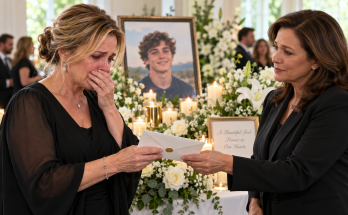
At my funeral, Gideon gave the first eulogy.
He was forty-four.
A father.
An engineer.
A husband.
He stood behind the podium and looked at the crowd.
“My grandfather spent most of his life being underestimated.”
People smiled.
“He liked it.”
More smiles.
“He wore shirts older than some of his attorneys.”
Thomas, now ancient himself, laughed loudly.
“He drove a truck that should have been legally classified as archaeological evidence.”
Laughter.
“He was wealthy but refused to look wealthy, which I suspect was partly frugality and partly entertainment.”
Then Gideon became serious.
“The most famous story about my grandfather is that when my father’s family threatened my mother, Grandpa made one phone call and nearly shut down their company.”
He paused.
“That story is true.”
“Mostly.”
People leaned in.
“But it isn’t the story he wanted us to remember.”
Gideon looked toward Arianne.
“The phone call that mattered happened earlier.”
“At 1:12 in the morning.”
“My mother called him.”
“She said she was afraid.”
“And he came.”
Arianne lowered her head.
“My grandfather later told me that people loved the patent part because it made him look powerful.”
“He hated that interpretation.”
“He said, ‘If I had been broke, she still deserved to be believed.’”
Silence filled the room.
“He wanted us to remember that.”
“Money helped.”
“Legal leverage helped.”
“Evidence helped.”
“Good lawyers helped.”
“Police helped.”
“Doctors helped.”
“But none of those things are the reason a frightened person deserves help.”
“They deserve help because they are frightened and in danger.”
Gideon swallowed.
“My grandfather was not perfect.”
“He would insist I say that.”
“He sometimes fixed things nobody asked him to fix.”
A few people laughed.
“He confused helping with taking over.”
“He had opinions about everything.”
“Especially tools.”
“He believed any machine built after 2005 was designed by cowards.”
More laughter.
“But he learned.”
“He learned that loving someone does not mean steering their life.”
“He learned that rescue is not the same as recovery.”
“He learned that sometimes the strongest thing you can do after helping someone stand is move your hands away and let them discover they can remain standing.”
Arianne began crying.
“And my mother did.”
Gideon looked at her.
“She stood.”
“She worked.”
“She raised me.”
“She built a company.”
“She designed places where other frightened families could find safety.”
“She taught me that anger is mine to manage.”
“She taught my children that family loyalty never requires silence.”
“And Grandpa stood nearby pretending none of this impressed him.”
People laughed through tears.
Gideon looked toward my coffin.
“It impressed him.”
“He was terrible at hiding that.”
Then Arianne stood.
She had not planned to speak.
I know because she said so.
She walked to the podium.
For several seconds, she said nothing.
Then:
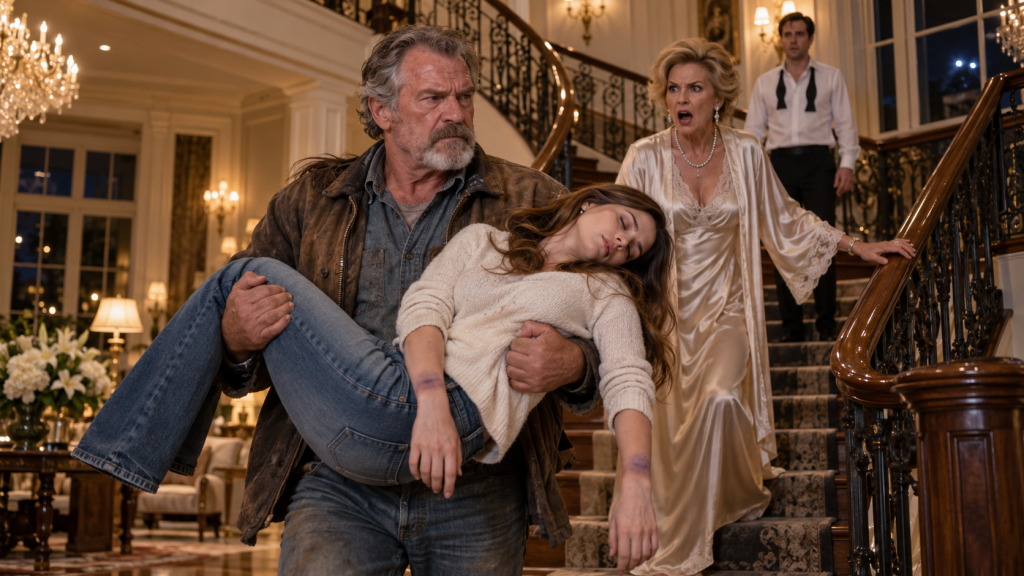
“My father carried me down a staircase when I could not walk.”
Her voice trembled.
“For years, I thought that was the moment he saved me.”
She looked at Gideon.
“I don’t think that anymore.”
People became still.
“He saved my life that night.”
“Doctors may have saved it too.”
“Police protected my son.”
“Lawyers protected our rights.”
“Those things matter.”
“But my life did not become mine again when Dad carried me out.”
“That happened slowly.”
“The first paycheck.”
“The first apartment.”
“The first night I slept without listening for footsteps.”
“The first time I bought something without explaining the receipt.”
“The first time I disagreed with someone and nothing terrible happened.”
“The first time my son became angry and then calmed himself instead of making his anger everybody else’s responsibility.”
“The first time I realized I could love my father without needing him to solve everything.”
She smiled.
“He hated that lesson.”
Laughter moved softly through the room.
“My father had money I didn’t know about.”
“He owned intellectual property worth more than I understood.”
“He had lawyers.”
“He had leverage.”
“But when I called him that night, I knew none of those things.”
“I thought he was a poor retired mechanic.”
Her voice broke.
“And I called him anyway.”
Arianne wiped her face.
“Because I didn’t need a millionaire.”
“I needed my dad.”
Silence.
“He came in an old truck.”
“He wore work boots.”
“He walked into a house full of people who thought he was beneath them.”
“And when they told him I was none of his business, he answered with the simplest truth in our entire story.”
‘She is my family.’
Arianne closed her eyes.
“That was enough.”
She stepped away from the podium.
Then stopped.
“One more thing.”
She turned back.
“My father once told Bertha Vance that she should not decide he mattered only because she discovered he had power.”
“He said he mattered when she thought he was poor.”
“He was right.”
“So I want to say something he would probably complain was too sentimental.”
People smiled.
“If someone comes to you frightened, do not ask whether they are important enough to believe.”
“If someone you love becomes quieter, smaller, more apologetic, more isolated, do not assume privacy is always kindness.”
“Ask.”
“Listen.”
“Leave the door open.”
“And if they call at 1:12 in the morning…”
Her voice failed.
Gideon came beside her.
Arianne finished:
“Answer.”
After my funeral, Arianne found an envelope in my desk.
Her name was written across it.
Inside were three pages.
The first contained boring instructions about tools.
Naturally.
Gideon received the torque wrenches.
Arianne received my original drafting pencils.
Thomas received a bottle of whiskey with a note saying he was not allowed to bill my estate for drinking it.
The second page dealt with money.
Most went into trusts for family and charitable work, with enough safeguards that nobody could use it to control anyone else.
I had learned.
The third page was for Arianne.
My girl,
If you are reading this, I am finally dead, despite my repeated objections.
She laughed through tears.
There is something I need you to know because fathers are good at saying practical things and bad at saying important ones.
I was proud of you before you left Derek.
I was proud of you while you were still afraid.
I was proud of you before the job, before the studio, before the safety center, before everyone started calling you strong.
You did not become worthy when you escaped.
Arianne stopped reading.
It took her several minutes to continue.
I know there were years when you thought staying meant you were weak.
I know there were years when I secretly wondered why you did not simply walk out.
I am ashamed of how easy the word “simply” can sound from outside a locked room.
There was nothing simple about leaving.
I know that now.
You survived long enough to find a door.
Then you opened it.
I carried you down the stairs because that was the part my old arms could do.
Everything after that was yours.
Do not turn me into the hero of your life.
I had the privilege of being your father.
That was enough.
Then the final paragraph:
And Arianne, if you ever tell the story about the patent, please make one thing clear.
The most valuable thing I owned was never the design Vance Dynamics needed.
It was never the royalty account.
It was never the contract that gave me leverage.
It was the fact that when my daughter finally called for help, she still believed there was one person in the world who would come.
Thank you for trusting me with that call.
Love, Dad.
Arianne folded the letter.
Then she went to the workshop.
My old truck was gone.
The tools had been divided.
Dust lay across the bench.
Above the desk hung the framed patent drawing.
She looked at it for a long time.
Twenty-seven years before the worst night of her life, I had drawn a valve.
That valve had become a patent.
The patent had become a license.
The license had helped build a company.
The company had created wealth.
That wealth had made the Vances powerful.
Then they mistook power for permission.
And for a brief moment, the same document they had depended upon became leverage against them.
It made a good story.
But it was not the whole story.
The whole story was a woman who had slowly been taught to doubt her own reality.
A child who learned too early that footsteps could be frightening.
A wealthy family that protected its image until the image became more important than the people inside it.
A father who saw warning signs but did not understand how loudly to speak.
A police officer who did his job.
Doctors who documented what they saw.
Lawyers who separated revenge from justice.
A company that survived because thousands of innocent workers were not forced to pay for one family’s wrongdoing.
A mother-in-law who learned accountability too late to repair everything but not too late to stop lying to herself.
A husband who eventually admitted that his need for control had been his responsibility.
A boy who grew into a man determined not to inherit his father’s behavior.
And Arianne.
Most of all, Arianne.
The woman carried unconscious from the bathroom was not the woman who reached the end of the story.
That woman woke.
She learned.
She trembled.
She failed.
She tried again.
She bought the red coat.
She earned the paycheck.
She opened the studio.
She raised her son.
She built rooms where frightened people could breathe.
She forgave some people.
Kept distance from others.
Changed her mind.
Set boundaries.
Made mistakes.
Grew older.
Laughed loudly.
And slowly stopped apologizing for taking up space.
Years after my death, when Arianne was seventy-six, the family safety center celebrated its fortieth anniversary.
A young reporter interviewed her.
“You’ve helped thousands of families.”
Arianne smiled.
“The center has.”
“Your name is closely associated with it.”
“I know.”
“People often say your father inspired the project.”
“He did.”
The reporter glanced at her notes.
“Is it true he once nearly shut down Vance Dynamics with a single phone call after your former husband attacked you?”
Arianne laughed softly.
“I knew you’d ask that.”
“It’s an extraordinary story.”
“It is.”
“Did he really have that much power?”
Arianne thought.
Then looked toward the center behind her.
A woman was walking through the front doors carrying a small suitcase.
Two children followed.
A staff member greeted them.
No judgment.
No questions shouted across a lobby.
Just:
Come in.
You’re safe here.
Arianne looked back at the reporter.
“Yes.”
“My father had leverage.”
“He had a valuable patent.”
“He had a contract.”
“He had money.”
“But people tell the story backward.”
“How?”
“They think the important thing was discovering that the poor mechanic was secretly powerful.”
“Wasn’t it?”
“No.”
Arianne smiled.
“The important thing was that he would have come even if he wasn’t.”
The reporter lowered her pen.
Arianne continued.
“That’s what I want people to remember.”
“You don’t need to be wealthy to believe someone.”
“You don’t need a patent to call the police.”
“You don’t need corporate leverage to say, ‘You can stay with me tonight.’”
“You don’t need power to refuse to blame someone for another person’s violence.”
“And if you do have power…”
She looked toward the doors again.
“Use it carefully.”
“Why carefully?”
“Because power can make you resemble the people you’re fighting if you start believing a good motive gives you permission to control everything.”
The reporter became quiet.
“What did your father teach you?”
Arianne smiled.
“A lot about engines.”
The reporter laughed.
“Anything else?”
“Yes.”
Arianne looked down at her hands.
Old hands now.
Wrinkled.
Free.
“He taught me that helping someone stand and owning the ground beneath their feet are not the same thing.”
She looked up.
“Love should make room.”
The interview ended.
That evening, Arianne went home.
On the wall of her study hung two framed objects.
Her first paycheck.
And my original patent drawing.
People assumed the patent was more valuable.
Arianne knew better.
One represented the power her father had possessed.
The other represented the power she had rebuilt for herself.
She stood between them.
Then her phone rang.
It was Gideon.
“Mom?”
“Yes?”
“Are you busy?”
“Never too busy for you.”
There was a pause.
Then he laughed.
“You know Grandpa used to say that.”
“I know.”
“My daughter is having a rough night.”
“What happened?”
“Boyfriend trouble.”
Arianne became still.
“What kind?”
“She says it’s nothing.”
Arianne closed her eyes.
For a second, she was thirty-two again.
Bathroom tile.
Bruised wrists.
Fear.
Then she opened her eyes.
“Don’t tell her what to do yet.”
“What?”
“Listen first.”
Another pause.
“Okay.”
“And Gideon?”
“Yes?”
“Make sure she knows she can call you at any hour.”
“I will.”
“Even if she’s made mistakes.”
“I know.”
“Even if she’s gone back before.”
“I know.”
“Even if—”
“Mom.”
She stopped.
He laughed softly.
“I know.”
Arianne smiled.
“All right.”
“Love you.”
“Love you too.”
She ended the call.
Outside, evening settled gently over the city.
There were no mansions.
No courtrooms.
No hospital lights.
No lawyers.
No corporate boardrooms.
Just an old woman standing in a quiet room with her father’s drawing on one wall and her own first paycheck on the other.
For a long time, she looked at the telephone in her hand.
Then she smiled.
Because finally she understood the story completely.
The phone call that changed everything had never been the one I made forty-eight hours later.
It was hers.
At 1:12 in the morning.
A frightened woman had found enough courage to whisper:
“Dad… please come get me.”
And an old mechanic had answered.
That was where the door opened.
Everything else—
the patent,
the lawyers,
the investigations,
the company,
the trials,
the consequences—
came afterward.
Important.
Necessary.
But afterward.
The first act of freedom was smaller.
A call.
A voice.
A person on the other end who believed her.
And years later, when people told the story of Baldric Vale, the poor retired mechanic who turned out to hold the contract that could bring a powerful family to its knees, Arianne always corrected them.
“My father wasn’t powerful because he could destroy them.”
she would say.
“He was powerful because he didn’t need to.”
Then she would smile.
“He used what he had to stop them from using what they had against us.”
“But after that, he gave my life back to me.”
And if someone asked what happened to the woman he carried down those stairs, Arianne would look down at her free hands and answer:
“She learned to walk.”
THE END STORIES! THANK YOU FOR READING GOOD LUCK !❤️
Related Posts