➡️ PART 3 ENDING PART ➡️
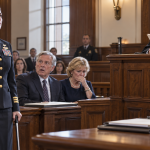
The entire hall went silent as I looked at my father.
For most of my life, silence had belonged to him.
It was what happened after I brought home a perfect report card and he barely glanced at it.
It was what filled the kitchen when Brooke received flowers for accomplishments smaller than mine.
It was what followed every attempt I made to explain that I was tired of being treated like an inconvenience in my own family.
But this silence was different.
This one belonged to me.
Major General Grant stood beside the podium, waiting.
Two security officers remained near Brooke.
My father was still standing.
Sandra had one hand pressed against her chest.
Brooke held the gold invitation in her lap.
The invitation I had given Dad.
The invitation I had imagined him carrying proudly.
For one ridiculous second, I remembered myself at twelve years old, waiting beside the living-room window because Dad had promised to attend my school awards ceremony.
He never came.
Work emergency.
At fifteen, he missed my debate final.
Traffic.
At seventeen, he forgot the dinner celebrating my academy acceptance.
Sandra had scheduled Brooke’s birthday photos that evening.
Brooke’s birthday was two weeks later.
There had always been a reason.
And I had always accepted it because the alternative was admitting something more painful.
My father was capable of showing up.
He simply did not show up for me.
“Cadet Lawson?”
Grant asked quietly.
I looked at him.
Then back at Dad.
My father finally seemed to understand that this decision belonged to me.
Not him.
I approached the microphone.
“They can stay.”
A murmur moved through the hall.
Dad’s shoulders loosened.
Sandra exhaled.
Brooke almost smiled.
I continued.
“But not in the VIP section.”
Dad’s relief vanished.
Grant gave one small nod.
“Understood.”
My father stepped into the aisle.
“Emma, don’t be ridiculous.”
There it was.
Not thank you.
Not congratulations.
Not I’m sorry.
Ridiculous.
I looked at him.
“Please sit down.”
His face reddened.
“I’m your father.”
“I know.”
“You can’t humiliate your own family like this.”
A strange calm settled over me.
“I’m not humiliating you.”
I said.
“I’m asking you to sit in the section your invitation allows.”
Sandra whispered urgently:
“Robert, sit down.”
But Dad was looking around now.
He could feel hundreds of eyes on him.
The same public attention he had always loved when it reflected well on him suddenly felt unbearable when he could not control the story.
He pointed toward Brooke.
“You gave us that ticket.”
“I gave you that ticket.”
“Same difference.”
“No.”
I said.
“That has been the problem for years.”
He stared.
“I gave one invitation to my father because I wanted my father at my graduation.”
My voice trembled.
I hated that.
Then I realized trembling did not make the words weaker.
So I continued.
“You handed it to Brooke before I had even finished explaining what tomorrow meant to me.”
Dad opened his mouth.
I did not let him interrupt.
“This morning, when I tried to enter my own graduation, you grabbed me.”
Grant’s expression hardened.
“You pushed me into a railing.”
The superintendent, seated behind us, turned sharply toward Dad.
“And then you walked inside using the invitation I had given you while I stood outside in the rain.”
Dad looked around desperately.
“That’s not what happened.”
My stomach dropped.
Even now.
Even with witnesses.
Even with my wet coat probably still hanging backstage.
Even with the ache in my arm.
Even now, his instinct was denial.
Major General Grant spoke.
“Mr. Lawson, I personally found your daughter outside.”
Dad’s mouth closed.
Grant continued.
“She was soaked.”
Silence.
“She was also late for a ceremonial preparation briefing because she had been prevented from entering.”
Dad tried:
“I didn’t realize—”
Grant stopped him.
“That much is apparent.”
I almost smiled.
Grant looked toward security.
“Please relocate the party to general seating if space permits.”
Brooke stood.
“But I haven’t done anything.”
Her voice surprised me.
She looked genuinely frightened.
I studied her.
Brooke had spent years accepting whatever Dad and Sandra gave her.
Attention.
Money.
Excuses.
My seat at dinner.
My bedroom once I left for the academy.
My graduation invitation.
But she had not shoved me.
She had not created this family.
She had benefited from it.
Sometimes enthusiastically.
That was different from building it.
I looked at Grant.
“Sir?”
“Yes?”
“If there are seats, Brooke can remain.”
Brooke looked at me.
“Emma…”
I turned toward her.
“The invitation wasn’t yours.”
She lowered her eyes.
“I know.”
It was the first honest thing anyone from my family had said that morning.
Security escorted them away from the VIP section.
Dad kept looking back.
Not at me.
At the people watching him.
That told me everything.
Then Grant leaned toward the microphone.
“Ladies and gentlemen, thank you for your patience.”
His voice changed.
Ceremonial again.
Controlled.
“Now, I believe Cadet Lawson has kept us waiting long enough.”
Laughter moved gently through the hall.
My heart pounded.
Grant stepped aside.
The podium was mine.
Thousands of eyes faced me.
Senior officers.
Professors.
Cadets.
Families.
People who had traveled hundreds of miles.
And somewhere toward the back, the father who had told me nobody would notice me.
I unfolded my speech.
The paper shook.
I looked at the first sentence.
I had written it three weeks earlier.
Leadership begins when someone gives you authority.
I stared at those words.
Then folded the paper.
I put it aside.
Grant raised an eyebrow.
I faced the audience.
“When I was seventeen years old, I believed leadership meant being the person nobody could ignore.”
The room became still.
“I was wrong.”
I paused.
“Leadership is often quiet.”
“It is returning equipment when nobody checks.”
“It is telling the truth when a lie would protect your reputation.”
“It is helping the person beside you prepare even when you are competing for the same honor.”
“It is understanding that rank can make people obey you, but character determines whether they trust you.”
I saw several instructors nod.
I continued.
“For four years, this academy taught us procedures, discipline, endurance, history, strategy, and responsibility.”
“But some of the most important lessons happened outside classrooms.”
“They happened when we failed.”
“When we were corrected.”
“When we had to decide whether correction was humiliation or an opportunity to become better.”
My throat tightened.
I thought of Dad.
Then I thought of myself.
“Today, many of us will leave here with new titles.”
“Some will eventually receive greater authority.”
“But I hope we remember something simple.”
“A title does not make every decision correct.”
“Authority does not make every assumption true.”
“And loving an institution—or a family, or a country, or another person—does not mean refusing to see its mistakes.”
The hall was silent.
“Sometimes loyalty means having the courage to say: This can be better.”
I looked toward my classmates.
“The people graduating beside me taught me that strength is not never needing anyone.”
“It is knowing who you can trust when you do.”
That sentence almost broke me.
Because I had spent four years learning to trust everyone except the people I shared a last name with.
I finished:
“So wherever we go after today, I hope we lead in a way that leaves room for other people to stand beside us without becoming smaller.”
“I hope we remember the difference between being respected and being feared.”
“And when someone places trust in our hands, I hope we understand that trust is not proof that we deserve power.”
“It is a responsibility to deserve it tomorrow.”
I stepped back.
For one heartbeat, nothing happened.
Then the hall rose.
Not everyone at once.
My classmates first.
Then faculty.
Then families.
Then officers.
Applause filled the room.
I saw Major General Grant clapping.
The superintendent stood.
My closest friend, Maya Torres, was crying while applauding hard enough to injure herself.
I laughed.
Then I looked toward the general seating section.
Brooke was standing.
Clapping.
Sandra was too.
My father remained seated.
His face was unreadable.
And strangely, that did not ruin anything.
A year earlier, it would have.
Five years earlier, one disappointed look from him could poison an entire week.
But standing on that stage, I realized something that should have been obvious long before.
His inability to celebrate me did not reduce what I had accomplished.
The applause did not create my worth either.
Neither approval nor rejection could rewrite the work already completed.
I had graduated first in my class before anyone stood.
I had earned the medal before Dad knew it existed.
I had become myself while he was looking somewhere else.
That realization felt better than revenge.
The ceremony continued.
When my name was called again, I crossed the stage to receive the Commandant’s Medal.
Grant pinned it carefully.
Quietly, so only I could hear, he said:
“Your speech was better than the one we approved.”
I whispered:
“Please don’t tell the speech committee.”
“They’ll survive.”
Then his eyes moved toward my arm.
“Medical officer after this.”
“Sir, I’m fine.”
“That wasn’t a suggestion.”
“Yes, sir.”
He smiled.
“Congratulations, Lawson.”
“Thank you, sir.”
I saluted.
For the first time all morning, my hand did not shake.
After the ceremony, the hall emptied into a reception area filled with flowers, photographs, embraces, and families trying to fit four years of pride into ten-minute conversations.
I was surrounded almost immediately.
Classmates.
Instructors.
Visiting officers.
People I barely knew.
A retired general whose book I had read twice shook my hand.
A colonel from one of the leadership programs asked whether I had decided where I would complete my fellowship rotation.
The superintendent introduced me to his wife.
Someone handed me flowers.
Then another bouquet appeared.
I did not know who sent either.
Through all of it, I kept looking toward the doors.
Old habit.
Looking for Dad.
Maya noticed.
“Stop.”
“What?”
“You’re doing the thing.”
“I don’t have a thing.”
“You absolutely have a thing.”
She pointed at my face.
“That.”
“Very specific.”
“You’re scanning the room for your father instead of enjoying the fact that General Harrison just asked whether he could quote your speech.”
“I was not.”
“You were.”
I sighed.
“Fine.”
Maya adjusted the medal on my uniform.
“You know what your problem is?”
“Please enlighten me on my graduation day.”
“You keep waiting for one person to give you something a hundred other people have already offered.”
I stared at her.
She shrugged.
“I’m profound when hungry.”
“You’re insufferable.”
“Also true.”
Then her mother appeared.
Mrs. Torres had known me since our first year.
She wrapped me in a hug before I could protest.
“I am so proud of you.”
Four words.
Simple.
I nearly cried.
She pulled back.
“Oh, honey.”
“I’m fine.”
“No, you’re not.”
“I am.”
“Your face is doing that thing.”
I looked at Maya.
“Apparently everyone knows my things.”
Mrs. Torres touched my cheek.
“You did beautifully.”
“Thank you.”
“And your speech…”
She shook her head.
“Your mother would’ve been proud.”
That did it.
My biological mother, Laura, had died when I was nine.
Cancer.
Three years later, Dad married Sandra.
There were times I wondered whether everything after Mom’s death would have been different if she had lived.
That question had no answer.
So I stopped asking it.
Mostly.
“Thank you.”
I whispered.
Mrs. Torres hugged me again.
When she released me, I saw Brooke standing ten feet away.
Alone.
She still wore the expensive cream dress Sandra had bought for the ceremony.
The gold invitation was gone.
She looked younger than twenty-two.
“Can we talk?”
she asked.
Maya looked at me.
I nodded.
“I’ll find you.”
She left with her mother.
Brooke approached.
For several seconds, neither of us spoke.
Then she said:
“I’m sorry.”
I waited.
She continued.
“I knew the invitation was yours.”
“Yes.”
“I knew you wanted your dad to use it.”
“Yes.”
“And I took it anyway.”
“Yes.”
Tears appeared in her eyes.
“I thought it didn’t matter.”
“That was convenient.”
She flinched.
“I know.”
I did not soften it.
For years, everyone had softened consequences for Brooke.
I would not be cruel.
But I would not help her escape discomfort either.
She looked at my medal.
“I didn’t know.”
“About what?”
“All of this.”
She gestured toward the room.
“The ranking.”
“The speech.”
“The medal.”
“The fellowship.”
“I didn’t know you were…”
She stopped.
“Important?”
Her cheeks reddened.
“I wasn’t going to say that.”
“But you thought it.”
“Yes.”
I looked at her.
“That is exactly the problem.”
She lowered her eyes.
“You thought I deserved respect today because important people respected me.”
Brooke said nothing.
“You watched Dad give you my invitation last night.”
“You heard me tell him it mattered.”
“You still took it.”
“I know.”
“This morning you watched him stop me outside.”
“I didn’t know he pushed you.”
“But you knew he wasn’t letting me in.”
“Yes.”
“And you walked inside.”
Her tears fell.
“Yes.”
I breathed slowly.
“I don’t need you to feel horrible, Brooke.”
She looked surprised.
“I need you to understand.”
“I do.”
“Maybe.”
I said.
“But understanding isn’t crying because today became uncomfortable.”
Her face changed.
That landed.
“Understanding is what you do the next time someone gives you something that belongs to another person.”
She nodded.
“Okay.”
“And don’t apologize because I turned out to be valedictorian.”
“I’m not.”
“Good.”
“I’m apologizing because it was yours.”
That was better.
I nodded.
“Thank you.”
She wiped her face.
“Can I hug you?”
“No.”
The word came easily.
Brooke froze.
Then nodded.
“Okay.”
I appreciated that more than the apology.
She did not ask why.
She did not cry harder.
She did not make my boundary an attack.
She simply accepted it.
That was the first moment I thought perhaps Brooke could change.
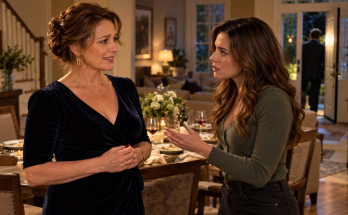
Then Sandra arrived.
“Emma.”
She looked exhausted.
“Congratulations.”
“Thank you.”
“Your father is upset.”
Of course.
I almost laughed.
Sandra noticed.
“This isn’t funny.”
“No.”
I said.
“It really isn’t.”
“He feels blindsided.”
“By my graduation?”
“By everything.”
“The medal.”
“The speech.”
“The officers.”
“The fact that you never told us.”
I stared at her.
“I did tell you.”
Sandra frowned.
“When?”
“Not today.”
“Over the years.”
“I told Dad when I made the dean’s list.”
“I told both of you when I was selected as battalion academic officer.”
“I sent you the announcement when I won the leadership competition.”
“I invited you to the recognition dinner last year.”
“You didn’t come.”
Sandra opened her mouth.
I continued.
“I stopped giving details because nobody remembered them.”
“That isn’t the same as telling us you were valedictorian.”
“No.”
“It isn’t.”
I nodded.
“By the time I found out, I didn’t want to beg you to care.”
Sandra looked wounded.
I wondered if I was supposed to comfort her.
I did not.
“You could have told us.”
“I could have.”
“You wanted to embarrass your father.”
“No.”
“That isn’t fair.”
“You knew he would look terrible.”
“I didn’t know he would physically stop me from entering my own graduation.”
She went silent.
I looked at her.
“Did you see him grab me?”
Sandra looked away.
That was answer enough.
“Did you?”
“Yes.”
My heart sank.
“And you walked inside.”
Her voice became defensive.
“I thought he was just upset about your appearance.”
“My appearance?”
“You were wearing a coat over your uniform.”
“Because my ceremonial uniform was inside.”
“I didn’t know that.”
“Neither did he.”
I said.
“He didn’t ask.”
Sandra folded her arms.
“You’re making us sound awful.”
I stared at her.
“No.”
“I’m describing what happened.”
That sentence changed something inside me.
For years, I had thought telling the truth about someone’s behavior was equivalent to attacking them.
It wasn’t.
Sandra whispered:
“Families should handle things privately.”
“Dad didn’t push me privately.”
She had no answer.
I continued.
“And I didn’t ask General Grant to find me.”
“I didn’t arrange today to punish anyone.”
“I came here to graduate.”
Sandra looked toward Brooke.
“Let’s go.”
Brooke did not move.
“Mom.”
“What?”
“She’s right.”
Sandra stared.
Brooke swallowed.
“We shouldn’t have taken the invitation.”
“Brooke, not now.”
“And Dad shouldn’t have stopped her.”
“Enough.”
“No.”
Brooke’s voice shook.
“No, Mom.”
“I watched it.”
“I walked inside anyway.”
“I don’t want to pretend I didn’t.”
Sandra’s face changed.
For the first time, Brooke had stepped outside the family script.
Sandra looked at me as though somehow I had caused it.
Then Dad appeared.
“Emma.”
He did not congratulate me.
Not yet.
He looked at Brooke.
“Go wait with your mother.”
Brooke hesitated.
“Dad—”
“Now.”
She looked at me.
Then followed Sandra.
Dad and I were alone.
Not literally.
Hundreds of people remained around us.
But emotionally, yes.
Father.
Daughter.
Years of things neither of us had said.
He looked at my medal.
“Quite a performance.”
My heart hardened.
“Is that what you came to say?”
“You made me look like a fool.”
“No.”
“I didn’t know any of this.”
“Whose fault is that?”
His eyes narrowed.
“You lived under my roof.”
“Until I was eighteen.”
“I paid for everything.”
“Until I entered the academy.”
“You think that means I wasn’t your father?”
“I think being my father should have made you curious about my life.”
He stared.
“Don’t talk to me like I’m one of your cadets.”
“I would never talk to a cadet the way you spoke to me this morning.”
His face reddened.
“You embarrassed me in front of generals.”
“You shoved me in front of the entrance.”
“I barely touched you.”
There it was.
The shrinking.
Not denial this time.
Minimization.
I rolled up my sleeve.
A bruise had begun forming where his fingers had gripped me.
Dad looked at it.
Something flickered across his face.
Then disappeared.
“You bruise easily.”
I laughed.
I could not help it.
“What?”
“Nothing.”
“No, say it.”
“You really can’t do it.”
“Do what?”
“Say you were wrong.”
“I said I shouldn’t have pushed you.”
“No, you didn’t.”
He stopped.
I waited.
He replayed the conversation.
Realized I was right.
“You know what I mean.”
“No.”
I said quietly.
“I spent my entire childhood knowing what you meant.”
“That was my job.”
“Knowing when your silence meant disappointment.”
“Knowing when your jokes were actually insults.”
“Knowing when ‘maybe next time’ meant you had already forgotten.”
“Knowing when Sandra wanted something.”
“Knowing when Brooke’s needs mattered more.”
“I became very good at translating you.”
“But I’m done.”
Dad’s face went strangely pale.
“Done with what?”
“Translating.”
“If you mean you’re sorry, say you’re sorry.”
“If you’re proud, say you’re proud.”
“If you don’t care, then have enough respect for me to stop pretending you do whenever other people are watching.”
His jaw tightened.
“I am proud.”
The words should have mattered.
They didn’t.
“Would you have been proud yesterday?”
He stared.
“What?”
“If there were no medal.”
“No generals.”
“No speech.”
“If I had graduated three hundredth instead of first.”
“Would you have been proud?”
“Of course.”
“Then why did you give away my invitation?”
Silence.
There it was again.
But this time I did not fill it for him.
Dad looked away.
People moved around us.
Families posed for photographs.
A child laughed.
Someone popped a champagne cork outside.
Finally Dad said:
“I thought Brooke would get more out of it.”
The honesty hurt.
But I preferred it.
“More than me having my father there?”
He rubbed his forehead.
“I didn’t think it was that important.”
“To you.”
He looked at me.
“Yes.”
“To me.”
I said.
“It was.”
His eyes shifted toward the floor.
I realized something.
My father had not spent years deliberately planning to make me feel small.
In some ways, that would have been easier to understand.
He had simply become accustomed to assuming I would survive neglect.
I was independent.
Brooke was needy.
I was responsible.
Brooke required help.
I rarely caused trouble.
Therefore, I required less care.
Every strength I developed became another excuse to give me less.
And because I kept succeeding, he mistook my survival for proof that the arrangement was harmless.
“I thought you didn’t need all the attention.”
he said.
I almost smiled.
There it was.
The entire childhood in one sentence.
“I didn’t need all of it.”
I said.
“I needed some.”
Dad looked at me.
For the first time that day, his face softened.
“I didn’t know.”
“You didn’t ask.”
“No.”
He swallowed.
“I didn’t.”
A long silence.
Then:
“I’m sorry I pushed you.”
I waited.
He forced himself to continue.
“I’m sorry I gave away your invitation.”
His voice cracked.
“And I’m sorry I didn’t know who my daughter had become.”
That one hurt.
I looked at him.
“You should have known who I was before I became impressive.”
Dad closed his eyes.
“Yes.”
When he opened them again, tears had gathered.
I had seen my father cry twice.
At Mom’s funeral.
At his mother’s funeral.
Now.
“I don’t know how to fix this.”
he said.
I believed him.
“You don’t fix twenty years in a hallway.”
“What do I do?”
“I don’t know.”
That frightened him.
He was accustomed to instructions.
Tasks.
Problems with solutions.
But relationships are not machinery.
There is no replacement part labeled TRUST.
He whispered:
“Can I take a picture with you?”
I looked around.
Everywhere, families were posing.
Parents touching medals.
Mothers fixing collars.
Fathers smiling.
I wanted that photograph.
I hated that I wanted it.
Then I asked myself a better question.
Did I want the photograph we would take?
Or did I want the father I had spent years imagining would stand beside me in it?
Those were not the same.
“Not today.”
His face fell.
“Emma.”
“Not today.”
He nodded slowly.
“Okay.”
That mattered.
He did not argue.
He left.
I stood alone for perhaps thirty seconds.
Then Major General Grant appeared beside me holding two cups.
“Coffee?”
“Yes, sir.”
He handed me one.
“Family?”
I stared into the cup.
“Yes, sir.”
“Complicated?”
“Yes, sir.”
“Usually is.”
I smiled.
He looked toward the door Dad had used.
“Do you want the incident documented?”
I knew what he meant.
The shove.
My arm.
“I don’t know.”
“You don’t need to decide this second.”
“Thank you.”
“But medical needs to photograph the bruise.”
“Yes, sir.”
“Documentation is not revenge, Lawson.”
I looked at him.
“It’s simply a record.”
That sentence stayed with me.
I had the bruise photographed.
I documented what happened.
I did not pursue charges.
That was my decision.
Not because Dad’s behavior was acceptable.
It wasn’t.
Not because family violence should be ignored.
It shouldn’t.
But after speaking with the appropriate people and understanding my options, I chose documentation and distance.
Most importantly, the choice was mine.
That afternoon, I took photographs.
With Maya.
With Mrs. Torres.
With my instructors.
With the commandant.
With the superintendent.
With people who had known what I accomplished before the ceremony.
In one picture, Maya had her arm around my shoulder while I held my medal.
Rain clouds were breaking behind us.
That became my favorite graduation photograph.
Not because I looked important.
Because I looked happy.
I did not go home that night.
I had already packed most of my belongings.
The academy provided temporary lodging until I left for my fellowship.
Dad called six times.
Sandra twice.
Brooke once.
I answered none.
At 11:08 p.m., Brooke texted:
I left your invitation at the front desk. I’m sorry. No excuses. Congratulations, Emma.
I stared at it.
Then replied:
Thank you.
Nothing more.
Dad’s message came at 1:16 a.m.
I’m sorry. I should have known.
I read it several times.
Then turned off my phone.
The next morning, I woke before dawn.
For a few seconds, I forgot graduation was over.
My body expected another rehearsal.
Another inspection.
Another requirement.
Then I saw the medal on the desk.
I smiled.
And cried.
Not dramatically.
Just quietly.
Because achievement does not heal childhood.
That surprised me.
I had spent years imagining success as a door.
Once I earned enough, I thought I would walk through and become someone who no longer cared.
But the girl waiting for Dad at the window when she was twelve still lived inside the woman wearing the medal.
She deserved kindness too.
So I found a therapist.
One of the best decisions I ever made.
Dr. Hannah Cole never cared about my ranking.
The first time I told her I graduated first in my class, she said:
“Congratulations.”
Then asked:
“Did it make you feel loved?”
I hated her immediately.
Which meant she was probably excellent.
“No.”
“Did you expect it to?”
I stared.
“Yes.”
“By whom?”
I cried for forty minutes.
Therapy was deeply inconvenient.
But it worked.
I learned that I had turned achievement into a language.
If I succeeded loudly enough, perhaps Dad would finally understand:
Look at me.
I matter.
The academy had rewarded that drive.
My career would too if I let it.
But there was danger in building a life where rest felt like disappearing.
Dr. Cole asked:
“Who are you when you’re not accomplishing something?”
I had no answer.
It took years to find one.
My fellowship sent me to Washington first.
Then Europe.
Then back to the United States.
I worked hard.
Sometimes too hard.
I made mistakes.
Important ones.
On my first major assignment, I prepared a briefing so thoroughly that I ignored a junior officer who tried twice to tell me one of my assumptions was wrong.
I presented.
A senior officer asked exactly the question the junior officer had warned me about.
I looked like an idiot.
Afterward, I found Lieutenant James Park.
“You tried to tell me.”
“Yes, ma’am.”
“I didn’t listen.”
“No, ma’am.”
“I’m sorry.”
He looked stunned.
That bothered me.
“Why do you look surprised?”
He hesitated.
“People at your level don’t always say that.”
I thought of Dad.
I never forgot.
“Then people at my level should improve.”
Years later, when I had officers of my own, I kept one rule.
If someone brought me bad news respectfully, I would never punish them for the discomfort of hearing it.
Correction was not disrespect.
Disagreement was not betrayal.
Leadership was not being the loudest person in the room.
I had learned that partly from great mentors.
And partly from my father.
Sometimes we learn what to become by watching what hurt us.
Dad and I did not speak for four months after graduation.
Then he wrote me a letter.
Handwritten.
Seven pages.
The first three were terrible.
Excuses.
Sandra needed help.
Brooke struggled after her biological father left.
I had always been independent.
Dad was grieving Mom.
He thought giving Brooke extra attention would help blend the family.
I almost stopped reading.
Then page four changed.
None of that explains why I made you pay for everyone else’s needs.
I sat down.
He continued:
I have been trying to remember when I started thinking of you as the child who would always be okay. I cannot find one moment. Maybe that is because there wasn’t one. You were responsible, so I gave you more responsibility. You were quiet, so I checked on you less. You succeeded, so I assumed you did not need encouragement. Every time you adapted to receiving less, I treated your adaptation as permission to give you less again.
I cried.
Not because it fixed anything.
Because he finally saw it.
The letter continued:
At graduation, when I heard those people describe you, I was proud. Then I realized I had no right to feel surprised. A father should not need a commandant to introduce him to his own daughter.
I read that sentence three times.
He ended:
I do not expect forgiveness because I wrote this. I would like to know you if you ever decide there is room for that. I understand if there isn’t.
I did not answer for two weeks.
Then:
Coffee. One hour. Just us.
He drove three hours.
Arrived forty minutes early.
We sat in a café.
For the first twenty minutes, conversation was painful.
Weather.
Traffic.
Work.
Then Dad said:
“I brought something.”
He placed the gold graduation invitation on the table.
Brooke had returned it to him.
It was slightly bent.
“You keep it.”
I said.
“Why?”
“Because it was yours.”
His eyes filled.
“I didn’t treat it like it was.”
“No.”
He touched the edge.
“I’m sorry.”
“I know.”
That became our beginning.
Not reconciliation.
Beginning.
There is a difference.
We met every few months.
He started asking questions.
Real questions.
Not:
“How’s work?”
But:
“What are you working on?”
“What part is difficult?”
“Who are your friends?”
“What do you do when you’re not working?”
The last question still confused me.
Eventually, I had answers.
I ran.
Badly.
I learned pottery.
Worse.
I adopted a mutt named Admiral despite being told repeatedly that naming a dog Admiral was obnoxious.
Maya approved.
Dad hated the name.
Admiral loved him.
Sandra and I remained distant.
She sent birthday cards.
I sent polite replies.
Then, two years after graduation, she asked to meet.
I almost declined.
Dr. Cole asked:
“Do you want to?”
“I don’t know.”
“That isn’t no.”
So I went.
Sandra looked older.
Less polished.
She ordered tea.
Then said:
“I owe you an apology without explaining myself.”
I almost laughed.
“That’s ambitious.”
“I’ve been practicing.”
She looked at me.
“I favored Brooke.”
“Yes.”
“I told myself it was because she needed more.”
“Yes.”
“I also liked that your father depended on me to take care of her.”
That surprised me.
She continued.
“You reminded him of Laura.”
My mother.
“I knew that.”
I stared.
“Sometimes when he looked at you, I could tell part of him was remembering her.”
Sandra’s voice trembled.
“I was jealous of a dead woman.”
I said nothing.
“That isn’t your fault.”
“No.”
“I treated you as though it were.”
“Yes.”
Tears filled her eyes.
“I’m sorry.”
I believed her.
That did not create closeness.
But it created truth.
“I accept the apology.”
“Do you forgive me?”
I considered.
“I don’t know yet.”
She nodded.
“Fair.”
Years later, I did.
Forgiveness arrived quietly.
Not because Sandra earned a relationship identical to the one we might have had.
We never became mother and daughter.
But we became two adults capable of sitting at the same table without pretending the past had been harmless.
That was enough.
Brooke changed the most.
Perhaps because she had the most room to.
The graduation incident humiliated her.
For a while, she blamed me.
I learned that later.
Then she started therapy too.
Apparently our family single-handedly funded half the mental-health industry.
Brooke eventually admitted she had spent years believing attention was proof of love.
So whenever Dad gave something to me, she felt threatened.
When he gave something of mine to her, she interpreted it as victory.
She had not invented the competition.
But she had participated.
At twenty-five, she called me.
“I need advice.”
“About?”
“A job.”
She had been offered a position at a marketing agency.
Good salary.
But her mother wanted her to join a friend’s company instead.
“What do you want?”
I asked.
Silence.
Then:
“Nobody asks me that.”
I almost laughed at the symmetry.
“What do you want, Brooke?”
“The agency.”
“Then take the agency.”
“Dad thinks the other one is safer.”
“Dad thought my graduation wasn’t important.”
She laughed.
“Point taken.”
She took the agency job.
She was good.
Very good.
The photoshoots had not been meaningless vanity after all.
Brooke understood visual communication instinctively.
She built a career.
Not because Sandra arranged it.
Not because Dad rescued her.
Hers.
That changed her.
One Thanksgiving, five years after graduation, Brooke handed me a small box.
Inside was the original gold invitation.
I looked at her.
“Dad gave it to me.”
“I thought he kept it.”
“He did.”
“He gave it to me last week.”
“Why?”
“He said I should decide what happens to it.”
I stared.
Brooke said:
“I think it belongs to you.”
I touched the embossed academy seal.
For years, that invitation had represented everything.
Dad choosing Brooke.
Me outside.
Rain.
Humiliation.
Now it was just paper.
I handed it back.
Brooke frowned.
“I don’t want it.”
“Neither do I.”
We looked at each other.
Then she laughed.
“What do we do?”
I thought.
“Recycle it.”
Her eyes widened.
“Emma.”
“What?”
“Dad kept this for five years.”
“And?”
“It feels dramatic.”
“Fine.”
I carried it to the kitchen.
Brooke followed.
I tore it in half.
She gasped.
I tore it again.
Then handed her half.
She stared.
“You’re insane.”
“Your turn.”
She smiled.
Then tore it.
We put the pieces in recycling.
Dad walked in five minutes later.
“What are you two doing?”
“Nothing.”
we said simultaneously.
He looked suspicious.
That became one of my favorite memories.
Not because destroying the invitation erased anything.
Because we no longer needed it to prove what happened.
We knew.
Dad knew.
The paper had finished its job.
My career moved forward.
Captain.
Major.
Lieutenant colonel.
Colonel.
Each promotion frightened me more than the previous one.
Not because I doubted my competence.
Because authority had become sacred to me.
The more power I received, the more careful I wanted to be with it.
At forty-six, I returned to the academy.
Not as a cadet.
As part of the leadership faculty.
Major General Grant had retired years earlier.
He attended my first lecture.
Afterward, he approached.
“Colonel Lawson.”
“General.”
“Still improvising speeches?”
“Only when emotionally destabilized.”
“Good.”
He laughed.
Then looked around the hall.
“Do you remember graduation?”
“Unfortunately.”
“I do too.”
“Sir?”
He smiled.
“I knew your speech would be good.”
“You hadn’t heard it.”
“No.”
“But I knew you.”
That touched me more than he probably realized.
He continued.
“You know what I remember most?”
“What?”
“You let them stay.”
I became quiet.
“I almost didn’t.”
“I know.”
“Would you have removed them?”
“If you asked.”
I smiled.
“I know.”
He looked toward the cadets entering the hall.
“That was the day you learned something most officers take years to understand.”
“What?”
“Having the power to punish someone does not mean punishment is always the strongest use of it.”
I carried that sentence for the rest of my life.
Dad was sixty-nine when he had his first heart attack.
I was overseas.
Brooke called.
“Emma.”
I heard it immediately.
“What happened?”
“Dad.”
I was on a flight within hours.
When I reached the hospital, Sandra was asleep in a chair.
Brooke stood by the window.
Dad looked tiny.
That frightened me more than anything.
Parents occupy impossible proportions in childhood.
Even when they fail us, some part of us believes they are permanent.
I sat beside him.
Hours later, his eyes opened.
“Emma?”
“Hi, Dad.”
“You came.”
“Yes.”
He smiled weakly.
“VIP ticket?”
I stared.
Then laughed.
“You’re terrible.”
“Too soon?”
“By about thirty years.”
He laughed and winced.
“Don’t make me laugh.”
“You started it.”
He recovered.
Slowly.
The heart attack changed him.
Not into a saint.
People do not become entirely different because mortality frightens them.
But he softened.
He retired.
Started gardening.
Terribly.
Called me about tomatoes as though they were strategic assets.
Brooke had two children.
Dad became a grandfather.
A good one.
That stirred complicated feelings in me.
Watching him attend every school play for Brooke’s children hurt.
At first.
Dr. Cole had retired by then, but I still heard her voice in my head.
Someone else’s receiving a better version of a person does not mean you deserved the worse version.
Dad had learned.
Late.
I could resent the children for benefiting from it.
Or I could be glad the pattern stopped.
I chose glad.
Mostly.
Human beings are allowed a little both.
I never had biological children.
For years, people asked whether I regretted it.
No.
My life became full in other ways.
At fifty-two, I married James Park.
Yes.
The lieutenant I had ignored during that briefing decades earlier.
Life has a sense of humor.
We did not begin dating until years after we no longer worked in the same chain of command.
He had built a remarkable career.
So had I.
At a conference, we ended up sitting beside each other at dinner.
He said:
“You still interrupt people?”
I said:
“You still hold grudges?”
“Professionally.”
We laughed for three hours.
Two years later, we married.
Maya was maid of honor.
Brooke stood beside her.
Dad sat in the front row.
Before walking down the aisle, I found him waiting outside the chapel.
He held an umbrella.
It had started raining.
Of course.
For a moment, neither of us spoke.
Then Dad looked at the entrance.
“Want me to walk you?”
I thought about graduation.
Rain.
A railing.
His hand gripping my arm.
You’re embarrassing us.
Now another rainy entrance.
Another important day.
Another choice.
I smiled.
“No.”
His face changed slightly.
Then he nodded.
“Okay.”
I touched his arm.
“But I’d like you to sit in the front.”
He smiled.
“I can do that.”
I walked myself down the aisle.
Not as a statement against my father.
Not because I had no one.
Because I wanted to.
That distinction mattered.
Dad cried.
Brooke cried.
Maya cried.
James definitely cried and later denied it.
We built a good marriage.
Not perfect.
Good.
That word became more precious to me with age.
Good meant apology.
Good meant listening.
Good meant nobody keeping score.
Good meant when James hurt me, he did not begin by explaining why I should not hurt.
He asked.
Then listened.
I tried to do the same.
Dad lived to eighty-three.
His final years were gentle.
Sandra cared for him.
Brooke lived nearby.
I visited whenever I could.
During his last week, I sat beside his bed.
He was thin.
Breathing slowly.
The room smelled faintly of lavender because Sandra had always liked it.
He looked at me.
“Emma.”
“I’m here.”
“You remember your graduation?”
I laughed softly.
“Seriously?”
“Hard to forget.”
“Yes.”
He stared at the ceiling.
“I think about the rain.”
“So do I sometimes.”
“I pushed you.”
“Yes.”
“I spent years wishing I could change that.”
I held his hand.
“I know.”
“Do you forgive me?”
The question hung between us.
I had forgiven him years earlier.
But forgiveness had never meant the event disappeared.
“Yes.”
He cried.
“I don’t deserve you.”
I shook my head.
“Don’t do that.”
“What?”
“Turn me into something you had to deserve.”
He looked confused.
“You were my father.”
“I was your daughter.”
“We hurt each other sometimes.”
“You hurt me more when I was young because you had more power.”
“That matters.”
He nodded.
“But you also changed.”
“That matters too.”
He squeezed my hand weakly.
“I was proud of you.”
“I know.”
“Before the medal.”
I looked at him.
He struggled.
“I didn’t know how to show it.”
I smiled sadly.
“I wish you had.”
“So do I.”
Then he said something I never forgot.
“You shouldn’t have needed to become extraordinary before I noticed you were hurting.”
My eyes filled.
“No.”
“You shouldn’t have.”
He closed his eyes.
“I’m sorry.”
“I know, Dad.”
He died two days later.
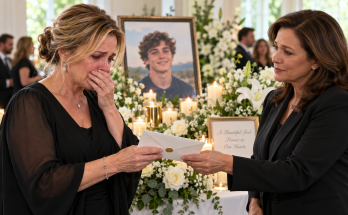
At his funeral, Brooke asked whether I wanted to speak.
I did.
I stood before people who knew many versions of Robert Lawson.
Friend.
Husband.
Coworker.
Father.
Grandfather.
I did not turn him into a perfect dead man.
I had learned better.
“My father and I had a complicated relationship.”
I said.
A few people shifted.
Brooke smiled faintly.
“He made mistakes.”
“So did I.”
“But one of the things I respect most about the man he became is that eventually he stopped asking me to pretend his mistakes had not happened.”
I looked toward his photograph.
“He learned to apologize without demanding immediate forgiveness.”
“He learned to listen.”
“He learned that love is not proven by authority.”
“And he became a grandfather who showed up.”
I paused.
“I wish he had learned some of those lessons earlier.”
“But I am grateful he learned them at all.”
Afterward, Brooke hugged me.
This time, I hugged her back.
Sandra died seven years later.
Brooke and I were both there.
By then, Sandra and I had become something I never expected.
Not mother and daughter.
Friends might even have been too strong.
Family.
Chosen consciously rather than automatically.
Near the end, she whispered:
“I’m glad you didn’t let us rewrite it.”
“What?”
“Your childhood.”
She looked at me.
“We were unfair to you.”
“Your father and I.”
“If you had pretended otherwise just to keep peace, I don’t think any of us would’ve changed.”
I squeezed her hand.
“Neither do I.”
She smiled.
“You were terrifying at twenty-two.”
“I was polite.”
“You were terrifyingly polite.”
We laughed.
Then she slept.
She died that night.
Brooke and I became sisters only after we stopped being forced to compete.
That was perhaps the strangest gift adulthood gave us.
At sixty-four, she called me crying.
Her daughter, Sophie, had been accepted to medical school.
“Emma, she did it.”
“I know.”
“She called you before me.”
“She wanted advice.”
“You’re her cool aunt.”
“Obviously.”
Brooke laughed.
“Remember when I took your graduation invitation?”
“Yes.”
“Still?”
“Brooke, I commanded thousands of people. I can remember a piece of paper.”
She laughed harder.
Then became quiet.
“I’m still sorry.”
“I know.”
“I was awful.”
“You were twenty-two.”
“Old enough.”
“Yes.”
“But young enough to change.”
Silence.
“Thank you.”
“For what?”
“For letting me.”
I smiled.
“You did that yourself.”
That was true.
We should be careful not to take credit for another person’s growth.
Brooke changed because Brooke decided to.
Dad changed because Dad decided to.
Sandra changed because Sandra decided to.
I merely decided what access each version of them could have to me.
That was my responsibility.
Years passed.
James died when I was seventy-nine.
Cancer.
Slow.
Cruel.
Beautiful in small places.
We had twenty-five years together.
On his final morning, he whispered:
“Remember the briefing?”
I laughed.
“You’re dying and you’re still bringing that up?”
“I told you your assumption was wrong.”
“You’ve mentioned it twice a year since 1999.”
“Because I was right.”
“You were a lieutenant.”
“A correct lieutenant.”
I kissed him.
“I’m sorry I didn’t listen.”
“Best apology of my life.”
He died smiling.
Grief came again.
Different.
No easier.
But by then I knew grief was not a hallway with an exit.
It was weather.
Sometimes violent.
Sometimes distant.
Sometimes arriving years after the forecast said clear skies.
I let it come.
Brooke stayed with me for two months.
One evening, she found me holding James’s old coffee mug.
“You okay?”
“No.”
She sat beside me.
No advice.
No speech.
Just sat.
I thought of our twenties.
The gold invitation.
How impossible this would have seemed.
People can change.
But change does not mean everyone must wait around while they do.
That distinction mattered to me.
I was fortunate.
My family changed after I created distance.
If they had not, the distance would have remained.
Love is not an obligation to stand indefinitely where someone keeps hurting you.
At eighty-one, I was invited back to the academy for a graduation.
The commandant was a former cadet I had taught.
She asked me to give the commencement address.
I almost declined.
Then she said:
“General Lawson, don’t make me beg.”
I had retired years earlier.
People still called me General.
That remained strange.
I accepted.
The morning of the ceremony, rain began falling.
I laughed when I saw it.
Of course.
I arrived early.
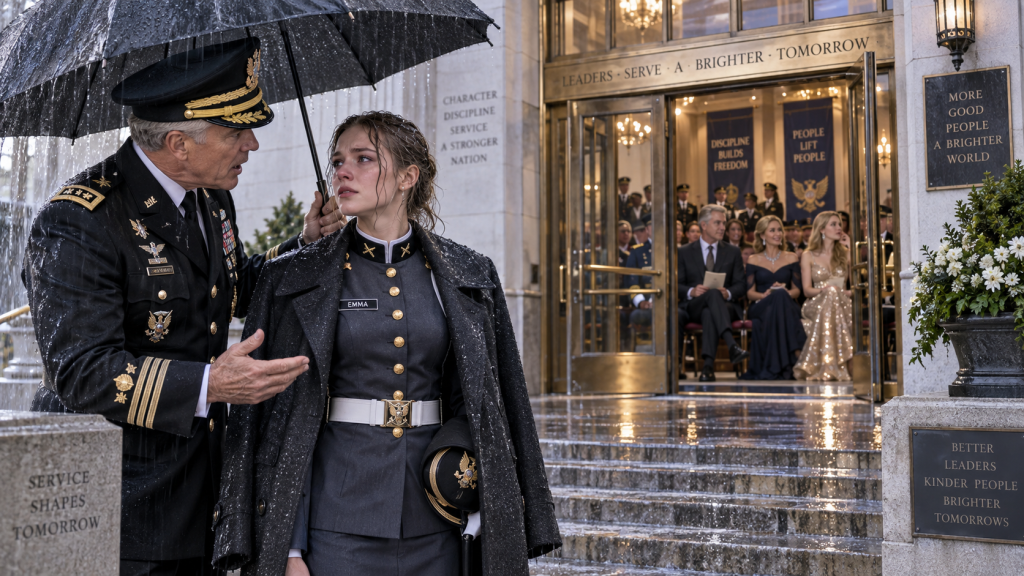
As my car approached the entrance, I noticed a young cadet standing beneath a stone overhang.
Alone.
No umbrella.
She looked upset.
I asked the driver to stop.
I stepped out.
My knees objected.
Eighty-one was unreasonable.
I opened my umbrella.
Walked toward her.
“Cadet?”
She snapped upright.
“Ma’am.”
“You all right?”
“Yes, ma’am.”
Her face said otherwise.
“Try again.”
She swallowed.
“My family didn’t come.”
I looked toward the entrance.
“Did they know?”
“Yes, ma’am.”
“Why aren’t they here?”
“My brother has a tournament.”
I understood immediately.
“They said they’d watch the recording.”
The cadet laughed bitterly.
“It’s stupid.”
“No.”
I said.
“It isn’t.”
Her eyes filled.
“I shouldn’t care.”
“Why?”
“I’m an officer now.”
“So?”
“I should be tougher.”
I stared.
“Who told you toughness means becoming incapable of disappointment?”
She looked at me.
“Nobody.”
“Good.”
“Because they’re wrong.”
She wiped her face.
“I’m supposed to report inside.”
“So am I.”
I held the umbrella toward her.
“Come on.”
We walked together.
At the entrance, she said:
“Thank you, ma’am.”
“What is your name?”
“Cadet Rachel Kim.”
“Well, Cadet Kim, congratulations.”
Her face crumpled.
“Thank you.”
I entered through those bronze doors.
The same doors.
Smaller than I remembered.
Most things from youth become smaller when revisited.
Not because they were insignificant.
Because we are no longer the person who first stood before them.
Backstage, the commandant asked why I was wet.
“Long story.”
Then I gave my speech.
I did not tell the graduates about Dad.
Not directly.
Their graduation was not a stage for my old wound.
Instead, I told them:
“When I was young, I believed achievement could make me impossible to overlook.”
“I was wrong.”
“Some people will overlook you anyway.”
A ripple of laughter.
“Some will underestimate you.”
“Some will misunderstand you.”
“Some may recognize your value only after someone with a more impressive title announces it.”
The hall became quieter.
“Do not build your identity around proving those people wrong.”
“That is still allowing them to define the mission.”
I paused.
“Build a life around becoming useful, principled, curious, accountable, and kind.”
“Know your competence without requiring applause.”
“Accept correction without confusing it with humiliation.”
“And if authority is ever placed in your hands, remember how vulnerable you once felt in the hands of someone who had more power than you.”
That was the lesson.
All of it.
My father.
The academy.
Marriage.
Leadership.
Age.
“Power reveals character most clearly when the person beneath you cannot easily say no.”
I looked across the graduates.
“So become someone who makes honesty safe.”
“Become someone whose people can bring bad news.”
“Become someone who notices the quiet person.”
“And if someone trusts you with an invitation into an important part of their life…”
I smiled.
“Treat it like it matters.”
Nobody knew why that line made me pause.
I did.
After the ceremony, Cadet Kim found me.
Her family still had not arrived.
I introduced her to two officers in the field she hoped to enter.
Not because I wanted to replace her family.
I could not.
But disappointment did not need to become isolation.
Before she left, she asked:
“General Lawson?”
“Yes?”
“Did your family come to your graduation?”
I smiled.
“Technically.”
She laughed.
“Were they proud?”
“Eventually.”
“Was that enough?”
What a question.
I thought for a long moment.
“No.”
Her expression changed.
I continued.
“But I learned I didn’t need it to be.”
She nodded slowly.
“Thank you.”
“Congratulations, Lieutenant.”
Her face lit up.
She saluted.
I returned it.
Then she walked away.
That evening, I remained on the academy grounds after most families left.
The rain had stopped.
I walked toward the bronze entrance.
My steps were slow.
I stood exactly where I thought Dad had shoved me nearly sixty years earlier.
I could not find the precise spot.
That surprised me.
For years, the scene had been so exact in memory.
Wet railing.
Cold sleeve.
Dad’s face.
Brooke holding my invitation.
Now the stone looked ordinary.
Students passed.
A groundskeeper pushed a cart.
Someone laughed inside.
I touched the railing.
Nothing happened.
No revelation.
No ghost.
Just cool metal beneath an old woman’s hand.
And I understood.
Healing was not returning to the place and feeling nothing.
I still felt something.
Sadness.
Tenderness for the young woman I had been.
A little anger.
A little gratitude.
But the memory no longer had authority.
That was different.
It was history.
Not command.
I whispered:
“You got in.”
I smiled.
Because she had.
Not just through the bronze doors.
Through life.
She got in.
I lived to ninety-four.
Long enough to become a nuisance to several generations.
Brooke died before me.
Eighty-nine.
Her daughter Sophie called.
I sat beside Brooke’s bed.
Her hair was white.
Her face still somehow looked like the twenty-two-year-old who had stood holding my gold invitation.
“Emma?”
“I’m here.”
“Remember the ticket?”
“Apparently nobody in this family is capable of dying without mentioning it.”
She laughed weakly.
“I’m sorry.”
“I know.”
“Stop apologizing.”
“Bossy.”
“You started it.”
She looked at me.
“I’m glad we became sisters.”
“So am I.”
“Do you think we would’ve if that graduation hadn’t happened?”
I thought.
“Maybe.”
“You’re supposed to say yes.”
“I’m ninety-three.”
“I don’t lie for comfort anymore.”
She laughed.
Then winced.
“I love you.”
I held her hand.
“I love you too.”
She died the following morning.
I cried harder than I expected.
Not for the stepsister who took my invitation.
For my sister.
Those were the same person.
Time had simply given her room to become more.
At ninety-four, I developed pneumonia.
Doctors did what doctors do.
My body disagreed.
Sophie sat with me.
Maya was gone by then.
Grant had been gone for decades.
Dad.
Sandra.
James.
Brooke.
A whole crowd of people had moved into memory.
Sophie asked:
“Are you scared?”
“A little.”
“Really?”
“Of course.”
“You’ve always seemed fearless.”
I smiled.
“That was good marketing.”
She laughed.
Then cried.
I took her hand.
“Fear isn’t failure.”
“I know.”
“Good.”
“Your mother took eighty years to learn that.”
Sophie smiled.
“Aunt Emma?”
“Yes?”
“Did you ever regret letting them stay at graduation?”
I had not thought about that question in years.
“No.”
“Why?”
“Because I didn’t want my first important use of power to be revenge.”
She nodded.
“Did you forgive Grandpa that day?”
“No.”
“Then why let him stay?”
“Because boundaries and punishment aren’t the same thing.”
I breathed slowly.
“I moved him from the seat he hadn’t earned.”
“I didn’t need to remove him from the building.”
Sophie became quiet.
“That sounds like you.”
“It took practice.”
The next morning, I asked Sophie to bring me a folder from my desk.
Inside was a photograph.
Graduation day.
Maya beside me.
Mrs. Torres on my other side.
My medal visible.
Clouds breaking behind us.
No Dad.
No Sandra.
No Brooke.
For decades, it had remained my favorite.
On the back I had written:
THE PEOPLE BESIDE YOU MATTER MORE THAN THE PEOPLE YOU ARE TRYING TO IMPRESS.
Sophie read it.
“Can I keep this?”
“Yes.”
Then I handed her another envelope.
“For the academy.”
“What is it?”
“A scholarship.”
Years earlier, James and I had created a fund.
Not for the top-ranked cadet.
Not for the most decorated.
For cadets whose families could not attend graduation.
Travel assistance for a chosen guest.
Lodging.
Transportation.
And if there truly was nobody to come, an alumni volunteer network so graduates who wanted company could invite someone who understood what the day meant.
We named it the Open Seat Fund.
Not after me.
Not after Dad.
Just Open Seat.
Because sometimes a seat is not just a chair.
It is evidence that someone chose to show up.
The fund had quietly helped hundreds of families by the time I died.
I never attended the ceremonies for recipients unless invited.
The point was not to become their substitute family.
The point was to remove one practical barrier between love and presence.
That afternoon, Sophie asked me:
“What do you want people to say at your funeral?”
“Preferably nothing too long.”
“Aunt Emma.”
“I’ve sat through military speeches. Trust me.”
She laughed.
Then asked:
“What do you want them to remember?”
I thought about medals.
Rank.
Commands.
Ceremonies.
Photographs.
None felt sufficient.
“That I learned.”
She frowned.
“That’s it?”
“Yes.”
“I learned.”
“I was wrong sometimes.”
“I apologized.”
“I changed.”
“I let other people change.”
“I tried not to use power carelessly.”
I looked at her.
“And I eventually stopped waiting for people to clap.”
Sophie cried.
I squeezed her hand.
“That’s enough.”
I died two nights later.
Quietly.
At my memorial, the academy sent an honor guard.
Former officers attended.
Cadets I had taught.
People I had mentored.
Sophie spoke last.
She told the graduation story.
Not dramatically.
Simply.
She described the invitation.
The rain.
My father.
The commandant finding me.
The ceremony.
Then she said:
“Most people think the important moment came when General Grant announced that Emma Lawson was first in her class.”
She shook her head.
“It didn’t.”
“The important moment came seconds earlier.”
“When Emma was given power over the people who had humiliated her.”
“She could have removed them.”
“She didn’t.”
“She moved them from seats that were not theirs.”
“Then she let them stay.”
Sophie paused.
“That was not weakness.”
“It was not instant forgiveness.”
“It was a boundary.”
“And Emma spent the rest of her life learning the difference.”
Then she read a letter I had written years earlier.
To whoever needs this:
There was a morning when my father left me standing outside my own graduation in the rain.
For a long time, I thought that was the story.
It wasn’t.
The story was what happened after I entered.
That distinction matters.
You will encounter doors in life.
Some will be locked.
Some will be guarded by people who have mistaken authority for ownership.
Some people will tell you that you do not belong because your presence makes them uncomfortable.
Some may even love you and still fail to see you clearly.
Do not spend your whole life standing outside trying to convince them.
Find another entrance.
Ask for help.
Use the door you earned.
Build one if necessary.
But enter.
The room was silent.
My father told me nobody would notice me.
Years later, I understood that being noticed was never the point.
The point was learning to notice myself.
To know when I had worked hard.
To know when I was tired.
To know when I was hurt.
To know when I deserved an apology.
To know when I needed distance.
To know when I was ready to forgive.
To know when someone else’s disappointment did not require me to abandon my own decision.
Self-respect is not applause you learn to give yourself.
It is the quiet refusal to disappear merely because someone else is more comfortable when you are small.
Sophie wiped her eyes.
I eventually forgave my father.
Please do not misunderstand that sentence.
Forgiveness did not turn the shove into love.
It did not make the stolen invitation harmless.
It did not restore the ceremonies he missed or the years when I mistook independence for being unwanted.
Forgiveness simply meant the debt stopped organizing my life.
He changed.
I allowed him closer as he changed.
If he had not changed, distance would have remained.
That would not have made me cruel.
Love can leave a door open.
It does not have to remove the lock.
Several people lowered their heads.
Brooke changed too.
So did Sandra.
So did I.
Do not freeze people forever at the worst moment you knew them.
But do not ignore who they are today merely because you hope they will become better tomorrow.
Let behavior—not promises—determine access.
That lesson saved me more than once.
Then:
If you become powerful, remember the day you were powerless.
Remember the room where nobody listened.
Remember the person who interrupted you.
Remember the door someone blocked.
Remember how it felt to need permission from someone who enjoyed withholding it.
Then do better when the authority becomes yours.
Power is not proven by how many people you can move out of your way.
Sometimes it is proven by how safe people feel telling you that you are wrong.
Sophie paused.
And if your child gives you an invitation, go.
Soft laughter filled the room.
I mean it.
Go to the terrible school play.
Go to the boring ceremony.
Go to the game where they sit on the bench.
Go to the recital where they play the wrong note.
Go when they win.
Go when they lose.
Go before anyone tells you they are exceptional.
Show up while they are still ordinary enough to wonder whether you will.
Sophie could barely speak.
Children should not need medals before their parents become proud.
They should not need impressive strangers to explain their worth.
They should not have to become extraordinary to earn ordinary love.
The room became completely still.
My father eventually understood that.
I am grateful he lived long enough to tell me so.
But if there is one thing I would change, it is not the graduation.
It is all the years before it when I believed his attention was something I could earn if I just achieved enough.
You cannot perform your way into being worthy of love.
You already arrive worthy.
Then came the final paragraph.
On the morning of my graduation, I stood outside in the rain and thought I had been shut out of one of the most important days of my life.
Then someone found me.
Someone said, “We’ve been looking for you.”
I spent years thinking those were the words that saved the day.
They weren’t.
The important thing was what I eventually learned to say to myself.
I am here.
I know what I have done.
I know what I have survived.
I know what I still need to learn.
And I do not need anyone else’s permission to walk through the door.
Sophie folded the letter.
Outside the academy chapel, rain had begun falling.
People opened umbrellas.
Young cadets helped elderly guests down the steps.
Former officers embraced.
Families gathered for photographs.
And near the entrance stood a young lieutenant whose mother had been unable to afford the flight until the Open Seat Fund paid for it.
Her mother held a gold guest invitation.
She kept smoothing it between her fingers as though it were something precious.
Because it was.
Not because the paper was valuable.
Because her daughter had said:
I want you there.
And her mother had answered by coming.
Years earlier, my father had held an invitation like that and failed to understand what it meant.
Eventually, he learned.
So did I.
The rain fell harder.
Nobody was left outside.
And if there was any final meaning in the medals, the rank, the long career, the mistakes, the forgiveness, the years of learning how to lead and how to love, perhaps it was something much simpler than all of them.
A seat is only a seat.
An invitation is only paper.
A medal is only metal.
But showing up—
showing up before someone becomes impressive,
showing up when there is nothing to gain,
showing up when nobody important is watching,
showing up because a person you love asked you to be there—
that is never small.
I had spent the first half of my life trying to become someone my father could be proud of.
I spent the second half understanding that the girl standing outside in the rain had already been enough.
She did not need the medal.
She did not need the generals.
She did not need to graduate first.
She only needed someone to open the door.
And when nobody in her family did—
she learned to open it herself.
Then, for the rest of her life, she held it open whenever she could.
THE END STORIES! THANK YOU FOR READING GOOD LUCK !❤️
Related Posts