➡️ PART 3 ENDING PART➡️
“Harold’s children filed something yesterday claiming the lot was accidentally left to you—and they’re asking the court to freeze the sale.”
For a moment, I thought I had misunderstood Bernard.
“Accidentally?”
He folded his hands on top of his desk.
“That is the word their lawyer used.”
I looked down at Harold’s letter again.
Doreen, if they laughed about the lot, then they still don’t understand what I left you. Good.
Nothing about that sentence sounded accidental.
“They were standing in the room when he signed the will.”
“I know.”
“They heard him tell me to keep the dirt.”
“I know.”
“They took the house.”
“Yes.”
“The boat.”
“Yes.”
“The brokerage account.”
“Yes.”
“And now that they’ve learned the weeds are worth more than the things they wanted, suddenly Harold made a mistake.”
Bernard leaned back.
“That is essentially their position.”
I laughed.
It came out sharper than I intended.
“Do judges laugh at people?”
“Not where anyone can see.”
“Shame.”
He almost smiled.
Then his face became serious again.
“Doreen, listen to me. Their claim is not strong simply because it is loud. But it is not something we ignore.”
I looked toward the sealed envelope, now opened between us.
“What exactly are they saying?”
Bernard opened another folder.
“Denise and Russell are alleging that Harold lacked full testamentary capacity when he signed the November will.”
There it was.
The accusation Harold had predicted.
Not that I had stolen.
Not yet.
That he had not known what he was doing.
I felt heat rise beneath my collar.
“He knew what he was doing right until almost the end.”
“I know.”
“He could tell you the price of cattle from 1987 but somehow didn’t know ten acres belonged to him?”
“I know.”
“He beat me at gin rummy from a hospital bed.”
“I know.”
I stared at Bernard.
“You keep saying you know.”
His expression softened.
“Because I do.”
Then he pulled out a yellow legal pad.
“I interviewed Harold privately before the will was executed.”
I went still.
“You did?”
“For forty-two minutes.”
“I was there.”
“You were outside for most of it.”
I remembered.
Bernard had asked me to get coffee.
At the time, I thought he was trying to give Harold privacy.
He had been doing more than that.
“What did you ask him?”
“His full name.”
“The date.”
“Where he was.”
“What property he owned.”
“The names of his children.”
“Your name.”
“How long you had been married.”
“What he wanted each beneficiary to receive.”
“Why.”
I looked down.
“And?”
“He answered.”
“All of it?”
“Yes.”
“He identified the house.”
“The brokerage account.”
“The boat.”
“The Route 9 parcel.”
“The mineral rights.”
My head lifted.
“He mentioned the mineral rights?”
Bernard nodded.
“He knew exactly what they were.”
I could not speak.
“He also told me Cardinal Midstream had been surveying.”
I stared.
“Then you knew before January.”
“No.”
“I knew the parcel might become valuable in November.”
“He did not tell me how far discussions had gone until January.”
I touched Harold’s letter with one finger.
“Why didn’t he tell me?”
Bernard considered his answer.
“I think he thought you would try to give something back.”
That irritated me.
“He was right.”
Bernard smiled.
“I know.”
I glared.
He stopped smiling.
Mostly.
“What else do they claim?”
“Undue influence.”
There.
I had been waiting for it.
Of course.
The second favorite accusation whenever an older man leaves something meaningful to a second wife.
“They think I made him do it.”
“They are alleging you isolated him during his final illness and influenced his estate plan.”
My mouth actually fell open.
“I drove him to dialysis.”
“Yes.”
“I changed his bandages.”
“Yes.”
“I slept in a vinyl chair beside him for six nights.”
“I know.”
“Denise came twice.”
Bernard said nothing.
“Russell came once.”
Still nothing.
“And now caregiving is evidence I manipulated him?”
“Caregiving is not evidence of undue influence by itself.”
“By itself?”
“Doreen.”
I stopped.
He waited until I looked at him.
“Anger is reasonable.”
“But anger is not strategy.”
I hated good lawyers.
“Fine.”
“What is strategy?”
“Documents.”
He opened a second folder.
Inside were handwritten notes.
Some in Bernard’s writing.
Some in Harold’s.
One page was dated eight months before the final will.
March 12.
The same month the first surveyor came.
Harold had written:
Route 9 stays with Doreen. House to kids. Boat to Russell. Brokerage split. Dirt to Doreen. Non-negotiable.
I read it twice.
Then a third time.
“You had this?”
“He gave it to me at my office.”
“When?”
“Two days after the first survey.”
I closed my eyes.
That old fox.
Bernard turned another page.
June.
Before Harold’s health worsened badly.
Another note.
If kids complain that Doreen gets parcel, explain she is the only one who ever went out there with me after the flood. She knows the creek. She knows where Ruth’s—
Bernard stopped.
I looked up.
“Where whose?”
He looked embarrassed.
“Different Ruth. Harold’s first wife.”
Oh.
Of course.
He turned the page toward me.
She knows where Ruth’s dogwood was planted. She knows the spring head. Kids haven’t walked it in fifteen years.
My throat tightened.
I remembered that dogwood.
Not his first wife herself.
She had died years before I met him.
But Harold had planted a tree after she passed.
Near the creek.
He took me there the first spring after we married.
He had stood with his hands in his pockets and said:
“I hope this isn’t strange.”
I told him:
“Loving somebody before me does not insult me.”
He cried.
That was the first time I saw him cry.
The dogwood had nearly died twice.
I watered it.
Mulched it.
Harold’s children did not know.
Maybe once they had.
Time changes what people choose to remember.
Bernard slid another document toward me.
“A draft will.”
Date:
July.
Same division.
House to Denise and Russell jointly.
Boat to Russell.
Brokerage account split between them.
Route 9 parcel to me.
Exactly.
Then September.
Same.
Then final November will.
Same.
Three drafts.
One instruction memorandum.
One private capacity interview.
“Does that help?”
I asked.
“It helps considerably.”
“Then why are we worried?”
“Because litigation can freeze transactions even when the underlying claim is weak.”
I looked at him.
“For how long?”
“Weeks.”
“Months.”
“Potentially longer.”
“And Cardinal?”
“The offer has a deadline.”
My stomach tightened.
“How long?”
“Forty-five days.”
“Can they walk away?”
“Yes.”
“Will they?”
“I don’t know.”
I looked at the acquisition offer.
Three point eight million dollars.
Behind it, annual payments that might outlive me.
Harold’s children could not stand the idea that the weeds they had mocked might become my security.
Maybe that was giving them too much credit.
Maybe they simply wanted money.
Most ugly family fights become ordinary when you scrape off the speeches.
Money.
Property.
Who gets what.
Who deserved more.
Who loved whom.
Numbers wearing grief clothes.
“What do you recommend?”
Bernard pushed the folder closed.
“We answer the petition.”
“Produce the drafts.”
“Produce my notes.”
“Obtain the hospital physician’s records regarding mental status.”
“Contact the two witnesses.”
“And?”
“And do not contact Harold’s children.”
I laughed.
“That one will be hard.”
“Especially because they will contact you.”
“How do you know?”
“They already have.”
He pointed toward my purse.
My phone had been buzzing inside it for ten minutes.
I pulled it out.
Denise.
Three calls.
Russell.
Two.
One text.
Doreen, we need to talk before this gets ugly.
I showed Bernard.
He sighed.
“Do not reply.”
I typed:
Too late.
He reached across the desk.
“Doreen.”
I deleted it.
“You take all the joy out of things.”
“That is why Harold hired me.”
I put the phone face down.
Then asked:
“Was he afraid of them?”
Bernard became still.
Not the question I expected to ask.
But once it arrived, I needed the answer.
“Harold?”
“Yes.”
Bernard looked toward the window.
“Not physically.”
“That isn’t what I mean.”
“I know.”
He took off his glasses.
“Harold was afraid that if Denise and Russell learned how valuable the land might become, they would decide he was incompetent before he was actually incompetent.”
“That sounds exactly like what they’re doing now.”
“Yes.”
My throat tightened.
“He thought they would fight the will while he was alive?”
“He thought they might pressure him to change it.”
“Did they pressure him about other things?”
Bernard hesitated.
That was enough.
“What?”
“In October, Russell asked Harold to add him as joint owner on the brokerage account.”
My stomach dropped.
“What did Harold say?”
“No.”
“Did Russell tell me?”
“No.”
“Did Harold?”
“No.”
“Why?”
“Because he did not want you fighting his children while he was sick.”
I laughed without humor.
“And instead I get to fight them after he’s dead.”
Bernard nodded sadly.
“Harold was still Harold.”
True.
Stubborn enough to leave everyone a problem he thought he was solving.
I looked down at the handwriting.
You keep the dirt.
“What did Denise ask for?”
“The house deed.”
“Before he died?”
“Yes.”
My jaw tightened.
“Why?”
“She said transferring it early would simplify probate.”
“Did he?”
“No.”
“Did she ask again?”
“Twice.”
I leaned back.
They had not been waiting only for grief.
They had been organizing inheritance while he was still breathing.
I wanted to hate them.
That would have been simple.
But I remembered Denise at eighteen in photographs.
Russell as a little boy on Harold’s shoulders.
Their mother dying.
Their father remarrying me years later.
Adult children can still become children around inheritance.
Old loyalties.
Old injuries.
Fear that somebody else has taken their place.
Understanding is not forgiveness.
But it keeps anger from making you stupid.
“What did Harold say about them when you asked why he was dividing things this way?”
Bernard opened his notes.
“He said…”
Then stopped.
“What?”
“He said, ‘I love my kids. I just don’t trust them to value anything they can’t sell by Friday.’”
I laughed.
Then covered my mouth.
That was Harold.
Exactly.
Bernard continued.
“He said the house meant nothing to them emotionally.”
“They would sell it.”
“The boat meant something to Russell because he liked it.”
“The brokerage account would make both children feel secure.”
“And the land?”
“He said it belonged with you.”
My eyes filled.
“Why?”
Bernard read.
“‘Because Doreen will sit by the creek before she signs anything.’”
I looked away.
That did it.
Not the millions.
The creek.
Harold knew me.
He knew I would sit first.
Think.
Ask what the land was being used for.
Look at the dogwood.
Call somebody smarter than me.
Then decide.
He did not leave me the richest thing because he wanted to surprise his children.
He left me the thing that required patience because patience was the one quality he trusted me to bring.
I cried in Bernard’s office.
Not quietly.
He handed me tissues and pretended to read something else.
Lawyers occasionally earn their humanity.
The petition arrived officially that afternoon.
Thirty-seven pages.
Denise and Russell Mercer? Wait surname Vance from Ruth Ann calling Mrs. Vance. Harold Vance. Children Vance. Doreen Vance. Let’s use Denise Vance and Russell Vance. Good.
They alleged:
Harold was weakened by dialysis and medication.
Harold depended on me physically.
I was present during estate discussions.
I had “isolated” him from his children.
The bequest of parcel 44-118 was “irrationally disproportionate” given its true value.
That line made me laugh.
At the time of death, their filing described the parcel as potentially worth several million.
At the will reading, they described it as weeds and a burnt-out trailer.
Funny how appraisals improve when envy becomes involved.
They also claimed Harold “could not reasonably have intended” to leave me an asset more valuable than what his biological children received.
That sentence stayed with me.
Could not reasonably have intended.
Why?
Because I was his wife but not their mother?
Because fourteen years counted less than blood?
Because I held his hand during dialysis but did not share their childhood?
Families love arithmetic until affection refuses to calculate cleanly.
I slept badly that week.
Not because I thought we would lose.
Because every filing reduced Harold to a weak old man being manipulated.
The man I knew had been sick.
Yes.
Very sick.
By November, he needed help getting out of bed.
He sometimes forgot whether he had taken pills.
He slept most afternoons.
But he could also tell you exactly how much the county overvalued his truck.
He followed West Virginia basketball scores.
He corrected nurses when they pronounced Elkview wrong.
He told Bernard what he owned.
Who he loved.
What he wanted.
People are not competent or incompetent like a porch light.
On.
Off.
Illness can weaken a body without erasing a mind.
The first hearing happened nineteen days after the petition was filed.
Small courtroom.
No television drama.
No packed gallery.
Denise wore navy.
Russell wore a gray suit.
They sat beside their lawyer, Thomas Grady.
The same attorney who had looked away when they laughed after the will reading.
That surprised me.
Bernard whispered:
“Do not read into it.”
I whispered back:
“I’m reading plenty.”
He frowned.
The judge was a woman named Elaine Mercer.
No relation.
Thank God.
She reviewed the freeze request.
Thomas argued that Cardinal’s acquisition should be paused until ownership was resolved.
Bernard agreed to a limited temporary hold on closing but asked permission for negotiations and due diligence to continue.
The judge granted that.
Forty-five-day offer clock paused by agreement between Cardinal and us.
That mattered.
Ruth Ann Kessler from Cardinal had already indicated they would cooperate if title litigation was actively being resolved.
Good.
No lost deal yet.
Then the judge addressed the will challenge.
She looked over her glasses.
“Counsel, I’m not trying the case today.”
Thomas nodded.
“We understand.”
“But I have reviewed the preliminary exhibits.”
She held up one draft will.
“Three estate drafts over several months contain the same devise.”
My heart steadied.
Thomas said:
“We believe those drafts themselves may have been influenced.”
Judge Mercer did not react.
Bernard did.
His pen stopped moving.
Thomas continued.
“Mrs. Vance was heavily involved in Mr. Vance’s medical care and daily life.”
The judge said:
“That describes many spouses.”
I loved her briefly.
Thomas adjusted.
“Our concern is the disproportionate nature of the final transfer.”
Judge Mercer looked at him.
“Disproportionate based on information learned after execution?”
Silence.
Thomas said:
“Some value indicators existed before.”
“Known to whom?”
That was the question.
Known to whom?
Harold.
Me, partly.
Bernard.
Surveyors.
Not Denise and Russell.
Not enough for them to care.
The judge scheduled an evidentiary hearing.
Until then, no sale.
No encumbrance.
No mineral-rights transfer.
I could still maintain the property.
Pay taxes.
Walk the creek.
That weekend, I went there.
Ten acres.
Most of it rough.
Goldenrod.
Sycamores.
Mud near the lower bend.
The burnt-out singlewide sat crooked near the access road, its windows boarded.
It had been there before Harold bought the parcel twenty-two years earlier.
He kept saying he would haul it away.
Never did.
I walked toward the northeast corner where Cardinal’s survey stakes remained.
Orange flags moved in the cold wind.
I could see why engineers liked the place.
The creek bent away.
Ground flattened.
Access from Route 9.
Pipeline corridor nearby.
Utility connection.
To me, it was still the place Harold taught me to identify pawpaw trees.
I found the dogwood.
Bare branches.
Winter.
Still alive.
I sat beneath it.
Exactly as Harold predicted.
Before signing anything.
Except there was nothing to sign yet.
I talked to him anyway.
“You old fool.”
Wind moved through the grass.
“You could have told me.”
Nothing.
“You left me a lawsuit.”
A crow answered.
“That feels about right.”
I cried.
Then laughed.
Then cried again.
Grief is ridiculous when nobody is watching.
My phone rang.
Denise.
I almost ignored it.
Then answered.
Bernard would kill me.
“Hello.”
Silence.
Then:
“Doreen.”
Her voice sounded different.
No courtroom.
No lawyer.
Just Harold’s daughter.
“What do you want?”
“Can we talk?”
“We are.”
“In person.”
“Why?”
Silence.
Then:
“I want to understand.”
I looked at the creek.
“No.”
Her breathing changed.
“What?”
“You don’t want to understand.”
“You want me to settle.”
“That’s not fair.”
“Maybe.”
I stood.
“Did you know this land had a creek before the will reading?”
Silence.
“What does that have to do with—”
“Did you?”
“Yes.”
“Did you ever come out here with your dad after I married him?”
Another silence.
“Once, maybe.”
“You came to the house twice while he was in the hospital.”
“That’s not—”
“I’m not keeping score.”
“You are.”
“No.”
I looked at the dogwood.
“Harold did.”
She inhaled sharply.
“That is cruel.”
“Yes.”
Maybe it was.
I softened.
“Denise, your father loved you.”
“I know.”
“He loved Russell.”
“I know.”
“He left you valuable things.”
“Not like this.”
There.
The truth.
Not enough.
Not compared to me.
I said:
“You thought this was worthless when you believed it was mine.”
Silence.
“You only became offended when you learned it was valuable.”
“That’s not true.”
“Then why did you laugh?”
She cried.
I heard it.
“Doreen.”
I closed my eyes.
She continued.
“We were angry.”
“At what?”
“At him.”
That surprised me.
“Why?”
“Because he married you.”
Fourteen years of truth, finally.
I sat back down.
“Why?”
“He changed.”
“How?”
“He stopped needing us.”
I stared at the creek.
There it was.
Not property.
Not entirely.
Replacement.
Denise continued.
“After Mom died, Dad called me for everything.”
“Bills.”
“Doctor appointments.”
“Food.”
“Then you came.”
“And suddenly he had you.”
My anger softened despite myself.
“I didn’t take him.”
“I know.”
“But it felt like it.”
That was different.
She sniffed.
“When he got sick, you were always there.”
“You made it look easy.”
I almost laughed.
“It wasn’t.”
“I know that now.”
“Then why didn’t you come more?”
The question came out before I could stop it.
She went quiet.
Then:
“Because every time I came, I felt like a visitor.”
My throat tightened.
Maybe I had contributed.
Not intentionally.
I was the wife.
I knew medications.
Nurses.
Appointments.
Routines.
When Denise asked questions, maybe I answered too quickly.
Maybe Harold deferred to me.
Maybe she felt outside the circle.
None of that justified the lawsuit.
But pain often begins before wrongdoing.
I said:
“You could have told me.”
She laughed bitterly.
“Would you have heard it?”
I thought.
“Yes.”
Then:
“Maybe not immediately.”
Honest.
She cried again.
“I don’t know what I’m doing.”
“That makes two of us.”
Then Denise asked:
“Did Dad really know?”
There.
Not:
Did he really intend it?
Did he know?
I answered carefully.
“Yes.”
“How can you be sure?”
“Because Bernard has drafts from March, July, September, November.”
Silence.
“Same parcel?”
“Yes.”
“To you?”
“Yes.”
She inhaled.
I continued.
“Harold knew about Cardinal.”
“How much?”
“Enough.”
“Did he know it was worth millions?”
“Not guaranteed.”
“But he knew it might be.”
Silence.
I said:
“Ask your lawyer to show you Bernard’s discovery.”
“He hasn’t.”
“He will.”
She whispered:
“Russell says Dad was confused.”
“Do you believe that?”
“I don’t know.”
I thought of Harold correcting the hospital TV schedule.
“Then decide based on evidence, not inheritance.”
I regretted saying it immediately.
Too lawyerly.
But true.
Denise said:
“Russell won’t stop.”
“That is between you and Russell.”
Then she asked:
“Would you settle?”
There it was.
I smiled sadly.
“I don’t know.”
“How much do you need?”
That question hardened something again.
“How much do I need?”
“I didn’t mean—”
“Yes, you did.”
I stood.
“I need my husband’s will to mean what he intended.”
Then I hung up.
Bernard was furious when I told him.
“You spoke to an adverse party?”
“She called me.”
“That is still speaking.”
“She cried.”
“That does not suspend litigation.”
“You really are no fun.”
He rubbed his forehead.
Then asked:
“Did you say anything damaging?”
“I told her the truth.”
“That is not an answer.”
Apparently lawyers hate truth when it is unsupervised.
Two weeks later, Denise withdrew from the will contest.
Not entirely from the estate dispute.
But she filed notice that she no longer alleged incapacity or undue influence.
Russell did not.
That split the family further.
I felt guilty.
Bernard said:
“Do not.”
Of course.
The evidentiary hearing lasted two days.
The first witness was Dr. Samuel Pike.
Harold’s nephrologist.
He testified that kidney disease, dialysis, medication, and fatigue can affect cognition.
Thomas leaned hard on that.
Then Bernard asked:
“Doctor, did you observe Mr. Vance to be delirious on November seventeenth, the date he signed the will?”
“No.”
“Did he know where he was?”
“Yes.”
“Did he recognize his wife?”
“Yes.”
“His children?”
“Yes.”
“Did he discuss his medical choices rationally?”
“Yes.”
“Did you have any concern that he lacked decision-making capacity that day?”
“No.”
Simple.
Next:
A hospital social worker who witnessed the will.
She remembered Harold because he joked that lawyers charge by the page.
Again, exactly him.
She testified he asked that I leave the room during part of the signing discussion.
That helped.
Then the second witness.
A retired bank manager.
Friend of Harold’s.
Same.
Coherent.
Clear.
Intentional.
Then Bernard.
He hated testifying.
Lawyers prefer questions.
Still, he read his notes.
March instruction.
July draft.
September confirmation.
November private interview.
Thomas asked:
“Mr. Skiles, isn’t it true Mrs. Vance was Mr. Vance’s primary caregiver?”
“Yes.”
“Isn’t it true she had substantial opportunity to influence him?”
“Yes.”
I tensed.
Bernard continued before Thomas could look pleased.
“Opportunity is not evidence that influence occurred.”
The judge nodded slightly.
Thomas asked:
“Was Mrs. Vance involved in arranging your visits?”
“Some.”
“Did she drive him?”
“Yes.”
“Did she communicate with your office?”
“Yes.”
“So she had access to his estate-planning process.”
“Yes.”
Then Thomas asked:
“Would you agree that leaving a potentially multimillion-dollar parcel to a second spouse while biological children receive less may appear unusual?”
Bernard paused.
“Only if you assume biological children are entitled to the most valuable property.”
The courtroom went still.
Thomas frowned.
“I’m asking about common expectations.”
“I draft wills, Mr. Grady.”
“I stopped relying on common expectations thirty years ago.”
Judge Mercer almost smiled.
Then Russell testified.
That was harder.
He spoke about his father’s decline.
Real things.
Harold forgetting a fishing date.
Repeating a story.
Calling Russell by his brother’s name once.
Getting confused about whether a dialysis session was Tuesday or Wednesday.
All true.
Illness had taken pieces.
Not the core.
Russell cried.
Real tears.
“I don’t think Dad would have wanted us treated like this.”
I looked down.
Treated like what?
Given a house, boat, investments?
But grief is not math.
Bernard cross-examined gently.
“What did you believe parcel 44-118 was worth when the will was read?”
Russell stiffened.
“I don’t know.”
“Did you call it a dump?”
Silence.
“I may have.”
“Did you say the burnt-out trailer was worth more than the land?”
Russell glared.
“I was upset.”
“Did you object to Doreen receiving the parcel that day?”
“No.”
“Did you ask the estate to revalue it?”
“No.”
“When did you first object?”
Russell looked at his lawyer.
The judge said:
“Answer.”
“When we heard about Cardinal.”
“After you learned of the acquisition offer?”
“Yes.”
Bernard stopped.
No speech.
Did not need one.
Then I testified.
I hated it.
My hands shook.
Thomas asked about Harold’s dependence.
I answered.
Yes, I organized medication.
Yes, I drove.
Yes, I helped him dress near the end.
Yes, I was present often.
Then:
“Mrs. Vance, did you know Cardinal Midstream was interested in parcel 44-118 before Mr. Vance signed his will?”
“Yes.”
The courtroom shifted.
Russell’s lawyer smelled blood.
“How early?”
“March.”
“Did you know the property might increase significantly in value?”
“I knew somebody was surveying.”
“That was not my question.”
I looked at Judge Mercer.
Then back.
“Yes.”
“How significantly?”
“I didn’t know.”
“But you understood the interest could be commercially valuable.”
“Yes.”
“Did Harold?”
“Yes.”
“How do you know?”
“Because he told me to write down everything the surveyor said.”
Thomas leaned closer.
“And you never told his children.”
“No.”
“Why?”
“Because it wasn’t my land.”
Silence.
He blinked.
“What?”
“It belonged to Harold.”
“He knew.”
“He could tell them if he wanted.”
Thomas regrouped.
“When Harold told you to keep the dirt, did you understand he might be leaving you the most valuable asset?”
“No.”
“Why not?”
“Because no one had made an offer.”
“Did you suspect?”
“Yes.”
“Did that influence you to encourage the bequest?”
“No.”
“Did you ever tell Harold you wanted the parcel?”
“No.”
“Did you ever ask him to leave it to you?”
“No.”
“Did you discuss changing the will?”
“No.”
“Did you hold his pen while he signed?”
There.
From the user’s story.
“Yes.”
Russell looked up.
Thomas let the answer hang.
“You physically held his pen?”
“I steadied his hand.”
“So he could not sign independently.”
“He could move his hand.”
“He had tremors.”
I swallowed.
“I held the barrel because the pen kept slipping.”
“Did you guide the signature?”
“No.”
“Could an observer distinguish?”
The implication burned.
I almost snapped.
Then I remembered Harold.
Sit by the creek before you sign anything.
Pause.
Think.
“I imagine that is why two witnesses were there.”
Judge Mercer looked toward me.
Thomas stopped.
Good.
Then he asked:
“Mrs. Vance, would you describe your marriage as close?”
“Yes.”
“Would Harold generally do what you asked?”
I almost laughed.
“No.”
People actually laughed.
Even Judge Mercer looked down.
Thomas frowned.
“What do you mean?”
“Harold would hear what I asked.”
“That is not the same thing.”
Bernard covered his mouth.
Thomas continued:
“Did you influence your husband?”
“Yes.”
Every head turned.
Bernard’s eyes widened.
I kept going.
“And he influenced me.”
“We were married fourteen years.”
“I got him to eat less salt.”
“He got me to stop buying margarine.”
“I got him to wear hearing aids.”
“He got me to watch baseball.”
“If you mean did I control his will, no.”
Thomas stared.
I continued.
“If you mean did our marriage affect his decisions, I hope so.”
Silence.
Then Thomas asked:
“Do you think it is fair that you receive an asset worth more than what his children received?”
There it was.
Not law.
Fairness.
I looked at Russell.
Then at Denise, sitting in the gallery now but no longer contesting.
Then back at Thomas.
“I don’t know.”
That surprised him.
“You don’t?”
“No.”
“Harold did not ask me to decide what was fair.”
“He decided what was his.”
“And he wrote it down.”
That was the end of my testimony.
Judge Mercer issued her ruling three weeks later.
I was at Bernard’s office.
Of course.
He received the electronic notice.
Read silently.
Too silently.
“What?”
He kept reading.
“Bernard.”
He looked up.
“The will stands.”
I did not breathe.
“What?”
“The court finds Harold had testamentary capacity.”
“No undue influence proven.”
“The Route 9 devise remains valid.”
My hands covered my face.
I cried.
Not because of the money.
That is what people say in stories when money is involved.
Sometimes they are lying.
Part of me absolutely cried because of the money.
Three point eight million dollars is not symbolic.
It changes a life.
Security matters.
But mostly, I cried because the court had not allowed Harold’s final months to erase the man he still was.
His decision counted.
That mattered.
Then Bernard said:
“There’s more.”
Of course.
“What?”
“The judge denied Russell’s request for continued restraint.”
“So Cardinal?”
“Can proceed.”
I sat back.
“And Russell?”
“Can appeal.”
My stomach tightened again.
“Will he?”
“I don’t know.”
He had thirty days.
He used twenty-eight of them.
Then he did not.
Maybe money.
Maybe Denise.
Maybe exhaustion.
Maybe the evidence.
I never asked.
The freeze lifted.
Ruth Ann Kessler from Cardinal called.
“Mrs. Vance?”
“That’s me.”
“Still.”
She laughed.
“We would like to reopen acquisition discussions.”
“Same offer?”
“Not exactly.”
My stomach tightened.
Lower?
Higher?
“Market conditions changed?”
“No.”
She paused.
“Our engineering team modified the proposed footprint.”
I waited.
“They need slightly more acreage and permanent access.”
“How much more?”
“About 1.8 acres.”
“And?”
“We’re prepared to increase the acquisition payment.”
“How much?”
She told me.
Four point six million dollars.
I said nothing.
“Mrs. Vance?”
“I’m here.”
“We would also preserve your existing royalty arrangement.”
The annual estimate had increased too.
Projected between $210,000 and $265,000 depending on throughput.
I looked at Harold’s empty chair.
The room blurred.
“Do you have counsel?”
she asked.
“Yes.”
“Good.”
“Please have him call me.”
I almost laughed.
The first time, she had told me to have somebody sitting beside me.
Now she knew better.
I called Bernard.
He said:
“Do not sign anything.”
I said:
“You sound repetitive.”
He said:
“You are why lawyers drink.”
We negotiated for six weeks.
Not because I was greedy.
Because Cardinal wanted broad rights.
Access.
Construction staging.
Water use.
Vegetation clearing.
Maintenance roads.
Noise allowances.
Emergency access.
That was Harold’s creek.
His dogwood.
My dirt now.
I cared.
I hired an independent land-use attorney.
A mineral-rights specialist.
An environmental consultant.
People at church thought I had become the governor.
I ignored them.
We negotiated setbacks from the creek.
Protection around the dogwood.
Restoration requirements.
Limits on additional surface disturbance.
Noise barriers.
Specific access route.
No use beyond the described project without additional compensation.
And an annual payment structure tied clearly to operations.
Ruth Ann said:
“Most owners focus on price.”
I replied:
“Most owners didn’t get told to sit by the creek first.”
She did not understand.
That was fine.
Eventually, I signed.
Slowly.
Every page.
Harold would have been proud.
The money hit the trust account on a Thursday.
Four point six million.
I stared at the bank statement for almost an hour.
Then drove to the grocery store.
Bought store-brand coffee.
Habits survive wealth.
Linda? No sister named. We haven’t established. Fine.
At church that Sunday, nobody knew yet.
I liked that.
I sat in the fourth pew.
Same purse.
Same shoes.
Same woman.
A bank balance is not a personality.
News spread by Tuesday.
Elkview is not New York.
People know.
By Wednesday, a woman I had not spoken to since 2008 invited me to lunch.
I declined.
Thursday, a local banker called.
Friday, a financial adviser I had never met sent flowers.
I gave them to the church secretary.
Saturday, Denise called.
Not Russell.
Denise.
“Congratulations.”
Her voice sounded sincere.
“Thank you.”
“Did you close?”
“Yes.”
She was quiet.
“How much?”
I smiled.
“Enough.”
She laughed softly.
“That sounds like Dad.”
“Probably where I got it.”
Then:
“Russell knows?”
“Yes.”
“How is he?”
“Angry.”
I sighed.
“I’m sorry.”
“You don’t need to be.”
Maybe.
Then Denise said:
“I want to apologize.”
I sat down.
“For what?”
“The parking lot.”
I closed my eyes.
She continued.
“I keep hearing myself.”
“‘It’s ten acres of weeds and a burnt-out singlewide.’”
“Yes.”
“I said that.”
“You did.”
“I wanted to make you feel small.”
There.
The truth.
“Why?”
She cried.
“Because I felt replaced.”
The same answer.
Stripped of lawsuit.
Money.
Lawyers.
A daughter who thought a second wife meant first family no longer counted.
I said:
“I never wanted to replace anybody.”
“I know.”
“Your father never asked me to.”
“I know.”
“Then why did you call me the roommate at the hospital?”
Silence.
That one still hurt.
“Because wife felt like a title that belonged to Mom.”
I swallowed.
Her mother had been dead almost twenty years.
Grief can be territorial.
“That was cruel.”
“Yes.”
“I’m sorry.”
I believed her.
Not enough to erase.
Enough to begin.
Then she asked:
“Can I see the property sometime?”
I looked toward the window.
“Why?”
“I don’t remember it.”
I almost said:
Exactly.
Instead:
“Yes.”
We met the following Saturday.
No lawyers.
No brothers.
Just Denise and me.
She arrived in boots too clean for mud.
Harold would have laughed.
I showed her the survey stakes.
Cardinal had not begun construction yet.
We walked to the creek.
Then the dogwood.
She stopped.
“Oh.”
“You remember?”
Her face changed.
“Mom’s tree.”
“Yes.”
She touched the bark.
“I forgot.”
I said nothing.
She cried.
“Dad planted this the year after she died.”
“Yes.”
“He made us come out here.”
“I know.”
“I was twenty-seven.”
She sat on a rock.
“I hated this place.”
I smiled.
“Why?”
“Bugs.”
Fair.
Then she looked around.
“Dad used to bring sandwiches.”
“Pimento cheese?”
She stared.
“Yes.”
“He still did.”
She laughed through tears.
For the first time, we had a memory of Harold that did not compete.
It overlapped.
Different years.
Same man.
Denise said:
“Did he bring you here when you first got married?”
“Yes.”
“Did he tell you about Mom?”
“Yes.”
“Was that weird?”
“No.”
She looked surprised.
“Why not?”
“Because he loved her before he loved me.”
“I wasn’t going to pretend otherwise.”
Denise cried harder.
“I thought you wanted us to forget her.”
I stared.
“Why?”
“I don’t know.”
Then:
“Maybe because Dad stopped talking about her around us.”
That hurt.
Maybe Harold had overcorrected.
Trying to protect me.
Trying to live forward.
Silence interpreted as erasure.
I sat beside Denise.
“He talked about her with me.”
Her eyes widened.
“What?”
“Not constantly.”
“But yes.”
“He said she burned biscuits.”
Denise laughed.
“She did.”
“He said she snored.”
“She absolutely did.”
“He loved her.”
I looked at the dogwood.
“He loved me too.”
Denise nodded.
“Both were true.”
There.
Maybe the sentence she had needed fourteen years earlier.
Not either.
Both.
We sat by the creek for a long time.
Before leaving, Denise asked:
“What are you going to do with the money?”
I smiled.
“I haven’t decided.”
“Travel?”
“Maybe.”
“New house?”
“No.”
She laughed.
“Dad said you’d say that.”
I turned.
“What?”
She looked embarrassed.
“He once said if you won the lottery, you’d fix the porch and keep the rest in savings.”
I laughed so hard birds scattered.
Yes.
Harold knew me.
Construction began in spring.
The burnt-out singlewide finally came down.
Cardinal paid removal.
Good.
I stood across the road while the excavator crushed it.
Forty years of ugly metal reduced in ten minutes.
I expected nostalgia.
None.
Some things are just trash.
The station footprint took part of the northeast corner.
Industrial equipment appeared where goldenrod had been.
I hated it at first.
Even with setbacks.
Even with compensation.
Money does not make every trade beautiful.
But the creek remained.
Dogwood remained.
Most of the acreage remained.
Cardinal planted screening trees according to our agreement.
They restored access.
Built a fence.
Paid me every year.
Harold had turned weeds into security.
I had turned security into something else.
First, I paid every debt I had.
Not many.
Harold had hated debt.
Then I set aside enough for taxes.
Bernard practically cheered.
Then I created a trust.
Not because I suddenly became fancy.
Because four million dollars without structure is an invitation for relatives you have never met.
My beneficiaries included my own niece.
Two charities.
A scholarship fund at the community college for older students returning to school after caregiving.
That one mattered.
Women like me.
People who spend years taking care of someone and emerge older, poorer, invisible.
The annual infrastructure payments funded the scholarship.
I named it the Harold Vance Second Start Fund.
Bernard said:
“Second Start sounds like a rehab program.”
I told him:
“You can draft or complain.”
He drafted.
The first recipient was a fifty-three-year-old widow named Janice who wanted to become a respiratory therapist.
When she received the award, she cried.
“I thought scholarships were for kids.”
I said:
“So did everybody.”
Harold would have liked her.
I traveled some.
Not extravagantly.
Blue Ridge.
Savannah.
Maine.
Then Scotland because Harold always wanted to see it and never did.
I carried a small photograph of him in my purse.
Ridiculous.
Comforting.
On a windy hill, I took it out.
“You would hate this weather.”
Then cried.
Money could not buy him back.
That became obvious in every beautiful place.
People imagine wealth removes grief.
It removes financial fear.
That is not the same thing.
I would have traded every Cardinal payment to hear Harold complain one more time that restaurant coffee cost too much.
But life does not permit reverse trades.
Russell did not speak to me for nearly two years.
Then his marriage ended.
I heard through Denise.
Not my business.
One afternoon, he appeared at my door.
No warning.
I almost did not answer.
Then opened it.
He looked like Harold around the eyes.
That made everything harder.
“Can I come in?”
I stepped aside.
He stood in the living room.
Same room where Harold watched baseball.
Russell looked around.
“You kept the chair.”
“Of course.”
Dad’s old recliner.
Ugly brown.
Perfect.
He sat on the sofa.
“I owe you an apology.”
I waited.
“I was wrong about the will.”
“Yes.”
“I was wrong about Dad’s capacity.”
“Yes.”
“I knew it before the hearing.”
That surprised me.
“What?”
He looked down.
“After Denise dropped out, Bernard’s documents came over.”
“I read Dad’s March note.”
“The July draft.”
“I knew.”
My chest tightened.
“Then why did you keep fighting?”
Russell cried.
“Because by then I had spent forty thousand dollars proving I was right.”
I stared.
Then laughed.
He looked up.
“What?”
“Your father would have loved that answer.”
Russell laughed too.
Then cried harder.
“I was ashamed.”
“I thought if I stopped, it meant I admitted I only cared once the land got valuable.”
I said nothing.
“Which was true.”
There.
The truth again.
He looked at me.
“I hated that Dad trusted you with something he didn’t trust us with.”
“That hurt more than the money.”
I understood.
“What do you think he didn’t trust you with?”
Russell stared.
“The land.”
“No.”
I shook my head.
“He trusted you with the boat.”
His face tightened.
“That sounds stupid.”
“It wasn’t to him.”
“He knew you loved it.”
Russell looked down.
Harold and Russell fished together when Russell was young.
The boat was more than fiberglass.
Maybe Harold’s distribution was not value hierarchy.
Maybe it was language.
Boat to son.
House to both children.
Money to both.
Land to wife.
Different relationships.
Different objects.
“He gave Denise the house.”
I continued.
“He gave you the boat.”
“He gave both of you investments.”
“He gave me the dirt.”
Russell laughed weakly.
“Million-dollar dirt.”
“He didn’t know the final number.”
“He knew enough.”
“Yes.”
I waited.
Then:
“Maybe he wasn’t ranking us.”
That was difficult for him.
He stared at his hands.
“I sold the boat.”
Of course.
“When?”
“Three months after probate.”
I almost smiled.
Harold had predicted they would sell what they could see.
“Why?”
“Marina fees.”
“Maintenance.”
“Did you want it?”
“At first.”
He cried again.
“Then every time I looked at it, I thought about him.”
“That was the problem?”
“Yes.”
I understood that too.
Objects can hurt.
“What did you do with the money?”
“Paid down my mortgage.”
“Then the boat still did something for you.”
Russell looked at me.
I shrugged.
“Your father would prefer that to rot.”
Maybe.
Russell wiped his face.
“I’m sorry I called you a gold digger.”
I blinked.
“You did?”
“At home.”
“To Denise.”
I almost laughed.
“Good to know.”
“You didn’t hear?”
“No.”
He looked embarrassed.
“Well.”
“Thank you for confessing something I had successfully missed.”
He laughed.
That helped.
Then:
“Can we start over?”
I thought.
“No.”
His face fell.
I continued.
“But we can start from here.”
Different.
You cannot restart fourteen years.
Cannot erase hospital hallways.
Second-row funeral seating.
Parking-lot laughter.
Court.
You can only begin from the truth available now.
Russell nodded.
“I’d like that.”
So would I.
Slowly.
Not family instantly.
Not Thanksgiving photographs the next week.
Slow.
Birthday calls.
Coffee.
He came to see the property once.
Stood by the compressor station.
Said:
“Ugly.”
“Yes.”
Then walked to the creek.
Sat.
Maybe Harold knew him too.
Denise became closer.
Not daughter.
I did not need that.
Friend, eventually.
Odd kind.
Shared grief.
She invited me to Christmas.
The first year I declined.
Second year too.
Third year, I went.
I sat at the table.
Not second row.
Not roommate.
When Denise introduced me to a neighbor, she said:
“This is Doreen. She was my dad’s wife.”
Past tense.
Accurate.
Then after a pause:
“She’s family.”
I looked at her.
She pretended not to notice.
I cried in the bathroom.
Family repairs itself in embarrassingly small sentences.
Years passed.
The annual checks arrived.
Some years lower.
Some higher.
Never became ordinary.
I invested most.
Gave some.
Used some.
I replaced my roof.
Bought a reliable car.
Not luxury.
Harold would have approved.
I also did one thing he would have complained about.
I hired someone to clean my house every other week.
He would have said:
“Doreen, you have arms.”
I would have said:
“Doreen also has money.”
Growth.
Bernard retired.
Finally.
At his retirement lunch, I gave him a framed copy of Harold’s March note.
Route 9 stays with Doreen. Non-negotiable.
Bernard stared.
“You know the original belongs in your estate records.”
“It’s a copy.”
“Good.”
“You really are no fun.”
He hugged me anyway.
Then whispered:
“Harold knew.”
“Yes.”
“He knew his children would fight.”
“Yes.”
“He also knew you would not.”
I frowned.
“I fought.”
Bernard shook his head.
“You defended.”
“That is different.”
That stayed with me.
I had spent years believing strength meant willingness to fight.
Sometimes strength is refusing to turn defense into destruction.
I could have tried to punish Denise and Russell.
Challenge distributions.
Seek fees aggressively.
Publicize everything.
I did not.
Not because they deserved mercy.
Because I deserved peace.
The house they inherited sold for $610,000.
Brokerage account was worth around $1.4 million.
Boat maybe seventy thousand.
They had not been disinherited.
They had been disappointed.
Important difference.
Eventually, I understood Harold’s estate plan better.
He did not secretly leave them crumbs and me treasure.
He gave them immediate liquidity and familiar assets.
He gave me uncertain land with potential.
There was risk.
Cardinal could have changed route.
Permitting could have failed.
Offer could have disappeared.
The annual royalty might have been nothing.
Harold did not know the future.
He placed the possibility with the person he thought would not panic if it remained weeds.
That was all.
The rest was luck.
Timing.
Geology.
Engineering.
Business.
Not proof he loved me more.
Once I understood that, the money became easier to carry.
There had been a season when people in town whispered:
“Harold left Doreen millions.”
Not exactly.
Harold left me ten acres.
The world later decided it needed them.
That is different.
Worth is often timing plus demand.
The dogwood did not care.
Every spring, it bloomed.
White petals near the creek.
I visited on the anniversary of Harold’s death.
Not because he was buried there.
He was in the cemetery with his first wife? Wait if he remarried, burial might be next to first wife maybe emotionally tricky. Could be family plot. Let’s say Harold buried in family cemetery beside parents, not first wife. Avoid.
He was buried in the family cemetery on the ridge.
But the creek felt more like him.
One April, Denise came with me.
She brought pimento cheese sandwiches.
I laughed.
“You remembered.”
“I remembered after you reminded me.”
Fair.
We sat beneath the dogwood.
She said:
“I used to think Dad leaving this to you meant he loved you more.”
I looked at her.
“And now?”
“I think he knew we’d sell it.”
I laughed.
“Yes.”
“That too.”
Then she became serious.
“He knew you’d keep some part.”
I looked toward the Cardinal fence.
Most of the land remained mine.
I had put a conservation restriction on the creek corridor.
No commercial development there.
The dogwood protected.
Not financially optimal.
Wonderful.
“I did.”
Denise smiled.
“Then maybe he was right.”
We ate.
No lawyers.
No jealousy.
Just two women who loved the same difficult man differently.
Russell eventually brought his granddaughter to fish.
He asked first.
Important.
I said yes.
He taught her where not to step near mud.
I watched from the bank.
For one second, Harold seemed close enough to hear.
Not supernatural.
Memory does that.
I had one last surprise from him years later.
Bernard’s successor found an old safe-deposit inventory while updating my trust.
Inside was not money.
Not another deed.
Thank God.
A photograph.
Harold young.
Maybe thirty-five.
Standing on parcel 44-118.
Before he owned it.
Back then it belonged to an uncle.
On the back, Harold had written:
Someday I’d like this little piece. Creek’s worth more than the whole hill.
Date:
I laughed until I cried.
He had loved the dirt before any pipeline.
Before Cardinal.
Before me.
Before his children thought inheritance was a scoreboard.
The creek had always been the valuable thing to him.
Not money.
Water.
Shade.
A place to sit.
That changed something.
I framed the picture.
Put it beside my bed.
Not the acquisition contract.
Not bank statement.
Young Harold by the creek.
That was the inheritance.
The rest was money.
When I turned seventy-eight, I amended my own will.
Denise and Russell knew.
I told them directly.
No sealed surprises.
No parking-lot mysteries.
No courtroom if I could help it.
The scholarship trust would continue.
My niece would receive my house and personal savings.
Denise and Russell would receive certain personal items of Harold’s they had not kept.
The Route 9 parcel?
That required thought.
The Cardinal footprint and payment rights went into a land trust.
The creek corridor would be preserved.
After my death, stewardship would pass jointly to Denise and Russell’s children, not for sale but for access and maintenance under the trust terms.
Bernard’s successor asked:
“Why not Denise and Russell?”
I smiled.
“They had their turn.”
He stared.
I laughed.
“Kidding.”
Mostly.
Truth:
The grandchildren had grown up without the same resentment.
They liked the land.
One studied environmental science.
Another loved fishing.
They might care for it.
Maybe not forever.
Nothing lasts forever.
But longer.
I wrote a letter.
Not secret.
Copies attached.
This land was Harold’s before it was mine. It became valuable because other people needed what ran beneath and beside it. That is not the same as making it precious. The creek was precious first.
Then:
Do not fight over it. If you find yourselves arguing about money more than walking the land, you have missed the point.
That sounded very wise.
I stole most of it from experience.
Denise cried when I showed her.
Russell said:
“You realize telling people not to fight over an estate is like telling rain not to fall.”
He had become funny.
I said:
“Then get umbrellas.”
We laughed.
I lived comfortably.
Longer than I expected.
Harold used to say stubborn people confuse doctors.
Maybe.
At eighty-two, my knees worsened.
Walking the creek became difficult.
Russell built a simple bench near the dogwood.
Paid himself.
Would not let me reimburse him.
I sat there every spring.
One afternoon, a Cardinal supervisor stopped near the fence.
Young man.
Maybe thirty.
He did not know my story.
He said:
“You the landowner?”
“Yes.”
“Nice spot.”
I looked around.
“Was before you got here.”
He laughed uncertainly.
“Fair enough.”
Then:
“My granddad used to own land along a pipeline.”
I nodded.
“Did he get rich?”
“No.”
I smiled.
“Most don’t.”
He looked toward the creek.
“You ever think of selling the rest?”
“No.”
“Developers would pay.”
“I know.”
He shrugged.
“Just asking.”
Good.
Ask.
People can ask.
I can say no.
Choice.
Harold gave me that.
Not wealth.
Choice.
That was more accurate.
Before him, I had lived modestly.
Worked.
Saved.
Managed.
After he died, I could choose without fear.
Keep land.
Give money.
Travel.
Pay health bills.
Help someone.
Say no.
Wealth at its best is not luxury.
It is room between a problem and panic.
Harold gave me room.
One winter, Denise brought over the original will copy.
She had been cleaning her files.
“I don’t want this.”
I smiled.
“Bad memories?”
“Yes.”
Then:
“Also I have too much paper.”
I took it.
She lingered.
“Doreen?”
“Yes?”
“I’m glad Dad married you.”
I stared.
Fourteen years.
A funeral.
A lawsuit.
Millions of dollars.
And that sentence still mattered more than most.
“Thank you.”
“I wish I’d said it while he was alive.”
“So do I.”
She cried.
I took her hand.
Then:
“He knew.”
She looked at me.
“Did he?”
“I think so.”
Harold had not been stupid about his children.
He knew Denise’s sharpness covered fear.
Russell’s pride covered need.
He loved them anyway.
People are rarely confused by the flaws of those they love.
They simply choose whether the flaws are survivable.
One spring morning, the annual payment arrived.
I did not check the amount until afternoon.
That would have astonished younger me.
I spent the morning at the scholarship ceremony.
Nine recipients that year.
A single father studying nursing.
A grandmother finishing an accounting degree.
A former caregiver training in radiology.
Janice—the first recipient—was now department supervisor at a hospital and had returned to speak.
She stood at a podium.
Said:
“When somebody gives you a second start, they are not telling you the first life was wasted.”
I cried.
That was it.
Harold.
Me.
Denise.
Russell.
Even the land.
Second starts do not erase first lives.
They continue them differently.
After the ceremony, Janice asked:
“Mrs. Vance, why did you start this?”
I thought of explaining everything.
Hospital room.
Will.
Parking lot.
Weeds.
Surveyor.
Court.
Instead I said:
“My husband left me something people thought had no value.”
She smiled.
“And it did?”
“Yes.”
I looked at the graduates.
“Just not the way I expected.”
By eighty-five, I rarely drove.
Denise took me to the property one last spring.
Russell met us there.
We moved slowly.
My cane sank into soft ground.
They both complained.
“Watch your step.”
“I have been walking longer than you’ve been alive.”
Russell said:
“That is exactly why we’re concerned.”
Rude.
Harold would have laughed.
We reached the bench.
Dogwood blooming.
Cardinal humming in the distance.
Not beautiful.
Not unbearable.
The creek louder.
Denise sat beside me.
Russell stood.
I looked at them.
Harold’s children.
No longer crows in a hospital doorway.
Just older people carrying their own regrets.
“I need to tell you something.”
Both stiffened.
Denise said:
“Please don’t say there’s another envelope.”
I laughed until I coughed.
“No.”
Russell:
“Another hidden account?”
“No.”
“Another pipeline?”
“No.”
They relaxed.
“I loved your father.”
Denise’s eyes filled.
“We know.”
“I know you do.”
“I just wanted to say it here.”
Russell sat on my other side.
For a while, nobody spoke.
Then he said:
“He loved you too.”
Simple.
We watched water move.
That was all.
When I got home, I took Harold’s old letter from the safe.
Paper soft at the folds.
Doreen, if they laughed about the lot, then they still don’t understand what I left you. Good.
For years, I thought he meant the money.
Then I thought he meant the land.
Later, I thought he meant security.
By the end, I think Harold meant something else.
He left me a decision that required me to trust my own judgment.
He had watched me spend fourteen years deferring in small ways.
Not because he demanded it.
Because that is how I had lived.
What do you want for dinner?
Whatever you want.
Where should we go?
You choose.
What should we do with the money?
Whatever you think.
Harold loved me.
But he also knew I had spent much of my life making myself easy.
Maybe the land was his last way of saying:
This one is yours.
Decide.
Keep it.
Sell part.
Negotiate.
Fight.
Give.
Choose.
At first, I hated him for the burden.
Then I understood the gift.
No one could make the decision for me.
Not his children.
Not Bernard.
Not Cardinal.
Not Harold anymore.
Me.
That may be why I never sold the whole parcel.
The acquisition money was enough.
The royalty payments were enough.
I kept the creek because I wanted to.
Not because Harold told me.
That distinction mattered.
On the last page of my own estate letter, I wrote:
People will tell you land is worth what someone will pay for it. That is only one kind of worth.
Then:
Harold’s children once laughed because they thought this place was worth nothing. Later they fought because they thought it was worth millions. Both times, they were looking at the same dirt.
And finally:
Be careful letting a price teach you what matters. Prices change faster than love should.
I signed.
My own hand.
Still steady enough.
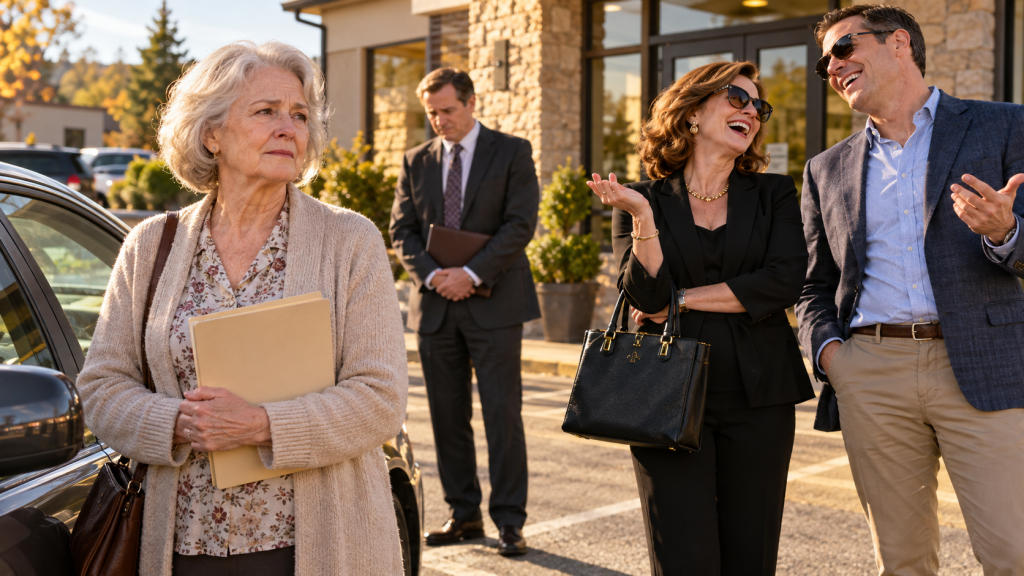
Years earlier, after the will reading, I had stood in a parking lot while Denise and Russell laughed.
I can see them now.
Denise in her black coat.
Russell holding the keys to Harold’s boat.
Their attorney looking away.
I remember being embarrassed.
Not angry.
Embarrassed.
As though receiving something “worthless” proved something about my place in Harold’s life.
I had gone home and cried.
Not because I wanted the house.
Not because I wanted stocks.
Because I wondered if maybe they were right.
Maybe wife number two.
Late-life wife.
Gray-haired wife.
The woman who came after all the important years.
Maybe I had been the roommate.
Convenient caregiver.
Companion.
Then Harold’s letter arrived.
Survey records.
Drafts.
His handwriting.
And slowly I learned something.
The value of what he left me was not measured by whether his children envied it.
It was measured by intention.
He chose.
Clearly.
Repeatedly.
Months apart.
While competent.
While sick.
While stubborn.
He chose me for the dirt.
His children eventually learned to respect that.
More importantly, so did I.
I never gloated.
Not to them.
Not publicly.
I never called Denise from the bank.
Never mailed Russell a copy of the acquisition check.
Never drove a new Cadillac past their houses.
Tempted?
Once or twice.
I am human.
But revenge would have tied the money permanently to their humiliation.
I wanted the money tied to Harold.
Scholarships.
Security.
Land.
Creek.
Choice.
Better legacy.
The burnt-out singlewide was gone.
The weeds changed with seasons.
The compressor station hummed.
The dogwood bloomed.
And every spring, somebody sat on that bench.
Sometimes Denise.
Sometimes Russell.
Sometimes one of the grandchildren.
Sometimes nobody.
That was fine too.
Land does not need to be admired every minute to matter.
Near the end of my life, a granddaughter asked me:
“Grandma Doreen, were you rich?”
Children ask clean questions.
I smiled.
“Eventually.”
She frowned.
“What does that mean?”
“It means I had more money than I expected.”
“Because of the land?”
“Yes.”
“Did it make you happy?”
I thought.
“No.”
She looked disappointed.
Then I continued.
“It made some things easier.”
“That matters.”
She nodded.
“Was Grandpa Harold rich?”
I smiled.
“He had enough.”
“Is that rich?”
“Sometimes.”
She thought.
Then:
“What was the best thing he gave you?”
I looked toward the framed photograph.
Young Harold by the creek.
Not acquisition contract.
Not trust statement.
Not royalty check.
“Time.”
I said.
She rolled her eyes.
“That’s not a thing.”
At eight years old, she was incorrect.
I let her be.
“The land?”
she asked.
“Maybe.”
“The money?”
“No.”
She looked frustrated.
I laughed.
Then:
“He gave me a place where I finally learned I could decide what something meant without asking everybody else first.”
She stared.
Children hate philosophical answers.
“Can I have a cookie?”
“Yes.”
Much better.
After she left, I sat alone.
Harold’s chair still gone? At advanced age maybe in assisted living? But let’s keep home until late. Fine.
I opened the letter one final time.
Doreen, if they laughed about the lot, then they still don’t understand what I left you. Good.
I smiled.
“You were smug.”
No answer.
“You knew.”
Still nothing.
Then I folded the paper.
Put it away.
I no longer needed to reread it.
I understood.
Harold’s children had taken what looked valuable.
The house.
The boat.
The brokerage account.
They left me weeds, creek water, mineral rights, survey stakes, and an old singlewide because they believed value announced itself with polished floors and account statements.
For a while, I believed that too.
Then the surveyor came.
The land agent called.
The court papers arrived.
The truth came out.
But the biggest surprise was not that the “worthless” lot became worth millions.
The biggest surprise was that after all the fighting was over, the millions were not the thing I loved most about it.
The creek was.
The dogwood was.
Harold’s handwriting was.
The scholarship checks were.
Denise bringing pimento cheese sandwiches was.
Russell building a bench was.
The grandchildren learning where not to step in the mud was.
All the things money could not explain.
Years before, Harold had looked at me from a hospital bed and said:
“Give them the house, Doreen. They’ll sell it in a month and it’ll be gone. You keep the dirt.”
I thought he was being stubborn.
He was.
But he was also right.
The house was sold.
The boat was sold.
Much of the brokerage money was spent, reinvested, divided, turned into other things.
The dirt remained.
Not untouched.
Not unchanged.
Nothing worthwhile stays completely unchanged.
But it remained enough.
And so did I.
The last time I sat beside the creek, the afternoon sun was low.
The dogwood petals had begun to fall.
One landed on my sleeve.
I brushed it away.
Then changed my mind.
Picked it up.
Held it in my palm.
I thought of the parking lot.
Their laughter.
My embarrassment.
The lawyer looking away.
I thought of Bernard opening the folder.
The first acquisition call.
The courtroom.
The settlement table.
The scholarship ceremony.
Years of ordinary mornings when money stopped being fear.
I thought of Harold.
Mostly Harold.
Then I laughed.
Softly.
“You were right.”
The creek moved over stones.
“That should make you unbearable wherever you are.”
Wind passed through the grass.
I sat there until the light changed.
Then I stood carefully.
Took my cane.
Looked once more at the land everybody had called worthless.
And went home.
Not rich because someone finally put a price on it.
Rich because I had learned the difference.
THE END STORIES! THANK YOU FOR READING GOOD LUCK !❤️
Related Posts