➡️ PART 3 ENDING PART➡️
“Matt,” Ryan said, his voice breaking, “there’s something Emma doesn’t know yet.”
Every person in the ballroom seemed to stop breathing.
Matthew lowered his champagne glass.
I stared at my husband.
Ryan had tears in his eyes, but there was something else there too.
Resolve.
The same expression he had worn at dinner months earlier when his mother suggested Matt enter our wedding through a side door.
The same expression he had worn when he pushed his chair away from that table and said:
“Then keep your money.”
I thought those words had only been anger.
Apparently they had been a decision.
Ryan reached toward me.
I gave him my hand.
He looked at our guests.
Then at his parents.
Selena’s smile was gone.
Her husband, Richard, sat rigidly beside her.
Ryan took a breath.
“My parents spent the last several months telling everyone they were paying for this wedding.”
A murmur passed through the room.
My stomach tightened.
Selena whispered:
“Ryan.”
He looked toward her.
“Mom, please let me finish.”
The room went silent again.
Ryan continued.
“They did offer to pay for a large part of it.”
“They paid the first venue deposit.”
“And from the beginning, Emma and I were grateful.”
I turned toward him.
Where was he going with this?
“Then one evening,” he said, “my parents told my wife that having Matthew walk her down the aisle would make our wedding look ridiculous.”
I felt heat rise into my face.
A few guests turned toward Selena and Richard.
Ryan kept going.
“They said that because they were helping financially, they had earned the right to decide what the wedding should look like.”
“Emma told them no.”
“I told them no.”
“But afterward, I realized something.”
He looked down at my hand.
“If somebody believes a gift purchases authority over your dignity, it is not a gift anymore.”
I stopped breathing.
Ryan looked at me.
“So six weeks ago, I returned every dollar my parents had contributed.”
My mouth fell open.
Selena stood abruptly.
“What?”
Ryan did not look away from me.
“I paid back the venue deposit.”
“I cancelled two things we did not need.”
“I used my own savings for the remaining balance.”
“And before anyone starts calling that romantic, Emma has every right to be furious that I made a financial decision without telling her.”
A few people laughed nervously.
I stared at him.
“You did what?”
He gave me the smallest guilty smile.
“I know.”
“You returned twenty thousand dollars?”
“Five thousand had actually been paid.”
“The rest was only promised.”
That mattered.
Slightly.
“You didn’t tell me.”
“No.”
“Ryan.”
“I know.”
Matthew covered his mouth, trying not to laugh.
I pointed at him.
“You knew?”
His expression immediately betrayed him.
“Oh my God.”
The entire room laughed.
Matthew raised both hands.
“I was under instructions.”
“You are my brother.”
“I was under very persuasive instructions.”
Ryan took the microphone back.
“I’m going to be in trouble later.”
“You should be.”
More laughter.
Then his expression softened.
“But I didn’t want Emma spending the weeks before her wedding wondering whether defending the person who raised her meant losing the wedding she had already planned.”
My anger disappeared almost as quickly as it came.
Not entirely.
There would be a conversation later.
Marriage deserved honesty too.
But I understood.
Ryan continued.
“I wanted my parents to understand that once I returned their money, every comment they made afterward was simply a comment.”
“Not leverage.”
“Not ownership.”
“Just a choice about the kind of people they wanted to be.”
The room became very quiet.
Selena sat down.
Richard stared at the tablecloth.
Ryan turned toward Matthew.
“And Matt…”
My brother looked up.
“Emma thinks tonight is the first time you gave her away.”
Matthew’s face changed.
“So I need to tell her something you told me the night I asked for your blessing.”
My eyes filled.
Matthew whispered:
“Ryan.”
Ryan smiled.
“I’m sorry.”
Then he looked at me.
“The first time I went to Matt’s apartment to tell him I wanted to marry you, I thought I was going there to ask for permission.”
I looked at my brother.
He was crying now.
Ryan continued.
“Matt told me, ‘Emma does not belong to me, so I can’t give you permission to have her.’”
That sounded exactly like Matthew.
A laugh moved through the room.
Ryan smiled.
“Then he said something I’ve remembered every day since.”
He looked at Matthew.
“You said, ‘I spent eleven years teaching her she never has to shrink herself just because somebody else is uncomfortable.’”
My throat closed.
Ryan’s voice broke.
“Then you told me, ‘If you marry her, don’t ever teach her the opposite.’”
I covered my mouth.
Matthew looked down.
Tears fell onto his suit sleeve.
Ryan continued.
“I promised him I wouldn’t.”
He turned toward his parents.
“And today, when my own family laughed while the man who raised my wife walked her toward me, I realized that promise wasn’t only about how I treat Emma.”
“It was about what I allow around her too.”
The room was so silent I could hear someone sniffle near the back.
Ryan returned his gaze to Matt.
“So no, you did not ruin our wedding.”
“You are one of the reasons there is a wedding.”
Matthew shook his head.
His entire face had crumpled.
Ryan stepped away from me.
Walked toward him.
Then did something I had never seen my husband do in public.
He knelt.
Not because Matthew needed him to.
Not because of height.
Because Ryan wanted to look directly into his eyes without making Matt crane his neck upward during one of the most vulnerable moments of his life.
Ryan held out his hand.
“Thank you for raising my wife.”
That was when the room broke.
Not into applause at first.
Into tears.
Two hundred people.
Quiet tears.
Someone behind me sobbed loudly.
My aunt put both hands over her face.
One of Ryan’s groomsmen turned away and wiped his eyes.
Even the wedding coordinator standing beside the doors was crying.
Matthew looked at Ryan’s outstretched hand.
Then ignored it completely and wrapped both arms around him.
Ryan hugged him back.
The applause came then.
Not polite.
Not ceremonial.
People stood.
Chairs scraped.
Hands clapped.
I saw Selena staring at her son.
Richard’s face had gone pale.
But for the first time that day, I did not look at them long enough for their reaction to become the center of the moment.
This belonged to Matthew.
Ryan stood.
Matthew wiped his face with his napkin.
“You’re ruining my reputation.”
he muttered.
Ryan laughed.
“What reputation?”
“Emotionally unavailable older brother.”
The room laughed through tears.
Then Ryan turned toward me again.
“And there’s one more thing.”
I groaned.
“Ryan.”
“Last one.”
He looked toward the band.
The bandleader nodded.
Soft piano began.
I recognized the song after three notes.
I could not breathe.
It was Moon River.
Our mother’s favorite song.
Not because she had sophisticated taste.
Because she sang it while washing dishes.
Badly.
Constantly.
When our parents died, Matthew had played it on an old cassette player during the first Christmas we spent alone.
I had cried.
He had turned it off.
For years afterward, we could not listen to it.
Then eventually we could.
Quietly.
Together.
I looked at my brother.
“You told him?”
Matthew shrugged.
“He asked.”
Ryan handed the microphone back to the bandleader.
Then said:
“There was supposed to be a traditional father-daughter dance.”
I felt the tears before he finished.
“But Emma’s father cannot be here.”
“So I thought the person who did the work should get the dance.”
Matthew stared.
“No.”
I laughed through my tears.
“Oh yes.”
“No.”
“You gave a speech.”
“That was my maximum emotional commitment for the decade.”
“Too late.”
I held out my hand.
Matthew looked around the room.
Two hundred people waiting.
Then at me.
“Emma.”
“Please.”
His face softened.
He took my hand.
And we danced.
Not elegantly.
Neither of us cared.
I bent my knees a little at first without thinking.
Matthew immediately frowned.
“Stand up.”
I straightened.
“Sorry.”
“You’ve been doing that since you were fifteen.”
“I know.”
“I hate it.”
“I know.”
We smiled.
He placed one hand in mine and the other lightly at my waist.
I held his shoulder.
For a minute, the ballroom disappeared.
I was eight again.
Standing in our parents’ kitchen.
Matthew burning grilled cheese because he had no idea how to cook.
He was nineteen.
Still a kid himself.
Three days after the funeral, I woke from a nightmare and found him sitting on the hallway floor outside my bedroom because he was too afraid I would wake up alone.
He quit community college for two semesters.
Worked mornings stocking shelves.
Evenings at a printing warehouse.
Weekends delivering food before apps made that fashionable.
He learned to braid my hair from a library book.
Badly.
The first braid looked like a rope accident.
I wore it to school anyway.
He came to parent-teacher conferences.
Signed field-trip forms.
Sat in the front row at my middle-school choir concert even though I could not sing.
He learned how to cook chicken without making us both ill.
He stretched money until it became something close to magic.
He dated almost nobody for years because, as I learned much later, childcare cost too much and he did not want strangers staying with me at night.
He never once said:
Look what I gave up for you.
Not once.
Now his hand trembled inside mine.
“You did good.”
I whispered.
He looked confused.
“What?”
“With me.”
His eyes filled.
“I made a lot of mistakes.”
“Probably.”
“Thank you.”
“Rude.”
I laughed.
Then:
“You did good.”
Matthew swallowed.
“Mom and Dad should have been here.”
“Yes.”
His voice broke.
“I spent years worried they’d look at me and think I screwed everything up.”
That stopped me.
“What?”
He looked down.
“When you were little.”
“I didn’t know anything.”
“I was making everything up.”
“Social workers.”
“School forms.”
“Money.”
“You had that fever when you were ten and I waited too long to take you to urgent care because I thought we couldn’t afford it.”
“You were fine.”
“I know.”
“But I remember sitting there thinking, if Mom knew, she’d kill me.”
I cried harder.
“Matt.”
“I was nineteen.”
he whispered.
“Nobody should have handed me a child.”
I tightened my fingers around his.
“They didn’t.”
He looked at me.
“Life did.”
“And you kept me.”
His face collapsed.
“Of course I kept you.”
“I know.”
“That’s the point.”
We kept dancing.
Around us, people watched.
Some cried.
Some smiled.
The photographer moved quietly along the side of the floor.
I noticed her kneeling once, angling the camera.
Not hiding Matthew.
Not cropping him.
Finding us.
Both of us.
Whole.
When the song ended, I kissed his forehead.
He hugged me.
The applause came again.
This time, Matthew bowed dramatically.
“Finally.”
he whispered.
“Recognition.”
I laughed into his shoulder.
For the rest of my life, that would be the moment I remembered when anyone asked about my wedding.
Not Selena’s laughter.
Not Richard’s remark.
Not the fight over photographs.
My brother dancing with me to our mother’s favorite song while two hundred people stood around us and understood, if only for three minutes, the shape of the love that had brought me there.
Selena found me twenty minutes later near the hallway outside the ballroom.
I had gone to fix my makeup.
Mostly to breathe.
She stood beside the restroom entrance.
Still perfectly dressed.
Still composed.
Almost.
“Emma.”
I stopped.
“Selena.”
Her mouth tightened.
“What Ryan did was cruel.”
There it was.
Not:
What I did was cruel.
Ryan.
I looked at her.
“Which part?”
“You know which part.”
“Returning your money?”
“Humiliating us in front of two hundred people.”
I almost laughed.
“You laughed at my brother while he was walking me down the aisle.”
Her face hardened.
“That was a private comment to my husband.”
“Three people around you heard it.”
“That doesn’t mean Ryan needed to make a spectacle.”
I took a breath.
Wedding dress.
Mascara.
Heart pounding.
This was not how I imagined spending my reception.
But maybe some conversations deserve white dresses and loud music on the other side of a door.
“You think Ryan made you look bad.”
I said.
“Yes.”
“No.”
I shook my head.
“He described what happened.”
Selena crossed her arms.
“That speech was designed to turn everyone against us.”
“Matt’s speech?”
“Ryan’s.”
“Matt spoke gently.”
“That almost made it worse.”
I stared.
There it was.
She would have preferred anger.
Anger could be dismissed.
Bitterness.
Oversensitivity.
Matthew had given her nothing to fight except the truth.
I said:
“You spent months telling me my brother’s body would ruin the appearance of my wedding.”
“I never said his body.”
“You said people would stare.”
“You told the photographer to avoid full-length photographs.”
“You asked him to use a side door.”
“You suggested another man stand beside him so it would ‘look less awkward.’”
Selena looked away.
I continued.
“And today you laughed.”
Her voice lowered.
“I was nervous.”
“So was he.”
That landed.
“He asked me this morning whether I was sure I wanted him to walk me down the aisle.”
I watched her face.
“Do you understand what you did?”
“You made the person who raised me wonder whether standing beside me would embarrass me.”
Selena’s eyes filled slightly.
Not enough to erase anything.
Enough to show she heard it.
I continued.
“He has spent most of his life entering rooms knowing people will sometimes stare.”
“He knows children may ask questions.”
“He knows adults can be worse.”
“But this was my wedding.”
“He should not have spent the morning wondering whether my new family was ashamed to be photographed beside him.”
Selena whispered:
“I wasn’t ashamed.”
“Then what were you?”
She did not answer.
I waited.
Finally:
“I wanted the wedding to look beautiful.”
I almost smiled.
There it was.
Honest.
Ugly.
“I thought it did.”
I said.
Then walked away.
She did not follow.
Richard found Ryan.
I know because I saw them through the glass doors leading to the terrace.
Their body language told the story.
Richard pointing.
Ryan listening.
Richard raising his voice.
Ryan not.
Matthew appeared beside me.
“Want me to go save him?”
I looked at my brother.
“From a tall man?”
Matthew grinned.
“I have a chair.”
I laughed so unexpectedly champagne nearly came out my nose.
“You are terrible.”
“Worked.”
It had.
The tension left my shoulders.
We stayed inside.
Ryan returned ten minutes later.
His face looked tired.
“You okay?”
I asked.
“Yes.”
“Your dad?”
“Angry.”
“About?”
“Everything.”
I waited.
Ryan glanced at Matthew.
“He thinks I chose Matt over him.”
Matthew’s smile disappeared.
“That’s not what happened.”
“I know.”
Ryan sighed.
“I told him nobody asked him to become less important.”
“He was asked to stop making someone else less important.”
My throat tightened.
Matthew stared at Ryan for a second.
Then said:
“Okay, now I understand why she married you.”
Ryan smiled.
“Finally?”
“Still evaluating.”
Good.
Ryan’s parents left the reception early.
Not immediately.
They stayed through dinner.
Perhaps pride.
Perhaps because leaving right after the speeches would make the conflict too visible.
Perhaps some part of them still wanted to be there for their son.
Life rarely gives one motive at a time.
Selena hugged Ryan before leaving.
She did not hug me.
Richard shook his son’s hand.
Did not look at Matthew.
Then they left.
The wedding did not collapse.
That surprised me.
For months, Selena had made everything feel as though her approval were a supporting beam.
It wasn’t.
The music continued.
People danced.
Cake was cut.
David? No, no David. Different story. Need avoid. We haven’t established kids here. Fine.
My college friends dragged Matthew onto the dance floor.
He was terrible.
He blamed “a low center of gravity.”
I told him that was not how dancing worked.
He told me I was not a scientist.
Our aunt Lydia drank too much champagne and cried into Ryan’s best man’s jacket about how proud our parents would have been.
The photographer found me near midnight.
Her name was Kayla.
She held the back of her camera toward me.
“I usually don’t show couples images before editing.”
she said.
“But I think you should see this.”
On the screen was a photograph from the aisle.
Matthew and me.
Full length.
Completely visible.
My hand in his.
His chin lifted.
My eyes on him instead of the altar.
Behind us, rows of guests slightly blurred.
Light from the windows touching the edge of my veil.
I stopped breathing.
Kayla said:
“Ignore anyone who told you this needed cropping.”
I cried.
Again.
My face hurt from crying.
“Can I have that one?”
“You’re getting all of them.”
“No.”
I looked at her.
“That one.”
She smiled.
“That one gets printed.”
I nodded.
Large.
I did not say it.
She understood.
At 1:30 in the morning, Ryan and I finally reached our hotel.
I kicked off my shoes.
He loosened his tie.
We looked at each other.
Newly married.
Exhausted.
Emotionally destroyed.
I pointed at him.
“You returned their money without telling me.”
He closed his eyes.
“I knew this was coming.”
“You deserve it.”
“Yes.”
“How much?”
“Five thousand.”
“You used your own savings?”
“Yes.”
“The account you had before we got engaged?”
“Yes.”
“How much was left afterward?”
He named the amount.
Enough that he had not endangered himself.
Still.
I crossed my arms.
“You should have told me.”
“I know.”
“Why didn’t you?”
Ryan sat on the edge of the bed.
“Because I knew you.”
“That is usually a terrible beginning.”
“I knew you would immediately say we should cancel half the wedding so I wouldn’t use my savings.”
“That would have been my right.”
“Yes.”
He looked up.
“That’s why I’m apologizing.”
Good answer.
I sat beside him.
He continued.
“I also knew you were already carrying guilt.”
“About what?”
“Matt.”
I frowned.
“You kept asking whether we should make the ceremony smaller.”
“Whether he would be comfortable.”
“Whether my parents would make a scene.”
“I didn’t want their money sitting in the middle of every conversation like a loaded gun.”
“So I gave it back.”
“And then didn’t tell me because…”
“Because I convinced myself removing the problem mattered more than making the decision together.”
I stared.
Ryan smiled sadly.
“Which is exactly the kind of thing I just gave a speech about.”
I laughed despite myself.
“Congratulations.”
“You discovered hypocrisy before our wedding night.”
“Efficient marriage.”
He took my hand.
“I’m sorry.”
No defense.
No romantic speech about protecting me.
Just sorry.
I squeezed his fingers.
“Don’t do that again.”
“I won’t.”
“Even for a good reason.”
“Especially for a good reason.”
That became one of the first promises of our marriage.
Not the poetic one.
The useful one.
No noble secrets.
Matthew came over two days after the wedding.
Ryan and I had postponed our honeymoon by a week.
Not because of drama.
Because Ryan’s work schedule shifted and because, after the wedding, I was too emotionally exhausted to immediately become a cheerful tourist.
Matt brought leftovers my aunt had frozen.
He sat on our couch.
I handed him coffee.
Then stared at him.
“What?”
he asked.
“You knew.”
“About the money?”
“Yes.”
“Traitor.”
He drank coffee.
“I contain multitudes.”
“You could have told me.”
“Ryan asked me not to.”
“You are my brother.”
“And he was trying to do something decent.”
“Badly.”
“Marriage.”
He shrugged.
“You’ll train him.”
Ryan shouted from the kitchen:
“I can hear you.”
Matthew called back:
“Good.”
I sat beside him.
The humor faded.
“Are you okay?”
He knew what I meant.
The wedding.
The laughter.
The speeches.
The attention.
Matthew stared into his cup.
“Yes.”
Then:
“No.”
I waited.
“I hated that everybody stood up.”
My heart dropped.
“During your speech?”
“After.”
“I felt like the dwarf inspirational segment at an awards show.”
I winced.
“Matt.”
“I know they meant well.”
He rubbed his thumb along the cup.
“But there’s a weird thing that happens.”
“What?”
“People can be cruel because of how I look.”
“Then other people respond by turning basic respect into sainthood.”
He looked at me.
“I don’t want applause for raising my sister because I’m short.”
My throat tightened.
“They weren’t applauding your height.”
“I know.”
“But some people will tell the story that way.”
He smiled without humor.
“Little man, enormous heart.”
I closed my eyes.
“God.”
“Exactly.”
I understood.
Cruelty and sentimentalizing can both turn a person into a symbol instead of a person.
Different intent.
Same erasure.
“I’m sorry.”
“For what?”
“For loving the moment.”
Matthew softened.
“You’re allowed.”
“I loved it too.”
Then:
“I’m just telling you the complicated part.”
I nodded.
“Thank you.”
He leaned back.
“Also, your husband kneeling was dramatic.”
“He wanted to look you in the eye.”
“I know.”
“Did that bother you?”
“No.”
Matthew smiled.
“He asked me beforehand whether it would.”
Of course he did.
That mattered.
I exhaled.
Then said:
“You did raise me.”
“Yes.”
“You deserve credit.”
“Yes.”
“You hate compliments.”
“Yes.”
“So what am I supposed to do with all this?”
“Buy me lunch.”
I laughed.
“There he is.”
Ryan’s parents did not speak to us for six weeks.
Selena told relatives she was “giving us space.”
Richard told Ryan’s sister that the wedding had become “a public attack on the groom’s parents.”
Ryan refused to fight through relatives.
When someone called to mediate, he said:
“If Mom and Dad want to talk to us, they know our number.”
Then changed the subject.
That impressed me.
I had expected guilt to get him.
It did.
He simply stopped letting guilt drive.
There is a difference.
On week seven, Selena called.
Ryan put the phone on speaker after asking whether I wanted to listen.
I did.
“Ryan.”
“Hi, Mom.”
A pause.
“I think enough time has passed.”
My eyebrows rose.
Ryan’s did too.
“For what?”
“For emotions to settle.”
He waited.
She continued.
“Your father and I are willing to move forward.”
Ryan rubbed his forehead.
“From what?”
Selena’s voice tightened.
“The wedding.”
“What about it?”
“This is exactly why conversations with you have become impossible.”
Ryan looked at me.
I said nothing.
He replied:
“Mom, moving forward requires talking about what happened.”
“I apologized for being nervous.”
“You did not apologize to Matthew.”
“He embarrassed us.”
“No.”
Ryan’s voice stayed calm.
“He said what you did without using your names.”
“Everybody knew.”
“Because everybody saw you.”
Silence.
Then Selena said:
“I will not grovel.”
“Nobody asked you to.”
“What do you want?”
There.
The important question.
Ryan answered:
“I want you to stop talking about Matt’s body as though it is an aesthetic problem.”
“I want you to stop saying he ruined pictures.”
“And I want you to acknowledge that you were cruel to him and Emma.”
Selena was quiet.
Then:
“And if I don’t?”
Ryan swallowed.
I could see how hard the next words were.
“Then we’ll have a more distant relationship.”
I looked at him.
His mother inhaled sharply.
“So that’s a threat.”
“No.”
“It’s a boundary.”
“Same thing.”
“No.”
Ryan closed his eyes briefly.
“A threat says I’ll hurt you if you don’t do what I want.”
“A boundary says what I will do if a situation is unhealthy for me.”
His therapist? Not yet. Maybe he knows. Fine.
Selena said nothing.
Then hung up.
Ryan sat at the table for a long time afterward.
I touched his hand.
“You okay?”
“No.”
I did not tell him he had done the right thing.
He knew.
Sometimes doing the right thing still hurts.
I made tea.
We sat.
That was marriage too.
Richard called separately three days later.
He asked to meet Ryan alone.
Ryan went.
I did not ask to come.
When he returned, he looked exhausted.
“How bad?”
“He apologized.”
I blinked.
“Your father?”
“Yes.”
“What did he say?”
Ryan dropped his keys.
“He said he has spent his whole life worrying about how people see the family.”
“Status.”
“Appearances.”
“Which school.”
“Which neighborhood.”
“What kind of car.”
“What the wedding looked like.”
I knew.
“He said he told himself the comments about Matt were about protecting the wedding from gossip.”
“But after hearing Matt’s speech, he realized the only person making Matt into a spectacle was him.”
I sat down.
“That’s…”
“I know.”
“Did he ask to talk to Matt?”
“Yes.”
“What did you say?”
“That it’s Matt’s decision.”
Good.
A week later, Matthew received a letter.
Not a call.
Richard said he did not want to put Matt in the position of having to accept an apology in real time.
That was the first thoughtful thing he had done in the entire story.
Matthew brought the letter to my house.
“You read it?”
I asked.
“No.”
“Why?”
“Wanted witnesses.”
“You’re dramatic.”
“Your husband kneels at receptions.”
Fair.
He opened it.
Richard wrote:
Matthew,
I made comments about your body that were cruel, disrespectful, and beneath the behavior I expect from myself.
Matthew stopped.
“Strong opening.”
He continued.
I told myself I was concerned about appearances. The truth is that I was concerned about my own discomfort with how other people might react, and I made that discomfort your burden.
My throat tightened.
I also spoke about your role in Emma’s wedding as if my financial contribution entitled me to reduce yours. It did not.
Matthew read more slowly.
You did not owe me dignity before I owed it to you. Your accomplishments, sacrifices, or relationship with Emma are not what make the mockery wrong. It would have been wrong if I knew nothing about you except your name.
Matthew stopped again.
His eyes filled.
“That part.”
I nodded.
That part mattered.
Not:
You are extraordinary, therefore I should respect you.
Respect should not require biography.
Richard finished:
I am sorry. I do not expect forgiveness or a relationship. If you are willing to speak with me someday, I will listen.
Richard.
Matthew folded the letter.
I asked:
“What do you think?”
“It’s good.”
“Will you meet him?”
“No.”
I blinked.
“Never?”
“I didn’t say never.”
He placed the letter down.
“I don’t owe an immediate reward for a competent apology.”
I smiled.
“True.”
“Maybe later.”
He met Richard four months after that.
Coffee shop.
Neutral place.
I did not attend.
Neither did Ryan.
When Matt returned, I called.
“How was it?”
“Fine.”
“Fine?”
“He apologized again.”
“I said I believed him.”
“And?”
“And we talked about baseball.”
“That’s it?”
“What do you want?”
“A reconciliation montage?”
“Yes.”
“No.”
Matthew laughed.
“We’re not friends.”
“But I don’t tense up when I see his name anymore.”
That was enough.
Selena took longer.
Much longer.
Her first apology was:
“I’m sorry if Matthew felt humiliated.”
Matthew rejected that without anger.
He told Ryan:
“I’m not doing grammar therapy for your mother.”
Her second:
“I’m sorry the wedding became uncomfortable.”
Worse.
Her third did not arrive for almost a year.
By then, Ryan and I were expecting our first child.
A daughter.
Selena knew.
We did not use pregnancy as leverage.
We did not say apologize or you cannot see the baby.
We simply maintained the same distance that already existed.
One afternoon, a letter arrived addressed to me.
Not Ryan.
Not Matthew.
Me.
Selena wrote:
Emma,
I have spent a year trying to apologize without admitting what I was apologizing for.
I sat down.
I mocked your brother because his appearance did not fit the image I had created for my son’s wedding. I disguised that cruelty as concern about photographs, guests, and elegance.
My eyes filled.
Worse, I expected you to cooperate because we were contributing money. I used generosity as leverage and then felt humiliated when Ryan removed the leverage.
That was painfully honest.
At the wedding, I told myself the speeches were designed to shame me. I understand now that most of the shame came from hearing my own behavior described aloud.
I stopped.
Read that twice.
Then:
I also understand something I missed at the time: Matthew should not have needed to raise you, sacrifice for you, or give a beautiful speech to deserve ordinary respect from me.
There.
Richard’s lesson had reached her too.
I am sorry to Matthew. I am sorry to you. And I am sorry to Ryan for putting him in the position of defending basic decency from his own parents.
No request for the baby.
No:
Can we move on?
No:
Family is family.
Just apology.
I called Matthew.
Read it.
He was quiet.
Then:
“That’s an apology.”
“Yes.”
“What do you want to do?”
I asked.
He laughed.
“Why do you think I decide?”
Old habits.
Right.
“What do I want to do?”
I repeated.
“Yes.”
I looked at the letter.
“I want to see whether her behavior changes.”
“Good.”
That was what we did.
Our daughter, Lily, was born the following spring.
Matthew arrived at the hospital carrying a stuffed elephant almost the size of him.
I stared.
“Subtle.”
“She needs to understand scale.”
“You’re impossible.”
He approached the bassinet.
Then stopped.
For all his confidence, his expression changed.
Fear.
Wonder.
He held out his hands.
“Can I?”
I lifted Lily carefully and placed her into his arms.
He looked down at her.
His face crumpled.
“Emma.”
“What?”
“She looks like Dad.”
My throat closed.
I had seen it too.
Something around the eyes.
Probably imagination.
Maybe genetics.
Didn’t matter.
Matthew sat.
Lily’s tiny fingers curled around one of his.
He laughed softly.
“Here we go again.”
“What?”
“Another expensive girl.”
I threw a pillow.
He ducked.
Ryan took a picture.
That photograph became my second favorite family image.
Not because it said anything about dwarfism.
Because Matthew looked exactly like what he was.
An uncle holding his niece.
Nothing remarkable.
Everything important.
Selena and Richard met Lily after we were home.
Not immediately.
A week later.
They came together.
Selena stood in our living room holding a casserole.
Classic maternal peace offering.
She saw Matthew on the couch.
Stopped.
He looked up.
For one second, years of awkwardness filled the room.
Then Selena said:
“Hi, Matthew.”
“Hi, Selena.”
No speech.
Good.
She handed me the casserole.
Asked whether she could hold Lily.
I said yes.
She sat.
Held her granddaughter.
Cried.
Richard stood beside her.
Matthew made coffee.
Life continued.
That was the beginning.
Not full reconciliation.
Behavior.
Selena stopped commenting on Matthew’s height.
That sounds like an absurdly low bar.
It was still necessary.
When Lily’s first birthday photographs were taken, Selena said nothing about composition.
When Matt appeared in the front row at her baptism, no side door was suggested.
When a distant relative made a stupid joke at a Christmas gathering, Richard said:
“Don’t.”
One word.
Immediate.
Matthew heard.
He did not praise him.
He should not have had to.
Basic respect does not earn medals.
But change can still be noticed.
Ryan and I had hard years too.
Not because of his parents.
Because marriages have ordinary difficulties once wedding speeches stop.
Money.
Sleep.
Childcare.
Work.
My tendency to say:
“I’m fine.”
when I was furious.
Ryan’s tendency to solve problems before asking whether I wanted them solved.
That one sounded familiar.
The returned wedding money had been our first warning.
Good intention.
Unilateral action.
We developed a rule:
No surprises involving money, family boundaries, or legal paperwork.
Birthday cakes?
Fine.
Trips?
Discuss.
A puppy?
Absolutely discuss.
Ryan once tried to argue a puppy was “emotionally classified as a gift.”
Rejected.
Matthew sided with me.
Lily got the dog anyway five years later.
His name was Waffles.
I lost.
Marriage.
As Lily grew, Matthew became one of her favorite people.
Not because he spoiled her.
Although he did.
Because he treated her questions seriously.
At four, she asked:
“Uncle Matt, why are you little?”
The room froze.
Ryan looked at me.
I looked at Matthew.
Matthew said:
“Because I didn’t eat my broccoli.”
Lily gasped.
“Really?”
“No.”
I threw a napkin at him.
He laughed.
Then told her simply:
“My body grew differently from your dad’s.”
“Why?”
“That’s how I was born.”
She considered.
Then:
“Can you still have ice cream?”
“Yes.”
“Okay.”
Conversation over.
Children can be refreshingly efficient when adults do not fill questions with shame.
Later, I asked whether it bothered him.
“The question?”
“No.”
“The panic on all your faces?”
“Yes.”
Fair.
He told us:
“You don’t have to teach her that my height is unspeakable.”
That became another lesson.
Respect did not mean pretending difference did not exist.
It meant difference was not an invitation to reduce the person.
When Lily was six, she saw our wedding album.
She climbed onto my lap.
“Mommy, you look like a princess.”
“Correct.”
Ryan shouted from the kitchen:
“Debatable.”
“Your father is jealous.”
She turned pages.
Cake.
Dancing.
Flowers.
Then the aisle photograph.
My favorite.
Matthew and me.
Whole.
No crop.
Lily touched the page.
“Uncle Matt walked you?”
“Yes.”
“Why?”
“Because my dad died when I was little.”
“And Uncle Matt took care of you.”
“Yes.”
She nodded.
Then:
“Like your dad?”
The question stopped me.
I looked at the photograph.
Matthew never called himself that.
Neither did I.
He was my brother.
That mattered.
I did not need to change the title to enlarge what he had done.
“Not exactly.”
I said.
“He was my brother.”
“But he did some dad things.”
“And some mom things.”
“He did all the things I needed.”
Lily thought.
“Family things.”
My eyes filled.
“Yes.”
“Family things.”
Children, again, finding the cleanest language.
Matthew never married.
Not because of me.
That is another story people tried to tell.
He dated.
Had two serious relationships.
One ended badly.
One ended kindly.
He built a full life.
Friends.
Travel.
A job in logistics management he genuinely liked because, according to him, “somebody has to make sure stores receive toilet paper.”
He bought a condo.
Learned photography.
Terrible at landscapes.
Excellent at candid portraits.
At forty-eight, he started volunteering with a support network for young adults with dwarfism and their families.
He hated when people described him as inspirational.
Naturally, the organization asked him to speak frequently.
“Punishment for being articulate.”
he told me.
Sometimes parents asked him how to raise confident children with dwarfism.
His answer was rarely profound.
“Same way you raise other kids.”
“Give them responsibilities.”
“Let them fail.”
“Adapt what actually needs adapting.”
“Stop making every stranger’s stare into a family emergency.”
“Also get good health care.”
Practical.
Matt.
Our relationship with Ryan’s parents settled into something real.
Not perfect.
Selena never became the warm, effortless mother-in-law I once imagined.
I stopped needing her to.
She could be controlling.
I could be stubborn.
Ryan could disappear emotionally during conflict if we did not call him back into the room.
Richard could still care too much about appearances.
People change without becoming new species.
What changed was what happened after.
Selena might say:
“I think Lily should wear the blue dress for pictures.”
I could say:
“She chose green.”
And Selena would stop.
No war.
Richard might start planning a holiday without asking.
Ryan would say:
“Check with everyone first.”
And he would.
Small corrections.
Repeated.
That is what real change looked like.
Not one wedding speech that transformed everyone.
Practice.
On our tenth anniversary, Ryan gave me a wrapped frame.
I opened it.
The aisle photograph.
Not the original print.
A larger one.
Restored from the high-resolution file.
Matthew and me.
The inscription on the back read:
Nothing important was cropped.
I burst into tears.
Ryan looked proud of himself.
Then I laughed.
“What?”
“That is disgustingly sentimental.”
“You love it.”
“I do.”
We hung it in the hallway.
Not because I wanted every guest to understand the story.
Because I liked the photograph.
Years later, when Richard visited, he stopped in front of it.
He stood there a long time.
I watched from the kitchen.
He eventually said:
“I was wrong.”
I walked beside him.
“Yes.”
He looked at me.
“You really don’t soften things.”
“I’ve matured.”
He smiled sadly.
Then looked back at the photograph.
“He looks proud.”
“He was terrified.”
Richard turned.
“Really?”
“Yes.”
“He asked whether I was sure I wanted him.”
Richard’s face changed.
That wound never completely disappeared from him either.
Good.
Not endless guilt.
Memory.
“I did that.”
he said.
“You contributed.”
He nodded.
“I’m sorry.”
“I know.”
Then:
“He forgave me?”
I looked at him.
“You’d have to ask him.”
Richard smiled.
“Still no shortcuts.”
“Never.”
At Matthew’s fiftieth birthday, we threw a party.
Small.
He had forbidden speeches.
So naturally Ryan prepared one.
Matt threatened to leave.
Lily, now a teenager, grabbed his jacket.
“You can’t. There’s cake.”
He stayed.
Ryan kept the speech short.
Mostly jokes.
Then he said:
“The first time Matt and I had a serious conversation, he gave me one rule for marrying Emma.”
Matthew groaned.
“Again?”
Ryan smiled.
“Don’t make her shrink herself because someone else is uncomfortable.”
He looked toward me.
“I have failed that rule sometimes.”
“So has Emma.”
I shouted:
“Excuse me?”
Everyone laughed.
Ryan continued.
“But it became one of the best things anybody ever told me about marriage.”
He raised his glass.
“To Matt.”
Matthew pointed.
“No inspirational nonsense.”
Ryan nodded.
“To the man who taught me one useful sentence and has been insufferable ever since.”
“Better.”
We drank.
Then Lily stood.
“Oh no.”
Matthew said.
“I also have a toast.”
“You’re cut off.”
She ignored him.
“When I was little, Uncle Matt told me he was short because he didn’t eat broccoli.”
Everyone laughed.
“He lied.”
Matthew nodded.
“Proudly.”
Lily smiled.
“But he also taught me something true.”
She looked at him.
“Being different is not the same thing as being fragile.”
Matthew’s expression changed.
She continued.
“And being protective of somebody does not mean speaking for them.”
That came from him.
I knew it.
“He always lets me ask stupid questions.”
“You ask many.”
he interrupted.
“See?”
Laughter.
Then Lily raised her glass.
“To Uncle Matt.”
“No adjectives?”
he asked suspiciously.
“No.”
“Acceptable.”
We drank.
He cried anyway.
Denied it.
Naturally.
Selena died twelve years after our wedding.
Cancer.
Fast.
The last year changed many things and solved very little.
Illness does not automatically make people wise.
But it can make time visible.
Matthew visited her once near the end.
His decision.
Not mine.
He did not tell me until afterward.
“Why’d you go?”
I asked.
“Wanted to.”
“How was she?”
“Tired.”
He sat at my kitchen table.
“She apologized again.”
“For the wedding?”
“Yes.”
“What did you say?”
“I told her she had already apologized.”
Then:
“She said she still thought about laughing.”
Matthew looked down.
“She said she couldn’t understand why she did it.”
“What did you say?”
“That she could.”
I stared.
He continued.
“I told her she knew exactly why.”
“She wanted social approval.”
“She felt uncomfortable.”
“She chose cruelty because it made her and Richard feel like they were on the same side of the joke.”
My throat tightened.
“That’s harsh.”
“It was true.”
“What did she say?”
“She nodded.”
Then:
“I told her the important thing wasn’t pretending she became a person who could never do something like that.”
“It was knowing she had been that person once and choosing differently afterward.”
I smiled.
“When did you become a therapist?”
“I charge by the insult.”
He smiled too.
Then grew quiet.
“She asked if I forgave her.”
“Did you?”
“I said yes.”
He looked at me.
“I meant it.”
Selena died two weeks later.
At the funeral, I stood beside Ryan.
Matthew came.
He sat with us.
No grand symbolism.
No one remarked on it.
That was right.
Richard lived much longer.
By then, he and Matthew had developed an odd friendship based mostly on baseball and complaining about home repairs.
No one predicted that.
Richard eventually asked Matthew to help him choose photographs for Selena’s memorial album.
The irony was not lost on any of us.
Matthew said:
“Full-length only.”
Richard laughed until he cried.
That joke would have been impossible years earlier.
Now it carried history without cruelty.
Different.
When Richard died in his eighties, Matthew helped carry his memory too.
People are complicated.
Forgiveness makes strange architecture.
Ryan and I grew older.
Our wedding became one story among hundreds.
Births.
Deaths.
Jobs.
Moves.
Arguments.
Holidays.
Lily’s first heartbreak.
Her graduation.
Matthew’s surgery one year.
Ryan losing his job and pretending not to be scared.
Me returning to school for a master’s degree at forty-five because I had postponed it for years.
Life widened.
That mattered.
For a long time after the wedding, I thought the greatest thing Ryan ever did for me was defend Matthew.
It wasn’t.
Defending someone once, publicly, can be dramatic.
The greater thing was what happened later.
He kept doing the small work.
When relatives made jokes, he stopped them.
When his parents complained about boundaries, he held them.
When I was wrong, he told me.
When he was wrong, eventually, he admitted it.
When Matthew needed surgery and hated asking for help, Ryan took time off and drove him without making a performance out of it.
When Lily was thirteen and came home crying because classmates mocked another child’s appearance, Ryan did not tell her to “ignore it.”
He asked:
“What did you do?”
She said:
“Nothing.”
He replied:
“Then tomorrow you get another chance.”
That was Matthew’s lesson traveling through our family.
Not sainthood.
Responsibility.
On Lily’s wedding day, many years after mine, I stood inside a quiet dressing room fastening the back of her gown.
Ryan was already crying downstairs.
Predictable.
Lily looked at herself in the mirror.
“Nervous?”
I asked.
“Yes.”
“Good.”
“That’s terrible.”
“Marriage deserves respect.”
She rolled her eyes.
Then:
“Mom?”
“Yes?”
“I want you and Dad to walk me together.”
My eyes filled.
“That would be beautiful.”
“And Uncle Matt is reading during the ceremony.”
I smiled.
“He’ll complain.”
“He already did.”
Of course.
Then she looked at me.
“Were you nervous walking with him?”
I thought of my wedding morning.
Matthew’s trembling hand.
His question.
You sure you want me?
“Yes.”
“Why?”
“Because I knew he was nervous.”
“No.”
She turned.
“About Grandma Selena.”
I understood.
“Yes.”
I said.
“I was angry.”
“Did you hear her laugh?”
“Yes.”
“That must have ruined it.”
I smiled.
“No.”
Lily looked confused.
“Really?”
“No.”
“It hurt.”
“But she did not get to own the memory.”
I adjusted the edge of her veil.
“People who behave badly do not automatically receive naming rights over the day.”
Lily smiled.
“That sounds like Uncle Matt.”
“Unfortunately.”
From outside the room came his voice:
“I heard that.”
We laughed.
Matthew entered wearing a dark suit.
Older now.
Gray at the temples.
Still my brother.
He looked at Lily.
His face softened.
“You look expensive.”
She hugged him.
“You look short.”
He gasped.
“I have been betrayed by my own teachings.”
We laughed until our makeup had to be repaired.
Then the music began.
Ryan and I walked our daughter down the aisle.
Matthew waited near the front with his reading.
No one stared.
Or maybe they did.
People stare at weddings.
At beautiful dresses.
At crying fathers.
At flowers.
At anything unusual.
It no longer mattered.
Matthew read a short passage about love being patient without becoming passive.
His own addition.
Of course.
Afterward, during photographs, the photographer said:
“Everybody squeeze in.”
Matthew called:
“No cropping.”
I nearly lost it.
Lily looked confused.
Ryan whispered the story.
She groaned.
“Dad!”
Family history survives in jokes.
Sometimes that is healing too.
Matthew grew old before I was ready.
Eleven years separated us.
As children, that age gap had made him almost parental.
As adults, it eventually became frightening.
His health had complications over the years.
Nothing dramatic at first.
Then more appointments.
Surgeries.
Mobility changes.
He hated people fussing.
Naturally we fussed.
One afternoon, when he was seventy-three, I took him to a cardiology appointment.
He sat in the passenger seat complaining about my driving.
“You’re going eight under.”
“There’s traffic.”
“There is one Honda.”
“Stop supervising.”
“You drive like somebody carrying soup.”
I laughed.
At the hospital, I helped with his coat.
He looked at me.
“You know I can do that.”
“I know.”
“Then why?”
“Because I’m your sister.”
He narrowed his eyes.
“That excuse sounds familiar.”
I smiled.
“Yeah.”
After the appointment, we sat in the parking lot.
He was tired.
He hated when I noticed.
“Matt.”
“What?”
“Did you ever resent me?”
He stared.
“What kind of parking-lot question is that?”
“A delayed one.”
“Forty years delayed.”
“Answer.”
He looked out the windshield.
“Sometimes.”
My heart stopped.
Then he laughed at my face.
“Emma, I was nineteen.”
“I wanted to go out.”
“I wanted to go to school.”
“I wanted to be irresponsible.”
“Sometimes you were annoying.”
“I resented the situation.”
He looked at me.
“I never resented that you existed.”
Tears filled my eyes.
“I’m sorry.”
“For what?”
“For everything you gave up.”
His expression hardened.
“No.”
“What?”
“Do not turn my choices into a tragedy because I’m old.”
“I gave things up.”
“I also got things.”
“What?”
He looked at me like I was stupid.
“You.”
I cried.
He groaned.
“Oh God.”
“You did that on purpose.”
“Get me food.”
We went for burgers.
That was Matthew.
Never allowing sentimentality to remain unsupervised for long.
He died at seventy-six.
Quietly.
In the hospital after complications from an infection his body could not fight off.
I was sixty-five.
Ryan sat beside me.
Lily flew home.
For three days, Matthew joked with nurses.
Complained about hospital coffee.
Asked whether anybody had fed his cat.
Then the jokes stopped.
His breathing became harder.
One evening, he opened his eyes and found me.
“Emma.”
“I’m here.”
“Obviously.”
Still him.
I smiled through tears.
He looked toward Ryan sleeping in the chair.
“Good guy.”
“Yes.”
“I picked him.”
“You absolutely did not.”
“I approved.”
“You barely tolerated him.”
“Same.”
I laughed.
Then he became serious.
“Did I do okay?”
The question broke something open inside me.
Seventy-six years old.
Still carrying nineteen.
Still wondering whether our parents would think he had done enough.
I leaned close.
“Matt.”
He looked at me.
“You did not do okay.”
His eyes widened slightly.
“You did everything.”
Tears slipped from the corners of his eyes.
I held his hand.
“You gave me a childhood when yours had just ended.”
“You gave me school lunches.”
“Christmases.”
“Bad braids.”
“Terrible chicken.”
“That was one time.”
“Many times.”
He smiled weakly.
“You walked me through every terrible year.”
“You walked me down the aisle.”
“You loved my husband.”
“Eventually.”
“You loved my daughter.”
“Obviously.”
I was crying too hard to see him clearly.
“You did not replace Mom.”
“You did not replace Dad.”
“You were never supposed to.”
“You were Matthew.”
“That was enough.”
His fingers tightened weakly.
“More than enough.”
He closed his eyes.
Then opened them again.
“Photo.”
“What?”
“The wedding one.”
I knew.
Full length.
Nothing cropped.
I had a copy on my phone.
I opened it.
Held it beside him.
He looked.
Young Matthew.
Young me.
My veil.
His suit.
Our hands linked.
He smiled.
“I looked good.”
“You did.”
“Better than Ryan.”
“Obviously.”
He closed his eyes again.
“Tell Mom.”
My throat tightened.
“What?”
“That I tried.”
I put my forehead against his hand.
“I’ll tell her.”
He died the next morning.
Ryan held me.
Lily held him.
And for the first time since I was eight years old, I lived in a world without Matthew.
I hated it.
There is no beautiful way to write that.
I hated it.
At his funeral, I refused to make him a lesson.
People asked whether I wanted to speak.
I said yes.
Then rewrote the eulogy eleven times because every draft sounded like:
Small man, giant heart.
Hero brother.
Inspirational life.
I could hear him insulting me from the afterlife.
So I stood at the lectern and told the truth.
“My brother hated speeches about overcoming.”
A few people laughed.
“He especially hated the phrase ‘bigger than life,’ because he said people only used it around him when they were trying too hard.”
More laughter.
I breathed.
“Matthew was not wonderful because he had dwarfism and still accomplished things.”
“He was wonderful because he was funny.”
“Stubborn.”
“Loyal.”
“Frequently irritating.”
“He burned chicken.”
“He lied to my daughter about broccoli.”
“He cheated at cards.”
“He raised me after our parents died because he loved me and because there was nobody else.”
I looked toward Ryan.
Lily.
Richard? He had died maybe. Fine.
“He made sacrifices.”
“But he also had a life that belonged to him.”
“He worked.”
“Travelled.”
“Loved people.”
“Got his heart broken.”
“Broke a few hearts too, although he would want that emphasized.”
Laughter through tears.
“I refuse to reduce him to what he did for me.”
My voice broke.
“Even though what he did for me was everything.”
The room became quiet.
Then I told them about the wedding.
Not Selena’s laughter.
Matthew’s question before the doors opened.
You sure you want me?
And my answer.
You’re the only person I ever wanted.
I looked toward his photograph.
“That remained true.”
I finished.
No standing ovation.
Thank God.
Matthew would have haunted us.
People simply sat.
Cried.
Smiled.
That was right.
After the funeral, Lily handed me an envelope.
“Uncle Matt left this with me last year.”
“What?”
“He told me not to give it to you unless he died.”
I glared upward.
“Still keeping secrets.”
Ryan smiled sadly.
I opened it at home.
Inside was a photograph.
The wedding aisle.
Not the professional one.
A candid shot someone else had taken from the side.
Matthew and me walking.
Selena and Richard visible behind us.
Selena’s program near her mouth.
Richard leaning toward her.
Exactly around the moment of the whisper.
My stomach tightened.
Then I saw what Matthew had written on the back.
Dear Emma,
You once told me this photo made you angry because you could see them laughing behind us.
I had forgotten telling him that.
Look at it again.
I turned the photograph over.
Looked.
Matthew and me.
We were smiling at each other.
Not at them.
Not the guests.
Each other.
His note continued.
They are in the picture. They are not the picture.
I stopped breathing.
That is true of most cruel people you meet. They may appear in the background of important days. Don’t give them the frame.
Tears blurred the page.
Of course.
Even dead, my brother found concise ways to rearrange my life.
Also, I still think I looked better than Ryan.
I laughed through sobs.
Ryan shouted from the kitchen:
“What?”
“Nothing.”
Then:
“Matt says you looked terrible at our wedding.”
Ryan walked in.
“Dead people shouldn’t get immunity.”
“He’d disagree.”
We laughed.
Cried.
Held each other.
I framed the candid photograph beside the professional one.
One showed the beauty.
The other showed the truth.
Both mattered.
Years passed.
My grief changed shape.
At first, I reached for my phone three times a day to text Matthew.
Then once.
Then less.
I still talked to him in grocery stores when no one was near.
Lily said that was normal.
Ryan said it was “concerning but charming.”
I ignored him.
On our fortieth wedding anniversary, Ryan and I sat together looking through the album.
His hair was gray.
Mine too.
We had made it.
Not perfectly.
Honestly enough.
We reached the photograph of Matthew walking me down the aisle.
Ryan touched the page.
“Best decision we made.”
I looked at him.
“Marrying you?”
“No.”
“Putting Matt in every full-length photograph.”
I laughed.
Then cried.
Ryan took my hand.
“I miss him.”
“I know.”
“He scared the hell out of me when I asked to marry you.”
“What did he say?”
Ryan smiled.
“You know most of it.”
“Not everything.”
He hesitated.
Then:
“He said, ‘Emma has spent her whole life being grateful for things she should have been allowed to expect.’”
My throat tightened.
“What did he mean?”
“Family.”
“Safety.”
“People showing up.”
Ryan looked at me.
“He said, ‘Don’t make her thank you for basic kindness like it’s a favor.’”
I stared.
That was Matthew.
Always knowing my wounds before I had names for them.
Ryan continued.
“I’ve thought about that our whole marriage.”
“You never told me.”
“It felt like something he said to me.”
I nodded.
Fair.
Then Ryan smiled.
“He also told me if I hurt you, he knew where to buy a shovel.”
I burst out laughing.
“There he is.”
When people asked me about my wedding in later years, they usually knew the story.
Families talk.
Stories spread.
Sometimes someone would say:
“Was that the wedding where your in-laws mocked your brother and then everyone cried at his speech?”
I would say:
“Yes.”
But that description always felt wrong.
It made cruelty the first noun.
I preferred another version.
My brother walked me down the aisle.
He gave a beautiful toast.
My husband stood up and thanked him.
We danced to our mother’s favorite song.
The photographs were beautiful.
Everything else was background.
That was the lesson Matthew left me.
Not that cruelty never matters.
It does.
Words can wound people who have already spent a lifetime developing armor.
Mockery should be confronted.
Boundaries matter.
Apologies matter.
Change matters.
But cruel people should not receive more narrative power than they earned.
Selena laughed.
Richard grinned.
Those things happened.
They hurt.
They also changed.
They apologized.
They became better in some ways.
And even if they had not, Matthew’s worth would never have depended on whether they eventually understood it.
That is what I had to learn.
His value was not proven by two hundred people standing.
Not by Ryan kneeling.
Not by an emotional toast.
Not by sacrifices.
Not by raising me.
Not by becoming the sort of man whose biography could force prejudiced people to feel ashamed.
He had deserved respect before anyone knew a single noble thing about him.
Because dignity is not a prize awarded for exceptional character.
It belongs to ordinary people too.
Matthew knew that.
Eventually, so did we.
I still have the wedding photograph.
It hangs in my hallway.
Matthew and me.
Full length.
Nothing cropped.
Sometimes visitors notice it before they know the story.
They say:
“That’s a beautiful picture.”
I say:
“Yes.”
I no longer explain immediately.
I do not tell them about the laughter.
The side-door suggestion.
The photographer.
The speeches.
I let the photograph exist first as what it is.
A bride.
Her brother.
Walking together.
If they ask who he was, I tell them.
“My brother Matthew.”
Then perhaps:
“He raised me.”
Maybe later, if there is time, I tell the rest.
But I always end in the same place.
Not with Selena.
Not with Richard.
Not even with Ryan’s speech.
With Matthew squeezing my hand halfway down the aisle after hearing someone laugh.
He heard it.
I know he did.
His fingers tightened.
For one second, I feared he might let go.
He didn’t.
He kept walking.
Not because he was fearless.
Because we had already walked through worse together.
Funeral homes.
Empty refrigerators.
School offices.
Bills.
Nightmares.
My first breakup.
College acceptance.
The day I moved out.
The day I called him to say Ryan had proposed.
One aisle was nothing compared with all of that.
At the altar, he kissed my cheek and whispered:
“Mom and Dad would be proud.”
For years, I thought he meant proud of me.
Older Emma understands he was asking a question too.
Would they be proud of him?
Yes.
I wish I had answered then.
So I answer now whenever I pass the photograph.
“Yes, Matt.”
“They were.”
And then I add the thing he spent too many years needing to hear.
“So am I.”
My in-laws once worried that my brother would make my wedding look small.
They were right about one thing.
Standing beside Matthew made some things look very small.
Cruel jokes.
Social approval.
Perfect photographs.
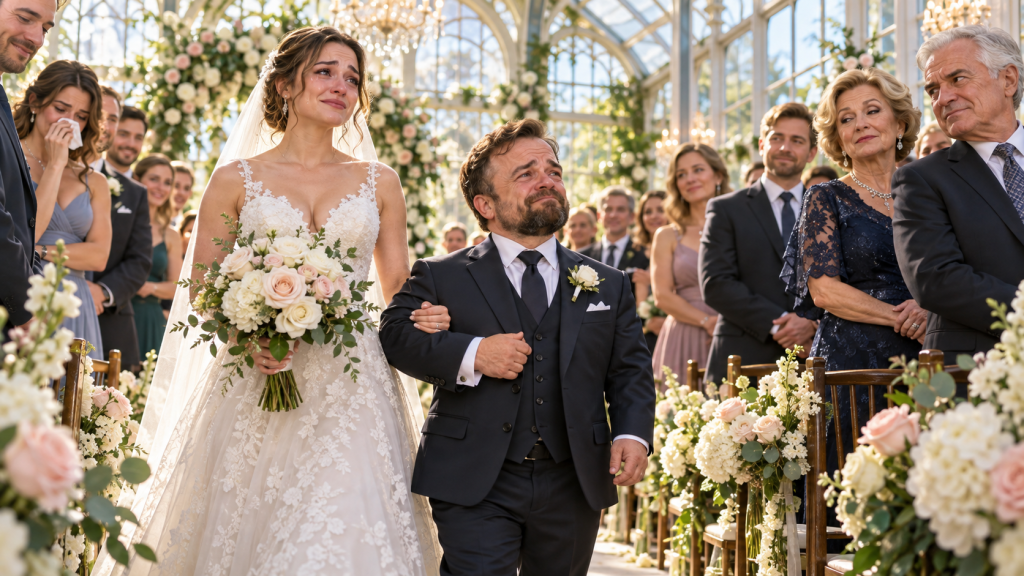
Money used as leverage.
People’s discomfort with bodies that do not fit their expectations.
All of it became tiny when measured against the life of a nineteen-year-old boy who lost his parents, looked at his eight-year-old sister, and decided she would not lose him too.
He never needed to be tall to walk me down the aisle.
He had already carried me farther than anyone else ever could.
And in the photograph that still hangs in my home, no one cropped him out.
No one moved him to the side.
No one hid him behind another man.
He is right there beside me—
exactly where he always belonged.
THE END STORIES! THANK YOU FOR READING GOOD LUCK !❤️
Related Posts